Home Blog Page 145

NDFP peace consultant Randall Echanis murdered

0

Randall Echanis, long-time National Democratic Front of the Philippines (NDFP) peace consultant, was killed early Monday morning, August 10, in Novaliches, Quezon City. His peasant organization colleagues said Echanis’ murder may be by state forces.

The post NDFP peace consultant Randall Echanis murdered appeared first on Kodao Productions.

Karapatan: Killing of Randy Echanis, the latest in the loathsome attacks on peace and peasant advocates

0

The killing of 72-year-old peace advocate and agrarian reform activist Randall “Randy” Enchanis is “a cold-blooded and unpardonable extra-judicial execution,” human rights watchdog Karapatan stated, as the group decried his killing as “the latest in a long list of atrocities and loathsome attacks on peace and peasant advocates under this fascist regime.”

read more

Davao Region lacks contact tracers

0

The regional office of the Department of Health (DOH-XI) has admitted they are still short of the targeted contact tracers in the region.

Police detain civilians after killing suspected NPA hors de combat

0

Under the Comprehensive Agreement on Respect for Human Rights and International Humanitarian Law, Caraig’s rights as hors de combat were violated.

By JUSTIN UMALI
Bulatlat.com

SANTA ROSA, Laguna – Combined elements of the Armed Forces of the Philippines (AFP) and the Philippine National Police killed an injured man alleged to be a member of the revolutionary New People’s Army in sitio Boho, barangay San Antonio, Kalayaan, Laguna before detaining civilians and taking them to an undisclosed location, August 7.

According to eyewitness accounts given to human rights watchdog Karapatan Southern Tagalog, Mario Caraig was tending to an injury in the Asedillo residence when police raided the house and killed him. After the encounter, police arrested the three members of the Asedillo household – Virgilio Asedillio; his daughter Chloe, two months pregnant; and Chloe’s husband, who was unidentified, for “harboring a criminal.”

The raid occurred at approximately 11:10 in the evening. No formal charges were filed against the Asedillo family.

An official statement from the AFP’s 2nd Infantry Division asserted that Caraig was a high-ranking member of the NPA. He was reportedly issued an arrest warrant for multiple counts of murder and fought back.

Karapatan ST disputed this, saying that eyewitness accounts clearly stated that Caraig was wounded in the arm and was in no condition to fight back, making him hors de combat.

Karapatan ST slammed the arrests of the Asedillo family, calling it a clear case of “illegal detention.” They also stated that under the Comprehensive Agreement on Respect for Human Rights and International Humanitarian Law, Caraig’s rights as hors de combat were violated.

Under Part IV, Article 4 of CARHRIHL, persons considered hors de combat are “protected in all circumstances and treated humanely.” CARHRIHL also stipulates the wounded combatants must be collected and cared for by the “party in the armed conflict which has taken them in its custody or responsibility.”

CARHRIHL is a joint agreement signed by the Government of the Republic of the Philippines and the National Democratic Front of the Philippines in 1998 which guarantees basic rights for combatants and non-combatants on both sides of the armed conflict.

Karapatan ST is currently investigating the whereabouts of the Asedillo family.

The encounter occurred barely three days after police officers shot and killed Dioscoro Cello, Rey Masinas, and Alex Perdeguera in the same barangay. Their remains are currently in Camp Vicente Lim, Calamba, Laguna. Police officers have so far refused to entertain any request from family members to claim the remains. (Bulatlat.com)

The post Police detain civilians after killing suspected NPA hors de combat appeared first on Bulatlat.

Peasant activist Randall Echanis detained under Marcos, Arroyo and Aquino, killed under Duterte

0

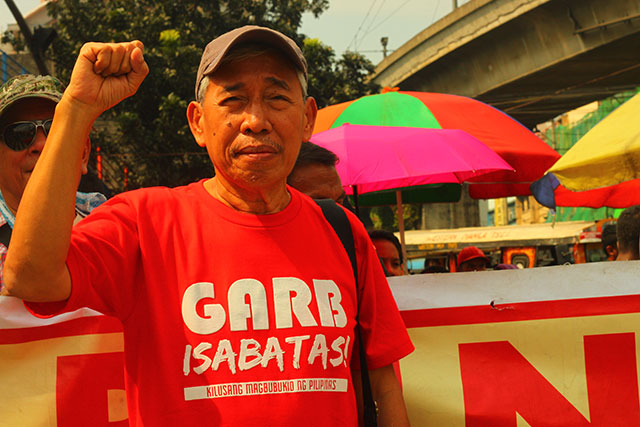
Anakpawis Partylist and Kilusang Magbubukid ng Pilipinas (KMP) condemned the killing of its national chairperson Randall “Randy” Echanis, an elderly peasant activist and peace consultant of the National Democratic Front of the Philippines (NDFP).  Echanis, 72, along with a still unidentified neighbor, were killed inside a rented house in Novaliches, Quezon City, during the wee […]

The post Peasant activist Randall Echanis detained under Marcos, Arroyo and Aquino, killed under Duterte appeared first on Manila Today.

Peace consultant killed in house raid

0
2015 Bulatlat file photo

By JANESS ANN J. ELLAO
Bulatlat.com

MANILA — Randall Echanis, peace consultant and known peasant leader, was killed in a house raid early this morning, August 10 in Novaliches, Quezon City.

Echanis, 72, was seeking medical treatment.

“Our anger is beyond words. This is a culture of extrajudicial killings with impunity under the Duterte regime. This is a declaratory act that national leaders of legal-democratic movement are now targeted to be killed by the Duterte regime. The entire civil society, human rights advocates and freedom fighters must totally denounce this criminal act,” said former Anakpawis Rep. Ariel Casilao.

Echanis was first arrested under the Marcos dictatorship, where he was detained incommunicado. He was released in 1986. He and wife Linda, along with their then two-year-old daughter were arrested four years later. Charges against them were later dropped.

In 2008, Echanis was arrested in Bago, Negros Oriental while holding a consultation with sugarcane workers. He was charged with multiple murder over the Hilongos mass grave.

Under the Duterte administration, Echanis was a member of the National Democratic Front of the Philippines’ Reciprocal Working Committee on Social and Economic Reforms, where he pushed for free land distribution, better living conditions for farmers and fisherfolk, rural development, to name a few.

He faced threats of re-arrest after the termination of peace talks between the Philippine government and the NDFP Peace Panel. (Bulatlat.com)

The post Peace consultant killed in house raid appeared first on Bulatlat.

Davao Region lacks contract tracers

0

The regional office of the Department of Health (DOH-XI) has admitted they are still short of the targeted contact tracers in the region.

‘Point of order, your honor’

Akala ng marami, bawal gamitin ang wikang Filipino sa Kongreso. Kapag may pulong ang komite o sesyon sa plenaryo, ang madalas na naririnig ay wikang Ingles. Ito ang pangunahing ginagamit ng mga mambabatas lalo na tuwing may debate o interpelasyon sa plenaryo.

Mali ba ito? Kung ang isang institusyo’y nagpapakilala bilang kinatawan ng mga mamamayang Pilipino, hindi ba’t akma lang na ang iba’t ibang wika ng bansa’y magkaroon ng silbi o papel sa loob nito? Na sa halip na wikang banyaga ang daluyan ng komunikasyon, wikang sarili ang prayoridad at may mga hakbang upang ang iba pang wika ng bansa’y ituturing bilang mga opisyal na wika tuwing deliberasyon sa Kongreso.

Subalit sinasalamin ng Kongreso ang nagpapatuloy na diskriminasyon laban sa pagtukoy sa wikang Filipino bilang wika ng mga edukado, propesyunal, at iba pang intelektuwal sa lipunan. Palibhasa’y pinamumunuan at pinamumugaran ng mga elitista na sanay sa paggamit ng wikang dayuhan sa kanilang pang araw-araw na transaksiyon sa opisina, negosyo o asyenda kaya may pagtingin na ang wikang Filipino’y hindi nababagay gamitin tuwing magkakaroon ng debate sa kapwa-mambabatas. Maaaring wikang Filipino ang bukambibig sa karaniwang mga usapan. Pero mabilis o awtomatikong napapalitan ito ng wikang Ingles kapag nakabukas na ang mikropono ng kapulungan.

Eh ano ba ang patakarang gumagabay sa Kongreso hinggil sa anong wika ang dapat gamitin ng mga miyembro nito?

Noong Agosto 16, 1988, nagtalumpati si Rep. Oscar Santos ng Quezon gamit ang wikang Filipino. Minungkahi ni Rep. James Chiongban ng South Cotabato na sa wikang Ingles magsalita si Santos. Ang sagot ng nagpapadaloy ng sesyon ay naaayon ang paggamit ng wikang Filipino bilang selebrasyon ng Buwan ng Wika. Tinanong ni Rep. Jose Yap ng Tarlac kung ito ba’y maaari ring gawin sa mga susunod na araw. At ang sagot ay oo, ang wikang Filipino ay wastong gamitin sa plenaryo.

Hindi ba’t kakatwa na kailangan pa ng opisyal na desisyon bago magkaroon ng kaliwanagan na nararapat lamang ang paggamit ng sariling wika sa Kongreso? At higit na kakatwa na sa bawat Kongreso ay laging may titindig upang magtanong kung nasa alituntunin ba ng institusyon ang pagsasalita sa wikang Filipino.

Maaaring isipin na tagumpay para sa pagsusulong ng wikang Filipino ang desisyong kumikilala sa kawastuhan ng paggamit ng wikang katutubo. Subalit bibihira ang mambabatas na mangangahas magsalita sa wikang Filipino sa plenaryo. Wala ring pagsasalin ng mga talumpati, buod ng mga debate, at panukalang batas sa wikang Filipino.

Noong 2 Mayo 1988, habang may interpelasyon sa pagitan nina Rep. Herminio S. Aquino ng Tarlac at Rep. Raul A. Daza ng Northern Samar gamit ang wikang Filipino, hiniling ni Rep. Antonio T. Bacaltos ng Cebu na isalin sa wikang Ingles ang kanilang usapan. Nilinaw ng nagpapadaloy ng sesyon na tanging mga talumpating binigkas sa wikang Filipino lamang tuwing ‘privilege hour’ ang pwedeng isalin sa wikang Ingles.

Samantala, nagkaroon ng kakaibang interpelasyon sa pagitan nina Rep. Celso L. Lobregat ng Zamboanga at Rep. Aleta S. Suarez ng Quezon noong Nobyembre 28, 2002 dahil nauwi ito sa paggamit ng wikang Cebuano Bisaya. Nagtanong si Rep. Raul L. Villareal ng Nueva Ecija kung ito ba ay tama at ang nakuha niyang sagot ay hindi, tanging wikang Ingles o Filipino lamang ang pwedeng gamitin ng mga mambabatas. Sa isang iglap, kung hindi man agad naunawaan ng kapulungan ang implikasyon ng desisyong ito, ay nawalan ng boses ang milyun-milyong katutubo at kahit ilang bahagi ng populasyon sa mga probinsiya na hindi pamilyar sa dalawang wikang nabanggit.

Mapapaisip tayo kung bakit sa kabila ng mabilis na pag-abante ng teknolohiya sa komunikasyon ay hindi nakabuo ang Kongreso ng programa kung paano isasalin ang deliberasyon sa plenaryo sa iba’t ibang wika ng bansa. Ilang dekada na itong praktika sa United Nations at puwede na itong gawin sa Pilipinas nang hindi mangangailangan ng malaking pondo o kumplikadong makinarya.

Ang laking pagkakaiba ng debate sa plenaryo at pagdinig sa mga komite kapag wikang Filipino ang ginagamit sa palitan ng mga diskurso. Mas ramdam ang emosyon, nakapokus ang atensyon ng mas marami, walang pagpipigil ng saloobin at iniisip, at tuwirang naipaparating ang mensahe sa publiko lalo na kung ito’y pinapalabas sa TV, radyo, o internet. Pero kadalasan, ang sesyon ay pinapaandar ng mga salitang tunog teknikal at dayuhan sa pandinig ng kamalayang Pilipino. Hindi rin kaaya-ayang pakinggan ang mga kalahok sa debate na tila humahabi ng mga argumentong walang salalayan sa rason o nagpapanggap na may alam sa sinasabi kahit baluktot na ang mga binibitawang salita sa wikang Ingles.

Hindi nakapagtataka kung bakit kaunti ang nagpapahayag ng interes kung ano ang nangyayari sa Kongreso. Bukod sa kontra-mamamayan ang karamihan sa mga batas na pinapasa rito, ang daluyan ng impormasyon ay sinasala ng wikang hindi mabilis na tumatagos sa pang-unawa ng publiko.

Hindi rin nakakagulat kung bakit napakadali para sa Kongreso ang maghain ng mga panukalang batas o resolusyong nagsasantabi sa wikang Filipino habang pinalalaki ang ambag ng wikang Ingles sa edukasyon ng mga kabataan. Ang ilan ay nagpapakalat pa nga ng lason sa kaisipan ng publiko tulad ng mga argumento na hindi pormal na wika ang Filipino dahil humihiram ng salita o kaya nama’y imposible itong gamitin sa pagtuturo ng agham at matematika.

Paano isusulong ang wikang Filipino kung ang mga kinatawan ng mamamayan ang mismong nangunguna sa pagpapababaw at pagpapalabnaw ng pagmamahal sa sarili nating kultura?