Ganito tinignan ng gobyerno ang imahe ng libu-libong Pilipino na nagsiksikan sa Rizal Memorial Sports Complex sa Maynila sa pag-asang makabalik na sa mga probinsya.
Sa balita, ang tawag sa kanila ay locally stranded individuals (LSI). Dumagsa sila sa sports complex para makasama sa programang Hatid Tulong ng gobyerno. Ginamit ng gobyerno ang lokasyong ito para sa rapid test na kailangang makuha ng mga LSI bago makabalik sa probinsiya.
Marami ang nababahala sa mga litrato ng mga LSI. Tabi-tabi ang istranded na mga Pilipino sa hagdanan, sa bleachers, ng sports complex. Marami ang nanlumo para sa kapwa Pilipinong ginagawang unan ang maleta at kama ang semento. May mga buntis, bata, nakatatanda. Umulan pa at nabasa ang bagahe ng ilan gabi ng Hulyo 26. Kinaumagahan, sa ilalim naman ng matinding sikat ng araw, daan-daan pa rin ang nakapila sa labas. May nahimatay na at may sanggol pang nilagnat matapos maambunan.
Ang mga nagtitiis na Pilipinong ito’y binansagan ni Interior and Local Government Sec. Eduardo Año na matitigas ang ulo. Sabi niya, natatakot kasi itong mga pamilyang ito na hindi mapasama sa programa.
Sino ang hindi matatakot sa ilang araw o linggo na wala pa ring makain dahil wala nang trabaho? Sino ang hindi matatakot sa kawalan ng tirahan dahil tuloy ang renta kahit walang kinikita?
Dumadagdag lang ito sa mga pruweba ng pagbubulag-bulagan ng administrasyon. Sa ilang buwan ng lockdown, daan-daang establisimyento ang nagsara, libu-libong manggagawa ang nawalan ng trabaho. Hindi na naman lingid sa kaalaman ng marmai na libong Pilipino ang dumadagsa sa Metro Manila para maghanap ng ikabubuhay.
Hindi rin naman ito ang unang beses na natampok ang litrato ng mga Pilipinong natutulog sa kalsada dahil sa kawalan ng matutuluyan habang nagbabalak bumalik sa probinsya. Kalsada, kariton, ilalim ng expressway.
At upang isagad ang kabalintunaang ito, naisipan ng polisyang magdala ng orchestra upang haranahin umano ang mga nag-aabang ng sakay pauwi. Pero walang matamis na hele ang papawi sa kalam ng sikmura at kirot ng mga katawang walang maayos na matutuluyan.
Sarap ng buhay, ika nga ni Senador Bato dela Rosa.
Buhay muna bago lahat, sabi naman ni Pangulong Duterte sa kanyang ika-limang State of the Nation Address. Buhay nino? Siguradong hindi ang libong Pilipino na nagtitiis sa harap ng magarbong pamumuhay ng gobyernong naturingang lingkod bayan.
Taliwas sa naging pangako niya nang mahalal, ang administrasyong Duterte ay hindi kanlungan ng api at naghihirap.
Tuwing ika-apat na Lunes ng Hulyo ay tradisyunal nang ginagawa ng Pangulo ang State of the Nation Address (SONA) o Talumpati sa Kalagayan ng Bansa, ayon sa ating Saligang Batas.
Kaya bawat taon, sa harap ng Mataas at Mababang Kapulungan ng Kongreso ay pinoproklama ng Pangulo ang kalagayan ng ating bansa, kasama na ang mga proyektong kanyang nagawa sa nakalipas at balak gagawin pa sa mga darating na taon.
Tuwing SONA ng Pangulo, tradisyunal na rin sa ating mga progresibong grupo ang magsagawa ng People’s SONA o ang paglalahad sa tunay na kalagayan ng bansa na maaring taliwas sa opisyal na pahayag ng administrasyon.
Ito ay matagal na rin nilang ginagawa at sang-ayon sa karapatan ng isang mamamayan na magpahayag ng kanyang sinasaloob na ginagarantiyahan ng ating Saligang Batas.
Ngunit sa ika-limang SONA ng Pangulong Duterte ay biglang pinagbawal ang pagtitipon ng mga progresibong grupo.
Ang dahilan ay ang pandemya ng Covid-19.
Matatandaan na ayon sa Resolution No. 57 ng Inter-Agency Task Force on Emerging Infectious Diseases (IATF), ay bawal ang mga mass gathering sa mga lugar na dineklarang may community quarantine dahil sa usaping pangkalusugan
Gamit ang resolusyong ito, noong Hulyo 23, 2020, ay naglabas ng advisory ang Department of Interior and Local Government sa ilalim ni Sec. Eduardo Ano na pinaaalahanan ang lahat ng local government units na pinagbabawal ang mga mass gathering dahil sa kasalukuyang pandemya at nagsasabing hindi dapat pahintulutan ang mga rali sa darating na SONA ng Pangulo.
Bago nangyari ito ay nakapagkita pa si Quezon City Mayor Joy Belmonte noong Hulyo 21 sa mga lider ng mga progresibong grupo upang pag-usapan ang mga health and safety protoculs sa gaganaping rali sa darating na SONA.
Napagkasunduan na gagawin ang rally sa harap ng Commission on Human Rights (CHR) sa Commonwealth Avenue.
Ngunit dahil sa memorandum ng DILG, napilitang umatras si Mayor Belmonte sa kanyang pangako.
Sa isang statement na nilabaas noong Hulyo 24 ay sinabi ng lokal na pamahalaan ng Quezon City na hindi ito maglalabas ng permit para sa mga grupong nagpaplano ng protest action sa darating na SONA.
Sinabi rin na ang mga permit na naibigay na ay ituturing na kanselado na.
Ang tanong ngayon ay ganito: Sa pamamagitan ba ng isang advisory ay maaring ipagbawal ng DILG ang mga rali sa SONA ng Pangulo?
Ang batas tungkol sa pagsagawa ng rali o demonstrasyon ay ang Public Assembly Act of 1985 o BP 880.
Sinasabi sa batas na ito na kailangan lamang ang permit kung ang isang rali o demonstrasyon ay gaganapin sa isang public place na hindi kinikilalang freedom park sa isang lokalidad.
Kapag ang rali ay gaganapin sa isang freedom park, hindi mo kailangan ang permit.
Hindi rin kailangan ang permit kapag ito ay gaganapin sa isang pribadong lugar na may pagsang-ayon ang may-ari o sa loob ng isang eskwelahan ng pamahalaaan sang-ayon sa regulasyon nito.
Hindi rin kasali sa batas na ito ang mga welga o pagkilos ng mga manggagawa laban sa kanilang kompanya.
Ayun sa BP 880, sa loob ng 2 araw ay kailangang aksyonan ng Mayor ang hinihinging permit.
Ang hindi niya pag-aksyon dito ay ituturing na pagpayag sa hinihiling na rali.
Maari lamang na tanggihan ito ng Meyor kung may malakas na ebidensya na ang isasagawang rali ay magiging sanhi ng maliwanag na panganib sa seguridad, kabutihan, kapakanan, o kalusugan ng publiko.
Pagdating sa usapin ng kalusugan, matatandaan na dati nang naka-pagsagawa ng rali ang mga grupong humihingi ng permit para magrali sa darating na SONA.
Sa mga raling ginawa nila nung nakaraan ay napatupad naman nila ang health and safety standards tulad ng social distancing at pagsusuot ng face masks na hinihiling ng Department of Health.
Isa pa, ang harap ng opisina ng CHR ay isa sa mga lugar na tinaguriang Freedom Parks ayon pa sa CHR Spokesperson Atty. Jacqueline Ann de Guia.
Kaya maliwanag na ang pagbabawal na ito sa rali sa darating na SONA ay walang batayan.
Hindi nga batas ang nilabas ng DILG kungdi isang advisory lamang.
Isipin natin ang nakasaad sa Bill of Rights ng ating Saligang Batas na nagsasabing hindi dapat magpatibay ng batas ang pamahalaan na nagbabawas sa kalayaan sa pananalita, pagpapahayag, o sa karapatan ng mga taong-bayan na mapayapang magtipon at magpetisyon sa pamahalaan upang ilahad ang kanilang mga karaingan.
Hindi kailanman pasailalim ang ating Saligang Batas o ang BP 880 sa isang direktiba ng DILG tungkol sa karapatang magtipon-tipon ng mga mamamayan upang iparating sa pamahalaan ang kanilang mga hinaing .
Maliwanag na ginagamit lamang ng administrasyong Duterte ang pandemya ng Covid-19 upang sagkaan ang batayang karapatan ng mga mamamayan.
Kaya ano pa ang ating hinihintay? Magkita-kita tayo sa People’s SONA, mga kasama!
The Department of Health (DOH) Situationer Report with data as of August 7 recorded 11 new confirmed COVID-19 cases among health care workers, bringing the total cases to 5,398 or 4.4% of the cases in the country. There were 10 more active cases recorded. Of these active cases, 1 is critical, 5 severe, 350 mild and […]
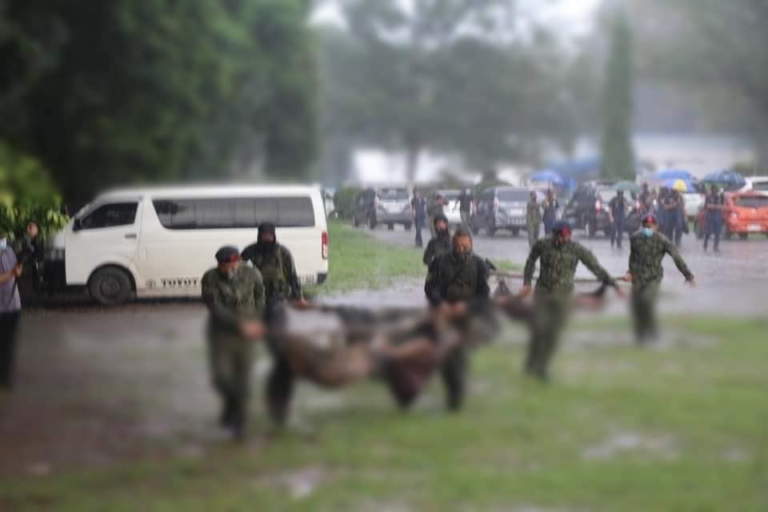
SANTA ROSA, Laguna – Elements of the Philippine National Police have taken the remains of three suspected members of the revolutionary New People’s Army to Camp Vicente Lim, Calamba, Laguna, and are “shrugging off all requests by their families” to claim them, according to human rights group Karapatan Southern Tagalog.
On August 4, Deoscorro Cello, Rey Masinas, and Alex Perdiguerra were killed in an armed encounter in barangay San Antonio, Kalayaan, Laguna.
The families were informed that the remains were interred at Green Lawn Memorial Services in Calamba, August 5. Reveleen Cello, Deoscoro’s daughter, sought the assistance of Karapatan ST in retrieving the remains – the group arrived at Green Lawn on August 6.
When they arrived, no remains were found.
“The funeral home said that the police took the bodies again to bury them,” Reveleen said.
Green Lawn staff also informed them that police officers had the three remains go under autopsy, without the consent of any family member or relative.
According to Karapatan ST, the police threatened the attendants at Green Lawn to give them the remains of the three individuals, despite protests that Cello’s relatives were on the way. They assert that police cannot simply “take somebody’s remains without the express permission of family members, especially after an autopsy was done.”
“Are these people policemen or undertakers?” asked Kyle Salgado, Karapatan ST spokesperson. “Is Camp Vicente Lim now a cemetery?”
Reveleen and the humanitarian team from Karapatan ST went to Camp Vicente Lim to claim the remains. They were delayed for three hours before a man in civilian clothes claiming to be from the PNP Regional Mobile Force Battalion 4A spoke with them to confirm that Cello’s remains were inside the camp, along with Masinas’ and Perdiguerra’s.
Photo from Karapatan-Timog Katagalugan
“Instead of mourning for our loved ones, we feel spiteful at the police officers who are denying the remains of our loved ones,” said Reveleen. “We are seeking justice, not only for the brutality that the police inflicted upon them, but also for the continuing denial of justice.”
Karapatan ST stressed that “NPA or not, everybody has the right to a decent burial.” The group is currently calling on the Commission on Human Rights and other groups to investigate the matter.
The group also alleged that the reason why Cello’s remains are being held is because of a police assertion that he was a high-ranking officer in the NPA’s Melito Glor Command, with a P3.8 million bounty above his head.
Not new under Duterte
Karapatan ST stressed that this wasn’t a new ‘modus operandi’ for the PNP. Last February 5, the remains of two peasant activists, Emerito Pinza and Romy Candor, were found hastily buried under false names in a cemetery in Calamba. Like Cello, Masinas, and Pedriguerra, they were also killed by police officers in Kalayaan, Laguna.
The PNP insisted that Pinza and Candor were members of the NPA. They also released a statement that they assisted family members and relatives in burying them.
Karapatan ST debunked the statement, with Pinza’s wife flat-out stating that she had not seen her husband’s remains.
The truth came out when the remains of the two were found in mislabeled graves in a local Calamba cemetery.
Aside from the three individuals, the 2nd Infantry Division of the AFP also reported an alleged encounter in Kalayaan, during the late hours of April 7. Karapatan ST is also currently looking into the facts of the matter.
Karapatan ST insisted that these were violations of the Comprehensive Agreement on Respect for Human Rights and International Humanitarian Law (CARHRIHL).
CARHRIHL is an agreement between the Government of the Republic of the Philippines and the National Democratic Front of the Philippines which guarantees basic rights for combatants and non-combatants on both sides.
Under CARHRIHL, the right to decent burial is guaranteed. (Bulatlat.com)
Nagpaalala ang mga lokal na pamahalaan sa loob ng National Capital Region (NCR) o Metro Manila, na may 16 syudad at isang munisipalidad, sa curfew sa panahon nang muling pagpapaloob sa rehiyon sa modified enhanced community quarantine (MECQ) mula Abril 4-18. Lahat ng syudad sa Metro Manila ay may curfew na 8pm hanggang 5am, bukod […]
MANILA – As chief negotiator of the peace panel of a revolutionary movement, one might expect an overbearing figure. But the deluge of condolences and tributes and the exchanges of anecdotes online as they shed tears speaks of a man who deserted comfort in lieu of serving those who have least in life.
Fidel Agcaoili, chief negotiator of the peace panel of the National Democratic Front of the Philippines, has been a constant figure in the Philippine movement for human rights and the pursuit of a just and lasting peace. Yet, over the years, he was able to maintain a self-effacing leadership.
On July 23, Fidel passed away due to pulmonary arterial rupture, which caused massive internal bleeding. His passing brought shock to those who loved and knew him, to his colleagues who cannot find the heart to look at the now empty chair where he would usually sit to have coffee, or those who will now forever have to wait in vain for their early birthday greetings, which he would send through Facebook at least three days in advance.
Yesterday, August 8, would have been his 76th birthday. Condolences and tributes poured anew.
Early years
Fidel came from a rather comfortable life. His father was an established lawyer in the Philippines. But this did not stop him from looking into the situation of those who have less in life.
As a political science student at the University of the Philippines, he joined the Student Cultural Association of UP (SCAUP). He was later introduced to Jose Maria Sison and Julie de Lima as he joined the Marxist study group that the former had formed. De Lima, in a video message, said they had access to the collection of Marxist books in the residence of an ambassador’s private library, which, at that time, posed danger to them as any possession of what the military considered as subversive was used as evidence for crimes against national security such as subversion and sedition.
Both Sison and De Lima would also later become his lifelong friends and comrades as they became part of the negotiating panel of the NDFP.
In her tribute, De Lima said that Fidel’s father feared that he was “straying deeper into revolutionary activism” and exiled him to the United States. He worked on the side while studying at a university in California. Here, he joined the wide student movement against the US war on Vietnam.
A year later, he returned to the Philippines and continued his activism. He then eloped and married Rosario, known to many as Chit.
A political prisoner
In his mid-twenties, Fidel was elected to be part of the Central Committee of the Communist Party of the Philippines in 1970, where he carried out crucial tasks for the then two-year old party.
Due to intensifying political climate under the Marcos administration, the Agcaoili family was relieved to know that the couple went underground before Ferdinand Marcos declared martial law rule in 1972. His family was then subjected to interrogation as state forces wanted to know their whereabouts.
Fidel, Chit, and their two children were arrested two years later. His sister Annabel said Fidel was mistreated while in prison, where he spent the next 11 years of his life as one of the “hard cores” among political prisoners and the longest held political detainee under the Marcos dictatorship.
While behind bars, Fidel did not stop in pushing for change. They struggled for better living conditions, longer visiting hours, to name a few. In 1976, at the height of martial law, Hermie Garcia, also a political prisoner that time, said this eventually led to the 14-day hunger strike that demanded the release of two nursing mothers and their babies.
More than 140 detainees participated in the hunger strike. And they were subjected to a brutal retaliation afterwards by the military. Their cells were raided and leaders of the hunger strike were forcibly taken in the middle of the night.
“Fidel was one of the targets. In his (detention) building, the detainees had put up a barricade of huge benches and tables to protect Fidel and other leaders. When the soldiers got hold of Fidel, the detainees would not let go of him. There was literally a tug of war between soldiers and the detainees with Fidel in the middle,” said Garcia.
He eventually decided to go with the soldiers to prevent injuries to the detainees.
“Fidel would later earn the trust of fellow political detainees,” Garcia said.
Apart from better conditions, they also pushed and campaigned for their release, even if among the cruel retaliation includes being locked up incommunicado.
Satur Ocampo, who was among those detained with Fidel, attributed his escape from prison in 1985 from the late negotiator’s skill in earning the trust of their captors. After hearings, they would first convince their jail guards to have lunch first at a nearby eatery and then watch movies. Before they knew it, they would stop by Fidel’s house after hearings, where their jail guards can eat with them.
In 1981, Marcos lifted the martial law on paper and released several political prisoners to deoderize his leadership in the face of international scrutiny. However, Fidel, one of those considered by the military as hard cores, remained in jail.
A staunch rights defenders
L-R NDFP peace panel chairperson Fidel Agcaoili, Royal Norwegian Government special envoy Elisabeth Slattum and GRP peace panel chairperson Silvestre Bello III during the third round of talks held in Rome, Italy. (Photo by Jon Bustamante)
With the torment he experienced in jail, it was not surprising to see Fidel continue his human rights advocacy after his release from detention. He helped found the Samahan ng Ex-detainees Laban sa Detensyon at Aresto (SELDA) and later helped in the consolidation and documentation of the nearly 10,000-class suit against the Marcoses before the US Federal court in Hawaii, which they won.
Fidel’s crusade for better conditions of political prisoners and their release continued even as a member of the negotiating panel and later its head. His face would turn red, or “alimango” as he was teased by colleagues, and his hoarse, raspy voice would erupt in frustration during meetings and negotiations with Philippine government emissaries whenever the issue touched on the impending release of political prisoners.
As co-chair of the reciprocal working committee that drafted the Comprehensive Agreement on Respect for Human Rights and International Humanitarian Law, the first substantive agreement signed between the Philippine government and the NDFP, Fidel pushed for the release of political prisoners.
In Part 3, Section 6 of the CARHRIHL, the Philippine government committed to abide to the Hernandez doctrine and to review cases of all political prisoners who have been charged, detained or convicted contrary to this doctrine and immediately release them.
“His tireless and selfless commitment in serving the people will be remembered, celebrated, and honored for his tremendous contributions in advancing and pursuing the cause of just and lasting peace that will forever live in the hearts and minds of the people whom he have inspired and influenced, and most especially those who have followed his example in serving the people and the revolutionary cause,” said Selda in a statement, paying tribute to their founding secretary general.
Agcaoili also served as secretary general of the Partido ng Bayan, a national democratic political party that fielded candidates to both senatorial and congressional seats during the administration of then president Corazon Aquino.
An advocate of peace
Fidel served as vice chairperson of the NDFP peace panel since it was formed in 1994. Apart from heading the NDFP Reciprocal Working Committee for Human Rights and International Humanitarian Law, he also later served as the co-chairperson of the Joint Monitoring Committee, which looked into CARHRIHL violations.
In 2016, Fidel assumed the chairmanship of the peace panel.
Detained NDFP peace consultants, in a statement, described the late chief negotiator as a leader who “possessed and wielded the traits and skills needed by a peace negotiator in the service of the people and the revolution.”
Under the Duterte administration, Fidel was known for his meetings with then president-elect Rodrigo Duterte, which eventually paved way to the resumption of formal peace talks in August 2016. Unprecedented progress marked the first year of the peace negotiations, especially where social and economic reforms are concerned, until it was terminated by President Duterte.
Far from the stereotype public image of the peace talks, where negotiators are stiffly opposite each other or are posting with measured smiles for posterity photos, “the real life action is more dynamic and full of drama, spanning the whole spectrum of situations and emotions,” said detained peace consultants.
But when the situation calls for it, Fidel can play the role of proverbial “bad cop,” detained peace consultants said, “crossing words with the most hardline or obstinate GRP protagonist. He could break the ice by initiating and engaging in friendly banter. Or he could be his congenial, amicable and persuassive self in order to clinch an agreement,” the detained peace consultants said.
During the online program, former GRP peace panel Nani Braganza, also Fidel’s godson, gave a heartfelt tribute to “Nong Tsip,” as he recalled their cigarette and coffee breaks together, which he said is part of the “problem solving” and to make their working atmosphere more conducive.
NDFP’s Agcaoili (left) and GRP’s Braganza during their meeting at Utrecht. (GRP photo)
No task too big or two small
Fidel might be remembered for the big, crucial, and sensitive tasks he has done for the human rights cause and the revolutionary movement but for colleagues and comrades who have worked closely with him, he will always be remembered for his small yet thoughtful acts of kindness.
Fidel and fellow peace panel member Coni Ledesma would usually look into the arranging of accommodations, travel and transportation, food, reference materials, and other technical needs of Philippine-based consultants who would visit their office in Utrecht, The Netherlands.
He would dutifully and cheerfully wake up early at dawn, said detained peace condulstants, and drive more than half an hour from Utrecht to Amsterdam to fetch colleagues at the Schiphol International Airport.
“No task was too big for Ka Fidel. Nor was there any that was too small. He carried out his tasks, big or small, with the same dedication, efficiency, eye for detail, energy and enthusiasm,” detained peace consultants said in a statement.
The netizen
But his passing has revealed a big mystery among his Facebook friends. Nearly everyone he knows, each year without amiss, received their birthday greetings at least two to three days in advance. But more than birthday greetings, he is also among the first to extend congratulations to happy news, words of wisdom to those in need, and condolences and warm words for those suffering. And yes, lots of teasing.
At times, he would send Facebook messages asking for a recipe, commenting on photos of children of activists, and sharing photos of his own grandchildren. University of the Philippines professor Sarah Raymundo said Fidel was particularly interested in millennial speaks, asking her what acronyms like CTTO means.
“Nakiki-bagets,” Raymundo said in jest.
As a news junkie, he is often seen with his tablet as he read and share Philippine and international news. He is also quick to share stories from the alternative media.
A father
Fidel’s wife Chit, their five sons and their granchildren are still wrapping their heads over his sudden passing.
His son Nikki said that growing up, he felt abandoned by his father who was away from them. But hearing the stories of people whose lives their father touched, their questions were finally answered. He understood that Fidel’s children were not just the five of them. It was all of those he served selflessly.
“During those times that papa was not with us, he was making it up by touching other people’s lives, those in need,” he said.
In one business meeting in February, Nikki shared that a senator approached him, saying that Fidel was lucky that none of his sons followed his footsteps. In hindsight, he said, he should have spoken out and said Fidel was instead unfortunate.
Nikki said their family will continue to support the causes and struggles of his father and do what they can to see his dreams into reality.
As his granddaughter Zia said, “He lives on through his promise. He lives on through us.”
Since the implementation of the community quarantine from March 15 to August 3, or 141 days, the Davao City Police have apprehended 4,644 persons for violating quarantine rules.