Home Blog Page 170

Mga bilanggong pulitikal, umapela sa Korte Suprema

“Nag-aalala na po kami.”

Ito ang bitaw ng mga kaanak ng mga bilanggong pulitikal sa pagkaantala ng desisyon ng Korte Suprema kaugnay ng petisyon nila na palayaanin na ang mga bilanggong pulitikal na bulnerable sa pandemyang coronavirus disease-2019 (Covid-19).

Nanawagan ang grupo ng mga kaanak at tagasuporta ng mga bilanggong pulitikal na Kapatid ng “mapagmalasakit na interbensiyon” kay Chief Justice Diosdado Peralta tatlong buwan matapos isumite ang petisyon.

Sa mga ulat sa midya, sa New Bilibid Prisons sa Muntinlupa City, di-bababa sa 80 bilanggo ang namatay mula Mayo 1 hanggang 19. Nababahala umano ang Kapatid dito dahil mabilis na nilampasan nito ang average mortality rate o tantos ng mga nasasawi sa naturang pasilidad na 50 hanggang 60 katao kada buwan. Samantala, daan-daang bilanggo at mga istap ng mga bilangguan ang naiulat na nagkasakit ng Covid-19 sa buong bansa.

Ang mga bilanggong pulitikal ay ordinaryong mga mamamayang inaresto at kinulong ng Estado dahil sa kanilang pampulitikang paninindigan at pagkilos. Marami sa kanila ay nanindigan para sa karapatang pantao ng mga mamamayan, at sinampaan ng gawa-gawang mga kaso.

Apela sa puso

Si Fides Lim (pangatlo mula kaliwa), kasama ang mga miyembro at si Atty. Krissy Conti (dulo) ng National Union Of People’s Lawyers

Nagsulat ang Kapatid, sa pangunguna ng tagapagsalita nito na si Fides Lim, na Kataas-taasang Hukuman sa pangalawang pagkakataon noong nakaraang linggo.

Ang unang batch ng mga sulat ay isinumite sa Korte walong araw bago sinumite ang petisyon noong Abril 8. Ang huling pahayag ng Korte sa petisyon ay bigyan ang opisina ng Solicitor General ng pagkakataon na magkomento sa petisyon.

Si Lim ang asawa ng konsultant pangkapayapaan na si Vicente Ladlad. Hindi niya umano nakikita ang kanyang asawa mula nang magkaroon ng lockdown sa mga kulungan noong Marso 11.

“Araw-araw ay napupuno ng pangamba, dahil 71 anyos na siya at may mahinang kalusugan,” sabi ni Lim.

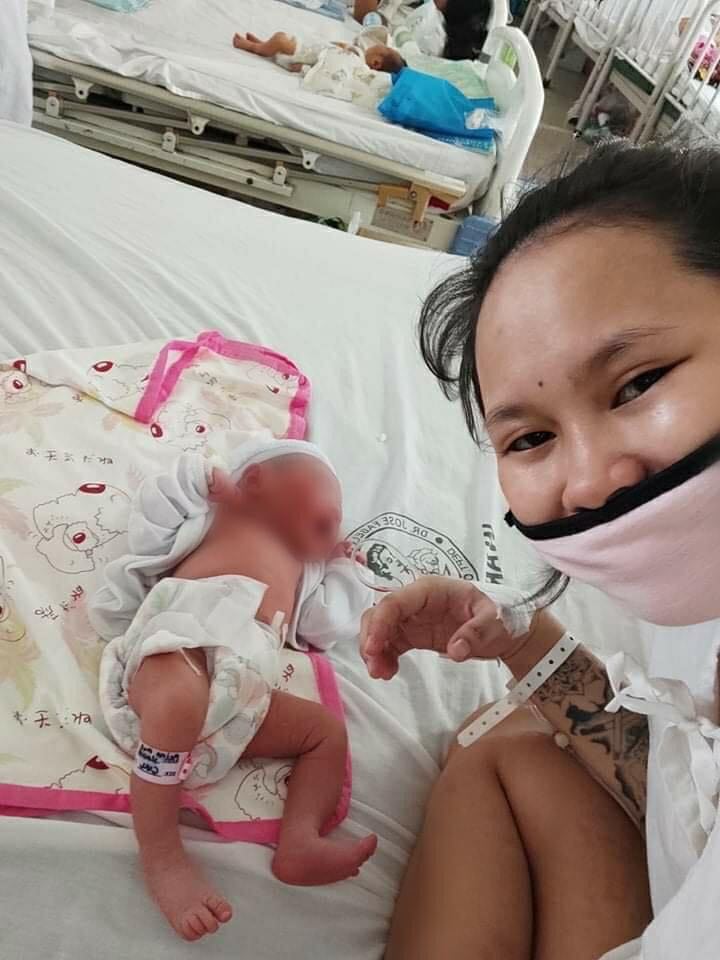
Si Reina Mae “Ina” Nacino kasama ang kanyang bagong silang na anak sa Fabella Hospital

Napakahirap umano ng mahabang paghihintay. Noong Hulyo 1, isa sa 22 petisyuner, ang bilanggong pulitikal na si Reina Mae Nasino, ay nanganak na sa kulungan. “Underweight at jaundiced ang baby, pero sikretong binalik ng mga awtoridad ng kulungan ang nanay at kanyang sanggol sa masikip na Manila City Jail,” sabi pa ni Lim.

Sinabi pa niyang napakalaking inhustisya ang pagkukulong pati sa kanyang sanggol sa panahon pa ng pandemya. “Pero ito mismo ang sitwasyon na nagbibigay-larawan sa aming tunguhin at pagka-napapanahon ng petisyon. Walang ibang pagpipilian sa loob ng kulungan. Maliban sa mabuhay araw-araw. Kailangan ng interbensiyong hudisyal. Lalo na para sa mga mababa ang tsansa na mabuhay laban sa mamamatay-taong virus na bumibiktima sa matatanda at maysakit,” paliwanag pa niya.

Nananawagan ang ina ni Reina Mae na si Marites Asis na agarang positibong tugunan ng Korte Suprema ang petisyon at bigyan ng kahit pansamantalang kalayaan o hayaang magpiyansa ang kanyang 23-anyos na anak.

“Nakakaawa po ang kanilang kalagayan sa loob ng City Jail dahil pa rin sa lumalaganap na virus sa ating bansa, at hindi lingid sa inyong kaalaman na maaari silang mag-ina ay mahawa. At ako po ay nangangamba at natatakot para sa aking mag-ina. Ang aking anak ay nagpapasuso sa kanyang anak bilang proteksyon niya,” sabi pa ni Asis.

‘Tao rin kami’

Nanawagan din ang anak ng 57-anyos na unyonistang si Ireneo Atadero na si Aprille Joy sa “puso at konsiderasyon” ng korte para sa mga matatanda, maysakit at bulnerableng bilanggo tulad ng kanyang ama.

“Nag-aalala kami sa kondisyon ng kalusugan niya lalo na patuloy na lumalaganap ang virus na ito at hindi natin alam kung kailan matatapos ang pandemyang ito. Ilang buwan na mula nang huli naming nakita siya. Nakakadurog ng puso na hindi namin kasama ang tatay namin sa panahong ito ng pandemya,” sinulat ni Aprille Joy.

“Labis po ang dinanas kong pag-aalala na nakakaepekto na sa aking kalusugan. Patuloy po ang pagdami ng nagkakasakit ng Covid-19 sa mga kulungan ng BJMP (Bureau of Jail Management and Penology) na nagpapatindi ng aming pag-aalala na magkasakit din siya,” sabi naman ni Evelyn Legaspi, asawa ng 62-anyos na bilanggong pulitikal na si Edisel Legaspi.

Para naman kay Jeanette Birondo-Goddard, kapatid ng 69-anyos na si Alexander Birondo na nakakulong kasama ang asawang si Winona Birondo, sapat na dapat na matulak ang korte na kumilos pabor sa petisyon ng nakatatakot na epekto ng pandemya.

“Simpleng makatwiran at makatao ang pagpapayag na palayain ang mga matatanda at maysakit, at isang nagpapasusong ina. Tao rin po kami,” pagtatapos ni Lim.

Ngayon ang panahon, oust the fascist…Rage!

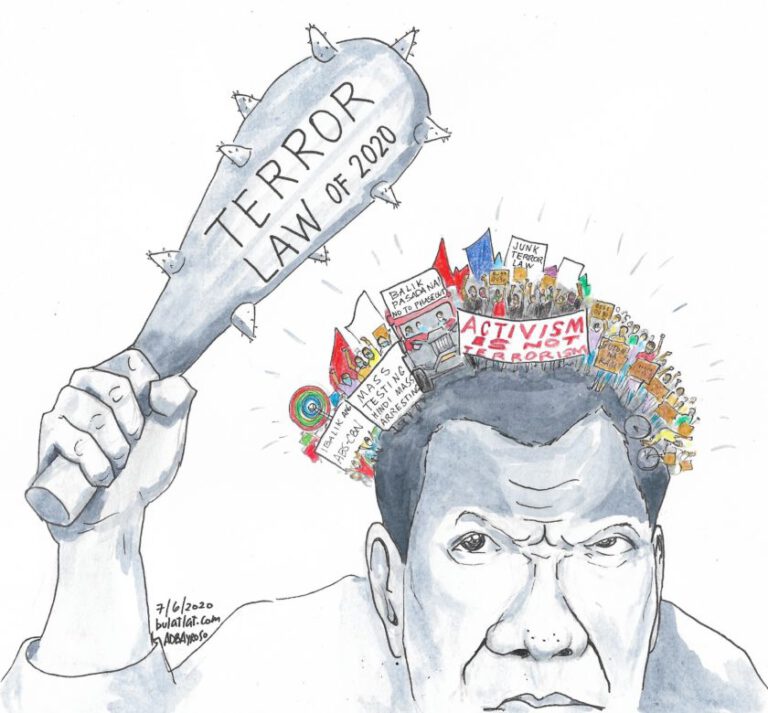
Tinutulan ng iba’t ibang sektor ng lipunan ang Anti-Terror Bill hanggang sa pagsasabatas nito bilang Republic Act No. 11479 o ang Anti-Terrorism Act of 2020, nang pirmahan ni Pangulong Duterte noong Hulyo 3. Sa kabila ng pangamba ng posibleng pagpapatahimik ng gobyero, buo pa rin ang tapang at paninindigan ng mga tumututol sa naturang batas.

Maging ang mga musikero mula sa iba’t ibang eksena’y tila hindi mapapatahimik ng Anti-Terror Law. Sa pamamagitan ng paglikha ng musika at music video, idinaan ng naturang artists ang kanilang naging mabilis na paraan upang ipahayag ang paglaban sa anila’y tiraniya at pasismo.

‘Ngayon ang Panahon’

Sa pangunguna ng Alternatrip, isang lokal na music collective, inilabas nito ang kantang “Ngayon ang Panahon” kasama ang iba’t ibang musikero at artists mula sa lokal na indie music community. Isinapubliko ang kanta sa pamamagitan ng isang music video na nilahukan ng mahigit 60 miyembro ng iba’t ibang banda tulad ng Ang Bandang Shirley, Ciudad, The Purplechickens, Identikit, Oh, Flamingo!, Pastilan Dong!, Rusty Machines, Megumi Acorda, The Strange Creatures, We are Imaginary at marami pang iba.

Friends Of Alternatrip

Ayon sa grupo, ang naturang kanta’y anthem laban sa tiraniya at sa Anti-Terror Law. “Nananawagan ang ‘Ngayon ang Panahon’ sa mga mamamayang Pilipino upang kumilos at iparinig ang kanilang boses laban sa isang gobyernong naghahangad na supilin ang ating kalayaan sa pamamahayag,” ani Jam Lorenzo, kinatawan ng grupo at miyembro ng bandang The Geeks.

Kasama ni Lorenzo sa pagsusulat ng naturang kanta sina Ean Aguila ng Ang Bandang Shirley at si Rj Mabilin ng protest band na The Axel Pinpin Propaganda Machine na kamakailan lang ay naglabas ng kantang “Ano ang aming kasalanan?” na hinggil sa palpak na tugon sa pandemya, kriminal na kapabayaan, at pasismo ng kasalukuyang administrasyon.

“Ang pinakahuling mga pahayag ng mga tauhan ng gobyerno’y bumuod sa kinatatakutan ng mga nasa hanay ng creative at cultural industry.” Tinutukoy ng grupo ang pahayag kamakailan, hinggil sa Anti-Terror Law, ni National Security Adviser Hermogenes Esperon Jr. na “Kung tahimik ka, ‘wag mabahala.”

Dagdag pa ng grupo, hayagang inaamin ng gobyerno ang intensiyong habulin ang mga kritiko nito. “Ang pagpapatahimik sa mga artist ay sumasalungat sa esensiya ng demokrasya at paglabag sa aming mga karapatan.”

Nakapaskil ang naturang music video mula pa Hulyo 9, na may 13,000 views, bilang bahagi ng segment na “Friends of Alternatrip” sa Facebook page ng grupo.

‘Oust The Fascist’

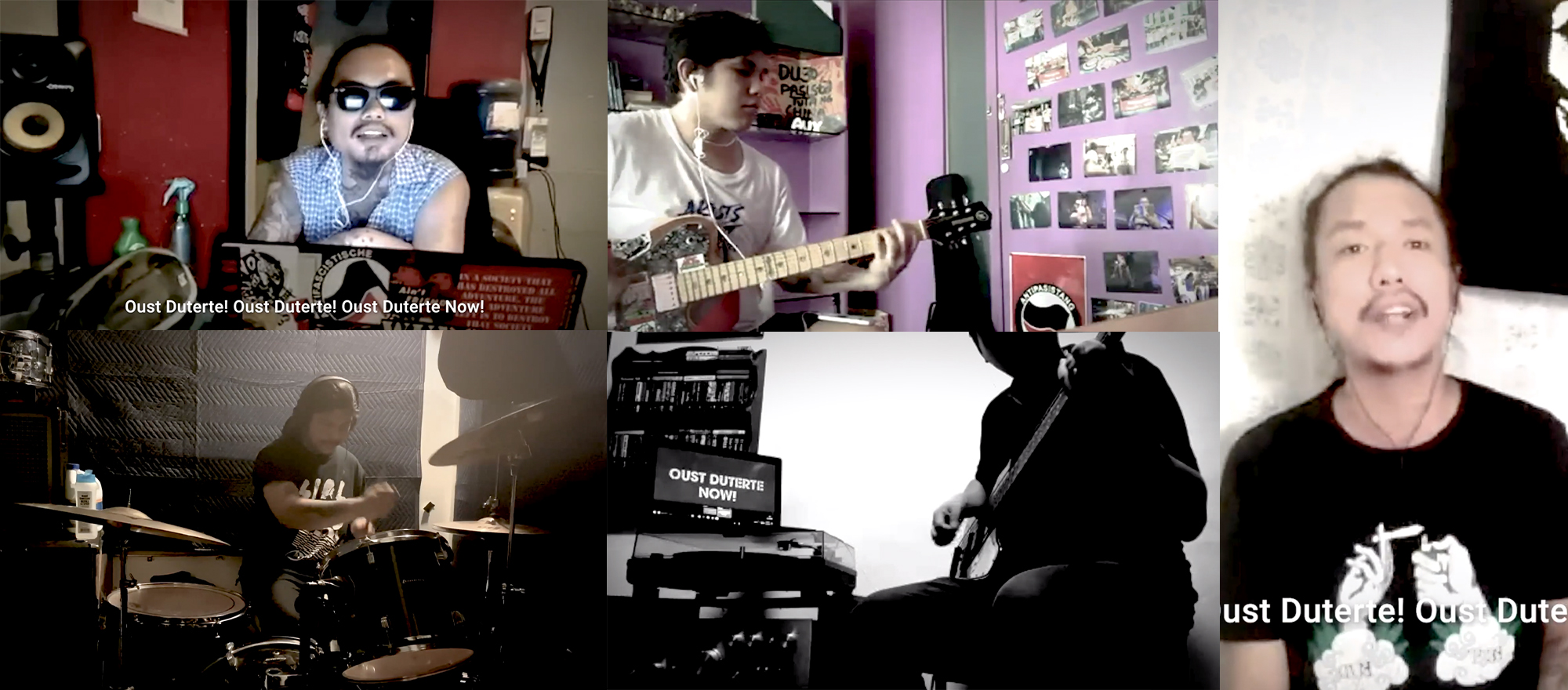
Isang kolaborasyon para sa music video naman ang ginawa ng mga punk sa loob at labas ng bansa, upang ipahayag ang paglaban at panawagan ng pagpapatalsik kay Duterte.

“Oust The Fascist” ang napiling kanta, bilang anila’y angkop sa kasalukuyang pampulitikang sitwasyon, ang ginawan ng sariling rendisyon ng mga miyembro ng mga bandang punk tulad ng Namatay Sa Ingay, Material Support, Anti-Suck System, New Fighting Task, Black Arts, at The Exsenadors.

Itchie and The Frenemies/Dirty Shoes Collective/CrazyDon’t Collective

“Ang naturang proyekto ng mga punk ay pagkondena sa paghihirap at pagdurusa, pampulitikang panunupil, paglabag sa karapatang pantao at pampulitikang pamamaslang, atake sa kalayaan sa pamamahayag at iba pang inhustiya sa ilalim ng apat na taon ng pasistang paghahari ni Duterte,” ayon sa Dirty Shoes Collective, grupo ng mga punk hinggil sa nasabing music video.

Orihinal na kanta ang “Oust The Fascist” ng Kadena, isang Filipino-American bandang punk sa New York na pinamumunuan ni Gary Labao. Naunang inilabas nina Labao ang kanta noong Setyembre 2019. Makaraan ng ilang buwan, inareglo ng ilang punk sa Pilipinas ang naturang kanta sa pangunguna ni Itchie Reyes (New Fighting Task/Anti Suck System) na siyang naging batayan ng kasalukuyang bersiyon.

Ayon pa sa grupo, kalahok ito sa isang online compilation album na “Know Your Enemy Vol. II” na lumabas noong Hulyo 18, ilang oras bago maging epektibo ang Anti-Terror Law. Ang naturang compilation album ay tugon ng iba’t ibang banda at grupong punk laban sa patuloy na pananakot at pagpapatahimik ng administrasyong Duterte sa mga kritiko sa naturang batas. 

“Know Your Enemy Vol. 2”, isang online compilation album ng mga punks sa bandcamp

“Ang batas na ito ay yuyurak sa pundamental na mga karapatan at kalayaan, na maging ang pagsulat ng mga kanta, paglulunsad ng mga tugtugan at events, fundraising at pagbibigay at tulong sa kapwa ay ikikriminalisa bunsod ng mga malabo at malawak na depinisyon ng “terrorist act’,” sabi ng grupo.

Libreng i-download ang buong album ngunit may pay-what-you-can basis din. Anila, 100 porsiyento ng sales ay ilalaan bilang pondo para sa legal services, at kung sakali’y pampiyansa, ng mga punk, artists, o sinumang indibidwal na maaakusahang terorista sa ilalim ng Anti-Terror Law.

Giit nila, hindi terorismo ang kritisismo, paglaban sa inhustisya at pakikibaka para sa panlipunang pagbabago. “Kami’y hindi terorista. Hindi kami yuyukod sa pasismo. Tinatawagan namin ang aming kapwa-punk at mga artist na lumaban kasama ang mamamayan at patalsikin ang pasista.”

Rage

Tumampok naman ilang araw maisabatas ang Anti- Terror Law ang mga hashtag na “#rage”, “#soon” at “#musiciansfightback“ sa mga Facebook status ng mga musikero na tutol sa nasabing batas. Lumitaw din sa newsfeed noong Hulyo ang page na Rage PH na nagtataglay ng mga naturang hashtag at ang mga linya sa kantang “Rage” ng bandang The Jerks na kinatatampukan ni Chikoy Pura, beteranong musikero at aktibista. Kamakailan lang ay naglabas ang naturang page ng video teaser at iba pang pubmat na nagsasabing “Musicians Rage For Freedom of Expression” at “Rage With Us”.


“Ngayon ang panahon”

https://www.facebook.com/alternatrip.net/videos/1072483603153949

“Oust The Fascist”

https://www.facebook.com/DirtyShoesCollective/ videos/1182214282142230/

“Know Your Enemy Vol. II”

https://knowyourenemyvol2.bandcamp.com/album/know-your-enemy-vol-ii

Rage PH

https://www.facebook.com/ArtistsRagePH

How is the Duterte regime normalizing the Filipino suffering? (Part 2)

0

By emboldening the police officers’ abuse of power, the government makes the people get used to surveillance, illegal arrests, abductions, and killings until tsubmission and callousness become the new normal.

DILG deployed more than 69,000 contact tracers nationwide

One of the plans of the government is to extend the contact tracing that is why the Department of Interior and Local Government (DILG) deployed 69,098 contact tracers to expand contact tracing nationwide and to isolate possible cases to prevent the spread of COVID-19. According to DILG Secretary Eduardo Año, the contact tracers are now […]

The post DILG deployed more than 69,000 contact tracers nationwide appeared first on Manila Today.

Bulatlat special coverage | What you need to know about the Anti-Terror Act of 2020

The controversial Anti-Terrorism Act of 2020 took effect last July 18. According to human rights groups, this is the final piece in President Duterte’s de facto martial law.

Human rights groups and advocates are steadfast in opposing the law since its filing in Congress. They said that it tramples upon the Constitutionally guaranteed rights of the Filipino people. There are now at least 10 petitions filed with the Supreme Court seeking to nullify the law.

Read how and why the Anti-Terrorism Act is violating the Constitution and why the people are up in arms about its implementation.


Why the anti-terror bill is sanctioned state terrorism
Who is exempted from being labeled “terrorists?” Rights defenders, lawyers, journalists, Church people, peasants, indigenous peoples and workers have been publicly vilified by state security forces as such. (Read more)

Anti-terror bill removes safeguards, accountability
The most glaring deletion in SB 1083, which was passed by the Senate last week, is Section 50 of the HSA. The provision which states, “A person acquitted of charges of terrorism is entitled to damages in the amount of P500,000 for every day of detention without a warrant. The amount of damages shall be automatically charged against the appropriations of the police agency or the Anti Terrorism Council that brought or sanctioned the filing of the charges against the accused,” has been removed in its entirety. (Read more)


In this Bulatlatan episode, Nonoy Espina, chairperson of the National Union of Journalists of the Philippines and Maria Victoria Beltran, Cebu-based artist detained for her satirical post, discuss the implications of the newly signed law on free speech and expression.

Lawyers question anti-terror bill provisions ‘undermining judiciary, due process’
The consolidated version of the bill provides broad powers to the Anti-Terrorism Council (ATC), which include filing of applications to declare organizations as terrorist, to conduct surveillance against suspected persons/organizations, to freeze assets of suspected terrorists, among others. The ATC is also granted authority to order arrest and detention without judicial warrant of persons suspected of the crime. (Read more)

‘Anti-terror bill to transform PH into a police state’ — groups
“It will terrorize targeted critics, dissenters and social advocates more than the real terrorists with unbridled State power and prejudice through subjective definitions, arbitrary arrests, and extended detentions.” (Read more)


Debunking government’s defense of the anti-terror bill 
Who have been declared “communist-terrorists” by state security forces and the National Task Force to End the Local Communist Armed Conflict? Practically all sectoral organizations advocating for reforms and genuine change. They did not spread terror or cause panic among the public but called on the government to act on legitimate demands of ordinary citizens. (Read more)


Anti-terror bill threatens hard won freedoms – bishop 
The Francescan community in the Philippines found it terrifying that lawmakers have turned their attention to the passing of a bill supposedly against terrorism when it has yet to look into mass testing, provision of decent accommodations for Filipino migrant workers, efficient mass transportation for returning workers, to name a few. (Read more)

4 reasons why anti-terror bill should be junked
“Allowing this administration, the added leeway and greater authority that come with a newer, more oppressive anti-terrorism law would open the floodgates to graver forms of abuses. The dangers that come with the Anti-Terrorism Bill are all too real to be ignored, and we cannot and should not wait until the final nail in the coffin has been hammered down.” (Read more)

How terror law could hamper humanitarian efforts 
While the terror law does not include humanitarian activities in both Sections 3 and 12, the exemption provided for the likes of the International Crescent of the Red Cross, the Philippine Red Cross, and other similar state-recognized humanitarian groups can implicitly cover that providing aid may be considered as terror act. (Read more)

‘Advocacy, protests could be declared terrorist’ — lawyers
While Section 4 of RA 11479 states “that terrorism shall not include advocacy, protest, dissent, stoppage of work, industrial or mass action, and other similar exercises of civil and political rights, Bayan Muna Chairperson Neri Javier Colmenares said the main problem is that the law penalizes intention. (Read more)


UN High Commissioner for Human Rights Michelle Bachelet. (Video grabbed from UN livestream)

‘Anti-Terror Bill worrying’ – UN report 
The report also noted that the controversial Anti-Terrorism Act which replaces the Human Security Act of 2007 “dilutes human rights safeguards, broadens the definition of terrorism and expands the period of detention without warrant from three to 14 days, extendable by another 10 days.”

“The vague definitions in the Anti-Terrorism Act may violate the principle of legality,” the report read. (Read more)


Anti-terrorism campaigns worldwide lack human rights grounding – UN expert
UN Special Rapporteur on the protection and promotion of human rights and fundamental freedoms Fionnuala Ní Aoláin said in her report that most policies countering terrorism worldwide directly contributes to human rights violations. (Read more)

UN expert expresses concern on anti-terror bill 
“The advancement of broad, vague and overly abrasive definition and legislation relating to terrorism can have the opposite of the intended effect which is that by silencing voices, by cracking down on civil society, by weakening the due process and protections offered by the criminal justice system that doesn’t strengthen the States by rather weakening the due process protections offered by the criminal justice system — that doesn’t strengthen the States but rather weakens it in the long run.” (Read more)

Critics assert that the anti-terror bill would infringe on the civil and political rights of dissenters and ordinary citizens. (Photo by Carlo Manalansan)

Groups urge SC to nullify anti-terror law 
“Given the vast and greater powers bestowed under the law, it will have a wide-ranging effects of violating existing constitutionally-guaranteed rights of our people, thus, the issuance of a ?shield against injustice, a temporary restraining order, against its enforcement, effective until the finality of the judgment, is fair and prudent under the circumstances.”

‘Terror law is a bad law’ — petitioners
“The law serves as the trigger for a hand that has long been poised to shoot. Verily, the prosecution and escalated persecution of activists, dissenters, and even ordinary citizens who dare harbor opinions contrary to the government line are not questions of ‘if,’ but ‘when.’ It becomes a question now of how large a scale the ensuing human rights crisis will be. That is, unless the law is stopped in its tracks.”

Greta Thunberg, climate activists join call to #JunkTerrorLaw 
“The proposed Anti-Terrorism Act of 2020 undermines constitutionally protected rights to political expression and dissent by equating activism with terrorist activities that are defined under the law.”

International community urged to continue monitoring human rights in PH 
They appealed to the member-States of the United Nations Human Rights Council to adopt and endorse High Commissioner for Human Rights Michelle Bachelet’s report, including recommendations for continuous monitoring and independent and impartial investigation of the human rights situation in the country.


Marie Dinglasan, popularly known as Aling Marie, addresses the crowd June 12. (Photo by Carlo Manalansan / Bulatlat)

Groups protest signing of ‘Terror Law’ 
“The Anti-Terror Act of 2020 tramples on our basic human rights and it is unconstitutional. It does not provide us safeguards and protection from terrorism. If anything, it is the very tool that creates all-out terror among the people.”

‘The fight is not over’ | Groups vow to challenge ‘Terror Law’ 
“We are prepared, and we will continue the fight against Duterte’s legalized martial law. We will not go gently into the night.”

Religious groups raise concern against anti-terror bill as 30-day deadline nears 
“Worrisome are the expanded and vague definitions of a “terrorist;” the powers given to the Anti-Terror Council to designate a group as a “terrorist group;” the weakening of the protection of one’s privacy and the safeguards against arrests and detention without warrants.”

Anti-terror bill to legalize crackdown in the North
“With the fast-tracking of the bill, graver human rights violations among IPs and farmers are expected, especially for groups who are known for their valiant opposition of destructive projects like Chico River dams back in the ‘70s. For so long, Cordillera has been treated as a resource base for investments and we have been politically persecuted for defending our land.”

#GrandMañanita | Critics of anti-terror bill stage party-themed protest 
Despite warnings from Malacañang that joining protest is still prohibited, thousands braved the rains and joined the party-themed protest against the anti-terror bill.

Independent artists join protest against anti-terror bill 
“We can be arrested on mere suspicion. That’s the most tragic in that bill. Regardless if you trust the government and its state forces or not, you cannot give them absolute authority on that. You do not want to give them the opportunity to abuse power. It is important that laws have checks and balances.”

What the anti-terror bill means to ordinary citizens 
Farmers, indigenous peoples and teachers have been tagged as terrorists and subjected to various forms of attack since Duterte assumed office. The Anti-Terror Bill, if enacted into law, would only escalate what they describe as “state terror” and would target ordinary citizens for merely exercising their constitutional rights.

Groups demand junking of anti-terror bill 
Labor groups and other progressive organizations held a protest action today outside the House of Representatives March 3, demanding the scrapping of Anti-Terror Bill.

Rights group slam Anti-terror drill as license to suppress mass movement 
“The lockdown and the said operations are part of the Duterte administration’s anti-communist hysteria, and has no objective other than to ‘pacify the human rights movement in Davao, which has a proud history of advancing civil and political rights.” (https://www.bulatlat.com)

The post Bulatlat special coverage | What you need to know about the Anti-Terror Act of 2020 appeared first on Bulatlat.

State of the nation’s terror, addressed

0

The day Duterte signed the Anti-terrorism Law, 11 activists in Cabuyao, Laguna were manhandled by police and military men as they were packing up after a peaceful protest. They were detained without charges. A few days later, the National Vice-Chairperson of Gabriela and Chairperson of Bicolana is arrested based on a trumped up murder case. Jenelyn Nagrampa is also a barangay councilor in Nabua town, Camarines Sur.

‘Aswang’ Documentary Review: Do Not Dare Look Away

0

July 20, 2020/

By L.S. Mendizabal

Kodao Productions

Pumarito ka. Bahala ka, kukunin ka ng aswang diyan! (Come here, or else the aswang will get you!)” is a threat often directed at Filipino children by their mothers. In fact, you can’t be Filipino without having heard it at least once in your life. For as early as in childhood, we are taught to fear creatures we’ve only seen in nightmares triggered by bedtime stories told by our Lolas.

In Philippine folklore, an “aswang” is a shape-shifting monster that roams in the night to prey on people or animals for survival. They may take a human form during the day. The concept of “monster” was first introduced to us in the 16th century by the Spanish to demonize animist shamans, known as “babaylan” and “asog,” in order to persuade Filipino natives to abandon their “anitos” (nature, ancestor spirits) and convert to Roman Catholicism—a colonizing tactic that proved to be effective from Luzon to Northern Mindanao.

In the early 1950s, seeing that Filipinos continued to be superstitious, the Central Intelligence Agency weaponized folklore against the Hukbong Bayan Laban sa Hapon (Hukbalahap), an army of mostly local peasants who opposed US intervention in the country following our victory over the Japanese in World War II. The CIA trained the Philippine Army to butcher and puncture holes in the dead bodies of kidnapped Huk fighters to make them look like they were bitten and killed by an aswang. They would then pile these carcasses on the roadside where the townspeople could see them, spreading fear and terror in the countryside. Soon enough, people stopped sympathizing with and giving support to the Huks, frightened that the aswang might get them, too.

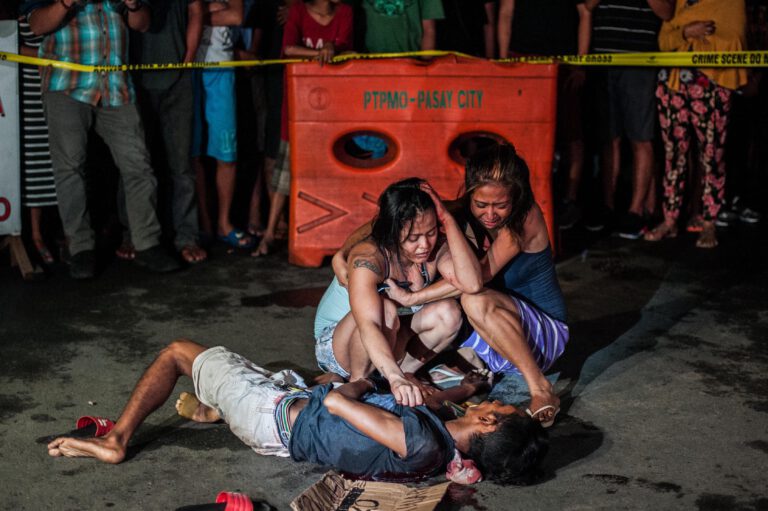
Fast forward to a post-Duterte Philippines wherein the sight of splayed corpses has become as common as of the huddled living bodies of beggars in the streets. Under the harsh, flickering streetlights, it’s difficult to tell the dead and the living apart. This is one of many disturbing images you may encounter in Alyx Ayn Arumpac’s Aswang. The documentary, which premiered online and streamed for free for a limited period last weekend, chronicles the first two years of President Rodrigo Duterte’s campaign on illegal drugs. “Oplan Tokhang” authorized the Philippine National Police to conduct a door-to-door manhunt of drug dealers and/or users. According to human rights groups, Tokhang has killed an estimated 30,000 Filipinos, most of whom were suspected small-time drug offenders without any actual charges filed against them. A pattern emerged of eerily identical police reports across cases: They were killed in a “neutralization” because they fought back (“nanlaban”) with a gun, which was the same rusty .38 caliber pistol repeatedly found along with packets of methamphetamine (“shabu”) near the bloodied corpses. When children and innocent people died during operations, PNP would call them “collateral damage.” Encouraged by Duterte himself, there were also vigilante killings too many to count. Some were gunned down by unidentified riding-in-tandem suspects, while some ended up as dead bodies wrapped in duct tape, maimed or accessorized with a piece of cardboard bearing the words, “Pusher ako, huwag tularan” (I’m a drug pusher, do not emulate). Almost all the dead casualties shared one thing in common: they were poor. Virtually no large-scale drug lord suffered the same fate they did.

And for a while, it was somehow tempting to call it “fate.” Filipinos were being desensitized to the sheer number of drug-related extrajudicial killings (a thousand a month, according to the film). “Nanlaban” jokes and memes circulated on Facebook and news of slain Tokhang victims were no longer news as their names and faces were reduced to figures in a death toll that saw no end.

As much as Aswang captures the real horrors and gore of the drug war, so has it shown effectively the abnormal “sense of normal” in the slums of Manila as residents deal with Tokhang on the daily. Fearing for their lives has become part of their routine along with making sure they have something to eat or slippers on their feet. This biting everyday reality is highlighted by Arumpac’s storytelling unlike that of any documentary I’ve ever seen. Outlined by poetic narration with an ominous tone that sounds like a legitimately hair-raising ghost story, Aswang transports the audience, whether they like it or not, from previously seeing Tokhang exclusively on the news to the actual scenes of the crime and funerals through the eyes of four main individuals: a nightcrawler photojournalist and dear family friend, Ciriaco Santiago III (“Brother Jun” to many), a funeral parlor operator, a street kid and an unnamed woman.

Along with other nightcrawlers, Bro. Jun waits for calls or texts alerting them of Tokhang killings all over Manila’s nooks and crannies. What sets him apart from the others, perhaps motivated by his mission as Redemptorist Brother, is that he speaks to the families of the murdered victims to not only obtain information but to comfort them. In fact, Bro. Jun rarely speaks throughout the film. Most of the time, he’s just listening, his brows furrowed with visible concern and empathy. It’s as if the bereaved are confessing to him not their own transgressions but those committed against them by the state. One particular scene that really struck me is when he consoles a middle-aged man whose brother was just killed not far from his house. “Kay Duterte ako pero mali ang ginawa nila sa kapatid ko” (I am for Duterte but what they did to my brother was wrong), he says to Bro. Jun in between sobs. Meanwhile, a mother tells the story of how her teenage son went out with friends and never came home. His corpse later surfaced in a mortuary. “Just because Duterte gave [cops] the right to kill, some of them take advantage because they know there won’t be consequences,” she angrily says in Filipino before wailing in pain while showing Bro. Jun photos of her son smiling in selfies and then laying pale and lifeless at the morgue.

The Eusebio Funeral Services is a setting in the film that becomes as familiar as the blood-soaked alleys of the city. Its operator is an old man who gives the impression of being seasoned in his profession. And yet, nothing has prepared him for the burden of accommodating at least five cadavers every night when he was used to only one to two a week. When asked where all the unclaimed bodies go, he casually answers, “mass burial.” We later find out at the local cemetery that “mass burial” is the stacking of corpses in tiny niches they designated for the nameless and kinless. Children pause in their games as they look on at this crude interment, after which a man seals the niche with hollow blocks and wet cement, ready to be smashed open again for the next occupant/s. At night, the same cemetery transforms into a shelter for the homeless whose blanketed bodies resemble those covered in cloth at Eusebio Funeral Services.

Tama na po, may exam pa ako bukas” (Please stop, I still have an exam tomorrow). 17-year-old high school student, Kian Delo Santos, pleaded for his life with these words before police shot him dead in a dark alley near his home. The documentary takes us to this very alley without the foreknowledge that the corpse we see on the screen is in fact Kian’s. At his wake, we meet Jomari, a little boy who looks not older than seven but talks like a grown man. He fondly recalls Kian as a kind friend, short of saying that there was no way he could’ve been involved in drugs. Jomari should know, his parents are both in jail for using and peddling drugs. At a very young age, he knows that the cops are the enemy and that he must run at the first sign of them. Coupled with this wisdom and prematurely heightened sense of self-preservation is Jomari’s innocence, glimpses of which we see when he’s thrilled to try on new clothes and when he plays with his friends. Children in the slums are innocent but not naïve. They play with wild abandon but their exchanges are riddled with expletives, drugs and violence. They even reenact a Tokhang scene where the cops beat up and shoot a victim.

Towards the end of the film, a woman whose face is hidden and identity kept private gives a brief interview where, like the children drawing monsters only they could see in horror movies, she sketches a prison cell she was held in behind a bookshelf. Her interview alternates with shots of the actual secret jail that was uncovered by the press in a police station in Tondo in 2017. “Naghuhugas lang po ako ng pinggan n’ung kinuha nila ‘ko!” (I was just washing the dishes when they took me!), screams one woman the very second the bookshelf is slid open like a door. Camera lights reveal the hidden cell to be no wider than a corridor with no window, light or ventilation. More than ten people are inside. They later tell the media that they were abducted and have been detained for a week without cases filed against them, let alone a police blotter. They slept in their own shit and urine, were tortured and electrocuted by the cops, and told that they’d only be released if they paid the PNP money ranging from 10 000 to 100 000 pesos. Instead of being freed that day, their papers are processed for their transfer to different jails.

Aswang is almost surreal in its depiction of social realities. It is spellbinding yet deeply disturbing in both content and form. Its extremely violent visuals and hopelessly bleak scenes are eclipsed by its more delicate moments: Bro. Jun praying quietly by his lonesome after a night of pursuing trails of blood, Jomari clapping his hands in joyful glee as he becomes the owner of a new pair of slippers, an old woman playing with her pet dog in an urban poor community, a huge rally where protesters demand justice for all the victims of EJKs and human rights violations, meaning that they were not forgotten. It’s also interesting to note that while the film covers events in a span of two years, the recounting of these incidents is not chronological as seen in Bro. Jun’s changing haircuts and in Jomari’s unchanging outfit from when he gets new slippers to when he’s found after months of going missing. Without naming people, places and even dates, with Arumpacletting the poor do most of the heavy lifting bysimply telling their stories on state terrorism and impunity in their own language, Aswang succeeds in demonstrating how Duterte’s war on drugs is, in reality, a genocide of the poor, elevating the film beyond numb reportage meant to merely inform the public to being a testament to the people’s struggle. The scattered sequence, riveting images, sinister music and writing that borrows elements from folklore and the horror genre make Aswang feel more like a dream than a documentary—a nightmare, to be precise. And then, a rude awakening. The film compels us to replay and review Oplan Tokhang by bringing the audience to a place of such intimate and troubling closeness with the dead and the living they had left behind.

Its unfiltered rawness makes Aswang a challenging yet crucial watch. Blogger and company CEO, Cecile Zamora, wrote on her Instagram stories that she only checked Aswang out since it was trending but that she gave up 23 minutes in because it depressed her, declaring the documentary “not worth her mental health” and discouraging her 52,000 followers from watching it, too. Naturally, her tone-deaf statements went viral on Twitter and in response to the backlash, she posted a photo of a Tokhang victim’s family with a caption that said she bought them a meal and gave them money as if this should exempt her from criticism and earn her an ally cookie, instead.

 Aswang is definitely not a film about privileged Filipinos like Zamora—who owns designer handbags and lives in a luxurious Ed Calma home—but this doesn’t make the documentary any less relevant or necessary for them to watch. Zamora missed the point entirely: Aswang is supposed to make her and the rest of us feel upset! It nails the purpose of art in comforting the disturbed and disturbing the comfortable. It establishes that the only aswang that exists is not a precolonial shaman or a shape-shifting monster, but fear itself—the fear that dwells within us that is currently aggravated and used by a fascist state to force us into quiet submission and apathy towards the most marginalized sectors of society.

Before the credits roll, the film verbalizes its call to action in the midst of the ongoing slaughter of the poor and psychological warfare by the Duterte regime:

“Kapag sinabi nilang may aswang, ang gusto talaga nilang sabihin ay, ‘Matakot ka.’ Itong lungsod na napiling tambakan ng katawan ay lalamunin ka, tulad ng kung paano nilalamon ng takot ang tatag. Pero meron pa ring hindi natatakot at nagagawang harapin ang halimaw. Dito nagsisimula.” (When they say there’s a monster, what they really want to say is “be afraid.” This city, chosen to be the dumpsite of the dead, will devour you as fear devours courage. But there are still those who are not afraid and are able to look the monster in the eye. This is where it begins).

During these times, when an unjust congressional vote recently shut down arguably the country’s largest multimedia network in an effort to stifle press freedom and when the Anti-Terrorism Law is now in effect, Aswang should be made more accessible to the masses because it truly is a must-see for every Filipino, and by “must-see,” I mean, “Don’t you dare look away.” #

= = = = = =

References:

Buan, L. (2020). “UN Report: Documents suggest PH Police Planted Guns in Drug War Ops”. Rappler. Retrieved from https://rappler.com/nation/united-nations-report-documents-suggest-philippine-police-planted-guns-drug-war-operations

Ichimura, A., & Severino, A. (2019). “How the CIA Used the Aswang to Win a War in the Philippines”. Esquire. Retrieved from https://www.esquiremag.ph/long-reads/features/cia-aswang-war-a00304-a2416-20191019-lfrm

Lim, B. C. (2015). “Queer Aswang Transmedia: Folklore as Camp”. Kritika Kultura, 24. Retrieved from https://escholarship.org/uc/item/3mj1k076

Tan, L. (2017). “Duterte Encourages Vigilante Killings, Tolerates Police Modus – Human Rights Watch”. CNN Philippines. Retrieved from https://cnnphilippines.com/news/2017/03/02/Duterte-PNP-war-on-drugs-Human-Rights-Watch.html

‘Sue us’: Bishop defends pastoral letter assailing anti-terror law

0

By: Christia Marie Ramos – Reporter

INQUIRER.net /July 20, 2020

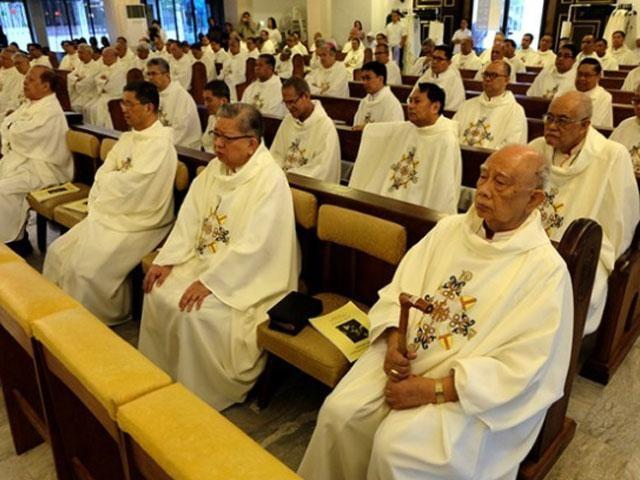
MANILA, Philippines — A Catholic bishop on Monday challenged Chief Presidential Legal Counsel Salvador Panelo to file a case over the Catholic Bishops Conference of the Philippines’ (CBCP) pastoral letter raising concerns over the Anti-Terrorism Act of 2020.

Panelo earlier claimed the CBCP’s pastoral letter “appears to have violated” the constitutional provision on the separation of the Church and the State. He further accused the CBCP of pressuring the Supreme Court in calling for prayers amid the recent signing of the highly controversial measure.

But at a press conference, Manila Auxiliary Bishop Broderick Pabillo said that if government thought that the Church had committed a violation on that account, then he would challenged it to file a case.

“Alam niyo, kung it violates, sila na ngayon ang magkaso sa amin. Hinahamon ko na kung talagang nagva-violate yun,” Pabillo said during a virtual press conference on Monday.

(If it really is violative, they should file a case against us. We are challenging them if our letter really violates that.)

“Don’t we have a right to speak sa mga kakulangan ng pamahalaan? Dahil ba kami ay Simbahan hindi kami pwedeng magsalita? We are also citizens,” he added.

(Don’t we have the right to speak about the government’s shortcomings because we are the church we cannot speak out?)

According to Pabillo, the CBCP does not intend to influence the decision of the SC on petitions filed before the high court questioning the constitutionality of the anti-terror law.

“We are doing that (call to prayer) in order na mamulat ang kamalayan ng mga tao. Sa halip na magsalita ng ganun, kasuhan nila. Tignan natin at hahamunin natin sila,” he said.

(We are doing that in order to raise awareness among Filipinos. Instead of saying things like that, file a case.)

“Yung aming call maliwanag na sa text is calling to prayer. Sila yung magbibigay ng intensyon na gusto naming baguhin ang desisyon ng iba,” he added.

(Our call, it’s clear from the text, that we are calling to prayer. They are the ones who are saying that our intention is to influence the decision of others.)

CBCP: A Pastoral Letter and a Call to Prayer

LiCAS News

July 19, 2020

Sow for yourselves justice, reap in mercy. Break up for yourselves a new field, for it is time to seek the Lord, till he comes and rains justice upon you. – Hosea 10:12

Dear Fellow Filipinos,

A few days ago, we received a letter from His Eminence, Charles Cardinal Maung Bo, Archbishop of Yangon, Myanmar, and President of the Federation of Asian Bishops’ Conferences. It was an ardent request for prayers for Hong Kong, on account of the signing into law of a new National Security Act. He explained in his letter how this new law poses a threat to the basic freedoms and human rights of the people of Hong Kong, and how it potentially undermines especially their freedom of expression.

Apparently, the Chinese government assures the people of Hong Kong that they have nothing to be afraid of, as long as “they don’t get involved in any activity that threatens national security.” Why does this sound eerily familiar to us Filipinos? Because we are in a similar situation. And so, while we responded with an assurance to His Eminence, Cardinal Bo, that we would join him in praying for the people of Hong Kong, we also asked him to pray for the Philippines and explained why we are as seriously in need of prayers as the people of Hong Kong. Like them, we are also alarmed about the recent signing into law of the Anti-Terror Act of 2020.

We are still in disbelief about the manner in which the contentious Anti-Terror Bill was fast-tracked and approved in both Houses of Congress while the whole country’s attention was focused on the Covid-19 pandemic. They did not even seem to care that many of the people they represent were against it—lawyers’ associations, the academe, the business sector, labor groups, youth organizations, NGO’s, political movements, faith-based communities, and even the Bangsamoro government.

The dissenting voices were strong but they remained unheeded. None of the serious concerns that they expressed about this legislative measure seemed to be of any consequence to them. Alas, the political pressure from above seemed to weigh more heavily on our legislators than the voices from below. It only made more evident the blurring of lines between legislative and the executive branches of our government.

In particular, the legal experts and constitutionalists in our country are seriously concerned that this newly signed law has many elements that are “oppressive and inconsistent with our Constitution.” They have pointed out convincingly how this new law poses a “serious threat to the fundamental freedoms of all peaceful Filipinos.”

And yet, the people in government and their allies have dismissed these fears as unfounded. The assurance that they give sounds strangely parallel to that which the Chinese government gave to the people of Hong Kong: “Activism is not terrorism. You have no reason to be afraid if you are not terrorists.” We know full well that it is one thing to be actually involved in a crime and another thing to be merely suspected or accused of committing a crime.

Have we not heard of people active in social advocacies who are accused of being communists? Have we forgotten the bishops, priests and religious who were included among those falsely charged by the Philippine National Police with crimes of sedition and inciting to sedition? Are we not aware of the thousands of people who have been killed in police operations on the basis of mere suspicion of involvement in criminality and illegal drugs? Have we not followed the news about Senator Leila de Lima who continues to languish in jail, also on the basis of mere allegations? Have we not heard of media personalities being harassed by a multitude of criminal charges? Have we not felt the chilling effect of the closure of the country’s biggest broadcast network, the ABS-CBN, after being denied renewal of its franchise? Is it not evident to us how this pattern of intimidation creates an atmosphere detrimental to the freedom of expression in our country?

In the midst of this bleak political landscape, we draw consolation from the groups of lawyers and ordinary citizens that have filed petitions before the Supreme Court, questioning the constitutionality of the newly signed law. Will the highest level of our Judiciary assert its independence, or will they, too, succumb to political pressure?

The return of “warrantless detentions” through this new law cannot but remind us of the initial moves in 1972 that eventually led to the fall of democracy and the rise of a dictatorial regime that terrorized the country for fourteen years. It all began when an elected president also legalized the “ASSOs” (arrest, search and seizure orders). It was from there that we gradually sank into the mire of authoritarian rule. Knowing how, in just the recent past, the law has been used too many times as a weapon to suppress legitimate dissent and opposition, we cannot but share in the apprehensions expressed by the lawyers and ordinary citizens that filed the petition against the said infamous law before the Supreme Court.

While a semblance of democracy is still in place and our democratic institutions somehow continue to function, we are already like the proverbial frog swimming in a pot of slowly boiling water. We draw encouragement from the belief that in various government agencies we still have many people of good will whose hearts are in the right places, and who remain objective and independent minded. We have nothing but admiration for these public servants in all branches of government who do only as conscience dictates and do not allow themselves to be intimidated or prevented by political pressure from performing their constitutionally mandated duties. We can only wish that there would be more of them. They are an important element to the strengthening of our government institutions, and are an essential key to a stable and functional democratic system.

Allow us then to end this letter by inviting you to pray with us,

“Be with us O Lord our God, as we continue to face the ravages of the Covid-19
pandemic, as well as the recent political developments that have deeply divided
our country. You know how desperately we need to be united in order to fight a
common unseen enemy that has caused a lot of sufferings and uncertainties,
widespread infections, an overwhelmed health care system, loss of jobs, hunger,
immense losses in business, and loss of lives.

We pray for our public servants, our people in government, especially those
among them who remain upright and continue to be motivated by a genuine
sense of duty and love for country. Protect them, Lord, and give them the
courage to stand their ground on the side of truth and justice.

May the crisis brought about by the pandemic bring about conversion and a
change of heart in all of us. May it teach us to rise above personal and political
loyalties and make us redirect all our efforts towards the common good. May we
be guided by your Spirit to respond with mercy and compassion for the poor, the
disadvantaged and the most vulnerable sectors of our society. For we know that
what we do for the least of our brothers and sisters we do for you. AMEN.”