IBON said that
the government’s supposed recovery plans are more concerned about supporting
business profits than helping the mass of unemployed Filipinos. The finance
department’s Philippine Program for Recovery with Equity and Solidarity
(PH-PROGRESO) and stimulus bills in Congress give considerable support to
businesses while millions of affected families get token support at best.
PH-PROGRESO of
the economic managers does not give any cash support to poor and low-income
families most in need, including the mass of unemployed, noted IBON.
The Corporate Recovery and Tax Incentives for
Enterprises Act (CREATE) proposal of PH-PROGRESO wants to give Php667 billion worth of
corporate tax breaks, the biggest in the country’s history. The Php133.7
billion in loans and guarantees, Php142.8 billion in other tax cuts and
foregone revenue, and Php233.3 billion in additional liquidity will also
benefit mainly enterprises.
The group said that the stimulus bills in Congress, including the Accelerated Recovery and Investments Stimulus for the Economy of the Philippines (ARISE) recently passed by the House of Representatives (HOR), are not much better. ARISE allocates a total of Php40 billion for cash-for-work programs and Php42 billion for education subsidies.
On the other hand, it allocates Php1.2 trillion for formal enterprises, said the group. There is a strong likelihood that the bulk of this will go to large firms of oligarch conglomerates and possibly even foreign transnational corporations. Big firms dominate the tourism, transport, import and export, manufacturing, and service industries identified for support. There is also no explicit prohibition of foreign companies, IBON noted.
Meanwhile only
Php135 billion of the Php1.2 trillion is explicitly for micro, small and medium
enterprises (MSMEs). Giving large firms equal access to the subsidized
financing will likely crowd out MSMEs especially the neediest smaller firms,
IBON said. The focus on formal enterprises will also mean that vast numbers of
informal earners and displaced workers will not be reached.
This Php1.2
trillion includes the Php110 billion for wage subsidies. The stimulus bill says
that freelancers, professionals, self-employed, and overseas Filipino workers
can also receive this. In practice, however, there is likely to be a bias for
workers in formal enterprises, which means the subsidies are in effect subsidies
for firms’ payroll expenses, said the group.
IBON said that support to enterprises should give much greater and more explicit priority to Filipino MSMEs. These are the foundations of the domestic-oriented development so urgent amid the global recession and increasing protectionism even by the world’s most powerful economies.
At the same time, government recovery plans need to give much greater direct income support to poor and low-income households. This is both direct support for families’ welfare as well as a meaningful stimulus that increases effective demand in the economy.
IBON said that
the unemployment crisis is actually even worse than official figures show. The
group estimates that the real unemployment rate is likely around 22% and the
real number of unemployed around 14 million. The 20.4 million real unemployed
and underemployed today is the worst crisis of mass unemployment in the
country’s history.
The Philippine
Statistics Authority (PSA) reported 7.3 million unemployed and 6.4 million
underemployed in April 2020. As it is, this is the worst government-recorded
unemployment (7.3 million) and combined unemployment and underemployment (13.7
million) in the country’s history.
IBON pointed out,
however, that the technical definition of unemployment does not count as much
as 4.1 million Filipinos who did not formally enter the labor force because of
the ECQ and another 2.6 million that the revised unemployment definition since
April 2005 stopped counting.
The drastic drop
in the labor force participation rate (LFPR) to 55.6% is most of all due to the
ECQ, said the group. The jobless Filipinos who did not enter the labor force
will not be counted as unemployed because the technical definition of
unemployed requires them to be in the labor force to begin with. If the LFPR
had stayed the same at 61.3% in April 2019, there would be an additional 4.1
million in the labor force.
The
methodology for counting the unemployed was revised in April 2005. Since then,
jobless Filipinos who did not look for work in the last six months or are
unable to immediately take up work are no longer considered unemployed and
removed from the labor force. This lowered officially reported unemployed
Filipinos and stopped comparability with data from previous years.
The revised
unemployment definition tends to underestimate the magnitude of unemployment by
35% and the unemployment rate by 3.3 percentage points. An initial correction
for this would mean an additional 2.6 million jobless Filipinos who should be
counted as unemployed according to the previous definition, said the group.
IBON said that it is important to see historical trends in the country’s unemployment situation to get an accurate picture of the long-term implications of economic policies. Having data that is comparable over time will give a much clearer indication of the structural economic changes the economy is undergoing which will enable better policymaking.
The country’s
record joblessness demands extraordinary measures from the Duterte
administration to help tens of millions of families losing incomes, research
group IBON said. Unfortunately, the response so far has been stingy and the
supposed recovery program does not appear to give much more. The group said
that unemployment is likely much worse with official figures underestimating
the real number of jobless Filipinos.
The Philippine
Statistics Authority (PSA) reported 7.3 million unemployed and 6.4 million
underemployed in April 2020, during the height of the enhanced community
quarantine (ECQ). This is the worst recorded unemployment (7.3 million) and
combined unemployment and underemployment (13.7 million) in the country’s
history.
IBON said that these
labor force survey figures confirm how inadequate emergency subsidies during
the lockdown have been. The social welfare, labor and agriculture departments
each had their own cash subsidy programs.
Some 19.3 million
beneficiaries have been reached, according to the president’s latest 10th
report to Congress. But the group noted that the majority were not given
assistance until the 8th week of the lockdown. IBON also said that the
Php108.1 billion distributed seems huge, but beneficiaries received only
Php5,606 on average for some 80 days of interrupted livelihoods and lost
incomes. This is equivalent to just Php77 per beneficiary family per day, which
is far from enough to ensure even a basic minimum standard of living.
IBON said that
the government’s supposed recovery plans are even worse in being more concerned
about supporting business profits than helping the mass of unemployed
Filipinos. The finance department’s Philippine Program for Recovery with Equity
and Solidarity (PH-PROGRESO) and stimulus bills in Congress give considerable
support to businesses while millions of affected families get token support at
best.
PH-PROGRESO does not give any cash support to poor and low-income families most in need, including the mass of unemployed, noted IBON. This is while the proposal wants to give Php667 billion worth of corporate tax breaks, the biggest in the country’s history. The Php133.7 billion in loans and guarantees, Php142.8 billion in other tax cuts and foregone revenue, and Php233.3 billion in additional liquidity will also benefit mainly enterprises.
Worse, the Duterte administration even wants to burden unemployed Filipinos with higher consumption taxes, said IBON. The finance department and its allies in Congress are already planning higher taxes on sweetened drinks, junk food, on-line shopping and viewing, and motor vehicles. Higher prices for Filipinos facing joblessness and income losses is unconscionable, said the group.
Government recovery plans need to give much greater direct income support to poor and low-income households, IBON stressed. This means both direct support for families’ welfare as well as a meaningful stimulus that increases effective demand in the economy.
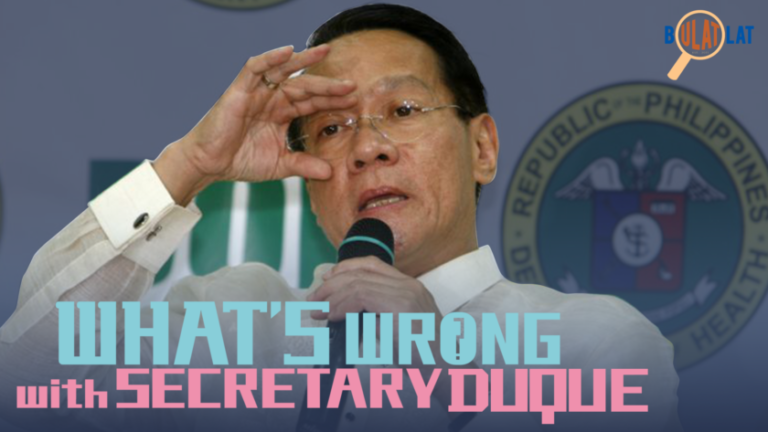
Health Secretary Francisco Duque III, who heads the lead Philippine government agency in the fight against the pandemic, issued inaccurate statements and unreliable data, leaving Filipinos in doubt of his capacity to lead the country out of a public health emergency.
MANILA – The country’s health secretary has been the subject of criticisms over what critics perceive as inept curbing of the spread of COVID-19 in the Philippines.
Health Secretary Francisco Duque III, who heads the lead Philippine government agency in the fight against the pandemic, issued inaccurate statements and unreliable data, leaving Filipinos in doubt of his capacity to lead the country out of a public health emergency.
The lack of clear strategies and decisive action, said health advocacy group Community Medicine and Development Foundation, “has cast aspersion on the agency.”
As it stands, confirmed COVID-19 cases continue rise, as it recently surpassed the 20,000-mark.
Confirmed COVID-19 cases in the Philippines, according to John Hopkins University
Bulatlat has compiled a series of pronouncements of the country’s health department and how it affected the country’s response against the pandemic.
1. PH does not have a poor health system?
Early in the Philippine government’s fight against the pandemic, Duque found himself in hot water over his reaction to the World Health Organization’s pronouncement as the latter expressed concerns over how countries with weaker health system will deal with the virus.
“The countries that have weak healthcare systems are those that are really poor. They are referring to third world countries. We are in a middle-income country. We are not included there,” he said in Filipino.
Coalition of People’s Right to Health co-convenor Josh San Pedro earlier stated that being a middle-income country will not necessarily translate to better health care system.
In 2016, the health department itself said it lacks 15,000 doctors to meet the needs of Filipinos.
2. Mass testing is not simple?
Right from day one, health advocates have been calling for increased mass testing capacity. No less than the WHO itself said that testing, isolation, and contact tracing are the backbone of response against the pandemic while social distancing measures can only reduce transmission and enable health systems to cope.
“You cannot fight a fire blindfolded. And we cannot stop this pandemic if we don’t know who is infected,” the WHO said, “We have a simple message for all countries: test, test, test.”
However, Duque said mass testing is “not as simple as others may want to appear.”
In the earlier months, the Research Institute for Tropical Medicine (RITM) was assigned to serve as the country’s lone testing center. Its capacity, however, was not sufficient.
Due to public pressure, the health department later decided to open sub-national testing centers. However, majority of these are located in Metro Manila, prompting scientists and health advocates to ask if the Philippines has indeed flattened the curve or it merely reached the ceiling of its testing capacity.
3. Asymptomatic virus carriers are not contagious?
In a Senate hearing two weeks ago, Duque said “there is no report or evidence” that will prove that asymptomatic carriers of the COVID-19 virus are contagious. However, in its April 2, 2020 report, the WHO said that while there is no documented case, it “does not exclude the possibility that it may occur.”
Even the health department’s own website said the risk of acquiring the virus from a carrier without symptoms is possible though “very low.”
The editorial further points out that “asymptomatic persons are playing a major role in the transmission of SARS-CoV-2. Symptom-based screening alone failed to detect a high proportion of infectious cases and was not enough to control transmission in this setting.”
Here in the Philippines, testing and contact tracing remain to be a challenge.
Mass testing, for one, remains way below the government’s own target. As of June 1, 2020, the health department has an average of 8,349 daily tests, a far cry from the 30,000 daily tests that it targeted to reach by the end of May.
Presidential Spokesperson Harry Roque earlier admitted that the country has no program for mass testing for COVID-19. He then backtracked and insisted that “mass testing” is a wrong term, blaming the media for quoting his direct statement.
The Alliance of Health workers recently issued a statement, saying that free mandatory testing for all health workers at least once every two weeks has yet to be implemented. This is coupled with the inadequate personal protective equipment and public hospitals that remain understaffed, forcing health workers to work more than 12 hours a day while enduring low pay and difficulties in mass transportation.
The group said they “cannot blame health workers to resign or leave the country because the DOH and the government force them to do so.”
Filipino Nurses United pointed out that the health department has failed to “establish early COVID-19 infection prevention and control measures,” following the three positive cases that were documented as early as January 30, 2019.
4. PGH as end-referral hospital
Duque identified the Philippine General Hospital, along with several other public hospitals, to serve as COVID-19 referral centers in the National Capital Region.
Community medicine practitioner and UP professor Gene Nisperos told Bulatlat that while it was a correct move to assign end-referral centers for COVID-19, he is not convinced that it should have been the PGH.
In earlier interviews, Nisperos, who also heads Commed, said any other hospital that is provided with due resources and equipment can serve as it its referral center while PGH is “the only tertiary hospital that many poor Filipinos can turn to.”
Filipino Nurses United said the delay in identifying referral hospitals not only flooded some hospitals with COVID-19 patients but also kept them from providing basic services to non-COVID-19 patients.
“Worse, some hospitals refused to admit non-COVID patients, which resulted in unnecessary deaths. Thorough investigation on these cases still need to be conducted,” the nurses group said.
5. Where are the PPEs?
While it appears to be a global problem, the high infection rate and deaths among health workers in the Philippines are telling of the grave situation they are in.
The FNU said that as of May 24, 2020, at least 31 health workers died and 2,369 were infected. Of these, 866 are nurses.
The health department earlier purchased one million PPEs for health workers. However, guidelines on the proper use of PPEs was only released in April, three months into the country’s fight against the virus.
Duque was earlier criticized not only for the lack of PPEs but also for overpriced purchases. The president, however, defended him, saying that he does not care if it is expensive and just “go ahead and do something about it.”
Meanwhile, CPRH’s San Pedro, however, pointed out that no implementing rules and regulations were forged since the passing of the Bayanihan Law that stipulates P100,000 and P1 million will be given to frontliners who will be infected by the virus or die, respectively.
This issue was earlier raised in a Senate hearing as health workers who contracted the virus has yet to avail of the financial compensation provided by the law.
Meanwhile, most hospitals, the nurses group added, relied on PPE donations from private organizations or individuals.
FNU said the health secretary “must be a leader with expertise in public health
administration, with pro-people management skills and visionary leadership skills that respect people’s welfare.”
6. The waves
Duque’s most recent slip-up was when he declared that the Philippines is already on its second wave and that it may be gearing towards a third wave now that more areas are easing their lockdown restrictions. This has brought confusion not only to the people who are all eyes and ears on COVID-19 updates but also to government officials themselves.
“What followed was a slew of statements from two DOH officials, two government consultants, a couple of legislators, and the Executive Secretary – all attempting to explain what the health secretary meant,” health advocacy group Commed said.
The health secretary later “clarified” his pronouncement, saying that the country “is still in the first major wave.” Critics, however, were not at all enlightened.
“We would like to remind Secretary Duque that he is the chief of the Health Department which is supposed to be on top of government’s response to the COVID-19 epidemic. If he is issuing statements which are confusing and baseless, he is putting the health and lives of our people in peril,” said Kilusang Mayo Uno chairperson Elmer Labog.
Did the health department get everything wrong?
Nisperos, UP associate professor and a community medicine practitioner, said the DOH has implemented and echoed guidelines issued by the World Health Organization, particularly on physical distancing, handwashing, to name a few.
Though belated, the health department has also bent to strong criticisms to increase its testing capacity by accrediting more sub-national testing centers including the controversial testing center in Marikina, and eventually built quarantine facilities.
Filipino Nurses United said Duque’s “weak leadership has caused unforgivable delays in the crafting and implementation of critical life-saving decisions.”
Despite all these brouhaha, the health secretary appears to be politically unscathed – at least in the eyes of the Duterte administration. He has even thanked the president for his unwavering trust.
Commed, however, begs to disagree. “No. Secretary Duque must go.”
“After reading the bill, from my understanding, it’s quite broad and vague, leaving room for different interpretations which could potentially take away each person’s basic rights of freedom of speech and acts of even peaceful protests. That is my understanding of it. I ask you to read the bill yourself. Take your stand and use your voice to express how you feel. #JunkTerrorBill”
Human rights watchdog Karapatan welcomed the “timely” release of the report of the United Nations Office of the High Commissioner for Human Rights (UN OHCHR) on the human rights situation in the Philippines, which came amid strong public backlash on the looming passage of the Anti-Terrorism Bill. Karapatan said that the UN report outlines the deteriorating state of human rights in the country — showing exactly why the proposed Anti-Terrorism Bill should be junked.
I challenge Sen. Ping Lacson to come out with emailed or received copies of invitations to known human rights organizations in the Philippines whom the Senate invited to the committee hearings. Karapatan and its members only knew about these hearings when media reports quoting generals come out.
ALTERMIDYA NETWORK demands the immediate release of our Cebu correspondent Dyan Gumanao of Aninaw Productions, who is among the Cebu 7 protesters arrested on June 5.
UP security guards and police dispersed the #JunkTerrorBill protest in UP Cebu and nabbed the seven protesters just as they were standing up after kneeling in solidarity with the #BlackLivesMatter protests in the United States.
Among the arrested are Jaime Paglinawan of BAYAN CenVis, Joahanna Veloso of the National Union of Students of the Philippines (NUSP), UP alumnus Al Ingking, Bern Cañedo of Youth Action Now Against Tyranny, Nar Porlas of Anakbayan UP Cebu, Janry Ubal from Food Not Bombs, and Dyan Gumanao.
The police will reportedly charge the protesters with a violation of the Bayanihan Heal as One Act, despite the protest being conducted using strict social distancing protocols. In fact, it was the police that violated longstanding guidelines on academic freedom, including those that bar outside police force from entering universities.
Lastly, and most importantly, we note how this latest attack against free speech and expression may serve as prelude to darker days, especially with the looming enactment of the Anti-Terrorism Bill. But activists and freedom-loving Filipinos will not be deterred but are more determined in fighting back.