Home Blog Page 373

Victims and families backed Karapatan amid red tagging by the military

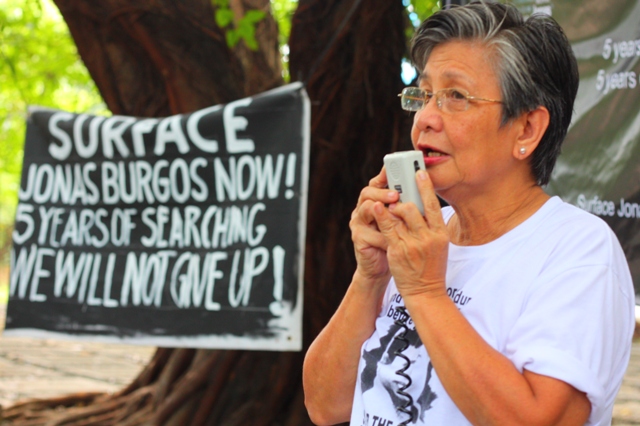
(BULATLAT FILE PHOTO) Mrs. Edita Burgos.

“Human rights defenders helping the victims and survivors, as well as those working to expose the real situation of extensive rights violations on the ground should not be subjects of attack.” – political prisoners

By ANNE MARXZE D. UMIL
Bulatlat.com

MANILA – Victims of human rights violations and their families expressed their support for rights group Karapatan who was accused of being a front organization of the Communist Party of the Philippines and its armed wing, the New People’s Army (CPP-NPA).

In a statement, the Free Jonas Burgos Movement (FJBM) “categorically states that Karapatan, a non-government organization duly registered with the Securities and Exchange Commission is a human rights group engaged in the promotion and protection of human rights in the Philippines.”

Edita Burgos, mother of the disappeared activist Jonas Burgos and chairperson of FJBM described the work of Karapatan as “expressions of love for the oppressed.” She said that they are also witness to the “volunteerism and selfless service and sharing that characterizes the management and manner by which the work is done in Karapatan.”

“FJBM has observed that the documentation, monitoring, research, advocacy and other services given by the staff and other volunteers without expecting any recompense or reward, are clearly expressions of love for the oppressed and those who have less. This brings to mind, Christ’s teaching. ‘By this everyone will know that you are my disciples, if you love one another (John 13:35),” said Burgos in a statement of support to the group.

Karapatan assisted the Burgos family in looking for Jonas who was abducted by members of the military in a mall in Quezon City on April 28, 2007.

Eyewitness identifies Army major as one of Jonas’s abductors

Brig. Gen. Antonio Parlade, Armed Forces of the Philippines deputy chief of staff for civil military operations is alleging that Karapatan as well as the think tank Ibon Foundation and Rural Missionaries of the Philippines, an inter-diocesan and inter-congregational organization of religious, priest and lay people, are fronts of the CPP-NPA. Parlade is part of the National Task Force (NTF) to End Local Communist Armed Conflict, a delegation sent to Europe in February to “clarify the issue on involuntary disappearances and anti-communist terrorist group.” He also claims that he has truckloads of evidence that will show the link of these groups to the CPP-NPA.

Assisting the families and victims of human rights violations

Burgos said Karapatan provided assistance in all aspects in their search for Jonas from the time of abduction to the present.

“Legal, psychological, social, moral, and material and other kinds of support were made available to the family of Jonas. Without these support the case of Jonas would not have progressed up to the point where the petitions for the Writ of Amparo and Habeas Corpus were granted by the Supreme Court,” said Burgos.

She also said that they have witnessed how Karapatan assisted many other families of victims of human rights violations including the families of Sherlyn Cadapan and Karen Empeño.

Karen Empeño and Sherlyn Cadapan: Fates Intertwined by a Desire to Serve the Masses

“FJBM asks, how can helping the oppressed and the poor be acts of terrorism or be a crime? Are we not called to be good Samaritans by Christ?” said Burgos.

Jimmylisa Badayos, a political prisoner in Cebu whose mother was killed by suspected military agents and father is a desaparecidos, said that Karapatan and human rights defenders “are dedicated individuals who seek to empower those around them to struggle, act, and fight for human rights and genuine social change.” She said they also became victims themselves while assisting the families and the victims in their quest for the elusive justice for their loved ones.

In fact, Badayos’ family has dedicated their life to human rights work. Her mother, Elisa is the regional coordinator of Karapatan in the Visayas. She was killed by suspected members of a landlord’s private army and military in November 2017 while conducting fact-finding mission on the reported human rights abuses committed by soldiers encamped in the communities in Negros Oriental. Her father Jimmy was a labor leader in Cebu was abducted by also suspected state agents in 1990.

Daughter of a desaparecido illegally arrested, detained, co-worker still missing

“My mother and human rights workers like her are not terrorists. I am here to continue the cause of my mother, withstanding the same repression and persecution that she withstood. We will not be silenced, even after all the red-tagging, threats, and imprisonment. If they kill us, many more will take our place,” she said.

Nanette Castillo, mother of Aldrin who was killed in 2017 said that “Karapatan is a comforting presence to the people who have gone through violations perpetrated by the government. They are among those who respond to the needs and calls of the marginalized and the abused.”

”Is it not the government who is behind the killings and abuses against its own citizens? My son was a victim of the Duterte government, and I consider them all thick-skinned for even denying the slaughter that continues to happen in our communities. They are the terrorists, using their position to abuse and kill the disadvantaged,” said Castillo.

(Photo by Carlo Manalansan / Bulatlat.com)

‘Do not wait for the next victim’

Political prisoners from Camp Bagong Diwa meanwhile condemned the attack against Karapatan and other groups.

They said that the attack against the group is alarming and should be condemned. They pointed out that “it is wrong to shrug off this issue and wait for the next victim.”

According to Karapatan’s data, there are 47 human rights workers of Karapatan who have been killed since 2001.

“To make people aware of their rights, and to stand alongside the marginalized as they defend and advance these rights, is a duty of every Filipino citizen. It is also justified to assert due process, to seek protection for children in-conflict with the law, and to support campaigns such as that calling for the release of political prisoners,” the political prisoners added.

They urged the Filipino public to be wary against attacks on human rights defenders.

The political prisoners believed that human rights issues are legitimate concerns that should be exposed and addressed.

“Human rights defenders helping the victims and survivors, as well as those working to expose the real situation of extensive rights violations on the ground should not be subjects of attack,” political prisoners said. (http://bulatlat.com)

Want to read stories like this? Help us keep up continue writing about issues that matter.

The post Victims and families backed Karapatan amid red tagging by the military appeared first on Bulatlat.
NDFP in Metro Manila hails 50th year of New People’s Army

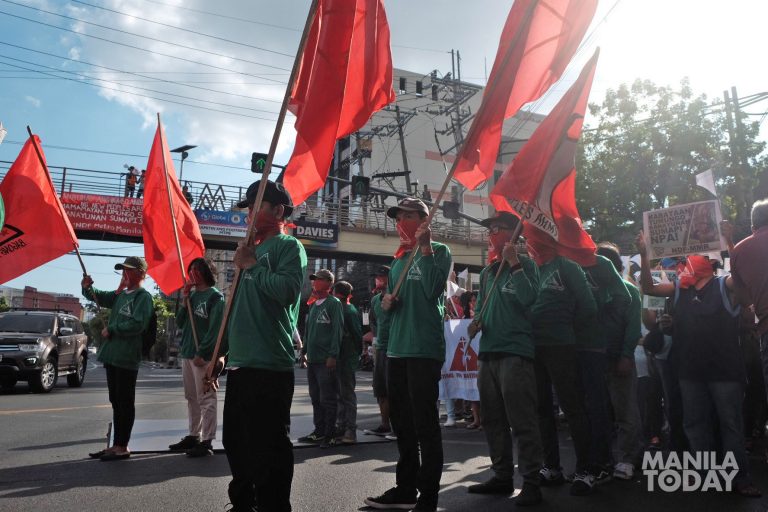
Underground mass organizations led by the National Democratic Front of the Philippines Metro Manila Region (NDFP-MMR) staged a lightning rally in Mendiola on Monday afternoon to commemorate the 50th anniversary of the New People’s Army (NPA).

The NPA, the armed wing of the Communist Party of the Philippines (CPP), was established on March 29, 1969, a few months after the CPP was re-established by founding chairman Jose Maria Sison and a group of young leaders.

The post NDFP in Metro Manila hails 50th year of New People’s Army appeared first on Manila Today.

PNP surfaces NDFP’s Frank Fernandez

ARRESTED. NDF consultant Frank Fernandez and his wife Cleofe Lagtapon are arrested for illegal possession of firearms and explosives in Laguna. PNP photo

By RAYMUND B. VILLANUEVA
Kodao Productions

The Philippine National Police (PNP) and the Philippine Army finally surfaced National Democratic Front of the Philippines (NDFP) peace consultant Francisco “Ka Frank” Fernandez after arresting him early Sunday morning and denying he was in their custody to human rights responders.

In a press conference at Camp Crame this morning, PNP chief Oscar Albayalde said Fernandez was arrested in Barangay Calumpang, Liliw, Laguna at 5:15 a.m. Sunday morning and, like five fellow NDFP consultants earlier arrested, was allegedly found to be in possession of firearms, ammunition and grenades.

Fernandez was arrested with his wife Cleofe Lagtapon and Gee-Ann Perez and are facing charges of violation of Commission on Election (Comelec) Resolution 10429 in relation to the Omnibus Election Code as well as violation of Republic Act 10591 (Illegal possession of firearms) and violation of Republic Act 9516 (Illegal possession of explosives), the PNP said.

Three caliber .45 pistols, three magazines with 15 live bullets and three grenades were allegedly found in their possession.

Fernandez also has four standing murder arrest warrants while his wife was included in one of the arrest warrants, the PNP said.

The three are under the custody of the Military Intelligence Group of Calabarzon and are set to face illegal firearms and explosives possession charges, the police added.

Fernandez, a former Roman Catholic priest, was a long-time NDFP spokesperson in Negros Island.

‘Hide and seek’

Human rights group Karapatan, however, slammed the PNP for withholding the three’s whereabouts for more than a day despite asking various police and military camps in Region IV-A and the National Capital Region.

“Legal counsel and paralegals went to Camp Vicente Lim in Canlubang, Laguna; Camp Paciano Rizal in Sta. Cruz, Laguna; Laguna Provincial Police Office and Municipal Police Office in Sta. Cruz, Laguna; Camp Crame in Quezon City; and Camp Bagong Diwa in Taguig City. Military and police officers denied having the three in their custody,” Karapatan said in a statement.

“This morning of March 25, legals counsels and paralegals went to the ISAFP Headquarters in Camp Aguinaldo, Quezon City; NBI National Office in Manila; and Camp Crame, Quezon City. The same answer was given to them,” the group added.

Karapatan said it was only after further prodding that unidentified officials revealed that the three arrested persons were in the Army General Hospital in Fort Bonifacio in Taguig City.

Karapatan said that lawyers and paralegals should have access to those arrested, particularly the elderly couple Fernandez and Lagtapon, aged 71 and 66, respectively.

Fernandez and his wife are reportedly in Laguna to seek medical treatment.

Karapatan raised the possibility that the three might be subjected to physical and psychological torture, a reported practice of state forces during arrests.

“Access of lawyers to the victims on time and ascertaining the responsible units and officers are a deterrent to the ill-treatment of arrested persons,” Karapatan said.

The group said the police and the military deliberately played a game of hide and seek, instead of directly giving the whereabouts of the detainees to their legal counsels, as mandated by Republic Act 7438 or the rights of persons arrested, detained or under custodial investigation law.

‘Ordered by Duterte’

NDFP’s chief political consultant Jose Maria Sison, for his part, condemned yet another allegation by the police that its latest arrested peace consultant and companions were in possession of guns and ammunition at the time of their arrest.

“Following the orders publicly given by their master (President Rodrigo) Duterte, the criminals in uniform always plant firearms and frame up NDFP consultants,” Sison told Kodao.

Sison said that planting such false evidence is the police’s way of violating the Joint Agreement on Safety and Immunity Guarantees (JASIG) between the NDFP and the Government of the Republic of the Philippines.

Sison said that when there are no witnesses, so-called “criminals in authority” kill NDFP consultants as in the case of Randy Felix Malayao.

Malayao was killed in his sleep inside a bus in Aritao, Nueva Vizcaya last January 30.

Sison said the planting of firearms is meant to justify also the arrest of people or witnesses who are in the company of the NDFP consultant.

NDFP peace consultants Rafael Baylosis, Adelberto Silva, Vicente Ladlad, Rey Claro Casambre and Reynante Gamarahave been arrested in succession from January 2018 and all were charged with illegal possession of firearms along with their respective companions.

“In the first place, they are even supposed not to surveil NDFP consultants under JASIG,” Sison explained.

New presidential adviser on the peace process Carlito Galvez Jr., however, said last Wednesday the JASIG is no longer operable since Duterte terminated the talks in November 2017.

“[T]he formal negotiation was terminated along with Joint Agreement on Safety and Immunity Guarantees (JASIG) through Proclamation 360 by President Rodrigo Duterte on November 2017,” Galvez said in a statement.

The NDFP, however, said the JASIG is still in effect.

“The safety and immunity guarantees for NDFP consultants are continuing even in case of breakdown or termination of the peace negotiations,” Sison said.

Baylosis was released last January 18 after the Quezon City Regional Trial Court dismissed charges of illegal possession of firearms and explosives against him. Reposted by (http://bulatlat.com) 

Read also: Where is Frank Fernandez? NDFP asks former priest’s captors

The post PNP surfaces NDFP’s Frank Fernandez appeared first on Bulatlat.

Laguna de Bay residents in Bayanan continue to oppose reclamation, demolition of homes

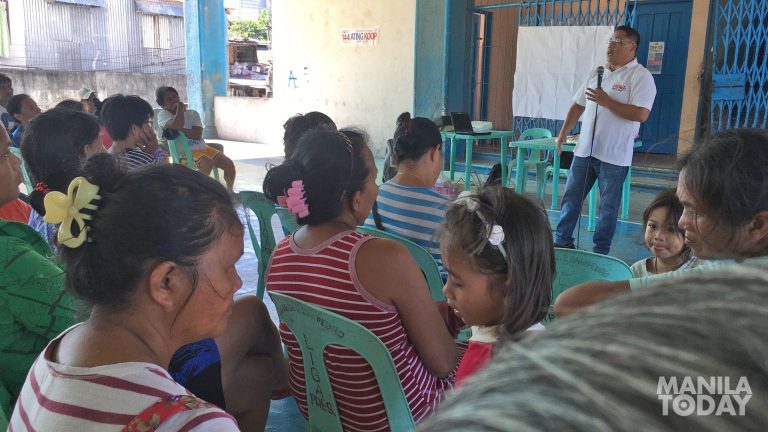
Residents of Barangay Bayanan in Muntinlupa gathered in a reclamation forum in the village this afternoon to learn from Anakpawis Partylist Rep. Ariel Casilao the various reclamation projects of the governments that would affect numerous urban poor communities in Metro Manila. The Save Laguna Lake Movement organized the forum.

Residents here live in the Laguna de Bay area that have been under threat of demolition with-then ‘Public-Private Partnership’ and now ‘Build, Build, Build’ project Laguna Lake Expressway-Dike Project (LLEDP). Fishing is among the common livelihood of residents in the area, while many have turned to informal or service work to augment their incomes due to the dwindling catch in the bay.

Pambansang Lakas ng Kilusang Mamamalakaya ng Pilipinas (PAMALAKAYA) estimated those who will be affected by the LLEDP at 4.9 million fisherfolk and urban poor families in Muntinlupa, Taguig and towns in Laguna and Rizal provinces that surround the 90-thousand ha lake.

The LLEDP has two component projects: a 47-kilometer expressway dike from the cities of Muntinlupa and Taguig to Los Banos, Laguna; and the 700-ha reclamation area for commercial, residential and mixed use.

Fisherfolk, residents and environmentalists opposed the LLEDP due to foreseen environmental damages on the already fragile marine environment and species.

Anakpawis Rep. Ariel Casilao shares the reclamation projects of the government with the residents of Bayanan. Photo by Jade Dela Cuadra.


More government reclamation projects

The Philippine Reclamation Authority (PRA) said there are  120 reclamation projects in the country. In Manila Bay alone, the agency has listed 43 reclamation projects, all included in its National Reclamation Plan. Once approved, the projects would cover 22,000 ha or about 11 percent of the bay’s 1,994-square-kilometer area.

Three of these projects have been approved in principle by the PRA—the 360-ha Pasay reclamation project, the 140-ha Solar City project, and the Navotas Boulevard Business Park. Around 547 hectares of Manila Bay will be reclaimed for ports expansion and mixed-use projects.

The solon also shared with the participants various efforts of Anakpawis Partylist and Makabayan bloc in the Lower House of Congress to oppose “environmentally-destructive reclamation projects” that he said would also lead to loss of homes and livelihoods while earning superprofits for big businessmen. Around 1 to 1.5 million Filipinos would be displaced across all Manila Bay reclamation projects, said Casilao.


Protesting reclamation

The Makabayan bloc filed House Resolution 2452 on January 29, urging the government to postpone the rehabilitation of the polluted Manila Bay over concerns in how the government plans to resettle an estimated 300,000 informal settlers until an assessment on the socio-economic impact on poor sectors and a genuine and democratic masterplan has been carried out.

On February 7, Anakpawis and Makabayan lawmakers filed House Bill No. 9067, declaring Manila Bay as Reclamation-Free Zone. The move was pushed to cater the broader demand for the urgent rehabilitation of Manila Bay, and emphasized on declaring the bay as “reclamation-free.” The progressive lawmakers also wanted to reiterate that rehabilitation of Manila Bay does not equate to reclamation and called for “genuine rehabilitation” of the historic waters.

Rep. Casilao also hit the contract earned by Duterte’s ally Dennis Uy. The solon believed Uy’s fingers dipped in one of the big-ticket Manila Bay reclamation project stinks of crony capitalism or graft. The 265-hectare joint-venture “Pasay Harbor City” would be carried out by a consortium involving Davao-based businessman Uy and the local government of Pasay City.

The lawmaker accused Malacañang Palace of using rehabilitation as a vehicle for reclamation. Aside from environmental damages, the reclamation projects are big profit infrastructure projects for big private corporations that would also build and serve businesses at the expense of the displacement of around 1 to 1.5 million Filipinos across all Manila Bay reclamation projects.


Emergency aid for fisherfolk

Almost two weeks ago, PAMALAKAYA said the fishing sector is not spared from drought induced by El Niño phenomenon and must be given emergency aid and relief by the Department of Agriculture (DA) and the Bureau of Fisheries and Aquatic Resources (BFAR).

The group said that the farm gate price of aquatic fish species in Laguna de Bay drops all time low due to the intense heat. Farm gate price of tilapia is now P20 per kilo compared to the pre-drought price of P50 per kilo or a 40% drop, while farm gate price of bangus or milkfish is now P50 per kilo, a 71% drop from the pre-drought price of P70 per kilo.

“During dry spell, fish in Laguna de Bay acquires earthy-taste and smell (gilik) because they go deep down the lake, making its farm gate price to drop because consumer demand for any kind of fish harvested during this season is very low. This reduces further whatever income small fishers can bring home to their families,” Ronnel Arambulo, coordinator of PAMALAKAYA in Laguna de Bay explained.

The post Laguna de Bay residents in Bayanan continue to oppose reclamation, demolition of homes appeared first on Manila Today.

Regulasyon (at rebolusyon) sa motorsiklo

Totoo namang pribilehiyo ang magkaroon ng lisensiya sa pagmamaneho. Kailangang dumaan sa masusing eksaminasyon ang sinumang nagnanais na humawak ng manibela. Sa kanyang pagpapaandar ng sasakya, nakasalalay kasi hindi lang ang kanyang buhay kundi ang buhay na rin ng kanyang mga pasahero.

Kaugnay nito, tama rin namang magkaroon ng ilang regulasyon sa mga sasakyan ng lisensiyadong nagmamaneho. May mga plakang iniisyu sa bawat sasakyan para madaling matukoy. May mga sertipiko ng rehistrasyon para alam kung sino ang may-ari. Taun-taon nirerehistro ang mga sasakyan at dumaraan sa emission testing at inspeksyon. May insurance pa ngang hinihingi para siguradong may magbabayad kung sakaling magkaroon ng aksidente.

At talaga namang nakakaalarma ang estadistika sa mga aksidente sa kalye (road accidents). Noong Oktubre 2018, nabanggit ng World Health Organization (WHO) na may 11,264 na namatay bunga ng aksidente sa kalye sa Pilipinas. Mahigit kalahati sa mga namatay (5,390) ay mga rider o pasahero ng motorsiklo, traysikel o anumang may dalawa o tatlong gulong na sasakyan.

Kung paniniwalaan ang datos ng Philippine National Police Directorate for Investigation and Detective Management (PNP-DIDM), apat na beses bawat araw kung umatake ang mga motorcycle-riding suspect (MRS) mula Oktubre 11, 2017 hanggang Hunyo 4, 2018. Batay sa datos na ito, malinaw na ginagamit talaga ang mga motorsiklo sa ilang krimen. Kung susuriin nga ang 933 insidente ng pamamaril ng mga MRS, 862 sa mga ito ay kaso ng murder. Ayon nga sa isang ulat sa midya, binanggit ng direktor ng PNP-DIDM na “Motorcycle was an indispensable tool in the commission of the crime, or to make good of his escape, ang ginamit niya motorsiklo.”

Hindi na marahil nakakagulat kung ipinasa kamakailan ang Republic Act No. 11235 o Motorcycle Crime Prevention Act. Para mas madaling matukoy ang isang motorsiklong ginamit sa isang krimen, pinalakihan na ang plaka. Kung dati’y nakakabit lang ito sa likod ng motorsiklo, kailangan na ring may plaka sa harap. Hindi pa nakasaad ang eksaktong sukat ng mga bagong plaka pero nakasaad sa Sek. 5 ng batas na “the contents of the number plates shall be readable from the front, the back and the side of the motorcycle from a distance of at least fifteen (15) meters from the motorcycle.”

Kung tutuusin, wala namang masama kung palakihin ang plaka dahil mas madaling mababasa sa CCTV footage, halimbawa, ang mas malaking letra at numero kumpara sa kasalukuyang maliliit na plaka na nakalagay pa sa likod lang ng motorsiklo. Sa teorya, walang ligtas ang sinumang gagamit ng motorsiklo sa krimen kung nasa harap at likod ang plaka.

Pero ano ba ang dahilan ng ginawang kilos-protesta noong Marso 24 ng libo-libong rider sa batas na tinawag na nilang “doble-plaka”? Una, delikado raw ang plakang pinalaki dahil puwede itong matanggal sa kanilang motorsiklo at tumama sa rider, pasahero o iba pang mga motorista. Ikalawa, sobra naman daw ang diskriminasyon laban sa mga motorsiklo.

Mukhang may katwiran naman ang mga nagpoprotesta dahil ano ba ang rekord ng Land Transportation Organization (LTO) sa pag-iisyu ng mga plaka? Bukod sa sobrang bagal (hanggang ngayo’y hindi pa nakukumpleto ang pagbibigay ng mga plaka, lalo na sa mga motorsiklo!), kapansin-pansin ang mahinang kalidad dahil madaling mayupi’t mapunit. Kung ganitong klaseng plaka ang ikakabit sa mga motorsiklo, posibleng matatanggal nga ito sa pag-arangkada. Marami ring nagsasabing madaling mapeke ang mga kasalukuyang plaka kaya baka ganito rin daw ang mangyayari sa pinalaking plaka na ikakabit sa mga motorsiklo.

Doble plaka, doble-kara. Malinaw din ang isyu ng diskriminasyon. Kahit na may malinaw na ebidensiyang ginagamit ang mga motorsiklo sa krimen, hindi ba’t may mga sedan, SUV at van din na ginagamit ng mga kawatan? Kung tututukan nga ang isyu ng kidnapping at pagdukot sa ilang indibidwal (lalo na sa mga aktibista), motorsiklo ba ang sangkot sa mga krimeng ganito? Hindi ba’t malalaking sasakyan tulad ng van ang mas ginagamit para masiguradong walang makakakita?

Aba, may mga kaso pa ngang ang mga kotseng dapat na nasa pangangalaga ng gobyerno ay ginagamit sa ilang krimen. Balikan lang natin ang nangyari kay Jonas Burgos noong Abril 28, 2007 sa loob ng isang mall sa Quezon City. Batay sa testimonya ng mga nakasaksi, Toyota Revo na may plakang TAB 194 ang ginamit sa pagdukot sa kanya. Napag-alamang ang plaka ay mula sa isang sasakyang naka-impound sa headquarters ng Army’s 56th Infantry Battalion (IB) sa Norzagaray, Bulacan. Makalipas ang 12 taon, hindi pa rin nakikita si Jonas. At paumanhin po sa sarkastikong komento, pero wala pa ring naghahain ng panukalang batas para palakihin ang plaka ng mga gumagamit ng Toyota Revo!

Kung nais ng gobyernong pigilan ang paggamit ng motorsiklo sa krimen, mainam na isakonteksto kung paanong ang matinding trapik sa mga kalye ay nagiging oportunidad para sa mga may maiitim na balak. Hindi ba’t sa pamamagitan ng motorsiklo mas mabilis silang makakalusot sa trapik, makakapasok sa makikipot na kalye at makapagtatago kung sakaling tinutugis? Malinaw na may kaugnayan sa kalunos-lunos at kasumpa-sumpang trapik ang tumitinding kriminalidad gamit ang motorsiklo.

Kailangan ding tandaang may korupsyon sa pag-iisyu ng rehistrasyon ng mga sasakyan (pati na ng mga motorsiklo) at ilang beses nang binatikos ang LTO tungkol dito. Nagiging madali sa mga sindikato ang iparehistrong muli ang mga motorsiklong sangkot sa krimen. Nakakaya rin nilang magpalit na lang ng plaka at “magpadulas” na lang sa ilang mga taga-LTO para hayaan ito. Kaya nga may katwiran ang mga nagsasabing para saan pa ang pinalaking plaka kung nariyan pa rin ang wagas na anomalya.

Hindi maliit na isyu ang mga pinalaking plaka. Hindi rin lang ito isyu ng posibleng disgrasya dahil sa hindi pinag-isipang resulta. Malinaw kasi ang diskriminasyon. Sana’y hindi na hintayin pa ng gobyerno ang pag-arangkada ng makina ng rebolusyon.

Para makipag-ugnayan sa awtor, pumunta sa https://risingsun.dannyarao.com

Si Danilo Araña Arao ay kawaksing propesor (associate professor) sa Departamento ng Peryodismo, Kolehiyo ng Komunikasyong Pangmadla, Unibersidad ng Pilipinas (UP) Diliman. Siya rin ay kawaksing patnugot (associate editor) ng Bulatlat Multimedia at nasa board of directors ng Alipato Media Center at Kodao Productions.


The post Regulasyon (at rebolusyon) sa motorsiklo appeared first on Bulatlat.
QC residents opposed to Bistekville protest at city hall

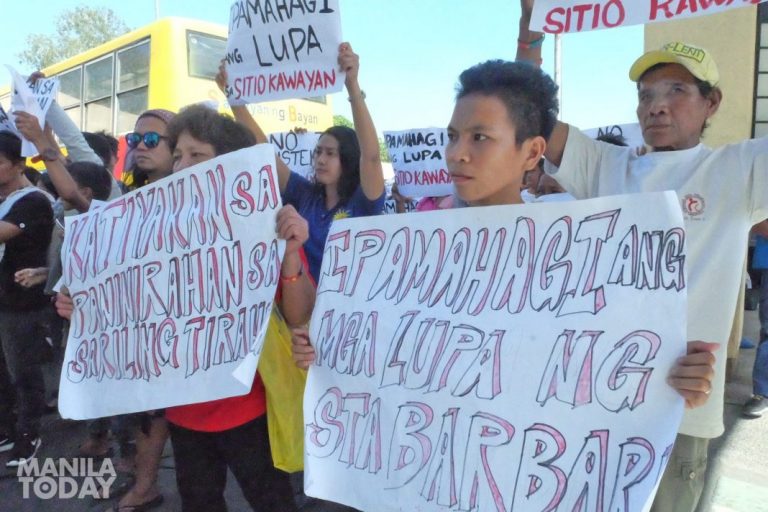
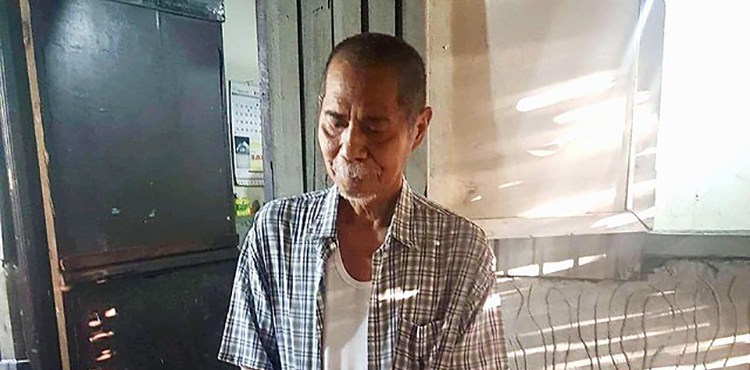
Residents from Sta. Barbara in Barangay Gulod and Sitio Kawayan in Barangay San Agustin staged a noise barrage at the Quezon City Hall this morning to protest impending socialized housing projects of the local government of Quezon City that will displace 500 families in said communities.

Protesters urged authorities and local politicians running in the May midyear elections to call off and make a stand against the impending Bistekville projects.

“Sumisikip po paunti-unti ang ating mga espasyo. Marami sa maralita sa lungsod ay galing sa probinsya, dating mga magsasaka, lumaki na inaagawan ng lupa, pinalayas sa kanilang mga komunidad dahil sa kahirapan at pumunta dito sa lungsod para makapaghanap ng trabaho, para magkaroon ng sariling bahay. Kung sa probinsya pinapaalis tayo, pagdating dito sa lungsod pinapaalis din ang mga maralita,” lamented Kabataan Partylist second nominee Erika Cruz.

[Our spaces are gradually becoming overcrowded. A lot of urban poor hail from provinces, used to be farmers, grew up with their lands taken from them, displaced from their communities by poverty and transeferred to the urban centers to find work, to acquire their own homes. If in the provinces we were evicted, here in city the urban poor are also being evicted.]

Cruz implored the local government officials to come out and listen to the residents.

The residents asked the local government to award the lands their homes are built on, rather than demolish their homes and use these to construct medium-rise buildings that are unaffordable and inaccessible to the urban poor.

The post QC residents opposed to Bistekville protest at city hall appeared first on Manila Today.

National Bilibid Prison compound residents protest eviction threat

Members of Kalipunan ng Mamamayan na Pinagkaisa sa NBP, Inc. (Kampina) marched from the NBP gate to the Muntinlupa City Hall to slam the New Bilibid Prison (NBP) Master Development Plan, which aims to privatize the NBP compound’s 366.7 hectares of land for mixed-use projects.

Around 10,000 families, some who lived for as long as 30 years in the compound, will be affected by the “Build, Build, Build” (BBB) program.

Bella Diaz, president of Kampina, called on the government to award the land to the residents or to give them affordable housing if free land distribution to long-time residents is not possible.

“Ang apektado po sa loob ng NBP Reservation Area, kami ay nasa more or less 10,000 families. Times 3 natin, 30,000 mamamayan ng NBP ang nagugutom na. Pinutulan kami ng suplay ng tubig sa NBP, may apat na komunidad na isang buwang nang walang tubig. Ginawa nila’ yon para raw umalis na kami,” said Diaz.

[The affected families in the NBP Reservation Area numbers to 10,000. If we multiply that number by 3, there are 30,000 residents are going hungry. They cut off our water supply in NBP, there are four communities that no longer has water supply. They did that to us so we will leave.]

The residents decried that BuCor’s moves to cut off the water and electricity and to prohibit water and construction supplies inside the area to allegedly drive away the residents.

Some of the NBP residents affected were those who were relocated to NBP after their homes along the Philippine National Railways within the city were demolished in 2009. They were made to sign a usufruct agreement in 2009 that stated they could use the land for 30 to 35 years.

Residents who lived in the compound before 2009 said they had been paying through a “community mortgage program” (CMP) that would allow them to have rights or own the land their homes were built after they completed paying the mortgage, a period of around 30 years. The CMP was replaced by the usufruct agreement and reportedly recorded their payments back to zero.

Local urban poor group Kampina led NBP residents’ march to Muntinlupa City Hall to protest the NBP Master Development Plan that the group said will displace 10,000 residents. Photo by Jade Dela Cuadra.

Diaz also said that the government land is massive and a lot are idle and could definitely take into consideration a portion for housing for the current residents. Diaz also implored the government to look after the welfare of ordinary Filipinos and its own citizens instead of giving the land for purposes of big business or foreign profits and benefits through BBB or onerous foreign project loans.

NBP residents trooped to the city hall to protest an eviction notice from the BuCor that lapsed on March 20. Photo by Jade Dela Cuadra.

Some 200 residents who picketed at the city hall sought a dialogue with City Mayor Jaime Fresnedi over the issue of the NBP Master Development Plan, which residents identify as a program for privatization of public lands and demolition of their homes.

During the dialogue, Fresnedi admitted that there have been no formal meetings held between his office and the BuCor through its Director Nicanor Faeldon. The City Mayor also assured residents that he will express their sentiments to Faeldon.

The Bureau of Corrections (BuCor) gave the residents 15 days to vacate their homes in a letter dated March 5, 2019.

The post National Bilibid Prison compound residents protest eviction threat appeared first on Manila Today.

Where is Frank Fernandez? NDFP asks former priest’s captors

NDFP peace consultant Frank Fernandez, during a press conference in Central Negros Island last December 2016. (Photo by JJ Espina)

By RAYMUND B. VILLANUEVA
Kodao Productions 

The whereabouts of National Democratic Front of the Philippines (NFFP) peace consultant Frank Fernandez reportedly arrested by the police and military in Nagcarlan, Laguna early Sunday morning have yet to be known more than 24 hours after his arrest.

NDFP Negotiating Panel chairperson Fidel Agcaoili said Fernandez, long-time NDFP spokesperson in Negros Island, must be surfaced and released by his captors as soon as possible as he known to be ailing and undergoing treatment.

“The NDFP strongly condemns the unjust arrest of Frank Fernandez and his partner. Frank is a publicly known consultant in the GRP (Government of the Republic of the Philippines)-NDFP peace negotiations as NDF spokesperson for Negros,” Agcaoili told Kodao.

“He is also known to be ill and requires medical treatment,” Agcaoili added.

In an Inquirer report, Fernandez was arrested at 5:16 a.m. in Barangay Calumpang, in a joint operation of the Philippine Army and Laguna police.

The report added the arrest was confirmed to the INQUIRER by three police officials and was undertaken by virtue of an arrest warrant.

Fernandez was the sixth NDFP peace consultant arrested since President Rodrigo Duterte terminated peace negotiations with the Left in November 2017.

Earlier, Rafael Baylosis, Adelberto Silva, Vicente Ladlad and Rey Claro Casambre were arrested in succession late last year after repeated attempts to revive the stalled peace talks failed.

Renante Gamara, NDFP peace consultant for the National Capital Region, was arrested last Wednesday in Imus City, Cavite.

Baylosis was first arrested in January 2018 but was eventually released last January 18 after the Quezon City Regional Trial Court threw out trumped-up charges of illegal possession of firearms and explosives against him.

Twelve days later, NDFP peace consultant Randy Felix Malayao was killed inside a bus in Aritao, Nueva Vizcaya last January 30.

Last Monday, March 18, Duterte dissolved the GRP Negotiating Panel and fired all its members.

Fernandez, a former Catholic priest, was last seen in public in central Negros Island in December 2016 where he attended a press conference and talked about the peace process and Duterte’s drug war, among other things.

He was reportedly tagged by the military as the most wanted rebel leader in Negros with a P7.8 million bounty on his head. Reposted by (http://bulatlat.com)

UPDATE: PNP surfaces NDFP’s Frank Fernandez

The post Where is Frank Fernandez? NDFP asks former priest’s captors appeared first on Bulatlat.