Home Blog Page 378

Initial response to Duterte’s cancellation of appointment of the GRP negotiating panel headed by Bello

0

By Jose Maria Sison | NDFP Chief Political Consultant | March 20, 2019

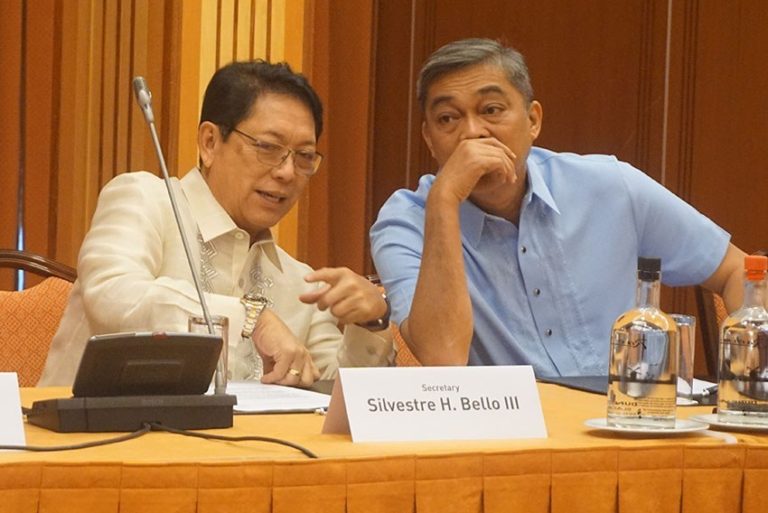
The cancellation of the appointment of the GRP Negotiating Panel headed by DOLE Secretary Silvestre Bello III has been anticipated by the NDFP because of the following: First, Duterte had terminated the peace negotiations since November 23, 2017 with his Proclamation 360. Secondly but more importantly, Duterte has no interest in the peace negotiations because he has always schemed to use the armed conflict as an excuse for carrying out martial law nationwide and for railroading charter change to a bogus kind of federalism in order to realize and impose fascist dictatorship on the Filipino people.

NDFP Chief Political Consultant Prof. Jose Maria Sison

The tyrannical Duterte regime has completely ignored the consistent NDFP policy of openness to peace negotiations because of his obsession to establish a fascist dictatorship and his pipe dream of destroying the people’s revolutionary movement by military means in order to continue plundering the social and natural resources of the country in collaboration with imperialist power and his plundering partners and in order to prevent the International Criminal Court from putting him on trial for publicly inciting the mass murder of impoverished people and providing cash rewards, promotions and presidential protection to his criminal accomplices in authority.

It is totally the responsibility of Duterte that he gives no choice to the people’s revolutionary movement but to single-mindedly wage and intensify all forms of struggle against his treasonous, tyrannical, corrupt, brutal and swindling regime until this goes down in ignominy like the fascist regime of his idol Marcos. In the first place, since the beginning of his term, he has always been obsessed with waging an all-out war policy, perpetuating the conditions of civil war and undertaking all brutal acts against the revolutionary movement, all the social activists and critics of his regime in order to achieve his objective of fascist dictatorship, with the absolute power to plunder the country and terrorize the people with red-tagging, psywar and mass murder.

Political prisoners: Let us not wait for another victim, stop the attacks vs human rights defenders

0
Political prisoners in Camp Bagong Diwa, including three organizers of the Confederation for Unity, Recognition and Advancement of Government Employees (COURAGE), expressed their support for Karapatan and other human rights and people’s organizations who remain critical against the anti-people policies and campaigns of the Duterte government. The political detainees have weighed in  on the issue of red-tagging, in light of Brig. General Antonio Parlade’s false accusations against Karapatan, IBON, the Rural Missionaries of the Philippines, and other organizations. 
 
They urged the Filipino public to be wary against attacks on human rights defenders. “Ang atake sa Karapatan ay dapat na ipangamba at kondenahin ng sambayanan. Mali na ipagkibit-balikat na lamang ito at hintayin na may maging kasunod na biktima (The attack against Karapatan is alarming, and it should be condemned. It is wrong to shrug off this issue and wait for the next victim),” they expressed in a statement sent to Karapatan.

Foreign lawyers decry surveillance, harassment

Two of the men who allegedly tailed the delegation of international lawyers while they were in Manila on March 18. (Photo courtesy of the National Union of Peoples’ Lawyers)

MANILA — Delegates of an international mission that investigated the attacks on Filipino lawyers and the legal profession experienced firsthand how it was to be tailed and harassed by suspected state agents.

Suzanne Adely of the U.S. National Lawyers Guild and Hans Gaasbeek of the Day of the Endangered Lawyer Foundation (DELF) said in a statement that on March 18, after the delegation presented its initial findings at the Integrated Bar of the Philippines (IBP) building, a man in civilian clothes who identified himself as a military personnel approached an IBP staff and boasted that “these foreigners are now under surveillance.” The man took pictures of the members of the delegation.

The group added that a woman, who claimed to be a journalist but could not present any identification, reported at the top of her voice to somebody over the phone.

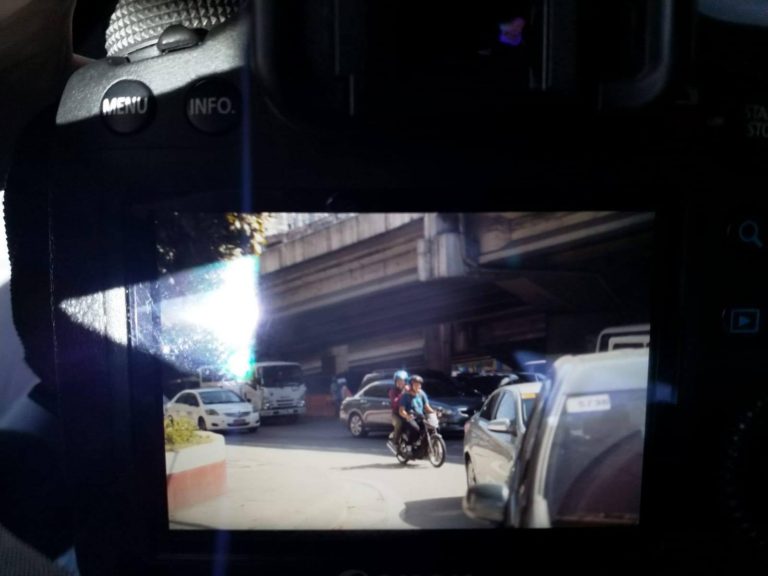
Upon leaving the IBP premises, the group said they were closely tailed by two men riding in tandem on a motorcycle with no plate number. They were tailed until they reached their hotel where more men in civilian clothes and bull caps were standing at both entrances. In a statement, the delegation said the men were “obviously stalking us and peering into the lobby and monitoring the ingress and egress of people and vehicles.”

One of the suspected state agent who stood at the hotel entrance for hours on March 18, observing the delegates of international lawyers’ mission. (Photo courtesy of the National Union of Peoples’ Lawyers)

A member of the delegation’s host committee was also tailed presumably by the same group of people when she left the hotel.

On March 19, a heavily tinted car parked at the basement of the hotel tailed the vehicle of the delegation.

“Under the contemporaneous circumstances and in the context of the usual reaction of the Duterte government towards opinions inconsistent with its official line, these vexatious acts against our Delegation appear to have the fingerprints of intimidation and reprisal by State agents,” Adely and Geesbak said in a statement.

The delegation found it ironic that they, who openly met with government offices and officials other than the police and military which gave them a runaround, would be subjected to “brazen harassment.”

“Even more outstandingly ironic is that we as international lawyers made time to see things firsthand on the reported attacks on our peers and brethren out of genuine concern and who in good faith humbly put forward concrete recommendations for consideration by the authorities are ourselves the object of attack,” they said.

In its initial findings, the delegation found patterns of “state-sanctioned violence” against Filipino lawyers. They also noted the lack of investigation by government agencies on the killings of their Filipino colleagues.

The nine-member delegation belong to international lawyers’ groups International Association of Democratic Lawyers (IADL), International Association of Lawyers (UIA) and Day of the Endangered Lawyer Foundation (DELF).

The delegation, which includes lawyers from Belgium, Italy, Japan, Korea, the Netherlands and the United States, has reported the incidents to the respective embassies, the various international lawyers groups which organized, participated, supported and endorsed the mission, and the international community. (Report by R. Olea/ (http://bulatlat.com) )

Want to read stories like this? Help us keep up continue writing about issues that matter.

The post Foreign lawyers decry surveillance, harassment appeared first on Bulatlat.

HANDS OFF HUMAN RIGHTS DEFENDERS!

0

HANDS OFF HUMAN RIGHTS DEFENDERS!


ICHRP-US Expresses Solidarity with Karapatan, Ibon,

and Rural Missionaries of the Philippines, Amidst Attacks

The United States Chapter of the International Coalition for Human Rights in the Philippines (ICHRP-US) denounces the vilification of human rights organizations and human rights defenders in the Philippines.  In the last week alone, in addition to the constant vitriol against progressive groups and partylists in public spaces, there was a press conference by the Philippine Government, as well as statement being circulated amongst media groups by a US-trained General, Antonio Parlade, naming organizations and specific people in their tirades against the mass movement in the Philippines.  

The red-tagging of human rights organization, Karapatan; research institution, the Ibon Foundation; and church organization, Rural Missionaries of the Philippines (RMP) is further proof of the desperation of a fascist regime.  Organizations and advocates who fight on the behalf of the oppressed masses should not be subjected to red-tagging simply for doing what the government fails to do.  The Duterte administration is afraid of the power and legitimacy of these organizations which garner world-wide support for their work to expose and address state-sponsored human rights violations. This comes at the same time as the Philippines officially withdrew from the International Criminal Court – the world’s only permanent war crimes tribunal. 

read more

Karapatan condemns recent killings of three human rights defenders in one week

0

“We strongly condemn the killing of yet another minor, a 15-year-old student at a community school in Mindanao, the killing of a former Bayan Muna coordinator in Borongan City, and the killing of another farmer in Bulacan days later. It must be emphasized that these killings are not isolated, but a systematic attack against indigenous and peasant communities who continue to raise legitimate demands for education, self-determination and genuine land reform. Students, their communities, and the schools which they have founded and built are being attacked. Farmers and their organizations, as well as their supporters are being attacked. Human rights defenders and activists are being targeted. The Filipino people who remain firm in the defense of their rights are in extreme danger under this brutal and murderous regime,” said Karapatan Deputy Secretary General Roneo Clamor. 

read more

Knowing How it Feels: Int’l Lawyers Looking Into Attacks on Ph Lawyers Harassed

0

PRESS STATEMENT | 19 March 2019

The International Delegation. of Lawyers which just concluded a Colloquium and issued a critical Initial Findings on the query into the attacks on Filipino judges, prosecutors, lawyers and paralegals was itself the subject of brazen threats, harassment, and surveillance yesterday. 

At the press conference at the Integrated Bar of the Philippines (IBP), a man in civilian clothes who identified himself as a military personnel approached an IBP staff and boasted that “these foreigners are now under surveillance.” Afterwards, he milled around the Delegation and was not-so-discreetly taking our pictures and snooping on our conversation.

Meanwhile, a woman in sloppy civilian clothes was also close by and was looking ill at ease, reporting at the top of her voice to somebody over the phone. When asked by our hosts to identify herself, she claimed to be a media person but could not produce any form of identification at all.

Thereafter, the Delegation was closely tailed from the IBP to a mall where we took lunch by two men in bullcaps riding in tandem on a motorcycle with no plate number.  We were tailed until we reached our hotel where more men in civilian clothes and bullcaps were posted at both entrances, obviously stalking us and peering into the lobby and monitoring the ingress and egress of people and vehicles. 

When one of the men visibly posted close to the entrance was confronted by the hotel security, he claimed he was waiting for his relative to check in though he was just standing outside pounding incessantly on his mobile phone for several hours already. We learned that he actually left for the night. 

Also, a member of our host committee was also tailed presumably by the same group of people when she left the hotel. 

Earlier today, a heavily tinted car parked at the basement of the hotel tailed the vehicle of our Delegation even while motorcycle-riding men were idly posted at the hotel’s street corner.

We were made to understand that our Delegation was probably the first foreign group to enter the country and conduct a firsthand open inquiry on the reported rights violations under the present Philippine government. 

Under the contemporaneous circumstances and in the context of the usual reaction of the Duterte government towards opinions inconsistent with its official line, these vexatious acts against our Delegation appear to have the fingerprints of intimidation and reprisal by State agents.

It is indeed ironic that our lawyers’ delegation representing various legitimate and prestigious organizations from all over the world which openly met with government offices and officials – other than the police and military which gave us a runaround – will be subjected to brazen harassmen ourselves. 

Even more outstandingly ironic is that we as international lawyers

made time to see things firsthand on the reported attacks on our peers and brethren out of genuine concern and who in good faith humbly put forward concrete recommendations for consideration by the authorities are ourselves the object of attack.

The respective embassies and missions of the members of our Delegation, the various international lawyers groups which organized, participated, supported and endorsed us, and the international community have been put on notice of this unacceptable harassment.

Indeed, to see and feel is to believe. And no amount of ad hominem insults and official denials of reality can change this matter of fact. But we will be back. #

References:
Suzanne Adely | Hans Gaasbeek
c/o 09159074183
2019lawyersdelegation@gmail.com

WPN Position Paper on the Water Crisis

0

WPN: Water crisis confirms failure of water privatization
IBON Foundation/Water for the People Network (WPN)

Position paper submitted to the Office of Sen. Grace Poe, Chair of the Senate Committee on Public Services, in line with the hearing to investigate the water shortage in Metro Manila


The Water for the People Network (WPN) holds that the ongoing water crisis confirms the failure of water privatization and the need for genuine public control of this essential service.

Republic Act No. 6234 mandates the Metropolitan Waterworks and Sewerage System (MWSS) to “ensure an uninterrupted and adequate supply and distribution of potable water for domestic and other purposes and the proper operation and maintenance of sewerage systems are essential public services because they are vital to public health and safety.” (Section 1) Meanwhile, the Concession Agreement with Manila Water Company for the East Service Area lists “Continuity of Supply” as among the concessionaire’s service obligations. (Article 5.1.2)

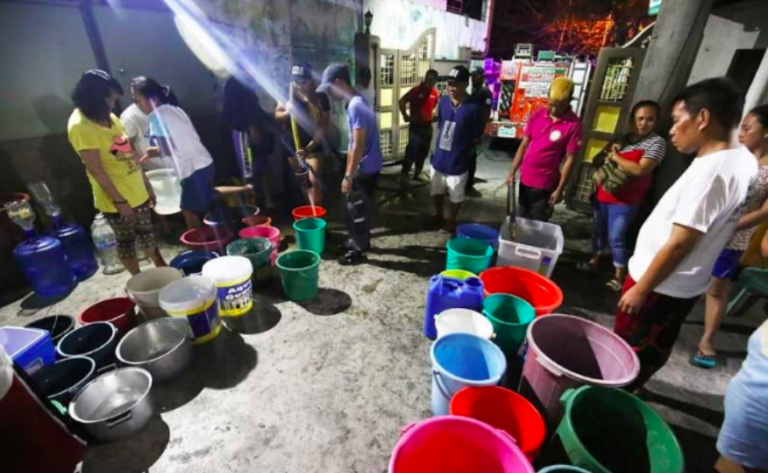
The ongoing water crisis already shows the failure of MWSS and Manila Water on both these counts. The Congressional hearings, in the Senate and House of Representatives (HOR), are important not to establish negligence but rather to clarify the exact nature of that failure – whether lack of foresight, or mismanagement and inefficiency, perhaps even reckless manipulation for some self-serving end, or some combination of these.

The Ramos administration hyped a water crisis to justify privatization of water utilities in 1997. Metro Manila residents were promised that the private profit-seeking East and West Zone concessionaires would provide cheap, safe and secure water services.

Corporate management of water services has been efficient in producing profits but inefficient in ensuring cheap, safe and secure water services to millions of consumers. Such large profits amid looming months of erratic water supply for so many consumers is grossly unacceptable.

The original sin of the current water crisis but also other problems with Metro Manila water services is the policy of water privatization pushed by the World Bank and implemented by the Ramos administration in the 1990s. This has resulted in: 1) expensive and overpriced water to bloat corporate profits; 2) apparently insufficient supply and distribution infrastructure; and 3) MWSS unable to properly supervise and control water services.

Expensive water

Metro Manila water rates, astride that of Jakarta in Indonesia, are the second most expensive in the region and second only to high-income Singapore. Water rates are lower in Bangkok (Thailand), Ho Chi Minh (Vietnam), Kuala Lumpur (Malaysia), Phnom Penh (Cambodia), Vientiane (Laos), Yangon (Myanmar) and Bandar Sen Baran (Brunei).

Water services are a natural monopoly. The concessionaires have used their monopoly power to overcharge customers and make excessive profits. Water rates have risen by 879% for Manila Water customers and 574% for Maynilad customers since water privatization began in 1997 until January 2019. These increases were four to six times as much as the inflation rate, or the increase in the general price level, over that same period.

The controversy during the previous rate rebasing period in 2013 of how the concessionaires pass on even their corporate income taxes to consumers usefully drew attention to how water rates are bloated by unimplemented projects, excessive costs of capital, foreign exchange and environmental charges, inflation and extraordinary price adjustments, and even arbitration costs.

The water firms make a big deal out of expanding service coverage. This was however done not so much to provide water as a human right but to expand their markets and increase their profits.

In just the last 10 years, expensive water has increased the net incomes of Manila Water and Maynilad by 137% and 444%, respectively. BusinessWorld’s Top 1,000 reports Manila Water’s net income grew from Php2.4 billion in 2007 to Php5.7 billion in 2017, while Maynilad’s grew from Php1.3 billion to Php6.8 billion in the same period. Manila Water’s latest annual report meanwhile showed its net income increasing from Php6.1 billion in 2017 to Php6.6 billion in 2018 – which could indicate an almost tripling (175%) of net income between 2007 and 2018.

The disruption of water services for over a million Metro Manila residents amid growing water concessionaire profits is unacceptable. Water services are natural monopolies that should be publicly owned, managed and controlled.

Insufficient infrastructure

The exact circumstances of the current crisis are still not clear. However, it is emerging that the problem is not a lack of water in general but rather the lack of facilities to bring this water to consumers. This is a lack of foresight, at the very least, or at worst a lack of decisive action if the supply-demand gap was indeed known earlier.

MWSS has been reported as having identified various potential water sources – 900 million liters per day (MLD) from Laguna de Bay; 188 MLD from Sumag River; 175 MLD from Tayabasan River; and 500 MLD from Wawa River. Angat Dam has also been reported to have as much as 1,200 MLD in unutilized capacity. The question this raises is why the water supply and distribution infrastructure to pump, divert, transport, store, treat and deliver safe water to consumers has not been attended to earlier.

Weak regulation

The government is however particularly accountable for allowing water privatization in the first place and for the insufficient regulatory powers of the MWSS. For instance, the MWSS-Regulatory Office (MWSS-RO) is overly dependent on monitoring reports and other information coming from the water concessionaires.

Privatization has also created artificial barriers to rational regulation of public water in the private interest by dividing public water between private profit-seeking interests with quotas and allocations. This prevents the government from acting expediently to make sure water goes where it’s needed.

Privatization has undermined transparency. As concerned and directly affected citizens, WPN has had difficulty getting information from the MWSS-RO on the rate rebasing process and negotiations with the water firms. Public consultations have been limited and token – merely feeding selected information rather than genuinely listening to, considering and addressing the concerns of water consumers. It took sustained public pressure by WPN and other concerned groups during the latest rate rebasing in 2018 to have the concessionaires’ business plans posted on the MWSS website.

The same lack of transparency is at work today resulting in conflicting accounts by Manila Water and government agencies on the Metro Manila water crisis. Transparency should be continuous and the public should not have to rely on ad hoc congressional hearings to be informed of the state of the water services they are paying for. Both water firms should be compelled to be more public about their operations, income and expenses in delivering water which is a vital public service.

Improving transparency and accountability of water utilities is only a start. The right to water and consumer access, affordability, and service quality will only be assured in the long-run if water services are publicly owned, managed and controlled. This of course includes improving governance and accountability of the public utility. Public control of water services is also the key to sustainable use of water resources and to promoting rational water use and consumption.

WPN would like to stress that responsible public control of water services is not just necessary but very much possible. The Philippines was among dozens of countries caught up in the water privatization trend starting the 1990s. This trend however has started to reverse in the last 10-15 years as privatized water resulted in expensive connections, overpriced water, poor expansion and upgrading, and lack of transparency around the world. Water services have since been reverting back to public or community hands in some 230 cities in over 37 countries covering an estimated 150-200 million water consumers. Filipino consumers deserve no less. ###