Home Blog Page 391

Chico River Pump Irrigation Project loan agreement, a sell-out of ancestral land and Philippine sovereignty

Violations of Free Prior and Informed Consent and right to self determination

The CRPIP is an outright violation of our right to Free Prior and Informed Consent (FPIC), right to our ancestral lands including the Chico River, and right to self determination. The project falls within the ancestral domain of the indigenous peoples in Kalinga but no FPIC from the communities was secured for the project before the loan agreement was signed on April 10, 2018. The indigenous communities affected by the project and the local government units (LGUs) in Kalinga have not been consulted and were totally unaware of the project until after the loan agreement. LGUs were not provided with any documents pertaining to the project. 

Free, Prior and Informed Consent is a right of indigenous peoples for projects that are to be implemented in our indigenous lands as enshrined in the United Nations Declaration on the Rights of Indigenous Peoples. It is an important component of our right to self-determination, to freely determine our own political, economic, social and cultural development at our own pace. In the Chico River Pump Irrigation Project, the indigenous communities affected by the project in Kalinga province were denied of this right and their welfare was totally ignored in the onerous loan agreement.

Onerous, one-sided and anomalous loan agreement

The West Philippine Sea is being surrendered by the Duterte regime to China, and so is our sovereignty over the Chico River in the Cordillera.  The 20-year loan agreement for the CRPIP is a back-stab to the Filipino people. It contains provisions that are burdensome to the Filipino people and highly favor the government of China. Under the onerous conditions, the CRPIP does not simply provide free irrigation since this will be paid back by the Filipino people in unfairly huge sums. 

  • The loan is a debt trap that China used to rake in super profits. The Philippines will be made to pay the loan “in full without counterclaim or retention” and will also pay the exceedingly high annual interest rate of 2% (around PhP 72 million) and other annual fees such as the “Management Fee” amounting to $186,260 (more than 9.6 million pesos) and “Commitment Fee” which is 0.3% of the loan amount. The interest rate is very high compared to loans offered by other countries such as Japan which charges 0.25% to 0.75% per year. 

    The loan agreement on the CRPIP and other projects under Duterte’s Build! Build! Build! Program are no doubt the reason why Duterte implemented the Tax Reform for Acceleration and Inclusion (TRAIN) Law and is pushing for more tax reforms. The burden of payment is put on the people, making the poor and marginalized including indigenous peoples dive deeper into poverty.
     
  • China demanded that payment should be included in the General Appropriations Law, which practically usurped the constitutional power of Congress to solely decide the content of the country’s yearly budget. Another provision which can prohibit the Philippine Congress from questioning the constitutionality of the loan agreement is Annex 6 of the agreement, where China demanded the Philippine Department of Justice secretary to issue a certification that the agreement is legal and constitutional. The contract also stipulates that the loan would be governed by the laws of China and that any dispute concerning the loan would be handled by the China International Economic and Trade Arbitration Commission in Beijing.
  • The Philippine laws require contractors to undergo a bidding process but in the CRPIP the project contract was awarded to China CAMC Engineering Corporation on March 8, 2018. In the ongoing construction of the project in Kalinga province, the local people have noticed the Chinese workers, including those that operate the equipment being used. Local residents who tried to apply for employment were not absorbed and were told that the project prioritizes Chinese workers. As of this writing, the construction of the bunkhouses for the Chinese workers has just been completed and ongoing activities include dredging in the Chico River.
  • The loan agreement surrendered Philippine sovereignty. Article 8.1 of the loan agreement states that the Philippines “irrevocably waives any immunity” of its patrimonial assets located in the Philippines which are commercial in nature. This means that government’s patrimonial assets can be taken over by China if the Philippines fails to pay the loan. We must not forget that China already has a record of taking over a port in Sri Lanka due to the country’s inability to pay back its loan from China. 
  • The contract has a confidentiality provision (Article 8.8) that prevents the public from gaining access to the loan agreement. But this is no wonder since the contract only contains onerous, one-sided, anomalous conditionalities. Nevertheless, the CRPIP is a public infrastructure and the Filipino people will be the one to pay for the loan so the government must be transparent in order for the public to fully understand the loan. 

With all of these, there is no doubt that China will be the only one to benefit from the project.
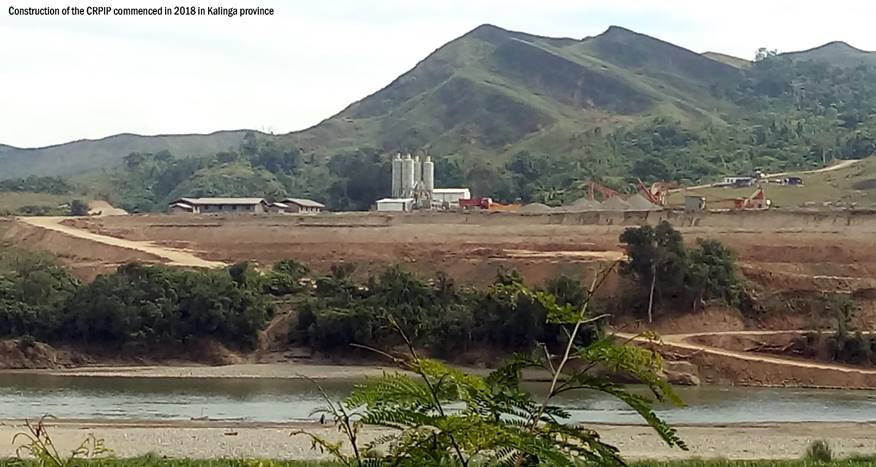
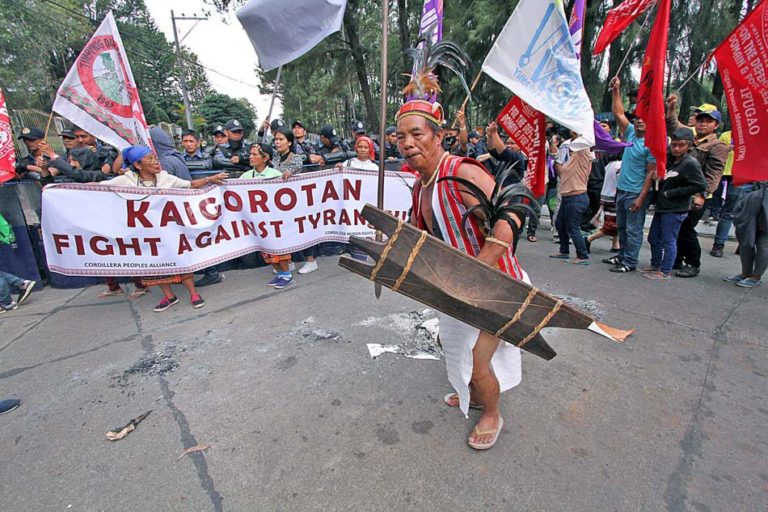
Photo by CPA

CRPIP is not feasible and sustainable under the overall “development” plan in the Chico River

Several factors can make the CRPIP fail in its purpose of supplying irrigation to 2 barangays in Pinukpuk, Kalinga and 19 barangays in Cagayan province. The project did not take into account the overall “development plan” in the Chico River and the province of Kalinga, such as the building of many hydropower, geothermal and mining projects. Thus, there is no assurance that the irrigation project will work, especially in the long run. Clearly, the CRPIP was primarily meant for China’s profit-making and not the welfare and benefits of the Filipino people. 

  • The Chico River is the most extensive river in the Cordillera region, which traverses the provinces of Mountain Province, Kalinga and Cagayan. Many communities that are situated near the Chico River banks depend on the water in the river for irrigation of farmlands and for domestic use.

The Chico River’s high potential for generating electric power has made it a target of numerous hydropower projects starting with the World Bank funded Chico Dams Project in the 1970s-1980s and succeeding projects until the present. 

At present, there are 10 hydropower projects along the Chico River in Kalinga province that were awarded by the Department of Energy. These include the Karayan Dam, Chico Hydroelectric Power Project, Upper Tabuk Hydro Power Project, Tinglayan Hydro-Electric Project, Bulanao Hydropower Project, 1 hydropower project in Balbalan and 4 hydropower projects in Pasil. On top of these are 5 pending hydropower projects. These dam projects will disturb the natural flow of the Chico River and, during the dry season, most of the water will be stored in the dam reservoirs, which in turn will worsen the scarcity of water supply in the downstream area including where the CRPIP will operate. 

  • Natural occurences such as tikag or drought drastically decreases the volume of water in the Chico River. At present, Kalinga farmers suffer from agricultural damages due to lack of water for irrigation during drought and summer. This is mainly due to the decreased volume of water in the Chico River. The project’s pump system will also deprive some of the downstream communities of water supply. In this case, it is doubtful that the CRPIP will be able to supply its target beneficiaries during summer and drought.
  • During summer, the CRPIP plans to divert 50% of water from the Chico River to its irrigation areas. But this will further lessen the decreased volume of water in the Chico River and will get water that is already scarce. 
  • Kalinga hosts several large-scale mining applications, including the exploration projects of the Makilala Mining Company in Pasil municipality and the Cordillera Exploration Co, Inc. (CEXCI), a subsidiary of Nickel Asia, covering parts of Balbalan municipality. 

Further, the Kalinga Geothermal Project of Chevron was given a two years extension of its exploration permit covering 260 square kilometers in Pasil, Lubuagan and Tinglayan municipalities. 

Both the mining project and geothermal power plant, if these operate, will require huge amount of water that will be drawn from tributaries of the Chico River. Large-scale mining and dams also cause river siltation. 

  • In Mountain Province where the Chico River traces its headwaters, there are several hydropower projects that are being planned to be built. The CEXCI mining company also has a mining application that covers 43,000 hectares in 7 municipalities. 

Our Calls and Demands

Agriculture remains a main source of livelihood in Kalinga province, the Cordillera region and the rest of the country. We continue to demand free irrigation and appropriate irrigation systems from the government for our peasants. These are government support services that are necessary to genuinely develop our agriculture sector and foster rural development instead of liberalizing it as in the Rice Tariffication Law. However, these should not be given at the expense of debt traps, violation of rights to FPIC and self-determination, and sell out of our national sovereignty. 

We demand government transparency on the CRPIP and other China-funded projects. Release to the public copies of the CRPIP contract and related documents. The government must immediately suspend the project construction, which is onerous and with questionable feasibility and sustainability for not taking into account the development projects along the Chico River and Kalinga province. 

Scrap the CRPIP loan agreement! Hold the government officials who signed the document and the Duterte regime accountable for the onerous loan agreement. 

No to China’s imperialist aggression in the Philippines! ###

Reference: Windel Bolinget, Chairperson

DCPO tightens implementation of traffic laws in Davao City

0

The tighter implementation of traffic laws has resulted in the increase of the number of apprehensions in the city, the Traffic Group of the Davao City Police Office (DCPO) reported.

‘Conflict of interest’ seen in SMC P1-B Manila Bay rehab partnership

MANILA — Environment group Kalikasan People’s Network for the Environment warned against “a possible conflict of interest” in San Miguel Corporation’s (SMC) recent P1-billion partnership with the Department of the Environment and Natural Resources (DENR). The green group likens it to a ‘soft payment’ to induce the government agency to fast track reclamation projects of SMC in Manila Bay.

“San Miguel’s P1-billion rehab is highly suspicious because it comes alongside its push for its Aerotropolis and Expressway-Dike reclamation projects across Northern Manila Bay,” said Leon Dulce, National Coordinator, Kalikasan People’s Network for the Environment (Kalikasan PNE).

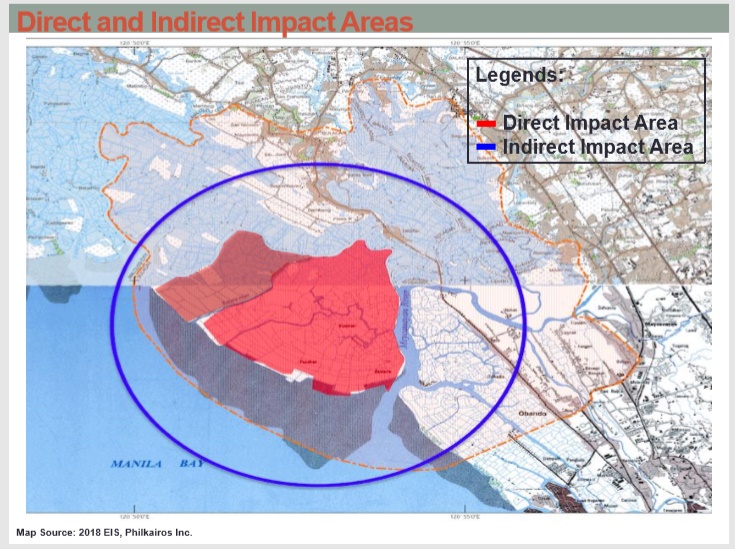
Bulakan fishing villages/areas to be “direct hit” of planned reclamation to pave way for San Miguel Corporations’ airport, real estate, infrastructure projects (map lifted from Silvertides’ presentation during a “public hearing” in an evacuation center in Bulakan, Feb 4, 2018.)

SMC President and Chief Operating Officer Ramon S. Ang signed on March 4 a five-year agreement with DENR for a comprehensive dredging and clean-up program for the 59.25 kilometer Tullahan River.

“We fear that it might serve as ‘greenwashing’ to cover up for SMC’s destructive projects, at best, or grease money for the railroading of reclamation at worst,” said Dulce.

Since last year SMC is processing government  approval of its proposal to develop a 2,500-hectare Aerotropolis in Bulacan province worth P700 Billion. It also has a pending public-private partnership proposal, the Manila Bay Integrated Flood Control and Coastal Defense and Expressway Project, an expressway-dike which covers 18,000 hectares across the northern part of Manila Bay.

Kalikasan PNE said Silvertides Holdings Corporation, SMC’s contractor company for land acquisition, is suspected as responsible for clearing at least 657 mangrove trees in Bulakan municipality without securing an Environmental Compliance Certificate (ECC) and special tree cutting permit. The company recently claimed it will leave the existing 24.5-hectare mangrove eco-park in Bulakan undisturbed with the proposed construction of the Aerotropolis.

“It’s easy to claim that the Aerotropolis will not affect mangrove parks and forests in Manila Bay but studies show otherwise. An ecosystem valuation case study in Manila Bay revealed how a land reclamation project complete with ecosystem conservation, buffering, and rehabilitation efforts could only generate only up to 49 percent of the area’s original ecosystem services,” explained Dulce.

The environmental group challenged the SMC to prove its sincerity in contributing to the rehabilitation of Manila Bay “by desisting their reclamation projects in Bulacan.”

“SMC’s P1-billion is chump change compared to the degree of environment destruction, loss of livelihood, and disaster risks that the Aerotropolis and the Expressway-Dike will cause in communities along Manila Bay” Dulce said.(https://www.bulatlat.com)

The post ‘Conflict of interest’ seen in SMC P1-B Manila Bay rehab partnership appeared first on Bulatlat.

Defending rivers and Manila Bay against pollution, privatization

Fisherfolk taking steps to counter SMC reclamation plans

3rd Part in a Series of 3 (DENR in mock Battle for Manila Bay rehab?)

Read the 1st Part: Bulacan fisherfolk, women want genuine, inclusive Manila Bay rehabilitation
2nd Part: ‘Direct hit’ Bulacan fisherfolk most affected, least consulted on SMC reclamation

This is one of the reports in a series produced by Bulatlat.com with the Asia-Pacific Forum on Women, Law and Development (APWLD) Media Fellowship. The series aims to report on linkages between gender, ecological conflicts and climate change.

 “If anyone had rights over the Manila Bay, it is the Filipino people, and if it is to serve any purpose, it should be for the benefit of the general population, and not an elite few.” — Makabayan lawmakers

By MARYA SALAMAT
Bulatlat.com

MANILA — Bucking threats from local government leaders and intermittent military “visibility” in their communities, members of the fisherfolk communities in Bulacan have protested the proposed reclamation affecting their homes and fishing grounds. “Buo sa isip ko, kaya namin lumaban (I’m entirely sure in my mind that we can oppose this),” fisherwoman and spokesperson of Network Opposed to Reclamation in Bulacan Monica Anastacio, 63, told Bulatlat in Filipino.

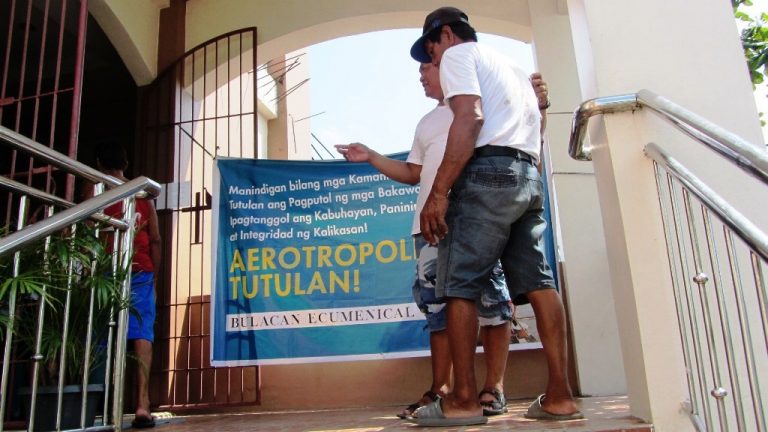
They have questioned since last year what they considered as initial steps to reclamation, the massive cutting of mangrove trees serving San Miguel Corporation’s proposal to do away with their communities and build an international airport on today’s river and villages. Despite the support to this project by their local government officials, they organized a Network Opposed to the Aerotropolis and Reclamation in Bulacan on October 2018.

With support of their fishermen, the women comprised the network’s unanimous choice as spokespersons to help convene the rest of the affected villagers for the defense of the bay, and to represent them as well in dialogues or forum in the mainland. They launched the campaign to #SaveTaliptip in early 2018.

Supported by the multisectoral Alyansa para sa Pagtatanggol ng Kabuhayan, Paninirahan at Kalikasan sa Manila Bay (AKAP KA-Manila Bay), the Bulacan fisherfolk launched a petition against reclamation since late 2018.  They sent delegations to various pickets and dialogues held at the national headquarters of the Department of Environment and Natural Resources (DENR). They spoke at peoples’ conferences on climate change, on land use and food security.

Malaking kawalan sa lahat pag pumayag tayo tabunan,” (It will be a huge loss for everyone if we agree to reclamation) a priest from the Bulacan Ecumenical Forum who grew up catching fish and seafood in Taliptip told a gathering of residents in Taliptip.

fisherman mangrove
Fisherman passing by ‘patches of mangroves’: “Hard to say goodbye to this.” (Photo by M. Salamat / Bulatlat)

The communities in Taliptip are united not just in protecting the mangroves but also in opposing moves to displace the fisherfolk in favor of a private company’s reclamation, according to Monica Anastacio, a resident of Taliptip for over 50 years. To them it is not just a call for saving their homes or sources of livelihoods for themselves. They believe other Filipinos in the mainland also stand to lose when the mangroves and the relatively affordable sources of nutritious fish and seafood are buried under concrete.

She has worked with her family in Taliptip saltbeds since she was in grade school. When the salt farms stopped operation in 1990s, she and her husband turned to fishing. The women in these coastal communities are used to working with their husbands, from the saltfarms of decades ago to today’s fishing.

fisherwoman on banca
Photo by M. Salamat / Bulatlat

While fishing is traditionally a male occupation in the Philippines, it is not uncommon to see women at work, too, setting traps (for crabs), casting nets, rowing the family’s banca, or selling the fish catch. Some women also go down to the river or out on the bay to catch fish. Some wade into the muddy, shallow loam to catch crabs. These days they add to their responsibilities of taking care of their household and family various tasks toward network-building to turn the rehabilitation of river and the bay to the people’s favor.

Their background of being saltfarmers and fisherfolk speaks of how much food the areas where they live now have contributed and could further contribute to the country’s food needs.

The coastal communities in Bulakan were major contributors to the country’s salt sufficiency for decades. Until 1990s, Bulacan was producing more than a hundred metric tons of salt, equivalent to more than half the country’s needs. That is, until a combination of the impact of climate change and trade liberalization began eroding the industry to a pale shadow of itself at present. Nowadays, the fisherfolk group Pamalakaya says the government’s approval of reclamation projects also threatens the country’s food security, along with other policies that ultimately shrink the fishing grounds and mangroves and remove the fisherfolk from the coasts.

Facing the threat of displacement due to reclamation, the women of Bulakan are facilitating their organizing and network formation for an organized response. Now they are also finding time to ride their bancas and visit their neighboring fishing communities in hopes of strengthening their network opposing the reclamation of their coastal villages.

Asked why it is the women frequently being sent to represent the fisherfolk in outside forum and dialogues, they replied that the menfolk are working with them and supportive, but the tasks of representation can be squeezed along with their other duties such as taking care of the household, selling the fish catch and procuring supplies.

Threats Not only in Bulacan but along entire Manila Bay

What is threatening to happen in Bulakan and neighboring coastal towns is happening under similar projects around the Philippines, said Jam Pinpin, spokesperson of Pamalakaya.

A total of 43 reclamation projects covering more than 32, 000 hectares are pending throughout the 194, 400-hectare Manila Bay, based on record obtained by Pamalakaya from the Philippine Reclamation Authority (PRA).

In Bulacan the SMC has won over the local government executives. Even as it has yet to conclude a concession agreement with the government (for the proposed airport), its subcontractors are already at work readying the ground for reclamation.  It is now at the final stages in the process of securing an ECC (Environmental Compliance Certificate) that will pave the way to reclamation of over 2,500 hectares. It was suspected to have been behind the massive cutting of old-growth mangroves in April 2018. This month as we write, the residents of nearby villages of Obando posted in Save Taliptip’s social media account that strangers were knocking on their doors asking them the sizes of their house and telling them they will have to leave soon.

In Manila, the Department of Public Works and Highways (DPWH) announced last week it will start  dredging in the Baywalk area of the Roxas Boulevard in March, saying it is part of the ongoing rehabilitation drive of Manila Bay.

But national fisherfolk group Pamalakaya warned that the targeted area for dredging also happens to be the area where the 148-hectare Manila Solar City reclamation project that will occupy 3.5 kilometers of Manila Bay’s shoreline will be located.

It brings a bitter déjà vu to the fisherfolk leader. He recalled that shortly before the SM Mall of Asia and Entertainment City establishments in Roxas Boulevard began construction years before, there was also some dredging work that resulted to the displacement of more than 6,000 fishing and urban poor families.

In Cavite, a province south of Manila, the coastal villages of mainly fisherfolk are also in a constant battle to save their community and livelihood. At least four reclamation projects covering hundreds to thousands of hectares of Cavite coastlines are being processed by the Philippine Reclamation Authority.

Unlike in Bulacan where the Manila Bay is still bounded by an expanse of alternating shallow loam/islets, a network of rivers and patches of mangroves, in Cavite, only a thin stretch of the shore remains between the bank that has been cemented for road and real estate development and the Manila Bay. Living on what’s left of this narrow shore the fisherfolk communities organized under Pamalakaya have been protesting reclamation and their demolition. They have suffered at least four incidences of suspected arson.

mangroves
Mangroves recently cut in Cavite (contributed photo)

In advancing their defense of the bay, they pointed to documents from the government’s Environmental Management Bureau (EMB) itself state that the reclamation projects will have ecological impacts in Manila Bay.

It says that throughout the construction of the various projects, contaminants from dredged sediments will be released, deplete dissolved oxygen, and destroy natural habitats of sardines and mangroves found in Manila Bay.  Once finished, the projects will interfere with the natural tide flow of water in the area and erode the shoreline of nearby beaches. The erosion could cause flooding in nearby low-lying areas especially during a typhoon.

Worse flooding has also been recorded in coastal towns of Bulacan since the reclamation of Manila Bay. The fisherfolk group Pamalakaya urged the government to take heed of its own environmental bureau’s assessment.

Based on the assessment of environmentalists and fisherfolk, the government’s ‘Battle for Manila Bay’ is turning out to be another mock battle for rehabilitation.

“With the recent actions of administration such as justifying reclamation projects and the abrupt issuance of Executive Order 74, or the taking over of the power to approve such projects and command of the Philippine Reclamation Authority (PRA), “Manila Bay rehabilitation” is becoming synonymous to “Manila Bay reclamation,” said Anakpawis party-list Rep. Ariel Casilao.

reclamation projects
Based on PRA Data as of end 2018

Environment Secretary Frank Cimatu denied this just this week. But around the same time he was saying these to reporters, Manila Mayor Joseph Estrada was defending and even extolling the reclamation projects.

Anakpawis’ Casilao said all these are a serving as a challenge for the people to advance a genuine rehabilitation of Manila Bay.

“If anyone had rights over the Manila Bay, it is the Filipino people, and if it is to serve any purpose, it should be for the benefit of the general population, and not an elite few,” read a part of the explanatory note when the Makabayan bloc of partylist lawmakers filed this February 7 the House Bill 9067 declaring Manila Bay as Reclamation-free Zone.

The proposed law criticized not only the duplicity in the Duterte administration’s conduct of “rehabilitating” Manila Bay – Anakpawis Partylist said it’s just a façade for facilitating reclamation and taking the bay away from the people. After years of previous reclamation, the ordinary people’s access now to the famed Manila Bay has been reduced to a few kilometers near Rajah Sulayman – and even there the poor are banned from swimming.

In Cavite, Pamalakaya’s Hicap rued said what used to be miles of cheap sources of clams and mussels are now concrete roads that could have been built elsewhere.

Makabayan lawmakers from Anakpawis, Bayan Muna, Gabriela, ACT and Kabataan Partylist traced how, through years of previous reclamation, “Development” along Manila Bay, has wiped out the mangrove ecosystem, from as broad as 54,000 hectares at the turn of the 20th century, to a measly 794 hectares in 1995.

mangroves
Mangroves along rivers in Bulacan to be ‘direct hit’ of SMC reclamation (Photo by M. Salamat / Bulatlat)

“Companies destroy mangroves because they saw no profit in maintaining it,” the Makabayan lawmakers said. And after reclamation the ordinary citizens also lose access to what remains of the bay.

“It is as clear as the blue sky of Manila Bay’s horizon that reclamation has deprived the people of public access,” Makabayan said in seeking to declare Manila Bay as reclamation-free zone.

Last February 22, a broad alliance and watchdog for genuine rehabilitation and against reclamation projects was launched in Malate Church near the last remaining free baywalk in Manila Bay. The watchdog seeks to garner support to declaring Manila Bay as a “reclamation-free” zone.

They hope that with the proposed law in Congress and the people’s movement and campaigns, they can refute any ruse of any group or even by the government “that worships profit at the cost of undermining the people’s aspiration for a sincerely-rehabilitated, restored and preserved Manila Bay. (http://bulatlat.com)

The post Defending rivers and Manila Bay against pollution, privatization appeared first on Bulatlat.

The unraveling of US hegemony

By Antonio Tujan Jr.
Crosscurrents 30 | 7 March 2019

That the US should warn the Duterte government to be wary over concluding treaties with China just shows that the world is no longer under a single hegemonic global power.  Before, the US would not simply countenance a former colony of brown Americans to welcome the Chinese.  Nor would it allow any president before Duterte to make overtures to everyone, most specially the communist regime of China.

The rise of China as the strongest economy overall puts the US at a disadvantage even though the dollar still reigns supreme as a global currency standard.  It would be stupid for anyone, must less the government, not to recognize that opportunity to develop friendly relations along with the benefits of economic cooperation.   Not to mention the geopolitics of the West Philippine Sea dispute.

Of course, we assume that the Duterte government is wary of the pros and cons in dealing with China, of its economic and geopolitical interests on the Philippines. But Trump is playing big brother politics to even warn the Philippines or the Duterte government as if the latter does not know its business. This warning smacks of US imperialism, on the decline, especially after China has overtaken it.

Russia has emerged from the ashes of the collapse of the Soviet Union and recovered its military might, still not as strong as that of the US but sufficient enough to challenge the US.  Russian official claims that US and Russia nuclear parity has been broken with a new generation of Russian nuclear military technology. This lead Trump to break off its agreement on intermediate range missiles in Europe.

The parity in economic and military strength with emergence of China and Russia translates to the tremendous weakening of US political hegemony overall.  This phenomenon has reported by many diplomatic quarters especially from intergovernmental organizations like the UN as early as 2015 when several agreements and treaties could no longer be concluded easily with objections from China and India and the realignments in the UN such as the emergence of G77+China.

IBON International has monitored developments over the decade and reported in its International Situation Briefings in 2013 the emergence of this new phenomenon.  This has become known internationally in 2015 as the new multipolar world order – the US is no longer the sole global hegemon after the end of the Cold War and the collapse of the Soviet Union. US hegemonic power is starting to crumble in a multipolar world full of conflict.

Does this phenomenon mean the emergence of other hegemonic powers such as China and Russia?  Not necessarily.  There are several economic, political and military factors that can operate one way or the other to create new hegemons.  Several aspects and factors than can decide this include investment, trade, conflicts, military build up, diplomacy and alliances, etc.

The US continues to use what is left of its political, economic and military strength and existing agreements to preserve what is left of the framework of its hegemonic power to prevent what can be a catastrophic collapse of the capitalist system. Its stranglehold on the international monetary system through the IMF and the worldwide currency peg to the dollar is under tremendous challenge whether from the strength of the yuan/Chinese economy or the euro transactions as pragmatic solutions to address unreasonable economic sanctions on several countries like Venezuela, Iran or North Korea under US political economic attack.

US unilateralism under Trump is politically, economically and diplomatically dangerous for the US.  Trade wars with the European Union, China or Canada easily backfires when the US is on the defensive in the first place.  These actions weaken the international neoliberal agenda and leaves the WTO and similar agreements severely frayed.  These reflect the severe contradictions faced by monopoly capital in the face of a full decade of no growth since the collapse of 2008.  Since 2011 when the world emerged from the worst depression since the 1930s, it still faces depressionary features of a stagnant world economy overall. 

Behind the US-initiated trade wars is its intention to revive its flagging industry but China has long overtaken the US industrial development and high technology.  The irony of it all is that China is so far ahead in the game that it produces and exports robots to run the new factories the US wants to build.  (More in Part 2)##

Groups slam arrest of artist, party-list volunteer in Bohol

“He believes that aside from using arts which he is good at, to amplify people’s calls, electing officials who truly represent the marginalized in Congress is also another way of advancing their rightful demands like genuine agrarian reform. For this, he untiringly campaigned for Anakpawis Partylist. And while doing this, he was arrested.”

Alvin Fortaliza, artistic director of the Bol-anong Artista nga may Diwang Dagohoy (Bansiwag) Bohol Cultural Network, inside police station. (Photo courtesy of Kilusang Magbubukid ng Pilipinas)

MANILA – A theatre worker was arrested by combined members of the Special Weapons and Tactics (SWAT) team and the police in Guindulman, Bohol on Monday, March 4.

Alvin Fortaliza, artistic director of the Bol-anong Artista nga may Diwang Dagohoy (Bansiwag) Bohol Cultural Network was reportedly accosted by the authorities while campaigning for Anakpawis Party-list at Guindulman town market and was immediately brought to detention. Fortaliza was among the names listed in a warrant of arrest for the charge of murder.

The Concerned Artists of the Philippines (CAP) condemned the arrest of Fortaliza saying that artists who are critical of President Duterte’s administration are not spared from being arrested.

“Fortaliza’s arrest happened after the harassment and killings of progressive party-list campaigners in the Visayas region. But this also points to a disturbing shift in the attacks against artists and cultural workers,” the group said in a statement.

According to Humabol, a peasant group in Bohol, Fortaliza was known for his socially relevant performances in and outside the province. His performances depict the lives and aspirations of poor farmers, workers, youth, women and other marginalized sectors. He also conducts theater workshops for youth groups around Central Visayas.

Fortaliza is also a volunteer of Anakpawis Party-list and actively help in its campaign.

“He believes that aside from using arts which he is good at, to amplify people’s calls, electing officials who truly represent the marginalized in Congress is also another way of advancing their rightful demands like genuine agrarian reform. For this, he untiringly campaigned for Anakpawis Partylist. And while doing this, he was arrested,” the group said in a statement.

The group said that Fortaliza’s arrest brought about by false charges against him are meant to harass, demonize and silence activists who are critical of the government’s policies such as Tax Reform for Acceleration and Inclusion (TRAIN) Law and Rice Tarrification Law which was recently signed by President Duterte.

“This is also what they did to Nelson Lumantas, Humabol deputy secretary general, who was slapped with poorly concocted murder charges December last year, over an incident that happened almost 20 years ago,” the group said.

Anakpawis Rep. Ariel Casilao demands for the release of Fortaliza. He also said that they will formally inform the Commission on Elections (Comelec) of the harassments and killing of their leaders and members by the state forces. Just recently, a leader of Anakpawis was killed in Pangasinan. Robert Mejia, a leader of Anakpawis and vice president of Bayambang Farmers Association was shot dead on Feb. 19 in Tayug, Pangasinan.

“Activists are not criminals; the criminals are the plunderers, mass murderers, allied with the administration,” said Casilao.

“Why the Duterte regime is targeting artists and cultural workers at this point is clear. A government that is kept afloat by bullying, cover ups, deceit, fake news, falsehoods, red-tagging, rights violations, fascist repression, silence, whitewashing, and organized trolling can only be threatened by art’s potential to speak truth to power and to help unite more people towards collective action,” CAP said in a statement.

The group calls on their fellow artists to support the call for the immediate release of Fortaliza. “Let us not wait for any more of our colleagues from the art and cultural sector to be arrested, assaulted, killed, or disappeared amidst the rising attacks. Let us stand for freedom of expression, human rights, and justice to prevent another dictatorship from rising to power.” (http://bulatlat.com)

The post Groups slam arrest of artist, party-list volunteer in Bohol appeared first on Bulatlat.

Holcim workers cry foul over abrupt termination of working contracts

0

Over 100 contractual workers of Holcim Philippines Inc., Davao Plant were illegally terminated despite a regularization order coming from the regional office of the Department of Labor and Employment (DOLE).

Groups decry continuing US intervention, martial law extension

MANILA- Indigenous people, women, and youth groups marched to various government offices on Tuesday to condemn the extension of Martial Law and the US military intervention in the country.

According to a statement from Save Our Schools, the decision of the Supreme Court is a blatant disregard of its mandate of protecting the interest of the Lumad people and their communities. Students from Mindanao wrote letters addressed to the Supreme Court justices stating their “anger and disappointment” over the decision.

Apart from the Supreme Court, members of Save Our Schools Mindanao, Kasalo-CARAGA and other Mindanao-based organizations also held protest actions before the Department of Justice and the United States embassy, where they assailed its role in human rights abuses.

“US Aggression in this new millennium is embodied by Martial Law in Mindanao, counter-insurgency programs such as Oplan Kapayapaan, and the bloody Oplan Tokhang,” said League of Filipino Student chairperson Kara Tagaoa.

Tagaoa also criticized lopsided deals with the United States such as the Mutual Defense Treaty, the Enhanced Defense Cooperation Agreement, the Mutual Logistics Support Agreement, and the Visiting Forces Agreement as new forms of colonial imposition of US interest over Philippines.

Groups will march again on March 8 during International Women’s Day celebration at Mendiola, Liwasang Bonifacio and Luneta.

Text and photos by JOMARI ALEJANDRO HERRERA
Bulatlat.com

The post Groups decry continuing US intervention, martial law extension appeared first on Bulatlat.