Home Blog Page 462

Karapatan Urgent Alert: Rights defenders tailed by riding-in-tandem identified to be members of the military in Negros

0

Karapatan Urgent Alert – November 17, 2018: Men onboard a single Honda motorcycle and those on the silver Hilux pick-up have been following our convoy since noon from Bacolod City to Sipalay (a 3-4 hour land trip), where Karapatan, NUPL, Kilusang Magbubukid ng Pilipinas (KMP), National Federation of Sugar Workers (NFSW) and many other people’s organizations were to attend the wake and funeral of Atty. Benjamin Ramos at the Sipalay Gym in Negros Occidental.

read more

End martial law in Mindanao now! -Karapatan

0
The martial law proclamation in Mindanao is set to lapse on December 31 this year. The military and several lawmakers have already floated the idea of further extending martial law to another six months. AFP Chief of Staff Gen. Carlito Galvez Jr. has expressed that he will recommend martial law’s extension to the President. This was followed by a resolution filed by Iligan City representative Frederick Siao on November 14, 2018, urging the extension of military rule in Mindanao for another six months. 
 

read more

IACAT records 67 cases of human trafficking in Davao

0

There were 67 cases of human trafficking recorded in Davao region from January to September this year with one-year-old children among the victims of online exploitation, the Inter-Agency Council Against Trafficking (IACAT-XI) said.

NDFP blames Año’s arrest threat for cancelled trip

0
YOGJAKARTA, Indonesia—Europe-based National Democratic Front of the Philippines (NDFP) peace negotiators announced they cancelled their planned trip to the Philippines and possible meeting with Government of the Republic of the Philippines (GRP) President Rodrigo Duterte, blaming interior and local government secretary Eduardo Año’s threat to have them arrested. In a statement today, NDFP Negotiating Panel […]

On the PNP’s revival of Alsa Masa-like forces

0

Karapatan opposes the creation and mobilization of all forms of paramilitary groups, auxiliary forces, “force multipliers” and civilian forces akin to Alsa Masa through the Community Mobilization Project by the Philippine National Police and the Armed Forces of the Philippines. 

read more

Karapatan to Duterte: Stop gift-wrapping our sovereignty and our territory

0
“The Duterte government has chosen a soft stand on China, opting for a defeatist and meek attitude towards China’s aggression and hogging of our territories. Duterte remains mute and has failed to assert the international tribunal ruling in The Hague, which recognized parts of the West Philippine Sea as part of the country’s exclusive economic zone. In effect, the government is gift-wrapping our sovereignty and territory in exchange for being the next debt colony of China,” said Karapatan Secretary General Cristina Palabay, as people’s and human rights groups conduct a protest in front of the Chinese consulate in Makati on November 20, 2018 in time for the first state visit of Chinese President Xi Jinping.


read more

Duterte’s infrastructure miracle: Resurrecting a damned project

0

By Jose Lorenzo Lim

Through China ODA, the Duterte administration revives a project halted by the historical struggle of the Cordillera people against destructive infrastructure

The Chico River Basin Dam Project was an infamous World Bank-funded hydroelectric project under the Marcos Era. Local opposition to the project was strong. The famed Macli-ing Dulag, tribal chieftain of the Butbut tribe, was among the leaders of opposition to the project. Then-president and dictator Ferdinand Marcos was insistent though and the 4th Infantry Division of the Philippine Army shot and killed Macli-ing Dulag in his home. The shooting spurred unity among the Cordillera peoples against the project and the Marcos regime eventually abandoned the project.

Today, Pres. Rodrigo Duterte is resurrecting the dam project with the China-funded Chico River Irrigation Project.

In the name of development

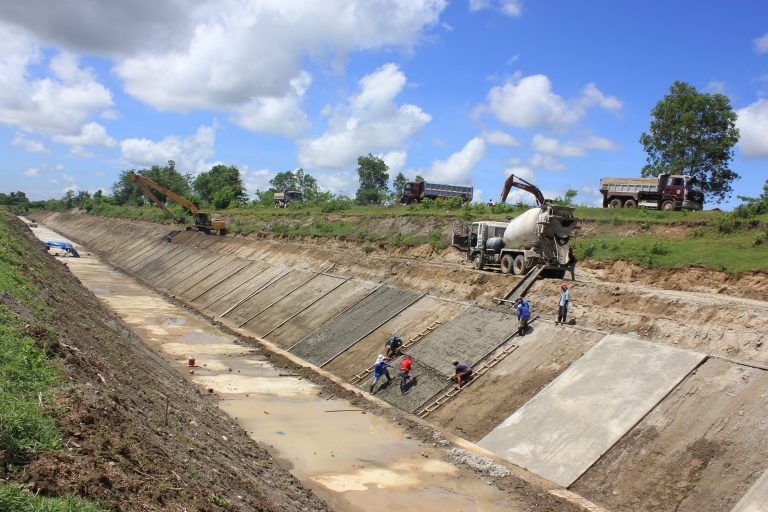
The Chico River Pump Irrigation Project is a Php4.3 billion project that is funded by Official Development Assistance (ODA) loan from China. The project will irrigate around 8,700 hectares that will supposedly benefit 4,350 farmers in 21 barangays from Tuao and Piat in Cagayan and Pinukpuk in Kalinga.

The Chico River Pump Irrigation Project is part of President Duterte’s Build, Build, Build infrastructure program for attracting foreign investors and accelerating economic growth. Build, Build, Build is a push for neoliberalism in the country particularly in the infrastructure sector. To recall, 70% of Tax Reform for Acceleration and Inclusion (TRAIN) revenues are earmarked for infrastructure projects mainly benefiting large foreign and domestic corporate interests.

According to the Cordillera People’s Alliance (CPA), the irrigation project privatizes agricultural services and forces farmers to succumb to unfair conditions set by corporations to be able to access their own resources. Communities also fear that the project will flood indigenous villages and farmlands in Barangay Sucbot, Pinukpok town up to Tabuk City. CPA also claims that affected communities did not consent to the Chico River Pump Irrigation Project.

However, the Duterte government continued on with the project and signed the loan agreement with President Xi Jinping on April 10, during the sidelines of the Boao Forum for Asia in Hainan, China. The winning contractor of the project is the China CAMC Engineering Corporation. The project is targeted to be completed in three years’ time and had its groundbreaking ceremony on June 8 at Tuao, Cagayan.

A reading from the onerous loan according to China

The Department of Finance (DOF) explains that the loan is worth Php 3.6 billion or 85% of the total value of the project to be implemented by the National Irrigation Administration (NIA). The loan for the Chico River Pump Irrigation Project has a 2% per annum interest rate and is payable in 20 years with a seven-year grace period. Moreover, there is a 0.3% commitment fee on the undisbursed amount and a one-time management fee pegged at 0.3% of the loan amount.

The loan agreement also has provisions that may be of serious concern. There is a provision that appears to, in effect, collateralize state assets. Article 5.5 is about the country not waiving immunity over Philippine assets dedicated to public and governmental use but suspiciously distinguishes these from “patrimonial assets and assets dedicated to commercial use,” which opens up the possibility that immunity over the latter is not waived.

The loan agreement’s Article 8.4 also explicitly says that it “shall be governed by and construed in accordance with the laws of China” but without similar explicit mention of Philippine law. Moreover, disputes regarding the loan agreement are to be settled at the China International Economic and Trade Arbitration Commission (CIETAC) which is outside of Philippine courts and beyond public transparency and scrutiny.

The Duterte administration seems focused on securing China investments and loans even to the extent of giving up territorial resources in the South China Sea. This is expressed in its desire to be included in China’s Belt and Road Initiative (BRI) and having access to its coveted infrastructure investments for developing countries.

China’s aggressive overseas efforts such as the BRI and its “debt book diplomacy”are part of the big power maneuvering and counter-maneuvering especially between China and the US for regional hegemony. The tensions between them recently became more public at the Asia-Pacific Economic Cooperation (APEC) summit. In particular, US protectionism went up against China’s desire to further open up economies. For the first time in its history, the APEC Summit was unable to produce a joint communique indicating not just the growing rivalry between the two big powers but perhaps even growing divisions among Asia-Pacific countries along those lines.

The mystery of dams

The Chico River Pump Irrigation Project is not the only dams project seeking China financing. Other projects include the Ilocos Norte Irrigation Project in Abra, the Gregorio Del Pilar Impounding Project in Ilocos Sur, the Tumauini River Multipurpose Project in Isabela, the Panay River Basin Integrated Development Project, the Ambal-Simuay River and Rio Grande de Mindanao River Flood Control Projects, and the New-Centennial Water Source- Kaliwa Dam Project of MWSS.

A deeper look into these projects shows that China is potentially interested in funding projects in areas with rich natural resources. According the Department of Environment and Natural Resources (DENR) the Chico River Basin has prospects for gold, sulfur, copper, clay, and gravel although since no actual drilling has yet been conducted in the river basin the volume of deposits is still uncertain.

The Rio Grande de Mindanao covered by the Ambal-Simuay and Rio Grande de Mindanao River Flood Control Projects of DPWH has metallic mineral sites within the river basin area including gold, copper, and silver, according to a study by the University of the Philippines Los Baños (UPLB).

The Chinese economy needs a constant and increasing supply of raw materials to keep growing and awareness of this should prompt more caution by the Philippines in the agreements it enters into with China. The possible collateralization of state assets such as under the Chico River Pump Irrigation Project loan agreement for instance may dangerously give way to China having undue access to the country’s rich natural resources in case of a loan default.

The New Centennial Water Source- Kaliwa Dam Project’s loan agreement is expected to be signed during Xi Jinping’s visit to the country. The loan agreement for this project may feature similar onerous conditions seen under the Chico River Pump Irrigation Project.

Continuing on

President Duterte’s development thrust is anchored on foreign investment liberalization with a huge infrastructure program as a central element. Infrastructure is essential for development but these need to be designed with a view to rural development and national industrialization. As it is, however, it is designed to reinforce the undue service- and foreign investment-orientation of the national economy. Moreover, the terms of deals especially with China seem to be onerous and surrender national sovereignty.

Philippine development should place the public welfare and national interest over that of narrow foreign and local big business interests.

Dalawang Eleksyong 2018

Sa buong mundo, naluluklok sa kapangyarihan ang mga lider na katulad ni Rodrigo Duterte. Ang tawag sa kanila, “maka-Kanang populista.” Maka-Kanan: naglilingkod sa iilang mayaman at makapangyarihan, nakasandig sa militar, at mapanupil sa mga mamamayan. Ibig ding sabihin, umaatake sa mga maka-Kaliwa, o mga aktibista at progresibo.

Populista: nagkukunwaring lumulutas sa mga tunay na problema ng mga mamamayan, pero naghahain ng pekeng solusyon. Halimbawa: para umasenso ang mahihirap, kailangan ng gera kontra-droga. Ang pekeng solusyon, marahas na pumupuntirya sa mga grupo ng tao na itinuturing na parte ng problema. Halimbawa: mga adik at ordinaryong tulak ng droga. Kaya naman madalas, marahas rin ang wika ng naturang mga lider laban sa iba’t ibang grupo: kababaihan, bakla’t lesbyana, pambansang minorya, migrante, dayuhan, bukod pa sa mga kalaban sa pulitika.

Ngayong taon, nagkaroon ng eleksyon sa dalawang bansa. Sa unang bansa, sa Brazil, nanalong presidente ang isang maka-Kanang populista. Sa ikalawang bansa, sa US, umani ng maraming boto ang mga pulitikong itinuturing na kalaban ng nakaupong presidente, na isang maka-Kanang populista.

Sa Brazil, pinakamalaking bansa sa Latin America na may populasyong 200 milyon, nanalong presidente sa eleksyon nitong Oktubre 28 si Jair Bolsonaro. Isa siyang dating opisyal-militar na naging lokal na pulitiko.

Lagi niyang pinupuri ang diktadurang dinanas ng Brazil noong 1964-1988. Nangako siyang bibigyan ng masaklaw na kapangyarihan ang pulisya — kasama na ang pagpaslang at pagtortyur — laban sa talamak na kriminalidad at itatalaga sa gobyerno ang mga opisyal-militar. Pabor din siya sa madaliang pagbili at pag-aari ng mga baril. Umasta siyang kalaban ng korupsyon at sagot sa malawakang kawalang-trabaho.

Marami siyang kontrobersyal na pahayag. May babae siyang sinabihan na napakapangit para gahasain niya. Mas gusto raw niyang mamatay na lang ang anak niya kaysa maging bakla ito. Ang kahinaan lang daw ng diktadura noon ay kulang ang pinatay nito sa mga kalaban. Nangako siyang ipapakalbo ang Amazon, isa sa pinakamalaking kagubatan sa mundo. Hinahangaan niya ang kakayahang militar at mapanupil ng US at Israel. Lilinisin daw niya ang bansa sa dumi ng mga Komunista. Nangako siyang bubuwagin ang Kongreso at nanawagang buwagin ang Korte Suprema.

Nakuha ni Bolsonaro ang 55% ng boto, habang 45% ang nakuha ng pinakamalapit niyang kalabang si Fernando Haddad, kandidato ng PT o Partido ng Manggagawa. Nitong Setyembre lang ipinasa kay Haddad ang pagiging kandidato ng PT ng dapat sana’y kandidatong si Luiz Inacio “Lula” da Silva — na siyang nangunguna sa mga survey sa pagkapangulo bago ang eleksyon.

Maalamat na personalidad sa Brazil si Lula. Aktibistang maka-Kaliwa siya na namuno sa mga protestang tumapos sa diktadura. Naging presidente siya noong 2002-2010 at pinalitan ng kapartido niyang si Dilma Rousseff, dating gerilya na ikinulong ng diktadura, hanggang kinudeta ito noong 2016. Ang gobyernong pumalit kay Dilma, nagpakulong kay Lula. Kinasuhan siya ng korupsyon, at binawalan siyang tumakbo ayon sa batas na likha niya noong presidente siya.

Sumuporta kay Bolsonaro ang oligarkiya ng Brazil, na matagal nang gustong bawiin ang mga serbisyo at proteksyong natatanggap ng mga mamamayan, at magpatupad ng mga patakarang neoliberal. Bumoto sa kanya ang mga mamamayang naakit sa pangako niya laban sa korupsyon at kriminalidad. Sinuportahan din siya ng mga konserbatibong Kristiyanong evangelical, na dumarami sa Brazil.

Tatak ng kampanya niya ang paggamit sa social media para magpalaganap ng “fake news,” gumawa ng mga eskandalo, at manlinlang. Ang social media na WhatsApp ang popular sa Brazil, ginagamit ng 44% ng populasyon. Sinasabing kinatuwang niya si Steve Bannon, tagapayo ni Donald Trump sa pagmanipula sa social media. Tampok na modus operandi ang paglalabas ng mga larawan at video na may maling paliwanag: kunwari’y tiwali ang kalaban, kunwari’y malaki ang mga rali ng tagasuporta niya.

Bagamat natalo sa eleksyon, malaking pwersang pampulitika pa rin sa Brazil ang mga progresibo. Nangunguna rito ang MST, o kilusan ng mga walang lupa, na kilala sa pag-okupa sa mga lupain at pamamalakad sa agrikultura sa mga ito. Nariyan din ang CUT, ang kumpederasyon ng mga unyon ng mga manggagawa. Kinikilala pa rin ng mga mamamayan si Lula, Dilma at Haddad.

Sa pagratsada ni Bolsonaro ng mga patakarang neoliberal at mapanupil, maaasahan ang paglakas ng paglaban ng mga mamamayan. Maaasahan na ang malalaking protestang lansangan at okupasyon na isinulong ni Lula sa panahon ng diktadura. Bilang tugon sa mga banta ni Bolsonaro, may mga nagpapalutang na rin ng pagsuong sa pakikibakang gerilyang isinulong ni Dilma noon.

Sa US naman, ginanap nitong Nobyembre 6 ang eleksyong “mid-term” — ibig sabihin, sa gitna ng termino ni Donald Trump, malaking kapitalista na presidente ng US simula 2016. Bumoto ang mga mamamayang Amerikano ng mga representante sa kanilang House of Representatives at Senado, at naglabas ng pahayag laban kay Trump.

Ang laging mensahe ni Trump: para makabangon ang Amerika sa pagbagsak ng ekonomiya, kailangang palayasin ang mga migrante at ilugar ang mga populasyong hindi puti — Itim, Latino, Asyano, at iba pa — sa US. At ganyan nga ang ginagawa ng gobyerno niya. Kilala si Trump sa mga pahayag na kontra sa mga taong hindi puti, migrante, kababaihan, at mahihirap. Ginatungan niya ang malaganap na seksismo at rasismo sa US. Pagkatapos ng unang Itim na presidente ng US, si Barack Obama, naging presidente ang isang rasista.

Bagamat mas mababa sa 50% ng botante ang bumoto, ito ang eleksyong mid-term na may pinakamaraming bumoto sa loob ng 50 taon sa US. Tumaas ang boto ng mga kabataan, kababaihan, bakla’t lesbyana, at hindi-puti. Pagsisikap ito na talunin ang mga botong maka-Trump na mula sa mga agrikultural na parte ng Amerika. Karamihan sa mga tagasuporta ni Trump: maykaya, puti, lalake, agrikultural at suburban, may-ari ng baril, maka-militar, at Kristiyano.

Sa Kongreso, nakuha ng mga Democrats, partidong kalaban ng Republican ni Trump, ang mayorya ng pwesto. Nakuha nila ang 35 pwesto na dating hawak ng Republicans. Huli silang nanalo nang ganito noong 1974, pangulo si Richard Nixon na kinamuhian ng publiko. Naramdaman ni Trump na tagilid ang mga Republicans, kaya ilang linggo bago ang eleksyon, sumama siyang mangampanya sa mga tagasuporta niya, sa mga puti.

Sa Senado naman, kung pagsasama-samahin, lamang ng 11 milyong boto ang Democrats, pero nanatili pa ring mayorya ang Republicans. Nag-uugat ito sa kakaibang sistema ng eleksyon sa Senado ng US kung saan ang bawat state ay may dalawang senador, gaano man kaliit ang populasyon. Halimbawa, ang Wyoming na may populasyong halos 600 libo, dalawa ang senador, katulad ng California na may populasyong 39 na milyon.

Sa CNN, tinanong ang isa sa nanalong senador sa California kung ano ang dahilan ng panalo ng Democrats at ng mga babae pa nga. Ang sagot niya: “Si Presidente Donald Trump.” Si Trump ang unang presidente ng US na sinalubong agad ng protesta sa pagkapanalo at panunumpa. Ang marami sa mga lumalahok, kababaihan.

Sa kampanya para sa eleksyon ngayong taon, naging tampok ang seksismo ni Trump at mga kakampi niya dahil sa pagdinig sa nominasyon ng isang kandidato sa Korte Suprema. Ganoon din ang pagtutol niya sa pagkontrol sa baril sa kabila ng kaliwa’t kanang kaso ng pamamaril sa matataong lugar sa US.

Hindi pa malinaw kung talagang babanggain ng Democrats, na partido rin ng malalaking kapitalista, si Trump. Pagkapanalo, nangako ng pakikipagkaisa sa mga Republicans si Nancy Pelosi, lider ng Democrats. Pero ang makikita sa resulta ng eleksyon, ang sentimyento ng mga Amerikano laban sa kanilang presidente.

Marami rin ang nagsasabi na marami pang dapat gawin bukod sa pagboto laban kay Trump. Kailangan ang tuluy-tuloy at papalawak na pagpapahayag at pagpoprotesta. Mainam ang kalagayan para sa paglawak at paglakas ng progresibong kilusan maging sa tinatawag na loob ng imperyalismong US, sa “sinapupunan ng halimaw.”

May mga komentarista na nagsasabing sa pagiging presidente ng mga maka-Kanang populista tulad nina Trump, Bolsonaro at Duterte, isang panahon ng kadiliman ang naghahari sa mundo ngayon.

Pero kahit ang mga pangyayari sa kasalukuyan — sa US, sa Brazil at lalo na sa Pilipinas — pinagtitibay ang aral ng kasaysayan: kapag may pang-aapi, may paglaban. May panahong walang makita kundi ang tindi ng pang-aapi, pero lagi’t laging pinapatunayan na pinapalakas pa nito ang paglaban.


Featured image: Jair Bolsonaro, bagong halal na presidente ng Brazil (Wikimedia Commons)