Their core message is clear: The ongoing climate negotiations in Glasgow are dangerously following previous patterns where pledges were big but actions were lacking
Filipino youth advocates urged global leaders to deliver on their promises regarding the climate and the environment amid the ongoing United Nations (UN) Climate Change Conference or COP26 in Glasgow, Scotland.
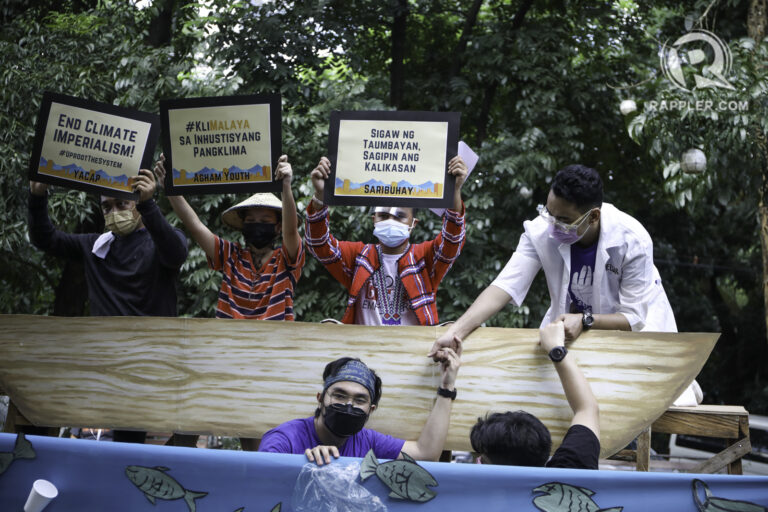
On Saturday, November 6, the Youth Advocates for Climate Action Philippines (YACAP) livestreamed the program “#KliMalaya: Fight For Freedom From Climate Injustice” – the online counterpart of the protest march that took place simultaneously in Quezon City.
The two-hour online event featured messages of support, performances, and calls to action from its various partner organizations and individuals mostly composed of the Filipino youth.
Their core message was clear: The ongoing climate negotiations in Glasgow are dangerously following previous patterns where the pledges were big but actions were lacking. Global leaders, particularly those from developed nations, should take action and deliver on their commitments and promises to address the growing climate crisis in the world.
The program included a Twitter rally, where participants were urged to tweet using the event’s official hashtags. The hashtags #KliMalaya and #WorldClimateMarch landed on the Philippines trends at 5th and 7th places, respectively, by the end of the program at 5 pm.
Holding companies, governments to account
It was reported in 2017 that only 100 corporations are responsible for over 70% of the world’s greenhouse gas emissions. Many of these companies have significant footprints in the Philippines.
“From the years passed, history has proven how the current capitalist setup has threatened our planet in different aspects,” said Jonas Angelo Abadilla, chairperson of the University of the Philippines Diliman student council.
“Let us demand big corporations and our national government to fight for a nationalist, scientific, and mass-oriented environmental policies…. Let us continue to change the system, not the climate,” he said.
Kabataan Representative Sarah Elago also pointed out that the pandemic has revealed the failures of the government to prioritize the environment and people over big businesses.
“COVID-19 has revealed the failure and fragility of our current economic system, which prioritizes business interest over the well-being of people and the environment. It has deepened inequality and has thus far failed to protect the most vulnerable. Clearly, a change is needed. We need to act now,” Elago said.
In August, the UN climate panel released a report detailing the “irreversible” climate impact caused by human activities. UN Secretary-General Antonio Guterres urged an immediate end to destructive coal and fossil fuels.
“Climate change is man-made. And it can be stopped by us, as well, with the right policies and actions,” said Adem Inovejas, founder of environmental conservation organization Project Blue Ilocos.
In August, Filipino business groups also urged the government to immediately act on the issue of climate change.
Protecting environmental defenders
Representatives of the youth groups also highlighted the dangers faced by environmental defenders in the country, where many are being threatened and killed for fighting for the environment.
In Southeast Asia, the Philippines remains the deadliest country for land defenders, according to environmental watchdog Global Witness. Globally, the Philippines ranks third.
“Our seas are rising, and so are we,” said Ann and Billie Dumaliang, Filipino conservationists and sisters behind the Masungi Georeserve Foundation. “Tinatawagan natin ang ating mga global leaders na mangunguna sa pagprotekta hindi lamang ng ating mga wild spaces, pati na rin ng ating mga taong nangangalaga rito.”
(We call on our global leaders to be the first in line to protect not only our wild spaces but also the people who take care of them.)
The Masungi Georeserve Foundation has struggled to deal with attacks on their forest rangers on top of illegal logging and quarrying.
The #KliMalaya event was led by environmental and civil society groups Panatang Luntian Coalition, Southern Peoples’ Action on COP26, and Youth Advocates for Climate Action Philippines. The on-ground march in Quezon City is part of the World Climate March by Oxfam International. – Rappler.com
Remember when Twitter users trolled Facebook and Mark Zuckerberg for Meta’s eerie similarities to Black Mirror? Well, it looks like a former Google CEO is joining the critic’s crowd.
Facebook is officially rebranding its corporate name to Meta to emphasize the company’s shift toward bringing virtual realities to life—and to dissociate itself from all the controversies and legal cases in Facebook’s wake. However, Google’s ex-CEO Eric Schmidt warns users that Mark Zuckerberg’s Meta isn’t as benign as it seems. Just a few months ago, Schmidt publicly said that social media is an “amplifier for idiots,” and now, he suggests that Meta might only make it worse. To Schmidt, this obsession with the metaverse could just worsen our already toxic behavior online.
“All of the people who talk about metaverses are talking about worlds that are more satisfying than the current world—you’re richer, more handsome, more beautiful, more powerful, faster,” Schmidt said to The New York Times.
“So, in some years, people will choose to spend more time with their goggles on in the metaverse. And who gets to set the rules? The world will become more digital than physical. And that’s not necessarily the best thing for human society.”
Remember when Twitter users trolled Facebook and Mark Zuckerberg for Meta’s eerie similarities to Black Mirror? Well, it looks like a former Google CEO is joining the critic’s crowd.
Facebook is officially rebranding its corporate name to Meta to emphasize the company’s shift toward bringing virtual realities to life—and to dissociate itself from all the controversies and legal cases in Facebook’s wake. However, Google’s ex-CEO Eric Schmidt warns users that Mark Zuckerberg’s Meta isn’t as benign as it seems. Just a few months ago, Schmidt publicly said that social media is an “amplifier for idiots,” and now, he suggests that Meta might only make it worse. To Schmidt, this obsession with the metaverse could just worsen our already toxic behavior online.
“All of the people who talk about metaverses are talking about worlds that are more satisfying than the current world—you’re richer, more handsome, more beautiful, more powerful, faster,” Schmidt said to The New York Times.
“So, in some years, people will choose to spend more time with their goggles on in the metaverse. And who gets to set the rules? The world will become more digital than physical. And that’s not necessarily the best thing for human society.”
Some tech giants like Elon Musk have warned about the dangers of artificial intelligence to warfare, technology, and conflict, but Schmidt points out how AI could change culture just as drastically—and just as detrimentally.
“It will be everywhere,” said Schmidt. “What does an A.I.-enabled best friend look like, especially to a child? What does A.I.-enabled war look like? Does A.I. perceive aspects of reality that we don’t? Is it possible that A.I. will see things that humans cannot comprehend?”
Of course, the online world has become integral during worldwide quarantine as millions shifted work and even leisure online. But despite this massive move to digital, Meta does present an important question: Is the digital world where we’re supposed to stay?
By: Nestor P. Burgos Jr. – Reporter / Philippine Daily Inquirer / November 03, 2021
ILOILO CITY, Iloilo, Philippines — Clarissa Ramos could only light and offer a candle virtually for her slain husband and human rights lawyer Benjamin “Ben” Ramos Jr. on All Souls’ Day.
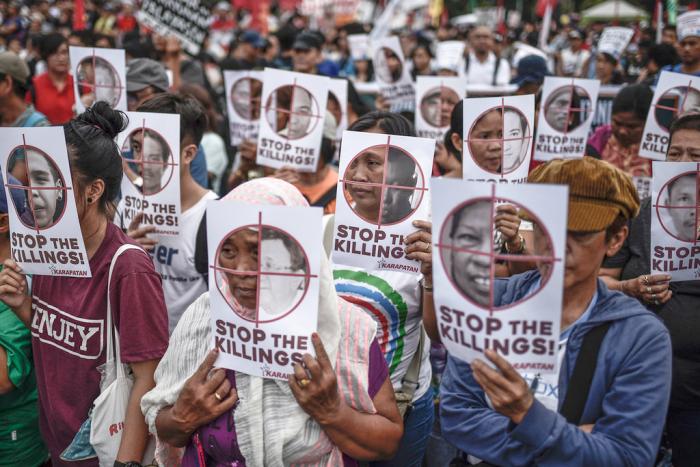
Clarissa, who last year sought refuge in Europe amid safety and security fears, also paid respects to victims of extrajudicial killings (EJKs), including human rights defender Zara Alvarez, who was killed in Bacolod City.
“I offer this candle to our departed loved ones and to the thousands who have offered their life for the road to peace. Let us remember their courage and let them inspire us to continue their fight until we realize genuine democracy. We will not stop praying and fighting for justice,” Clarissa said.
A gunman on a motorcycle shot and killed Ramos on Nov. 6, 2018, near their house in Kabankalan City in Negros Occidental province.
He was killed after he was repeatedly red-tagged and accused of being a part of the Communist Party of the Philippines (CPP) and New People’s Army.
Ramos was the founder of the nongovernmental organization Paghida-et sa Kauswagan Development Group and a founding member of the National Union of Peoples’ Lawyers.
Alvarez, on the other hand, was repeatedly shot by a masked gunman as she was going home to her boarding house at Barangay Mandalagan in Bacolod City on Aug. 17, 2020.
She served as a paralegal of the human rights group, Karapatan, and helped document killings of rights workers and activists on Negros Island.
No arrest
Like many other killings of members of progressive groups in Negros, no arrest has been made for their deaths.
“We remember them because our families continue to feel the pain. They are victims of state violence. The perpetrators have escaped justice until now while many human rights defenders and progressive organizations continuously face threats and repression,” Clarissa said.
Like Clarissa, Lean Porquia could also not visit the remains of his father, Jose Reynaldo “Jory” Porquia, at a columbarium in Iloilo City.
“I wish that our family can together visit him but for now we can remember Tatay in our own personal spaces,” Lean told the Inquirer in a telephone interview on Sunday.
Lean, who is a union organizer of employees of business process outsourcing firms, said observing All Souls’ Day for him was not only remembering his father but continuing their cry of justice.
At the height of a city-wide lockdown due to the COVID-19 pandemic, masked armed men gunned down Jose Reynaldo on April 30 last year at a rented cottage at Barangay Sto. Niño Norte in Arevalo District, Iloilo City.
At the time of his death, Jose Reynaldo was Bayan Muna Iloilo City coordinator and was leading a feeding program for those worst affected by community quarantine restrictions.
‘Calvary’
A popular youth leader during the Marcos dictatorship, he was repeatedly Red-tagged before he was gunned down. No arrest has been made a year and a half after his killing.
“Our own Calvary has not ended and has even worsened,” Lean said.
He said his family cannot be together to visit his father due to continued Red-tagging.
In September, two alleged former communist rebels filed a complaint before the Department of Justice against Lean, CPP founding chair Jose Maria Sison and two others, for child abuse and trafficking of minors for allegedly recruiting them in the rebel movement when they were minors.
Climate of fear
Lean’s mother, Josephine, and sister Krisma have also been accused as members of the rebel movement.
“After my father’s death, they still want to silence us,” Lean said.
He said the families of other victims of extrajudicial killings, including lawyers, human rights defenders, indigenous peoples leaders and farmers, are also crying for justice.
“There’s a climate of fear among our families and we continue to grieve for our loved ones and remember them today,” Lean said.
Concerned citizens filed last month with the Ombudsman a criminal complaint charging Energy Secretary Alfonso Cusi, billionaire Udenna Corp. CEO Dennis Uy, and other officials with graft for their role in what they deem as the questionable sale of the majority stake in the Malampaya deepwater gas-to-power project — ”the most incredible crony agreement” in history, they said.
Geologist Balgamel Domingo and US-based Rodel Rodis and Loida Nicolas Lewis alleged in a 42-page complaint filed Oct. 18 that Cusi, as well as employees of the state-run Philippine National Oil Company-Exploration Corp. (PNOC-EC), had conspired with the officers of Udenna and sellers Chevron Malampaya LLC and Shell Philippines Exploration BV (SPEX) to give “unwarranted benefits, advantage or preference to Udenna and its subsidiary, UC Malampaya.”
UC Malampaya — later renamed UC38 — bought for $565 million in November 2019 the 45-percent stake of Chevron Malampaya in the Malampaya natural gas field off northwest Palawan. The sale, which got the Department of Energy’s blessing, was followed up with the purchase for $460 million of the other 45 percent held by SPEX, bringing Udenna’s total stake to 90 percent, with state-run PNOC-EC holding the remaining 10 percent.
The complaint’s main charge is that Cusi et al. “allowed or facilitated” the transfer to the Uy companies the rights and shares of Chevron “without ascertaining Udenna and UC Malampaya’s legal, technical and financial qualifications” to take over the latter’s obligations under the Malampaya contract.
That view is shared by Sen. Sherwin Gatchalian, who has aired his own concerns over the financial capability of the Udenna group to keep the Malampaya field up and running, especially after one of Udenna’s subsidiaries recently suspended a hyped casino project in Clark due to debt and cash problems.
“This is a red flag. Paano natin mapagkakatiwalaan ang kumpanyang lubog sa utang? First, the acquisition of Udenna Corp. unit of Chevron’s 45 percent stake in Malampaya was largely financed by loans. Now, Udenna wants to have the operating interests by acquiring Shell’s stake,” Gatchalian said.
Another red flag noted was the speed at which negotiations over the extension of the Malampaya service contract — expiring in 2024 — picked up pace, just as gas field operator SPEX was finalizing the transfer of its interest to Udenna subsidiary Malampaya Energy XP Pte Ltd.
“Hindi talaga maiaalis sa isip na baka magkaroon ng midnight deal dahil 2016 pa lang, gusto na itong i-renew ng Shell,” pointed out Gatchalian. “Ngayong pumasok sa eksena si Udenna, biglang bumilis ‘yung negotiations.”
Davao-based businessman Dennis Uy, owner of the Udenna Group, is listed as one of Mr. Duterte’s top campaign contributors, and has been on a buying spree over the last five years.
According to the complainants, Cusi, who is ex-officio chair of PNOC-EC, could have challenged Uy’s bid for the Chevron stake, but chose not to despite the sure revenues from the operating field that should help fill government coffers severely depleted by COVID-19 response programs. “This very profitable opportunity was squandered due to not properly exercising the right of first refusal prior to the closing of the sale transaction,” they said.
How profitable? The estimate is that the government will essentially forego some P42 billion a year in revenues from Malampaya due to the sale. This has prompted Gatchalian to brand the transaction as “lutong macau.”
Malampaya is no ordinary gas venture. Per Shell, it supplies up to 40 percent of the power needs of Luzon or about 3.7 million homes. It’s considered the “backbone” of the country’s energy mix, accounting for 30 percent of total capacity.
That’s why “This should shock our consciences, shock our nation,” lamented Rodis. “Why is the Philippine government allowing this theft of our resources, this theft of our future, to take place? … The question really is: If [Uy] was not a close friend and crony of President Duterte, would he have received the benefits of this incredibly one-sided contract?”
The Malampaya gas field falling into the hands of an “unqualified” company, Gatchalian added, will spell trouble for the economy considering its key role in the Philippines’ power needs.
Cusi, who chairs a faction of the divided ruling party, has characterized the charges as politically motivated
(“I have no doubt the truth will vindicate me and the innocent people dragged into this purported action obviously filed for the singular purpose of political propaganda”) and has criticized Gatchalian’s statements as “misguided, lacking in factual and legal basis.”
Are they? At this point, only a rigorous, transparent probe delving into the fine print of this mammoth transaction will assuage such questions. The Malampaya field is simply too important a national asset to be the subject of any suspect deal — and its seemingly convenient sale to a known associate of the President deserves the utmost scrutiny.
The Philippines’ first Olympic gold medal, in a sport that is not popular in the Philippines, did not happen by accident. It was a journey that began three decades ago in Barangay Mampang, Zamboanga City. Here, exceptional talent, visionary leadership, and an audacious grassroots program converged to give Hidilyn Diaz the boost she needed early in her career.
BY ATOM ARAULLO October 31, 2021, https://pcij.org/article/7369/anatomy-of-philippines-first-olympic-gold-meda
It seems fitting that our enduring image of Tokyo 2020 is that of weightlifter Hidilyn Diaz, arms above her shoulders, elbows locked, body taut, lifting the unbearable weight of nearly a century of national disappointment. And then a moment later, bent forward, hands clasped tight against her chest, screaming, realizing she has done it, a nation weeping for joy with her back home.
The battle for gold was down to her last lift. When she stepped up to the stage, the record for the women’s 55 kilogram division had already been broken three times in quick succession. Diaz herself held that record for all of three minutes when she carried 124 kg in the clean and jerk, before her formidable Chinese rival, who had never placed anything other than first in her competition history, broke it again after lifting 126 kg. Now, Diaz had to carry a kilogram more, a weight she had never conquered previously, whether in contest or practice.
Diaz gripped the bar and took position, uttering her competition mantra again. “Chest out. Deadlift. One motion.”
The weight seemed to float from the floor as Diaz racked it onto her shoulders. Visibly at her limit, Diaz summoned all of her strength to stand up from her squat.
“She has the clean, now she needs the jerk,” the TV commentator said.
With a look of absolute determination, Diaz drove the weight overhead and dropped under it, splitting low to the ground. Her entire body quivered. The bar tipped slightly to the left. The earth moved. But Diaz, a veteran of four Olympics, was not going to let this moment slip from her already torn and bleeding fingers.
She pushed her legs together and straightened her body. One one thousand, two one thousand. History.
It was the Philippines’s first gold medal in the prestigious contest in almost 100 years of trying. For the first time in a medal event, the sun and three stars rose above all colors, and the Lupang Hinirang soared in the halls of the Olympics. Diaz, a sergeant at the Philippine Air Force, held back tears as she saluted the flag, her hand wrapped in tape.
“I couldn’t believe it. I did it despite all the pressure, all the expectations, and against very strong rivals,” Diaz said.
As superlatives swirled following Diaz’s win, it was her heartbroken nemesis who paid her the ultimate compliment. “I really respect Diaz as an opponent because she did the best she could, in fact better than that, and that is the ultimate,” silver medalist Liao Quiyun said.
One gold medal from Tokyo would’ve been enough to juice “Pinoy Pride” for weeks to come, but our athletes were not done yet. It was the turn of our scrappy boxers to tantalize, fighting their way to three more podium finishes: a silver each for Nesthy Petecio and Carlo Paalam, and a bronze for Eumir Marcial.
By the end of the games, it was our winningest Olympics yet, surpassing the three bronze medals the Philippines won way back in 1932.
Philippine sports on the world stage
Since the first modern games in 1896, the Olympics has come to be recognized as the world’s foremost sporting event. More than 200 nations (and recently, a refugee team) participate in the games, with summer and winter editions alternating every two years.
The Philippines has not had much success in these games. The country’s best and most admired athletes repeatedly fell short of the ultimate prize for decades. This was understood and rationalized with a collective shrug. After all, we were competing against the might and resources of wealthier countries. We watched with awe and no small amount of envy as powerhouse nations like the US, UK, China, Germany and Russia cleaned it up year after year. Filipinos were underdogs, so we embraced it, sequestering “puso” or “heart” as our unofficial battle cry.
Not everything is about winning, however. The best-known architect of the modern Olympics, Baron Pierre de Coubertin, once said: “The most important thing in the Olympic Games is not winning but taking part; the essential thing in life is not conquering but fighting well.” An overemphasis on victory for its own sake may lead to a skewed, even toxic approach to sport.
Even so, any serious athlete will testify that they play to win. The pursuit of excellence is integral to sport, and winning is a validation of the hard work, dedication, and sacrifice required to get better and eventually compete with the best.
In some ways, the Philippines had a head start. We first joined the Olympics in the 1924 Paris Games, sending David Nepomuceno to compete in the 100-meter and 200-meter dash. This was 24 years ahead of any other Southeast Asian country, with Myanmar joining the Olympics at the post-World War 2 London Games in 1948. By then, the Philippines had already snagged five bronze medals in three consecutive games, with wins in athletics, swimming, and boxing.
It would take another 80 years for the Philippines to win its next five medals: three silvers and two bronzes. In that time, neighbors Thailand and Indonesia had already won multiple golds, while Vietnam and Singapore earned their first gold medals at the 2016 Rio Olympics. The Philippines had fallen behind.
Tracking our delegation size over time reveals a similar story. Qualifying for the Olympics is an achievement in itself because athletes have to rank among the best in the world in a series of sanctioned, international events in order to compete.
From a single representative in 1924, the Philippine delegation grew steadily until the 1964 Tokyo Games, where we sent our biggest contingent of 66 athletes. Since then, that number has gone down. The biggest drop happened after the 1972 Games, in part because we haven’t qualified for basketball since, an event with 10 to 12 players to a team. In London 2012, we sent a lean delegation of 11 athletes, our smallest since 1932.
The decline of Philippine sports is even clearer in the Asian Games. The country’s four best performances came in four consecutive competitions from 1954 to 1966. The Philippines finished second behind Japan in the 1958 and 1962 editions. From then on, our medal haul nosedived despite competing in more events. We finished 22nd out of 37 nations in 2014, and improved slightly to 19th in 2018.
Why do some countries win more medals than others?
Many studies have explored the relationship between key national characteristics and Olympic success. Two of the most frequently cited factors are population and wealth. The logic behind this is intuitive. A larger population means a larger pool from which to recruit and develop talent. Meanwhile, athletes from richer countries would likely have the advantage of better facilities and equipment, while a higher standard of living improves general fitness and opportunities to participate in sport.
To get a glimpse of these connections, we examined the results of the recent Tokyo Olympics and ranked countries in terms of total medals won.
Right off the bat, it was clear that considering population alone did not work as a predictor of Olympic success. If population were the only feature that mattered, China, India, US, Indonesia and Pakistan would have been in the top five of the Games, while the Philippines would rank 13th. Only China and US were in the top five, the Philippines ranked 47th-59th, and Pakistan did not even win a single medal.
Plotting the medal tally against GDP per capita with bubbles indicating population size was a little more useful. We considered the top 30 countries in our analysis, and also included Asean nations to zoom in on the performance of the region.
Here, we can see that the higher the GDP per capita of a country, the more medals they won. Even so, there were many exceptions. Switzerland, Denmark, Sweden and Norway have been winning less medals compared with nations with comparable per capita incomes (although it’s worth noting that Switzerland, Sweden, and Norway consistently ranked among the top 10 at the Winter Olympics). Among Asean nations, a conspicuous outlier is Singapore, which has one of the lowest medal tallies of countries in the higher GDP per capita range.
Considering population size, some of these deviations can be partially explained. Singapore only has a population of approximately 5.8 million people. This is well below the median of the top 20 countries in the Olympics, about 49 million. Similarly, Switzerland (8.7 million) Denmark (6.8 million), Sweden (10.1 million), and Norway (5.4 million) all have comparatively smaller populations.
Still, this is clearly not the entire picture. With only a slightly bigger population, Cuba, a nation of 11.3 million people, won two more total medals and four more golds than Switzerland, despite having a GDP per capita one tenth the size. Wealth and population alone also cannot account for the outsized performance of countries like China, Russia, and Ukraine. Kenya, which specializes in middle- to long-distance running, is a particular overachiever at the Summer Games. It managed to win four gold medals, four silvers, and two bronzes in Tokyo 2020 despite having a GDP per capita and population that were both abo
In their 2015 book “Successful Elite Sport Policies,” authors Veerle De Bosscher, Simon Shibil, and Hans Westerbeek revealed that the three most significant macro-level factors for predicting Olympics success were wealth, population, and a third determinant – current or former communism – that is to say, the presence or earlier presence of a socialist regime. Using regression analysis, a form of predictive modelling that finds the causal relationship between variables, they found that just those three factors predicted medal-winning success by 41.6 percent. Older studies placed the influence slightly higher, hovering at about 50 percent.
These results are encouraging for countries like the Philippines with plenty of ambition. We may have the relative advantage of population, but we are lagging in terms of wealth, and that may take a longer time to change. But when it comes to elite sports, studies suggest that literally half the battle involves other factors. Those other factors are the subject of numerous inquiries, too, with population grip strength, and radios per capita among some of the more intriguing predictors that have been investigated.
But the most self-evident of the factors that may contribute to international sporting success is an effective national sports program. And that begins at the grassroots.
Diaz’s story is proof.
Sports at the grassroots
Our first Olympic gold medal, in a sport that is not popular in the Philippines, did not happen by accident. It was a journey that began 30 years ago in Barangay Mampang, Zamboanga City. Here, exceptional talent, visionary leadership, and an audacious grassroots program converged to give Diaz the boost she needed early in her career.
By now, Diaz’s modest beginnings as a young athlete from the province is legendary. The fifth of six children of a tricycle driver turned farmer and a stay-at-home mother, Hidilyn and her siblings grew up with very little. Nevertheless, sports was always part of their life. Hidilyn first learned about weightlifting from her older cousins, her competitive streak revealing itself from an early age.
“My cousins always beat me in other sports. I wasn’t good at them. I liked weightlifting because I was better at it,” Diaz said.
Hidilyn’s budding interest in the sport came at an opportune time. Former national weightlifting athlete Elbert Atilano had just become the director of the Institute of Human Kinetics at the Universidad de Zamboanga (UZ), then called the Zamboanga A.E. Colleges, a non-sectarian private school. He had high ambitions for the sport in his hometown, shifting to coaching full-time almost two decades earlier after realizing the need to upgrade the skills and knowledge of local coaches.
With Atilano as head weightlifting coach, the school dominated national competitions for several years, even beating the powerhouse team of the Armed Forces consistently. The school’s former president Dr. Arturo Eustaquio, Atilano’s boss, jokingly said that he was growing sick of all the national championship titles.
“He (Eustaquio) told us he wanted an international title. He wanted an Olympic gold,” Atilano recalled, laughing. “I told him, ‘If that’s what you want, you should send me abroad to train.’ There were no weightlifting coaches in the Philippines then.”
Eustaquio called his bluff. Soon, Atilano was in Indonesia for an intensive, three-month program under the Asian Sports Institute that cost P300,000, a hefty sum back in 1993.
“The school covered the costs. They invested. I learned scientific sports training,” Atilano said.
High from his experience, he made a bold prediction: “The first Olympic gold will come from weightlifting in Zamboanga City.”
Atilano immediately started going to work. One of his first moves was looking for younger talent. Because of his international exposure, he learned that world-class weightlifters began training as young as 8 years old. Filipino weightlifters back then typically started training in high school; too late in the game. Atilano convinced UZ to make an extension program to cater to youngsters who weren’t enrolled in the school. With the blessing of the Department of Education, he started training elementary students.
The program had been around for a few years when Diaz, who was 10 years old at the time, found that she had a knack for lifting. She began playing around with makeshift barbells made from ipil-ipil wood fitted with mag wheels or poured concrete. Her first coach was her cousin Catalino Diaz, who was already part of the UZ extension program. Catalino decided to bring her to Atilano. The coach was looking for female lifters to train, another strategy to succeed internationally, but few girls were interested in the sport.
Atilano recalls meeting Diaz for the first time.
“I tested her. She was structurally fit for weightlifting. She could do full squats, and you could see her arms really lock, like the letter V,” Atilano said. “I said, ‘Yeah, she’s qualified.’”
At first, Atilano didn’t set high expectations for Diaz. He told her cousin to give Hidilyn the beginners program, expecting her to drop out within a week or two. Instead, Diaz did not miss a single training session for six months.
“She was never absent. She was really interested,” Atilano said.
But it wasn’t just determination that Diaz needed to keep up with training. To get to a local gym some 15 kilometers from home, she had to cough up P50 for the roundtrip fare, a considerable sum given the modest income of her family. Diaz resorted to selling vegetables and fish, and washing jeepneys to earn extra money. Seeing her struggle, Atilano eventually gave Diaz her own Olympic bar and weights so she could train in their backyard.
There were gender stereotypes to deal with as well. Hidilyn’s own mother, albeit supportive, used to warn her about bulking up due to weightlifting. It wasn’t lady-like, she said, and could drive away potential suitors.
“People said, ‘Don’t do that, that’s for men. Women should stay at home.’ They’ll say you’re an Amazon, a macho person. I got embarrassed. My mother told me no one would like me if I did weightlifting. So growing up as a girl I was insecure with my muscles,” Diaz said.
But through it all, she persevered, in no small part because of the support and mentorship of Atilano and his wife Cecilia, a former weightlifter and Southeast Asian Games medalist herself. Diaz had found a role model and a viable path to success.
Hidilyn was soon offered a high school scholarship at UZ. Soon, she was blazing through local and national competitions. The local government extended support, shouldering the cost of transportation, providing allowance, and supplying uniforms for out-of-town meets. At the tender age of 13, Diaz became a member of the national team.
Diaz still speaks highly of her city’s sports program. With fellow Zamboangeño Marcial taking home bronze in the last Summer Games, and high jumper Simeon Toribio snagging the country’s second medal, a bronze, in Munich back in 1932, the city now has four out of 14 Philippine Olympic medals to its name, the most for any municipality.
“There were many promising athletes there. They held annual summer games, where athletes hone their skills. On top of that, the Zamboanga city government supported the kids. They paid for water, shoes, clothes, cycling shorts — the complete set,” Diaz said.
Diaz deserves credit for fighting through adversity, but being born in a place with a functioning weightlifting program was the luck of the draw. The city had a bona fide weightlifting coach, a university that offered scholarships for weightlifting (one of only three in the country at the time), and a local government that supported its athletes.
But not all localities are the same. Sports journalist and political science lecturer Anthony Divinagracia said in an interview that grassroots sports development in the Philippines was uneven, and could rise and fall on the manna of local governments or worse, individual politicians.
“Our grassroots sports programs are very localized. They’re not coordinated at the national level, unlike in other countries,” explained Divinagracia. “There are local leaders who say, ‘We’re a small municipality with very limited funding. Instead of spending on sports, we’d rather spend on agriculture and housing.’ It’s (grassroots sports program) not prioritized.”
The Palarong Pambansa, organized by the Department of Education, is one mechanism to promote grassroots sports from the top. But the annual competition for student athletes has been plagued with problems, too, mostly stemming from a lack of support both from the national and local levels. A glance at the budget of the Palaro reveals that funding has largely been stagnant since 2015, dropping further in 2020 and 2021 presumably because of the pandemic.
Meanwhile, another national youth sports competition, Batang Pinoy, has not been held since 2018. Unlike the Palarong Pambansa, Batang Pinoy also involved out-of-school youth, further extending the reach of grassroots sports. It also had events like weightlifting that were not included in the Palaro. Hidilyn’s first competition ever was at the Batang Pinoy games held in Puerto Princesa in 2002.
Ticket out of poverty
But certain sports can thrive even with limited supervision. A beloved sports at the grassroots is boxing, with basketball perhaps its only rival in terms of popularity. This is especially true in central and southern Philippines, which has produced some of our finest boxers, the likes of which include Flash Elorde of Cebu, Onyok Velasco of Negros Occidental, and of course, Manny Pacquiao of General Santos City. Every single one of our Tokyo 2020 boxing medalists hailed from Mindanao.
The prevalence of boxing in many parts of the country reveals an important reality. In impoverished areas, grassroots sports is a deeply socioeconomic phenomenon, seen as a way to improve one’s standing in life.
Marcial, Petecio, and Paalam famously joined local amateur matches as children, earning anything between P100 to P500 per fight. All born into poverty, the promise of financial reward was an important motivation for getting into sport.
Paalam, who moved from town to town in Mindanao with his family in search of greener pastures, had an exceptionally difficult childhood. As a boy, he had to hustle constantly to eat, diving for loose change flung by tourists at a pier, selling peanuts at a bus station, pilfering vegetables, and finally, picking garbage at the city dump in Cagayan de Oro after relocating there with his father. He experienced all this before turning 7.
On the way home from the landfill one day, barefoot, Carlo passed by the backyard of a neighbor who was training his son to box. Scared by what he saw, he tried to scuttle away into an alley, but was roped in by the neighbor for a little sparring session with his kid anyway. His boxing career had begun.
“I really didn’t like boxing at first. I was forced to wear gloves and fight the kid. He beat me up, but his father saw that I was fearless and I had the potential. That’s how I started,” Carlo recalled.
Soon he was joining every amateur contest he could, including “Boxing in the Park,” a popular event held in the city every week. With his first-prize money, Carlo bought his family some rice and a P3 ice cream stick for himself, the first time he could ever afford the sweet treat.
Afraid he would be told to stop, he lied to his father Rio about the source of the money in the beginning, saying it all came from working at the landfill. But Rio eventually found out, catching his son in action at one of his matches. A neighbor had told him a certain “Paalam” was fighting at the boxing tournament, and that Paalam was certainly not him.
Stepping down from the ring after earning a victory, aware that his father had been watching, Carlo asked for his blessing right then and there. Rio relented.
“I told him, ‘Let me do it, Papa. I’ll take care of myself and I’ll bring us out of poverty,’” Carlo said.
Officials would eventually take Carlo under their wings, giving him a slot in a local boxing program. He was given a monthly allowance of P500-P1,000, board and lodging, and support for schooling. Grassroots boxing has endured under this system for decades, giving rise to an ecosystem of benefactors, coaches, athletes, and administrators at the local level.
Local politicians and businessmen, especially in the Visayas and Mindanao, often support “stables” of athletes who compete in local competitions, in the hopes of finding the next breakout star, Divinagracia said.
But this is unsustainable, he added. Without deliberate support and coordination on a national level, the boxing model is hard to replicate in other disciplines, especially emerging ones. Often, patronage becomes the main driver of grassroots sports. This ties the system to the political fortunes of local executives who seem to use sports as a way of boosting their profiles.
Without an institutionalized support system, many young athletes who risk everything also fall through the cracks.
“Aspiring kids see their boxing idols live good lives, Manny Pacquiao for example, when he turned professional. Some stop going to school and their parents even encourage that. But not everyone who turns pro is lucky. Others slide deeper into poverty or even die,” Divinagracia said.
One way of widening support at the grassroots is through athletic scholarships. After scouting for stand-out talent in youth competitions, the transition to being a subsidized member of the national team is not always immediate or guaranteed. In the meantime, athletes need support, since many of them come from underprivileged backgrounds.
Athletic scholarships fill that gap, a way of sustaining young athletes as they continue their progress into elite competitors. But these are not easy to come by. Competition is stiff, funding for less popular sports is limited, and schools offering scholarships are concentrated in Metro Manila and other major urban areas. Crucially, a majority of higher education institutions are also private, a staggering 88 percent, putting them beyond the reach of public funding.
“Athletes who are scouted by good high schools or colleges are lucky. They get free food, their needs are paid for, they get scholarships and all that. But not all get to that level. So what happens to you?” Divinagracia said.
Although finding the best talent naturally involves a culling process, a comprehensive basic sports program places adequate safety nets for those who don’t go all the way. Providing quality, continuing education for young athletes makes a huge difference in protecting them, and also encourages a wider population to give sports a try.
While grassroots sports is the starting point for developing elite competitors, this is not its only purpose. In fact, it may not even be its most important function. Sports is a social investment. It promotes the holistic development of the youth, encourages peace and understanding among diverse communities, and instills important values like discipline, excellence, teamwork, sportsmanship, fair play, and solidarity.
And yes, it is also an opportunity to rise out of poverty, even if you don’t reach the pinnacle of success. As Diaz explained, the beginning of her sports career was about necessity.
“The truth is, I went into sports because the school gave me a scholarship. I wanted to finish school. That was it. I didn’t even know the Olympics existed.”
Diaz would learn about this most prestigious sporting event soon enough. Her long road to victory was only beginning.END
Part 2 of this report will be published on November 7.
The following contributed to this report: Voltaire Tupaz (interviews), Bong Santisteban and Elyzsa Jenwel Olavydez (research), and Czarina Jollyn Bastasa (visualization).
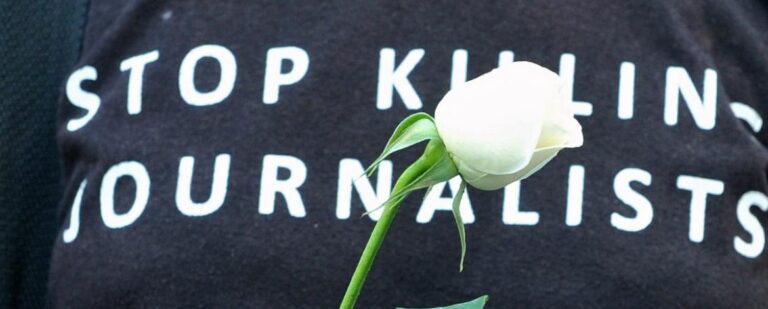
MANILA, Philippines — The Philippines remains one of the deadliest countries in the world for journalists, according to a global media watchdog report released on Friday, which again highlighted the dangers faced by media professionals working under hostile governments or weak criminal justice systems.
According to the annual Impunity Index issued by the Committee to Protect Journalists (CPJ), which trains the spotlight on countries where journalists have been killed and the perpetrators remain free, the Philippines ranked seventh on the list, the same as last year, with 13 murders still unsolved.
These cases were cited out of the total of 85 recorded in the country between 1992 and 2021.
Unsolved killings
For this year, the New York-based watchdog took note of the unsolved killings that happened between Sept. 1, 2011, and Aug. 31, 2021, spanning the period from the Benigno “Noynoy” Aquino III administration to the current Duterte presidency.
Only nations with five or more unsolved cases are included in the latest index, which this year covers 12 countries.
The Philippines joins war-torn states and authoritarian regimes on the list, which is topped by Somalia this year with 25 unsolved cases.
The list largely remained unchanged from last year. After Somalia, next in descending order based on the number of deaths are Syria, Iraq, South Sudan, and Afghanistan.
At sixth place is Mexico, while on the eighth to 12th spot are Brazil, Pakistan, Russia, Bangladesh, and India.
CPJ noted that no one had been held to account in almost 81 percent of the media killings worldwide in the last 10 years.
In a statement accompanying the report, CPJ deputy editorial director Jennifer Durham said the rankings reflected how “conflict, political instability, and weak judicial mechanisms perpetuate a cycle of violence against journalists.”
“Illustrating the endemic nature of this lack of accountability, all 12 of the countries on the index have featured multiple times since CPJ first ranked the data in 2008, and seven have appeared every year,” Durham added.
Last year, CPJ noted only one unsolved murder in the Philippines: that of Cebu-based radio broadcaster Renante Cortez, who was shot by motorcycle-riding gunmen on July 22, 2020. Cortez was then a host of a political news program on dyRB radio station in Cebu City.
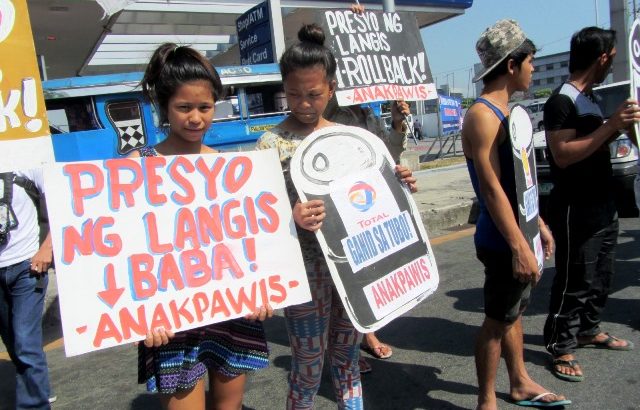
Supporting calls to suspend oil excise taxes, research group IBON said that this will go far in immediately easing the burden of rising prices on ordinary Filipinos. The group added that revenue losses can be compensated by similarly suspending recent corporate tax cuts. IBON said that these measures can be the start not just of a more progressive tax system but also a prelude to better regulation and control over the country’s oil industry.
Amid tight supplies and later increasing demand, global oil prices have been generally rising since the pandemic started including for eight straight weeks now. The Organization of Petroleum Exporting Countries (OPEC) has cut production, the US is not releasing oil from its Strategic Reserve, and China instructed its energy companies to secure supplies for the coming winter. From August 23 to October 15, the price per barrel of Dubai crude increased by US$15.95, Mean of Platts Singapore (MOPS) gasoline by US$19.05, and MOPS diesel by US$22.65.
The country is heavily reliant on oil imports so the global oil price hikes are causing domestic oil prices to follow suit. In just the past eight weeks, the price per liter of diesel hiked by Php8.70, gasoline by Php7.25, and kerosene by Php8.10.
This disproportionately burdens poor oil consumers and Filipino households, IBON said. Just from the eight weeks of hikes, for instance, jeepney drivers have to pay Php95.70 more for 11 liters of diesel per day. Farmers have to pay Php1,653 more for 190 liters of diesel per hectare per cropping season.
Rising oil prices increases the prices of basic goods and services, IBON stressed, and fuels inflation. This is worst for the poorest 30% of the population for whom inflation is higher than the national average. Inflation across many commodity groups is already much higher now than last year. Food inflation increased from 1.8% in the whole of 2020 to 5.4% in September 2021. Over that same period, inflation in housing, water, electricity, gas and other fuels increased from 2% to 3.4%, and in clothing and footwear from 2.5% to 2.7 percent. Inflation in health, transport and education have fortunately moderated.
IBON said that suspending the oil excise taxes under Tax Reform for Acceleration and Inclusion (TRAIN) will provide immediate relief. This will lower the price per liter of diesel by Php6.72 and of gasoline by Php6.33. It will also remove Php3 from the price per kilo of liquefied petroleum gas (LPG), lowering the price of an 11-kilo tank by Php33 not including VAT. The price per liter of diesel can go down from some Php46.33 to Php39.61, gasoline from some Php55.51 to Php49.18, and LPG from some Php968.90 to Php935.90.
IBON also said that oil revenue losses can be offset by also suspending corporate income tax (CIT) cuts under the Corporate Recovery and Tax Incentives for Enterprises Act or CREATE. The group noted that the government projects revenue losses of Php115.8 billion in 2021 and Php101.8 billion in 2022 from CREATE’s CIT cuts. Reducing indirect consumption taxes such as on oil and increasing direct taxes on income makes the tax system more progressive, said IBON.
The group stressed that these immediate measures are doable and will help lower domestic oil prices and ease inflationary pressures, substantially mitigating the burden of global oil price hikes on the poorest. Longer-term solutions should also start to be seriously considered, said IBON.
IBON stressed that more effective regulation and control of the oil industry is the only way to sustainably lower oil prices. This can start by ensuring transparency in oil firms’ price-setting and active state intervention to prevent overpricing. IBON pointed out that oil firms have had too much freedom to raise domestic oil prices opaquely and at will since the Oil Deregulation Law or Republic Act 8479, often changing pump prices by more than warranted by global oil price increases.
IBON also said that renationalization of oil firms such as Petron will increase the government’s capacity to intervene in the industry, with the strategic view of eventually nationalizing the majority of the oil industry. ###