Tahasang sinagot ng mga estudyante ng University of the Philippines Diliman sa kanilang Black Friday Protest ang paglalabas ng AFP ng listahan ng 18 unibersidad na diumano ay laganap ang pagrerekrut ng CPP-NPA. Ayon sa AFP, ang isang paraan sa panghihikayat ay ang pagpapalabas ng mga pelikula kaugnay sa Martial Law. Ang mga paraan na […]
Nasa Labas si Titser

Ipinagdiriwang sa Pilipinas at maging sa buong mundo ang paggunita sa kabayanihan ng mga guro. Sila na marahil ang pinakadakilang propesyon na hindi nabibigyang tuon ang kanilang mga batayang benepisyo at priyoridad ng pamahalaan. Marami na ring balita ang lumabas hinggil sa pagpapakamatay ng ilang guro dahil sa bigat at patong-patong na gawaing nagreresulta sa hindi makataong pagtrato sa kanilang kakayanan at limitasyon. Ilan lamang ito sa kalagayan ng mga guro mula sa pribado at lalo’t higit sa mga pampublikong paaralan.
Dahil sa kapangyarihan ng teknolohiya at mass midya, madalas nakasentro ang konsepto ng pagiging guro sa mga paaralan, kolehiyo at unibersidad. At sa tuwing ipinagdiriwang ang Araw ng mga Guro nagiging pokus ang kadakilaan nilang mga nasa loob ng institusyon at tila nakalilimutang bigyang pagkilala ang ilang gurong nasa labas din ng mga haligi.
Isa sa mga gurong nasa labas ay ang mga manlilikha ng bayan o mga cultural masters. Sila ang mga kinikilalang indibidwal na mayroong mga kasanayan at pamamaraan sa isang partikular na tradisyonal na gawain. Sila ay may pananagutan sa pagtuturo sa isang pangkat ng mga mag-aaral na kalimitang kabilang sa parehong etnolinggwistikong komunidad. Kinakailangan nilang tiyakin na ang mga mag-aaral ay matututo ng kanilang kalinangan.
Tinatawag na Balay Turun-an o School for Living Tradition (SLT) ang mga paaaralang pinamumunuan ng isang cultural master. Dito itinuturo ng isang gurong may kakayanan at kaalaman sa kanilang kultura ang mga kasanayan at pamamaraan sa paggawa ng isang tradisyunal na gawain tulad ng sining at mga oral na panitikan. Ang paraan ng pagtuturo ay karaniwang hindi pormal, pabigkas at sa mga praktikal na demonstrasyon ang daloy ng pagtuturo. Kalimitang bahay ng cultural master, isang social community hall, o isang lugar na sinadyang ipatayo para sa pag-aaral. Ang pagkakatatag ng mga SLT ay may layuning pangalagaan ang pamana ng kultura sa pamamagitan ng pagpapanatili nito sa isang buhay na anyo, pagtitiyak sa pagsasalin nito sa susunod na henerasyon at maging ang pagdodokumento sa unti-unting nawawalang katutubong kasanayan. Sa kabuuan, ang programa ay naglalayong kilalanin ang mga aspekto o sangkap ng tradisyunal na kultura at sining na itinuturing na mahalaga sa isang kultural na komunidad na dapat na ipagpatuloy ng mga susunod na henerasyon upang mapanatiling buhay. Patuloy nilang hinihikayat ang pagsuporta sa pag-aaral, pagkilala at pangangalaga ng mga nanganganib na gawaing mula sa mga weaver, chanter, mananayaw at iba pang mga manggagawang kultural.

Sa panahong nilulunod ng pangingibang bayan ang ilang mga guro, mahalagang palakasin ang pwersang nagmumula sa kultura. Tulad ng ibang mga paaralan nanganganib din ang kalagayan ng mga SLT, kasalukuyang kinakaharap nito ang usapin sa badyet upang maipagpatuloy ang programa, kawalang interes ng ilang etnolinggwistikong kabataan, at limitadong mga cultural master na may interes na maging guro. Sa kabila ng mga suliraning kinakaharap ng mga guro sa SLT, ipinagkakasya nila ang badyet na inilaan ng gobyerno sa kanila. At dahil sa malasakit sa kanilang sariling kultura, sa panahong matapos ang kontrata o suporta sa pagpapatakbo mula sa gobyerno, ang ilan sa kanila ay humihingi ng donasyon o pagpopondo sa mga pribadong indibidwal at institusyon upang maipagpatuloy lamang ang SLT.
Malinaw na sa pamamagitan ng mga programa ng mga cultural master ng SLT, patuloy na maiaangat at maitataguyod nila ang makasaysayan at kultural na pamana ng bansa. Sa pagpapatibay at pagpapahalaga sa moral ng mga guro hindi malayong mararating ang pagdami ng mga guro ng bayang magpapatuloy sa pagtuturo ng kalinangang bayan. Dahil isa rin ang guro sa manlilikha ng bayan— ang guro ay tagapagdaloy rin ng ating kalinangan at kasaysayan.
The post Nasa Labas si Titser appeared first on Manila Today.
Agaw Agimat
ni Rene Boy Abiva Kayong lagpas dekada nang binubusabos piniga’t pinatiwatiwarik hanggang sa dumausdos at malagutan ng buhay at damputi’t itapon sa libingang tila bangin ang bangis at lalim. Lagpas dekada na rin pala nang mapangahas n’yong tahakin ang ipinagkait sa inyong mga tanawin, ang lahat ng imaheng abot ng inyong paningin kabilang ang […]
New large dams onerous for Filipinos — IBON
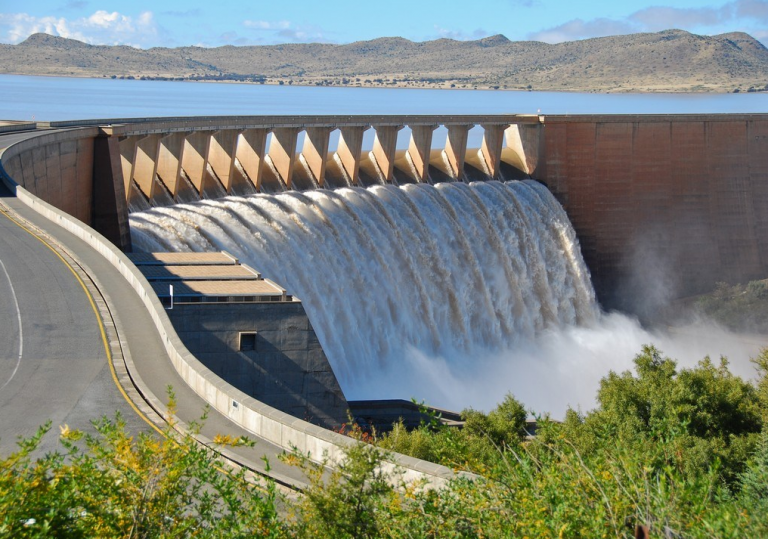
Research group IBON joined other concerned groups and advocates to launch a network opposed to the the Kaliwa, Kanan, and Laiban dam projects of the Duterte administration. The group said that large dams do not deliver their promised benefits and are harmful to communities. Filipinos will be saddled with higher taxes, to pay for their construction, and with high water, power and irrigation user fees.
Large dams are among the infrastructure projects targeted under the Duterte administration’s Build, Build, Build (BBB) program. BBB projects will be funded by private foreign investments, local oligarchs, and official development assistance (ODA). Many projects will be hybrid public-private partnerships (PPP) where the government builds the infrastructure, often with ODA, which the private sector will then operate and maintain. IBON said that this will greatly increase government debt.
The Kaliwa, Kanan and Laiban dams under the New Centennial Water Source Project (NCWS) are meant for the water and power supply needs of Metro Manila and to irrigate nearby farms.
Yet water, power and irrigation remain expensive despite decades of building large dams, IBON said. Water rates continue to rise with, for instance, Maynilad increasing its rates by Php5.73/cubic meter (cu.m.) and Manila Water by Php6.22-Php6.55/cu.m. over the next four years. The Philippines still has the second highest electricity rates in Asia after Japan. Farmers continue to pay irrigation fees despite the Duterte government’s declaration that this will be free.
User fees are high and accessibility remains a concern, said the group. According to the 2016 Annual Poverty Indicators Survey (APIS), about 8.6% of families still do not have electricity in their homes. Meanwhile, 16.8% of families still have no access to a safe water supply, with only 49.4% having water piped into their dwellings. The rest still fetch water away from their houses. Only 60.4% of total irrigable lands have irrigation systems in place as of December 2017.
Large dams have displaced communities and harmed the environment, said IBON. The construction of the Kaliwa and Laiban dams will displace around 6,214 households and flood barangays in Tanay, Rizal and General Nakar, Quezon. Majority of the affected are the Dumagat and Remontado indigenous peoples. Agricultural and forest lands and wildlife habitats inside the Kaliwa Watershed Forest Reserve, an environmentally critical area, will also be flooded.
Filipinos, especially Metro Manila residents, will pay for the NCWS dams through taxes and even higher user fees than today, said the group. As it is, 70% of revenues from the Tax Reform for Acceleration and Inclusion (TRAIN) Law will be used to pay for BBB infrastructure projects.
The Php12.2 billion Kaliwa Low Dam will be 85% funded by China ODA. China ODA however has onerous conditions and its high interest rates of as much as 3% make it more like a commercial loan, said IBON. This is unlike Japanese ODA which are concessional loans with much lower interest rates. China may also require the government to collateralize state assets in case of a loan default.
IBON also pointed out the lopsidedness of the loan agreement with the Philippines virtually surrendering its sovereignty to China. For instance, the loan agreement for the China-funded Chico River Pump Irrigation Project will be governed by the laws of China and any disputes will be settled in a Chinese international arbitral court. The Duterte government also waives its immunity as a sovereign power.
IBON said that NO to NCWS is timely and necessary because of the government’s BBB infrastructure offensive. The group said there are alternatives to building large dams for profit. This includes sustainable community-based water and energy systems. Infrastructure should also support real development of domestic agriculture and Filipino industries. ###
Critical thinking under government attack, transformative education at risk
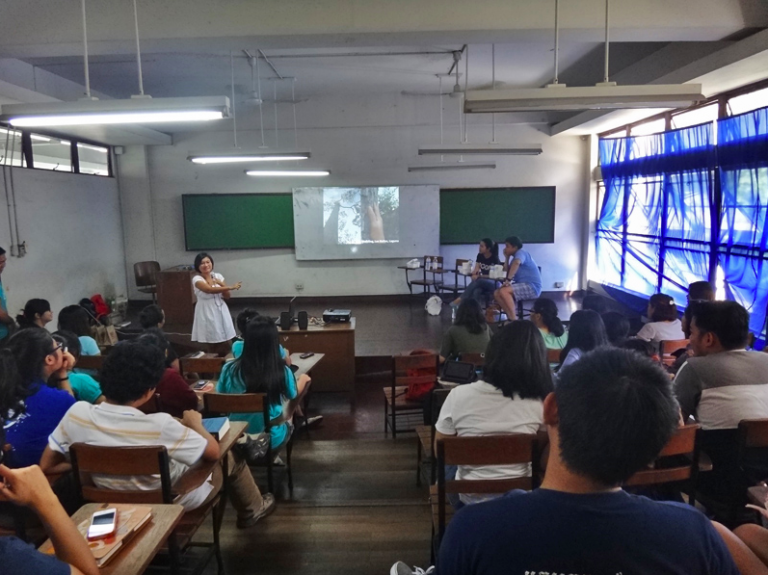
Recent government statements including by the Armed Forces of the Philippines (AFP) and Philippine National Police (PNP) aim to stifle critical thinking of educators and students. By trying to censor ideas it finds objectionable, the State is violating the public’s right to free expression and academic freedom. This will stop education from being truly transformative.
As teachers and members of the Educators’ Forum for Development (EfD), we believe in and advocate the importance of education. Education is not just about equipping students with basic competencies and skills. It is also about building their social consciousness and capacity to participate in and lead the process of social change and transformation.
Thus, we strongly condemn recent efforts by the State to intimidate educators and students away from thinking critically about Martial Law, the government and the conditions of the nation. These are damaging the academic environment for freely exchanging ideas, confronting social realities, and developing new frontiers of learning.
The AFP’s statement that students in at least 18 Metro Manila universities are being recruited by the Communist Party of the Philippines to oust Pres. Rodrigo Duterte is meant to create a “chilling effect” in schools nationwide. Worse, it endangers the safety and sanctity of the academe and by extension all those seeking to objectively study the country’s situation.
In particular, the AFP’s call to stop “teaching of rebellious ideas” can be used as blanket grounds by repressive university and school administrators against teachers and other educators perceived to be critical of school policies.
What counts as ‘rebellious’ is open to interpretation and evidently includes understanding the lessons of history and ongoing social realities to be able to contribute to the country’s progress. Educators who embrace the transformative role of education must not be subjected to villification or attack.
As it is, the AFP has already attacked Lumad schools in Mindanao apparently to stifle the education of Lumad children which they fear will strengthen their communities’ resistance to large-scale corporate mining and logging.
EfD joins the increasing chorus of resistance by the academic community for the Duterte government and the AFP to stop the red-tagging of students and repression of critical thinking. This is on top of our continuing opposition to the militarization of schools and the intensification of neoliberal dictates on curriculum and the entire education system.
We mark this year’s World Teacher’s Day with our call to fellow educators to oppose attempts to stifle academic freedom and protect the safety and right of our students to free expression and pursuit of learning towards making Philippine education transformative and responsive to social change. ###
Inflation worsening: Gov’t should act fast as households’ incomes hemorrhage
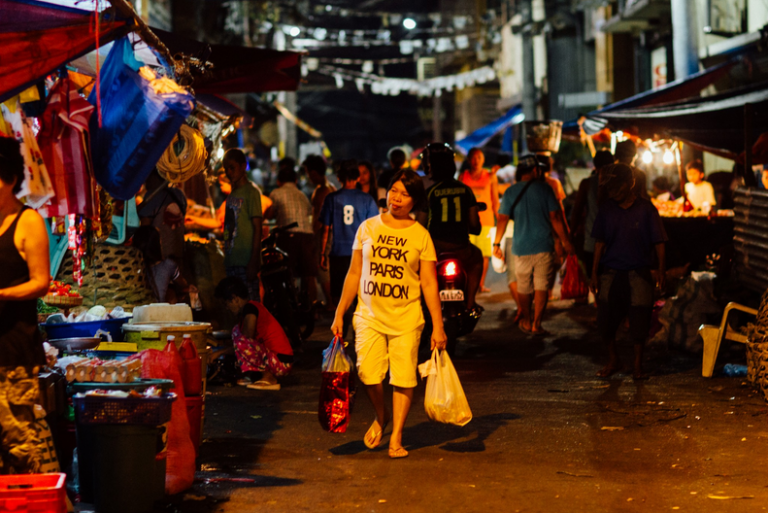
Research group IBON said that inflation has not tapered off as government projected but has accelerated in September, highlighting government’s continued neglect in addressing rapidly rising prices of goods and services. The group said that government continues to push failed neoliberal measures, while feigning concern for Filipino families struggling with a quickly falling purchasing power.
Sonny Africa, IBON executive director, said, “The purchasing power of Filipino families continues to fall because the Duterte administration is more concerned about managing the political backlash of rising prices than genuinely addressing the burden on the country’s poorest families.”
The Philippine Statistics Authority (PSA) reported that the headline inflation rate accelerated to 6.7% year-on-year in September 2018, higher than the 6.4% in August. Africa said that this is also more than double the 3.0% in the same period last year and over five times the 1.3% in June 2016 at the start of the Duterte administration. The inflation rate for the poorest 30% of families is however likely even higher and some 8.5% or more.
Africa said that inflation has not moderated because the government refuses to suspend implementation of the Tax Reform for Acceleration and Inclusion (TRAIN) law or to implement price ceilings on basic necessities and prime commodities. “Doing these would have sent a strong signal of the administration’s sincerity in addressing rising prices and would bring immediate relief for tens of millions of Filipinos,” stated Africa.
Instead, inflation has already eaten up thousands of pesos in the purchasing power of the incomes of the poorest households who are already under-consuming and have low standards of living as it is. Africa estimated that each of the country’s poorest 30% of households have lost at least Php1,800 to Php2,916 already from the start of the year until September due to inflation. These are households assumed to be earning some Php12,835 or less monthly.
Less poor and middle income households have also seen their purchasing power eroded. The next 30% of households have lost Php3,418 to Php4,725 since the start of the year. These are the households earning up to around Php21,119 monthly. IBON estimates the erosion of purchasing power by deflating household incomes with reported monthly inflation rates. The impact on the poorest households is also underestimated by the unavailability of inflation rates for low income groups.
The administration has been promoting measures such as importation of agriculture products and the public utility vehicle modernization as ways to mitigate high inflation. But Africa said that these government measures are tepid because the economic managers only see the numbers as cold statistics and callously insist that the situation is manageable. “The measures are weak, slow to take effect and oblivious to the worsening conditions of tens of millions of the poorest Filipinos,” said Africa.
Africa also said that lower inflation in the National Capital Region (NCR) may reflect how the government is just managing the political impact of inflation. “Reported NCR inflation of only 6.3% could be because the administration diverted food supplies to NCR to lower food prices here but at the expense of the regions,” said Africa.
Food inflation in non-food producing NCR is conspicuously moderated. There was a just 0.6 percentage point increase in NCR versus 1.5 percentage point increase outside NCR, and 1.2 increase nationwide.
“The government should provide real relief to millions of poor Filipinos and middle class. This includes immediate price controls, stopping TRAIN’s consumption taxes, and a meaningful wage hike. Steps must also be taken to strengthen domestic agriculture and Filipino industry,” he said. ###
Groups protest water rate hike
Members of the Confederation for Unity, Recognition and Advancement of Government Employees (COURAGE) and Water System Employees Response (WATER) staged a picket protest outside the office of Metro-Manila Sewerage System (MWSS) in Balara, Quezon City to denounce the latest water rate hike by Maynilad and Manila Water Thursday, October 4. According to Ferdinand Gaite, National […]
Dubai crude trigger price to suspend TRAIN oil taxes already reached, IBON observed

The government is already obliged to start considering suspension of its oil excise taxes as provided for under the Tax Reform for Acceleration and Inclusion (TRAIN) law, said research group IBON. The group said that oil prices have in effect already reached the trigger price for suspending excise taxes as provided in Republic Act 10963 or TRAIN if their peso values are taken into account.
Section 43 of the regressive TRAIN has a pseudo-safeguard where scheduled oil taxes shall be suspended when the average price of Dubai crude reaches US$80 per barrel for three (3) months. This provision however does not consider foreign exchange movements, IBON noted.
The group said that the US$80 per barrel figure mentioned is equivalent to Php4,032 per barrel if converted at the prevailing peso-dollar exchange rate of Php50.39 in December 2017 when TRAIN was signed into law.
The world price of Dubai crude is some US$75 per barrel as of September 2018. While this is still technically below the US$80 per barrel trigger price under the TRAIN law, IBON explained that the peso’s fall against the dollar to Php53.94 as of September means that Dubai crude is already priced at Php4,038.
This means that the peso price of Dubai crude today is already more than the peso price of US$80 per barrel at the prevailing exchange rate when TRAIN became law. It is more reasonable to consider the peso price of Dubai crude as the trigger price rather than its price in dollars, the group said.
IBON said that the supposed safeguard is however weak because its implementation is still subject to the Department of Finance’s (DOF) discretion. The DOF has been belligerent and extremely protective of its oil tax revenues in these past months.
Moreover, TRAIN if ever only suspends the upcoming round of additional oil taxes in January 2019 and keeps the taxes already imposed at the start of 2018. This means that the inflationary impact of the first round of TRAIN oil taxes will remain, said the group. Inflation is already at its highest in a decade.
IBON said that while the government should implement suspension of the oil taxes, the token safeguards of TRAIN point to how the more pro-poor option is to repeal TRAIN and replace it with a genuinely progressive tax scheme that relies more on higher direct taxes on the rich rather than consumption taxes burdening even the poorest Filipinos. ###