Never has a Department of Labor and Employment (DOLE) official been unanimously hailed and defended by the labor movement as Joel Maglunsod. As when they issued a joint manifesto against labor-only contracting last year and jointly commemorated International Labor Day in May 1 this year, the country’s major labor groups were again united, this time […]
Poor and middle class burdened most by TRAIN’s oil taxes

The higher oil excise taxes of the Duterte administration’s Tax Reform for Acceleration and Inclusion (TRAIN) is a greater burden on the poor and middle class than the rich, said research group IBON. The poor and middle class, even those few with gains from personal income tax cuts, will suffer cuts in their standard of living unlike the rich who will easily be able to maintain their lifestyles, said the group.
In light of the recent hike in global oil prices reflected in local pump prices, the Department of Finance (DOF) justified TRAIN’s higher oil excise taxes as progressive. It claimed that the richest 10% of families consume as much oil products as the poorest 80% combined. The argument here is that the burden on the richest 10% is greater because they will in effect pay as much taxes as the more numerous poorest 80% combined.
IBON said this argument is however insensitive to the actual incomes of Filipino families. It does not consider how taking away a few pesos from poor and middle class families through higher taxes is not the same as taking away much more pesos from very rich families. The high incomes and accumulated savings of wealthy families are more than enough to offset rising prices.
The “poorest 80%” that the DOF refers to have monthly incomes from as low as Php1,441 to around Php29,600, according to the latest 2015 Family Income and Expenditure Survey (FIES). The group said that the overwhelming majority of these 18.1 million families can be considered the country’s poor with perhaps some 2.1 million at the higher end of this range considered lower middle class.
IBON said that the so-called “richest 10%” however cannot all be considered “rich”. This is because only the richest 2.4% or top 546,000 families have monthly incomes of around Php100,000 or more. This means that the DOF’s so-called “richest 10%” actually includes middle class families earning just between Php44,000 to less than Php100,000 monthly.
The reality is that TRAIN burdens the poorest 17.2 million or three out of four (76%) of Filipino families with oil and other consumption taxes without giving them compensatory personal income tax cuts, said the group. Rising fuel prices drive up the prices of food, transport and electricity. The supposed cash transfers for the poorest 10 million and Pantawid Pasada fuel vouchers are not just merely temporary but, after nine months of TRAIN, even very delayed for the overwhelming majority of their supposed beneficiaries.
TRAIN’s supposed benefits for the middle class are increasingly questionable, said IBON. It is almost certain that TRAIN-driven inflation in the first nine months of the year has eaten up any supposed gains from lower taxes on the middle class. IBON estimates that inflation in the first eight months of the year has eroded the purchasing power of the poorest 90% of the population, covering the poor and most of the middle class, by a cumulative Php1,622 to Php9,520.
IBON said that the government needs to replace the regressive consumption taxes that unduly burden the poor and middle class with higher direct taxes on the income and wealth of the country’s richest. Hundreds of billions of pesos can be raised by increasing taxes just on the richest 570,000 or 2.5% of super-rich Filipino families without burdening the poor. This will also entail lifting taxes on sensitive products such as oil, which will genuinely benefit the majority. ###
Groups vow to go after Mocha despite resignation
Groups welcomed Presidential Communications Operations Office (PCOO) Assistant Secretary Margaux “Mocha” Uson’s resignation this morning, saying the controversial official’s departure is “long overdue”. Media and arts alliance Let’s Organize for Democracy and Integrity (LODI) said it gladly welcomes Uson’s departure as a victory against disinformation. “[Her resignation] proves disinformation is not forever. Napupuno din ang […]
A military rule as solution to economic crisis is crucifying the Filipino people
The Duterte regime is about to fall down not because of the ‘Red October’ tale sloppily hatched by the Armed Forces, but because of the worsening economic and political crisis in the Philippines and the collective unity of the Filipino people.
Duterte’s economic managers, who try to troubleshoot the crisis by imposing exorbitant taxes (TRAIN 1 & 2), fail to realize that economic problems are rooted in corruption in the bureaucracy, land monopoly, and the US constant pestering of our economic, political, and social affairs.
Because the government is not successful in easing the economic burden of Filipinos, it resorted to concocting the ridiculous ‘Red October ouster plot’. This military’s conspiracy theory may result in a tighter clampdown of legitimate and legal organizations championing their democratic rights. ‘Red October’ will give armed state forces a stronger license to surveil, harass, arrest, and liquidate activists and will set the tone for martial law nationwide.
When President Rodrigo Duterte declared martial law in Mindanao, then acting Departmenr of Interior and Local Government Secretary Catalino Cuy said that martial law “does not mean that the military now supersedes civilian authority”.
A memorandum released by the DILG at that time stated that “the suspension of the privilege of the writ of habeas corpus in Mindanao covers only persons charged with rebellion or invasion”. Cuy further said: “A state of martial law does not suspend the operation of the Philippine Constitution, nor supplant the functioning of the civil courts or legislative assemblies”.
As Commander-in-Chief of all the Armed Forces of the Philippines (Section 18, Article VII of the Constitution), indeed the President has convincingly shown that he has the peoples’ mandate to ensure that “Civilian authority is, at all times, supreme over the military” expressly stipulated in Article II Section 3 of the Charter.
This principle of supremacy of civilian authority over the military is inherent in every democratic state like the Philippines where “sovereignty resides in the people and all government authority emanates from them (Article II Section 1)”.
This safeguard against any military takeover and the rise of military dictatorship has to be preserved and upheld at all times.
However, the hardships and sufferings experienced by the Moro people in Marawi City, Maguindanao and Sultan Kudarat and the Lumad serve as proof of the brunt of martial law. Thousands of displaced people in Mindanao are crying out to stop martial rule in Mindanao.
Now, Duterte administration is gearing towards the declaration of martial law nationwide. It is apparent that the government is using “Red October” as pretext. The Armed Forces of the Philippines (AFP) and Philippine National Police (PNP) have been restless in spreading baseless, inconsistent, and even ludicrous stories, like the discovery of high powered arms in Rizal province and the ten universities involved in the ouster plot.
A military rule as a solution to economic crisis is not the solution at all because the people will continue to suffer not only due to hunger but from political persecution. It is a kind of crucifixion of the Filipino people like the crucifixion of Jesus in his time where people fought for emancipation from hunger, sickness, and colonial rule.
Leaders from different churches have already condemned the sufferings of the Filipino people under Marcos’ dictatorship. The task now of the Philippine churches is to ready their ranks and actualize their statements of opposing martial law through concrete action.
A statement issued by Episcopalian Bishop Rex RB Reyes, Jr., D.D Convenor, Ecumenical Voice for Human Rights and Peace in the Philippines (Ecuvoice) released September 25, 2018, expressed the will of the people. It states, “We want peace for the Philippines. The way to move in this direction is to resume GRP-NDFP peace talks intended to address the roots of the armed conflict. The negotiating parties had hammered out meaningful agreements, ready for signature, on much needed Socio-Economic Reforms. These very peace spoilers in the AFP and the security cluster are the ones standing in the way of democracy and peacebuilding.”
The Duterte has an option over military rule; it is a politically negotiated settlement through the peace negotiations between his government and the National Democratic Front of the Philippines. If President Duterte will not heed to this call, Filipinos have not forgotten about People Power. The people did it during Ferdinand Marcos; they can do it in the present.
The post A military rule as solution to economic crisis is crucifying the Filipino people appeared first on Manila Today.
Duterte under fire for firing labor undersecretary
Militant labor group Kilusang Mayo Uno (KMU) – Metro Manila today said Pres. Duterte’s recent move of firing Labor Undersecretary for Labor Relations Joel Maglunsod “broke the last straw of Filipino workers’ trust that the government can truly address issues of contractualization, low wages, and better and humane working conditions in the country.”
Duterte made public his decision to ax Maglunsod during his speech in Camp Juan Ponce Sumuroy in Catarman, Nothern Samar on Tuesday, saying that Maglunsod failed to stop labor strikes across the nation, which he said “have been affecting the country’s economy.”
KMU Metro Manila slammed Duterte for sacking Maglunsod as they believe that the former labor leader turned labor official “has been their voice inside the bureaucracy despite the rotten system inside the agency.” According to the pro-labor group Defend Job Philippines, Maglunsod has been instrumental in the struggles for regularization and labor recognition of workers of Jollibee Foods Corporation, Philippine Long Distance Telephone Company, NutriAsia, Toyota Motors Philippines, Jolly Plastics, UniPak, Manila Harbour Centre, and Regent Foods Corporation, among many others.
“We believe that he will be a great loss in the agency as he is the only DOLE official in history who has a genuine heart for the Filipino workers. He himself has been and will forever be known as a true labor leader,” said Defend Job Philippines in a statement.
“Now that Maglunsod is out of the agency, DOLE has totally lost its credibility and returned to its nature of being an anti-workers agency and an institution for big businesses and capitalists,” said KMU Metro Manila Chairperson Ed Cubelo.
Cubelo also welcomed Maglunsod back to the labor movement and to the mass movement, which they said is the “true home” of the sacked government official.
More strikes ahead
KMU Metro Manila also lambasted Duterte’s statement blaming the labor group for leading labor strikes across the country which he said “will paralyze the economy”. Duterte also pointed fingers at KMU for the “lack of foreign investors in the country.”
Cubelo said that Duterte has no one and nothing to blame for such strikes to happen but himself. “Such forms of resistance of Filipino workers has been the result of his government’s failure to realize his promises to end contractualization, increase wages and salaries of workers in the private and public sectors, among many others,” Cubelo said.
The labor group reminded the President that organizing labor strikes is enshrined in the Constitution and in the Labor Code. “The Duterte administration must end using strikes as justification for its ‘Red October ouster plot’ paranoia that will only legitimize its attacks against the ranks of Filipino workers and people. It must stop using our strikes to push forward its evil agenda of instilling a dictatorial and tyrannical rule across the country,” Cubelo said.
KMU Metro Manila said that they will not be cowed by the government’s actions but will continue to push for more workers strikes in various factories and workplaces in the days to come.
The post Duterte under fire for firing labor undersecretary appeared first on Manila Today.
Int’l group launches book on Philippine community broadcasting
KAMPALA, Uganda–The International Association of Women in Radio and Television (IAWRT) launched a book on community radio broadcasting in the Philippines, narrating its nearly three-decade history and laying down the challenges it faces in one of the most dangerous countries for journalists in the world. Entitled Amplifying the People’s Voices: The Philippine Community Radio Experience […]
Sara reveals gains of her admin in SOCA
Days before the filing of candidacy on October 11, Davao City Mayor Sara Duterte-Carpio delivered her second State of the City Address (SOCA) on Tuesday, highlighting the continued gains of her administration.
Govt anti-inflation measures inadequate and anti-agriculture
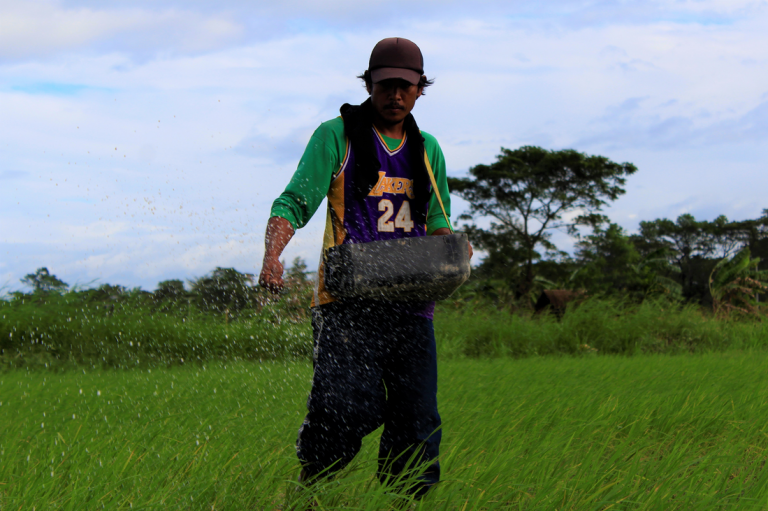
Research group IBON said that the Duterte administration’s anti-inflation measures are reckless stop-gap measures that will ironically harm domestic agriculture, displace farmers and fisherfolk, and worsen food insecurity. The group also said that the government should use its vast authority to take much more decisive steps to reduce inflation.
President Duterte issued Administrative Order (AO) No. 13 to remove non-tariff barriers on agricultural products and streamline administrative procedures. These are on top of Memorandum Order (MO) No. 27 which aims to reduce distribution costs and MO No. 28 on releasing rice from National Food Authority (NFA) warehouses.
“AO 13 is a Trojan Horse exploiting the current inflation crisis to advance the economic managers’ ideological agenda of liberalizing agriculture,” IBON executive director Sonny Africa said. The legality of AO 13 is also questionable, he said, as an administrative order is apparently being used to change Republic Acts that have been passed by Congress and are presumably superior to mere administrative orders.
Africa added that liberalization will keep the country chronically dependent on imported food and vulnerable to the availability of global supplies. “It is so odd that our economic managers still insist that liberalization will develop the sector,” he said. He cited countries that continue to protect their agricultural sectors such as Vietnam and Thailand, from which the Philippines imports rice, and advanced industrial powers such as the United States, European Union and Japan.
“It is fine and even necessary to import farm and fishery products if domestic supply really is tight but this should only be as a short-term emergency measure,” said Africa. The administration is however going overboard in permanently removing important protection for Filipino farmers and fisherfolk through tariffication, lower tariffs and scrapping non-tariff barriers. Budget cuts in the Department of Agriculture (DA) also continue the long-standing problem of just 3-5% of the national budget being alloted for agriculture.
The group said that immediate relief from importing farm and fishery products cannot substitute for food security from genuinely developed local agriculture. “We have to improve rural productivity and expand farm and fisheries output by supporting our producers,” Africa said. Recklessly exposing them to cheap imports will just destroy rural livelihoods and stunt domestic supply.
These stop-gap measures also do not address other major sources of inflationary pressure – the Tax Reform and Acceleration and Inclusion (TRAIN) and higher taxes that are directly within government’s control, peso depreciation from chronic trade deficits, and global oil price movements liberated from domestic regulation, said Africa.
“There has to be a genuine effort to improve domestic agricultural and fisheries production. These should also give stress to farmers’ and fishers’ access to production resources, and sustainable methods such as organic agriculture to protect our environment. Government should give technology, inputs and price support. These will not only lessen pressure on the chronic trade deficit, but will ensure long-term food security,” he said. ###