Home Blog Page 54

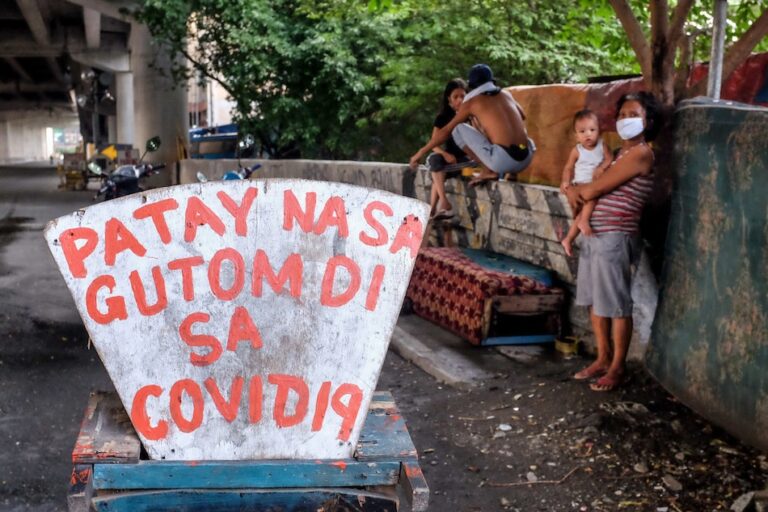
Declines in Duterte approval rating show impact of his actions

0

By: Kurt Dela Peña – Content Researcher Writer / INQUIRER.net /October 06, 2021

MANILA, Philippines—As the Commission on Audit (COA) released a report on red flags in COVID-19 spending by the Department of Health (DOH), President Rodrigo Duterte lost no time defending his men as the Philippines saw a spike in infections.

Last Aug. 26, as COVID-19 cases drew nearer to 2 million with 1,899,200 infections, Duterte, in his Talk to the People, attacked the Senate for investigating contracts with Pharmally Pharmaceutical Corp., a firm with less than P600,000 in capital but bagged up to P11 billion in COVID supply contracts with the Duterte administration.

READ: Pharmally scandal: Due diligence failure overshadows debate on law

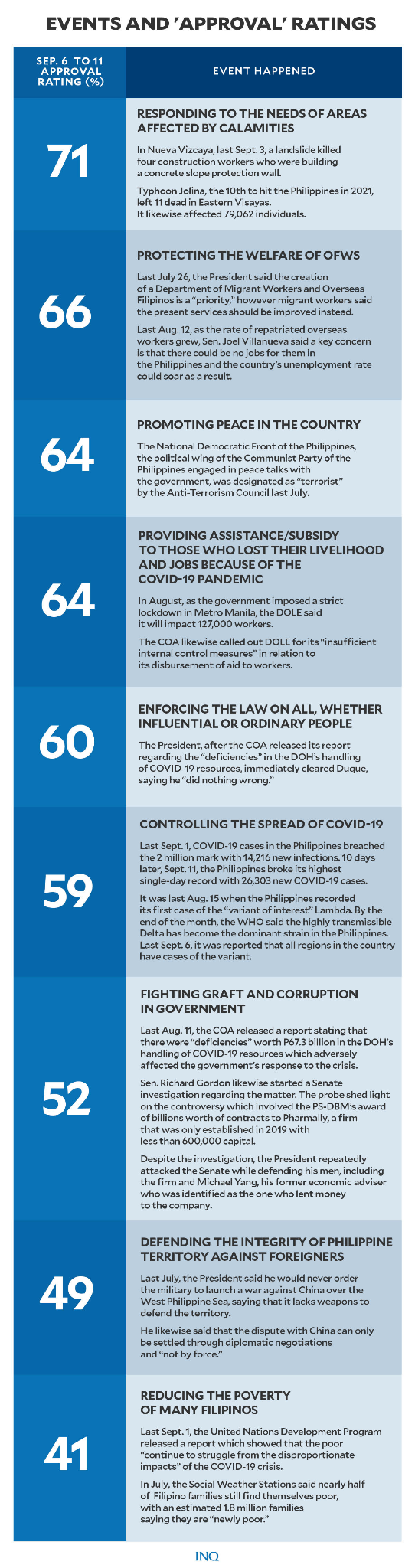
Approval of the administration’s fight against corruption and COVID fell. Approval of Duterte’s anti-corruption campaign declined by 12 percent while approval of his COVID handling fell by 6 percent, according to results of a Pulse Asia survey conducted in September.

READ: Pulse Asia: Approval score of Duterte admin in fighting corruption down by 12%

In June, the government approval rating in fighting corruption was 64 percent, but in a poll conducted last Sept. 6 to 11, it fell to 52 percent. The rating in September 2020 was 77 percent. By November 2020, it was still 77 percent and 67 percent in February 2021.

Sonny Africa, executive director of IBON Foundation, said the controversy involving the Duterte administration and Pharmally Pharmaceutical Corp., the firm that bagged up to P11 billion in COVID supply contracts, was definitely the reason for “worsening dissatisfaction” in Duterte’s fight against corruption.

READ: Corruption scandals under Duterte: From whiff to helplessness

“Filipinos have always been very sensitive to corruption as shown by this being a key reason in public opposition to disgraced Presidents Ferdinand Marcos, Joseph Estrada, and Gloria Macapagal-Arroyo,” he told INQUIRER.net.

Last Aug. 11, the COA said it found deficiencies, worth P67.3 billion, in DOH spending, which had an adverse impact on government response to the health crisis that has claimed the lives of 38,828 Filipinos as of Oct. 5.
A week later, Sen. Richard Gordon, head of the blue ribbon committee, started an investigation of COVID spending by the Duterte administration, which the President, in an attack on the Senate investigation, said would “lead to nothing.”

READ: Duterte hits ‘posturing’ of senators, says investigations result to nothing

The Senate blue ribbon committee started peeling the layers of P11 billion in contracts that had been given by the Procurement Service of the Department of Budget and Management (PS-DBM) to Pharmally, which was found to have ties with Chinese businessman Michael Yang, Duterte’s longtime friend in Davao City and economic adviser who was removed for being a Chinese national.

READ: Tactic or knee-jerk? Duterte’s insults vs probers

Duterte did not hesitate to defend Yang, saying his Chinese friend has been a businessman in Davao in the last 20 years.

“He was the one I instructed to make contact with the Chinese. Of course, he has businesses so he wants in. He’s a businessman of course. What can you do?” Duterte said of Yang.

READ: ‘Negosyo lang’: Pharmally’s meteoric rise

Spike in COVID-19 cases

Asked about the Duterte administration’s efforts to mitigate the spread of COVID-19, 59 percent of respondents in the Pulse Asia survey said it approved of the way the administration was handling the pandemic. It was, however, a 6 percent decline from the number of people who approved pandemic handling by the administration last June.

The Duterte administration saw a decline in people’s approval of its pandemic response. In September 2020, at least 84 percent of respondents said they approved of the administration’s pandemic handling. It was 81 percent in November 2020 but just 77 percent in February 2021.

Last Aug. 15, the Philippines recorded its first case of Lambda, a variant of SARS Cov2, the virus that causes COVID-19. By the end of August, the World Health Organization said Delta, which scientists said was as contagious as chicken pox, has become the dominant SARS Cov2 variant in the Philippines.

READ: In Duterte take on COVID, clarity lost in attacks vs critics

By Sept. 6, 2021, it was reported that all Philippine regions already have Delta cases. Last Sept. 1, infections breached the 2 million mark with 14,216 new COVID  cases. Ten days later, Sept. 11, the Philippines broke its highest single-day record with 26,303 new infections.

Malacañang previously said Metro Manila will shift to a less strict lockdown from Sept. 8 to 30, but withdrew the decision and declared a modified enhanced community quarantine instead.

Welfare of OFWs

The latest government rating for the protection of the welfare of overseas Filipino workers (OFWs) was 66 percent, lower than the 73 percent last June 2021. It was 76 percent in February 2021, 80 percent in November 2020 and 79 percent in September 2020.

Last August, Foreign Affairs Secretary Teodoro Locsin Jr. described the pandemic-related repatriation of OFWs as the “biggest ever in the history of the Philippines.” Since 2020, over a million Filipinos have already been sent home, mostly because of the COVID-19 crisis.

Sen. Joel Villanueva said that as the rate of repatriated OFWs grew, a key concern was that there would be no work for them in the Philippines, saying that it could even result in a spike in the country’s rate of jobless Filipinos.

To address this, he said there should be an inventory of their skills. “We should have an inventory where we can match their skills and competencies to available talent and jobs. In this reintegration, we can check their skills and which jobs are fit for them.”

Last July 26, Duterte endorsed the creation of a Department of Migrant Workers and Overseas Filipinos as a priority measure even if sentiment among OFWs was to just improve services instead of creating another layer in government bureaucracy.

Assistance to displaced workers

Asked about the Duterte administration’s efforts to help people who lost jobs and livelihood as a result of pandemic lockdowns, 64 percent of respondents in the Pulse Asia survey said it approved. It was a 2 percent decline from a 66 percent approval last June.

Approval of government work in helping the jobless fell to 77 percent in February 2021 from 84 percent in September and November 2020.

Last August, as the government imposed a strict lockdown in Metro Manila in the midst of a spike in COVID-19 cases, the Department of Labor and Employment (DOLE) said the restrictions will impact 127,000 workers in Metro Manila.

The COA, in its yearly report, called out DOLE for its “insufficient internal control measures” in distribution of aid to displaced workers. The COA report said the DOLE, as a result, lost P1 million in excess payouts, left P22.43 million unclaimed aid and P1.824 million “never reached intended beneficiaries.”

In response, the DOLE said it adheres to government regulations in using public resources, saying that this can be proven by consecutive “unqualified” audit opinions given by COA for 2019 and 2020.

Promoting peace

The latest government rating for the promotion of peace in the Philippines was 64 percent, lower than the 70 percent last June 2021. It was 75 percent in February 2021, 78 percent in November 2020 and 81 percent in September 2020.

On July 3, 2020, Duterte signed the controversial Anti-Terrorism Act of 2020. The law, described as dangerous, was condemned for it could “violate people’s rights and civil liberties.”

Over a year later on July 19, 2021, the Anti-Terrorism Council said the National Democratic Front of the Philippines, the political wing of the Communist Party of the Philippines engaged in peace talks with the government, was designated as “terrorist”.

Reducing poverty

On reducing poverty for Filipinos, 41 percent said they approved of the Duterte administration’s handling. It was 44 percent in June 2021, 48 percent in February 2021, 58 percent in November 2020 and 65 percent in September 2020.

Last Sept. 1, the United Nations Development Program released a report which showed that the poor “continue to struggle from the disproportionate impacts” of the COVID-19 crisis in the Philippines.

Last July, the Social Weather Stations (SWS) said nearly half of Filipino families still find themselves poor, with an estimated 1.8 million families saying they are “newly poor.”

Defending PH territory

Asked about the government’s efforts to assert Philippine sovereignty against China’s territorial grab, 49 percent of Pulse Asia survey respondents said it approved of the government work. It was a sharp decline from 62 percent in February 2021 and 65 percent in September and November 2020.

Last July 26, the President said he would never order the military to go to war with China to defend the Philippine exclusive economic zone in the West Philippine Sea. Duterte said the Philippines can’t win a war with China.

In his last State of the Nation Address, Duterte also said there was no other way to stop China from stealing Philippine territory except through negotiations and never by force.

Enforcing the law on all

The latest government rating in enforcing equal justice, 60 percent of respondents said it approved. It was a 7 percent decline from 67 percent in June 2021. It was 69 percent in February 2021, 74 percent in November 2020 and 76 percent in September 2020.

Last August, after the COA released the audit report finding red flags in DOH spending, Duterte quickly cleared Health Secretary Francisco Duque III, saying the health chief “did nothing wrong.” Duterte said he would continue to defend Duque even if it brought him down.

Africa said that Duterte’s immediate defense of his people, without even ordering an investigation, was likely the biggest reason that approval rating on his ability to render equal justice for all declined.

Africa added that people viewed Duterte as someone who protected his friends.

Disaster response

About disaster response, 71 percent said they approved of the work of the Duterte administration. It was 73 percent in June 2021 and 82 percent in February 2021 and in September and November 2020.

Last Sept. 3, in Nueva Vizcaya, a landslide killed four construction workers who were building a concrete slope protection wall.

In the first week of September, Typhoon Jolina, the 10th storm to hit the Philippines in 2021, left 15 dead in Eastern Visayas. It likewise displaced 79,062 individuals.

READ: Tropical Storm Jolina leaves 15 dead, 10 missing — NDRRMC

Pulse Asia said the government also saw a decline in approval of its efforts to fight criminality (74 percent), end environmental destruction (56 percent), create more jobs (49 percent), increase pay of workers (48 percent) and to control inflation (37 percent).

‘Getting alarmed’

While Pulse Asia said that levels of approval for the government’s performance on national concerns declined significantly, “for the most part, public assessment of the work done by the national administration remains positive”.

It said the government enjoyed declines in approval ratings for its handling of nine concerns:

  • Fighting crimes
  • Calamity response
  • OFW protection
  • Promoting peace
  • Help for the jobless
  • Enforcing rule of law
  • Controlling COVID spread
  • Stopping environmental destruction
  • Fighting corruption

For Africa, however, the ratings reflect Filipinos’ distrust because “the objective situation and people’s daily difficulties are getting so much worse and beyond being glossed over by the government’s propaganda.”

“The administration may put up a brave face but it’s definitely getting alarmed by how its electoral prospects are steadily getting eroded by corruption cases getting closer and closer to President Duterte, and by people increasingly putting the blame for their health worries and economic difficulties on the government’s failures,” he said.

He said Duterte’s so-called teflon armor against criticism will be tested as the “disapproval for his administration worsens”.
TSB


‘Crime washing’

0

Editorial: Philippine Daily Inquirer / October 07, 2021

With only about eight months to go before the end of its term, the Duterte administration is making belated moves to demonstrate that it is pursuing accountability for the thousands of lives of mostly poor Filipinos killed in the name of its brutal war on illegal drugs.

Last Sunday, Justice Secretary Menardo Guevarra announced that 154 policemen would be investigated for possible criminal liability for their involvement in anti-narcotics operations that led to the deaths of 52 suspects. “The DOJ noted that based on the facts gathered by the PNP (Philippine National Police) internal affairs service, the police officers involved in these cases were not only administratively liable; the existing evidence pointed to their possible criminal liability as well,” said Guevarra.

The erring policemen may be indicted for homicide or murder, added Justice Undersecretary Adrian Sugay.

Then on Tuesday, Guevarra said the Department of Justice had begun the examination of at least 100 operations conducted by the Philippine Drug Enforcement Agency that also resulted in the killing of drug suspects. The investigation will not end with the 154 policemen, stressed Guevarra, and that the DOJ will go “wherever the evidence will lead.”

“If in the course of the investigation it would appear that other persons were likewise involved in any capacity whatsoever, so be it. All persons against whom competent evidence will show a degree of culpability shall be made to account,” Guevarra declared.

All persons? The justice secretary, however, made no mention of the possible culpability of, say, President Duterte, who is on record as having encouraged the police time and again, through violent rhetoric, to “kill” drug suspects. What the President said on Aug. 6, 2016 was emblematic of the rhetoric he would repeat over the next five years: “My order is to shoot to kill you. I don’t care about human rights, you better believe me.”

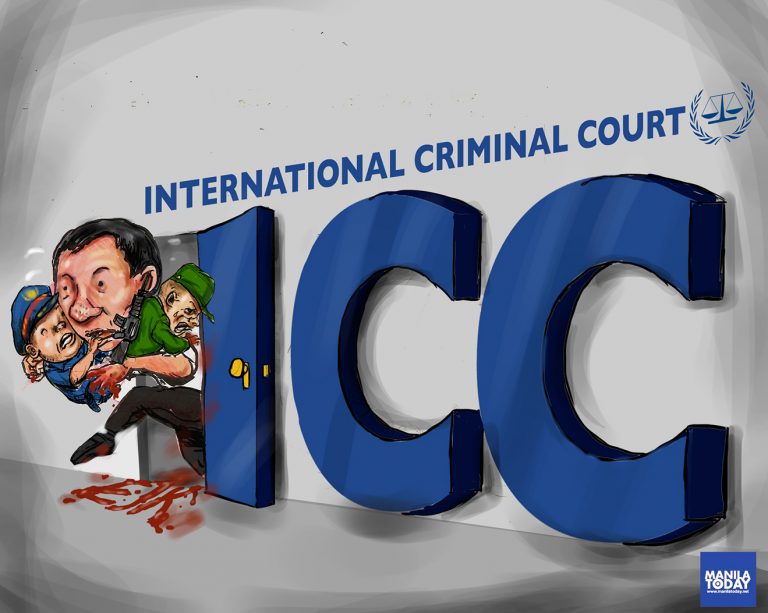
The launch of the probe by the International Criminal Court against Mr. Duterte and cohorts for possible crimes against humanity may be having the salutary effect of now prodding the administration to shift its tone from the rabid defense of the President’s pet drug war to seeking some appearance of reckoning for police misconduct.

But that the administration seems suddenly fired up on this issue did not impress activists and human rights groups, who noted that the deaths being investigated are but a minute fraction of the staggering body count in the drug war. The number of cases cited by Guevarra was barely 0.9 percent of the total deaths based on the PNP’s own data, according to House Deputy Minority Leader and Bayan Muna Rep. Carlos Zarate. “Why limit the filing of cases to 52 killings of drug suspects only when the PNP itself admitted that there were 6,000 drug suspects, more or less, who were killed since July 1, 2016, in this bloody drug war?” asked Zarate.

The small number of cases to be examined was “highly unacceptable and may be interpreted as an attempt at ‘crime washing’ the culpability of law enforcement officers and their agents in the dubious ‘nanlaban’ narrative,” he added.

Calls to expand the investigation do have basis: The DOJ itself told the United Nations Human Rights Council (UNHRC) in February this year that more than half of the anti-drug operations it reviewed showed that the police “failed to follow standard protocols,” and had “asserted” the “nanlaban” to justify how suspects were killed after they supposedly “resisted arrest or attempted to draw a weapon and fight back.”

“Yet, no full examination of the weapon recovered was conducted. No verification of its ownership was undertaken. No request for ballistic examination or paraffin test was pursued until its completion,” Guevarra admitted to the UNHRC.

Human Rights Watch senior researcher for the Philippines Carlos Conde likewise dismissed the DOJ’s gestures as window-dressing. “All the fuss,” he said, was designed to show the world that the Philippines was doing something when “in truth, nothing significant has been done,” and that the DOJ’s belated probe is a mere “continuation of the Duterte administration’s attempt to misinform and mislead the international community about the situation in the Philippines.”

The DOJ’s pronouncements were particularly suspect, Conde pointed out, because these coincided with the session of the UNHRC and came just weeks after the ICC declared that it had authorized an official probe into the conduct of President Duterte’s centerpiece domestic policy.

The DOJ has only months to go to disprove such suspicions and show that it can conduct, at minimum, a thorough, credible probe that should go all the way to the top of the chain of command if need be. Can it do it? Guevarra may yet surprise the public, but at this point weary citizens should be forgiven for not holding their breath.

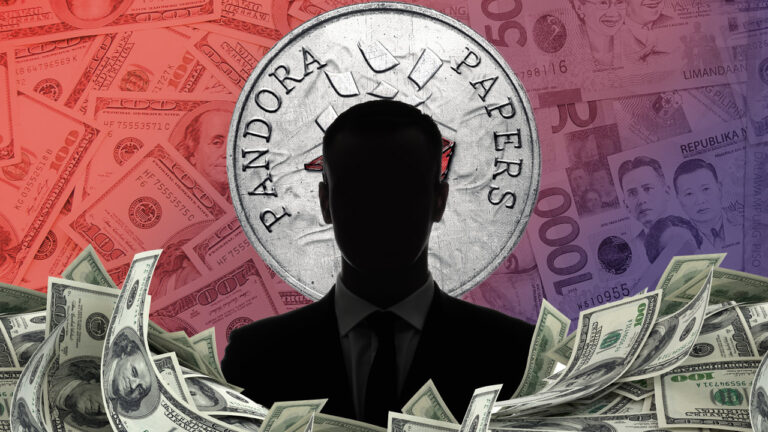
Filipino tycoons, government officials in Pandora Papers leak

0

Explore the offshore financial dealings of Arthur Tugade, Dennis Uy, and other Philippine power players in the Pandora Papers October 4, 2021 |  

This page, produced by the Philippine Center for Investigative Journalism (PCIJ) and Rappler, features the offshore companies linked to more than 35 Filipino politicians, contractors, bankers, and business professionals. Their profiles are based on a cache of leaked documents from offshore service providers, namely, Trident Trust, Commence Overseas Limited, Overseas Management Company Trust Limited, Asiaciti Trust and Alcogal. The documents were shared to PCIJ and Rappler by ICIJ, which led a global investigation with more than 600 journalists in 117 countries.

PCIJ and Rappler found more than 940 individuals and companies with Philippine addresses in the leaked files. We sifted through hundreds of emails, documents, and corporate records and selected names that were in the public interest. There are legitimate uses of offshore companies, and we do not intend to imply that all of the individuals or companies included in this page were in violation of the law. PCIJ and Rappler sent requests for comment to all those on the list. The answers we received are included in the profiles.

PUBLIC OFFICIALS

ARTHUR P. TUGADE

DENNIS A. UY

FORMER OFFICIAL

JOSE ANDRES BAUTISTA

NOTABLE COMPANY

MONTE ORO RESOURCES & ENERGY INC.

CONTRACTORS, BANKERS,
AND OTHER BUSINESS
PROFESSIONALS

JOSE CARLOS REYES ANTONIO

JOSELITO ‘BUTCH’ CAMPOS JR.

HELEN Y. DEE

ROLANDO C. GAPUD

OSCAR J. HILADO

ENRIQUE K. RAZON JR. 

PETER Y. RODRIGUEZ

ELMER B. SERRANO

DELFIN J. WENCESLAO JR. 

FAMILIES IN BUSINESS

ABOITIZ

GAISANO

GATCHALIAN

OLIVAREZ

SY

TANTOCO

OFFSHORE HAVENS AND HIDDEN RICHES
OF WORLD LEADERS AND BILLIONAIRES
EXPOSED IN UNPRECEDENTED LEAK
 
_______________
AN OFFSHORE TSUNAMI
_______________
MYSTERY NAMES HOLD BULK
OF PHILIPPINE-LINKED
OFFSHORE ACCOUNTS 
_______________
TRANSPORT CHIEF TUGADE
KEEPS OFFSHORE FIRM
OFF BUSINESS LIST

Contributors to the ‘Pandora Papers’ Project: Carmela Fonbuena, Miriam Grace A. Go, Karol Ilagan, Elyssa Lopez, Pauline Macaraeg, Ralf Rivas, Felipe Salvosa

Illustrated profiles: Guia Abogado


Follow PCIJ on FacebookTwitter, and Instagram.

Pandora Papers: Mystery names hold bulk of Philippine-linked offshore accounts

0

More than 900 of them are part of the Pandora Papers, a hoard of almost 12 million files from 14 offshore finance service providers analyzed by investigative journalists worldwide

BY RALF RIVAS, RAPPLER October 4, 2021

In collaboration with the Philippine Center for Investigative Journalism and the International Consortium of Investigative Journalists

More than 900 individuals and companies linked to the Philippines have figured in millions of files on offshore accounts leaked from finance providers, and which a broad group of journalists from 117 countries recently investigated. 

An extremely small number of these accounts are tied to big businesses with legitimate sources, and whose reasons for moving and keeping their wealth overseas may be indicative of how the Philippine financial system has been slow on reforms.

The rest of the Philippine-linked accounts are mysterious at the very least. Some individuals, who are either previously unheard of in elite circles or never found in legitimate databases, turned out to be the beneficiaries of multiple accounts. The purpose of many accounts could not be ascertained.

On a global scale, the International Consortium of Investigative Journalists (ICIJ) – leading 140 media outlets in 117 countries in this latest investigation – found that fugitives, con artists, murderers, and world leaders used offshore accounts to hide wealth and buy properties. 

Rappler and the Philippine Center for Investigative Journalism (PCIJ) parsed through all names and companies from documents collectively known as the Pandora Papers.

Of the 14 offshore service providers whose documents were accessed by ICIJ partners, five had Philippine-based clients:

• Trident Trust

• Commence Overseas Limited

• Overseas Management Company Trust Limited

• Asiaciti Trust

• Alcogal 

We found very little information about the persons with the most links to offshore accounts found in the documents from ICIJ. (Check the complete list from the ICIJ here.) 

Details were scant to be able to identify the purpose of 259 offshore companies, while at least 282 names from the list could not be linked to registered or active companies. 

While Rappler and PCIJ do not necessarily imply that illegal transactions were done through these companies of unknown individuals, we raise questions on the purposes of keeping these offshore. 

 Why go offshore? 

It is legal for Filipinos to set up offshore accounts. These companies, however, operate in various shades of gray areas that are worthy of scrutiny from regulators.

A seasoned corporate lawyer who has wealthy clients acknowledged in an interview with Rappler and PCIJ that companies in so-called tax havens attract both high-net worth individuals and criminals. He requested not to be named. 

For one, the British Virgin Islands is an established favorable taxing jurisdiction. While the Philippines has recent laws which reduced estate and income taxes, the British Virgin Islands still has significantly lower rates.

“We have this client, she’s a matriarch, she owns shares of high value. Now, her concern is that she does not want to burden her children and grandchildren with taxes related to inheritance. I think the tax could reach P30 million. What if you’re rich but not liquid? Where will you get that money just to inherit the shares?” the lawyer explained.

“So I advised her to establish a trust, because, when those shares go into the trust, the trust will hold the shares for the benefit of your children…and effectively cut what could have been perpetual taxes once it goes down to the grandchildren and their children. That saves a lot of money,” he added.

For another, the territory is very lenient when it comes to disclosure of ownership of companies. 

BVI companies can help in “layering” one’s wealth so as not to attract “too much” attention.

The lawyer, however, admitted that these functions operate within gray areas that corrupt individuals can abuse.

“It’s not wrong per se, but, like all other things, it can be used for bad purposes. For example, you’re a politician who got kick-backs, then you have lodged your funds here in the Philippines, it’s quite possible that the bank secrecy can be lifted during a litigation. But if you lodge it abroad, it would mean that the court may have to ask for cooperation from that country, that company or bank – that’s a lot of steps,” the lawyer said.

We reached out to the business executives we were able to identify on the list. They said that their offshore companies were either created for business deals or for cost and tax efficiency. Some remained dormant and were not used at all.

Moreover, corporate lawyers we spoke to pointed out that the rich have every reason to move their money out, as the Philippines’ laws “unnecessarily” tax wealth several times over.

“While there have been reforms, the tax laws need to be improved further,” a corporate lawyer said.

Most importantly, moving assets abroad also provides some security for their legally-acquired wealth.

 What’s fishy, what’s not 

With the mix of the good and the bad operating within the BVI system, how does one tell which account holds dirty money?

“There really is no clear way,” said another corporate lawyer, who also wanted to remain anonymous so as not to “alarm” his high-profile clients.

“I have a client whose child was almost kidnapped because of their perceived wealth. Setting up an offshore account hides their money in a legitimate way from people who have bad intentions, while also keeping it accessible whenever they need the liquidity,” the second lawyer said.

Former Bureau of Internal Revenue Commissioner Kim Henares shared this view, saying that prominent names on the list may “not be an issue,” as these individuals could easily justify their wealth.

“But if a name does not come up on Google, but has lots of offshore accounts,” the second lawyer said, “I simply ask: What are you doing there?” 

After careful investigation, Rappler and PCIJ found that the purpose of the majority of the offshore companies linked to Filipinos on the Pandora Papers are unclear.

Moreover, the secrecy of the offshore system makes it impossible to distinguish which are tied to legitimate sources and which come from criminal activities.

ICIJ also pointed out that even legal transactions have to also be put into question. For instance, profits of businesses from high-tax countries are transferred to companies that only exist on paper in tax havens.

Does this put the host country like the Philippines at a disadvantage? Or are there gaps needed to be plugged in such countries and territories? 

The Philippines is not a unique case. According to the Paris-based Organization for Economic Cooperation and Development (OECD), at least $13.3 trillion is held offshore.

 Who’s who on the list? 

The tree map below shows that most of the individuals on the list linked to the Philippines are unknown or have scant publicly available records.

The chart was made by carefully checking each name on search engines and databases and matching them with a company. These companies are then categorized per industry.

While the majority of the companies can’t be traced to prominent Filipino personalities or firms, we were able to identify 36 offshore companies linked to conglomerates and mall operators, some of which have responded to our queries.

The names of the Sy siblings of SM Investments Corporation, for instance, showed up on the Commence list and are linked to 10 offshore companies incorporated in the British Virgin Islands (BVI). Their companies were created sometime between 2002 and 2015.

The Gaisano family, which owns malls and retail outlets mostly in the Visayas and Mindanao, are linked to 12 companies.

The Commence list also indicated the Gatchalian family of the Wellex Group owning 10 BVI companies.

Some members of the Aboitiz clan were named owners of 13 companies.

(View the responses of prominent Filipinos here when they become available on October 4 at 12 p.m., Philippine time.)

Meanwhile, at least 31 names on the list are lawyers, some of whom are directors and corporate secretaries of publicly listed companies.

At least six mining companies, including Monte Oro Resources and Energy, have also set up offshore companies. 

Monte Oro said that the offshore company was set up for an exploration project in Sierra Leone.

Logistics companies, notably of Davao-based businessman Dennis Uy’s, have also appeared on the list.

The name of Transportation Secretary Arthur Tugade also appears on the list. (Read the story here when it becomes available on October 4 at 10 am Philippine time.)

 Mystery people 

The list from the offshore service providers also revealed that the individuals with the most links did not appear on search engines and other public databases. 

A woman’s name, for example, is identified in 21 offshore companies as their client. No other details can be found about this person in any government databases or past offshore leaks. The documents from the offshore service providers also did not provide other information.

Meanwhile, a 71-year-old male appears in 20 companies as either a client or beneficial owner. While his name appears on several websites, Rappler and PCIJ won’t publish his name as we are still unable to verify his identity.

A network map of all Filipino-related companies in the Pandora Papers also showed that the companies of the mystery woman are linked to other individuals on the list.

Meanwhile, the companies established by the 71-year-old man are only linked to one individual who could either be his wife or relative.

The documents were able to identify 156 Filipinos, 21 Chinese, and 9 Britons. 

But the nationalities of 160 other names on the list cannot be ascertained. Almost all of these names, however, are Filipino- and Chinese-sounding.

The documents from ICIJ revealed that more Filipinos started to create offshore companies in 1997 or during the Asian financial crisis. 

The crisis led to financial contagion, drop in stock prices, and the peso’s devaluation, among other economic meltdowns.

A total of 23 offshore companies were established by Philippine-based individuals and companies in 1997 alone. 

Among those who established these were the Gatchalian family, who are prominent businessmen and politicians.

In 2015, another spike in the number of incorporated offshore companies was observed.

Among the 28 companies established during that time were owned by the Gaisano and Sy families.

A long way to go on reforms 

While offshore companies continue to house money of both legitimate and sketchy individuals, leaks to the press have made significant improvements to somewhat lift the veil.

For instance, the Panama Papers of 2016 helped persuade the United States Congress to pass the Corporate Transparency Act, which requires owners of companies to disclose their identities to the Treasury Department. 

Meanwhile, the Organization for Economic Cooperation and Development reported that nearly 100 countries carried out automatic exchange of information in 2019, enabling tax authorities to obtain data on 84 million financial accounts held offshore by their residents. 

“This represents a significant increase over 2018 – the first year of such information exchange – where information on 47 million financial accounts was exchanged, representing €5 trillion. The growth stems from an increase in the number of jurisdictions receiving information as well as a wider scope of information exchanged,” the OECD said.

The Philippines, however, has a long way to go. 

While leaks via the Panama Papers and the Paradise Papers of 2017 have prompted legislators in other countries to follow the rest of the world in lifting the bank secrecy law, the Philippines continues to keep the lid on. 

The Philippines is the only country left in the world with a law that keeps the secrecy on bank deposits. END

Contributors to the ‘Pandora Papers’ Project: Carmela Fonbuena, Miriam Grace A. Go, Karol Ilagan, Elyssa Lopez, Pauline Macaraeg, Ralf Rivas, Felipe Salvosa


Follow PCIJ on FacebookTwitter, and Instagram.— PCIJ

Neil Arce reiterates Angel Locsin not running in 2022 elections: ‘She’s watching TV while the corrupt file COCs’

0

By: Dana Cruz INQUIRER.net / October 06, 2021

Angel Locsin’s husband, businessman and film producer Neil Arce, has reiterated that the actress will not be running for public office in the upcoming 2022 elections.

Arce denied speculations that his wife wants to become an elected official in his Instagram Story yesterday, Oct. 5.

“To those who accused my wife of wanting to run this election just because she extended help to people in need, well, she’s sitting here in front of me watching TV while corrupt politicians are filing their COCs,” he said. “What do you have to say for yourselves now?”

Locsin first dismissed speculations that she intended to run for public office during a live video call with actor Richard Gutierrez in May last year. This was amid her lauded efforts to provide sanitation and isolation tents to hospitals in the Philippines in March last year.

For Locsin, actors are already considered public servants. She also stressed that she lacks the interest to enter a political career.

Locsin then denied in September 2020 that she planned to run for senator, after a netizen claimed she would run for the position under the Liberal Party. She warned that the netizen was spreading “wrong propaganda.”

Election season officially started in the country as filing for COCs began last Friday, Oct. 1. As per the Commission on Elections, aspirants can file their COCs until Oct. 8.  /ra

How Much Money Did Facebook, and Mark Zuckerberg, Lose Per Minute During the Facebook Outage?

0

By Anri Ichimura , esquiremag.ph 

In case you missed it, Facebook’s family of platforms went down earlier this morning (Philippine time) sending pretty much the majority of the Facebook-using world into a tailspin. While users were twiddling their thumbs, waiting for Facebook, Messenger, Instagram, and WhatsApp, the Facebook Inc. group was bleeding millions by the minute. 

In the world of digital, it’s not an option to have an off day. While some companies can enjoy weekends where no one has to be in the office, Facebook has created a business model that requires 24/7 monitoring to keep that ad money coming. But what happens when the site goes down? They lose money—fast. 

What happened? 

Facebook and its subsidiaries, including Instagram and WhatsApp, were down for a whopping total of six hours—this is six times longer than Facebook’s 2019 outage. After integrating themselves into the lives of three billion users, Facebook and its apps have become a prime source of information and communication for over a third of the world. So when these apps are down, it becomes an event

According to experts, the outage was caused by a configuration issue, particularly Domain Name Server (DNS) failure. The DNS is essentially the “phonebook” of the Internet, converting website names into IP addresses. No IP address, no access. 

Facebook’s engineers eventually resolved the issue, but not before costing Facebook six hours of activity—and several stock points. 

Facebook was down for approximately six hours, according to Downdetector

How much money did Facebook lose?

According to a CNBC report from May 2021, the GAFAM (Google, Amazon, Facebook, Apple, Microsoft) companies earn anywhere from $200,000 to $830,000—every minute. These high-speed earners get revenues primarily from sales, whether through ads or their products. In Facebook’s case, the tech giant earns a hefty cut of their revenues from social media advertisements, and their business model only requires one thing: connection. When Facebook’s apps, like IG, goes down, so do their revenues. 

Based on CNBC’s minute metric, Facebook lost $72,697,320 in the time their sites were inaccessible by users around the world. This is in line with Forbes’ estimation that Facebook brings in $330 million every 24 hours in sales.

But while Facebook lost millions, Zuckerberg lost billions.

How much did Mark Zuckerberg lose? 

Stocks plummeted by five percent as Facebook faced a global outage—just as a Facebook whistleblower exposed Facebook’s failure to address misinformation in a damning Wall Street Journal report. The whistleblower is Frances Haugen, a former Facebook product manager whose claims that Facebook puts “profits over people”—coupled with the outage—were enough to encourage a Facebook stock selloff that chipped off about $6.11 billion from Mark Zuckerberg’s wealth. 

Facebook stocks dipped by 4.9 percent, dropping Zuckerberg’s net worth to $122 billion. According to Bloomberg, the Facebook founder has lost $18 billion in the last few weeks, made worse by the whistleblower allegations that came just one day before the Facebook outage. While there is no official connection between the two, the consequential timing has led many to speculate. 

Suffice it to say, it’s been a rough week for Zuckerberg. 

Discover the best of culture, business, and style from Esquire Philippines. Visit Quento for more stories and subscribe to our YouTube channel for new videos. 

Purge of ‘subversive’ PH books draws images of Nazi book-burning orgies

0

By: Kurt Dela Peña – Content Researcher Writer / INQUIRER.net /October 04, 2021

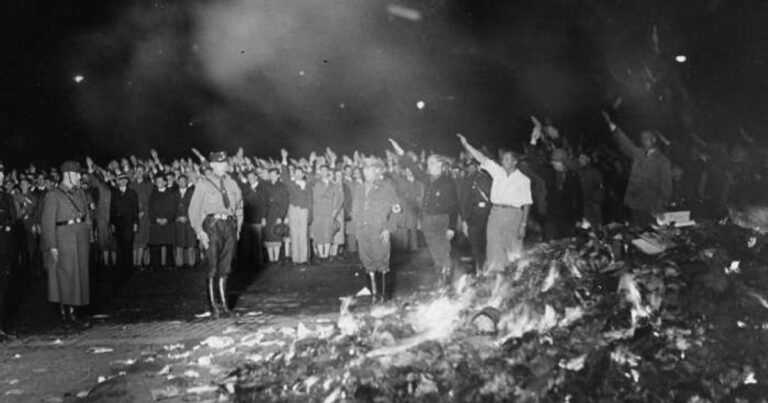
MANILA, Philippines—It was 1933 in Germany. Adolf Hitler was about to become chancellor and his Nazi party was consolidating power through several means, including a purge of what the Nazis branded as un-German ideas from the collective memory of the German people.

These included books that had been arbitrarily branded as deviant from what the Nazis preached. As a result, tens of thousands of books had been burned on orders of Joseph Goebbels, the propagandist who would play a key role in Hitler’s rise as a dictator and history’s most evil mass murderer.


https://hdl.loc.gov/loc.pnp/cph.3g04267

An orgy of book-burning, shown partly in the movie “The Book Thief,” would sweep Germany just months before Hitler tightened his grip on power and would drive their famed authors to flight or death.

Among the works that had been burned in piles at German plazas were those by poet Bertolt Brecht, scientists Albert Einstein and Sigmund Freud and even those of novelist Ernest Hemingway’s.

“This was a prelude only. Wherever they burn books, they will also, in the end, burn human beings,” wrote German poet Henrich Heine about the book-burning frenzy, according to a report in the German website DW.

Heine’s words were prophetic. A few years later, at least six million Jews would be murdered by the Nazis and their bodies dumped in mass graves or burned.

Fast forward to 2021. A version of the Nazi book-burning orgies would emerge in the Philippines in the libraries of state universities in a purge that the country’s military said was meant to protect the youth.

The mission was to remove all books, pamphlets, research work or any reading material that has reference to communism, socialism or Philippine communist rebels who have been waging a guerrilla war for more than 50 years now.

The premise was that books with socialist or communist content poison the minds of the youth into rebelling against the government, never mind the other more substantial causes of rebellion.

The operation to rid state university libraries of what the military would brand as subversive reading materials could be part of the bigger plan to end the insurgency by the time President Rodrigo Duterte steps down from power in 2022. It was a campaign that has targeted everyone in the Left, including those indiscriminately branded as communist sympathizers.

But target books, too?

Elvira Lapuz, librarian of the University of the Philippines (UP) Diliman, said getting rid of reading materials as part of the counterinsurgency campaign disregards critical thinking and literacy.

READ: Academic excellence, freedom

“It shows how little faith we have in our youth,” she told INQUIRER.net.

“It clearly says that we do not trust them at all to be conscious, aware and critical of the materials they have or have been given access to,” she said.

Last September, three educational institutions—Kalinga State University (KSU), Isabela State University (ISU) and Aklan State University (ASU)—removed from their libraries books and other reading materials about peace negotiations between the government and National Democratic Front of the Philippines (NDFP) and other topics deemed anti-government by the military.

Ricmar Aquino, president of ISU, said the state university supports Duterte’s “whole of nation approach” on the insurgency against which the youth must be protected.

READ: Another university removes NDFP books from library

The youth, Aquino said, must be provided with relevant education. “Our students should not be exposed to anything that will destroy their future,” he said.

Existential threat

Some officials of state universities, however, are opposed to the operation to remove supposedly communist or socialist books in school libraries.

Last Sept. 28, Clement Camposano, UP Visayas (UPV) chancellor, said “not a single Marxist book, or any similar or so-called subversive material, will be removed from UPV’s library collection.”

READ: UP Visayas won’t ditch ‘subversive’ materials

In an interview with INQUIRER.net, he said the purge of books was an “existential threat.” The operation sends the “wrong signal” to the youth, he said.

It is also a violation of academic freedom and was a form of censorship, said Camposano.

“Institutions have the right to decide on their own, what to teach and how to teach it and the kind of books that we maintain in our collection is central to our teaching mission,” he said.

Camposano said education extends beyond the classroom. “We are talking about creating an environment in the university where students can freely explore different perspectives,” he said.

“We need everybody to pitch in, we need to fire up the intellectual energies of Filipinos. We can’t do that if you’re depriving them of intellectual fuel which is really books and ideas,” Camposano said.

He said the purge of books also “plants the seeds of censorship” because it brands some books as “poisonous to the young.”

Censorship, Camposano said, “is not healthy.”

“We need to create this wide latitude for people to explore different ideas, for people to question things, for people to propose new policies, different ways of framing issues and certainly you can’t do that if you have censorship,” he said.

Legal or not?

Lapuz said she was not in the position to say if the purge of books was legal or not. But she said that in the Philippines, librarians are bound to heed the Code of Ethics for Registered Librarians.

The code provides that:

  • Librarians shall uphold the Constitution, obey the laws of the land, and respect duly constituted authorities.
  • Librarians shall promote literacy and education by making resources and services of the library known and accessible to its users.
  • Librarians shall uphold and promote the right to information as well as abide by the provisions of the intellectual property law.
  • Librarians shall be partners with the community they serve in inculcating nationalism practicing Filipino values and preserving the country’s historical, cultural, and intellectual heritage.

The National Library of the Philippines said there are 1,157 public libraries in several provinces. The National Library’s Filipiniana Division serves as “official repository of the country’s printed and recorded intellectual and cultural heritage.”

ISU

Last Sept. 20, Col. Leandro Abeleda, of the 502nd Infantry Brigade, witnessed the purge of books in the ISU library ordered by ISU head Aquino. These included the writings of Philippine communist party founder Jose Maria Sison.

The books removed from the ISU library were turned over to Dennis Godfrey Gammad, regional director of the National Intelligence Coordinating Agency (Nica) and head of an office of the Regional Task Force to End Local Communist Armed Conflict (RTF-Elcac).

Some of the books and reading materials removed from the ISU library were:

  • Building People’s Power
  • Defeating Revisionism, Reformism, and Opportunism
  • Crisis Generates Resistance
  • Building Strength through Struggle
  • Continuing the Struggle for Liberation
  • Louie Jalandoni, Revolutionary: An Illustrated Biography
  • NDFP Organization and Program of Action for the Rights, Protection and Welfare of Children
  • Comprehensive Agreement on Respect for Human Rights and International Humanitarian Law (CARHRIHL)
  • Declaration of Undertaking to Apply the Geneva Conventions of 1949 and Protocol I of 1977
  • People’s Struggle Against Imperialism, Plunder and Wars

“As gateways to knowledge and culture, libraries play a fundamental role in society,” Gammad said. “The books you read become part of you. Therefore, commitment and accountabilities lie in every page you read,” he added.

KSU

The KSU library last Sept. 1 removed books and documents related to peace negotiations between the government and NDFP.

READ: Books, papers on gov’t-NDFP talks purged from library of Kalinga State University

Librarian Evangeline Cabello purged the books as police and military inspected the university library. She, however, kept the books “somewhere.”

“I acted on my own but with personal reservations because I think some of those books should not have been removed from the library,” she said, admitting she had second thoughts about removing the books.

In a statement, the 50th Infantry Battalion said 11 books had been surrendered by KSU:

  • CARHRIHL
  • The Declaration and Program of Action for the Rights, Protection and Welfare of Children
  • The GRP–NDFP Peace Negotiations Major Written Arguments and Joint Statements for September 1980 to June 2018
  • The GRP–NDFP Peace Negotiations Major Written Arguments and Outstanding Issues
  • NDFP Adherence to International Humanitarian Law: Letters to the International Committee of the Red Cross and the UN Secretary General
  • NDFP Adherence to International Humanitarian Law: On Prisoners of War
  • Two Articles on the People’s Struggles for Just Peace
  • The NDFP Reciprocal Worrying Committee Perspectives on Social and Economic Reforms

The military described the removal of the books as a mission to “spare KSU students and Kalinga youth generations from Communist Party of the Philippines–New People’s Army recruitment.”

ASU

Last Sept. 24, the ASU library removed documents and books described as subversive which had been there since 2012.

The books were removed as Aklan police and RTF-Elcac of Western Visayas told the state university that the books were “not mentally healthy for our students.”

A total of 13 books and documents were surrendered to the Aklan police. Some of them were:

  • Primer on CARHRIH
  • NDFP Organization and Program of Action for the Rights, Protection and Welfare of Children
  • The GRP–NDFP Peace Negotiations Major Written Arguments and Outstanding Issues
  • Foundation for Resuming the Philippine Revolution
  • CARHRIHL

Flosemer Chris Gonzales, RTF-Elcac Western Visayas spokesperson, said the purge of the books was not an attack on academic freedom.

He said academic freedom is checked “when the welfare of the people or overriding public welfare calls for it.”

Exercise in futility

Camposano said the purge of books in state libraries looked like an “exercise in futility” because it just makes the materials more interesting.

“These books are available online and are easily accessible,” said Camposano. “All students can read materials in the privacy of their own homes, mobile phones. Why do we run after libraries?” he said.

He said interfering with schools on which books they want in their libraries was an infringement of academic freedom.

“All ideas should be discussed to the fullest extent possible. We should talk about everything because it’s better to talk about it in the open than discuss it while hiding,” he said.

It’s not clear where the enforcers of Duterte’s all-nation approach to insurgency got the idea that purging books would be effective in countering rebel influence on the youth.

But such a campaign is often an attachment of tyrannical rule and has many examples in history. The most infamous was the one that helped Hitler exterminate six million people.

TSB

Global COVID-19 deaths hit 5 million as Delta variant sweeps the world

0

Reuters / October 03, 2021

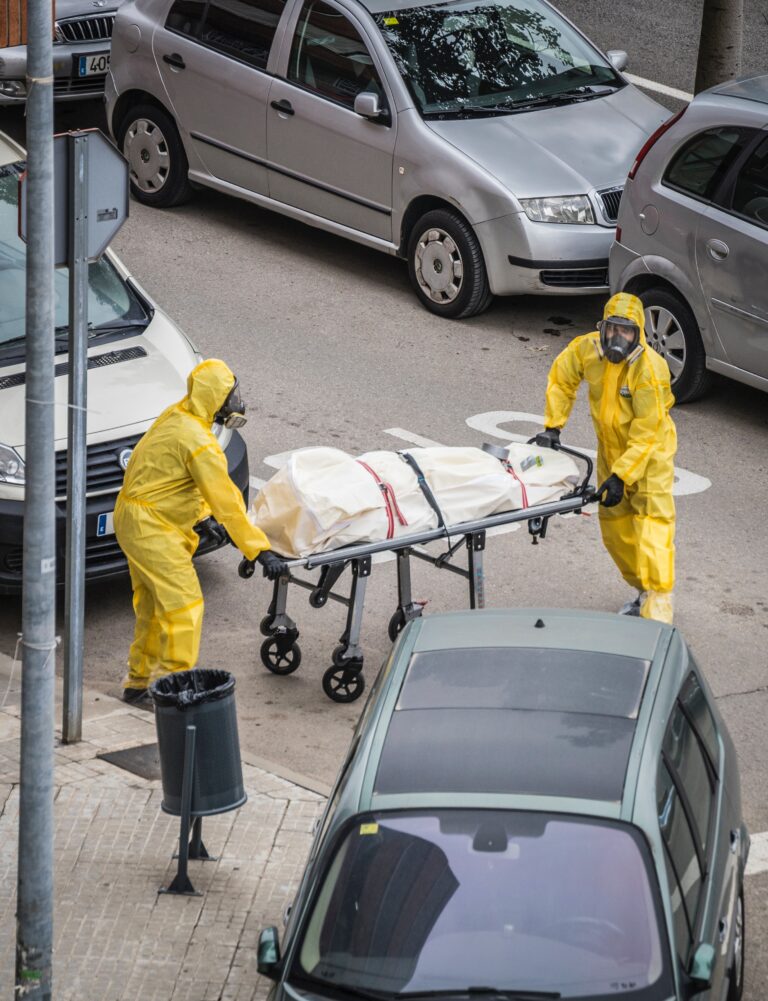
Worldwide deaths related to COVID-19 surpassed 5 million on Friday, according to a Reuters tally, with unvaccinated people particularly exposed to the virulent Delta strain.

The variant has exposed the wide disparities in vaccination rates between rich and poor nations, and the upshot of vaccine hesitancy in some western nations.

More than half of all global deaths reported on a seven-day average were in the United States, Russia, Brazil, Mexico and India.

While it took just over a year for the COVID-19 death toll, the next 2.5 million deaths were recorded in just under eight months, according to a Reuters analysis.

An average of 8,000 deaths were reported daily across the world over the last week, or around five deaths every minute. However, the global death rate has been slowing in recent weeks.

There has been increasing focus in recent days on getting vaccines to poorer nations, where many people are yet to receive a first dose, even as their richer counterparts have begun giving booster shots.

More than half of the world has yet to receive at least one dose of a COVID-19 vaccine, according to Our World in Data.

The World Health Organization this week said its COVAX distribution program would, for the first time, distribute shots only to countries with the lowest levels of coverage.

Co-led by the WHO, COVAX has since January largely allocated doses proportionally among its 140-plus beneficiary states according to population size.

“For the October supply we designed a different methodology, only covering participants with low sources of supply,” Mariangela Simao, WHO Assistant Director General for Access to Vaccines, said in a recording of a conference presentation last week posted on the WHO’s website.

The United States, which has been battling vaccine misinformation that has caused about one-third of the population to avoid inoculations, surpassed 700,000 deaths on Friday, the highest toll of any country.

U.S. cases and hospitalizations have been trending lower, but health officials are bracing for a possible resurgence as cooler weather forces more activities indoors.

Russia reported 887 coronavirus-related deaths on Friday, the largest single-day death toll it has recorded since the pandemic began and the fourth day in a row it has set that record. Only 33% of Russia’s eligible population has received a first vaccine dose.

As a region, South America has the highest death toll in the world accounting for 21% of all reported deaths, followed by North America and Eastern Europe contributing more than 14% of all fatalities each, according to Reuters analysis.

However, India, one of the first countries ravaged by the Delta variant, has gone from an average of 4,000 deaths a day to less than 300 as its vaccination campaign is rolled out.

About 47% of India’s eligible population has received a first shot, with officials administering around 7,896,950 doses per day over the past week, a Reuters analysis of Our World in Data showed.

The Delta variant is now the dominant strain around the globe and has been reported in 187 out of 194 World Health Organization member countries. (www.inquirer.net)