Ni Jess Manuel Santiago Piso ang layo natin sa isa’t isa kuwarenta’y singko hanggang Monumento Monumento hanggang Cubao, trenta’y singko bente naman mula Cubao hanggang sa inyo Dalawang piso, sabihin pa, kung babalikan. Piso lamang ang layo mo sa akin Pero ito’y kahapon pa, Tumaas na ang pasahe’t gayon pa rin ang gana ko […]
Duterte’s TRAIN to blame for highest inflation in nearly 10 years — IBON
Research group IBON said that the government’s insistence on higher taxes especially on the poor is among the factors driving inflation rates to their highest in nearly a decade. The group said that runaway inflation is due to the peso depreciation and rising global oil prices combined with the Tax Reform for Acceleration and Inclusion […]
Rights groups press for release of illegally detained church workers, activists
Led by Bagong Alyansang Makabayan Northern Mindanao and Movement Against Tyranny Northern Mindanao, groups condemned the illegal arrest and detention of at least 13 persons on the evening of July 4.
The ‘Gensan 13’, as they are collectively called, include church workers, a Higaonon chieftain, and youth and women leaders.
Karapatan Southern Mindanao Region notes that they were conducting a consultation with volunteers of the IFI-VIMROD (Iglesia Filipina Independiente Visayas-Mindanao Regional Office for Development) at Mother Francisca Spirituality Center in Lagao when elements of the CIDG (Armed Forces of the Philippines, Philippine National Police, and Criminal Investigation and Detection Group), PNP-SWAT (Philippine National Police-Special Weapons and Tactics), City Mobile Force Company, and Joint Task Force GenSan arrested them without presenting warrants.
Barug Katungod Mindanao reports that the individuals were charged with obstruction of justice.
The following are the ‘Gensan 13’: Jomorito Goaynon, Kalumbay Regional Lumad Organization in Northern Mindanao chair; Roger Plana, Kalumbay secretary general and VIMROD volunteer; Aldeem Yañez of IFI; Ireneo Udarbe of Kilusang Magbubukid ng Pilipinas; Vennel Chenfoo ofKabataan Partylist; Kristine Cabardo of League of Filipino students; Teresita Naul of Karapatan; and their companions including the center’s staff and security personnel.
The group was brought to Camp Fermin G Lira Police Station in General Santos City before the males and females were transferred to Police Station 1 and 4, respectively, following a delay in inquest proceedings.
Just hours before, six women were also illegally arrested in Pangantucan in Bukidnon. The women are members of OGYON (Organisasyon sa Yanong Obrerong Nagkahiusa), a peasant organization forwarding farmworkers’ rights in the province.
Crackdown against activists
In a statement posted online, Sandugo – Movement of Moro and Indigenous Peoples for Self-Determination sees the arrest and detention as a move by the Duterte administration to stifle criticism and dissent against its ‘anti-people’ and ‘anti-poor’ policies such as Oplan Tokhang and TRAIN (Tax Reform for Acceleration and Inclusion).
Kalumbay members Goaynon and Plana have been active in denouncing Duterte’s so-called counter-insurgency measures in favor of mining, logging, and plantation concessions, which have resulted in militarization of ancestral lands, attacks on Lumad schools, and widespread displacement of Lumad communities.
Movement Against Tyranny – NMR meanwhile slammed Duterte’s martial law, saying this further emboldened state armed forces to commit illegal arrests and killings of innocent civilians.
“His only solution for all the social and economic problems is to kill, jail, crush whoever dares complain. He has made the blood-hungry state forces supreme in ruling the country,” said MAT – NMR in a statement.
In the two years since Duterte took oath, Karapatan notes 351 cases of illegal arrest and detention; 1,599 cases of illegal arrest without detention, 163 cases of extrajudicial killing; and 351 cases of extrajudicial killing; with most cases having occurred in Mindanao.
The post Rights groups press for release of illegally detained church workers, activists appeared first on Manila Today.
#LupangRamos | Nanay Carmelita

She is a woman one could not forget. She is fairly small, barely reaching five feet in height, but is armed with a bright, toothy smile, a sharp sense of humor, and a tender “Sige, anak,” to every young person she meets.
Carmelita Abaya, 53, is one of the famers of Katipunan ng mga Lehitimong Magsasaka at Mamamayan sa Lupang Ramos (KASAMA – LR), a farmer’s organization fighting for the distribution of the 372-hectare Lupang Ramos in Dasmariñas, Cavite to farmers who have occupied and tilled the land for the past century.
Nanay Carmelita, as she is fondly called, recounts her childhood living in Lupang Ramos. She, like many other farmers in the organization, had been born and raised in that land.
“Mula sa mga ninuno ko, mga lolo at lola ko, mga magulang ko, hanggang sa ako na at mga kapatid at pinsan ko, dito na kami nabuhay. Nabuhay talaga kami sa pagsasaka dito,” she says.
She joined KASAMA-LR in 2010, upon seeing their efforts towards attaining genuine land reform, as opposed to the people they called ‘kontras’, who already have agreements with land developers such as the Ayalas, who are willing to pay a hefty sum in exchange for the land they know to be home. Even the police seem to be in on it, she says, pointing towards the kontras’ camp, which was visible from theirs.
“Kita niyo yung police mobile? Kahit noong nagkagulo dito, wala talagang ginawa ang mga pulis, pinanood lang nila yung karahasang ginawa ng kontras sa amin,” she says.
The 372-hectare land, now called Lupang Ramos, was formerly owned by Spanish friars. When U.S. colonizers replaced the Spanish at the turn of the 20th century, the land was called ‘Lupang Kano’ and was subjected to the Land Registration Act of 1903. But tenants, including Nanay Carmelita’s relatives, didn’t have the resources or assistance by the government to list down the land as theirs. Rich Dasmariñas-based families did so instead. Original owners became kasamá or was forced to share parcels of land with the new owners on basis of rent. In 1965, Emerito Ramos claimed the property and started planting sugarcane. The tenants were evicted from the vast farmlands and settled on the margins — at the riverbanks, where they planted vegetables and banana to subsist on. From farmers who tilled their own land, they became farmworkers inside the Ramos’ hacienda. Several bogus land reform programs and court struggles later, members now under the banner of KASAMA-LR still assert their rightful ownership to Lupang Ramos. An ironic name for the estate, really.
Nanay Carmelita says there is nothing left to do but fight. She shares her relation to Nanay Masang, an icon of the Lupang Ramos struggle in the 90s. Nanay Masang, Nanay Carmelita’s aunt, was known for using a Good Morning towel as a weapon of resistance, when she used it to threaten to strangle the tractor driver tasked to destroy the famers’ crops which were fruits of their land occupation movement.
Their organization is strong and steadfast, she says, so she does not worry. She knows that what they are fighting for is not just a piece of land, but their families, their history, their livelihood, and their lives.
“Ang panawagan lang namin, sana matapos na ang gulo, nang makapaghanapbuhay na kami nang maayos. Mahirap, pero andito na tayo, wala nang atrasan. Laban kung laban.”
The post #LupangRamos | Nanay Carmelita appeared first on Manila Today.
Violence against women among the pitfalls of Duterte’s martial law in Mindanao
Mounting cases of harassments and cases of violence against women and other forms of human rights violations were among the issues raised during the recently-concluded National Fact-Finding Mission conducted by various groups, including the Gabriela Women’s Party in Sultan Kudarat province.
Govt’s TRAIN to blame for highest inflation in nearly 10 years — IBON
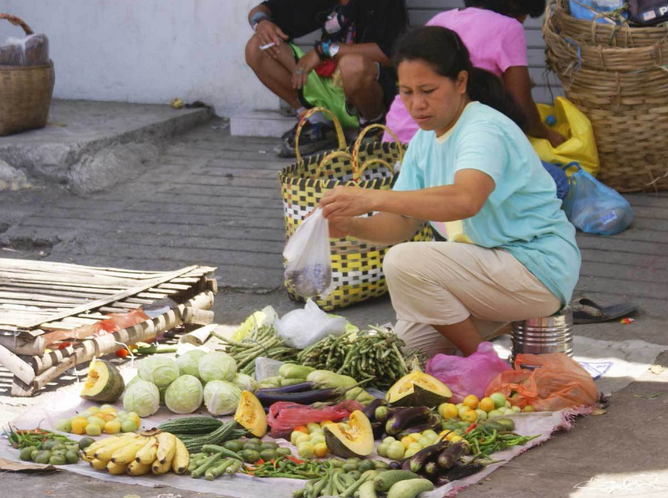
Research group IBON said that the government’s insistence on higher taxes especially on the poor is among the factors driving inflation rates to their highest in nearly a decade. The group said that runaway inflation is due to the peso depreciation and rising global oil prices combined with the Tax Reform for Acceleration and Inclusion (TRAIN) law. Among these, TRAIN’s higher consumption taxes are directly within the government’s control and it can immediately arrest the tax-driven portion of inflation if it chooses to do so.
The Philippine Statistics Authority (PSA) has reported a 5.2% inflation rate for the month of June. The biggest price increases were in food, especially in corn, vegetables, meat and rice; alcohol and cigarettes; transport; housing, water, electricity, gas, and other fuels; and education. This 5.2% inflation rate is more than double the 2.5% in the same period a year ago and four times the 1.3% inflation rate in June 2016 at the start of the Duterte administration.
The June inflation rate appears as the fastest in only five years because available estimates using the current base year [2012=100] are only until 2013. But IBON noted that inflation today would already be the fastest in nearly a decade, or since March 2009, using inflation data according to the previous base year [2006=100] as an approximation.
Sonny Africa, IBON executive director, explained that the TRAIN-triggered increase in consumption taxes, especially on fuel products, is an inflation factor immediately within the government’s control. “The Duterte administration’s insistence on TRAIN makes it directly accountable for the highest inflation in almost ten years,” said Africa, “and its pushing the higher taxes last year amid already rising global oil prices and a depreciating peso only underscores its insensitivity to the poor.”
Africa stressed that the runaway inflation hits poor Filipinos the hardest because their incomes are so low already that any price increase means they will be consuming less. Moreover, food spending accounts for over half the expenses especially of the poorest households so that food prices are rising even faster than other commodities is particularly alarming. The poorest are hit worst, Africa said: “The cumulative impact of high inflation is that the poor will eat less, walk more, forego spending on medicines and treatment, scrimp on their utilities, and have nothing for emergencies.”
In the short-term, government can suspend TRAIN to moderate inflation and provide relief to millions of poor Filipinos. Even better, it can work towards eventually reforming the tax reform package to become genuinely progressive rather than regressive and anti-poor, said Africa.
Africa added that the government can also take measures to moderate inflation over the longer term. It can manage the impact of rising global oil prices through responsible regulation of the oil industry. Arresting the peso’s steady decline will, he said, require a more comprehensive approach. This includes identifying and overcoming: the long-standing agricultural and industrial backwardness at the root of the country’s chronic trade deficit; the over-reliance on overseas remittances for foreign exchange; and the over-reliance on foreign debt and investment. ###
Duterte’s preconditions completely shutting down talks–CPP
The Information Bureau of the Communist Party of the Philippines (CPP) said President Rodrigo Duterte is bent on completely shutting down the peace talks between the National Democratic Front of the Philippines (NDFP) and the Government of the Republic of the Philippines (GRP). Reacting to a statement issued by presidential peace adviser Jesus Dureza Thursday […]
Teachers call for 30K salary increase
By April Burcer Despite the rains, teachers from all over Metro Manila marched Wednesday afternoon (June 4) on EDSA to call for an across-the-board salary increase for mentors and employees in the education sector. After their General Representatives’ Assembly earlier organized by the Alliance of Concerned Teachers-National Capital Region (ACT-NCR) Union, the teachers also demanded […]