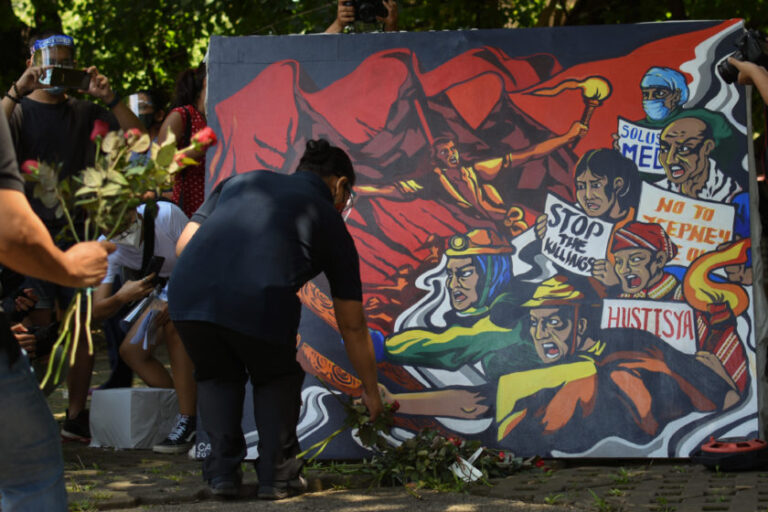
As the country commemorates National Heroes Day today, August 31, progressive groups honor the heroes of the people’s struggles and those martyred by the Rodrigo Duterte regime with this music video.
Scoundrels in high places have so dominated these parts, shamelessly promoting themselves, ripping off taxpayer money, or doing havoc to public lives, so that the women and men we should be honoring today in commemoration of National Heroes Day stand out in stark dimensions.
Filipino schoolchildren learn that Aug. 31 officially marks the anniversary of the 1896 Cry of Pugad Lawin (or Balintawak — historians disagree on the location), the beginning of the Philippine Revolution against Spanish colonial rule.The virtues of the Katipunan supremo Andres Bonifacio and the intellectual Jose Rizal and of the major and minor lights of the Revolution routinely emerge from the mouths of babes, committed to memory from the well-worn annals.
It is supremely important that children not only know but also understand their history — including the circumstances that led to the Cry, when the revolutionaries gathered to firm up their plan of action and tore up their cedulas (tax certificates) in defiance of parish officials — for them, the children, to grow up into responsible adults capable of taking their future into their own hands.
But this day is set aside as well for other Filipinos, past and present, with whom children and even their elders should be acquainted beyond often bigoted (because orchestrated) presentations in social media — such as, say, the startling bashing of Vice President Leni Robredo for her looks after her speech rallying Filipinos to take courage in their capabilities despite rudderless leadership.
In the formulation of the National Heroes Committee organized in the 1990s during President Fidel V. Ramos’ term, heroes are those who define and contribute to the freedom, order, quality of life, and destiny of the nation. Per the Official Gazette, the “lack of specifics” in the commemoration of National Heroes Day “offers an opportunity to celebrate the bravery of, not one, not a few, but all Filipino heroes who have braved death or persecution for home, nation, justice, and freedom.”
It requires no prodding then to light candles for the heroes whose names are etched on the Wall of Remembrance at the Bantayog ng mga Bayani, which bears witness to the brutality of Ferdinand Marcos’ dictatorship and to the enduring impunity and absence of remorse with which his heirs claim space in the democratic project.
Also in the present day, if being a hero means taking up the cudgels for others, then heroes are those at the frontlines of the COVID-19 crisis, daily risking their lives for or contributing in various ways to the common good; those teaching our children and guiding them in the ways of good citizenship; those toiling abroad in hostile conditions and devastating loneliness to keep family and country afloat; and those engaged in wrenching their fellow Filipinos from the grip of poverty and, necessarily, fighting to keep the democratic space from being wiped out — a struggle so arduous, so harsh, that many have been killed for it.
They all deserve recognition and honor, as well as encouragement and other manifestations of support. Yet it is in this very aspect that the administration has been lacking, whether in word or in deed, as shown in the glaring matter of wages so low (for health care workers, for teachers, indeed for those driven to work overseas) as to disallow the recipients and their families to live, and to live with dignity.
The administration certainly needs all the help it can get. But quite often, despite the huge resources at its disposal, despite the Inter-Agency Task Force for the Management of Emerging Infectious Diseases that has been officiously calling the shots since Day One of the pandemic, the administration has seemingly welshed on its obligations, allowing the lumbering bureaucracy to get the better of it to the extent of surrendering the initiative to private citizens.
Like the actor Angel Locsin and her colleagues, whose efforts put them front and center in assistance to Filipinos laid low by the coronavirus. Operating on the (correct) idea that many people wanted to help but did not quite know how, Locsin et al. managed to raise funds that gave them leeway to quickly come to the aid of, for example, jeepney drivers for whom hunger became a grim reality in the course of the long lockdown, and to whom the administration couldn’t even give the time of day.
One doesn’t need a reason to help others, Locsin recently told the Inquirer’s Marinel Cruz. It’s “actually our obligation as a human being, as a citizen of this country, as a Filipino,” she said.
Similar instances of humanity, of heroism, have been demonstrated by activists who sought to banish the ignorance blinding many impoverished Filipinos to the root causes of their condition. For showing what is, as well as what can and should be, they paid the ultimate price. Remember Randall Echanis. Remember Zara Alvarez. Remember Nelly Bagasala and many others. Remember. PA
MANILA — Multisectoral groups hEld a protest action today at the Bantayog ng Mga Bayani as part of a nationwide action honoring the “national and new” heroes in this year’s National Heroes Day, August 31.
They honored those who sacrificed their lives for the country’s democracy. They paid tribute to medical health workers, media professionals, human rights defenders, farmers, teachers, and workers for their valuable contribution battling the COVID-19 pandemic.
Aside from the tribute, they also demanded justice for slain human rights defenders and activists under President Rodrigo Duterte.
They may be tireless and fearless, but human rights defenders are humans too. They get tired and have their own share of fear. Still, they continue to rise above it all amid the worsening human rights situation in the country. Watch this fun-filled Huntahan sesh with human rights defenders of Karapatan, which is now on its 25th year, and find out why they continue to fight for what is just.
HOSTED BY JANESS ANN ELLAO VIDEO EDITED BY AARON MACARAEG Bulatlat.com
Nakakatawa pa ba kayo sa panahong ito?
Taule: Oo naman. Kailangan ito pambalanse sa buhay. Sa office, natatawa kami kahit sa maliliit na bagay. Kumakain kami at habang kumakain ay natatawa kami. Kapag may nangyari, siyempre ay kailangan magrecover pero tatawa na rin ulit. Kung habang buhay kaming iiyak, baka hindi na kami nakapasok sa opisina. Yes, tumatawa kami. Masayahin kami.
Ellao: Minsan nga nakakapagtaka sa opisina niyo, galing sa isang hearing, agit na agit. Galing sa rally. Pagdating sa office, narito na ang mga reenactments ng mga bloopers, asaran. Ang ingay-ingay. Tapos sisigawan kayo galing sa third floor, “hoy may nagmi-meeting dito, ang ingay niyo!”
Taule: Kilala ko reklamador doon.
Ellao: Ilaglag natin sila sa comments section. Tinay, nakakatawa ka ba?
Palabay: Kung makikita niyo kami, maiisip niyo na lahat kami ay kailangan ng psych. Kasi may range of emotions sa isang araw, we can have it all. At legit ito ha. (Hindi ito baliw-baliwan) tulad ng mga intel sa labas ng office. Example lang, share ni Claring Singson, after pinatay si Zara, she had to get documents from the police. So dahil masakit ang ulo niya, naghaplas siya, alam mo naman kahit mga bata dito ay naghahaplas na rin. Tapos pumasok siya at kinuhanan ng temperature, siyempre 39 ata ang lumabas.
Kaya ang sabi niya sa kuyang pulis, “no, wala akong COVID, haplas yan! Haplas!!!” Matindi ang nangyari sa Negros pero at the same tiEllao:me, she keeps her humor and cool intact. At self-deprecating humor yan eh. Is it a way of coping? I don’t think so. Siguro, bahagi ng training, nakasanayan namin, at ng Filipino culture to be more hopeful and humor is something that we should always have.
Ellao: Ito si Jon, maligaya sa Twitter. Nase-sense niyo ba?
Palabay: Marami kasing lovelife yan!
Ellao: I’m sure may kanya-kanya kayong kwento kung paano kayo napadpad sa Karapatan. Si Jon, former president ng CEGP tapos nag-law school. You could have pursued a career in journalism. So paano ka napadpad sa Karapatan?
Callueng: Matagal ako bago napunta sa Karapatan pero gusto ko talaga ever since I started law school. Pero dahil president ako ng CEGP, hindi pwedeng basta iwanan iyon. So tinapos muna, at “ilang taon pa ba?” until after two years ay napunta na formally sa Karapatan.
Pero even nandoon ako sa CEGP, tulungan yan sa coverage. Dual representation. At ito ang dahilan bakit hindi ako nahuhuli as paralegal kasi media din ako.
Ellao: Ang tanong ko sana ay: Bakit hindi ka nag-Bulatlat? Biglang nang-intriga. Si Tinay kasi eh. Punta tayo kay Atty. Sol, siyempre baka may expectation na “yayaman” na dahil abogado na. Paano ka napunta sa Karapatan? At ano ang reaction ng family mo?
Taule: Nagsawa na sila mag-expect. Dakilang walk-in kasi ako. Noong nag-aktibista ako, walk-in ako. Noong nagkarapatan ako, walk-in din. Ako ata ang nagpasa ng resume kay Tita Marie. “Mrs. Enriquez, kelan niyo po ako iinterviewhin?” kasi parang ilang linggo na ay wala pa ring feedback sa resume ko.
Sabi niya lang sa akin, wag kang mag-alala, tanggap ka na. Ipapatawag ka na lang namin. That was eight years ago. Ito kasi talaga yun nagtagal ako sa trabaho at tinanggap na rin nila. Wala na silang magagawa. Nakita naman nila na noong nag-aaral ako ng law, hindi ako umalis. At noong nag-review ay bumalik pa rin. Nagsawa na sila mag-expect. Though later on, tinanggap na lamang nila. Pero naroon pa rin ang mga paalala na mag-ingat. Pero tingin ko, alam nilang committed na ako sa trabaho ko at wala na silang magagawa doon.
Yun lang, walang pag-asang yumaman pero sa COVID meron.
Ellao: Oo, naka-quarantine kasi itong si Sol dahil siya ang nag-assist kay Pao na nahuli. Itong si Tinay, dapat negosyante yan eh. Major throwback ba ito? Balita ko, linaglag ka ni Mong sa student number mo?
Palabay: Kasi siya, isang taon lang naman ang itinanda niya ni Raymond Palatino pero educ kasi siya eh. Ako business ad and accountancy sa UP Diliman. Excuse me lang, Mong? Biro lang. Pinagpilitan lang ako ng nanay ko eh dahil pasok naman sa GWA so ang plano ay yumaman sa negosyo at maging CPA dahil accountancy eh. Yun dapat. Pero kaso, ganoon na nga. Nag-walk in din ako noon.
Ellao: Puno kayo ng inisyatiba? Mahilig kayong mag-walk-in?
Palabay: Parehas kami ni Sol ng organization. Siya sa PUP, ako sa UPD. Center for Nationalist Studies. History na. Sa Karapatan, 2010 ako lumipat. Nag-seven years din kami sa GWP. Siguro sukang-suka ako sa Congress. (laughs)
Makikita mo itong mga pangit na ito. Kala mo may ginagawa. Lumalamon lang at nagsisigarilyo sa lounge. Pero yun sa human rights work, refreshing but dangerous shift of advocacy.
Ellao: So kanya-kanya ng kwento kung paano napasok sa Karapatan. Yun iba ay naging biktima at dahan-dahan ay na-involve na rin sa Karapatan. At maraming ganyang kwento. Pero one important question, yun decision to stay, saan kayo kumukuha ng ganoong hugot? O lakas ng loob?
Taule: Parang noong naging abogado ako, nakita ko kung paano nila nilaban ang causes at kaso nila. So lugmok na ako dito at samahan ko na lang sila kung saan kami makarating. Sila nga ang tatapang nila at sino ako para iwan sila sa trying times na ganito? Damay-damay na ito, sama-sama na. Ganoon ang attitude ko.
Yung napapanghawakan ang experience ng mga biktima, ito ang nagpapalakas sa akin para ipagpatuloy ang ginagawa ko.
Ellao: Teka lang, Jon, may kwento ka ata tungkol sa tili moment ni Sol?
Callueng: Kasi kinasahan kami ng baril. “Ay, oh my God! Hindi pa ako nag-aasawa.”
Ellao: Sol, gusto mo ba ipagtanggol ang sarili mo?
Taule: Ay inaamin ko yan. Na-shokot talaga ako te. May mga bantay sa bahay ng mga Birondos eh nag-QRT kami para makausap ang may-ari ng building. Pagpasok namin, mga naka-long fire arms at biglang may nagkasa. Eh ang dilim pa ng garahe. So dahil advance mag-isip, naisip na baka ma-chugi doon. Parang wala pang CCTV at mamamatay ka ng walang laban. So nagpanic ako ng kaunti, ng very very very slight lang naman. Pero mabilis kami naglakad.
Ellao: Mabilis naman ang recovery?
Taule: Oo, mabilis kasi sa ganoong sitwasyon, hindi ka pwedeng papapatay-patay. Or else mamamatay ka.
Taule: We have to be mindful if you want to survive CCTV.
Ellao: Siyempre, natural naman na may kanya-kanya tayong fears o takot.
Taule: Totoo yan. Marami pa rin kaming takot. Tulad na lamang ng takot maligaw. Pero napapangibabawan naman.
Ellao: Ikaw, Tinay, dahil ikaw ang humaharap sa media at nag-iisyu ng maaanghang na press releases, what made you stay sa Karapatan?
Palabay: Parehas ni Sol. Kasi parang you cannot unsee things di ba? At the end of the day, kung ikukumpara mo ang buhay mo sa buhay ng iba, ang sasabihin mo eh, “nakakaloka naman kung Tiktok at pagpapayaman lang.” Parang ang corny din ng buhay mo. Ang dali lang naman yumaman eh, sa totoo lang. Madaling magpakayaman. Pero at the end of the day, ano naman kung mayaman ka. Ano naman ang silbi ng buhay mo? At the end of the day, it is still a matter of choice.
Dito ka ba sa piling ng mga inaapi at nagfa-fight back. O doon ka ba sa side ng mga nang-aapi. For the record, Mong Palatino, 41 years old na ako. Kaya ganoon na lamang ka-simple ang mga bagay-bagay. You are either here or there. (laughs)
Ellao: Touchy ata ang point na yun. Sorry kung na-raise ko. (laughs) Jon is young. Pagpasok mo eh left and right ang harassment, hindi ka ba na-shock? Ano ba itong pinasok kong mundo?
Callueng: Maraming beses yan te na naiisip ko yun mga paglabag. Imbis na matakot, napapangibabawan yun ng galit mo, ng agitasyon mo. At totoo yung sinasabi nila na iba ang dating kapag ang biktima mismo ang nagsasabi ng kwento nila. Ito yun mga bagay that will make you stay.
Para sa mga burgis friends, sasabihin nila na wala namang pera dyan. Pero ito talaga yun mga bagay at kwento na magpapaalab ng puso na paghusayan ang human rights work.
Yun tapang din ng mga kasama mo tulad nila Tinay and Sol. Iba ang atmosphere kapag ang kasama mo ay matatapang so nahahawa ka rin sa tapang nila, imbis sa takot.
Ellao: True, mas nakakahawa talaga ang courage kaysa sa takot. Pero dahil napag-usapan ang human rights work, balikan lang natin itong pinakamatagal na, ano ang iyong most memorable na experience mo sa advocacy na ito.
Palabay: Madami eh. Pero todo ang experience ay yun Kidapawan. QRT namin doon ay dalawang buwan ata. Lahat ng klase ng HRVs ay na-document namin. May mga araw talagang walang tulog. May mga araw na kailangan magdocument, mag-interview, makisalamuha. Kasi “who-you” ka naman di ba kung di mo kinilala o inalam ang kanilang sitwasyon at ipinadama na kaisa mo sila. So sa tingin ko, in a sense, pivotal sa akin. Lahat ng klaseng violations ay na-experience na ng mga magsasaka pero laban pa din.
Lalo kapag nakakakita ka ng ganoon, doon mo masasabi sa sarili mo, “hoy, mahiya ka naman. Ang problema mo in-grown. Tulad ng beneficiaries sa Philhealth na kinurakot na pera. Ang problema mo, ML o Tiktok. I mean, okay naman yun pero ang mga tao dito ang buhay na ang usapin, bigas. I guess those moments. Pero ang dami ng kaso.
Doon pinapakita that people inspire human rights work. Hindi ito about us, as individuals. It is about these people who are claiming their rights. At ito ang nagpapayaman sa pakikibaka for people’s rights sa bansa.
Ellao: Nabanggit mo lang yun pakikisama. Kasi hindi ka pupunta doon para mag-document. Hindi yun interview tapos lalayas na.
As a journalist, na-witness ko din yun on the ground ay andoon kayo. Hindi lang kayo nagdodocument ng human rights violations. Talagang andoon kayo. At napaka-effective niyo kaya naman you are one of the most vilified human rights organizations sa bansa.
Palabay: The most vilified. (laughs)
Taule: Number one vilified kami. Yun iba ay eme-eme. Char.
Ellao: Atty. Sol, ano ang most memorable mo?
Taule: Marami na ako. Pero katulad noong kay Tinay, yun din. Law student pa lamang ako noon. Lahat sa karamihan ng fact finding na napuntahan ko at walang signal, parang yung puso ko ay gustong kumawala sa dibdib kasi hindi mo alam kung paano magtext kung may mangyari.
Siguro kung may memorable ay fact finding sa Abra dahil kaunti lamang kami. Eh may trauma pa ako dahil sa nangyari kay Ka Eden sa ST. Ito 50 lang kami. Ang pamantayan ko ng FFM ay daan eh, para safe na safe hindi ba? Pero ito, 50 lang kami at hinati-hati pa kami sa 5 Sitios. So yun isang team sa kabilang bundok pupunta. Yun isa kong kasama, you had one job, dalhin ang pagkain, nakalimutan niya. At iyon lang ang task niya.
Eh birthday ko yun. Marami na akong birthdays sa presinto o fact finding at isa ito sa mga moments na iyon.
Ellao: Dito ba nilabas ni Brutus ang kanyang Mang Tomas?
Taule: Ay iba pa yan! Itong sa Abra, dahil wala kaming ulam ay nagpunta kami sa ilog. Buti na lamang at talangka season kaya nanghuli kami ng talangka. Sugat-sugat kami dahil ang hirap tapos first time mo pa. Hindi rin ako makatulog sa bahay kasi umiikot ang Army tapos 10 lang kami doon. Tapos kinabukasan ay mag-hike naman pabalik. So high na high noon habang naglalakad.
Noong nag-program doon ay inagaw ng military ang mic namin at pinapatigil ang among program. Kaya nag-init ang ulo ko at sinagot ko siya. Kaya nagsagutan kami. Kapag wala ka palang tulog at walang kain, nakagat ka pa ng talangka, di ba?
Marami na akong death-defying moments sa FFM pero iyan siguro ang most memorable. Bukod sa Mang Tomas ni Brutus kaya lagi din kayo dapat magdala. You will never know kung kelan kailangan.
Ellao: Specific brand ba? Baka pwedeng hot and spicy?
Taule: Pwede naman para may variety.
Ellao: Itong si Jon, Bukod sa pagtalon ni Sol, ano pa ang hindi mo makakalimutang moment?
Callueng: Turo ito sa amin na maging creative. Hindi pa ako nag-FFM at ito ang susunod na i-breakthrough ko. Pero sa mga QRT ay nagkaklase ako, tapos bilang inexcuse ako para mag-QRT sa Pasig. From Taft to Pasig. Pagdating doon, 40 pala ang nahuli at mga bata. Eh ilan lang ang abogado noon. Si Atty. Kathy pa lamang. Tapos ako lang ang naka-barong at sila ay hindi maganda yun suot dahil wala namang hearing. Alam mo naman ang mga abogado natin kapag walang hearing, naka-t-shirt at tsinelas sila. For that, kailangan maging creative. At popostura ka dapat.
Minsan kailangan daanin sa postura. Nagpa-power dress din kami. Hindi lang kami. Kailangan umaura din kami. Nakapostura at make-up. Minsan pa may dress code pa. Okay, bukas naka-white tayo. Tapos pagdating ni Tinay, naka-blue. “Ano na teh? Kahapon lang. Senior moment na ito teh.”
Bukod sa QRT, yun mga nasa office kami. Kapag bored na kami, kakanta ng Regine Velasquez. Yan ang trip namin kapag bored o sobra na ang violations. Kaya kami maingay.
So i-breakthrough ko yan. At nagte-take down notes na ako, like magdala ng botas, Mang Tomas, at travel light lang talaga. Nakakuha naman ako tips ngayon so feeling ko, ready na ako mag-FFM.
Ellao: Isa pang tip sa FFM. Natutunan ko ito. Dapat may dala kang black thrash bag. Naalala ko dati ay kinaladkad ako ng Karapatan para sa isang FFM na nasa ibabaw ng bundok ang community ng IPs. Tapos noong gabi, nangingig kami lahat sa lamig. Lahat ng pwede ipatong sa sarili para wag lamigin, wala pa rin. So ang ginawa ko ay yun thrash bag. Pumasok ako sa loob at nakatulog ako. Ang katabi ko matulog ay si Joan ng IP tapos “uy, bakit ako may katabing basura.” So proteksyon ito sa ulan, sa mga gadgets, at kahit magmukhan kang basura ay para din ito sa lamig.
Nariyan din malalaglag ka sa bangin tapos si Pastor Edwin nasa likod mo. Kinakaladkad na ako para hindi mahulog. Tapos noong nagrolyo-rolyo sa putik, pagbangon mo, “aura pa rin!” Para makarating sa mga IP communities na dapat ma-document ang human rights violations. 2011 or 2010 ata ito sa Saranggani.
Masaya mag-Fact finding. Pero pwede ba yun masayang Factfinding?
Taule: Pwede bang outing na lang?
Ellao: Ay, sige outing na lang. Mahirap pala ang fact finding dahil ang ibig sabihin ay may pangit na dahilan. Pero paano – surveillance, may creative ways ba kayo to shake them off?
Palabay: Pinipicturean ko. Nilalapitan ko. Nananapak nga ako ng pulis eh.
Ellao: Gutom ka rin ba?
Palabay: Gutom talaga kasi bata pa ako. Ang mahalaga ay presence of mind. Sa case ng FFM, ang first rule o tip: wag kang tatanga-tanga. Una, maliligaw ka tulad ni Sol. Wag din matindi matulog tulad ni Jon. Yan ang basic. Kapag natantya mo, na may sumusunod sayo, i-document mo. Dalawa yan, nadocument at may resibo ka. Pangalawa, ayaw nilang nakikita sila. So kapag ganyan na kilala na sila ay nililipat o pinapalitan sila.
Ang best confrontation sa surveillance – para kay Rey Vergara. Siya pinakamagaling. Kakausapin pa niya iyon with Ilonggo accent. Sasabihin niya, “hello ma’am, sino ka ba?” (with Ilonggo accent). Bandang dulo, “sino ka, kuya? Bakit ka andito? Kanina ka pa sa kanto. Tapos sa dulo ay minumura na niya.
Pero siyempre ay kailangan i-report sa barangay o pulis. Kailangan lagi kang may number ng pulis at hotline ng Karapatan.
Ellao: Grabe na siguro ang shunga mo kung pati ang number ng hotline ay hindi mo alam. Deserve mo ang kurot mula kay Tinay. Speaking of fact finding, paano niyo na-aapply ang skills na ito sa everyday life?
Taule: Na-apply ko na yan sa nawawalng pinggan sa office. Tinatangay. Nakikiinom na lamang eh bitbit pa ang baso. Matinding fact finding yan. Kaya nga minsan, isang pair na lang ang kutsara at tinidor namin.
Ellao: Ano ka ba, sharing? Sharing is caring. Ano ang pinakamahirap na balita na matanggal?
Palabay: Ako yun kilala ko. Yun kilala ko ang victim and you have to be the one to say it to the family. So durug-durog di ba? You have to say it and relay to the family so they will know. So kailangan pigilan ang sarili. Alangan naman na mauna ka pang umiyak kaysa sa pamilya.
So para din you can deliver the information, the best way that families. There is no better way to break a bad news. Pero at least hindi ka nakakadagdag sa panic.
Callueng: Bukod sa pana-panahong pagpatay, nariyan din yun sa interview with families. Isa kasi ako sa frontliners who interview victims. Para maipalabas ng maayos ang naratibo ng biktima. Isa rin sa mahirap na kunan ng account ay mga bata. Kapag bata ang biktima, doble ang bigat. Kasi vivid sila maglwento kaya challenging mag-interview.
Taule: Bukod sa sinabi ni Tinay, mahirap talaga kapag kakilala mo. Kasi ito yun nakasama natin sa hirap. Bukod doon, yun mga karanasan sa QRT, kapag ang kaanak ay naghahanap ng nawala, either dinukot o inaresto. Yun pressure, feeling mo nasa iyo. Doble ang pressure katulad noong pagkakahuli kay Paolo. So grabe ang pressure kasi nariyan ang mga pulis, at kailangan din ilabas siya agad.
Ellao: At kapag may ganito, how do you cope? May time pa ba?
Callueng: Madalas naman. Kaya mayroong pagkain sa Karapatan kasi nga mabigat ang natatanggap na balita. May debriefing kami at nagkukumustahan kami. Isa rin magandang program namin ay ang panganalaga ng mga HRDs. Last year, may psychosocial activities kami during the National Convention.
Laging ay nirerecommend ni Tinay ay yung routine para may debriefing ka sa sarili mo. Okay kapag may avenue din sa pagkanta.
Ellao: Speaking of Kanta, yun videoke na tatlong beses niyong pinostpone, ay isinumpa ko talaga dati dahil hindi niyo ako iniimbita bilang mag-aawit. Kaya Tinay, pasensya. Pero pwede pa naman via Zoom. Baka pwede ang ganitong content for “Laban Mars.”
Tinay, bilang pinakamatagal na, ano ang ginagawa mo? How do you look after your mental health?
Palabay: Ako pinakaiyaking tao. When it comes to you, it comes to you. Ganoon ang grief lalo na pag biglaan. Kailangan i-express kasi if not magiging bottled up. And you will feel hopeless. Pwede ka din magluto.
Tama si Jon, maraming pagkain dito. Marami kasi nagbibigay kasi wala naman kami anju.
Ellao: Noong nagpunta ako sa office niyo, parang wala naman akong nakitang pagkain.
Palabay: Tinago ko (laughs)
Ellao: Si Sol, best practice ito. Baka may pwede ka naman share?
Taule: Minsan hindi na rin umeepek kasi may mga mahabang FFM. So minsan pag pagod na, mga one-day na walang gagawin. Nakahiga lang at nagpapahinga. Pero mahalagang kung naiiyak, maiyak. Kung magalit, magalit ka. Mag-Netflix din, tulad ni Tinay.
Pag-uwi ko, nagmomoment ako. Pero hindi naman makapag-emote ng mga more than half day. Kailangan makarecover ka ng mabilis.
Ellao: As HRDs, may takot pero kumikilos. At kailangan din umiyak kung naiiyak.
As a journalist, madali makarelate sa mga HRDs dahil ang interest na.
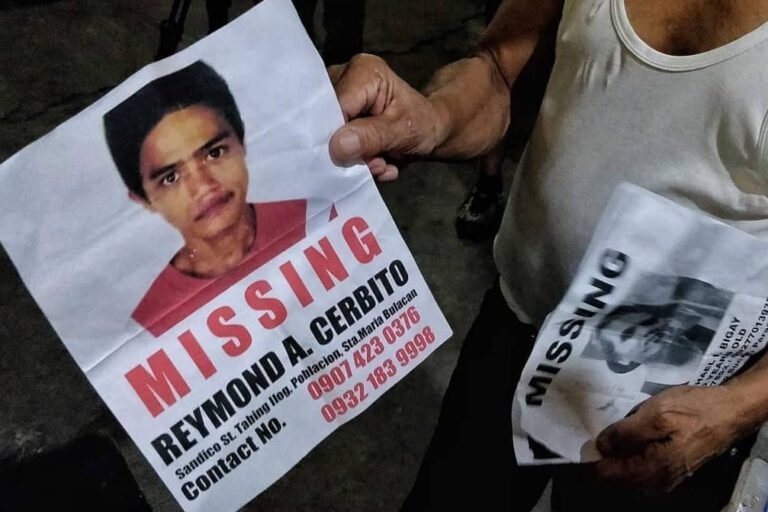
MANILA – – In the midnight of April 27, 2018, Reymond Cerbito went out of their house in Santa Maria, Bulacan to buy something from the nearby sari-sari (variety) store. He never came back.
The 20-year-old father of two mysteriously disappeared during the height of President Duterte’s campaign against illegal drugs.
His mother Marina searched for him everywhere, from all over Bulacan up to Caloocan City. They went to police stations, jails, morgues, funeral homes but to no avail. They also posted pictures of him with the family’s mobile number, hoping that someone might know his whereabouts. The family even sought the assistance of Caloocan Bishop Pablo Virgilio David. Until now, however, they remain groping in the dark.
Enforced disappearance is the most cruel form of human rights violation – with victims forcibly taken outside the protection of law and at the mercy of their captors. Their loved ones, on the other hand, experience anguish over the unknown whereabouts of the disappeared.
Today, August 30, is the International Day of the Disappeared, which aims to draw attention to how the crime of enforced disappearances is used by the powers-that-be to spread terror.
Cerbito is among the countless victims of the Duterte administration’s “war against illegal drugs,” which only targeted the poor, according to its critics.
In a phone interview with Bulatlat, Cerbito’s aunt Leah (real name withdrawn upon request) said her sister has never stopped searching for her son for more than two years already.
“Is he still alive or is he dead? Is he in prison? We want to know,”she said in Filipino. With the lockdown, the search has become even more difficult.
Leah admitted that Cerbito would peddle small amount of illegal drugs to earn extra income. He made a living by looking after vehicles in a parking lot of a commercial area.
“Even drug users have the right to live. They shouldn’t be killed like animals,” Leah said.
Leah said Cerbito left behind his two children who were two years old and two months old at the time of his disappearance. The older one, now four years old, is being taken care of by Marina while the youngest is with Cerbito’s wife.
“He may be ‘pasaway’ (stubborn) but he was a loving son, husband and father,” Leah said.
Leah said their only wish is for the abductors to surface Cerbito, dead or alive.
In its June report, United Nations High Commissioner for Human Rights Michelle Bachelet noted that Duterte’s campaign against illegal drugs resulted in extrajudicial killings and “there has been near impunity for such violations.”
Independent estimates said that more than 20,000 were killed due to Duterte’s so-called “war on drugs.”
MANILA – Sobs were all that 50-year-old Violeta heard from her sister Elena Tijamo, a development worker who dedicated more than half her life in serving farmers and farm workers, as she was dragged out of their house in Cebu, with her mouth gagged and hands tied to her back.
Elena was forcibly disappeared for more than two months now by suspected state forces in her hometown in Bantayan, Cebu. This despite repeated pleas from her sister, her 17-year-old daughter, and a family friend staying in their home, and the sobs and wailings that escaped Elena’s lips, which Violeta can still vividly remember.
She is the latest – the 13th activist – under President Rodrigo Duterte to fall victim of enforced disappearance, the most cruel form of human rights violation. The United Nations said that victims are placed outside the protective precinct of the law and put to the mercy of their captors, while families and friends go through slow mental anguish of not knowing the victim’s whereabouts.
This despite a law against enforced disappearance.
More than two months since her abduction, the Tijamo family has heard no lead from the police. Instead of looking into the perpetrators, they felt that they were the ones being subjected to an investigation as the police wanted to know who she was and why her abduction was quickly reported not just in the country but also abroad.
But their search for Elena continues, just as the many other families and colleagues of victims of enforced disappearances.
Service to farmers
Elena spent more than half of her life in service of her poor farmers and farm workers in Central Visayas, where she was instrumental in piloting sustainable agriculture program in many farming communities in Cebu, Bohol, and Negros Oriental.
Former head of the Farmers Development Center (Fardec) Estrella Catarata said introducing a sustainable agriculture program to farmers who are used to the current farming system they have known all their lives is far from easy. But Elena, who is patient and a good communicator, took time until she was able to reap the benefits she sowed.
“She is known to be a very responsible development worker. She is also very effective. She would even stay in farming communities for as long as necessary. You need to be deeply immersed in this kind of work. You cannot give a three-day training and leave farmers on their own. So she stays with them for long periods of time,” Catarata told Bulatlat in an interview.
Soon, farmers were harvesting twice the amount of rice per hectare, with less water requirement and with the use of bio-fertilizers. They welcomed her to their families with so much appreciation for her commitment.
Red-tagging and surveillance
Elena, however, is not your ordinary development worker. Apart from providing trainings, Elena also helped in organizing farmers and forged partnerships with other non-government agencies to support their needs. She would also assist farmers in their land disputes amid the widespread landgrabbing cases in the region, earning the ire of local landlords in these regions.
They continued their work amid the pandemic, providing much-needed relief assistance to families in need, especially those whose livelihoods were affected due to the lockdown.
As such, Elena and the rest of the officers and staff of Fardec are not at all surprised to be among the often vilified grassroots organizations in the region. The farmers group, too, was red-tagged along with other national and international humanitarian agencies before a congressional hearing last year.
Red-tagging, according to local human rights organizations and even the United Nations itself, often lead to graver human rights abuses.
Last month, however, individuals who introduced themselves as from the social and welfare department went to her house to ask about her personal information, claiming that the interview is part of the requirements to avail the government’s COVID-19 amelioration program. The family found out later that their village officials were not informed of such visit and that no other household in their community was interviewed.
Weeks later, Elena was abducted.
“Who will benefit from this? Who red-tagged her in the first place? I cannot think of anyone else but state forces,” said Catarata.
Apart from Elena, Fardec’s staff Fely Catalbas was also forcibly disappeared in 2007 and remains missing to this day. The farmers’ assistance group has also lost two of their founding board members Victor Olivar and Mario Auxillo to extrajudicial killings back in 2006 and 2007, respectively. Their members and staff also experienced varying degrees of harassment.
A generous person
Growing up, Violeta looked up to her sister, who was by then already working in the city. As the eldest in the brood of five, Elena was caring and responsible. She never thought twice about extending financial assistance to her parents or when she footed the bill for Violeta’s college tuition, despite receiving a meager salary from the development agency she works for.
Her parents were initially against her decision to work for Fardec as they feared for her safety. But they saw how happy and passionate she was when she took on the job. In the end, they threw their support to Elena.
A cool and hands-on mother, Elena is also a hardworking single parent to her two daughters, whom she used to tag along in farming communities during the summer breaks.
Elena also extended her generosity to their neighbors. She was a go-to person whenever there are land disputes in the village. Even among her colleagues, Elena is known for being caring and generous. Every time there is a gathering, she would volunteer to cook. Among the crowd favorites are her sweet and sour fish, garlic shrimp, pancit, and caldereta.
She does not know how to say no to those in need.
Injustice continues
The injustice that the Tijamo family is facing continues to this day – with the endless agony over her disappearance. The local police, too, has yet to provide them a credible lead but the supposed investigation only ended up with more questions on Elena’s identity.
Their family was also displaced from their hometown, as they had to move to a relatively safer space due to fear that her captors would return to bring more harm to them.
“We want her back,” Violeta said, “If she has wronged anyone, let her have a day in court. But do not hide her. No, not this way.”
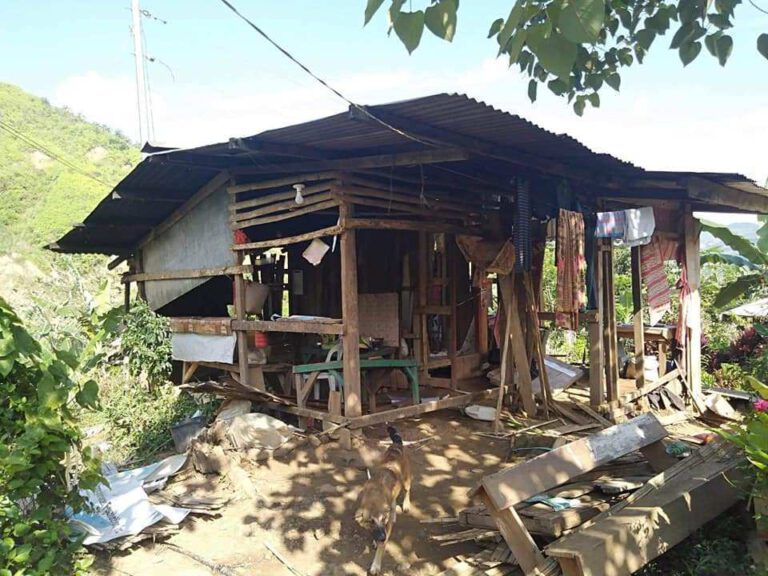
A paramilitary group destroyed an indigenous people’s school in Bukidnon Province last Wednesday, August 26, the Save Our Schools (SOS) Network reported.
The Mindanao Interfaith Services Foundation Inc. (MISFI) Academy in Sitio Laburon, Brgy. Matupe, San Fernando was attacked and destroyed by around 50 members of paramilitary group ‘Bagani’, the network said in an alert Saturday.
The group said two teachers tending to the school farm were alerted by students at around 7:15 in the morning that armed men have trespassed the school campus.
The school was 15-minutes away from the farm.
The teachers saw the paramilitary group destroying the school buildings and tearing up textbooks.
The destroyed teachers’ quarters. (SOS photo)
“The teachers were about to take photos of the incident but were threatened by the ‘Bagani’ leader Lito Gambay, who told them to leave as President (Rodrigo) Duterte will know about this,” the SOS said.
Students and community members cried out of frustration as their school was being destroyed before their eyes, the SOS added.
The two school buildings and teachers’ cottage was built in 2007 from donations by the European Union Aid for uprooted people.
The main school building after the attack. (SOS photo)
The SOS said the ‘Bagani’ paramilitary is under the command of the 89th Infantry Battalion Bravo Company of the Philippine Army which has set up camp in Brgy. Kalagangan, San Fernando, 30-minutes away from the school.
“The Save Our Schools condemns in strongest terms the unabated destruction and closure of Lumad schools in Mindanao. As of August 2020, around 178 lumad schools are now forcibly closed,” the group said.#
Another view of the destroyed school building after the attack. (SOS photo)
By LILIAN HAZEL CORRO-NAVARRA, MIDM United Church of Christ in the Philippines
Psalm 63:2-6, 8-9
Romans 12:1-2
Jeremiah 20:7-9
Matthew 16:21-27
According to the Webster dictionary, mission means “the act of sending; the duty on which one is sent”. In the UCCP Calendar, August is mission month. Today, we meditate on the words of Scriptures when Jesus said to his disciples, “Whoever wants to be my disciple must deny themselves and take up their cross and follow me. For whoever wants to save their life will lose it, but whoever loses their life for me will find it.” (NIV)
The Presence of Terror
Confronted with the reality of the global pandemic due to COVID-19, recession, depression, terrorism, bombings and killings of human rights defenders; followers of Christ may be threatened and shaken in fear. The unjust socio-economic and political situation is like a wolf ready to devour the sheep – but still, Jesus called his disciples to follow him.
The text from the gospel according to Matthew narrates one of the last teachings of Jesus before he was arrested and killed. It tells us about following Jesus in his mission in obedience to the Father. Living for Jesus means living a life full of sacrifice, giving up comfort zones in order to serve and become a blessing to others. Being “sent” is to be present with humanity and to serve God as an act of faith and genuine commitment inside and outside our Church institutions.
Churches around the world as the body of Christ should help each other in healing the wounds from both the past and the present due to,
Economic crises
Gender bias
Religion
Racism
Colonialism
Oppression
Plunder of the environment
The church should focus its priorities in spreading Kingdom values as revealed in the words and works of Christ – justice, peace and integrity of God’s creation. We need to grow in our understanding of God’s Kingdom through our belief in Jesus and living by his teachings through our actions. In this process we have to see that the world is still suffering from wounds that continue to destroy humanity and His creation.
We experience God’s blessings if we share our time and talents to our brothers and sisters especially the least and the neglected. We can unite in doing Christ’s mission even with our differences. Our common goal is for us to establish a just and humane society. Let us also remember the lives of men and women who became martyrs because of their faith and genuine service to humanity. Like Randy and Zara, we are being called out of our comfortable lives to offer our service to the people.
A Word of Hope
As a Church it is essential to be in mission by following Christ with courage to stand firm and move forward in the midst of persecution and fear.
If we will become God’s partners in doing his service to the people, then we can offer hope and truly become God’s presence in this world. This is our calling so that God’s will shall be done on earth as it is in heaven.
God bless us all. Amen.
Balik-Tanaw is a group blog of Promotion of Church People’s Response. The Lectionary Gospel reflection is an invitation for meditation, contemplation, and action. As we nurture our faith by committing ourselves to journey with the people, we also wish to nourish the perspective coming from the point of view of hope and struggle of the people. It is our constant longing that even as crisis intensifies, the faithful will continue to strengthen their commitment to love God and our neighbor by being one with the people in their dreams and aspirations. The Title of the Lectionary Reflection would be Balik –Tanaw , isang PAGNINILAY . It is about looking back (balik) or revisiting the narratives and stories from the Biblical text and seeing ,reading, and reflecting on these with the current context (tanaw).



 The main school building after the attack. (SOS photo)
 Another view of the destroyed school building after the attack. (SOS photo)