Home Blog Page 147

Health worker who died of COVID-19 was a good brother, reliable colleague

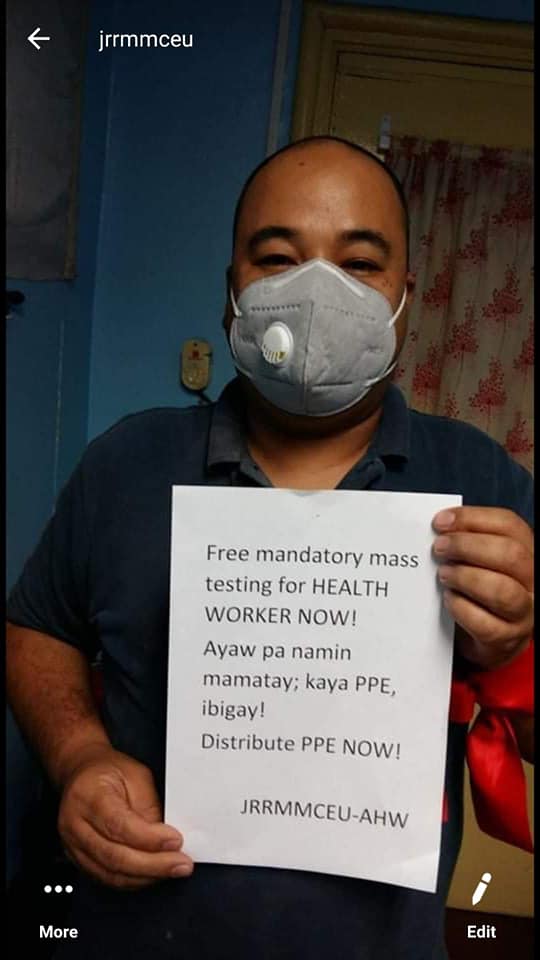
Bonn Suerte joined an online protest calling for personal protective equipment (Photo courtesy of Alliance of Health Workers)

“As a health worker, it pains me that my brother has died from this virus. I work hard, look after my patients and even say a prayer for them, because I know the world will turn in my favor one day. But it hasn’t. My brother was neglected.”

By JANESS ANN J. ELLAO
Bulatlat.com

MANILA – “Are you making rags?”

Jejelyn Green Suerte earlier asked his brother, Judynn Bonn, who was busy cutting and sewing fabric in the midst of a pandemic. She is used to seeing his brother looking after things at home.

A scene like this would not have been anything extraordinary. But to her surprise, her brother responded, “I am making a face mask.”

As a medical technologist, she knew of the dangers that health workers are confronting in the face of a deadly virus. She berated her brother that he should be using a proper medical-grade mask, along with a corresponding protective gear during hospital duties. Bonn, on the other hand, assured his sister he would only use it in case proper face masks have run out.

Months later, he tested positive to the COVID-19 virus. And in less than a week, Bonn died.

Bonn, a tireless union leader in the Jose Reyes Memorial Medical Center (JRRMC) in Manila, is among the 20 health workers who was
afflicted by the deadly virus. Ironically, he was among those who demanded the provision of personal protective equipment and regular swab tests for their ranks.

The Philippines has one of the highest cases of COVID-19 infections among health workers. Apart from shortage in protective gears, health workers here have long been working for long hours due to chronic understaffing. As it stands, the country, too, has surpassed the 100,000-mark of confirmed COVID-19 cases, the highest in Southeast Asia, and beating even China’s.

“As a health worker, it pains me that my brother has died from this virus. I work hard, look after my patients and even say a prayer for them, because I know the world will turn in my favor one day. But it hasn’t. My brother was neglected,” she told Bulatlat in Filipino.

‘A good brother’

Bonn was a caring and generous brother.

Growing up together in Iloilo and their parents both working, Bonn and Green knew how to look after themselves even at an early age.

Young Bonn and Green in Iloilo, where they grew up. (Photo courtesy of Green Suerte)
Bonn, along with cousins and friends (Photo courtesy of Green Suerte)

But like any siblings, they had their own share of petty fights. With only a two-year gap, they endlessly bickered over who should wash the dishes and do other household chores. Still, Green and Bonn were inseparable. They slept next to each other as kids, and Bonn was frequently irate whenever Green would bother him at night, or when he was writing or sketching.

They always had each other’s back. These include being her escort when she joined a local beauty pageant and even staying within a safe distance whenever Green was caught in a fight.

One time, she recalled, a male classmate tried to enter the fight scene just when Green was winning.

“And he ended up fighting himself,” she said in jest.

Still, she described her brother’s teenage years as “boring.” This, she said, was often a butt of jokes among their cousins. After school, he would go home immediately, clean their house, and cook for them.

With a year and half to go before finishing her college degree, Green was supposed to stop attending school due to financial constraints. But her brother stepped in and provided for her until she finished her medical technology degree.

Both Green and Bonn became health workers. While Bonn finished a computer degree at a local college in Iloilo, he ended up taking up a job at the Jose Reyes Memorial Medical Center.

“We grew up knowing that we can unequivocally depend on each other, without expecting anything in return,” she said.

A family man

Bonn was a family man.

“His family had always been his first priority. He would take the risk of being late for an appointment just to send his children to school,” Green told Bulatlat, adding that she now worries for the future of her brother’s three children and their future, especially his eldest 17-year-old daughter who dreams of being a doctor someday.

At home, her brother would always consult with wife Tess in their decisions. He would always see to it, she said, that they “were
partners in life.”

Josephine Aligano, a colleague of Bonn and a friend to the Suerte family, said they would always tease Bonn for being late. He would also frequently tag his youngest son to union meetings and rallies.

“Oh, dala mo na naman ang buong bahay niyo!” his colleagues would often tell him. (Literally, ‘are you carrying your entire house?’)

Even after having his own family, Green said Bonn continued on being a good son that he was. After long hours of work, he would still find the energy to accompany their mother in the hospital.

‘A reliable colleague’

When Bonn eventually became active in the health workers union, Green was surprised. She thought how could someone who grew up to be a quiet person suddenly found the courage to speak out publicly.

Judyn Bonn Suerte. (Photo from the Alliance of Health Workers Facebook page.)

But for his colleagues in the state-run hospital, Bonn was a friendly face, who would always smile and help his fellow health workers who were in need. If you ask him for a favor, both big and small, he is quick to retort: “ako ang bahala dyan” (I will take care of it) with a sweet Ilonggo accent to it.

Aligano said they were worried when they learned that Bonn tested positive for COVID-19. They sent him messages of support while he was still in the hospital to boost his spirits.

“I spoke to him a week before he was swabbed. He looked so healthy. But when he was diagnosed that he had pneumonia, his health
deteriorated fast, it seemed,” she said.

One morning, before Bonn was transferred to a COVID-19 hospital, she sent him soup to make him feel better.

His passing had affected their mood in the hospital, Aligano said, mostly in disbelief of the gross neglect that Bonn experienced just because he was an ordinary mortal. “What if this happened to us? Are we going to suffer the same fate?” she asked.

Government neglect

The employees union at the Jose Reyes Memorial Medical Center, an affliate of the Alliance for Health Workers, blamed the “gross neglect and inefficiency” of the hospital management, the health department and the Duterte administration for Bonn’s death. They are now anxious over their worsening health and working conditions, with infection among health workers increasing.

From day one, health advocates such as the AHW have been pushing for mass testing and the provision of personal protective equipment for health workers.

In a statement, union president Cristy Donguines said the hospital management “blindly implemented” the health department’s protocol that employees who are considered as severe COVID-19 cases should be transferred to any designated COVID-19 referral hospitals.

They are also not provided with due swab tests. Donguines said they are forced to cough up funds in swab testing facilities outside the hospital, amounting anywhere between 1,600 to P5,500.

Her brother’s death, she said, would have been easier to accept, “if we know that all efforts were exerted.”

“We want justice,” she said, “This is why we are speaking out. We do not want other health workers to suffer the same fate as he did.”

Continuing Bonn’s fight

BULATLAT FILE PHOTO. Judyn Bonn Suerte who is among those who receive the lowest salary joins the protest against the proposed Salary Standardization Law 4. (Photo by Ronalyn V. Olea / Bulatlat)

As a health worker in a private hospital, Green said they, too, are overwhelmed with the spike of cases they are receiving. She was not surprised that doctors recently went to public to ask for a “timeout,” among other demands.

Teka lang ha,” (Give us a second) she told Bulatlat.

She clarified that health workers are one with the government in putting an end to the COVID-19 pandemic. “If we have demands, it is
not just for us. But for the people’s best interest,” she added.

The AHW said that while they are grieving, “we are not losing the strength and fighting spirit to continue the fight of our fellow health workers. Bonn’s calls and struggles are our fight as health workers.” (https://www.bulatlat.com)

The post Health worker who died of COVID-19 was a good brother, reliable colleague appeared first on Bulatlat.
First Person | Thoughts of a frontliner

By Dr. MUTYA ESPINA VARONA

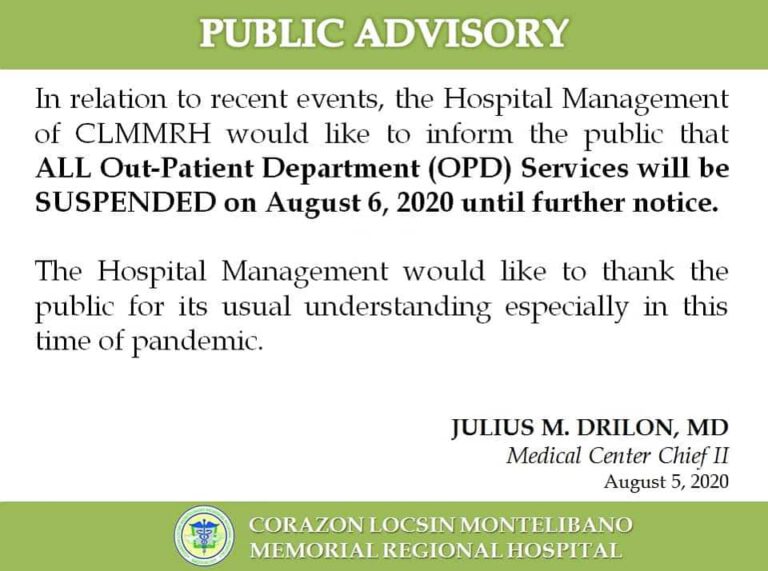
Be informed. “Overwhelmed” is an ordinary, everyday condition – it refers to the number of patients we see. But times have changed – we now see less patients, but we are engulfed by the consequences brought by this pandemic.

Overwhelmed. This is where our health care stands, where it has always been, even without COVID.

We, as a tertiary regional hospital under the DOH, cater to the most unfortunate ones. We see those who cannot afford to have a private consult, or buy and maintain their medications; people who will wait – choosing first to put food on their family’s table – until such time they can no longer bear it, and will tell you: “subong lang ko doc nakakadto, kay wla guid bilin sa balay kag wala guid kwarta.” (I couldn’t come until now because there was no one who could stay at home and there was just no money.)

And them and you knowing, that sometimes, it’s too late. Some would even tell you, “wala guid plite, doc” – coming in from farflung areas. (I had no money for transport.) These people rely on social services, on Philhealth. They almost always want to seek help. But poverty was/is a hindrance even for this. And yes, it kills you.

They struggled then, had no privileges, more so in our current state with COVID.

It kills you so much more, to see them defeated and lose hope.

My heart breaks especially for our cancer patients. Since we went on lockdown last April, we had patients who were lost to follow up.

We had patients scheduled for operations, but these were cancelled. What can they do? What can we do?

In ordinary days it was/is hard for them. Without transportation, and support, it was the most difficult of times.
I cannot imagine their dilemma – it choosing and wanting to live, but not knowing how.

They had a fighting chance – but they are losing the battle.

When the quarantine eased, some of them came back for treatment after months of break. And medically, you knew what was coming.

Seeing them again, the pain in their eyes, the disappointment, after you tell them, “nay, tay..sorry guid, kilanlan ta gd liwat magpa CTscan kag labs.” (I’m sorry but we have to do another CTscan and new lab tests.)

Nay,tay..sorry guid, kinahanglan ta anay magpa swab test antis ma operahan.” (We need a swab test before the operation.)

Nay, tay, sorry guid..indi kna kaya operahan..naglapta nagid.” (I’m sorry, but it’s too late to operate; the cancer has spread too much.)

You dont even know how to explain the circumstances.

If only one can be speechless – i would choose to be. If only one can be silent – i would. Because you know, in your heart, no words can ease the real situation.

I cannot in my heart and conscience, say: “nan, sala mo na.” (This is your fault.)

These are what we are fighting for every single day.

COVID is not the only battle we are facing. We battle for all our patients, for all Filipinos – who were deprived and forgotten.

During my previous COVID rotation, we were informed by a family that a patient I operated on, before any of this happened, ended his life. He was already undergoing chemo. The last time I saw him, he smiled, as he always does.

I was shocked. I was devastated. Saddened. Angered.

I may not know the circumstances why he chose to. I may not know what made him do it – whatever it was. Please know that I prayed for you, to rest easy. And I prayed for all the others, too.

The family sent us a photo of him, wearing a mask, in their house, holding a manila paper – thanking each and everyone of us. I cried.

And now, here we are. Where every public health care service was/is limited – and now, even more restricted. Where every health care sector is scrambling – do we have to choose whom to help?

These people we see every day, where do they go, now? I do not have an answer. Maybe you can help me out with this one.

When the outside of the confines of hospitals are not controlled – and we, manning the forts, dwindle and are left to choose – we are doomed.

It is not only COVID – but it made everything: hardest. DO NOT MAKE US CHOOSE WHO DESERVES TO LIVE. Because neither of us, wants to hear and utter these words: “maam, sir..sorry guid..wala lugar“. (Sorry, we don’t have space.)

Yes, this is our reality. Hardened by times. We are crying and screaming, for us to be heard – not just because we are tired; not because we are heroes – but because we know we cannot help and accommodate every one – both in private and government hospitals.

That is why we are making our voices louder: for you, for every patient, for each and every Filipino. Because every one of us deserves a chance.

We are only recording the COVID fatalities – and the number is still rising.

But we are losing count of all the others. Should we stop counting, then?

When those of you on the outside fail, we will fail, too. May you always remember, lest you forget, the people we put into power – for they were the ones who turned their backs on us.

Do not treat our colleageus as part of the statistics. Do not treat the Filipino people as mere numbers. YOU are stealing BILLIONS. While THOUSANDS OF US, are left to DIE.

Praying for each and every one.  (https://www.bulatlat.com)

*The author is a doctor at Corazon Locsin Montelibano Memorial Regional Hospital

The post First Person | Thoughts of a frontliner appeared first on Bulatlat.

Balik-Tanaw | 10th Sunday after Pentecost: God is here and there is hope

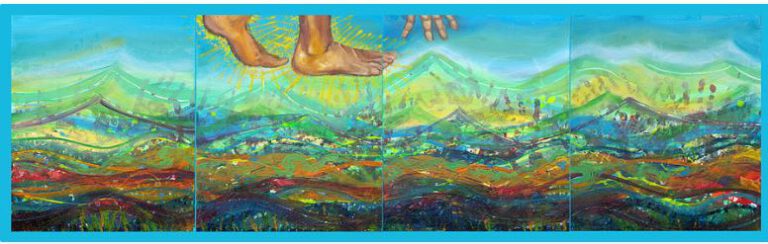
Artwork: https://fineartamerica.com/featured/walking-on-water-anne-cameron-cutri.html

By FR. JOEY GANIO EVANGELISTA, MJ
Malita Tagakaulo Mission
Diocese of Digos, Malita, Davao Occidental

1 Kings 19:9, 11-13

Ps 85:9-14

Romans 9:1-5

Matthew 14:20-33

The things happening around us right now seem more like elements from a sci-fi thriller. An unknown virus killing people from all walks of life: young, old, women, men, rich, poor; medical experts unable to control its spread and scientists racing against time to make a vaccine; people panicking and rushing to stores and supermarkets to buy food and supplies; and world leaders helpless in the face of a pandemic. All of these are ingredients of a sci-fi thriller that we would normally watch to escape the humdrum of real life. Reality check. That sci-fi thriller is now our reality and the humdrum of what used to be real life is now a memory we all want to go back to. The bad news is we are unable to turn this reality off just like a movie. This is life now wherever we go. There is no escaping it. This is the new normal.

People often ask, “When will this all end?” My honest response is, “I do not know.” I do not know of anyone who has information with regard to the timeline of this pandemic. Even scientists dare not give a timeline as to when this pandemic could end. Their wise counsel is often how to avoid being infected and how to prevent and contain outbreaks. Only someone with a delusional disorder would dare predict the end of this global crisis. It is easy to despair during such times because the unknown far outweighs that which we have knowledge of. Fear could easily overwhelm us because we are no longer in control. Despite what humanity has achieved through the centuries and the short decades just before this pandemic, we were beginning to think that we had somehow sorted everything out. There were still some unknowns here and there but nothing that science could not decipher in time. Covid-19 is now making us rethink all that.

Where is God in all this? There would be doomsayers who would claim that God had sent this virus to punish humanity. As Christians we know that “God so loved the world that he gave his only Son, so that everyone who believes in him might not perish but might have eternal life” (Jn 3:16). God most certainly is not in this virus. There are those who are putting all their faith in the development of a vaccine that they have become oblivious to everything and everyone to the point of making the vaccine their god. There a number who have made the economy their god willing to sacrifice the health of people on the altar of economic growth firm in their belief that money will make this pandemic go away. And there are those who are tempted to think that they are faraway from God because they are no longer able to frequent their church as they had used to. So, where is God in all this? The story of Elijah reminds us that God is not in power that can destroy mountains, shake the earth nor in power that can destroy everything. Elijah found God in a tiny whispering sound. In the midst of this pandemic, where is God? God is in every act of kindness that we extend to the people around us especially those who have lost much. In the midst of all the efforts that are being done to defeat this virus, in the midst of all the fear, doubt, desperation, anger, and frustration, an act of kindness is like a tiny, insignificant whispering sound. And yet it is there where hope springs anew. God is there.

The story of Jesus walking on the water toward his disciples as they were being tossed about by the waves urges us to bring this hope to the many people who are today being tossed about by the waves of fear, doubt, desperation, anger, and frustration because of this global pandemic. It is not enough that we know where God is in this pandemic; like Jesus, we are being sent to bring this hope to those who are in most in need of it even if they doubt. God is a God who comes to us first. Jesus came walking toward his disciples and calmed the wind despite their fear and doubt. In the midst of the incessant rise of infections both locally and globally, Christians are admonished not to cower in fear while our boat is tossed about by uncertainty, we are called to step out of the boat to help and not allow fear to overwhelm us. The greatest challenge for us is to rethink how to help people in need in the face of a highly infectious disease.

The many frontliners in this global crisis are showing us the way. Despite the high risk to themselves and to their loved ones by extension, they have not ceased helping the sick, accompanying the lonely, feeding the hungry, giving the thirsty to drink, consoling those who are grieving, and being there even when they should have been with their families. They do this with no fanfare and without counting the cost. Laboring quietly, their sole aim that their patient gets better. As we are tossed about by uncertainty and fear, Jesus comes to us in our frontliners assuring us that all will be well. Their silent labor of love, selflessly coming to the aid of Covid-19 patients, reminds us that God is here and there is hope. We are invited to do the same. (https://www.bulatlat.com)

Balik-Tanaw is a group blog of Promotion of Church People’s Response. The Lectionary Gospel reflection is an invitation for meditation, contemplation, and action. As we nurture our faith by committing ourselves to journey with the people, we also wish to nourish the perspective coming from the point of view of hope and struggle of the people. It is our constant longing that even as crisis intensifies, the faithful will continue to strengthen their commitment to love God and our neighbor by being one with the people in their dreams and aspirations. The Title of the Lectionary Reflection would be Balik –Tanaw , isang PAGNINILAY . It is about looking back (balik) or revisiting the narratives and stories from the Biblical text and seeing ,reading, and reflecting on these with the current context (tanaw).

The post Balik-Tanaw | 10th Sunday after Pentecost: God is here and there is hope appeared first on Bulatlat.

Indigenous peoples, Moro groups urge high court to junk ‘terror law’

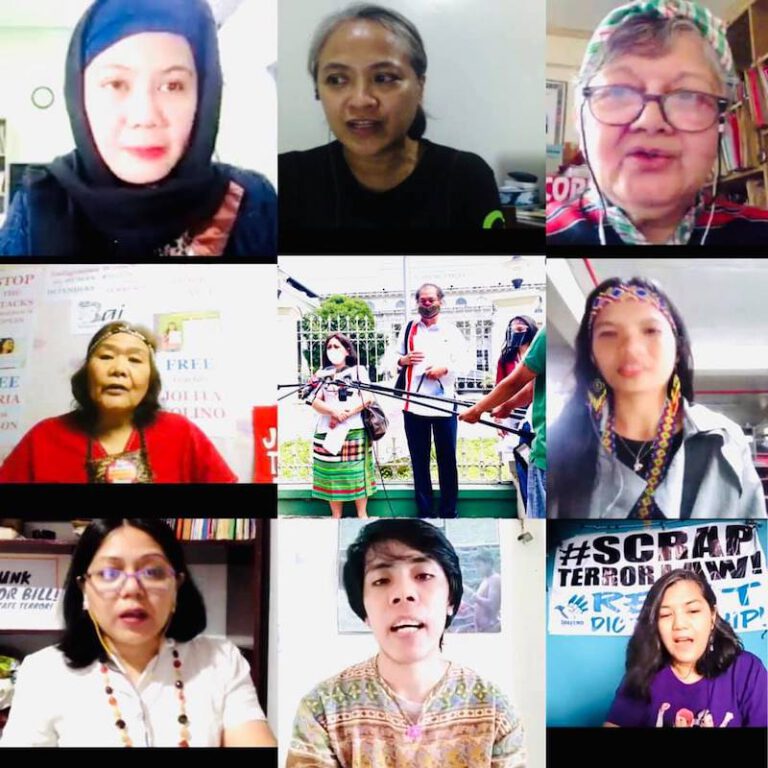
Among the Lumad and Moro leaders who filed a petition Friday asking the Supreme Court to junk the Anti-Terrorism Act of 2020 (Taken from Atty. Tony La Viña’s Facebook page)

“The terror law is added ammunition to the existing arsenal of repressive laws against the Indigenous and Moro people. This is a mockery to the exercise of our fundamental rights”

By MENCHANI TILENDO
Bulatlat.com

MANILA — Indigenous peoples and Moro groups are bracing for an intensification of attacks on their ranks with the passage of Republic Act 11479 or the Anti-Terrorism Act of 2020.

They are not taking it sitting down. Sandugo-Movement of Moro and Indigenous Peoples for Self-Determination and other Moro and indigenous peoples groups filed with the Supreme Court, Aug. 7, the 26th petition against the Anti-Terror Act. They are urging the high court to declare the law unconstitutional, saying it “would cause irreparable and undue injury to indigenous and Moro peoples.”

“Cloaked in legalese, RA 11479 is none other than terrorism in disguise,” the petition read. They highlighted that the ambiguous definitions of ‘terrorism’ would have far reaching impacts on their communities.

“In the Philippines, IP leaders and organizations defending their ancestral lands against plunderous corporate and government projects have been tagged as enemies of the State. Human rights violations are its worst in the Philippines, which ranked as the worst place in Asia for land and environment defenders, and second in the world,” said Beverly Longid, one of the petitioners and global coordinator of International Indigenous Peoples Movement for Self-Determination and Liberation (IPMSDL).

Petitioners also include Samira Gutoc, chairperson of AkoBawit; Joanna Cariño, co-chairperson of Sandugo.

Both Longid and Cariño were named in the Department of Justice’s petition to declare the Communist Party of the Philippines and New People’s Army as terrorist organizations. They were eventually removed from the list.

They were joined by Rose Hayahay and Chad Errol Booc, volunteers teachers in Lumad schools, which have been shut down under the Duterte administration.

Amirah Lidasan of the Moro-Christian Peoples Alliance; Kakay Tolentino of Bai Indigenous Women; Nora Sukal, B’laan indigenous leader; Teresa de la Cruz, Aeta indigenous leader; Judy Pasimio of Lilak are also among the petitioners.

Antonio La Viña, lawyer, professor and environmental and human rights advocate acts as the legal counsel of indigenous peoples and Moro petitioners.

Added insult to injury against indigenous and Moro peoples

The petition states that indigenous and Moro peoples are often met with militarization and violations because of defending their lands and right to self-determination. The labels “terrorist” and “insurgents” have become the catch-all pretext to legitimize attacks on them. Far from a law that protects, RA 11479 legitimizes the structural violence already perpetuated against them.

“The Moro people are similarly placed in grave insecurity under RA 11479. The RA 11479 takes off from the dominant and prevailing global counter-terrorism agenda post 9/11 in which the central villainous figure is characterized as the Muslim terrorist,” the petitioners said.

“The Anti-Terror Law does not help in our centuries-old struggle from stereotyping, derogatory words that label Muslims as terrorists. It endangers our identity and even faith. This law is a continuation of the Human Security Act (HSA) of 2007 which has primarily targeted the Bangsamoro people,” Gutoc, Marawi Moro civic leader and chairperson of AkoBakwit, said.

Gutoc cited that under the HSA 2007, Muslims were subjected to warrantless arrests, and profiling of those who wear the niqab (garment of clothing that covers the face, worn by some Muslim women), or those who have a name of ‘Muhammad.’

“…And take note, none of these mistaken arrests and identities committed by the authorities were held to account, or even investigated,” Gutoc added.

Gutoc reported that after the three-wave of President Duterte’s Martial Law imposition in Mindanao, Marawi has not been fully rehabilitated yet. She said that the Anti-Terror Law has worsened the lack of decent livelihood for Moro people in all parts of the country.

Primary victims at the forefront of the fight

“We are one of the primary stakeholders targeted by the Anti-Terror Law. We need to stand up for the war-ravaged victims, migrant and vendor communities. The Anti-Terror is an all-out war against the Moro people”, Gutoc said.
 
“The Anti-Terror Law discredits our struggles and legitimacy, and undermines our right to self-determination to participate and voice our opinions in matters that affect us. The terror law is added ammunition to the existing arsenal of repressive laws against the indigenous and Moro people. This is a mockery to the exercise of our fundamental rights,” Longid ended. (https://www.bulatlat.com)

The post Indigenous peoples, Moro groups urge high court to junk ‘terror law’ appeared first on Bulatlat.

The SONA and the Fury

PRESIDENT Rodrigo Duterte has placed the National Capital Region and outlying provinces under modified enhanced community quarantine (MECQ) supposedly in response to the plea of healthcare workers to do just that. But that was only part of their suggestion — they also asked that the government reassess its anti-pandemic strategy. Such a reassessment was glaringly absent in Mr. Duterte’s fifth State of the Nation Address (SONA) delivered on July 27, despite the surge in the number of Filipinos afflicted with the disease.

Required by the Constitution, the President’s delivering a SONA every year is not the meaningless, merely customary ritual some think it to be. If done right, it would be a report to the Filipino people on the country’s current situation. It provides a ruling administration the opportunity to present to the nation its plans to address the challenges before it, and to enable it to move forward.

As head of state and the country’s chief executive with access to the information and the expertise needed in navigating the complex waters of governance, the President is presumably in the best position to identify what problems as well as threats and opportunities face the nation. Even more crucial is identifying the steps needed to solve the country’s problems, addressing the threats to it, and using to its advantage whatever opportunities are available. The SONA thus includes the President’s legislative agenda: his recommendations on what bills the legislature has to draft, file and pass into law.

Like many other well-intentioned practices in government, the SONA has become a mostly political exercise. But it should ideally be a sober and sobering appraisal of what is happening to the country and its people even during those times that one can loosely and uncritically describe as “normal.”

One can argue that such times, if there have been any at all, have been rare and far between in this country of unending crises — in which widespread violence, political instability, poverty and hunger, inequality, human rights violations, injustice, ignorance, corruption, criminality, abuse of power and institutionalized oppression are afflictions so widespread they practically define the daily lives of millions of Filipinos.

If even in such times a SONA should be a non-partisan and objective analysis of the country’s situation and problems and how to address and prevail over them, the more urgent is the need for it during these unquestionably abnormal times.

The COVID-19 pandemic is the biggest threat to the well-being and lives of the people, and addressing it should be the first priority of every government official from the President to the lowest-ranking civil servant. As the number of those infected breached 100,000 and will very likely surpass it; as the millions who have lost their livelihoods are unable to feed clothe, shelter and educate their children; and as hunger stalks the poorest communities, the 2020 SONA was an opportunity to unite a divided population and allay its fears by demonstrating that government has the will, the means and the vision to control the pandemic enough for the economy and the disemployed, impoverished and hungry millions to recover from the devastating consequences of the contagion.

Despite that need, President Rodrigo Duterte devoted in his fifth SONA only a few minutes to the continuing threat of COVID-19. One can therefore understand the alarm, frustration and disappointment of those who have been saying that by devoting more time to ranting against ABS-CBN and the Lopezes and Senator Franklin Drilon; threatening to expropriate Globe and Smart Telecommunications; and urging the restoration of the death penalty rather than providing the country a clear understanding of the Philippine situation, Mr. Duterte only exposed how ineffectual his administration has been in curbing the pandemic and presiding over the country’s economic recovery. In addition, what he did not say as much as what he did in his address also spoke volumes about the distressing state of governance and its impact on what is going on in these isles of uncertainty.

In the brief five minutes when he began his address, it seemed that Mr. Duterte would depart from the sound and the fury that usually characterize his public utterances, and that after four long years he was at last going to be Presidential. That hope was soon dashed to pieces as he once more launched into his accustomed tirades, described himself as a 2016 “casualty” of ABS-CBN despite his winning the presidency that year, and ended his address by again attacking Drilon and accusing him of wrongdoing and hypocrisy.

He claimed to have the preservation of human life as his priority, but in almost the same breath urged Congress to restore the death penalty. He did present a legislative agenda that seems intended to revive the economy, but by threatening Smart and Globe Communications with expropriation so soon after his regime’s harassment and persecution of the Lopezes, sent the business community a message the Management Association of the Philippines (MAP) correctly warned is likely to have a chilling effect on both local and foreign investors.

The closest he came to acknowledging his administration’s failure to reduce the number of COVID-19 infections and to produce any semblance of an economic recovery blueprint was a reluctant admission that it has had “difficulties.” But he presented no coherent plan of action to address them on the basis of a fact-based analysis of the last six months’ experience and the lessons learned from it. Neither did he say anything about addressing such major concerns of healthcare workers as the inadequacies of healthcare system equipment and facilities, the critical shortfall in the number of nurses, doctors, and other medical frontliners, and most hospitals’ being full to the rafters with COVID-19 patients.

Mr. Duterte instead beguiled his constituency with the promise that the Philippines would have first priority in getting a vaccine from China, a concession that he said he had managed to wangle from that country. That he had earlier declared that the West Philippine Sea is Chinese “property” naturally leads to suspicions that the promise of a vaccine is his reward for surrendering to it the Philippines’ rights to its own territorial waters and resources.

He also claimed to be for the human rights he has a number of times declared he does not care for. But he said not a single word about how his and his Congressional cohorts’ so-called Anti-Terrorism Law will savage such Constitutionally guaranteed freedoms as free expression and the right to due process. And he certainly gave no accounting of how his administration spent the billions allotted for the pandemic and the much hyped but much criticized and corruption-ridden Social Amelioration Program.

From what he said as well as what he did not, one can only conclude that the entire country and its 108 million population should be in precisely the state of panic that Mr. Duterte keeps saying they shouldn’t be.

Some Filipinos dispose of their garbage by burning or throwing them into the nearest estero. Many get help and even the justice they cannot get from the government from the media’s public service programs. As Mr. Duterte’s spokesperson at one point suggested, following those examples of do-it-yourself initiatives, that it is now up to every citizen rather than the government to protect himself, his family, and his neighbors from the many ills Filipino flesh is heir to. Everything else is sound and fury, signifying little — or nothing.

Luis V. Teodoro is on Facebook and Twitter (@luisteodoro).

www.luisteodoro.com

Published in Business World
August 6, 2020

The post The SONA and the Fury appeared first on Bulatlat.

Committed to human rights, basic reforms and just peace

Today, Aug. 8, this column pauses to pay respect to a man, born to a family of means and comfort, who opted to devote his life to the struggle for fundamental reforms and fight for the rights and welfare of the impoverished, exploited and oppressed in our society.

And he lived up to those commitments, despite the many obstacles and challenges he had to surmount.

Fidel V. Agcaoili would have turned 76 years old today. Tragically, a sudden surge of an ailment that induced profuse internal bleeding cut short his otherwise vigorous life last July 23. He passed away at a hospital in Utrecht, the Netherlands, where for many years he had been staying in a small upper room at the office of the National Democratic Front of the Philippines.

At the time of his passing, Fidel was chairperson of the NDFP negotiating panel in the on-and-off GRP-NDFP peace negotiations, which President Duterte once again sought to revive last December, although he had unilaterally terminated them in November 2017. The COVID-19 pandemic has sidelined further talks. It was Fidel, as NDFP emissary and peace panel member since 1992, who met with Duterte in Davao City after the latter’s proclamation as president in May 2016, getting his commitment to resume the peace talks that year.

He was the second NDFP peacemaker to have died of illness in Utrecht. The first was Antonio L. Zumel, former NDFP chairperson, born on Aug. 10, 1932, passed away on Aug. 13, 2001. His name is now engraved on the Wall of Remembrance of the Bantayog ng mga Bayani in Quezon City.

Like Tony Zumel, Fidel was a beloved comrade and friend. He was also my compadre, the sole sponsor at my second daughter’s baptism.

The man could be grim and determined, sharp-tongued at times, often jovial and funny – but never insincere.

We started working together in the bi-monthly publication, Progressive Review, edited by Jose Ma. Sison, Luis V. Teodoro Jr. and Francisco Nemenzo Jr., which first came out in May-June 1963. Fidel handled business matters; I was a member of the editorial board.

His work with Progressive Review was cut short when his father, a top lawyer and friend of Marcos since their UP Law days who strongly disapproved of Fidel’s activism, sent him to continue his studies in the United States. But he persisted, and maintained links with colleagues here. After his return to the Philippines, we resumed working together discreetly, avoiding the frontlines of open protest actions.

After Marcos declared martial law in 1972 and ruled by decrees, Fidel and I assumed various duties in the underground revolutionary movement, which was then focused on resisting and overthrowing the Marcos dictatorship. Captured separately (he in 1974 and I in 1976), we both survived torture and isolated detention (bartolina) until we were allowed to join fellow political prisoners at the Bicutan Rehabilitation Center (now Camp Bagong Diwa) in Taguig City.

In 1978, we formed the Samahan ng mga Bilanggong Pulitikal, which systematically worked for the release, batch after batch, of political detainees; organized and managed our day-to-day collective life in prison; and coordinated nationwide actions to press for the release of prisoners and to call attention to the continuing torture and other human rights violations.

Fidel was released in 1984, after almost 10 years of detention. I managed, with the help of journalist colleagues at the National Press Club, to free myself the following year.

After his release, Fidel initiated, with several others, the formation of an association of former political detainees. That led to the founding of the Samahan ng Ex-Detainees Laban sa Detensyon at Aresto (SELDA) on May 25, 1986, with the late Joaquin “Chino” Roces, the Manila Times publisher, elected as chairperson and Fidel, as secretary-general. When SELDA trustee Jose Mari Velez initiated the filing of a class suit before a US trial court in Hawaii seeking judicial recognition of the Marcos dictatorship’s human rights violations, Fidel worked hard with the Task Force Detainees of the Philippines to document the cases of some 10,000 ex-political detainees.

By the mid-1990s the Hawaii court ruled in favor of the petitioners and ordered their compensation, amounting to $2 billion, to be taken from the ill-gotten wealth that would be recovered from the Marcoses. Fulfillment of the compensation with a much smaller amount, however, had to come through the passage of a law by our Congress in 2013, with Bayan Muna legislators among the principal authors who arduously pushed its approval over 12 years.

In its statement honoring Fidel, his life and struggles, SELDA hails him as a pillar of the organization. And in a joint statement, human rights defenders Karapatan, SELDA, Hustisya and Desaparecidos said they share “the tears of the people he had served well and inspired in the long, continuing struggle for just and lasting peace.”

On that last point, let me cite Fidel’s important role in advancing and preserving the valuable gains of the GRP-NDFP peace talks against the sustained attempts to ignore or negate them by those who claim the talks haven’t achieved anything substantive , particularly the militarist saboteurs in the Duterte government.

As co-chairperson of the Joint Monitoring Committee, the bilateral implementing body of the Comprehensive Agreement on Respect for Human Rights and International Humanitarian Law (CARHRIHL) and as head of the NDFP Monitoring Committee since 2004, Fidel ensured the publication in book form of important documents, making them available to the public. Among these are the following:

• In June 2006, a book containing the facsimile of all 17 written agreements forged by the GRP and NDFP in 14 years of intermittent formal negotiations;

• In May 2007, a revised and updated comparative study of 23 cases of extrajudicial killings filed against the GRP but which the Gloria Arroyo regime was attributing to the NDFP. The study’s original version was presented to the UN Special Rapporteur Philip Alston in February that year;

• In August 2009, a presentation of the NDFP Reciprocal Working Committee Perspective on Social and Economic Reforms; and

• In December 2018, an updated book containing the facsimile of all the major agreements and joint statements of the GRP-NDFP peace negotiations from Sept. 1, 1992 to June 9, 2018. It included the agreements signed or initialed by the negotiating parties, in the series of formal and informal talks from March 2017 to June 2018, that were aborted by President Duterte.

In the book’s preface, Fidel wrote: “But these aborted agreements… could be used as basis for resuming the peace negotiations with any GRP regime that is willing to talk with the NDFP to address the roots of the armed conflict and pave the way for a just and lasting peace, in accordance with The Hague Joint Declaration.”

Words from a man who wouldn’t give up any small hope to achieve genuine peace in our times.

* * *

Email: satur.ocampo@gmail.com

Published in Philippine Star
Aug. 8, 2020

The post Committed to human rights, basic reforms and just peace appeared first on Bulatlat.