Home Blog Page 238

Barbarian at Miagos

By TOMAS TALLEDO

I.
Our barbarian foreparents hunt heads
when balayong flowers bloom
in hearth hung the skulls of strangers:
hollowed eyes mouths daydreaming

Marrying males are not to dance ’til
they’ve bitten chunk of liver fiend
no, it’s no contest for loud cheers
but valor when honor is everything

Nobody owns the sweet river waters
its flows can’t be damned nor sold
nobody steals our fiery cauldron:
boils legal conceits grammar wrong.

II.
Ancients as we are ancients —
we’re Tumandok, you’re Pangayaw.
Our dungan swirls on our navel
our inunlan, our tigadlum in birthland.

You deny our sacred claims with your
lying tongues, funky memorandum,
zoom meetings and hardheadedness:
curse be unto you and your seeds

Your days will be sad and few
your prayers will be impotent
your children be leprous beggars
your name unspoken and unheard.

III.
We’ll defy your malevolent diktats.
In golden biday we’ll sail to forage
the forest of herbs and tearless vales
of exciting buds and delightful roots

to fill up our kitchen table with mirth.
In synchronous songs while baking,
in nutritious fun of meaning making
we grind your hacks into new normal

“from each according to abilities,
to each according to one’s needs”
and relish the feast of cooperation,
our communion, our communism.

(https://www.bulatlat.com)

The post Barbarian at Miagos appeared first on Bulatlat.

‘Magiting’ | Filipino artists pay tribute to frontliners

About 50 musicians both here and abroad collaborated under the umbrella of Musika Publiko to produce “Magiting”

By REIN TARINAY
Bulatlat.com

MANILA — A community of Filipino musicians, composers, music producers, and music enthusiasts paid tribute to frontliners who are risking their lives as the country confronts the dreaded COVID-19 pandemic.

Titled “Magiting,” about 50 Filipino musicians both here and abroad collaborated with Musika Publiko to produce the song written by Jaime Hernandez. This was part of the online fundraising Tugtugan Para sa Kalusugan, sponsored by the Citizens’ Disaster Response Center, where about 200 Filipino musicians joined.

“Producing the song within the framework of the current lockdown and restrictions to mobility, plus the physical distance of each and every participant was very challenging. But Musika Publiko was able to maximize technology and innovative music production techniques in putting Magiting together,” the Musika Publiko said.

The group described its musical arrangement as a “fusion of providing space to every musician so that they are uniquely heard throughout the song while creating a powerful impact when voices come together, united in chorus.”

Through the heartfelt song with a message, “salamat sa inyong pagsisikap,” Musika Publiko called on to ensure people’s health and welfare in the time of crisis.

As of May 19, 2020, a total of 2,315 frontline health workers have contracted the virus; 974 have already recovered while 35 died of the disease since May 11, 2020. (https://www.bulatlat.com)

The post ‘Magiting’ | Filipino artists pay tribute to frontliners appeared first on Bulatlat.

Information lockdown

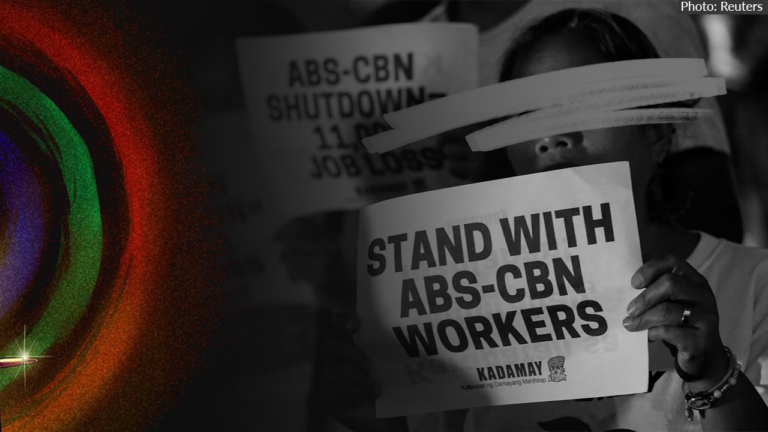
A number of media advocacy, human rights and journalists’ organizations, as well as individual journalists and media practitioners and artists, have denounced the shutdown of television and radio network ABS-CBN as an attack on free expression and press freedom, and have urged the renewal of the franchise.

Even the network’s vast entertainment audience is appalled by the Duterte regime’s shutdown of a network whose programs have become part of the daily lives of millions of Filipinos. ABS-CBN is among the few media institutions in the Philippines responsible for shaping television and film preferences during the many decades of its existence.

Although the network’s influence on mass culture has not always been positive or providential, and its performance as a news provider and interpreter far from perfect, life without Ang Probinsyano and TV Patrol is almost unthinkable for many Filipinos. But some took news of the shut-down with indifference, while still others, primarily those who predictably and blindly approve of what the present regime does without regard for the consequences, even cheered it. They saw it as neither an assault on press freedom and free expression, nor as having any particular relevance to their daily lives.

It might interest the latter to know that despite large numbers of Filipinos’ either refusing to acknowledge it or being totally ignorant of it, the value of press freedom has been acknowledged for centuries even if it is still being debated in these benighted isles.

For example, he was critical of newspapers and on a number of occasions had really harsh words for them, but Thomas Jefferson (1743-1826), the third President of the United States and the principal author of the US Declaration of Independence, nevertheless wrote that if he had to decide between a government without newspapers and newspapers without government, he would not hesitate to choose the latter.

Although he wasn’t always consistent— he was himself a slave owner, but the US Declaration of Independence he authored affirmed that “All men are created equal”— Jefferson valued the role of the free press in preventing government abuse.

He understood its immense contribution to the making of a politically engaged citizenry, without which governments including that of the US can turn into the people’s oppressors. He thus argued that even when the people make mistakes, it is necessary to protect their right and duty to monitor and criticize government, and that newspapers are needed to keep them better informed.

Newspapers have since been joined by radio, television, film and online media. They now constitute the major sources of information on, and interpretation and analysis of events and issues for billions of people. Together they provide the means through which free men and women can hold governments to account and prevent the abuses that Jefferson feared would certainly follow the absence of a free press. Indeed, only some 30 years ago, by reporting what was happening during the Marcos dictatorship the alternative press proved how crucial press freedom is in the making of the informed public needed to combat tyranny.

Some Filipinos understand and appreciate the role of independent journalism in society, and do not need Jefferson or anyone else to remind them of it. But other than the bought-and- paid-for trolls and regime hacks who have made it their business to disparage it, there are still many who honestly think that press freedom has no relevance to their lives, that only journalists benefit from it, and that the shutdown of ABS-CBN has nothing to do with it and is a purely administrative issue.

They are grossly mistaken.

As decision-makers in an agency of the Department of Information and Communications Technology (DICT), which is under the Executive Branch of government, National Telecommunications Commission (NTC) officials were obviously bowing to both their superiors’ and the Solicitor General’s wishes.

The latter had earlier warned the NTC leadership of the supposedly legal consequences of allowing ABS-CBN to continue to operate pending the renewal of its franchise by the House of Representatives, which, however, has been sitting on it for the last three years.

There is also the additional context of the Duterte regime’s sustained attacks since 2016 on other media groups, individual journalists, and their organizations. In addition, Solicitor General Jose Calida also filed a quo warranto complaint against ABS-CBN alleging that it is in violation of the terms of its franchise.

Under these circumstances, in which the existence of a government-orchestrated plot to silence ABS-CBN is as starkly evident as the sun at noon, the NTC cease and desist order is far from being the impartial decision to implement the law its officials claim it to be. It is nothing less than censorship, of which there are at least two forms: prior restraint, and subsequent punishment.

President Rodrigo Duterte has been ranting against ABS-CBN for over two years, accusing it of fraud and bias against him and his regime, and threatening to block the renewal of its franchise. He repeated the threat to see to it that it will be “out” only last November 2019. By December, he was telling the Lopez family to sell the network so its franchise could be renewed.

The inevitable conclusion is that ABS-CBN is being punished for reporting, commenting on, and interpreting events and issues relating to government that Mr. Duterte and his accomplices do not approve of. The NTC order is therefore a form of censorship in the subsequent punishment category.

But it is also a form of prior restraint against the rest of the independent press. It is a warning to other media organizations that if the Duterte regime can shut down ABS-CBN with impunity, the same thing, and perhaps worse, can be done to them. The order is in effect saying that to avoid that fate, every media organization should think twice before it criticizes and dares hold government to account—or even reports truthfully and honestly on what it is doing.

The end result is a constriction in both the quantity and quality of information that reaches the public through the media. Tyranny and bad government thrive on the absence of reliable information, which, it has been said again and again, is vital to the lives of the people in “normal” times. It is even more crucial during and in the aftermath of natural disasters like earthquakes, floods, volcanic eruptions and super typhoons, political and social upheavals, and such emergencies as the current public health crisis brought about by the COVID 19 pandemic.

The availability and quality of information or the lack of it can be a matter of life or death, hence the need for the press to be truly independent so it can provide the daily intelligence, interpretation and analysis the public needs without being censured, insulted, threatened, harassed, and silenced for it.

The shutdown of ABS-CBN is not just an attack on one media organization, but on the entire independent press community, and indirectly, on the people’s fundamental right to the information that will enable them to prevail not only over the present crisis but also future ones.

What the citizenry of this country and the rest of the planet is witnessing is the equivalent of the lockdown that has been imposed on many areas in the Philippines. But rather than to prevent the spread of a virus-borne contagion, it is being used against the people’s right to, and urgent need for the accurate, relevant and timely information that in periods of crisis can save lives.

Prof. Luis V. Teodoro is the national chairperson of the Altermidya Network. This post first appeared in Vantage Point published by BusinessWorld.

The post Information lockdown appeared first on AlterMidya.

ALAB Analysis: Free speech, naka-lockdown din?

Importanteng malaya tayong nakapagpapahayag, laluna sa panahon ng pandemya. Pero paano kung ang free expression, naka-lockdown din?

The post ALAB Analysis: Free speech, naka-lockdown din? appeared first on AlterMidya.

First Person | Ang araw na kami’y nawala sa ere

Habang pinagninilayan ko ang mga pangyayaring ito, marahil ay bahagyang natalo ang mga Lopez ngunit mas malaki ang pinsala nito sa mga sambayanang Pilipino kasama kaming ilang libong empleyado. Ito ay dahil sa pinagdamutan na sila ng estado na makakuha ng libangan at impormasyon sa panahon na may kinakaharap na krisis ang ating bansa, lalo na sa mga komunidad na tanging ABS-CBN lang ang napapanood nila sa pamamagitan ng analog broadcast.

Ni GABRIEL JOHN VILLEGAS
Bulatlat.com

Lahad ng isang kakapasok pa lamang na empleyado

Naalala ko noong sinalubong ko ang ika-5 ng Mayo, inakala ko na sa mga oras na iyon ay magpapaalam na kami sa ere. Nagtapos ang programa ng paborito kong DJ sa MOR 101.9 na si Chico Martin na pinatugtog niyang background ang orchestral theme ng ABS-CBN at ang kantang “Pag-Ibig ang Hihilom sa Daigdig” na siyang tema ng Pantawid ng Pag-Ibig. Napakinggan ko pa ang replay ng episode ng isa pa sa mga tinututukan kong programa ng MOR, ang Dear MOR.

Sa aking pagtulog, nandoon na yung pangamba na maaari na kaming mawala sa ere dahil walang naibibigay ang National Telecommunications Commission na Provisional Authority para patuloy na makapag-ere ang ABS-CBN habang nakabinbin pa sa Mababang Kapulungan ang prangkisa nito. Nagising ako ng umaga na patuloy pa rin silang umeere, napakinggan ko pa si Ted Failon sa kanyang programang Failon Ngayon sa DZMM sa pamamagitan ng live audio streaming sa Youtube.

Dahil sa sobrang takot ko noon na baka mawala na kami sa ere, tiniNgnan ko muna sa iWant ang livestreaming ng ABS-CBN Channel 2 at ng DZMM kung totoo pa ba ang mga nakikita ko ng bandang tanghali, napanood ko pa ang Kapamilya Blockbusters at ang hook-up ng #LagingHandaPH ng PTV-4 na umeere sa DZMM. Nagawa ko pang mag-tweet at mag-post sa aking social media accounts na nagpapasalamat na patuloy kaming nasa ere.

Hindi ko maalala kung nagawa ko pang mag-siesta nung araw na iyon pero nangyari ang kinatatakutan naming lahat. Malapit nang mag-ikalima ng hapon ng biglang magpop-up sa notification ko ang article na nilabas ng GMA News Online na mayroon nang ibinabang cease and desist order ang NTC laban sa ABS-CBN. Lahat kami ay nagtatanungan kung totoo ba ang mga nababasa namin dahil sa lahat kaming magkakatrabaho ay naka work-from-home. Tinutukan namin ang lahat ng mga social media platforms ng mga oras na iyon, maski ang radyo ko ay binuksan ko na rin upang masigurong hindi pa nawawala sa ere ang MOR.

Habang pinapakinggan ko ang DZMM, ramdam ko sa tinig ni Sir Peter Musngi, na tinataguriang ginintuang tinig ng ABS-CBN ang emosyon habang siya ay nagpoprograma sa radyo, kausap ang ilan sa mga mambabatas sa ere. Maski ang mga nasa Senado at Kamara ay naging dismayado sa naging hakbang ng NTC na maglabas ng CDO kahit pa nakapangako ito sa House Committee on Legislative Franchise at sa Senado na maglalabas sila ng Provisional Permit sa ABS-CBN para makapagpatuloy ito sa pagbrodkast habang dinidinig pa ang panukala na naggagawad ng prangkisa sa ABS-CBN.

Binalikan ko muli ang Memorandum Circular na nilabas ang NTC noong panahong nasa mga unang araw pa lang ang Luzon sa ilalim ng Enhanced Community Quarantine. Nakasaad sa nasabing kautusan na awtomatikong maggagawad ng renewal sa permit ng mga broadcast companies kung ito ay mapapaso at matapat sa petsang nasa ilalim pa rin ng quarantine period at magbibigay sa mga ito na makapag-apply ng panibagong permit sa loob ng dalawang buwan mula sa araw na matapos ang quarantine period nang walang binabayarang multa.

Habang nasa ere pa si Sir Peter, agad akong pinadalhan ng mensahe ng mga naging kasamahan ko sa The Catalyst, ang opisyal na publikasyong pang mag-aaral ng PUP upang magpatulong na makabuo sila ng statement hinggil sa nangyari. Dahil hindi ko maaaring magsalita bilang isang empleyado ay nagbigay na lang ako ng mga sangguniang pwede nilang magamit upang makabuo ng mga pahayag mula sa mga articles na inilabas ng ABS-CBN News. Sa mga sandaling iyon, naramdaman ko ang pagmamahal at pagsuporta nila hindi lamang bilang isang kolektib, maski bilang isa ring alagad ng midya.

Maski sa TV Patrol habang ako ay nakikinig sa pamamagitan ng MOR 101.9, nararamdaman ko rin ang emosyong dala-dala ni Ted Failon habang iniinterview niya ang mga mambabatas hinggil sa prangkisa ng ABS-CBN. Ang pahayag ng aming pangulo at CEO na si Ginoong Carlo Katigbak at chairman na si Ginoong Mark Lopez ang siyang naging hudyat upang magpapaalam sa ere ang ABS-CBN. Sa sandaling iyon, nadurog ang puso ko habang pinapakinggan ko silang magsalita para sa mga empleyado ng ABS-CBN at sa ating mga kababayan na palaging tumututok sa ABS-CBN araw-araw.

Napagdesisyunan ng pamunuan ng ABS-CBN na ihinto na ang pagsahimpapawid ng ABS-CBN, DZMM, MOR, at mga himpilan nito sa buong bansa bilang pagtalima sa kautusang ibinaba ng National Telecommunications Commission. At sa ganap na 07:52 ng gabi, tuluyan nang nagpaalam sa ere ang ABS-CBN.

Isa ito sa mga madidilim na araw sa amin bilang mga empleyado, ang bigla na lamang kaming ipasara ng hindi man lang nabibigyan ng pagkakataong madinig ang aming prangkisa sa Kamara. Naulit muli ang kasaysayan na hinarap ng ABS-CBN noong ipinatupad ang Batas Militar sa bansa noong 1972. Sa halip na mga sundalo, isang papel lang ang dumating upang mapatigil kami sa pag-ere. Ang pagkawala ng ABS-CBN sa himpapawid ay hindi lamang usaping pulitikal, kundi ito rin ay usapin rin ng pagkitil sa kalayaan sa pamamahayag at pagkakamit ng impormasyon, ito rin ay usapin ring pang-ekonomiya dahil sa libo-libong manggagawa ng ABS-CBN ang nanganganib na mawawalan ng trabaho, lalo pa’t humaharap ang bansa sa pakikipaglaban sa COVID-19 at patuloy na pagbagsak ng ekonomiya dulot ng krisis na hinaharap hindi lamang ng bansa, pati na rin ng buong mundo.

Sa sandaling nawala kami sa ere ang siya namang buhos ng pagpapahayag ng suporta mula sa iba’t-ibang mga student publications, sectoral groups, media organizations, mga kolehiyo at pamantasan, at marami pang iba. Naging maingay ang aking Messenger dahil sa aking mga kaibigan na nagpapahatid ng suporta sa laban na hinaharap namin ngayon.

Isang oras din ang nakalipas ng pumutok ang balitang pinatay ang mamamahayag na si Rex Cornelio ng Energy FM Dumaguete habang pauwi na sa kanilang tahanan matapos ang kanyang programa. Siya na ang ika-16 na mamamahayag na napatay sa ilalim ng administrasyong Duterte at pangatlo sa mga napatay na mga mamamahayag sa Dumaguete.

Nalungkot din ako na yun ang huling pagkakataong maririnig ko ang tinig ni Chico Martin sa radyo noong madaling araw ng ika-5 ng Mayo. Gayunpaman, bilang pampaantok ko ay pinanood ko na lang ang Facebook Live nina Chinapaps at Chico Martin sa Facebook Live ng MOR 101.9 at sinariwa nila ang mga alaala na nasa himpapawid pa ang MOR at ang ABS-CBN. Sa mga sandaling iyon, pansamantalang nawala ang lungkot ko dahil sa katatawanang dulot nilang dalawa.

Ngunit, hindi nawawala ang mga taong nagdiriwang na mawala ang ABS-CBN sa ere. Tulad na lamang ng isa sa mga kaibigan kong isang opisyal ng pamantasan ang natutuwa pa sa pagkawala ng ABS-CBN sa ere dahil sa umano’y dapat mawala ang mga oligarkong tulad ng pamilya Lopez na nagmamay-ari sa ABS-CBN sa dahilang sila umano ang sumisira sa imahe ng pamahalaan at nagpapahirap sa sambayanang Pilipino.

Sinabi ko na lang bago ako matulog ng gabing iyon, sana makatulog ng mahimbing ang mga nasa likod ng pagpapatigil sa amin na umere. Natulog ako ng may halong lungkot, pangamba, at galit ng dahil sa nangyari.

Isang araw matapos ang shutdown

Kinabukasan, nalaman ng aking ina na wala na sa ere ang ABS-CBN. Agad niya akong tinanong kung paano na ang trabaho ko. Ang sinabi ko lang, pansamantala lang kaming wala sa ere pero tuloy pa rin ang trabaho namin. Ngunit sa loob-loob ko, dun na nagsisimula na ako’y mangamba. Paano na ang mga pangarap ko sa sarili ko at sa pamilya ko? Paano na yung pangarap kong maging bahagi ng ABS-CBN News? Paano na ang lolo at lola ko? Paano ko sila mabibigyan ng maayos na buhay? Paano na ang gastusin nila sa gamot? Ito ang mga bagay na tumatakbo sa isip ko.

Agad ding tumawag ang aking mga tiyuhin at tiyahin upang kumustahin ang kalagayan ko. Basta ang sinabi ko lang sa kanila, “Maayos lang po ako. Tuloy lang ang trabaho namin.” Naiisip ko na rin yung mga kasamahan namin, paano kaya ang mga pamilya nila sa mga susunod na mga araw, linggo, o buwan? Habang nagbabasa ako ng mga post sa Social Media, nakikita ko ang emosyon ng mga tao buhat ng mawala ang ABS-CBN sa ere. Maraming mga bata at matatanda ang lumuluha ng mawala ang ABS-CBN dahil sa hindi na nila mapapanood ang mga paborito nilang mga teleserye o makakapanood ng balita lalo na tuwing sasahimpapawid ang TV Patrol.

Marami rin sa kanila ang hindi na nagbukas ng telebisyon, o di kaya ay dumating pa sa puntong sinira o ibinenta na nila ang telebisyon dahil wala nang mapanood na ABS-CBN.

Marami rin ang nagtatanong kung paano pa nila magagamit ang nabili nilang Tvplus (isang digital receiver device ng ABS-CBN) kung wala nang eere na ABS-CBN. May mga post pa sa Social Media na ginawang patungan ng sabon ang Tvplus nila dahil wala na silang mapanood na mga channels ng ABS-CBN.

Habang pinagninilayan ko ang mga pangyayaring ito, marahil ay bahagyang natalo ang mga Lopez ngunit mas malaki ang pinsala nito sa mga sambayanang Pilipino kasama kaming ilang libong empleyado. Ito ay dahil sa pinagdamutan na sila ng estado na makakuha ng libangan at impormasyon sa panahon na may kinakaharap na krisis ang ating bansa, lalo na sa mga komunidad na tanging ABS-CBN lang ang napapanood nila sa pamamagitan ng analog broadcast.

Ang pagbabalik ng TV Patrol, Teleradyo, at MOR sa Cable at Internet

Marami ang natuwa sa naging pagbabalik ng TV Patrol sa internet pati sa mga digital platforms nito. Maski kami ay natuwa dahil sa wakas ay makakapanood na rin kami ng balita kahit man lang sa internet. Nagbalik ang TV Patrol noong ika-7 ng Mayo sa Facebook, Youtube, iWant, at ANC nang araw na iyon. Sa unang araw ng pagbabalik nito, tinatayang nasa pitong milyon ang tumutok sa Facebook Live at hindi pa kasama rito ang iba pang mga digital platforms ng ABS-CBN.

Sumunod na araw pagkatapos magbalik ng TV Patrol sa mga nasabing platforms ay nagbalik rin ang Teleradyo sa Tvplus at sa cable, pati na rin ang MOR sa cable at online. Nakakatuwang isipin na hindi pa rin sumusuko ang ABS-CBN na magpasaya ng mga tao sa gitna ng matinding krisis na kinakaharap ng ating bansa ngayon, ang pandemyang dulot ng COVID-19.

Sa kasalukuyan, napapanood pa rin ang mga channels ng ABS-CBN tulad ng Cinemo, YeY, TeleRadyo, at KBO (Pay-per-view service ng ABS-CBN) sa Metro Manila, Laguna, Iloilo, Bacolod, at ilang bahagi ng Baguio sa pamamagitan ng blocktime arrangement at hindi sakop ng Cease and Desist Order na inilabas ng NTC.
Ngunit isa pa ring masakit na katotohanan na malaking bahagdan ng populasyon ng Pilipinas ang hindi makapanood ng ABS-CBN sa kanilang mga telebisyon dahil sa patuloy na transition ng mga broadcast companies mula sa analog patungong digital broadcast na inaasahan ang permanent shutdown ng analog broadcast pagdating ng 2023.

Kinabukasan ng mga empleyado ng ABS-CBN

Simula ng mawala ang ABS-CBN sa himpapawid, mas maraming kwento ang aking natutuklasan. Maraming mga kwento mula sa empleyado ng ABS-CBN ang aking naririnig at nababasa habang lumilipas ang mga araw. Marami sa mga kasamahan ko ang may mga binubuhay na pamilya, sa kanilang sinusweldo sila kumukuha ng panggastos upang mapag-aral ang kanilang mga anak sa paaralan, o di kaya ay doon sila kumukuha ng panggastos sa gamot na iniinom nila o kaya ng mga mahal nila sa buhay na mayroong karamdaman.

Lahat kami ay magkakaiba ng mga pinagdaraanan sa buhay, ngunit sa kasalukuyan ay pareho lamang ang aming pangamba. Hindi namin natitiyak kung may mga trabaho pa ba kaming mababalikan pagkatapos ng pandemyang ito. Sa sitwasyon ko ngayon, hindi ko alam kung may maiaabot pa ba akong pera sa aking nanay pandagdag sa gastusin sa aming bahay o kaya ay sa aking lolo at lola pandagdag man lamang sa aming maliit na tindahan sa probinsya, o di kaya ay pandagdag lang din para makabili sila ng kanilang gamot o kaya ay pandagdag sa buwanang bayarin ng kuryente at tubig pati na rin sa kanilang pagkain.

Kada araw, nasa P30-35 milyon ang nawawala sa kita ng ABS-CBN habang wala ito sa ere. Kalakhan sa kinikita ng kumpanya ay nanggagaling sa mga advertisers na bumibili ng ad spots upang maiere ang kanilang mga produkto tulad ng shampoo, sabon, sipilyo, seasoning, at marami pang iba. Sa kinikita rin ng ABS-CBN sa advertisements nagmumula ang mga dagdag benepisyo na tulad ng rice subsidy, health insurance, at marami pang iba. Dyan din nagmumula ang pondo ng ABS-CBN upang makapaghatid ang kumpanya ng mga dekalibreng teleserye at mga dokumentaryo.

Sa totoo lang, hindi na lamang pagiging regular ang inaasam ko ngayon bilang empleyado ng ABS-CBN. Naiisip ko na sana pagdating ng Agosto, wala ni isa sa amin ang mawawalan ng trabaho. Umaasa kami na may mga trabaho pa kaming mababalikan.

Noong nakaraang linggo ay pinangunahan ng ABS-CBN Rank and File Employees Union at ABS-CBN Supervisors Union ang pagkalap ng petisyon sa Kongreso na maibalik na ang ABS-CBN sa himpapawid. Wala pang dalawampu’t apat na oras at sa huling tala ay nakakalap na ito ng 1.2 milyong lagda. Lubos ang naging pagpapasalamat ng mga manggagawa ng ABS-CBN sa mainit nilang pagsuporta sa laban na mapanatili ang kanilang trabaho.

Sa darating na ika-26 ng Mayo ay itinakda na ang pagdinig para sa mga panukalang batas na maggagawad ng dalawampu’t limang taong prangkisa ng ABS-CBN at pag-imbestiga sa umano’y mga paglabag nito sa ilalim ng naunang prangkisa na napaso noong ika-5 ng Mayo.

Patuloy na umaasa ang mga manggagawa ng ABS-CBN na maigawad na ang prangkisa nito upang masiguro ang hanapbuhay ng nasa 11,000 na mga empleyado nito at makabalik ang himpilan sa himpapawid.

Ang pahayag at opinyon sa artikulong ito ay pawang sa may-akda lamang. Hindi ito opinyon at pananaw ng mga empleyado, pamunuan ng mga unyon at ng network.


The post First Person | Ang araw na kami’y nawala sa ere appeared first on Bulatlat.

HOMEBOUND

0

Wearing protective suits, government personnel assist the returning overseas Filipino workers upon arriving at the Laguindingan Airport in Laguindingan, Misamis Oriental before going to their respective hometowns in Mindanao on Monday (May 26). Two sweeper flights flew in the 333 OFWs who were stranded in Metro Manila to Mindanao after spending more than two months following the declaration of enhanced community quarantine protocol in Luzon. (Jigger J. Jerusalem/davaotoday.com)

RITM, the missing piece in the Philippines’ mass testing capacity vs. COVID-19

The decrease in the RITM budget is also coupled with the decline in the allotment of other related health concerns, such as the Epidemiology and Surveillance Department, with a 40-percent drop from P247 million in 2019 to P101 million this year. Since 2015, no additional isolation rooms have been built.

Related story: What is RITM?

By JANESS ANN J. ELLAO
Bulatlat.com

MANILA – Three months into the lockdown, health advocates are enraged with the absence of a comprehensive plan to curb the spread of the COVID-19. Just recently, the Philippine government recently passed on its duty to conduct mass testing to private companies.

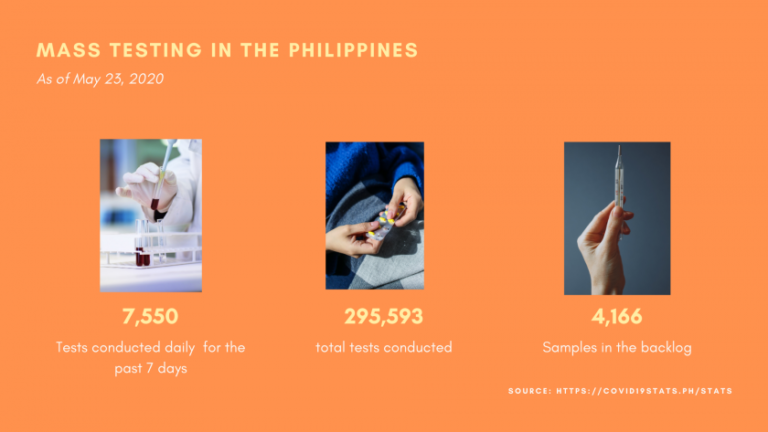
Mass testing, per the experience of many countries also confronting the virus, proves to be the first step in stopping its spread. To date, the Philippines has surpassed its 14,000-mark of confirmed COVID-19 cases. But the government’s own data revealed over 4,000 samples in the backlog and a testing capacity of about 8,277 tests daily as of May 23, 2020.

(Data from https://covid19stats.ph/stats/testing)

This is in stark contrast with Philippine government’s plan to have a testing capacity of 30,000 a day by the end of the month. It does not help, however, that majority of the testing centers are located in Metro Manila, with scientists saying that the Philippines has instead “reached the ceiling” of its testing capacity instead of flattening the curve.

Read: Without mass testing, PH not flattening the curve – scientist

A missing piece in the public discourse is the big role that the Research Institute of Tropical Medicine (RITM) could have played in the country’s fight against the virus if only it was not left with limited funding.

The RITM, along with the Philippine General Hospital, was designated to serve as the COVID-19 referral center in the National Capital Region as the country continues to prevent the spread of the deadly pandemic.

Read: PGH as COVID-19 center: Capacities and Implications

Starting March, 16, the RITM has suspended its other services as they refocus their “available manpower and resources to augment the needs of the ongoing COVID19 response.”

The RITM’s Surveillance and Response Unit, which was formed in 2013, was hailed for its significant role in the surveillance efforts of both emerging and re-emerging diseases of the health department and the WHO. The unit, along with the Epidemiology Bureau, had its “baptism of fire” during the MERS-CoV outbreak.
http://ritm.gov.ph/ritm-surveillance-and-response-unit/

Budget over the years

For the past decade, the budget allocation for RITM’s capital outlay amounted to P137.3 million. This is a far cry to the military’s P1.7 billion capital outlay for this year alone.

Retired RITM employee Edgardo Damicog, in an earlier interview with Bulatlat, said this resulted in the stunting of RITM’s potential.

Under the Duterte administration, there has been a sharp decrease in the maintenance and operating expenses of the RITM.

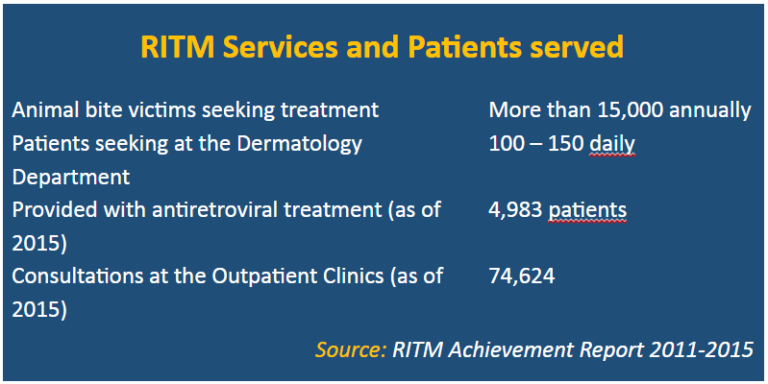
In its 2015 report, the RITM said it has a negative pressure facility with six isolation rooms. Damicog said the construction of these isolation rooms were part of the “lessons learned” from the country’s response to SARS. But no additional isolations rooms were built since then.

The decrease in the RITM budget is also coupled with the decline in the allotment of other related health concerns, such as the Epidemiology and Surveillance Department, with a 40-percent drop from P247 million in 2019 to P101 million this year.

Despite the limited budget, Romeo Garcia, RITM employees union president, said the hospital has turned meeting rooms to laboratory receiving area, where samples are brought before they are turned over to the testing laboratory. These laboratory receiving areas, he added, are equipped with bio-safety cabinets.

Health workers at RITM

The state neglect of RITM has been highlighted by the conditions of its employees. More than 40 RITM health workers tested positive for COVID-19, forcing the state hospital to temporarily scale down its operations. This has resulted in a backlog of at least 5,000 specimens that were awaiting for confirmatory tests, while the institute still tried to maintain their then daily testing target of 1,500.

Garcia told Bulatlat in a previous interview that some of their colleagues have tested positive despite following safety protocols and minimal contact with patients.

Reneging on its responsibility?

Today, instead of strengthening the testing capacity of government institutions such as the RITM, the Philippine government has been banking on private companies to provide mass testing and to comply to minimum health standards as Filipinos return to the workforce with the easing of the lockdown.

The Philippine Red Cross, for one, has been conducting tests for health workers in public hospitals – with at least 90 workers per batch from the National Center for Mental Health, Tondo Medical Center, and the Philippine Orthopedic Center.

RITM health workers were tested every two weeks for free, the group added.

Robert Mendoza of the Alliance of Health Workers said, “We are so disgusted with government’s privatized response in dealing with COVID-19 pandemic while abandoning its state responsibility for health workers’ safety and people’s right to public health.”

Mass testing, he added, has never been done promptly.

Mendoza said, “DOH says that the curve has flattened but in reality it has no solid basis since large-scale of testing has not been performed. The number of tested is miniscule compared to the IATF’s two-million target.” (With additional research from Dawn Peña) (https://www.bulatlat.com)

The post RITM, the missing piece in the Philippines’ mass testing capacity vs. COVID-19 appeared first on Bulatlat.

What is RITM?

(Photo grabbed from RITM website)

This is a sidebar report to our special report: RITM, the missing piece in the Philippines’ mass testing capacity vs. COVID-19

By JANESS ANN J. ELLAO
Bulatlat.com

Established in 1981, RITM was an outcome of a series of negotiations between the Philippine and Japanese governments. The 50-bed capacity hospital was tasked to plan and implement research on programs for infectious and tropical diseases. It has since merged with other government agencies to expand programs and services such as producing vaccines and later serving as the National Reference Laboratory for dengue, influenza, enteroviruses, measles, tuberculosis, to name a few.

It has provided evidence-based clinical management on various health emergencies, including those of international concern such as the SARS-COV in 2003, the pandemic Influenza A in 2009, the Middle East Respiratory coronavirus (MERS-CoV) in 2014, and Zika virus in 2015.

It has also launched various programs in the prevention of spread of HIV in the country, including a national HIV treatment and monitoring program, school-based prevention, and the elimination of stigma associated with HIV through a national testing week.

Most importantly, RITM is known for responding to tuberculosis, malaria and dengue fever cases.

In 1982, just a year after its forming, the RITM began its Acute Respiratory Infection Research Program, which was primarily tasked to look into child pneumonia in the Philippines.

In 2013, the RITM’s Surveillance and Response Unit was formed. Its so-called “baptism of fire” was during the Philippine government’s response to the MERS-CoV, along with the Epidemiology Bureau, as they traced all 414 passengers of an Etihad flight that carried the male Filipino nurse who was afflicted by the virus.

The Surveillance and Response Unit, in the aftermath of the MERS-CoV response, was hailed for its significant role in the surveillance efforts of both emerging and re-emerging diseases of the health department and the WHO. (https://www.bulatlat.com)

The post What is RITM? appeared first on Bulatlat.