Home Blog Page 303

First Person | ‘Hamon para sa mga dalubhasa sa komunikasyon’

Bundoc delivers her valedictory speech during the AIJC graduation on June 7, 2019 (Photo courtesy of author)

By LORIE LYNN BENDIOLA-BUNDOC
Bulatlat.com

Senior Associate Justice Antonio Carpio, Supreme Court of the Philippines, AIJC Board of Trustees chairman Mel Velarde, AIJC President Emeritus, Dr. Florangel Rosario-Braid, members of the AIJC Board of Trustees present today, Dr. Corazon Claudio, Dean Olive Villfuerte, Dr. William Torres, Prof. Ramon Tuazon, current president of AIJC, officials of the NOW Corporation, and Dr. Paz Diaz, vice president for academics and acting dean of Graduate School, sa ating mga guro, mga magulang, mga panauhin, at sa aking mga kamag-aaral na nagsipagtapos sa araw na ito, magandang hapon po sa ating lahat.

Bago pa lamang ako pumasok sa graduate school ay lagi kong tinatanong ang aking sarili kung bakit ko ninais na mag-aral pang muli. Nakuha ko ang aking sagot makalipas ang tatlong taon — na ang pagiging isang dalubhasa sa komunikasyon ay hindi lamang dekorasyong idinudugtong sa iyong pangalan kundi ito ay isang pang-habang buhay na misyon.

Ang aking mga magulang na sina Jose at Maria Bendiola ang una kong mga guro, ang nagmulat sa akin sa kahalagahan ng edukasyon, at ito ay isang personal value na ibinahagi ko sa aking mga kapatid, si Leslie, Paul, at Cha. Ang aking asawa na si Jan-Michael Bundoc ang naging inspirasyon ko upang magpatuloy. Iniaalay ko sa aking pamilya ang entabladong ito.

Ang mga paksang aming tinalakay sa bawat taon ko sa AIJC ay nagpatibay sa aking pagnanais na maabot ang araw na ito upang maisabuhay ang mga aral na aking natutunan. Ngunit hindi ko ito nagawa nang mag-isa lamang. Kasama ko ang aking mga guro at kamag-aaral na nagbigay ng bagong perspektibo sa sining na pinili kong yakapin.

Si Dr. Paz Diaz, ang aking thesis adviser, ang nagturo sa akin ng tunay na diwa ng pagiging isang communication scholar — ang gamitin ang komunikasyon upang makatulong sa mga higit na nangangailangan.

Ngunit ano nga ba ang ating misyon bilang mga dalubhasa sa komunikasyon? Para sa akin, ito ay binubuo ng tatlong tungkulin: palawigin ang diskurso, panatilihin ang kultura, at iangat ang antas ng kamalayan lalo na ng mga mahihirap.

Palawigin ang diskurso. Isang malaking kabawasan kung tayo ay sasabay lamang sa agos ng diskusyon para masabing tayo ay nakikiisa o naiiba. Bilang mga dalubhasa sa komunikasyon, nakaatang sa atin ang misyon na mag-ambag ng ating kaalaman upang maiangat ang kalidad ng diskurso lalo na sa mga online platforms. Balikan natin ang mga communication theories na ating natutunan at gamitin silang inspirasyon upang maitama ang direksyon ng diskurso. Ito ang magsisilbing ambag natin upang muling buhayin ang isang lipunan na may sensibilidad. Hindi pa huli ang lahat.

Panatilihin ang kultura. Bilang mga mananalastas, misyon natin na ipakilala at ipaalala ang ganda ng ating wika sa pamamagitan ng laging paggamit nito. Ang wika ay salamin ng kasaysayan ng isang bansa. At bilang mga mananalastas, tayo ay mga instrumento upang mapalawig ang paggamit nito. Panatilihin natin itong buhay. Gaya ng sinabi ng manunulat na si Jun Reyes, “ang wika ay hindi lang salita. Kamalayan din ito at sensibilidad. Nasa panitikan at kasaysayan ang dangal ng bawat bayan.”

Iangat ang antas ng kamalayan lalo na ng mga mahihirap. Nakalulungkot isipin na ang ating masang Pilipino, gaya ng tinuran ng isa kong propesor, ay over-entertained but under-informed. Bilang mga dalubhasa sa komunikasyon, misyon nating ipaabot ang tamang impormasyon lalo na sa mga maralita upang magkaroon sila ng kamulatan sa mga issue na maaring makaapekto sa kanilang pamumuhay. Tamang impormasyon din ang susi upang sila ay mabigyan ng pagkakataon na makatulong sa kanilang pamayanan.

Diskurso, kultura, at kamalayan, ito po ang misyon na aking iniaatang sa aking mga kamag-aaral at sa mga susunod pang henerasyon ng communication scholars ng AIJC. Sa pinagsama-sama nating pagnanais na mapabuti ang daloy ng pakikipagtalastasan, alam kong darating ang panahon na tayo ay magiging isang lipunan na may alam, hindi takot na manindigan para sa katotohanan, at may mas malakas na boses na ipagmalaki ang ating pinagmulan.

Nais kong iwan sa inyo ang mga salita ni Nelson Mandela “kung ikaw ay makikipag-usap sa isang tao gamit ang wikang kanyang nauunawaan, ito ay tumatatak lamang sa kanyang isipan. Subalit kung ikaw ay makikipag-usap sa wikang kanyang alam, ito ay tumitimo sa kanyang puso.”

Maraming salamat po!(http://bulatlat.com)

Above is the author’s valedictory speech during the graduation and recognition ceremonies of the Asian Institute of Journalism and Communication last June 7, 2019 at Club Filipino

The post First Person | ‘Hamon para sa mga dalubhasa sa komunikasyon’ appeared first on Bulatlat.

‘Sta. Cruz 5, palayain’

Nagbunyi ang grupong pangkababaihan na Gabriela sa pansamantalang paglaya ng bilanggong pulitikal na si Hedda Calderon matapos siyang payagang magpiyansa ng Sta. Cruz Regional Trial Court nitong Hunyo 3.

“Ang ibig sabihin nito, kahit yung korte, hindi mapasubalian na mahina yung kaso laban sa kanya, dun sa ‘illegal possession of firearms (and) explosives’,” ani Joms Salvador, pangkalahatang kalihim ng Gabriela.

Nanawagan ang grupo na matapos mapalaya si Calderon, kailangang sundan din ito ng pagpapalaya sa tinaguriang “Sta. Cruz 5” na biktima diumano ng gawa-gawang kaso na illegal possession of firearms and explosives.

Noong Oktubre 15, 2018, hinuli ang lima, kasama si Calderon, 64, habang bumibiyahe patungo sa isang konsultasyon kay Adelberto Silva, konsultant pangkapayapaan ng National Democratic Front of the Philippines. Pag-uusapan sana umano nila ang mga panukala para sa programang Comprehensive Agreement on Socio-Economic Reforms (Caser).

Nanggaling sa iba’t ibang sektoral na organisasyon ang apat na kasamahan ni Calderon na sina Edisel Legaspi, Ireneo Atadero at Julio Lusania.

Ang hinala ng mga hinuli, ginawa ito sa kanila ng pulisya ng rehimeng Duterte para “may ipakitang mga sangkot” diumano sa planong “Red October.” Ito ang planong sinasabi ng rehimeng Duterte na isinagawa raw ng mga kalaban ng gobyerno para mapatalsik si Duterte.

Ayon kay Salvador, patuloy lang ang grupo sa kanilang paglaban upang mapawalang-sala ang Sta. Cruz 5. Malakas umano ang tsansa na mapalaya ang apat, kung patas lang na titimbangin ang ebidensiyang ipiniprisinta laban sa kanila.

On Independence Day, progressives slam US, China intervention

“June 12 is a reminder that our nation is not truly free as China grabs our islands while the US seeks to re-establish its bases in the Philippines.”

By JANESS ANN J. ELLAO
Bulatlat.com

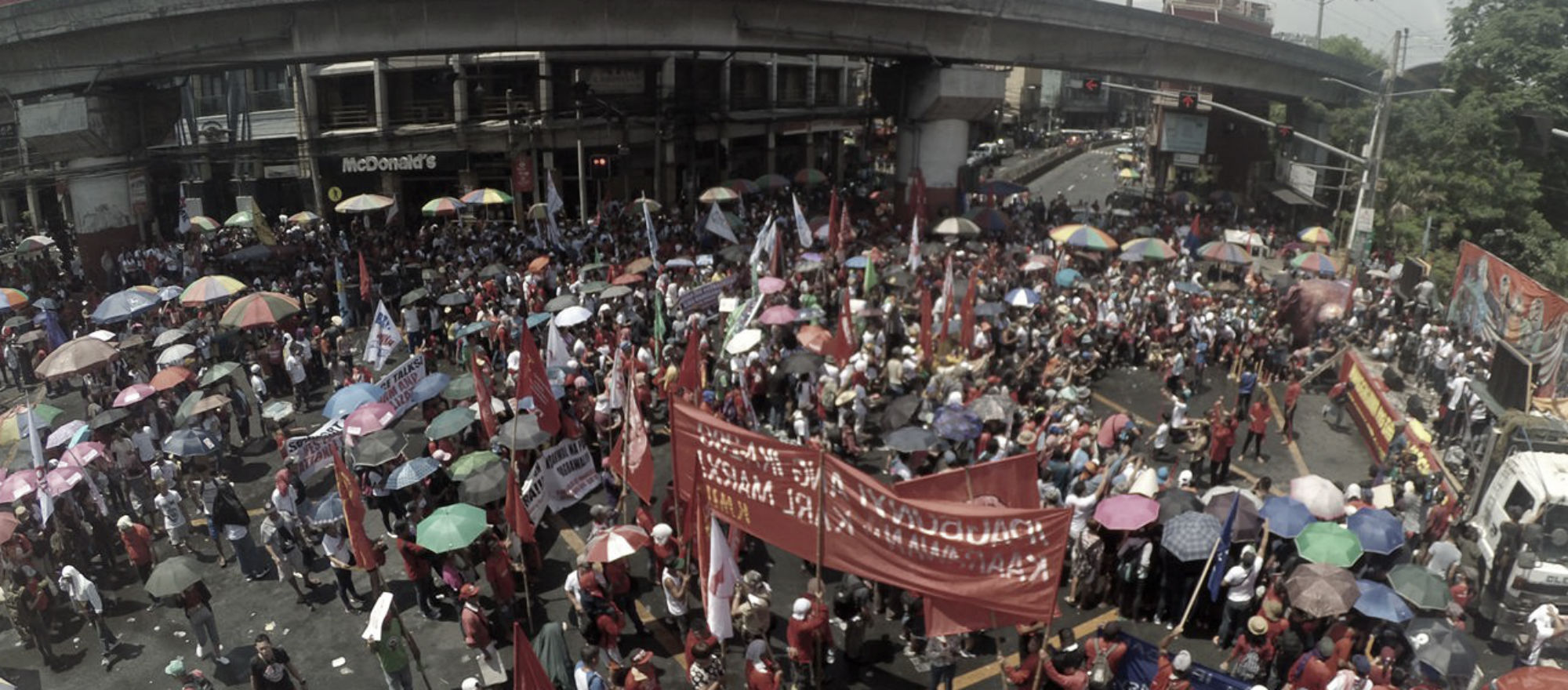
MANILA — Progressives held back-to-back protest actions today before the US Embassy in Manila and the Chinese consulate in Makati to commemorate the country’s Independence Day.

“June 12 is a reminder that our nation is not truly free as China grabs our islands while the US seeks to re-establish its bases in the Philippines,” said Bayan, an umbrella organization of progressive groups, in a statement.

Members of progressive groups began their protest as they marched along Kalaw Avenue, where they were blocked thrice by police officers until they were able to hold a short program in front of the US embassy.

They then held a caravan to Makati and marched along Gil Puyat.

Among those who joined the protest were human rights lawyer Neri Colmenares, Kabataan Rep. Sarah Elago, Gabriela Women’s Party Rep. Arlene Brosas, and actors Mae Paner and Pen Medina.

Bayan said both US and China “want to open up the Philippine economy for investments and extraction of resources.”

Risks facing fisherfolk amid US, China intervention

In an interview, Pamalakaya spokesperson Bobby Roldan told Bulatlat that many fishing communities are caught between two imperialist powers in the West Philippine Sea dispute, which, at the end of the day, “only want to benefit from the country’s natural resources.”

Chinese presence in the disputed waters remains to this day. Roldan said they continue to drive away Filipino fisherfolk, including those who usually seek sanctuary at the Scarborough shoal lagoon whenever the weather has gone bad.

Pamalakaya has already documented about 50 fisherfolk who has gone missing ever since Chinese coast guards began flexing their muscles in the disputed waters as Filipino fisherfolk are now forced to return to shores despite the bad weather.

Filipinos, too, are also way behind in terms of fishing technology. Roldan said that for every one fish they catch, Chinese fishing vessels get about a ton.

Economic intervention hurting the poorest

The intervention of both US and China, however, may also be seen in various policies of the Duterte administration, despite his supposed tough-talking stance on having an independent foreign policy.

As Filipino fisherfolk stand their ground in the disputed waters, their fight continues as they return home with the left and right mining activities in their communities.

Roldan stressed that Zambales and its neighboring provinces are rich in natural resources. It is home to several US and Chinese mining firms, including a jade mine.

Chinese and US firms, too, are raking in trillions of dollars in profits in Mindanao, where a martial law rule is currently in place, said Kabataan Partylist.

The youth group described the deals as “one-sided” as it renders the government as a “victim to debt traps of economic superpowers.”

“The liberalization of the country’s economy has left us to no good,” Roldan quipped.

Farmers still landless

Under Duterte, peasant groups assailed the insincerity of the government to implement a genuine agrarian reform program, adding that at least seven out of 10 farmers remain landless.

Those, on the other hand, who are working as farmworkers in various agribusiness plantations are enduring “back-breaking work for wages that can barely sustain their families,” said Antonio Flores of Kilusang Magbubukid ng Pilipinas.

Flores said that rice liberalization and sugar implementation, as pushed by the US on the Duterte administration, worsened the plight of Filipino masses.

Flores said, “national independence will not be genuinely possible until the decades-old system of a semi-colonial and semi-feudal system of Philippine society is finally abolished by the toiling masses through their perseverance to struggle for genuine agrarian reform and national industrialization.” (http://bulatlat.com)

The post On Independence Day, progressives slam US, China intervention appeared first on Bulatlat.

How I survived anti-Left academics and became an activist

QUESTION EVERYTHING
Mong Palatino

Yes, I studied Marxism at the university. But all things considered, I believe I spent more time learning about postmodernism and its numerous variations inside classrooms and libraries. I got introduced to the politics of the Left through the writings of anti-Left academics.

No ‘mad Marxist’ indoctrinated me to become an activist. In fact, it took me some time before I was able to identify, resist, and unlearn the conservative bent of my postmodern albeit progressive education.

In the 1970s, Marxism became a popular theme in the academe. It was applied in conducting researches, developing the curriculum, and extending the role of the university in social affairs. In the Philippines, this coincided with the rise of the communist-led resistance to the Martial Law regime.

Marxism was formalized as a proper field of study but its reach went beyond the university through the work of ‘organic intellectuals’ and other cadres of the Maoist-inspired national democratic movement. Popular Marxism was linked to the anti-dictatorship struggle. A Marxist was someone who fought oppressors personified by super evil politicians like Marcos.

Meanwhile, academic Marxism bloomed into various schools of thought which some scholars welcomed as the emergence of the so-called New Left. Unfortunately, one consequence of this was the dismissal of the basic tenets of Marxist ideas and practices under the pretext of either upholding classical Marxism or updating it to the conditions of the modern world.

The Left faced an existential crisis after 1986. It mirrored the global decline of the Soviet bloc until its disintegration in the late 1980s and early 1990s.

This was the same time when postmodernist studies flourished and Marxist philosophy was viciously attacked and blamed for the failure of the socialist experiment.

The 1990s was the heyday of neoliberal thinking. It accommodated various ‘isms’ that negated Marxism. Resources were provided to institutions propagating the ‘end of history’ and the blunder of communists everywhere.

This was the popular political perspective when I entered the university in the mid-1990s. Marxism was taught through the lens of academics who were ridiculing the experience of the Philippine Left. Books, journals, magazines, and reading materials celebrated postmodern approaches while dismissing the purported obsolete framework of Marxism. Pluralism was affirmed and all views were declared to be valid except the grand narratives of the Left.

Looking back, it seemed impossible to study Marxism and end up being a Marxist. The required readings in social sciences were mostly slanted against a Marxist interpretation of history and economy. The legacy of the Philippine Left was reduced into a boycott error in 1986. We were exposed to a set of writings lampooning the doctrines and practices of the revolutionary movement. Curiously, there was little reference to the foundational documents of the Left because these were treated as propaganda materials unfit for academic discussion. Instead, we were required to read ‘Leftist’ scholars who specialize in attacking the Left.

We devoured essays and researches highlighting the supposed glaring errors, inconsistencies, and deviations in the documents of the Communist Party and the seminal writings of Joma Sison. The vitriolic attacks waged by the military and other state ideologues against the Left found resonance in the academe.

This was not unusual if we consider the critical appraisal of the Left as an expression of academic freedom. Perhaps the freedom to engage in partisan politics and misidentify anti-Left ranting as objective scholarship. The freedom to fetishize against an entire national liberation movement, nitpick on minor doctrinal arguments, decontextualize criticism, and echo the ethos of the state in evaluating the Left.

Studying under these conditions, we acquired a distorted sense of the Left’s holistic impact on politics; instead, we only saw its fundamental weaknesses and its doomed prospects.

It was thus awkward to read about the misguided Leftists and then bumping into them in hallways and classrooms. The vocabulary I absorbed was patently biased against them and so their presence seemed strange and even a nuisance.

But they were persistent propagandists and after several encounters I found myself joining one of their activities. It’s only later I realized that the Left was undergoing a rectification movement. For some academics, it was an internal purge that divided the Left. But what I saw was an intense political education campaign that mobilized young people to study the classics of Marxism, the history of the unfinished Philippine revolution, and the relevance of Mao’s cultural revolution in understanding the triumph of capitalism in erstwhile communist societies.

Before the era of free downloads and file sharing, we got hold of the collected works of Marx, Lenin, and Mao. Our reading was complemented by collective discussions which also became a venue to debunk the arguments of anti-Left scholars.

Lenin’s ‘Imperialism’ became a useful guide to rethink the concept of globalization and dissect the roots of the Asian Financial Crisis. Sison’s ‘Specific Characteristics of our People’s War’ clarified the uniqueness and general phases of the Maoist revolution in the archipelagic Philippines.

But I was not easily persuaded despite the creative approach of activists in offering alternative courses on philosophy, political economy, and people’s war. Despite my fascination with my new ‘study group’, I was more drawn to my academic classes where I started to feel more confident articulating Marxist terminologies.

I still had my doubts, though. I felt playing an amateurish language game wherein I could cherry pick concepts from various strands of philosophy and flaunt them in debates and essays.

But alas, the Left was not in the game for simply interpreting things and events, and getting involved in politics from a distance. It was consistently in the thick of battle, initiating local and sectoral struggles, and pursuing the national democratic line for social transformation.

As a student of politics and a young citizen wanting to do more in society, the NatDem Left offered something concrete, comprehensive, and radical. There were other Leftist movements as well but I was not impressed by their appeal for peaceful activism (as if this should be the aim of progressive politics). Meanwhile, I couldn’t fathom what anti-Left academics wanted really to achieve in politics aside from making a sinister prognosis about the Natdem movement. They were focusing on the failures of the NatDem Left yet they were quiet about the other factions of the Left.

I was prepared to be disappointed with NatDem politics but instead, I became more immersed in their mass campaigns. I was overwhelmed with several political realizations: Here was a movement making democracy work through collective leadership, here was a political force whose strength is linked to the empowerment of its members in the grassroots, here was history claiming the present to build a new future.

And I was genuinely surprised to learn that anti-Left academics were wrong on many things about the practices of the NatDem Left. Contrary to what I read about them, the NatDem Left acknowledged its mistakes and the excesses it committed. This was one of the early resolutions of the rectification movement. Again, against what I expected, there were nonstop debates within the Left about tactics, strategies, campaign demands, alliances, and analysis of the political situation. There were always new lessons in organizing, victories and defeats in mass struggles, and the constant vigilance over state reprisals. The Left can’t survive, thrive, and surge in many places if it were a dogmatic political force.

It is sad to see anti-Left academics parroting the state rhetoric about the irrelevance of the Left. If the Left is already too weak and isolated, then why build a career ridiculing a supposedly dead and dying movement? Two decades later, the NatDem Left is still a major political force in the country. But the anti-Left academics are still trying their pathetic best to give hope to state apologists and the conservative Establishment about the looming defeat of the revolutionary mass movement. Dream on.

The post How I survived anti-Left academics and became an activist appeared first on Bulatlat.

Q & A with San Carlos Bishop Gerardo Alminaza on Negros killings

The violence that erupt from time to time in Negros is but a painful reminder of the longstanding land problem and unjust system operative in Negros.

By JHIO JAN A. NAVARRO*
Bulatlat.com

Negros, an island of landlords, has ever since been rife of agrarian tensions. From the bloody Escalante Massacre of 1985 to the more recent Sagay 9 and March 30 massacres, violence entrenched in land conflicts remains heavily pervasive.

The inhumane killings have elicited indignation from human rights advocates and public outrage both exerting strong pressures for prompt and impartial investigations. Individuals from other sectors have also boldly spoken against the wanton killings. One of such personalities who is both vocal and critical is a Negrense himself, Bishop Gerardo Alminaza of San Carlos.

A staunch advocate of social justice, Bishop Alminaza has made it to the headlines by getting out of his way, demanding a thorough probe on the case of the 14 farmers killed in Negros Oriental. Claiming that the victims lived within the boundaries of one of the diocese`s mission stations, the bishop demanded quick and thorough investigation from the authorities. More so, the prelate boldly brought to the fore and questioned the alleged lack of arrest warrants when the apprehension took place.

In light of the election results in the province, Bishop Alminaza also appealed to the newly elected officials for a multi-sectoral dialogue to seek solutions to the lingering social injustice dilemma that he believes is rooted on land disputes.

Below is an interview with the good bishop conducted on May 25. The questions were sent on-line via messenger to Bishop Alminaza who was then in Ad Limina visit to Rome.

Q: Since the previous year, Negros has claimed the headlines for countless peasant killings perpetrated by state elements. As a bishop in Negros, what can you say about this?

A: The killing of anybody – a human being endowed with inherent dignity and inalienable rights – is certainly unacceptable to say the least, more so if the victim is defenseless, already a victim of social injustice and is simply fighting for his/her legitimate rights as in the case of farmers in Negros! It becomes even worse if the very government agency mandated to protect and defend those who have less in life and in law are responsible for their killings! What’s lamentable about these killings is that the victims were not given their right to due process, they were heard pleading for their life. According to state forces, their death was summarily justified by the claim that they fought back – “Kasi nanlaban!” Such response to our social problem by state forces has no place in a civilized and more so in a Christian society.

Q: Last October20, 2019,the incident tagged as “Sagay 9 massacre” gained nationwide attention. Many government officials vowed to deliver justice in the soonest possible time and the police pledged impartial investigation. However, less than a month after this, Benjamin Ramos, pro bono lawyer of Sagay 9 was killed and until now justice for the families of the massacred remains elusive. What does this indicate to Church leaders like you?

A: The government can’t blame anyone if some of us will conclude that critics of the present administration are being silenced. Our history is replete of such stories! Prophets suffer the same fate. Our Lord Himself was sentenced to die on the cross between thieves! It’s also a fact that where there is long standing grave social injustice, the wheels of justice do turn ever so slowly. We can’t expect those favored by the present state of affairs to simply give up their position of privilege! The common state response is to tag them as communists or rebels and as such they are immediately stripped of their human rights and anybody then feels justified in killing them. This betrays a lack of solid moral grounding, not to mention the spirituality that all who believe in God should have. To follow Christ is a risky business. It’s not for the faint-hearted. He Himself said, “No disciple is greater than his Master.” One has to be prepared to be considered and killed as an enemy of the state!

Q: Just recently, Negros has once again found itself on the headlines with the killing of 14 peasants in Negros Oriental. According to the police they are lawless elements who resisted a duly constituted arrest. Do you subscribe to this sort of justification? Why or why not?

A: Lest I be misunderstood – as I am these days – we want our security forces to do their job well in keeping the peace and order of our communities. We acknowledge their sacrifices and their efforts to defend our country and our democratic principles and it is precisely when they themselves violate these that we are greatly disheartened and disappointed, pretty much in the same way when we learned of cases of sexual abuse committed by our clergy who vowed to bring us closer to God and to witness to God’s faithful and constant love! Listening directly from the families of victims themselves and some eyewitnesses, corroborated by independent reports, we are afraid our security forces have committed gross irregularities and human rights violations in their conduct of “operation Sauron” or Sempo (sychronized and enhanced management of police operation) last December 27, 2018 and March 30, 2019 and should really be thoroughly investigated. Sadly, however, we don’t anymore hear of any update on this. Various accounts have indicated that the victims did not and could not have fought back as in the case of the barangay captain in Manjuyod for example who sustained seven gunshot wounds in his body, including his genitals. The protocol for serving search warrants was not followed. The whole conduct of police operation acquired an even uglier face if it is proven true that they were done to meet the expected quota, to receive the promised reward money and for them to get a promotion.

Q: The separation of the church and the state had been a constant issue thrown to people like you, critical of the administration’s policies. Despite this, why do you persist?

A: I welcome honest and well-meaning feedbacks but it saddened me to read reactions from people who resort to argumentum ad hominem (personal attacks) and totally missed the issue. Some of their arguments are: 1) separation of Church and State; 2) we don’t pay taxes so we have no right to make comments on the way our government is run; and, 3) we can’t even correct our errant priest so why criticize government!

Aside from being a legitimate citizen of our country, as a Church leader I am duty-bound to teach and clarify which actions are in accord with our moral and spiritual teachings and should be upheld and which constitute a grave error or violation and should be therefore denounced or avoided. Simply invoking the separation of Church and State outside its proper context is obviously indicative of a closed mindset or of a heart misplaced (not in the right place). I persist because we do what we do — not in order to win a popularity contest or establish a mutual admiration club but simply out of conviction that is faith-based, which means it is motivated by my love for Christ coupled by the soundness of the course of action chosen and valued among available choices. It is discerned as most consistent with and integral to my identity as Filipino Christian ordained for priestly service. Our God as witnessed by Christ took the side of the suffering people, those most excluded and oppressed. For as long as the social order is far from the kingdom of God, our work – our mission – continues…

Q: In light of the rampant killings and injustices in Negros, what is your message to the faithful?

A: First of all, we need to make sure that we in the Church do not become part of the established order that keep the poor poorer and favor only the few. It is so important that we be critical of ourselves when we begin to enjoy the status quo of grave social injustice and turn a blind eye to all that prevent the disadvantaged from enjoying the fruits of the earth and their honest labor.

Secondly, it is never God’s will that there exists among us social inequality, and worse, that only a few enjoy the abundance of God’s creation.

Thirdly, militarization characterized by violence, killings, intimidation, harassment like red-tagging can never be a solution to an already violent situation brought about by social injustice. Our security forces should keep asking the hard questions: What drives people to resort to violent armed struggle? What makes them vulnerable to ideologies? How can we win the hearts of people victimized by unjust structures? Often these people don’t have access to basic social services that government is supposed to provide. We need therefore to help one another to address the root causes of the social unrest in Negros.

Fourthly, it remains a scandal that in a country predominantly Christian there exists a wide gap between the rich and the poor, that a few own vast tracks of land and continue to amass wealth while the fruits of labor are not justly shared.

The violence that erupt from time to time in Negros is but a painful reminder of the longstanding land problem and unjust system operative in Negros. Poor, competent and qualified candidates for public office, for example, will never get the chance to get elected for the system won’t simply allow them. Aids to help the poor are never meant to alleviate them from poverty but sadly they are done to keep them poor and under the control of the powerful! Disturbingly we seem not to question it anymore and the Church may unwittingly reinforce and legitimize the unjust situation. Those who rock the boat risk being silenced or killed! In 2021, the Catholic Church in the Philippines will celebrate the 500th Anniversary of the Arrival of Christianity in our country. We are grateful we remain predominantly Catholic yet our public life portrays many inconsistencies and contradictions, for example: (1) the conduct of our local and national elections with rampant vote-buying, intimidation and questionable automated election system; (2) we signed as co-signatory to the Paris Agreement to help mitigate global warming yet we keep allowing the construction and operation of coal-fired power plants in the country, for example; and, (3) impressive religious and pious display of faith yet there exists glaring social inequality.

Our challenge is how to narrow the gap, how to acquire a consistent lifestyle and how to offer an alternative, coherent public witness of faith that addresses the heart of our social problem. Let’s live according to the spirit of “ubuntu” (“I am because we are!”, the principle of synodality – journeying together / church of communion / never a self- referential Church. Let’s actively build a more listening, participatory Church by organizing and strengthening our basic ecclesial communities. Let’s collectively hear the “cry of the poor” and the “cry of our common home”! Let’s shift from the arancel system of supporting the Church with its inherent semblance of commercialization of the sacraments and priestly ministry to stewardship and tithing system. Let’s do a lifestyle check and open ourselves to the call for greater financial transparency and accountability. Let’s make sure justice is served for those unjustly killed and those responsible will be held responsible and will not go free with impunity. (http://bulatlat.com)

* The author is an in-coming Negrense sophomore of the University of the Philippines Visayas taking up BA in Psychology and a staff writer of Pagbutlak, student publication of UP Visayas.

The post Q & A with San Carlos Bishop Gerardo Alminaza on Negros killings appeared first on Bulatlat.

On the Frustrated Murder of Mindoro Prosecutor Olivar: YET ANOTHER ONE

PRESS STATEMENT |11 June 2019

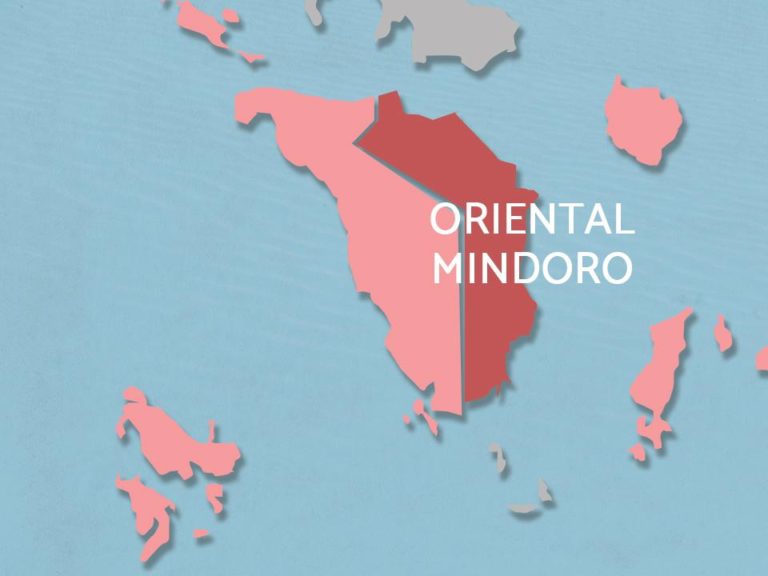
The National Union of Peoples’ Lawyers (NUPL) joins the calls for a thorough investigation on the brazen shooting of a provincial prosecutor in Oriental Mindoro yesterday.

Reports disclose that Prosecutor Josephine Carranzo Olivar was shot several times in front of her very home in Calapan. She sustained wounds in the head and body but fortunately is now in stable condition.

We are immensely concerned about this seemingly unending and lamentably unresolved attacks on members of our profession.

Olivar is the seventh prosecutor attacked under the Duterte administration. A total of at least 39 lawyers, judges and prosecutors have been killed apparently in relation to their work since 2016, three of which just happened in the last month.

This is on top of many others who have been attacked in other forms like labelling, threats, harassment, intimidation, surveillance, false charges, and even arrests.

Even the policemen who have been identified to have been involved in the heinous murder of Quezon City Prosecutor Rogelio Velasco are now off the hook.

We condemn this attack on Olivar and we call out once again the Philippine government to abide by its responsibility under the UN Basic Principles on the Role of Lawyers which clearly mandates that:

  1. Governments shall ensure that lawyers (a) are able to perform all of their professional functions without intimidation, hindrance, harassment or improper interference xxx;
  2. Where the security of lawyers is threatened as a result of discharging their functions, they shall be adequately safeguarded by the authorities; and
  3. Lawyers shall not be identified with their clients or their clients’ causes as a result of discharging their functions.

This latest attack comes on the heels of the unrelenting vicious attacks on NUPL as a whole. It also highlights the imperative for an independent investigation on the other “staggering” killings as urged by several UN officials including the UN Special Rapporteur on the Independence of Judges and Lawyers.

With a surfeit of lawyers in all branches, levels and interstices of government, it must be a no-brainer that these attacks must be addressed, resolved and prevented with utmost dispatch and urgency. We must go beyond bombastic rhetoric, formulaic task forces and trite palliatives lest we learn of another one of our own biting the dust. #

Reference:

Edre U. Olalia
NUPL President
+63 9175113373

Ephraim B. Cortez
NUPL Secretary General
+63 917546 5798

Josalee S. Deinla
NUPL Spokesperson
+63 917431 6396

31 years of CARP, farmers still demand real land reform

Farmers hold protest calling for genuine agrarian reform (Photo by A. Macaraeg / Bulatlat)

The demand of peasants and agricultural workers for land for peasants, agricultural workers, and national minorities, and not for landlords.

By JOHN AARON MARK MACARAEG
Bulatlat.com

MANILA – Farmers and land reform advocates trooped to the Department of Agrarian Reform (DAR) and Mendiola on the 31st year of the Comprehensive Agrarian Reform Program (CARP), June 10.

The protest action demands the government to acknowledge that the CARP was never been an answer to the problems that the farmers and agricultural workers are facing.

“Laws such as CAPaeR and CARP only concentrated land to a few landlords and enabled them to grab and control from thousands to hundreds of thousands of hectares of land that should have been in the hands of farmers who till the land. The basic and primary problem of landlessness only worsened under the Duterte regime,” Anakpawis Representative Ariel Casilao said in Filipino.

The peasant masses that gathered yesterday, also called for the government to be held accountable for the killings, fabricated search and arrest warrants, and imprisonment of farmers. Since President Rodrigo Duterte administration began, there have been 207 documented killings of farmers.

Genuine reform

“During 31 years of CARP, farmers were not given land to till, the conditions even worsened in the countryside. The Duterte administration gave away Certificate of Land Ownership Awards (CLOAs) but farmers are demanding actual and physical land distribution. It is not enough to get CLOA, which may easily be canceled and revoked,” Kilusang Magbubukid ng Pilipinas (KMP) Chairperson Danilo Ramos said.

According to KMP, there are 201,604 CLOA and Emancipation Patents (EPs) pledged only to farmer-beneficiaries. The peasant group said that in paper and in essence, farmers do not own the land awarded to them. There are still reported issues of land grabbing, land-use conversion, and other conflicts that hamper the farmers’ actual possession of the land they till.

“Most agrarian reform beneficiaries do not have control over the kand. They may have certificates but they could not own the land because of the presence of big plantations,” Casilao said.

In 2016, Casilao, together with the Makabayan Bloc, filed House Bill 555 or the Genuine Agrarian Reform Act.

GARB proponents said that land monopoly is a big factor in the stagnation of Philippine agriculture, pointing out the failure of the three-decade Comprehensive Agrarian Reform Program (CARP).

However, the bill is still at the committee level of the House of the Representatives.

“The government ignores our proposed law as landlord lawmakers would not even discuss it,” Casilao said.

He added, “So our hope in the struggle for land reform rests on the organized strength of farmers in their communities. The persistence in different forms and levels of struggle for land reform throughout the country.”(http://bulatlat.com)

The post 31 years of CARP, farmers still demand real land reform appeared first on Bulatlat.

Red Flag vs the Redtag

The petition “Filipino communities raise concern about candidate for a Southeast Asian studies job at Berkeley,” which was able to gather 467 signatories from March 26 to May 31 this year, has become highly controversial among Filipino activists, writers, professors and academics in the Philippines and the US. It has so far provoked four articles in online newsite Rappler.com, many Facebook posts and comments, and numerous skirmishes in various comments sections.

The petition is about Lisandro “Leloy” Claudio, an academic who claims to be an historian, a writer-vlogger for Rappler.com and other publications in the Philippines, and the author of a few books. Having been informed that Claudio is being considered for a position at the University of California-Berkeley, the signatories ask the Search Committee of the Department of South and Southeast Asian Studies to “review [his] record carefully before proceeding further with consideration of his candidacy.”

The basis: Claudio red-tags various “organizations, leaders, students and ordinary activists” or calls them Communists or Communist supporters. In the Philippines, such an act has always put lives in danger, especially under the regime of Rodrigo Duterte – which has carried out the extra-judicial killing, abduction, arrest and detention, harassment and surveillance of numerous activists who are accused of being Communists or Communist supporters working in legal fronts. Indeed, as the petition states, “in the Philippines, red-tagging can lead to death.”

Contrary to the patently absurd claims by Claudio’s defenders that he does not red-tag individuals and organizations, the document presents clear, indisputable proof of his red-tagging via a selection of linked articles and posts. The signatories are voicing out their condemnation of such an act, especially amidst the dire human-rights situation – nay, crisis or emergency – in the Philippines at present.

Despite numerous criticisms thrown his way, including one written by this author, Claudio has carried on with his merry red-tagging ways, arrogantly defending the act in the name of “truth,” “democracy” and supposed “liberalism” – yes, in the time of an authoritarian and murderous president like Duterte. Anybody who is open-minded enough to recognize the connection between red-tagging on the one hand and human-rights violations and political repression on the other has every reason to feel bothered and concerned, even disgusted and angry. Duterte, for one, has publicly floated carrying out the “Indonesian solution” in the country.

Internationally-known academic Walden Bello responded to the petition by invoking “academic freedom” which he says must be defended “against political extremism.” He claims that what critics call Claudio’s red-tagging is just part of a “stimulating, indeed enjoyable, debate.” Claudio, he says, is not engaged in McCarthyism; it is the petition’s signatories, who come from the “extreme Left,” who are. In short, he absolves Claudio of any wrong-doing and takes advantage of the occasion to further demonize the country’s Left. Refusing to recognize the consequences of Claudio’s statements for people and organizations which are red-tagged, Bello exposes himself as an uncritical defender of Claudio and peddler of an anti-Left persuasion.

Also responding to the petition, academic Patricio N. Abinales asserts that the document “is notorious for violating an unstated norm among academic institutions that they respect each other’s hiring process.” Abinales is not only showing off his supposed knowledge about such norms but is elevating such norms to the level of a universal rule that is seemingly inviolable in the case, for example, of rapists or mass murderers. He faults the petitioners for not engaging with Claudio’s scholarship, a complaint which is wide off the mark because such scholarship will not change the caution being raised against Claudio. He dismisses the petitioners’ claim as mere “speculation,” again ignoring the very real dangers of red-tagging in the Philippines.

Denying that Claudio’s statements endanger the lives of activists, he claims that it is actually the petitioners who are endangering the life of Claudio – who he now pictures as “a possible subject for communist assassination.” While it is activists who are suffering the brunt of Duterte’s fascism and have done infinitely more to fight it, Abinales chooses to valorize Claudio’s consistent anti-Duterte stance – which is not unexpected from a consistent partisan of the Noynoy Aquino regime. In trademark Abinales fashion, he ends the piece with an attack on Jose Maria Sison, founding chair of the Communist Party of the Philippines. He says it was Sison who has red-tagged progressive organizations and not Claudio. Like Bello, Abinales exposes himself as an uncritical defender of Claudio but, compared to Bello, Abinales is a more rabid anti-Left commentator.

Given the foregoing, it is no wonder that the response of Jody Blanco, one of the petitioners – addressed to Bello, but in a way also to Abinales – reiterates the most dangerous in Claudio’s actions: “Claudio’s identification of students and student groups as extremist exposed them to added surveillance and possibly danger, given the current breakdown in the administration and enforcement of laws and individual rights and freedoms in the Philippines under the current government. That this allegation has come from students themselves raised an ethical concern that, I imagine, was shared by many colleagues who also signed the petition.”

Unconvinced by Blanco’s response, no less than Peter Zinoman, chair of the History Department and professor of history and Southeast Asian studies at UC-Berkeley, defended Claudio. Zinoman justified Claudio’s red-tagging on the basis of the need to expose the “dishonest recruitment practices of communist front organizations on college campuses.” He also talks about similar “deceitful efforts” being used to recruit “Phil and Phil-Am students” at UC. One wonders about these recruitment efforts. Were students recruited to the Disney Club or the Glee Club only to find out that they have become members of the Communist Party? Of course not. Many Communists will say the more logical thing: prospective members are asked point blank about wanting to become a member of an organization that entails “sacrifice, difficulties and even death” and are asked to devote many hours to collectively study the Party’s Constitution and Program, among other educational courses.

Zinoman says that Claudio never outed individual students as Communists. Maybe Claudio did not name them individually, but maybe Zinoman does not know how big a campus chapter of a party-list group looks like. It is composed of a minimum of 15 members, the leaders of which are often visible and easily identifiable on campus, especially the Ateneo de Manila University campus. Saying that a campus organization is a Communist front already puts its members, but especially its leaders, in danger.

Zinoman also displays an obvious disdain for the local Communist movement. He refers to “the inglorious and authoritarian record of the [CPP] under the leadership of its Chairman Jose Maria Sison” as if this is an indisputable fact and describes Claudio’s opposition to Communist recruitment practices as “even-handed.” He says that the CPP allied with Duterte “around the 2016 election,” when the close relations between the two happened after the election, and the Left never went silent about Duterte’s human-rights record, nor failed to oppose Duterte’s enactment of neoliberal and anti-people policies. He says Claudio is “superbly qualified” for the academic post, showing a genuine meeting of minds.

Here we have, on the one side, the petitioners, who consider red-tagging as wrong and dangerous. On the other side, Bello, Abinales and their ilk who refuse to recognize even a dint of red-tagging in Claudio’s statements and the dangers it poses to people and organizations. On the one side, the petitioners who signed a document to condemn Claudio’s red-tagging. On the other side, Bello, Abinales and their ilk who think that signing that petition is an error even more grievous than red-tagging itself. Based on how these camps responded to the petition, it is clear to see who is on the side of reason. There are none so blind as those who, because of their loyalty to Claudio and hatred for the Left, refuse to see.

There is, however, a need to further clarify the accusations being levelled at Claudio and the appropriate response – from a clearly socialist perspective. Socialists, after all, do not take accusations of being complicit with or responsible for death, harm and danger lightly; they take these seriously. Statement of fact: in the countryside, the act of supplying information to the military that results in the death of comrades or civilians is, for the New People’s Army, punishable with death.

Indeed, as my friend Raymond “Mong” Palatino argues, “redbaiting triggers the killing of activists in the Philippines.” It is not, however, a night in which all cows are black; some are more responsible than others. In the Philippines, the main proponents of red-tagging are the entites that actually inflict harm and cause death among activists: the government and the military. Anti-Left writers and intellectuals, by and large, have only amplified and legitimized this with their own red-tagging in their writings and social media posts. Saying “only,” is not to belittle the danger caused by red-tagging; this is only to clarify the primary and secondary responsibilities for the effects of the act.

Claudio’s red-tagging in his social media posts and writings choruses with the red-tagging by the military and the government. It legitimizes the latter, but its responsibility for the effects of red-tagging is merely secondary, not primary. Claudio’s red-tagging may be a notch worse than his run-of-the-mill anti-Left writings and those of other intellectuals in the country, but as far as actual impact or harm is concerned, it can still be clustered with the usual. It must be acknowledged that even if his statements certainly, even if inadvertently, gives legitimacy and credence to outright calls for harming suspected Communists, he – unlike Duterte, the military and Duterte’s influencers – does not openly advocate this. There is still a distinction, however threadbare.

What Claudio did in the AdMU in May 2017 – claiming that the progressive youth party-list whose chapter was established there is “associated with the Communist Party of the Philippines” and “receive[s] direct instruction from cadres and serve as tools for recruitment” – is so far the most serious or worst incident of red-tagging that he has done. It is yet a notch worse than his red-tagging in his writings and social media posts and directly endangered the lives of the students in the chapter of the party-list group. He deserves to be exposed, criticized and even shamed for this, and indeed he was by activists and sympathizers in social media.

Does this act, however, mean that socialists should be calling for his non-acceptance to a university post? Claudio has escalated his red-tagging attacks, but does this mean that socialists should escalate the level of counter-attacks, too? Had his red-tagging of students in the AdMU resulted in actual harm to the students – it pains one to even write this, even as a speculative exercise – it can be argued that an escalation is called for, but even then, concrete evidence of the harm having resulted from his red-tagging should be produced and examined.

Jose Maria Sison, whom Abinales depicts as a tyrant and the source of all evil, however, is on record saying: holding pseudo-progressive, counter-revolutionary or reactionary ideas or beliefs is no reason for anybody to be punished by the NPA. He says categorically that the revolutionary movement upholds the freedom of thought and expression and will only punish outright criminal acts like murder or espionage. The socialist policy towards reactionary, counter-revolutionary, or pseudo-progressive views is ideological struggle, not measures such as denial of a source of living or venue for speech. Mao Zedong states a similar view in the context of a socialist society. He says that people holding reactionary views should not be dismissed from school or sent to labor reform, must be allowed to explain their views, and must be engaged in a struggle at the level of ideas. “There can be teachers in opposition,” he says. The only threshold and warning he sets: “Only they should not kill.”

From the foregoing, the socialist approach to reactionary or counter-revolutionary beliefs or ideas, this writer thinks, is not to seek an escalation beyond ideological struggle, but rather to persist, as much as possible, within it. Sison talks about freedoms that the workers, masses and peoples of the world have fought for and that the bourgeoisie and the monopoly bourgeoisie have been forced to enshrine in their laws and declarations. These freedoms will be upheld, preserved, even expanded, under socialism. Upholding the freedom of thought and expression is an important socialist principle both in the oppressive present and in the emancipated future –something that is important for writers, academics and intellectuals.

Clarifying the socialist stand on intellectuals holding reactionary, counter-revolutionary, or pseudo-progressive views is also instructive amidst several contexts: the intensifying political repression and worsening human-rights situation in the Philippines, the persistent anti-Left or outright pro-government stands of some intellectuals, and forging of a broad united front against the Duterte regime.

In short, a socialist case could be made that Claudio’s actions and ideas still fall within the ambit of ideological struggle, despite his constant efforts to up his red-tagging game, as it were. Calling for his non-acceptance to a university post is an escalation, one that is not warranted by his statements or sheer obstinacy in making these. Claudio is clearly taunting activists and the Left, and the latter should not fall for his tricks. This is not a call to turn the other cheek; rather it is a call for tireless persuasion work, not with Claudio, but those who have the bad luck or the bad disposition of reading him.

One who has followed the anti-Left writings of Bello and Abinales and other writers and academics would notice that both the legal and the underground Left do not waste ink and time responding to potshots and tirades. For the Left, perhaps, they are just minor irritations, whose statements are better left to younger activists for whetting critical analysis and rhetorical skills. While Abinales, in particular, speaks as if he is being read by people he attacks, he is a nobody to movement leaders, activists and mass members.

The underground Left, in particular, has focused instead on anti-Communist right-wing ideologues who are actually responsible for repressive policies and therefore the harm and death befalling activists: the likes of social-democrats Norberto Gonzales and Romeo Intengan during the regime of Gloria Macapagal-Arroyo. They do not have books or publications on which to display their so-called “expertise” or mastery of the “body of knowledge” on certain topics, but they have greater responsibility for policies that are repressive of the Left. Under the Duterte regime, the likes of Communications Undersecretary Lorraine Badoy, who just came from a trans-European red-tagging junket and repeatedly spews anti-Left venom in her social media posts, is deserving of critical attention.

With this, I delineate my stand from that of my fellow activists and other good-hearted people who signed the petition. I have many friends, comrades, mentors and idols who are among the signatories and I trust that they will understand the position I am taking. This is not about personal views, but about striving for the fidelity of our political stands to the socialist principles that we share. Despite this difference, I consider the signatories as comrades, friends and allies.

I also aim to show the reality: that despite the solid unity in major issues, there is a diversity of ideas within the national-democratic Left on many topics. This diversity is not considered by the Left as a weakness, but a source of strength. Its critics love to portray the Left as a dictatorial, monolithic organization, but for many of its members and activists, it is a venue of popular rule and vibrant democracy like nothing else in Philippine society.

Contrast this with the mindless and almost fanatical closing of ranks of Claudio’s defenders behind their poster-boy of anti-Left punditry, with nary a whimper of recognition that red-tagging is wrong and dangerous to activists. Not seeming to recognize at all that activists are crying foul over Claudio’s red-tagging, they held a red-tagging and Left-bashing feast in their Facebook posts and comments sections. Saying “Guys, lives are actually at stake here” will not mean anything to them because they are frothing in the mouth against the Left and seem to be fighting for the generational continuity of their politics and schools of thought.

Bello and Abinales are not new to red-tagging; they have done it before and it is predictable that they are defending it. Bello engaged in it in 2005, when he claimed that a diagram created by the Left is a hitlist, and in 2013, when groups were seeking the disqualification of his erstwhile partylist group Akbayan from the elections. He projects himself internationally as red, but in the Philippines, he is merely pink, who often attacks the red. Abinales on the other hand has made a career out of red-tagging activists, leaders and organizations and spreading rumors, half-truths and lies about the Philippine Left since the 1990s. His statements on the Left are so wildly untruthful and malicious that one cannot believe anything he writes on other topics – even in his so-called scholarly works. Lacking theoretical vigor and engaging in crass anti-Left tirades, he is in reality Claudio’s intellectual father.

In social media, most notable in red-tagging and anti-Left potshots are the following: Sylvia Estrada-Claudio, the mother who is always there to save the day for her controversy-thirsty son. Invoking the instances that she helped the Left while keeping silent on the more numerous times that she sided with its enemies, she is now inventing categories to try to demonize the Left. Vicente L. Rafael, who was known for fine-grained readings of texts, use of fashionable theories, and supple prose, but who is now displaying a crude Cold War-era understanding of the Left and frankly anti-Communist politics. Ninotchka Rosca, whose mission in life seems to outdo her record as an erstwhile progressive with her record as an anti-Communist and pro-Yellow social media troll.

While of course believing that they have the knowledge and status to engage in this issue, these illustrious writers and academics do not seem to see it beneath them to engage in public social media gossip about the dark ways of a supposedly authoritarian and murderous organization which, unlike a broken clock, never even gets things right twice a day.

It is in this context that one should examine the statement in the petition that should UC-Berkeley hire Claudio, its “prestige would give weight to language that can limit and endangers legitimate activism and protest in an already dire Philippines.” First, the socialist stand of insisting on ideological struggle in relation to writers and academics simply promoting reactionary or anti-Left views holds whether one is talking about UC-Berkeley or the University of Caloocan City. Second, because while the Philippine Left has many adherents and allies in prestigious universities, many of its most vocal critics also find their home in the same universities. Have these critics adversely affected the Philippine Left in any significant way? Have the likes of Bello and Abinales, who hail from prestigious universities abroad, prevented the struggle from soldiering on and gaining strength? Hell, no.

And so we say to Claudio and his defenders: Stop the red-tagging, but criticism is fine; it is par for the course in waging a revolution. Bring it on!

11 June 2019