The sixteen-day celebration of the 82nd Araw ng Davao concluded successfully on Saturday, March 16, with the Parada Dabawenyo that was joined by thousands of participants.
Legislators hold 2nd round of Congressional hearing on Korean garbage
There is a need to assess the country’s law on the environment and Customs rules and regulations to prevent wastes from other nations to enter the Philippines as lawmakers are still investigating the thousands of tons of plastic trash imported from South Korea.
Karapatan: Persecution vs rights advocates already worsening, set to intensify after PH leaves ICC
Lawyer Jude Sabio, legal counsel of self-confessed member of the Davao Death Squad Edgar Matobato, recently expressed his fear of persecution against him and other human rights defenders, particularly those who have filed complaints at the International Criminal Court (ICC). The country’s withdrawal of its ratification of the Rome Statute takes effect on March 17, 2019.
Under Duterte, attacks against Filipino lawyers escalating
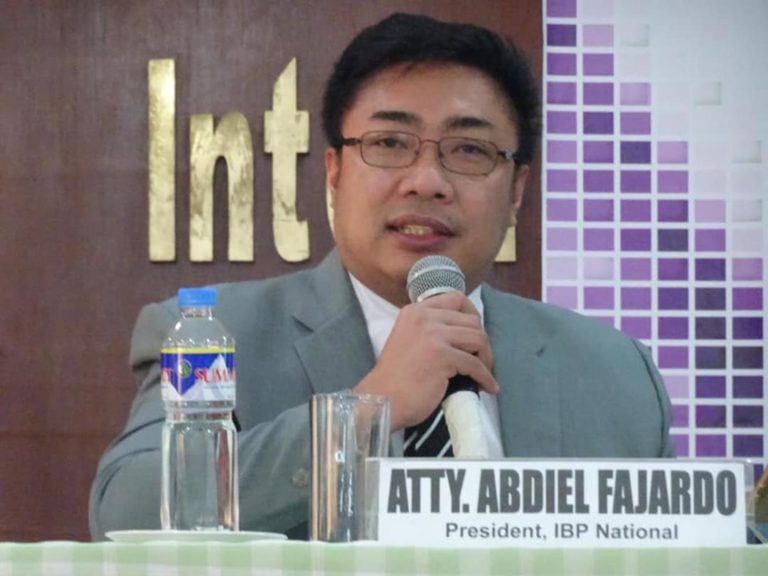
“If they can kill lawyers, then they can practically kill anybody.”
Related story: International lawyers’ groups to probe attacks on Filipino counterparts
By ALYSSA MAE CLARIN
Bulatlat.com
MANILA – One lawyer is killed per month.
This is how the Integrated Bar of the Philippines (IBP) illustrated the escalating attacks against lawyers and judges in the Philippines during a colloquium held March 14 at the IBP Auditorium, Ortigas Center.
IBP President Abdiel Fajardo said that since 2016, there were 38 reported and documented killings of lawyers in the country.
The 38th victim, Rex Jasper Lopoz, was gunned down in Tagum City, March 13, a day before the Colloquium on the United Nations Basic Principles on the Role of Lawyers: Focus on the Philippines.
“If they can kill lawyers, then they can practically kill anybody,” senatorial candidate and NUPL Chairperson Neri Colmenares said.
At least 26 incidents of other forms of attacks and threats have been recorded, according to the National Union of Peoples’ Lawyers (NUPL).
Role of lawyers undermined
Both the IBP and NUPL pointed out how the Duterte administration undermines the role of lawyers and the underscored the attack on the legal profession.
According to the United Nation’s Basic Principles on the Role of Lawyers, the government should ensure that efficient procedures and responsive mechanisms for effective and equal access to lawyers are provided for all persons within their territory.
Furthermore, the government shall ensure that lawyers are able to perform their professional functions without any type of hindrance, harassment, intimidation, and interference from third party and even the government itself.
Duterte publicly warned he would include lawyers of drug suspects in his so-called “war on drugs.”
On August 23, 2016, Rogelio Bato Jr., lawyer of a drug suspect, was shot dead by an unidentified assailant in Tacloban.
Fajardo said that new lawyers are afraid to handle drug cases for fear of being subjected to the same treatment as their clients.
“We should not be attacked on the basis of the cases we handle,” said Fajardo.
Judge Felix Reyes Jr., president of the Philippine Judges Association (PJA), admitted that some prosecutors, for fear of antagonizing police officers, proceed with filing drug cases even without probable cause.
Duterte also threatened human rights advocates, even ordering the police to shoot human rights activists who are ‘obstructing justice.’

“Just because you wish to protect your client, just because you’re going to demand a search warrant, just because you demand a warrant of arrest! That’s obstruction of justice!” Colmenares said.
Colmenares said the attacks against lawyers are state-sponsored. He said victims were publicly vilified by the President himself; the killings were committed as if the perpetrators were not afraid of being caught; and, there was complete lack of interest to investigate the killings.
Day of the Endangered Lawyer Foundation Director Hans Gaasbeek of the Netherlands aired the same sentiment. Gaasbeek emphasized the need for governments to educate not only the people but also the police on the role of lawyers.
The colloquium, sponsored mainly by the International Association of Democratic Lawyers (IADL), Union of International Advocates (UIA) and Day of Endangered Lawyers Foundation (DELF), is part of the International Delegation of Lawyers to the Philippines.
The delegation will conduct its own investigation on the reasons and causes of various forms of attacks against Filipino lawyers. They will be holding a series of meetings in Metro Manila and Iloilo and will publicly share their initial insights and views on Monday, March 18. (With reports from Ronalyn V. Olea)
Want to read stories like this? More lawyers are braving it out, facing difficult conditions to defend and advance human rights. Help us keep up with their activities and cases.
The post Under Duterte, attacks against Filipino lawyers escalating appeared first on Bulatlat.
Govt should be transparent, release 9 signed foreign loan agreements — IBON
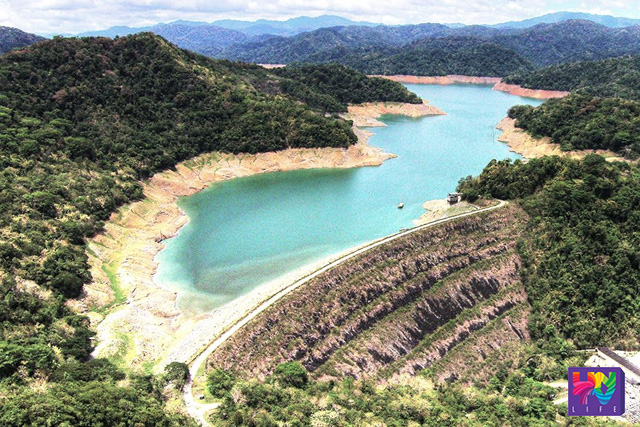
Research group IBON said the Duterte administration should immediately release to the public all nine foreign loan agreements it has already signed for infrastructure projects, especially for the upcoming Kaliwa Dam project with China. The group raised concerns of government’s transparency since it has denied IBON’s previous requests for copies of the loan agreements. The government has an obligation to disclose these contracts as a matter of public interest and protecting the country’s sovereignty, the group said.
The nine foreign loan agreements signed by the government include the Chico River Pump Irrigation and New Centennial Water Source-Kaliwa Dam with China; Pasig-Marikina River Channel Improvement, Cavite Industrial Area Flood Management, Metro Manila Subway, and North-South Railway with Japan; Panguil Bay Bridge; and the new Cebu International Container Port with Korea.
IBON research head Rosario Bella Guzman said that there is lack of transparency of government offices to disclose loan agreements signed by the government. IBON wrote a letter to the Department of Finance (DOF) in June 2018 requesting copies of the loan agreement for the Chico River Pump Irrigation Project. The DOF responded that the contract has a confidentiality clause and that the agency is not allowed to disclose details of the contract to any third party.
Loan agreements should be disclosed since the projects are public infrastructure which are supposed to be serving public interest, said Guzman. The Chico River Pump Irrigation Project, with the provisions that could be disadvantageous to the country, may become the gold standard of other loan agreements, Guzman added.
Guzman said that the contracts for other Chinese loans such as the one for the New Centennial Water Source-Kaliwa Dam Project would follow the template of onerous provisions found in the Chico River Pump Irrigation Project. The loan agreement for the Kaliwa Dam which was signed in November 2018 is yet to be made public and IBON has yet to receive a copy of the loan agreement it requested from concerned offices. Guzman added that the Php12.2-billion Kaliwa Dam will be 85% funded by China official development assistance (ODA), in other words, debt that will be paid for by the public in the future.
“China loans are one-sided and impose onerous conditions, which could result in the Philippines virtually giving up its sovereignty,” said Guzman. IBON previously raised questions on the Chico River Pump Irrigation loan agreement being governed by China laws, and that any arbitration or suit shall be heard at the China International Economic and Trade Arbitration Court (CIETAC).
“Natural resources, including water, are the subject of these loan agreements, which makes it more problematic if conditions are lopsided in favor of foreign governments, creditors and investors,” Guzman added. Instead of prioritizing the attraction of one-sided foreign investments and loans for its infrastructure program, the government should put national interest and public welfare first over local and foreign big business interests. Government can start by subjecting the loan agreements it is signing to public scrutiny and declining those that are not mutually beneficial and do not contribute to the country’s domestic economic development, IBON concluded. ###
WPN: Water crisis confirms failure of water privatization
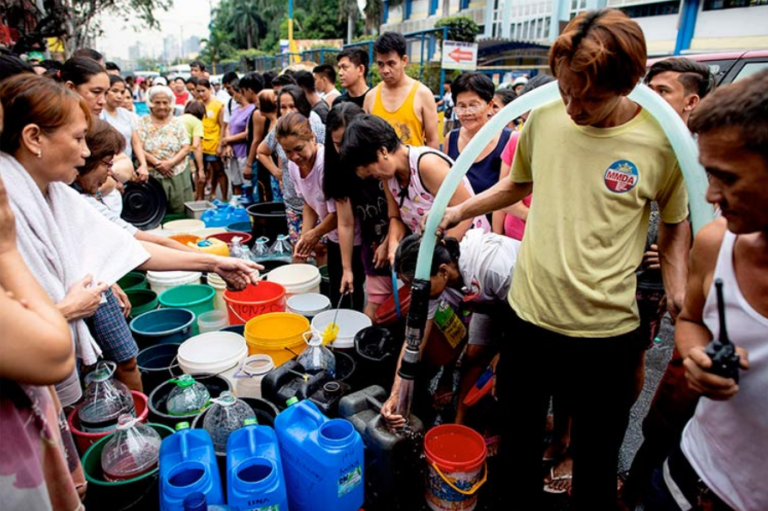
Advocacy group Water for the People Network (WPN) said that the ongoing water crisis confirms the failure of water privatization and the need for public control of this essential service. The group said that the disruption of water services for over a million Metro Manila residents amid growing water concessionaire profits is unacceptable. Water services are natural monopolies that should be publicly owned, managed and controlled.
WPN recalled that the Ramos administration hyped a water crisis to justify privatization of water utilities in 1997. Metro Manila residents were promised that the private profit-seeking East and West Zone concessionaires would provide cheap, safe and secure water services.
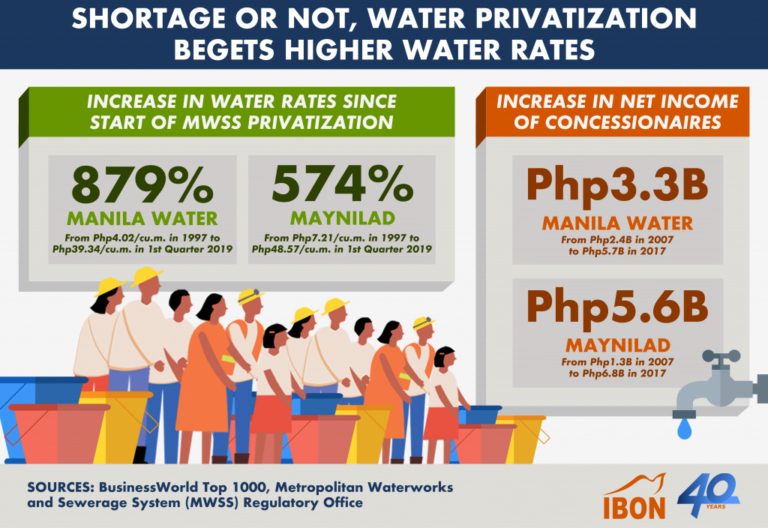
The water corporations have raked in huge profits. In just the last 10 years, the net incomes of Manila Water and Maynilad have increased by 137% and 444%, respectively, said WPN. Manila Water’s net income grew from Php2.4 billion in 2007 to Php5.7 billion in 2017, while Maynilad’s grew from Php1.3 billion to Php6.8 billion in the same period.
The concessionaires have used their monopoly power to overcharge customers and make these excessive profits. The group noted that water rates have risen by 879% for Manila Water customers and 574% for Maynilad customers since water privatization began in 1997 until January 2019. These increases were four to six times as much as the inflation rate, or the increase in the general price level, over that same period.
WPN said that corporate management of water services has been efficient in producing profits but inefficient in ensuring cheap, safe and secure water services to millions of consumers. Such large profits amid looming months of erratic water supply for so many consumers is grossly unacceptable. The group also asked if the water crisis is due to Manila Water choosing to inflate their profits by not investing in the facilities needed for the ample water supply in Angat and Ipo Dams to be brought to consumers.
The group said that the government is also accountable for allowing water privatization in the first place and for the insufficient regulatory powers of the Metropolitan Waterworks and Sewerage System (MWSS). For instance, the MWSS-Regulatory Office (MWSS-RO) is overly dependent on monitoring reports and other information coming from the water concessionaires.
Privatization has also undermined transparency, said WPN. The group recalled its difficulty getting information from the MWSS-RO on the rate rebasing process and negotiations with the water firms. It took sustained public pressure by WPN and other concerned groups during the latest rate rebasing in 2018 to have the concessionaires’ business plans posted on the MWSS website.
The same lack of transparency is at work today resulting in conflicting accounts by Manila Water and government agencies on the Metro Manila water crisis. WPN said that transparency should be continuous and the public should not have to rely on ad hoc congressional hearings to be informed of the state of the water services they are paying for. The group said that both water firms should be compelled to be more public about their operations, income and expenses in delivering water which is a vital public service.
WPN said that improving transparency and accountability of water utilities is only a start. The right to water and consumer access, affordability, and service quality will only be assured in the long-run if water services are publicly owned, managed and controlled. This includes improving governance and accountability of the public utility. Public control of water services is also the key to sustainable use of water resources and to promoting rational water use and consumption, said the group. ###
Military’s accusations against rights groups a blatant attack vs people’s right to uphold, defend human rights
Brigadier General Antonio Parlade Jr., deputy chief of staff of the Armed Forces of the Philippines (AFP), has consistently red-tagged Karapatan in several interviews and statements. Parlade is among the representatives of the National Task Force to End Local Communist Armed Conflict (NTF) which made rounds in diplomatic missions in Europe. Among Parlade and the NTF’s modus operandi is to red-tag and discredit organizations, including Karapatan and the Rural Missionaries of the Philippines, who have worked for decades in their commitment to uphold, protect, and defend human rights.