President Rodrigo Duterte’s martial law in Mindanao, extended for the second straight year this 2019, continues to wreak havoc in the lives of Lumad children, the National Democratic Front of the Philippines (NDFP) in Southern Mindanao Region said. In a statement posted on its website today, the NDFP reported that a platoon of the 88th […]
MILF’s Jaafar dies
Moro Islamic Liberation Front (MILF) first Vice Chairman and Bangsamoro Transition Commission (BTC) chair Ghazali Jaafar passed away at the age of 75 at dawn on Wednesday, March 13.
Youth groups clamor for justice for slain ROTC cadet

Various youth groups from several universities launched indignation protests in various schools on Tuesday, March 12, following news on the death of a Reserve Officers Training Corps (ROTC) cadet Willie Amihoy.
Amihoy, 23, a student from Iloilo State College of Fisheries, died at the hands of Elmer Decilao, his ROTC Corps Commander.
News about Amihoy’s death have yet to receive bigger media coverage from dominant media but sparked debate on social media on the ROTC program anew and launched indignation rallies the day after, especially with the mandatory ROTC for Senior High School students passed in the Lower House after its 2nd reading.
Grief and rage
Pickets were staged in University of the Philippines Manila and Diliman, and schools within the university belt also organized various symbolic and indignation protests.
Youth groups Anakbayan Metro Manila and Kabataan Party-list Metro Manila and students from Far Eastern University (FEU), University of the East (UE), National University, Pamantasang Lungsod ng Maynila (PLM), and Polytechnic University of the Philippines staged a picket and candlelight protest in front of FEU Gate 4 to condemn the murder of Amihoy.
“Bakal na tubo ang ginamit ni ROTC Corps Commander Elmer Decilao upang hampasin sa ulo si Amihoy. Natagpuan ang bangkay ni Amihoy sa isang palikuran sa loob ng pamantasan. Ang kinasapitan ni Amihoy ay hindi isolated case. Napakarami pang naitalang kaso ng hazing, harassment, at sexual abuse na nangyari buhat ng abuso ng kapangyarihan ng mga nagpapatakbo ng ROTC sa mga pamantasan. Nagpapatunay ang mga insidenteng ito na ekstensyon ng pasismo ng estado ang ROTC sa mga paaralan. Hindi disiplina at pagmamahal sa bayan ang itinuturo ng ROTC, kundi pagiging kimi at takot ng mga estudyante—na sunud-sunuran na lang sa awtoridad nang hindi kinukuwestiyon ang kanilang mga aksyon,” said Kate Gotis, Kabataan Party-list Metro Manila secretary-general.
[ROTC Corps Commander Elmer Decilao used a steel pipe to hit Amihoy’s head. His body was found in a bathroom within the university. Amihoy’s demise is not an isolated case. So many cases of hazing, harassment, and even sexual abuse were tallied due to the abuse of power of those who implement the ROTC in schools. These incidents only prove that this program serves as an extension of the state fascism in schools. This program does not teach discipline and patriotism, rather it teaches students to be meek and docile—that they should follow the authorities without questioning their actions.]

Meanwhile, Kate Santos of PLM shared her experience under the mandatory ROTC program implemented in her school.
“Sa amin, ginawa ang ROTC na mandatory. Wala kaming choice. Dito sa ROTC na ito namamayagpag ang kultura ng blind obedience at machismo. May mga kaso ng pang-aabuso ng mga commander at instructor sa kanilang kapangyarihan, kung saan ginagamit nila ang kapangyarihan nila upang mangmanipula ng mga estudyante. Ako, bilang estudyante at kadete ay saksi sa nangyayari na ito sa aming Pamantasan,” Santos manifested.
[“In our school [PLM], ROTC is mandatory. We have no choice. ROTC serves as a purveyor of the culture of blind obedience and machismo. There are also cases of the commanders’ and instructors’ abuse of power, wherein they use their authority in manipulating the students. I, as a student as well as a cadet, am a witness of these cases in our University,”]

Santos also stated that she even encountered harassment and taunts under the hands of her instructors. PLM’s ROTC program caught under fire last year when women cadets suffered verbal abuse by a commander who joked that the women cadets who do not compose themselves will be subjected to rape.
The ROTC program was first formed in 1912 with the aim to produce civilian reservists especially in times of war. The program was first made to be only mandatory for males in the college level. However, it ceased to be mandatory following the death of Mark Welson Chua, a cadet from the University of Sto. Tomas (UST) in 2001 who exposed corruption in the ROTC program in the school. After 18 years, two of four accused in Chua’s case remain at large.

Attacks on youth’s rights
In the protest, the youth groups also tackled the implications of the resurgence of ROTC program especially on the senior high schools that will be under the proposed mandatory ROTC.
“We oppose the mandatory ROTC [for SHS] because we want to promote each and every one’s rights. The [proposed] ROTC violates the Philippines’ declaration in its ratification of the Optional Protocol to the Convention of the Rights of the Children who will be involved in armed conflict,” said Kate Gruenberg, a youth leader hailing from UE.
Gruenberg referred to the Philippines’ own declaration in the Conventional Rights of the Child, particularly the Optional Protocol on the involvement of children in armed conflict.
The Protocol expounded that States who choose to ratify this must do their best in securing that youth under the age of 18 must not be directly involved in hostilities and armed conflict.
At present, students in senior high school fall under the ages of 15-17 years old.

“Kaya tayo nandito, at tumitindig at lumalaban. Do we want the children to be exposed to this violence? Do we want them to be associated and conditioned with the violence of this mandatory ROTC?” Gruenberg continued.
[“That’s why we’re here and we’re standing against this. Do we want the children to be exposed to this violence? Do we want them to be associated and conditioned with the violence of this mandatory ROTC?”]
Maxinne Chavez of Anakbayan FEU ended the program by reiterating that mandatory ROTC did not emulate the ideals it mentioned due to the violence that is endemic in the program.
“We oppose the Duterte regime’s proposal of reinforcing the already abolished mandatory ROTC within schools in the Philippines. The administration has been hiding under the guise of instilling what they call ‘patriotism’ and ‘discipline’ to reinstate the mandatory ROTC, but on the contrary, it has not done anything but violence and death. ROTC instills not patriotism, but warmongering culture that promotes machismo, blind obedience, and feudal actuations. Through it, the Armed Forces of the Philippines (AFP) breeds fascists—the future machinery for tyranny and wars of aggression,” said Chavez.

The post Youth groups clamor for justice for slain ROTC cadet appeared first on Manila Today.
Red-tagged groups file complaint at CHR
Groups that advance human rights and have been accused recently as fronts of the Communist Party of the Philippines (CPP) and its armed wing, the New People’s Army (NPA) trooped the office of the Commission on Human Rights (CHR) on Tuesday, March 12, to file formal complaints on the “government-instigated” incidents of red-tagging campaigns against them.
Suporta sa Venezuela
Laman ng balita ngayon ang bansang Venezuela. Sabi ng midya ng malalaking kapitalista, may “humanitarian crisis” doon: walang pagkain at batayang pangangailangan para sa mga tao, at diktador ang pangulo. Gusto raw tumulong ng US at ng oposisyon ng Venezuela, pero hinahadlangan ng gobyerno. Hindi raw lehitimo ang gobyerno ni Nicolas Maduro; ang dapat kilalaning presidente ay ang oposisyunistang si Juan Guaido.
Sa usong bansag ngayon, “fake news” ang lahat ng ito — pero pinapalaganap ng malalaking kumpanya ng midya sa mundo. Kailangang magbalik-tanaw sa katangian ng gobyerno ng Venezuela at sa tuluy-tuloy na pag-atake rito ng US. Sa ganito natin mauunawaan ang kalagayan ngayon ng ekonomiya ng bansa, ang nilulutong gera ng US sa Venezuela, at ang pangangailangan ng tuluy-tuloy na pakikiisa sa sambayanan doon.
Gobyernong Bolivariano
 Pres. Nicolas Maduro ng Venezuela. Wikimedia Commons/Cubanet.org
Kaiba sa gobyerno ng maraming mahirap na bansa, ang gobyerno ng Venezuela ay hindi sunud-sunuran sa US. Naggigiit ito ng pambansang kalayaan at soberanya laban sa mga dikta ng US at ibang bansa. Tinitingnan nito ang sariling mga patakaran na pagsusulong ng sosyalismo. Nakikipagkaisa ito sa mga bansa at organisasyon sa mundo na kumakalaban sa imperyalismo, neoliberalismo, at maging sa rasismo at seksismo.
Nagsimula ito noong Disyembre 1998, nang manalong pangulo si Hugo Chavez, isang opisyal-militar. Ang tawag niya sa prosesong kanyang sinimulan, “Rebolusyong Bolivariano,” hango kay Simon Bolivar, bayaning anti-kolonyal sa Latin America. Nang mamatay siya noong Pebrero 2013, nanalo sa eleksyon kapalit niya si Maduro, dating drayber ng bus na naging bise-presidente niya. Ipinagpatuloy ni Maduro ang sinimulan ni Chavez.
Nagpatupad ang gobyernong Chavez-Maduro ng mga repormang pabor sa mga mamamayan. Noong 1998, kalahati ng populasyon ang gutom; noong 2015, sinabi ng UN Food and Agriculture Organization na halos napawi na ang kagutuman sa bansa. Ngayon, sapat ang tanim na halamang ugat, prutas at gulay bagamat angkat pa rin ang pagkain at gamot. Nakakakain ang lahat, kahit ginigipit ng malalaking kapitalista ang suplay ng pagkain.
Kudeta at sanctions
Hindi tinigilan ng gobyerno ng US, kasabwat ang oligarkiya ng Venezuela sa ekonomiya at pulitika, ang pag-atake sa gobyernong Bolivarian. Noong Abril 2002, halimbawa, kinudeta si Chavez at napaalis sa Miraflores, Malakanyang nila. Ilang araw pagkatapos, naibalik siya sa pwesto nang magmartsa, lumusob ang mga mamamayan sa Miraflores. Tila lalo siyang naging radikal dahil rito; sabi niya, utang niya ang buhay niya sa sambayanan.
Ginawa ng US sa Venezuela ang dating gawi nito sa mga bansang itinuturing na kalaban: inatake ang ekonomiya. Marso 2015, nagpataw ang gobyerno ni Barack Obama ng sanctions: lahat ng pag-aari ng Venezuela sa US, hinarangan; lahat ng kumpanya sa US, binawalang makipag-ugnayan. Agosto 2017, nagpataw ng bagong sanctions ang gobyerno ni Donald Trump: bawal ang bagong pautang, bawal bumili ng langis sa gobyerno ng Venezuela.
Mabigat ang pagsandig ng Venezuela sa pagbebenta ng langis. Sa ilalim ni Chavez, isinabansa ang kumpanya ng langis, tinaasan ang presyo, at ang nalikom na pondo ay inilaan sa mga serbisyong panlipunan — edukasyon, kalusugan, pabahay. Pero simula gitna ng 2014 ay bumababa ang presyo ng langis sa mundo. Dinagdagan pa ito ng mga sanction ng US. Ang resulta: pagliit ng pondo na hawak ng gobyerno at pagiging bulnerable sa sabotahe ng oligarkiya.
Atake ngayon
Sa midya ng malalaking kapitalista, pinapalabas na matindi ang kagutuman, kahirapan, kawalan ng bilihin, pagtataasan ng presyo, at paglikas ng mga tao palabas ng bansa. Disaster: ito ang tinatawag ng US na “humanitarian crisis.” At para raw matigil ito at makapaghatid ng tulong sa mga mamamayan, handang pumasok sa bansa ang US. Mula nang maging pangulo siya, hindi tumigil si Trump ng pagpapalipad-hangin tungkol sa paggera sa bansa.
Nitong Enero 23, idineklara ni Juan Guaido, lider-oposisyon sa Venezuela, ang sarili bilang “interim president.” Ang dahilan niya: hindi lehitimo ang eleksyon noong 2018 na naghalal muli kay Maduro, kahit maraming tagamasid ang nagsabi ng kabaligtaran. Agad nagpahayag ng suporta ang US at 50 gobyernong alyado nito. Malakas ang loob nila dahil sa pagkahalal ng mga maka-Kanang kandidato sa Latin America nitong nakaraang mga taon.
Nitong Pebrero 23, pinilit ng US na ipasok ang mga “tulong humanitarian” sa Venezuela sa pamamagitan ng hangganan nito sa Colombia at Brazil — mga bansang pinaghaharian ng mga pasista. Ang layunin ng US at mga kakampi nito: mag-udyok ng labanan at ng pagtalikod ng militar kay Maduro. Pero nabigo silang ipasok ang kanilang “tulong,” mag-udyok ng komprontasyon, at kumabig ng militar palayo kay Maduro.
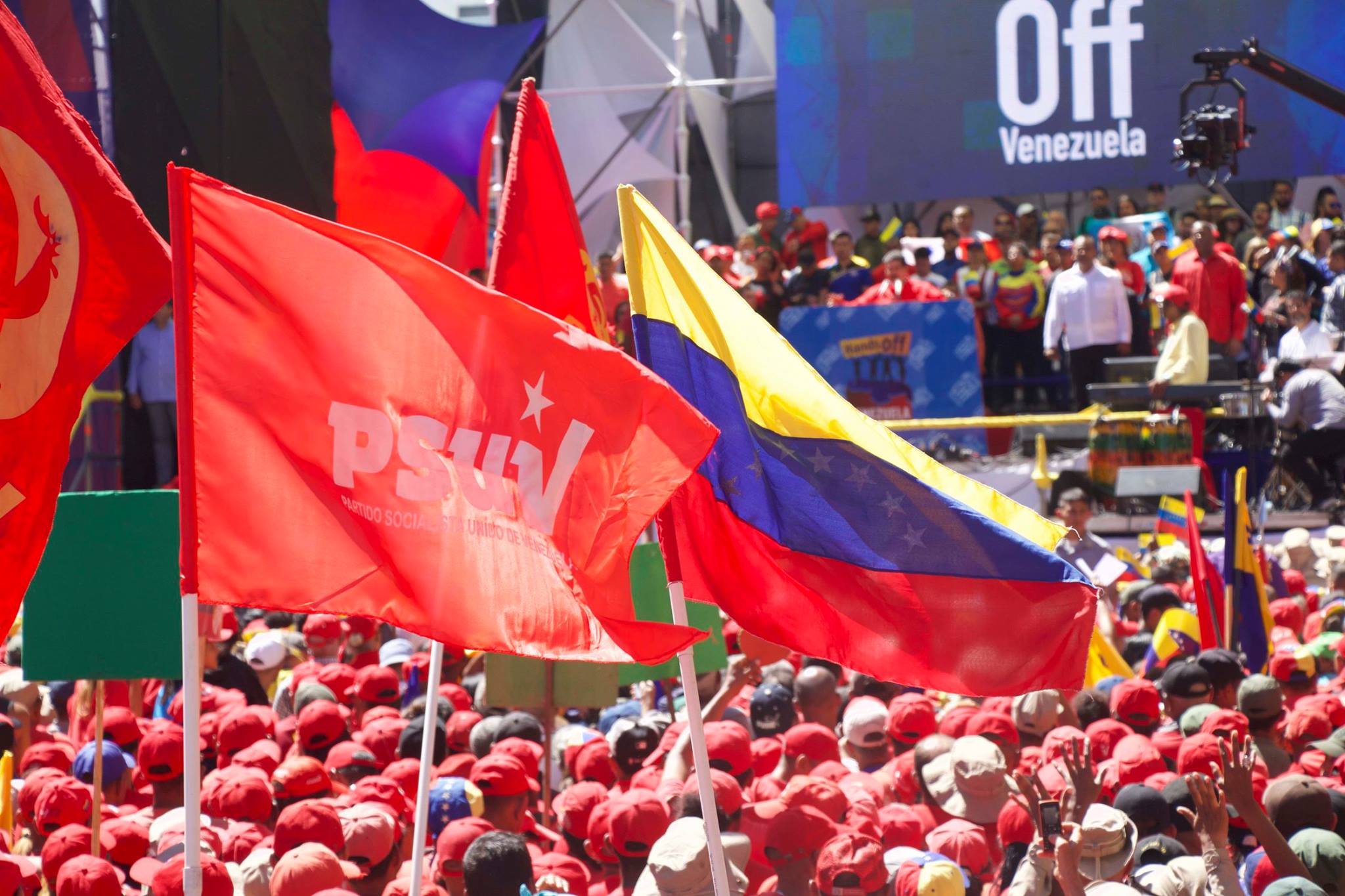 Isa sa maraming protesta ng libu-libong Venezuelan sa Caracas (kabisera ng bansa) na tutol sa interbensiyon ng US. People’s Dispatch
Patuloy na banta at suporta
Habang isinusulat ito, bumalik na si Guaido sa bansa matapos manawagan ng mga protesta doon. Pero bago ang Enero, 80 porsyento ng mga mamamayan ang hindi nakakakilala sa kanya. Totoo, naghahatid ngayon ng tulong ang UnitedNations at Red Cross, pero dahil ito sa kakapusan ng mga suplay bunsod ng mga sanction at pananabotahe. Ginawa ng US at oligarkiya ang kahirapan sa ekonomiya, na pinapalaki nila ngayon sa tawag na “humanitarian crisis.”
Pero sa kabila ng pag-uudyok ng US at ibang bansa, matapat pa rin kay Maduro ang militar. Gayundin ang mga mamamayan na nagpoprotesta para depensahan ang gobyerno. Kalakhan ng mga bansa, 75 porsyento, ang nagpahayag ng suporta kay Maduro, kasama na ang mga superpower na China at Rusya, mga karibal ng US. Kahit ang Brazil, Colombia, Chile at Peru, maging ang Spain at Germany, na mga kakampi ng US, dumistansya sa plano nitong gera.
Luma na ang palusot na “humanitarian” para sa gera ng US; ginamit na ito sa Iraq, Libya at iba pang bansa. Lantad ang motibo ng US: kontrolin ang reserba ng langis ng Venezuela, na pinakamalaki sa mundo, at ang ekonomiya nito. Gusto rin ng US na payukurin sa paghahari nito ang isang bansang inspirasyon at kaisa ng maraming kilusan sa paglaban sa imperyalismong Amerikano. Malinaw kung kanino pumapanig ang mga mamamayan ng mundo.
Featured image: Pagkilos ng maralitang Venezuelan sa Caracas (People’s Dispatch)
Karapatan demands scrapping of repressive, unconstitutional Negros ordinance on factfinding and humanitarian missions
On March 2, 2019, a 400-delegation was organized to conduct a humanitarian mission in several villages in Guihulngan City. Various human rights and people’s organizations and Guihulngan residents joined the said mission. Soldiers from the 94th Infantry Battalion-Philippine Army tried to disallow the entry of the humanitarian mission participants to the communities but they eventually relented after negotiations.
Lumad groups call for immediate release of Higaonon leader
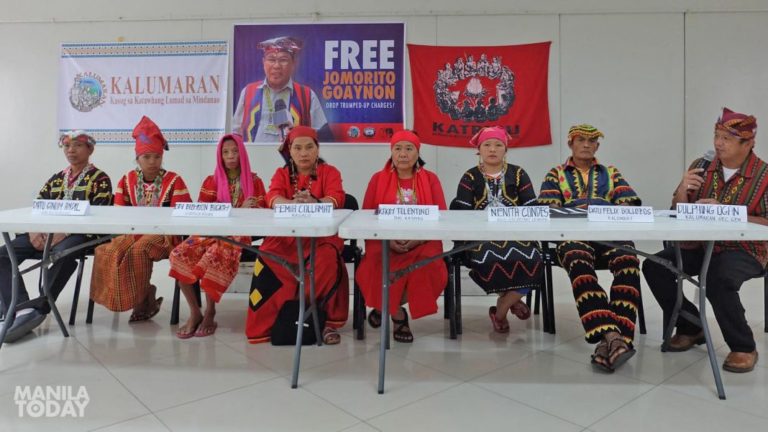
Lumad group Kusog sa Katawhang Lumad sa Mindanao (KALUMARAN) held a press conference on March 11 to call for the immediate release of Datu Jomorito Goaynon, the vice chairperson of KALUMARAN and chair of the regional alliance of Kalumbay in Cagayan de Oro city. He was charged with criminal cases and rebellion violations under Human Security Act of 2007 (HSA).
According to KALUMARAN, Datu Goaynon was taken by the combined elements of the Philippine Army and Philippine National Police on January 28, 2019, together with peasant leader Ireneo Ubarde. The two were accosted while riding a jeepney on the way to a scheduled dialogue with the Commission on Human Rights (CHR) . Later that day, another arrest was played out before the public along the highway, this time with planted evidence of explosive and firearms in their bags.
First test case of HSA
KALUMARAN called to drop the charges against Datu Goaynon and Ireneo Ubarde, as well as for the government to stop using the HSA to silence critics.
“Ang HSA ang ginamit na batas laban doon sa pagsusulong ng mga katutubong mamamayan para sa sariling pagpapasya lalo’t na kami sa Mindanao. Doon sa aming sariling pagpapasya ay pagdepensa sa ating lupang ninuno [para] hindi ibigay doon sa mga foreign investors at abusuhin. Kundi isinusulong lang namin yung pagpapalago at sustainable agriculture para sa mga katutubo pero binigyang-laya ng gobyerno ang mga foreign investors at kaming mga katutubo ay dinidikit sa pag-red-tagging kaya kinakasuhan ang mga katutubo ng HSA para patahimikin” said Dulphing Ogan, KALUMARAN Secretary General.
The HSA imposes a penalty of reclusion perpetua or lifetime imprisonment on a person found guilty with no chance of parole. It is also a non-bailable case.
For KALUMARAN, the HSA is an alarming and an unusual case of anti-terrorism effort under President Rodrigo Duterte’s administration as the law has again been used as a tool to silence government critics.
HSA was first targeted to be used against terrorism during Gloria Macapagal-Arroyo’s presidency when the law was passed. It allowed warrantless arrests and surveillance but imposes hefty fines on government for every day a person is wrongfully detained. The law is being amended before Congress adjourned. Among some provisions proposed are the removal of the payment of damages, warrantless arrests with detention up to 30 days, and allows surveillance on suspected terrorists and conspirators up to the time they are proven innocent.
KALUMARAN also decried that while HSA is being used by the government to silence its critics, massive militarization, forced evacuation, red-tagging were being implemented in the countryside of Mindanao. According to the group, there are at least 4,000 lumads being forcibly displaced because of militarization in their communities, while 85 lumad schools have been closed.
The group ended the press conference with a call to free Datu Jomorito Goaynon and lift the martial law in Mindanao.
The post Lumad groups call for immediate release of Higaonon leader appeared first on Manila Today.
OVERCOME CYBER-MARTIAL LAW
POOLED EDITORIAL: March 12 is World Day against Cyber Censorship, when advocates around the globe call for an Internet that is not only accessible to all, but also free from restrictions on free speech. It is specially relevant to us today, when our nation is practically under cyber martial law and another tyranny.
The Duterte regime is using every means to silence dissent, criticism and free expression: from threats, incarceration to killings, to cyber warfare. The main target of this latest assault are the alternative media that mostly via online disseminate reports and views on events and issues that are rarely covered, if at all, by the dominant media. The goal is to deny a public hungry for information the reports and stories that it needs to understand what is happening in a country besieged by lies and disinformation.
The distributed denial of service attacks (DDoS) against the websites of Bulatlat, Kodao Productions, Pinoy Weekly, and AlterMidya began in December and have not stopped since. DDoS is a malicious form of cyber-attack that aims to overload a website and make it inaccessible.
The websites of Arkibong Bayan, Manila Today and the National Union of Journalists of the Philippines (NUJP) have also been attacked, and so have the websites of human rights group Karapatan, Arkibong Bayan, Bagong Alyansang Makabayan and lately, Ibon Foundation.
Qurium, the Sweden-based media foundation assisting Bulatlat, Altermidya, Karapatan and Pinoy Weekly, has established that the same techniques and botnets are being used against these websites. An independent review of Kodao Productions’ traffic logs also revealed the same attack signatures. Quirium noted that it has not seen the same scale of DDoS attacks in any other country.
The details of the attacks have been reported to the National Computer Emergency Response Team (NCERT) of the Department of Information and Communications Technology. But the agency has remained alarmingly silent on the issue.
We have every reason to believe that these attacks are state-sponsored. In the past two years, cyber warfare has taken the form of vilification and red-baiting of progressive leaders and organizations through social media.
The Duterte administration identifies “strategic communication” as one of the pillars of its “whole of nation” approach against dissent and criticism, in which the regime’s counterinsurgency program will infiltrate and target social media and rid cyberspace of “communist propaganda.”
The cyber attacks are part and parcel of the ongoing assault by the administration on the media. From threatening to revoke the franchises of big media companies to the attempt at the incarceration of Rappler executive Maria Ressa, to the killing of community journalists in the past months, the Duterte administration will stop at nothing to silence the Fourth Estate and its critics.
But Duterte and his keyboard and old-media army of mercenaries are hell-bent not only in silencing their perceived enemies, but also in expanding the echo chambers they maintain to create the illusion of continued support. On one hand, they attack news websites and journalists in all possible ways. On the other, they maintain a horde of fake supporters, employing what is known as “astroturfing” or the practice of creating the illusion of mass support by employing bots and trolls.
The alternative media have consistently upheld journalism for the people and given voice to the marginalized and the oppressed. Because of the political and economic interests of the corporate media, it is the alternative media that are discharging the democratic imperative of providing the information Filipinos need in this hour of national peril.
We enjoin everyone from all walks of life to unite against, to expose, and to work together in stopping the attacks against all media. We should exhaust all means to make those responsible accountable for their foul deeds. There are many technical and legal remedies that can and must be pursued to combat and halt the unabated DDoS attacks, including mirroring target websites to keep them online.
To defend press freedom is to defend the people’s right to know. As our fellow journalists and advocates continue to expose the truths on the attacks on indigenous communities, workers, farmers, and other groups, we ask all freedom-loving Filipinos to stand with us. Only through the strength and power of our unity can we defeat these brazen attempts at silencing protest and suppressing the truth.
The post OVERCOME CYBER-MARTIAL LAW appeared first on Altermidya.