There will be no adjustments and cancellations of flagship projects under the Duterte Mindanao 2030 in areas to be placed under the Bangsamoro Autonomous Region in Muslim Mindanao (BARMM).
Youth groups assail passage of Mandatory ROTC for Senior High School
Various youth groups assailed the passage of the Mandatory Reserve Officers Training Corps (ROTC) in the Lower House on Wednesday, February 06, claiming that it paves the way for militarization within school premises.
The House Bill (HB) 8961 which requires Mandatory ROTC for Senior High School students, was passed on its second reading amidst objections raised by several lawmakers in the Lower House. The bill now also requires girls to be part of the program, as compared to the previous ROTC program wherein only the boys’ participation was compulsory.
On November 22 last year, speaking at the ARESCOM 35th anniversary, President Rodrigo Duterte said he wants mandatory ROTC for Grade 11 and 12.
“I likewise encourage Congress to enact a law that will require mandatory ROTC for Grades 11 and 12, so we can instill patriotism… love of country among our youth,” Duterte said.
‘Breeding grounds of impunity’
The ROTC serves as one of the three optional components of the National Service Training Program (NSTP). The program said it aimed to enhance civic consciousness, instill patriotism, and develop the ethics of service through military training and was only previously mandatory for students of the tertiary level. Under the NSTP, universities and colleges may choose to implement any two or all three components and students are free to choose which component they would enroll for four semesters. The program up to now, save for state universities and local colleges covered by the free tuition policy in RA 10931, has matriculation fees on top of the fees for regular subjects.
The program ceased to be mandatory for college boys for four semesters following the death of Mark Welson Chua, a cadet from University of Sto. Tomas (UST), in 2001. After exposing corruption in the UST ROTC unit, Chua was murdered by his senior officers and his body was found in the Pasig River with his head wrapped in packaging tape.
In a study conducted by the National Union of Student of the Philippines (NUSP), cases involving hazing and sexual abuse in various universities and colleges still plague ROTC even after undergoing reforms. (see table below)
“Mandatory ROTC entails indoctrinating students with a militarist view of patriotism. If this brand of love for country means tyranny, human rights abuses, and repression of dissent inherent in any democracy—as reflected in the AFP’s atrocities towards peasants and indigenous peoples in the countryside—then the government would be gravely misguiding the youth,” says Erika Cruz, the regional coordinator of Kabataan Partylist Metro Manila (KPL MM).
Cruz maintains that the resumption of the program would only teach blind obedience to the senior high school students, as highlighted in a recent statement her group released following the Lower House’s greenlighting of the bill.
“Ang ROTC ay matagal nang nailantad bilang hakbangin upang higit na gawing ‘robot’ at sunud-sunuran ang mga estudyante nang sa gayo’y sila ay magamit mismo sa panunupil ng mamamayang kritikal sa anti-mamamayang mga polisiya ng gobyerno,” said KPL-MM in its statement.
[“The ROTC has long been exposed as a way to make students uncritically obedient so that they will be used by the State as a way to curtail the citizens critical of its anti-people policies.”]
The group also blasted the Duterte administration for another anti-youth policy through ROTC, after the passage of the lowering of the Minimum Age of Criminal Responsibility (MACR).
Skewed priorities
“Habang kinakaharap ng milyun-milyong kabataan ang mababang badyet sa mga pampublikong pamantasan at taunang pagtataas ng matrikula sa mga pribadong paaralan, nakadiin ang pansin ng gobyerno sa isang programang nagbabalatkayo lamang na nakabubuti para sa mga mag-aaral,” KPL MM continued.
[“While the millions of the Filipino youth suffer under the low budget allocation from state-funded educational institutions, as well as yearly tuition fee increases from private schools, the government still chooses to prioritize a deceptive program posturing as ‘beneficial’ for the students,”]
For the youth group, the alternative to instilling service and love for the nation should not be reliant on military training programs alone. Rather, they propose that the government should focus on improving the educational system instead.
“Hindi ang mga huwad na programang tulad ng ROTC, na nagtuturo ng bulag na pagsunod ang magtuturo sa kabataan na maging patriyotiko at disiplinado. Ang solusyon pa rin para maturuan ang mga kabataan kung paano maglingkod sa bayan ay sa pamamagitan ng pagbibigay ng kanilang batayang karapatan sa edukasyong siyentipiko, makabayan, at makamasa. Sa pamamagitan lamang nito maipapatimo sa kabataan ang kahalagahan ng kanilang potensyal para sa lehitimong pagbabagong-panlipunan at paglilingkod sa bayan,” the youth group ended.
[“Fake programs like ROTC, which peddles blind obedience, will not teach the youth to become patriotic and disciplined. The solution in teaching the youth to serve the nation still lies through giving them their basic right to an education that is scientific, nationalist, and mass-oriented. It is only through this that the youth will be able to discern the importance of their potential for legitimate nation-building and serving the nation.”]
NUSP listed some of the reported violations in the ROTC program from 1995 to 2017.
| Year | School | Nature of Violation | Remarks |
| 1995 | De La Salle University | hazing | Mechanical student and ROTC cadet Seth Lopez succumbed to injuries following hazing activities by ROTC cadet officers in a farm in Tanay, Rizal. |
| 1999 | Saint Louis University | hazing | Student and ROTC cadet Arthur Salero died of hazing. |
| 1999, 2000 | University of the Cordilleras | hazing | |
| 2000 | University of the Philippines Baguio | hazing | |
| 2001 | University of Santo Tomas | Murder of Mark Welson Chua | Chua exposed the corruption of UST ROTC unit. He was murdered by his senior officers and dumped in Pasig River. |
| 2006 | University of the Philippines Diliman | red-tagging, assault on democratic rights | ROTC and SIN members distributed pamphlets discouraging the students to join the walkout against 300% tuition increase. They tagged leaders of anti-tuition increase as recruiters for New People’s Army (NPA). |
| 2007 | Polytechnic University of the Philippines – Sta. Mesa | red-tagging | ROTC unit distributed pamphlets tagging student leaders, including the PUP Central Student Council Chairperson, as NPA recruiters. |
| 2010 | University of the Philippines Los Baños | red-tagging | ROTC unit distributed pamphlets tagging student leaders and activists as recruiters of NPA. They discouraged students to join the walkout against class-size increase per subject. |
| 2014 | Benguet State University | hazing | Brenda Dayao, a student who entered Cadet Officer Candidate Course (COCC), experienced paddling in their training. Female cadets were also forced to sleep in the quarters of male cadets. |
| 2014 | Benguet State University | sexual abuse, hazing | Jezrael Sacpa testified that ROTC officials hit them with wooden rifle and mauled them. They were forced to remove clothes and masturbate. He filed a complaint against Emily Sao-anen and Elray Baguiwan but was dismissed by BSU Administration. The incident occurred last November 2014. |
| 2014 | De La Salle University | hazing | Charges were filed against ROTC Corps Commander and COCC program was suspended after the Student Discipline Formation Office (SDFO) received multiple reports of hazing, including one filed by parents of a former cadet. |
| 2014 | Ateneo de Davao University | red-tagging | On August 23, 2014, at a forum entitled “Threat to National Security” held at the Ateneo de Davao University, Army Capt. Nathaniel Morales of the 10th Infantry Division, branded the College Editors’ Guild of the Philippines (CEGP) as a “legal front of the Communist Party of the Philippines-New People’s Army-National Democratic Front of the Philippines (CPP-NPA-NDFP).” The forum was part of NSTP orientation. |
| 2014 | Polytechnic University of the Philippines – Sta. Mesa | hazing | A freshmen student filed a complaint against two (2) ROTC officers after she experienced hazing in two (2) separate incidents. |
| 2015 | University of the Philippines Visayas – Tacloban College | red-tagging | Campus journalists of UP Vista, the official student publication of UPVTC, was tagged in an ROTC lecture class as members of NPA. |
| 2016 | University of Mindanao – Tagum | hazing, verbal abuse, and psychological abuse | A video uploaded in Facebook shows several cadets were being hit hard repeatedly in their chest and stomach by their senior officers. One of the officers were heard saying “Kung gusto mo maranasan ang naranasan ng senior mo, tanggapin mo ‘yan lahat!” The incident occurred on July 15, 2016. |
| 2016 | Tarlac State University | surveillance | Local ROTC unit in TSU conducted a surveillance operation during a forum for free education in the said university. |
| 2016 | Pamantasan ng Lungsod ng Pasig | hazing, sexual abuse | PLP ROTC cadets experienced physical abuse as well as attempted rape of female cadets. |
| 2016-2017 | University of the Philippines Mindanao | militarization | ROTC classes in UP Mindanao is under the supervision of Armed Forces of the Philippines’ (AFP) 11th Infantry Battalion, a violation of Sotto-Enrile Accord of 1989 which forbids police and military presence within any campus of University of the Philippines. |
The post Youth groups assail passage of Mandatory ROTC for Senior High School appeared first on Manila Today.
People’s hero funeral march for Randy Malayao
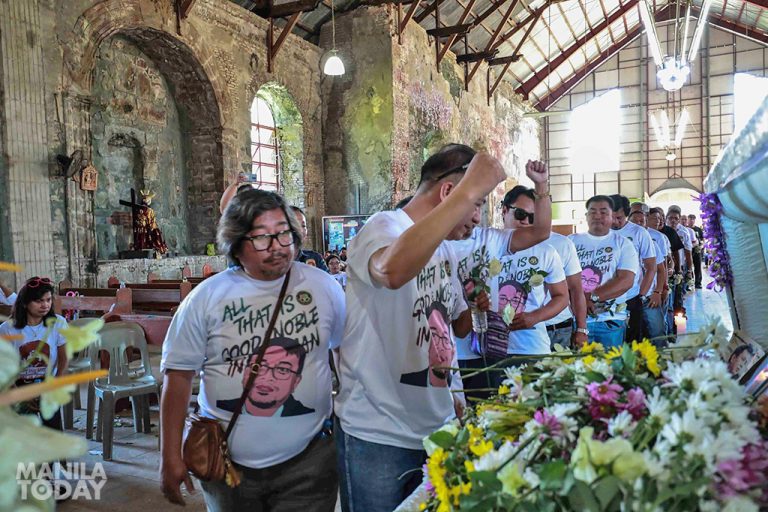
A person like Randy Malayao would be described with many positive adjectives — and that was exactly what transpired during the days and nights of his wake in the eulogies and stories that friends and family offered. His name would be preceded with one-too-many appellations — and it was only due to a meaningful live he lived as a youth activist, a human rights advocate, a nationalist, a servant of the people until his very last breath. He was laid to rest on February 7.
Malayao, a peace consultant of the National Democratic Front of the Philippines, was cowardly killed while he was sleeping inside a bus in Aritao, Nueva Vizcaya on January 30. His killing came after many peace consultants and trade unionists have been illegally arrested and detained on trumped up charges — non-bailable offenses such as illegal possession of firearms, explosives, murder, arson — meant to disrupt their life and work. This also came after another consultant walked free after charges of illegal possession of firearms against him were dismissed for witness stories being to incredible and improbable — and now charges will be filed against the arresting officers.
As in the massacre of the peasants in Sagay, Occidental on October 20 as with Malayao’s killing, when the killings become too brazen, state forces who have systematically perpetrated human rights violations from the time after Marcos’ martial law, would go on to wash their hands clean, tag the slain as a rebel, coax rumors to besmirch the name of the dead and point to internal conflict as the motive of killing and the rebel companions as killers even without evidence or progress of investigation being presented. Such an affront this was for Randy — who until the end of his life worked tirelessly and lived simply. All too painful, all too big an affront — but nothing so bigger as the people have been made to suffer in the past three years.
In the San Pablo Cathedral where necrological services were held for Malayao, the priest addressed the congregation — none bigger have been seen to have gathered there before.
“I know that all of us are grieving and angered, but we should rise above our grief and anger, and find comfort in the fact that Randy lived a meaningful life,” the priest said.
This is all too familiar. For as eulogies and tributes for revolutionaries usually go, as many as have been given, the assemblage was always reminded: turn your grief into revolutionary courage; for every one that falls, ten shall rise in his steed to bear the arms that fell, to continue the struggle to victory.


The post People’s hero funeral march for Randy Malayao appeared first on Manila Today.
Where to spend a holiday? With the workers and the toiling masses
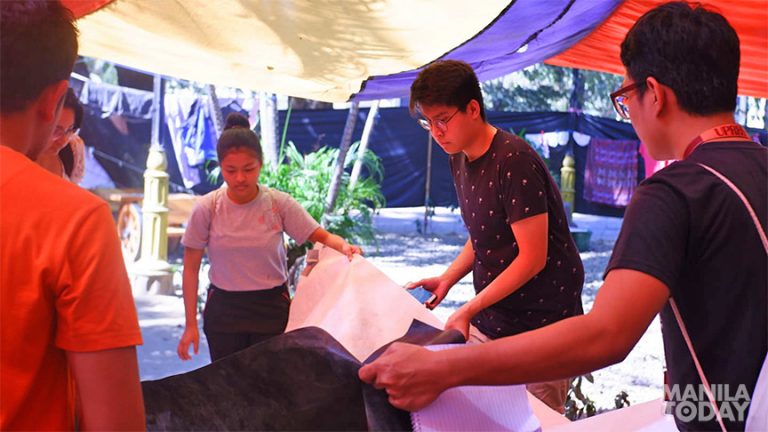
Students from the University of the Philippines Manila spent their Chinese New Year holiday integrating with Sumifru workers to better understand their fight against contractualization.
The workers discussed their condition and the grueling labor they had to undergo in the factories of the Sumitomo Fruit Corporation.

Some of the workers shared anecdotes of how working 12 hours a day while earning too little affected their lives.

They detailed how they were able to form a union as well as how Sumifru and the state tried to quell dissent by threatening their leaders and members, going as far as killing one of their leaders.

The integration also included an educational discussion on the role of peasants, women and the youth in fighting for a just society.

The workers now face the threat of eviction from their kampuhan in Liwasang Bonifacio but they are ready to assert their right to stay until their demands are met.

The post Where to spend a holiday? With the workers and the toiling masses appeared first on Manila Today.
Media are part of the problem

There are other former and still practicing broadcast, print and online media people who have never quite understood that the most fundamental values in journalism are independence, accuracy, and truth-telling.
They’re not even running for any office, although some have been rewarded with government posts. But not only do they make it a point to say the same thing at every opportunity; they also support what the regime is doing to online news site Rappler, and approve of its threats against the Philippine Daily Inquirer and ABS-CBN network. They applaud Mr. Duterte’s harangues against, and his subalterns’ banning individual journalists from covering events in which he’s present. They ignore or are completely clueless about the killing of journalists, and the libel suits, threats, physical assaults, and other harassments against them.
Neither they nor the aspiring senator have earned the right to be named in polite society. Some deserve only the infamy they have gained through their corruption, mediocrity, and mendacity, while others remain in well-deserved obscurity despite their pandering to whatever regime is in power.
One has thankfully traded his newspaper column for a post as lobbyist for China in the regime he’s been worshipping. In-between lying about the Marcos martial law regime, another demonizes, incites violence against, and endangers not only activists and members of sectoral and people’s organizations, but also those authentic journalists who are not in the pay of either his own patroness or other interests.
But it is not only these frauds who’re responsible for much of the public’s failure to understand what’s happening today in this country as well as what happened in such dark periods of its history as the reign of the Marcos kleptocracy.
There is also an entire broadsheet whose pages are not only in daily violation of the ethical and professional standards of journalism; they are also repositories of the worst writing in recent press history.
It has a sister publication in another broadsheet that, while not as incompetent and as clumsily partisan, nevertheless also contributes to the spread of disinformation and ignorance by dutifully repeating and applauding everything government sources say as if they were all Bible-truth.
There are also at least three tabloids whose editors, through press releases obviously sourced from their military handlers, have endangered the lives of their betters in journalism by claiming that the National Union of Journalists of the Philippines is “headed” by the Communist Party of the Philippines and the New People’s Army.
The media’s being part of the problem in developing the informed public vital to the democratization of Philippine society doesn’t end there. Much of print, broadcast and online reporting has also helped legitimize the regime’s “drug war” narrative.
By citing primarily, and often solely, official sources such as the police, Mr. Duterte’s spokespersons, and Mr. Duterte himself, many reporters have helped make acceptable the regime tale that those killed were only a few and had to be put down because they fought back (“nanlaban”).
Reporting the killings in the course of that war against the poor as just part of the daily toll of violence has also lulled much of the public into indifference, and allowed the killings to continue without much protest. But the humanitarian crisis that is developing because of the killing of breadwinners and the thousands of widows and orphans they’ve left behind remains unreported, except by a handful of practitioners who take their responsibilities seriously enough to risk harassment and hate speech from the regime and its online trolls.
The few reporters and editors who’ve given it a thought defend their practice by citing such news values as that of prominence, which measures newsworthiness in terms of the fame, notoriety, or social and political standing of those involved. In addition to reporting what the prominent are doing, it is also assumed that the views and claims of official sources, particularly presidents, generals, Cabinet secretaries and other State personages, take precedence over the stories of such unknowns as ordinary citizens even if they’re the ones whose fathers, husbands, sons, wives or daughters have been killed in, say, a police anti-drug operation.
The illusion of “objectivity” is also cited often to justify simply quoting what sources say. But even when sources other than the powerful are quoted, the absence of context and explanation often results in the dominance of the views of official sources.
It would seem that only the conventions of reporting are responsible for the legitimization of the regime version of events, and that the media have only unknowingly become instruments of public disinformation. But there is an additional factor involved that makes the media not only inadvertently but also deliberately complicit in the spread of false and misleading information.
That factor is the corruption that has long been a problem in Philippine media practice. In certain beats such as Congress, police and defense, some reporters’ being in the pay of the officials they cover is so well-established it is hardly remarked upon. Practitioner corruption is manifest in the selective presentation of his or her patrons’ views and claims as authoritative and beyond question, by, among other devices, quoting them extensively and citing contrary views perfunctorily and only at the end of news reports. In many instances, they don’t even write them but simply attach their bylines to the press releases churned out by the government disinformation system.
In addition are the political and business interests that in most media organizations take precedence over the public’s right to accurate and reliable information. The editorial policies of the two broadsheets earlier referred to, for example, make reporting favorably on government to the exclusion of critics mandatory for reporters, who have so internalized those policies they have become second nature.
A reexamination of the conventions of journalism is in order in these times, when the need for accurate information has never been more urgent. It is not enough — it has never been — for journalists to simply quote what this source or that said without analysis and explanation.
Journalists need to explain what the news means as well as report it. The more responsible sectors of the US press have emphasized this as equally necessary as fact-checking in combating false information. They don’t just report what politicians and government officials say; they put them in context and explain what they mean, and hold the powerful to account for the consequences of what they say and do on people’s lives.
Citing only official sources in reporting events and issues has to yield to accessing a multiplicity of sources to include those who’re credible and who have something of more value to say than the bureaucrats whose biases and lies should by now be so self-evident the press should either ignore them altogether or else point out their failings.
Equally important, the media advocacy, journalists’ groups and civil society formations should make the development of a media-literate public part of their programs. Those programs should make primary the need for public understanding of the political economy of the media as a crucial factor in the way they report and interpret events and issues.
As in the search for solutions to this country’s legions of problems, these efforts will take some time to bear fruit. Hopefully they will eventually help make much of the media part of the solution to the crisis of information instead of being part of the problem.
Luis V. Teodoro is on Facebook and Twitter (@luisteodoro).
www.luisteodoro.com
Published in Business World
Feb.7, 2019
The post Media are part of the problem appeared first on Bulatlat.
2 remarkable modern-day women
One was an editor of books and novels for 41 years, hailed by her peers as “the best editor in London,” who made a mark as prize-winning author mostly of her memoirs. Asserting and living out her independence to the end, she passed away recently at the age of 101.
The other is a pastor of the United Church of Canada in Toronto, who is also an outspoken atheist supported by her congregation. For this she was tried and found “unsuitable” for ministry in 2015, in spite of which the local jurisdiction allowed her to continue ministering her congregation in a working-class neighborhood in that city.
I thought it worthwhile to share their remarkable stories with you, dear readers, as a way of reminding ourselves that human beings in all corners of the world bring meaning to life in many interesting and positive ways. Diana Athill and the Rev. Gretta Vosper were both profiled in the New York Times international edition on Feb. 4.
Diana Athill’s “fiercely independent life” is manifested in two of her memoirs – “Stet: An Editor’s Life,”and “Somewhere Towards the End” (published when she was 91). Lena Dunham wrote: “Perhaps her greatest legacy was her refusal to cede to societal expectations as she carved out a persistently unusual world for herself, in which the demands of femininity – marriage and children, specifically – were rethought and redefined.”
And yet, looking back, Athill also said: “I was not ashamed of valuing my private life more highly than my work; that, to my mind, is what everyone ought to do.” Conscious that she wanted to be remembered for her own writing – “we [editors] are only midwives – if we want praise for progeny we must give birth to our own” – she began to write her memoirs at a late age, to much critical acclaim.
She came out with a book about her memories of a somewhat privileged childhood (“Yesterday Morning”); about love lost to depression, with her partner killing himself in her home (“After a Funeral”); an early broken engagement that left her with a fear of lasting intimacy (“Instead of a Letter”). “Stet” was about a book editor’s work, praising the written word and the people who make it their mission to tell stories.
“’Somewhere Towards the End’ is one of several volumes that make up a masterclass in revealing without flaunting,” wrote Damian Barr in the Guardian. Athill “did that thing on the page that Brits do on the beach: stripping under a towel. You knew she was naked, but never glimpsed anything; nothing she didn’t want you to.”
As an editor, Barr described Athill this way: “Nobody who has been edited by Diana doubts the value of her contribution. Steel is more yielding. She’s at my shoulder as I write now: ‘More here, less there, stop being sentimental.’” Generously, she brought out the best in other writers’ work” describing it as “like removing layers of crumpled brown paper from an awkwardly shaped parcel, and revealing the attractive present which it contained.”
For her outstanding works, Diana Athill was awarded the Order of the British Empire in 2009.
Now 60, the Rev. Gretta Vosper says she has felt since childhood that she belongs to the United Church of Canada (UCC), which is the largest Protestant church in that country, with two million members. “This is my church,” she avows, “The United Church made me who I am.”
After a failed marriage and a daughter in the 1960s, Ms. Vosper enrolled in a divinity school, because she wanted to “learn how to make the world a better place through it.” At the time, the UCC was impelled more by social justice than by theology. It was the first church to ordain transgender ministers. Subsequently, its leadership supported abortion and same-sex union before these became legal in Canada.
After her ordination, she began preaching. Observing the reactions of many congregants, however, she noticed that something was amiss: “We were caught in the story of Christianity that was centuries and centuries and centuries old, regardless of the fact we could say with a lot of confidence that the story was not entirely true – even its most important and sacred beliefs.”
She had always understood God “obliquely” as Love, so perhaps it wasn’t a turnaround when she finally admitted her atheism and spoke what was in her heart. In 1977, after delivering a sermon titled “Deconstructing God,” she recalled, congregation members hugged her. This was affirmed by Debbie Ellis, a member of the congregation for 20 years. “Most of the congregation was in a similar place theologically,” Ellis said. “The idea of a savior from our sins keeping us from actual eternal damnation was not something many believe in,” she added.
From then on Ms. Vosper discarded her robe and ordination stole. She began replacing the traditional biblical language in her Sunday “weekly gatherings” with rituals reflecting her congregation’s consensus beliefs: love, justice, compassion, integrity, forgiveness. Instead of the Lord’s Prayer, they recite the “Words of Commitment” which she wrote with her husband (the church’s musical director) and sing humanist hymns on peace and love, which the couple also composed.
The close relationship among the congregants is the definition of God, Ms. Vosper said. “I see us as beams of light between each of us,” she explained, “and that light is a source of strength and encouragement, and courage and bravado sometimes, and peace and healing.”
What spurred the public hearing into her “heresy trial” in 2015? In the wake of the terror killings of the Charlie Hebdo newspaper staff in Paris, she publicly reprimanded the church’s moderator for asking God to “lead us to seek comfort, compassion and peace.” She said, “God is not the power that allows that to happen. We have the responsibility to make that happen ourselves.”
Interestingly, her congregants backed her up vigorously. They travelled across Canada holding discussions on her case and raising 80,000 Canadian dollars (US$59,000) for her legal fees.
To be sure, the beliefs and lifestyles of these two distinctive women – who could be total strangers to most of us – would hardly gain open adherents in our country where social and political conservatism hold sway. Still, they provide us a glimpse of the fascinating diversity of the times we live in.
* * *
Email: satur.ocampo@gmail.com
Published in Philippine Star
Feb. 9, 2019
The post 2 remarkable modern-day women appeared first on Bulatlat.
Kawthoolei travelogue: A continuing journey of Karen indigenous peoples to self-determination
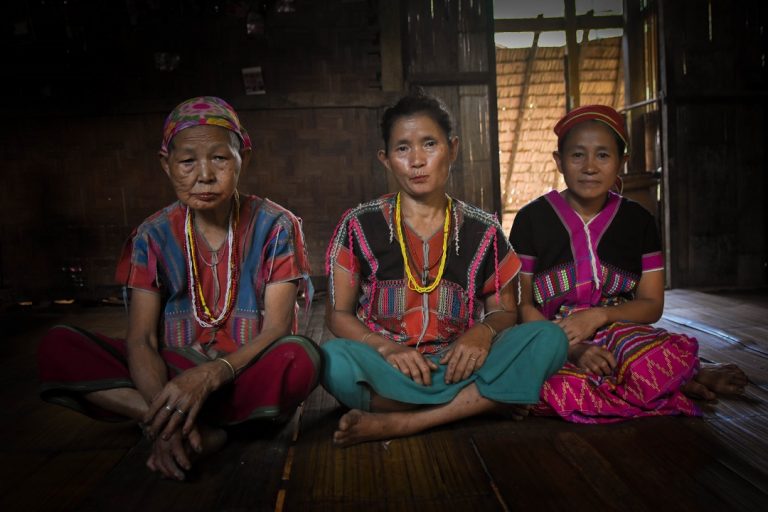
By CARLO MANALANSAN
Bulatlat.com
Our recent trip to indigenous communities of Karen in Kawthoolei was not totally a new experience but a special ‘tour of duty’. The mere thought of entering an area that has witnessed a seven-decade civil war for self-determination was exhilarating to say the least. Although communities find themselves talking about peace, the struggle for self-determination never ceases.
Like most indigenous communities in other countries, some villages within the Karen territory are remote and getting there could be an extra challenge for outsiders, especially under unfavorable weather circumstance and the person’s physical condition.
It was raining when we started our long land travel. It took us five hours before we reached the Salween River which serves as the gateway to our destination. Salween River is a natural boundary of Burma and Thailand and a waterway for traders and ordinary commuters from Karenni, Karen, and Mon States.

Along Salween River, several makeshift ‘No Dam’ placards are installed signifying strong opposition from communities. A number of hydroelectric dam projects are planned in the upstream areas of Salween River and its tributaries. These proposed projects spell the greatest threat and disaster to land and life of indigenous communities, particularly the internally displaced peoples (IDP) who sought refuge and found sanctuary on a flat stretch along the river after being victimized by nonstop Burmese military operations.
After five hours of river cruise, we arrived at a small community right before the sunset. We decided to stay overnight because going up the mountain under nonstop rains was impossible. Luckily on the following day, the rain stopped.

Despite the muddy mountain road that prevented us from seamless maneuvering, the scenic beauty of lush forest, misty canopy and cold breeze at a high altitude of Mutraw district was just so overwhelming. The picturesque mountain landscape contrasted with villages masked by clouds show no sign of massive environmental damage and resource plunder. However, it tells a story of social unrest, conflict and resistance. This part of Karen territory has been under the political power of Karen National Union (KNU) and military control of Karen National Liberation Army (KNLA) for nearly 60 years.

Three different villages and new acquaintances who share common stories of disarray, defiance and hope were our home for a couple of days.
T’may Hta Village
T’may Hta was our first stop. It is the home of the Indigenous Eco-Training Center built by and for the Karen people. The Karen Environment and Social Action Network (KESAN), a community-based, non-government and non-profit organization, has possible the establishment of the training center.

The bamboo raft, as the main water vehicle to cross Pwan Lo Klo River and get to the Eco-Training Center, adds to the whole experience of our community visit.
Community members collectively operate and maintain the training center under the supervision of KESAN staff based in Mutraw District. They cultivate their own organic farmlands and they also have free-range chicken and pig. It already hosted several training and activities that promoted the fusion of indigenous knowledge and new technologies to improve the people’s lives.

Aside from the training center, T’may Hta village provides a space for some families and individuals who were forcibly displaced by the Burmese Army. In 2015, both the Karen National Union (KNU) and Burmese Army have signed the Nationwide Ceasefire Agreement (NCA) which prohibits the expansion of military facilities and deployment of military forces within the defined ceasefire areas. In 2018, however, the Burmese Army built road networks to connect their military bases without the knowledge and permission of the KNU. Military operations have caused massive displacement of indigenous peoples.
Lay Bu Der Village
Lay Bu Der is a small village of 18 houses which account for at least 20 households. Here I met Saw Ba Moo or ”black teeth man,” a 27-year old father of two children and husband of Naw Moo.

Ba Moo recalled his father’s story on how his clan started and persevered to populate their present community and develop as their own village. It was a tough journey to search for a suitable place where they could settle. They had to transfer three times, from one forest area to another, due to unfavorable conditions like wild animal attacks. They finally decided to settle at Lay Bu Der, an area that used to be a thick forest.

The entire community continues to enjoy the simple living practiced by their ancestors. Their customary practices of resource utilization and management essentially translate to environmental protection in a self-reliant way.

Karen women have always played a crucial role in cultural preservation and social development. Women in the community are in-charge of collecting some light woods and leaves from the forest in order to build their houses. Ba Moo jokingly mentioned that women could not go to the forest and collect woods without chewing betel nut.

The culture of weaving, especially in the production of their indigenous Karen attire, is still alive in the community. Materials like cotton, thread and color dye are available in their forest. According to them, villagers, particularly women and children, at Lay Bu Der always wear their traditional attire as a sign of cultural pride. Right now, economic practicality plays a critical factor in the continued existence of weaving in their community.
Maw Lay Koh Village
Maw Lay Koh, the last village that we visited, is an hour away from the district center. The motorbike travel to this village could be dangerous for those who are not familiar with the rugged terrain.

Saw Klop Poe and his family accommodated us in our short stay in their village. When we entered his house, Klop Poe’s wife offered some water and food while his daughter immediately placed the handwoven mat and pillow so we can have some rest after an hour of travel.

Some of his grandchildren hid from me and cried. They might be shy or afraid of someone who does not speak their language. But there are few little children amassed in front of me to have them photographed. Like any other children, they always love to see themselves in the photo.

Klop Poe started to tell his personal story as a village chief turned Karen army member. Being a village chief was both tough and fulfilling. He needed to be present in all meetings concerning his village and people. Sometimes, he mediated in domestic issues. Moreover, he led the conservation efforts of one of the most important community forest areas in Mutraw district.
After his term as the village chief, he immediately enrolled to become part of the KNLA where he served for only two years. According to him, the life in KNLA was amazing but his age could not keep up with all the training and other physical activities. He then decided to go back to his village and continue living with his children and grandchildren.

Before we said goodbye, Klop Poe rendered a poem with his traditional musical instrument, Tayna Kaylaw. It tells a story of hope and solidarity among communities in all parts of the world, solidarity that transcends boundary, distance and nationality.
Intergenerational struggle for self-determination
The military operations of the Burmese Army across Karen State amidst the ongoing nationwide ceasefire make genuine peace elusive. Burmese military encroachment on indigenous territories means increasing political control over jurisdiction and indigenous population. This further provides the Union Government of Burma the power to liberalize the territories and resources of indigenous communities. The apparent strategy works concurrently for the benefit of the ruling government at the expense of the people and environment.
On the other hand, peace negotiations between KNU and the Union Government of Burma give a window of opportunity for some families to rebuild their lives and consolidate their village. However, the threat of Burmese military operations remains as manifested by widespread cases of IDPs and land grabbing by the local elite.
Amid all these, the Karen people continue to assert their right to self-determination. Karen peoples have re-envisioned their indigenous territories through the establishment of Salween Peace Park as “a space of peace, self-determination, environmental integrity, and cultural survival.”
Peace is not necessarily the absence of war. Just and lasting peace will only happen if the root causes of the armed conflict are addressed.

The continuing struggle of Karen for self-determination is an expression of the rich history of their resistance against national oppression by the Burmese Army and the Union Government of Burma. The younger generation of indomitable Karen accepts the challenge to carry on the struggle for self-determination and liberation.

Carlo Manalansan is the campaign officer of the International Indigenous Peoples Movement for Self-Determination (IPMSDL)
The post Kawthoolei travelogue: A continuing journey of Karen indigenous peoples to self-determination appeared first on Bulatlat.
Oblation Run 2019 highlights fight for democracy, freedom of expression
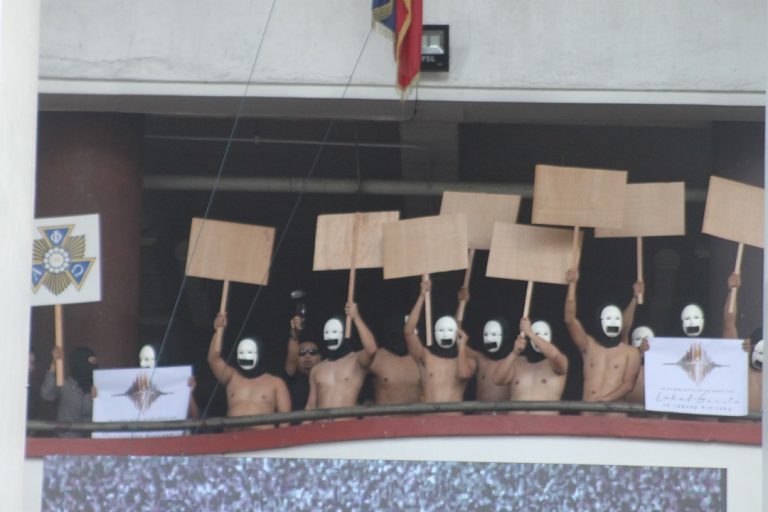
MANILA — This year’s Oblation Run highlighted the Filipino people’s fight for democracy and called for the defense of freedom of expression amid worsening attacks on media and various sectors critical of the policies of the Rodrigo Duterte administration.

Led by the Alpha Phi Omega (APO) Fraternity – Eta Chapter, the APO Fraternity’s University of the Philippines Diliman (UPD) Chapter, the naked runners wore masks with covered mouths while carrying blank wooden placards as they staged their annual tradition at the UP Diliman Palma Hall. An LCD screen featured videos and photos of known UP personalities and leaders holding placards with the various messages and demands being campaigned for by their respective sectors. Among them were UP Faculty Regent Bomen Guillermo, UP Student Regent Ivy Taroma, UPD Chancellor Michael Tan, All UP Academic Employees Union national president Carl Ramota, and journalist and newly-appointed United Nations High Commissioner for Refugees (UNHCR) National Goodwill Ambassador Atom Araullo.


According to the APO spokespersons, the masks and placards symbolize their calls, and the Oblation Run, a tradition that began in 1977 during the Marcos dictatorship as an effective form of protest, amplifies the people’s demands and issues. They also called on the public to become more vigilant, critical, and involved in people’s issues in order to bring about social justice, freedom and progress for all.
(Photos by FRED DABU)
The post Oblation Run 2019 highlights fight for democracy, freedom of expression appeared first on Bulatlat.