The post Uring Manggagawa appeared first on Manila Today.
Last Monday
Last Monday I was on a bus back to the Netherlands from the town of Trier, Germany. Claiming to be the oldest city in Germany, and named as the capital of the northwestern extent of the Roman Empire in the fourth century, Trier is also better known as the birthplace of Karl Marx.
Rice tariffication to impoverish Filipino farmers more, Congress warned
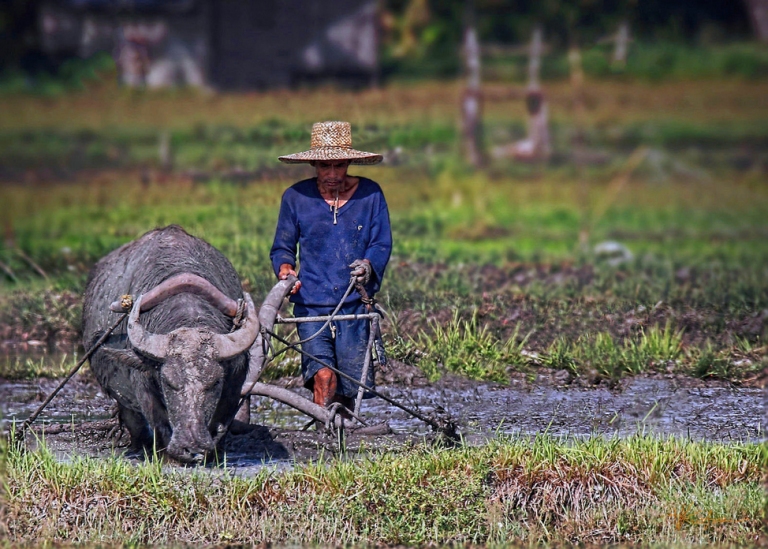
Research group IBON raised concern over the current move by the House of Representatives (HOR) to lift the quantitative restrictions (QR) on rice imports and instead apply a 35% tariff on unlimited rice importation. This will practically decrease farmgate prices, said IBON, but not necessarily lower retail rice prices as government claims.
Rice prices have increased for six straight months in 2018 – by Php2.53 from Php37.83 to Php40.36 for regular milled rice and by Php1.61 from Php42.58 to Php44.19 for well milled rice. Consequently, government called for additional importation ahead of the schedule for the minimum access volume (MAV), a commitment under the World Trade Organization (WTO), and for Congress to rush the rice tariffication bill to lower the price of rice and ensure support for farmers.
IBON however said that as it is, the prevailing farmgate price of Php21 does not provide sufficient income from the farmers’ average production cost of Php12 per kilo. Computing the average yield of 80 cavans of palay from one hectare, which is equivalent to 4,000 kilos, the rice farmer earns only Php36,000 until the next cropping. Each cropping commonly lasts for six months, which means that the farmer’s average monthly income of Php6,000 is 76% short of the estimated monthly family living wage (FLW) of Php25,454 for a family of five. If higher importation will decrease farmgate prices, then the already insufficient income of farmers will fall further, IBON said.
Retail prices, on the other hand, will not likely automatically go down with increased rice imports that supposedly stabilize supply. The years of highest importation are also the years of highest price increases, IBON observed. For instance, when rice retail prices increased by Php7.99 per kilo during the rice crisis in 2008, the country was already importing an average of 1.8 million metric tons (MMT) for three years, an unprecedented volume since 2000s. When the country imported even more at a yearly average of 2.2 MMT from 2008-2010, retail prices continued to increase by an annual average of Php1.20 until 2016.
The farmers are themselves rice consumers, IBON said, and will be affected badly by lower income yet continuously increasing rice retail prices.
The group added that Congress may be misguided for placing hopes on unlimited rice importation for stabilizing supply and prices while the rice industry remains dominated by an alleged trading cartel that dictates rice prices. ###
CL, Manila prices barely differ
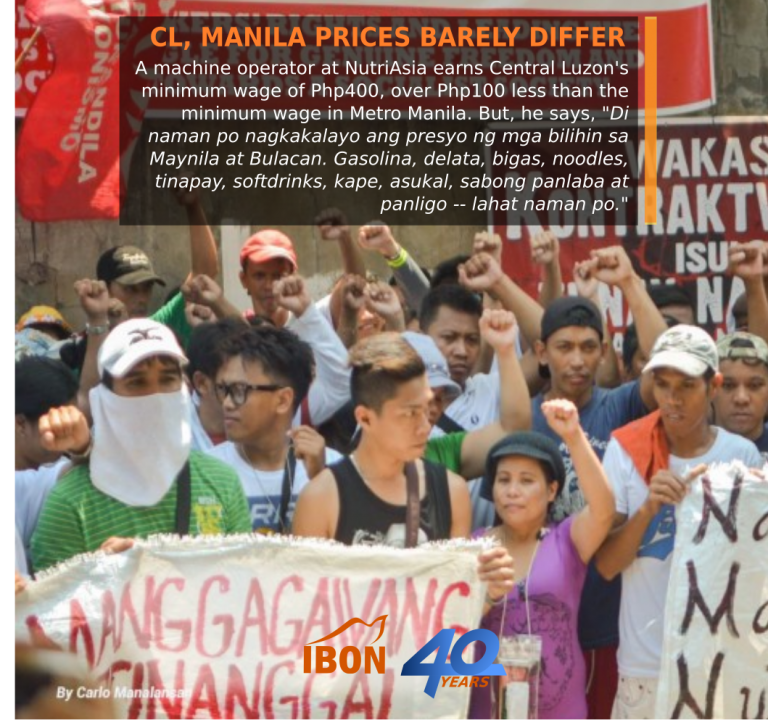
The minimum wage in Central Luzon was hiked to Php400 per day, but since there is almost no difference between the prices of goods and services in the region and in Metro Manila, the amount – as with the National Capital Region’s minimum wage of Php512 – remains insufficient for the workers and their families. IBON estimates the daily family living wage to be Php979 for a family of five. #NutriAsiaWorkers
Wage hike only 18% cut in profits
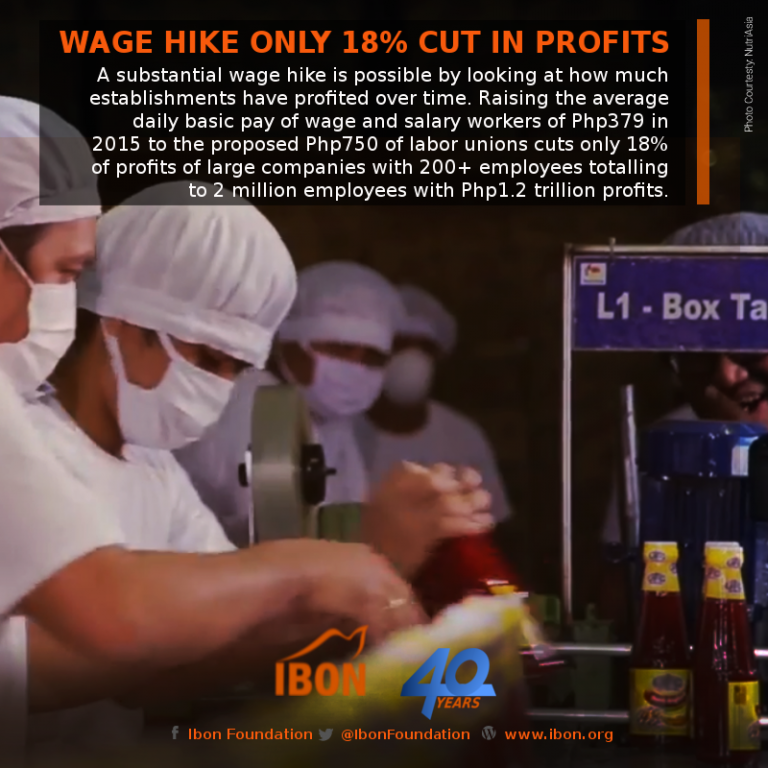
Raising wages substantially remains a pressing and legitimate call that is doable and good for the economy. #NutriAsiaWorkers
Itanong mo kay Prof: Political persecution sa mga lider-aktibista
Sa episode na ito ng Itanong mo kay Prof, ipinaliwanag ang ibig sabihin ng political persecution at bakit target nito ang mga progresibong lider tulad nila Liza Maza, Satur Ocampo, Rafael Mariano at Teddy Casiño.
Human rights lawyer says arrest of journalists in NutriAsia dispersal a threat to press freedom
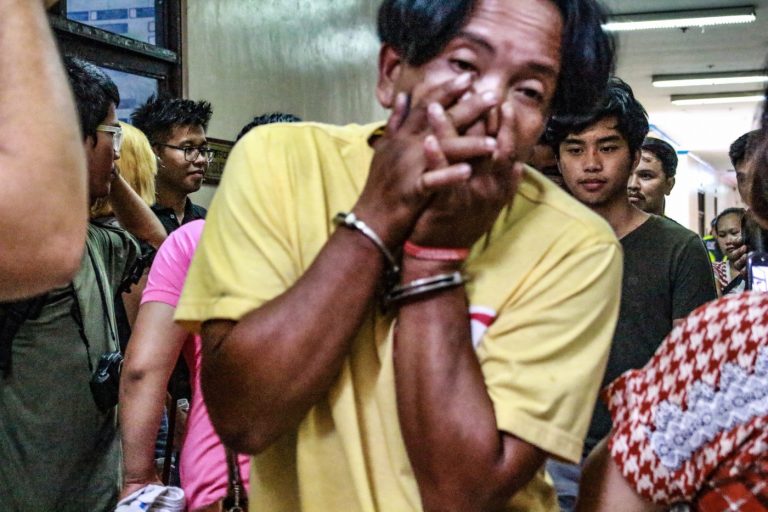
The arrest of journalists covering the brutal dispersal of the NutriAsia workers’ strike on Monday showed that the company is not only a violator of labor rights but also a threat to press freedom, a human rights lawyer said on Thursday.


The ‘NutriAsia 19’ during the inquest proceedings Tuesday. Photos by JC Gilana, Akira Liwanag, and Jasmaine Reyes.
Describing the dispersal as ‘overkill’, Krissy Conti of the National Union of People’s Lawyers said that the security guards acted upon the orders of NutriAsia.
Five journalists were arrested during the dispersal, namely Altermidya correspondents Avon Ang, Hiyasmin Saturay and Eric Tandoc, Altermidya intern Psalty Caluza, and UP Scientia graphic artist Jon Bonifacio. They were released last Wednesday, August 1.
In the press conference, Ang and Saturay narrated how they were arrested by forces of the Meycauayan City police during the dispersal.
“Ipinakita ko press ID ko, kinuha ni Supt. [Santos] Mera saka ako inaresto,” Ang said. Mera is the chief of the Meycauayan City police.
Meanwhile, Saturay said she was arrested while filming the dispersal. Their equipment were also confiscated, she said, and that most of the confiscated equipment such as bags, cameras and laptops were not returned to them.
Jose Mari Callueng, national president of the College Editors Guild of the Philippines (CEGP) and one of the paralegal staff of the arrested individuals said that the Meycauayan City police barred legal aid and media personnel from the station.
In a statement, CEGP condemned the arrests of the five journalists as “the desperation of the condiment firm to repel the burning battlecry of the people.”
Altermidya national coordinator Rhea Padilla, meanwhile, claimed that NutriAsia’s lawyers forced the journalists to sign quit claims in exchange for the dropping of charges filed against them. Among the charges filed against them include illegal assembly, physical injuries, and alarm and scandal.
The five journalists were released on August 1, but charges for illegal assembly and public alarm and scandal remain. Charges for the remaining 14 workers and youth leaders would be subjected to further investigation.
National Union of Journalists of the Philippines (NUJP) deputy secretary-general Raymund Villanueva vowed to bring the press freedom violations during the NutriAsia strike dispersal to local and international forums.
In a statement released on the day of the dispersal, NUJP urged the community of independent journalists “to rally around our beleaguered colleagues and send a clear signal that we will not allow any assault on freedom of the press and of expression to pass unchallenged and will hold anyone responsible accountable.”
Villanueva further urged that there should be consequences to the attacks against journalists. Conti said that the arrested journalists can file counter charges against the Meycauayan City police.
“We have plenty of controverting evidence and these are enough to file counter charges,” the human rights lawyer said.
The post Human rights lawyer says arrest of journalists in NutriAsia dispersal a threat to press freedom appeared first on Manila Today.
3 CAFGUs die in Masbate encounter
Three government troopers under the 2nd Infantry Battalion of the Philippine Army were killed in an encounter in Masbate Province Friday morning, a spot report from the Philippine National Police said. The soldiers figured in a fire fight with suspected members of the New People’s Army at Barangay Mactan, Cawayan town at about 8:30 in […]