Salin sa Filipino nina Cora at Rey Casambre Mula sa orihinal ni Max Ehrmann Humayo nang panatag Sa gitna ng ingay at pagmamadali at tandaang May kapayapaang matatagpuan sa katahimikan. Hangga’t maaari nang walang pagsuko, Makipagkapwa-tao. Bigkasin ang iyong katotohanan nang mahinahon at malinaw, at makinig sa iba, kahit sa mapurol o mangmang: sila […]
Children’s group Salinlahi celebrates 32nd anniversary
Aktibong pagtalakay sa mga isyu kaugnay sa karapatan ng kabataan ang naging kaganapan sa ika-32 anibersaryong programa ng Salinlahi Alliance for Children’s Concerns. Nagsama sama ang iba’t ibang sektor upang pangunahan ang usapin ukol sa kabataan na nararapat pagtuunan ng pansin ng kasalukuyang pamahalaan. Kasama rin sa programa ang pangkulturang pagtatanghal ng ilang kabataan upang […]
Proposed amendments to Human Security Act violates human rights – progressive groups
The proposed amendments to the Human Security Act (HSA) of 2007 is tantamount to “undeclared but legislated” nationwide martial law, Kabataan party-list Rep. Sarah Elago warned on Monday as she denounced the Duterte administration’s “draconian and over-broad counterinsurgency legislation.”
OATH TAKING
Newly elected barangay officials in Davao City take their oath before Mayor Sara Duterte-Carpio at the Davao City Recreation Center on Monday, June 25, 2018. (Kath M. Cortez/davaotoday.com)
Manggagawa ng Jollibee, pinagkaitan ng saya at trabaho
Storya nina Nicole Falcasantos at Patricia Esteban | Interns mula sa University of the Philippines Baguio at Diliman
“Sa Jollibee bida ang saya, sa mga manggagawa, tinanggal ang saya!” Ito ang hinaing ng Samahan ng Manggagawa- Jollibee Foods Corporation (SM-JFC) sa naganap na kilos-protesta sa harap ng warehouse ng Jollibee sa Parañaque City noong Hunyo 21.
Noong madaling araw ng Hunyo 17, gumising sa kanila ang biglaang pagkawala ng kanilang mga trabaho, dahil diumano’y natapos na ang kanilang kontrata sa kompanya. Isa sa mga manggagawang ito ay si Rogelio Magistrado, pinuno ng SM-JFC. Ayon sa kanya, tinanggal sila nang walang babala o abiso.
Ang mga manggagagawa ay pinapirma ng isang dokumentong ‘Notice of Pull-out’ bilang hudyat ng pagtatapos ng kanilang kontrata, ani Magistrado.
“Tapos kapalit ng pagpirma mo, bilang pa-kunswelo, bawat manggagawang pipirma, may kasamang Yum Burger,” dagdag ni Magistrado, isang warehouse picker.
Noong nakaraang Mayo 2018, napag-alaman ng Department of Labor and Employment (DOLE) na ang JFC ay nagsasagawa ng labor-only contracting na isang paglabag sa Department Order 174. Ayon sa datos, 14,960 na manggagawa ang apektado. Bago ito, noong Abril 2018, nagmandato ang DOLE sa JFC na kailangang gawing regular ang 6,482 na mga kontraktwal na manggagawa ng kompanya.
Sa isang panayam sa ALAB Analysis, inihayag ni Magistrado kung paano, matapos ang utos ng DOLE, unti-unti nang sinabihan ang mga manggagawa na huwag gamitin ang logo ng Jollibee, at tinanggal ito sa kanilang mga ID at masthead na ginagamit ng kanilang agency, ang Toplis Solution.
Ang Toplis Solutions ang nagpapatakbo ng commissary at warehouse ng Jollibee sa Parañaque City. Responsable ito sa storage, handling, at distribution ng mga produkto at iba pang logistical needs ng iba pang mga warehouse at outlets ng Jollibee, Chowking, Greenwich, Burger King, Mang Inasal at Red Ribbon sa buong Luzon.
Daan-daang manggagawa ang tinanggal sa trabaho nang i-terminate ng JFC ang kontrata nito sa Toplis Solution at Staff Search Asia Cooperative, ang mayor na mga ahensiyang nagpapatakbo ng commissary at warehouse ng Jollibee.
Ibinahagi ni Magistrado ang kalagayan ng mga manggagawa sa loob ng JFC at ang mga patakaran na umiiral sa kompanya.
“Mahigpit po sila sa 30-minute break rule. Kung lumagpas po ay nagbibigay sila ng Incident Report…hinihingan kami ng paliwanag kung bakit kami na-late ng balik, kung bakit ganoon katagal. Hindi po namin alam kung saan dinadala [ang incident report],” dagdag ni Magistrado.
Ang JFC ay pagmamay-ari ni Tony Tan Caktiong na siyang namamahala sa distribusyon ng food supplies sa mga malalaking industriya ng fastfood chains sa bansa. Ilan sa mga ito ay Jollibee, Chowking, Greenwich, Burger King, Mang Inasal, at Red Ribbon.
Sa huli, ang panawagan ng mga kontraktwal na manggagawang tinanggal ng JFC ay mabalik ang kanilang trabaho dahil ito ang pangunahing pinagkakakitaan ng karamihan sa mga manggagawa. Bukod pa rito ay ang malawakang panawagan upang itigil ang kontraktwalisasyon sa bansa.
The post Manggagawa ng Jollibee, pinagkaitan ng saya at trabaho appeared first on Altermidya.
Stop rate rebasing until onerous fees resolved – WPN
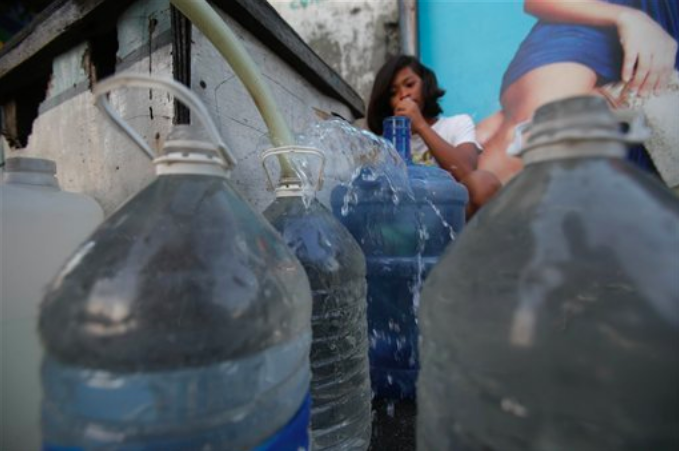
Advocacy group Water for the People Network (WPN) is appealing to the Metropolitan Waterworks and Sewerage System – Regulatory Office (MWSS-RO) to halt the ongoing rate rebasing process that is expected to raise water rates in Metro Manila and its environs, saying the basis for determining future water rates remains unresolved.
Concessionaires Maynilad and Manila Water continue to contest the MWSS-RO’s 2013 decision to prohibit water companies from passing on their corporate income tax and other questionable expenses to consumers. Both companies took to international arbitration to protest government’s denial of their petitioned rate hikes, with Maynilad demanding government to pay Php72 billion in lost revenues and Manila Water demanding Php10 billion. Both cases are still pending in the courts.
WPN said that pending resolution of both controversies, any rate rebasing scheme would be conjectural and would burden the public with unjust and unnecessary increases in the midst of soaring prices.
“With continued lack of transparency in the rate rebasing process and petitions, water companies could make another attempt to pass on questionable charges to consumers through their water bills,” said former party list representative Teddy Casiño, a convenor of the WPN.
For the 2018-2022 rate rebasing period, Maynilad is seeking an estimated Php12 per cubic meter increase, while Manila Water is seeking and Php8 per cubic meter increase. Rate rebasing pertains to the periodic computation of water rates based on government’s review of the concessionaires’ petitioned new tariffs. The latter supposedly covers the companies’ past and projected expenses and a guaranteed rate of return.
However, due to water consumers and advocates’ clamor during the rate rebasing process in 2013, previous water regulators disallowed corporate income tax and other expenses unrelated to the delivery of water from being computed into the water bill.
Casiño said that since 1997 when water utilities were privatized, basic or average water tariffs have soared by as much as 596% under Maynilad and 970% under Manila Water, contrary to the promise of affordability. Studies also showed urban poor families end up shelling out thousands of pesos beyond their means for either fetched water from the community pump or submeter water access in the absence of direct water connections.
“WPN hopes that the government will look upon the rate rebasing petitions with public interest foremost in mind,” Casiño said. He added that the network will guard against the inclusion in the bill of the Php82-billion uncollected funds which both private companies have pleaded international arbitration courts to demand from the government.
According to Casiño, government’s accession to the companies’ demands would certainly entail higher user fees. “This will double the burden on poor Filipinos who are already struggling with price hikes due to the new taxes,” he said. Casiño challenged the government to not allow companies to impose onerous fees for profit. ###
A war without the rubble: Marawi a year after
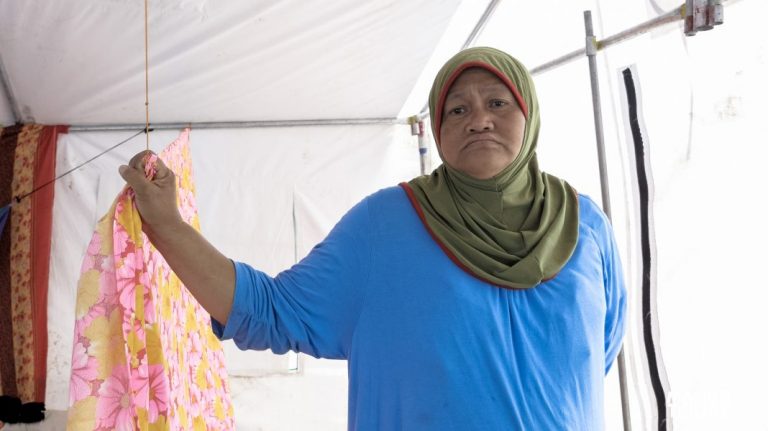
Rohaina Magarang walks down a few steps from Tent No. 2136 in Sarimanok II Tent Shelter to check on her father. The elderly man, paralyzed from the waist down, has just been transferred to the shelter in Marawi from a hospital in Cagayan de Oro. Camp authorities refuse to give aid to ailing evacuees unless they’re brought to the shelter, so Rohaina saved all the money she could to afford transportation expenses. The old man tries to tell something to his daughter but has difficulty in doing so. He breaks down in tears. Rohaina elicits the same response.
Like thousands of displaced Moros following the war between elements of Daulah Islamiyah and the Armed Forces of the Philippines, Rohaina is hopeful that her family could set foot in war-torn Marawi once again. Life inside the tents can be dreary.


“Food rations will run low again, now that Ramadan is over” Rohaina says.
Eid’l Fitr has just passed, and while the three-day tradition is marked by lavish meals, gift-giving, and grand festivities, the families inside the tent shelter shared a modest iftar at sundown.
Rohaina recalls that last year, it was days before the start of the Holy Month of Ramadan that the fighting in Marawi began. Displaced Muslims spent Ramadan and Eid’l Fitr in evacuation centers, many of them separate from their families. One year on, they have not yet returned to their homes.

The government says many of the internally displaced persons have returned to the 24 barangays in Marawi most affected by the siege. Task Force Bangon Marawi pegs the number of displaced families at 42,252, with 45 evacuation centers still in operation. More are staying with relatives in home-based centers across the Lanao provinces.
The Sarimanok II tent shelter houses around 200 families.


From professional and middle class workers, they are relegated to receiving food aid from the government and from non-government donors. Some tents are shared by two or more families. The evacuees have resorted to generating different kinds of livelihood to buy soap, matches, and other essentials.
“How do we cope with lack of livelihood in the tent shelter?” Rohaina returns our question. She tells us that she buys malong (traditional wrap-around tubular garments), cuts them to small pieces, and sews them into wallets to sell in the city.
Her husband, Olawan, wants sustainable livelihood for those living in tent cities. “If only the government would provide farming inputs, then we would put our bodies to work. I don’t mind if I’m 60 years old. We are very hungry for any kind of work just so we could send our children to school,” he says.


They are lucky if nearby relatives give them rice, chickens, or vegetables. “If not for their help, we would be eating canned sardines for breakfast, canned sardines for lunch, and some more canned sardines for dinner. I could do that for a week, maybe, but for my family to eat canned food and noodles everyday for a month, no, I couldn’t bear that thought,” one man shares.

Water doesn’t come in abundantly, either. Delivery trucks refill their tanks once every day, not quite enough for the several thousand individuals who cook, bathe, and wash at the shelter.


According to Sarimanok II residents, moves are underway to transfer them to relatively stronger housing units like the ones in Sagonsongan, but they want more transparency as to when and how they could relocate.
“We can’t get any sleep when it rains around here. We’re afraid the winds would blow our tents away,” says an elderly man.


Task Force Bangon Marawi has recently presented slides of the master plan for Marawi’s most affected areas, with officials estimating the total rehabilitation cost to be P51.6 billion. President Duterte gave his government a four-year period to complete all rehabilitation efforts in Marawi.
Members of the Maute Group or Daulah Islamiyah burned buildings and houses, but it was the heavy airstrikes by the Philippine armed forces that left the Islamic City in rubble.
Ambitious as they may be, Olawan fears that the government’s “undemocratic” process of rebuilding Marawi will leave the residents behind. They are wary of donations coming in from the U.S. and Chinese governments as these would entail awarding business contracts to them. For so long, Marawi has supported local merchants and their businesses. Foreign establishments could eat up residents’ small and medium enterprises.
Plans for the construction of a military camp are also underway, apart from the existing 103rd Brigade headquarters.
“With most Meranaws not having titles for our properties, how can the government assure us that we would reclaim our land?” Olawan asks, angered at the thought of businesses or the government taking over their ancestral land.
“The Philippine media should hear the stories of the ordinary residents, not just the authorities and the experts,” Olawan adds. “Not everything is well in here.”
Rohaima, Olawan, and the hundreds of thousands of displaced residents of Marawi may have come out of the crossfire alive, but their everyday struggle for food, livelihood, and adequate shelter — for their fundamental rights and dignity — is a battle they continue to wage.
The post A war without the rubble: Marawi a year after appeared first on Manila Today.
Tula | Ganito si Ka Luis

Hinintay mo ako sa huling sandali
Tulad ng paghihintay mo sa mga di ko pag-uwi
Humawak ka sa aking kamay
kahit papalamig na ang iyong katawan
Na para bang panatag ka na, tuwing ako ay nariyan.
Ang ating pagsasama’y di karaniwan
Di -tradisyunal, di maintindihan
Ngunit sa pagitan nating dalawa
ay malinaw ang mga batayan
Sa piniling landas ng buhay.
Di kita pansin noong una kitang makita
Maliit ka, di kaguwapuhan at banlag pa
Pero nang iduyan mo ako sa iyong mga tula
Ewan ko ba para kang nagmukhang tala.
Sabi mo pa noon
“ang pag-ibig ko sa iyo ay higit pa sa pambansang demokrasya”
Kinilabutan ako dahil labis na ito
Pero biglang pumihit ka at sinabing
Syempre, naman, may sosyalismo pa.
Parati kang nagbibiro, nagpapatawa
Kahit gusto na kitang sakalin sa lakas ng iyong pang-aalaska
“He finds humor in the most outrageous things” sabi nga ng aking
pamangkin
Tulad ng paghahanap ng kamera
Habang naka-suwero ka at oxygen.
Talaga namang kakaiba ang lalim at talas ng iyong pag-iisip
Malawak ang iyong pananaw at interes
At para kang encyclopedia
Inaaral mo nang buong giliw ang bawat gusto
Ma-pulitika man, siyensa, digmaan, kalusugan, kalawakan,
pati takbo ng kabayo sa Sta Rosa.
Hindi ka man tapos ng kurso,
kaya mong ituro nang buo
ang kurso ng lipunan at rebolusyong Pilipino
Sa paraang pakuwento –
walang notes, walang outline, walang visual aids.
Mag-aral ka, mag-aral ka ang sabi mo sa akin
Tigilan na ang sobrang youtube at telenovela
Lakbayin ang mundo, hindi lamang ni Mao,
gayundin nina Marx, Lenin at Engels
At hawakan nang mahigpit ang DM at HM.
Marubdob ka rin kung magbasa, magsulat, magsalin
Kahit gamit ay sulat-kamay o matandang typewriter
Nahilig ka man sa computer, ilang taon ka ring natulala
Nang sa isang iglap na-delete ang marami mong akda
Hindi lahat ng kaalaman mo ay halaw sa libro
Ang buhay mo ay buhay ng masa –
payak, kulang sa rekurso, walang pera
Nagtinda ka ng diaryo at sigarilyo
Kahit pa man sana NSDB scholar ka
Dahil problema pa rin kung paano makakarating sa eskwela.
Ginalugad mo ang mga komunidad para mag-organisa
Kumatok ka sa mga pagawaan para abutin ang mga unyonista
Naging tahanan mo ang maraming tahanan
Naging eskwelahan mo ang maraming picketline
Bumangka ka sa maraming huntahan
Lumobo ang iyong mga kasama at kaibigan
Nakipagtagisan ka ng talino
sa mga panatiko sa Luneta at Plaza Miranda
Nilaman ka ng mga rali at demonstrasyon
laban sa diktadura at mga imperyalista
Tinawid mo ang kabundukan
para malaman ang buhay ng mga pambansang minorya
At sa dami ng Dumagat sa bahay wala na akong mahakbangan pa.
Nahilig ka sa pagsasalin dahil mahina ka sa Ingles
Suki ka ng public libraries at kaulayaw
ay diksyunaryong English-Pilipino
Ayaw mong ipagkait ang yaman ng Marxismo
laluna sa mga manggagawa
Kaya sa wikang Pilipino ka nagsisimula
Buong buhay mo wala kang pinangarap
kundi ang paglaya ng uring ito
Ang pagpawi ng pagsasamantala at pang-aalipin
Hindi lamang ng uri sa uri, kundi ng tao sa tao.
Dumaan din ang panahon na inabot ka
ng lungkot, panghihinayang, pagkasiphayo
Kaya tuloy lalong kumita si San Miguel sa iyo
Timgin mo wala namang interesado sa mga salin mo
Liban sa mga anay, langgam, alikabok
Gagawin mo na sanang hanapbuhay ang pagsasalin
Papal encyclicals at Koran, di ka binayaran pala.
Pero nitong Mayo Uno, ang saya-saya mo
Kahit maysakit nabuhayan ka ng sigla
kumislap ang iyong mga mata
Nagbunyi ka sa pagkakaisa ng KMU at ng iba pa
Sana magtuluy-tuloy na, ang sabi mo
Sabay tanong sa akin: “naitabi pa ba ang aking mga salin?
Kaya pa ba irekober ang mga ito?”
Lihim akong natuwa
Ngunit sandali lamang pala
Dahil matutuldukan na ang iyong mga akda
Pero hindi ang iyong ala-ala sa akin.
Sa iyong pag-alis ay ibaon mo
Ang pangakong titipunun at aayusin ko
Ang lahat ng natitira mo pang salin
Upang sa darating na mga araw
Magsilbi ang mga itong pamana mo
Sa kasalukuyan at susunod pang mga henerasyon
Ng magigiting na anak ng bayan ng uring anakpawis.
Mabuhay ka, Ka Luis!
Evelyn
12 Mayo 2018, Quezon City