Home Blog Page 67

Lacson hits, PNP defends Duterte proposal to arm civilians

0

Jun 28, 2021 Jairo Bolledo

MANILA, Philippines

Stricter gun control ‘would be a better solution,’ says former police chief Senator Panfilo Lacson

Senator Panfilo Lacson, a former police chief, criticized President Rodrigo Duterte’s latest proposal to arm civilians, even as the Philippine National Police (PNP) said their commander in chief’s idea aims “purely” to protect Filipinos against crime.

“Stricter gun control measures by the Philippine National Police, including the more stringent issuance or even suspension of permits to carry firearms outside residences (PTCFORs), would be a better solution to stopping criminality than arming civilians,” Lacson said in a statement on Sunday, June 27.

During an event in Camp Crame on Friday, June 25, President Rodrigo Duterte said he was “open” to arming civilian groups. In 2018, Duterte had said he was considering providing free guns to the public as long as they would fight drugs and crime.

“If you have this coalition, you have a list of people who are there who can arm themselves. I will order the police if you are qualified, get a gun, and help us enforce the laws,” the commander in chief said.

However, Lacson added that issuing firearms to civilians might actually lead to more crime. 

“Arming civilians to fight criminality could backfire, especially if they don’t have the proper training and mindset. In the United States, there have been so many fatal shootings due to loose firearm laws,” he said.

Duterte made his proposal as part of his bloody law-and-order campaign since assuming the presidency in 2016. Under Duterte, police have been involved in many cases of brutality, including the recent case of dismissed Police Master Sergeant Hensie Zinampan, who shot and killed a 52-year-old woman in Quezon City on May 31.

For civilians’ protection

The PNP, despite Lacson’s disagreement, defended Duterte’s idea. 

“The proposal to arm them is purely for their own protection, to defend themselves, and the PNP itself will not allow each and every one of them to engage in the actual fighting of criminal elements. The PNP also assures [the public] that only those who will qualify under the law may be permitted to own and possess firearms,” Eleazar said in a statement.

The police chief also clarified that the police will not issue the guns.

“The government, particularly the PNP, will not give guns,” Eleazar said in a press conference on Monday, June 28.

Constitutional law expert Antonio La Viña said Duterte’s suggestion would only be legal if the issuance of guns is properly deputized by the government.

“There needs to be deputation by authorized agency so when [civilians] are given the authority, they are government agents and act for the government because the basic premise [is that] only government has monopoly of force,” La Viña told Rappler.

The Commission on Human Rights (CHR) also reiterated that there should only be one police force. 

“The Philippine National Police is more than enough,” CHR Spokesperson Jacqueline de Guia said in a statement. “Arming civilians without proper training, qualification, and clear lines of accountabilities may lead to lawlessness and proliferation of arms, which may further negatively impact the human rights situation in the country.” – Rappler.com

Withdrawal from ICC no free pass for Duterte, says ex-judge

0

By: Marlon Ramos – Reporter/Philippine Daily Inquirer / June 26, 2021

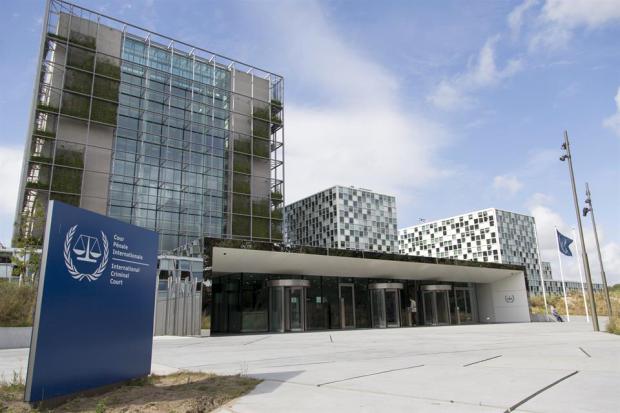
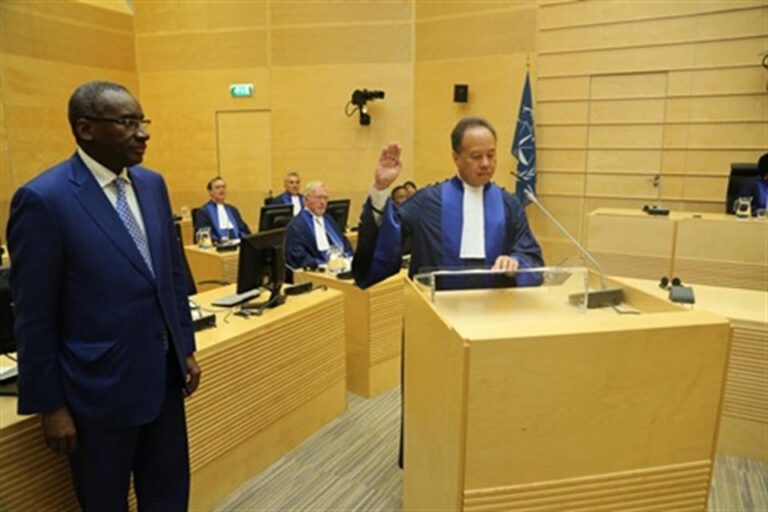
MANILA, Philippines — The Philippines’ withdrawal from the Rome Statute is not a free pass for President Duterte to escape the judicial mantle of the International Criminal Court (ICC) or evade accountability for the deaths of thousands of alleged victims of his brutal war on drugs, according to former ICC Judge Raul Pangalangan.

But Pangalangan, the first Filipino to sit as judge in the international tribunal, conceded that the ICC does not have its own law enforcers to implement arrest warrants against individuals indicted for committing crimes against humanity.

Speaking in an online forum on Friday, he said Article 127 of the Rome Statute—the international treaty that created the ICC—clearly stated that the withdrawal of a state-party did not excuse it from cooperating with the court’s processes.

A day before she stepped down last week, ICC Prosecutor Fatou Bensouda announced that she had requested the ICC pretrial chamber to open a formal investigation of charges of crimes against humanity involving murder against Duterte in his war on drugs.

Malacañang said Duterte would not cooperate with the probe since the Philippines had already bolted from the treaty in 2019.

“When [we] signed the statute [in 2011], we agreed to the terms laid down in the statute,” Pangalangan said.

“Article 127 of the statute says that the court retains jurisdiction even after the withdrawal. It retains jurisdiction over all crimes committed in its territory while it was still a member of the Rome Statute,” he said. “For me, that question is fully satisfied by Article 127.”

Burundi case

Pangalangan, a former dean of the University of the Philippines College of Law who was elected by his colleagues as president of the ICC Trial Division in 2019, said the legal concept was applied in the case of Burundi, the first nation that left the ICC in 2017 following the violent crackdown by state forces against critics of then President Pierre Nkurunziza.

He said Burundi was among the first cases he handled as a member of the ICC pretrial chamber.

“When (Bensouda) asserts her jurisdiction over crimes committed while the Philippines is still a member of the Rome Statute until March 2019, she is squarely invoking the application of Article 127,” said Pangalangan, who retired as ICC judge last month.

‘Global police’

Duterte ordered the country’s withdrawal from the Rome Statute in March 2018, a month after Bensouda announced that she would start a preliminary examination of the complaints against him. The withdrawal took effect a year later.

Pangalangan, also a former Inquirer publisher, said the cooperation of state-parties to the Rome Statute was needed in enforcing the orders and decisions issued by the 18-member international court based in The Hague. The Philippine government’s action was not yet needed at this point since the ICC has yet to grant Bensouda’s request, he said.

“Is there a global police by which the ICC orders arrest to be carried out? There’s no such thing in international law, in general, and no such thing for the ICC, in particular,” he said.

“[That question] captures the dilemma [of the ICC]. We need the cooperation of states,” he said.Such cooperation was demonstrated by the United States when US soldiers captured a Ugandan rebel leader who was indicted for war crimes in the ICC and then turned him over to the Ugandan government, said Pangalangan. He noted that the US was not even a member of the ICC.

No simple process

Speaking in the same forum, Ruben Carranza, a senior staff of the International Center for Transitional Justice, said exacting accountability for the thousands of drug war killings was not a simple process.

A guilty verdict from the ICC on the President and his subordinates who carried out his bloody campaign is “such a distant prospect right now,” he said.“It’s important to manage everyone’s expectations,” said Carranza, who was a commissioner of the Presidential Commission on Good Government that was tasked with recovering the ill-gotten wealth of dictator Ferdinand Marcos and his family and cronies.

He cited the case of former Sudanese President Omar al-Bashir, who was ordered arrested by the ICC in 2009 for genocide, war crimes and crimes against humanity for the deaths of over 10,000 of his countrymen during the Darfur war.

Al-Bashir was arrested only after he was ousted in a revolution in 2019, which was inspired by the “Arab Spring” protests. It took a year before Al-Bashir was handed over to the ICC by the new Sudanese government to stand trial.

“What led to the accountability for Al-Bashir? A revolution in his own country … his ouster by people who refused to leave the streets of Sudan until he was removed from power,” Carranza said.

“So, it’s not the law and lawyers that lead to justice. It’s the people—be it the victims of the drug war or the Sudanese people against an authoritarian leader,” he said.

Arrest warrants from the ICC are not enough to hold corrupt leaders and dictators liable for their crimes. “It’s political power and when you grab it,” Carranza said. “The national justice processes are arguably more important than the proceedings in the ICC.” INQ

Cyberattacks on red-tagged news sites traced to DOST, Army

0

By: Krixia Subingsubing – Reporter/Philippine Daily Inquirer / June 24, 2021

MANILA, Philippines — A recent series of cyberattacks to temporarily block access to the websites of two alternative news organizations and the human rights group Karapatan were traced to computer networks of the Department of Science and Technology (DOST) and the Philippine Army, according to a Swedish digital forensic group.

In its report, “Attacks against media in the Philippines continue,” published on Tuesday, Qurium Media Foundation said it recorded “brief but frequent” distributed denial of service (DDOS) attacks against bulatlat.com, altermidya.org, and karapatan.org.

Bulatlat, Altermidya, and Karapatan have been red-tagged or vilified by state agents as fronts for the Communist Party of the Philippines and its armed wing, the New People’s Army.

The three groups denounced the cyberattacks.

Bulatlat said these were “politically motivated and state-sponsored” attacks after the National Task Force to End Local Communist Armed Conflict had “consistently labeled us as communist fronts for pursuing journalism for the people.”

Karapatan said the “attacks against the people’s freedom of information” were conducted by “cowards” who “hide behind the online cloak of anonymity.”

‘Flooding’

In a DDOS attack, the perpetrators “flood” the targeted machines or resources with superfluous requests to overload the host and disrupt its services, rendering them inaccessible to others, including the general public, for the duration of the attack.

Qurium found at least five attacks against the three groups — on May 17, May 18, May 20, and two on June 6.

In simultaneous attacks at 2:24 a.m. on May 17 against Bulatlat and Karapatan, Qurium said the attacker used several means to verify whether the attacks were successful.

The following day, at around 7:30 a.m., Qurium saw a “vulnerability scan” being conducted against Bulatlat’s website, which is one way to assess computers, networks, and applications for possible weaknesses.

Qurium said “one machine from the Department of Science and Technology” (DOST) launched the vulnerability scan, identifying its internet protocol (IP) address as 202.90.137.42.

“The IP seems to belong to the Philippine Research, Education, Government Information Network,” or Preginet, which is billed as the “only REN (research and education network) in the Philippines.”

It is a unit under the Advanced Science and Technology Institute (Asti) of the DOST, which is located at the University of the Philippines Diliman campus.

Zooming in, Qurium found that the Sophos firewall behind the DOST’s IP address had a certificate under “IP Solutions Inc.”

The company that signed the digital certificate was found to be a supplier of hardware and services to the Philippine government, it said.

Army statement

Qurium said another unit in the same IP address was also registered to a certain “acepcionecjr@army.mil.ph,” which is under the official domain and website of the Philippine Army.

IP Solutions could not immediately be reached for comment.

Army spokesperson Col. Ramon Zagala said the Philippine Army “respects freedom of expression and per policy, will never infringe that freedom.”

“We take these accusation of cyberattack seriously and we will not condone or tolerate it if such occurred against media entities. Rest assured we are servants of the people and protector of freedom of expression,” Zagala said.

‘Already in touch’

The Inquirer reached out to the chief of staff of Science Secretary Fortunato dela Peña for comment but he only replied that they were “already in touch” with Asti about the matter. There was no response from Asti as of press time.

According to Qurium, from 10:50 p.m. on June 6 to 3 a.m. the following day, Bulatlat and Altermidya were under a DDOS attack and subjected to “pen testing,” also to check for vulnerability.

Bulatlat said it was “angered that taxpayer money is being spent to bring down our website and to deny our readers access to our reportage.”

It was during the May 17 attack that Bulatlat published reports on the designation of 19 individuals as terrorists by the Anti-Terrorism Council and the arrests of activists and elderly peasant leaders in Northern Mindanao.

On June 16 and June 22-23, Bulatlat journalist Len Olea said they were updating their stories about the possible investigation of President Rodrigo Duterte’s alleged crime against humanity involving murder by the International Criminal Court (ICC), the death of a political prisoner and the low capacity for mass testing for COVID-19.

ICC probe story

Altermidya noted that the attacks happened after it published a story also on the ICC prosecutor’s request to investigate Mr. Duterte.

Cristina Palabay, secretary general of Karapatan, said the May 17 attack on its website, which was overwhelmed by 350,000 hits in less than five minutes, was also when it posted a statement calling for the immediate release of two elderly Mindanao peasant leaders—Marcela “Silay” Diaz, 59, and a stage 4 cancer patient, and 70-year-old Virgilio “Yoyong” Lincuna, a former political prisoner and stroke survivor with partial paralysis.

“We believe that this attack is meant to keep our website down,” Palabay said.

She said the May 20 attack might have been “meant to track down” visitors of the Karapatan website.

“On that day, we posted materials related to our submission of cases and recommendations to the Supreme Court on search warrants and trumped-up charges against activists and on the rules on the petition for the writ of amparo and habeas data,” she said.

—WITH REPORTS FROM DEXTER CABALZA AND JEANNETTE I. ANDRADE


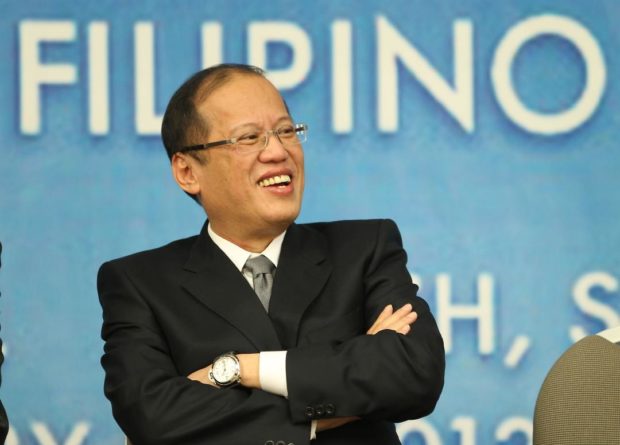
Aquino’s most lasting act of service to Filipinos: Case vs China

0

By: Tetch Torres-Tupas – Reporter /INQUIRER.net/June 24, 2021

MANILA, Philippines—Former President Benigno Aquino III will be remembered for being the one who took the initiative to assert Philippine sovereignty over the West Philippine Sea.

A dispute between China and the country was brought before the Permanent Court of Arbitration during his term as president.

For retired Supreme Court Associate Justice Francis Jardeleza, Aquino’s decision to make an arbitration case against China was his most lasting act of service to the Filipino nation.

“We will do him honor by helping our present President, President Duterte and future presidents chart a durable enforcement mechanism by joining the present and future debates on enforcement,” Jardeleza said.

Jardeleza served as Solicitor General under the Aquino administration. He served on the team that defended the country at the Permanent Court of Arbitration. Aquino appointed him to the Supreme Court in 2014.

Honest and lived by the rule of law

“It was a great honor to have served as Ombudsman when he was our President and honesty, integrity and the rule of law guided our government,” retired Supreme Court Associate Justice Conchita Carpio-Morales said in a statement. She was appointed as Ombudsman by Aquino.

READ: Noynoy Aquino was ‘example of decency,’ says Justice Carpio-Morales

Like Carpio-Morales, Supreme Court Associate Justice Alfredo Benjamin Caguioa described Aquino as one who “believed in and lived by the Rule of Law.”

“If there is anything I will remember President Noy for, it was his immense respect for the law. He believed in and lived by the Rule of Law. This is why he always said that if we really believed in democracy, then we have to be patient with democracy–to stand by democracy amidst all the noise and dissent it invites and engenders,” Caguioa said in a statement.

Caguioa, who served as justice secretary under the Aquino administration prior to his stint at the Supreme Court said: “I am very honored to have worked for and with him in his Quixotic quest. I am deeply humbled to have been regarded by Noy as his friend.”

“He was simply the best of us. The best of all of us. Decent and respectful, always mindful of others. He exemplified Lux in Domino. and all that he did was Ad Majorem Dei Gloria (For the greater glory of God.)

For Associate Marvic Leonen, Aquino was a “kind man, driven by a passion to serve our people, diligent in his duties, and with an avid and consuming curiosity about new knowledge and the world in general.”

Aquino and the Supreme Court

For ousted Chief Justice Maria Lourdes Sereno, Aquino has invested in the long-term strengthening of institutions of justice and accountability.

“Some of our presidents will be remembered how they tried to subject independent institutions to conform to their will; in contrast, President Aquino will be remembered for how he invested in the long-term strengthening of institutions of justice and accountability,” Sereno said.

She said she never heard any talk of Aquino asking any favor from any of his appointees in the judiciary.

“He may have been initially so frustrated with the Supreme Court invalidating the Disbursement Acceleration Program (DAP) but eventually he accepted it. He set aside whatever disagreements he had with the judiciary,” she said.

READ: SC declares parts of DAP unconstitutional

Sereno said Aquino has expressed support for the following program:

(1) increasing the Maintenance and Other Operating Expenses (MOOE) for all trial courts with the goal of lessening their dependence on LGU assistance and increasing their independence; (2) approving the full funding of family courts that had been delayed for more than 15 years; (3) granting the full benefits of court social workers; (3) funding the infrastructure program of the judiciary, including for local halls of justice, the Court of Appeals in Visayas and Mindanao, and the Supreme Court lot acquisition in Taguig; (4) supporting the multiple-year funding requirements for the computerization of the judiciary; and (5) putting the seal of the GoP on judicial reform fund.

Not easy to be President

For Justice Secretary Menardo Guevarra, becoming president of a country like the Philippines did not come easily to him.

“With enormous social, economic, and political challenges is a colossal task. Anyone who accepts this awesome responsibility, like the late President Benigno Aquino III, deserves our utmost respect, admiration and gratitude,” says Guevarra who served as Deputy Executive Secretary under the Aquino administration.


Facebook Labels ‘State-Controlled Media’ in the Philippines

0

By Mario Alvaro Limos, Esquire Philippines, 18 June 2021

Facebook has started labeling what it believes to be state-controlled media organizations in the Philippines. The measure seeks to hold pages accountable.  “We hold these Pages to a higher standard of transparency because we believe they combine the influence of a media organization with the backing of a state,” Facebook explained on their support page.  Among the news organizations that Facebook labeled “state-controlled media” are IBC TV 13, PTV, Philippine News Agency (PNA), Radio Television Malacañang (RTVM), and Radyo Pilipinas, which now carry the label “Philippines state-controlled media” on their posts and the Page Transparency section.

State-Controlled Media and Editorial Independence

According to Facebook, “state-controlled media” are media outlets that Facebook believes may be partially or wholly under the editorial control of their government. This label is based on Facebook’s research and assessment against a set of criteria developed for this purpose. 

“Facebook seeks to identify these organizations by using our definition and standards to review their ownership, governance, sources of funding, and processes that may help ensure editorial independence,” Facebook explains.

The labels are not permanent and will be applied on a rolling basis to organizations globally when Facebook determines that publishers meet its criteria of editorial independence.

“We do not consider public media organizations that are publicly financed, retain a public service mission, and demonstrate independent editorial control to be state-controlled media under our definition and will not apply the label to these organizations at this time,” wrote Facebook. 

[OPINION] A Masbateño on the deaths of Kieth and Nolven Absalon

0

Jun 16, 2021, Mary Ann Espino

Since time immemorial, I’ve been hearing a lot of things about the so-called insurgency in our country. Though I am not that involved in politics, as a probinsyana, it’s almost impossible to go through life without hearing things about both the AFP and the NPA. However, I consider them as things that have always just been in the backdrop of my life. Until now.

I hail from the same province where Kieth Absalon, a fellow college student, and his cousin died in an unfortunate incident involving the New People’s Army. I’ll admit that I was one of the many who were outraged then. We Masbateños are a peace-loving people, and it really tears my heart that such incidents happen in my hometown. I can’t imagine the pain and grief the Absalon family must be feeling especially during these trying times. But right after what happened, the NPA issued a statement claiming responsibility for the two civilians’ deaths. And truth be told, that apology struck something within me.

I cannot fathom where this organization gets that extraordinary humility to admit something that they know can and will be used against them. I realized that my admiration with what the NPA did comes from the sad truth that I have grown accustomed to crimes against civilians that are ignored or unnoticed – most of which were committed by elements of the AFP and PNP. Almost every day do I learn of more violations and abuses but never have I heard them express remorse. Worse is, I have been inured not to expect them to do so.

I realize that I’ve never heard the PNP say sorry to Mrs. Valdez’s family after a police officer shot her in cold blood. I never heard the AFP say sorry to the families of Rechelyn and Redel, two kids killed by soldiers during one of their operations in Barangay Panan-awan, Cawayan, Masbate on April 20, 2017. Regrettably, I remember that devastating event clearly, as I was back home then when I heard the news. Nor have I found any public apology issued, either by the PNP or AFP, for the brutal Bloody Sunday where, in just a day, nine activists were massacred in front of their families.

The AFP-PNP and the NPA have both been claiming that they are for the common people’s interests. Both have been saying, for as long as I can remember, that they are for peace and genuine development. But in reality, only one of them has the bravery and humility to admit their wrongdoings and openly ask for forgiveness from the people they claim to serve. The other shrugs off the blood of civilians like me just as easily as they wipe their combat boots clean.

I know that I still need to learn a lot about our society and the conflicts and complexities that define it. All I know for certain right now is that the fact that the NPA expressed their regret with what happened shows how genuine and deep their respect for human life and dignity is. – Rappler.com

Mary Ann Espino is a third year BS Economics student from Masbate City.

If You’ve Been Jabbed with Chinese, Russian, Indian Vaccines, You May Be Unable to Enter a Majority of EU Countries

0

Not yet anyway.

By Paul John Caña   |  Esquire Philippines, 17 June 2021

IMAGE SHUTTERSTOCK

Only four vaccines against the coronavirus have been approved by the European Medicines Agency (EMA) so far. The EMA is the agency responsible for the evaluation and supervision of medicinal products in the bloc. The four vaccines are: 

1| Comirnaty (BioNTech, Pfizer)

2| COVID-19 Vaccine Moderna

3| Vaxzevria (previously COVID-19 Vaccine AstraZeneca)

4| COVID-19 Vaccine Janssen (Johnson & Johnson)

According to the website SchengenVisaInfo, four other vaccines are currently under review, but have not been approved yet. These are:

1| CVnCoV (CureVac)

2| NVX-CoV2373 (Novavax)

3| Sputnik V (Gam-COVID-Vac)

4| COVID-19 Vaccine (Vero Cell) Inactivated (Sinovac)

Individual countries in the EU are free to accept certificates from travelers as proof of being vaccinated before they are allowed inside their respective countries. However, a majority of the member states belonging to the EU and Schengen areas have already announced that they don’t intend to accept vaccines that have not yet been approved by the EMA. 

That means that if you’ve already been jabbed with Chinese-made vaccines in the country (Sinovac or Sinopharm), you might want to hold back on those travel plans to Europe.

On June 14, officials of the European Union officially signed the regulation governing travel to the EU in the pandemic era. It essentially provides for the use of a universal document that would make it possible for travelers to move within the member nations.

“The EU Certificate will again enable citizens to enjoy this most tangible and cherished of EU rights—the right to free movement,” the presidents of the three main EU institutions—the Parliament, the Council, and the Commission—said during the signing ceremony. “Signed into law today, it will enable us to travel more safely this summer. Today we reaffirm together that an open Europe prevails.”

This EU COVID-19 vaccination passport will serve as evidence of the holder being fully vaccinated with the EMA-approved vaccines (Moderna, AstraZeneca, Pfizer, and Janssen), has recovered from the disease, or has tested negative for the virus in the last 48 hours.

EU or Schengen member-states that have made it clear that they intend to accept only EMA-approved vaccines include Iceland, France, and Lithuania.

Some countries in the bloc, however, are more open to other vaccines, including Greece, which said it will accept Russia’s Sputnik V, and Slovenia, which has approved Sputnik V and China vaccines Sinopharm and Sinovac. 

Hungary, accepts Sputnik V, Chinese Sinopharm, as well as Covishield from India and Convidecia from China.

Don’t forget to subscribe to the Esquire Philippines YouTube channel

ICC case vs Duterte may take 3 months in pretrial body

0

By: Julie M. Aurelio, Nikka G. Valenzuela – Philippine Daily Inquirer / June 19, 2021

MANILA, Philippines — Although the former chief prosecutor of the International Criminal Court (ICC) has found grounds to prosecute crimes against humanity in President Duterte’s war against illegal drugs, the first step of the process will likely take at least three months.

Param-Preet Singh, a lawyer with the Human Rights Watch (HRW), said the case was submitted to the ICC’s Pre-Trial Chamber (PTC) by former prosecutor Fatou Bensouda who determined that members of the Philippine National Police illegally killed several thousand civilians from 2016 to 2019.

Singh said that for the case to move forward, the judges of the PTC would examine if the prosecutor had “presented reasonable grounds to proceed, and that she’s adhered to the [Rome] Statute” that created the ICC.

“Timing varies,” said Singh, who once lawyered for the United Nations Mission in Kosovo, noting that the PTC took only three months to open an investigation of crimes against humanity in Myanmar in 2019. However, there were also cases, like the war crimes in Afghanistan, that took more than two years to resolve.

“For the most part, the threshold is quite low, provided that she has dotted her i’s and crossed her t’s. All things being equal, we hope that the judges will open the investigation,” Singh said.

Singh made the remarks in an online forum with journalists in Manila and HRW officials from New York and Geneva on Wednesday evening.

But the day before, Malacañang said it would not cooperate with the ICC because the Philippines, which was a party to the Rome Statute from Nov. 1, 2011, withdrew from the ICC on March 17, 2019.

Lawmakers dare Duterte

Leftist lawmakers mocked Malacañang’s position and dared the President to cooperate with the ICC.

“We dare the Duterte administration to open itself to the investigation, if it is not truly guilty of the thousands who died ‘tokhang-style.’ Let’s open all venues to the ICC to probe, and if you are not guilty, the investigation will show this,” said ACT Teachers Rep. France Castro.

“Where’s the bravado of the Duterte administration?” asked Gabriela Women’s Rep. Arlene Brosas.

“The Palace said there should be no reason to be afraid if one did no wrong. Now that the ICC wants to investigate, they are making a lot of excuses and it seems the government is afraid,” she said.

“If he has nothing to be afraid of—and he says this a lot—if he did not do anything wrong, why should he be afraid? The Duterte regime should face these crimes against humanity and all those involved should be made to answer for it,” said Bayan Muna Rep. Ferdinand Gaite.

For Bayan Muna Rep. Carlos Isagani Zarate, Mr. Duterte “may not even want to participate in the investigation but, eventually, the long arms of justice will catch you.” INQ