Atom Araullo Specials
Activists launch protest at PH Embassy in Washington countering Ambassador’s celebratory reception
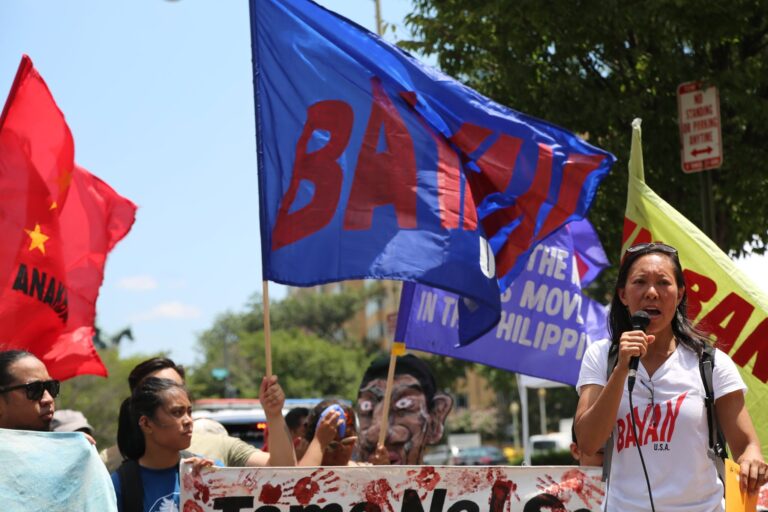
WASHINGTON, DC – Filipino-American activists and solidarity allies throughout the metropolitan area staged a protest and program in front of the Philippine Embassy on Tuesday to counter Ambassador Jose Romualdez’s reception dinner celebrating 75 years of “thriving Philippine-United States relations”. The protest was held to emphasize the unequal and exploitative relations of the U.S. and the Philippines, and to highlight the atrocities that the Philippine government has committed against its citizens. The protesters also expressed their anger over the contrast between the lavish reception hosted by the Ambassador and the ordeal of the Filipinos back home and across the diaspora suffering from hunger and COVID-19.
Calls for support of the Philippine Human Rights Act (PHRA), which was reintroduced to the House on Monday June 14 by Congresswoman Susan Wild, were made throughout the night. The PHRA is a response to the human rights violations and extrajudicial killings committed by the Duterte administration. The bill calls for the suspension of U.S. military and police aid to the Philippine government until human rights violations cease and responsible state forces are held accountable.
After the activists conducted a noise barrage to assert their presence, CJ of Anakbayan DC and Rob from Katarungan kicked off the night with a punk rendition of “Muog na Buo” [Solid Fortress] as the crowd cheered on and continued to make noise, forcing the Embassy to move their lavish dinner inside. Throughout the protest, there were various other cultural performances by Luci of the Poor People’s Campaign, and QTPOC activist-singer-songwriter Black Assets.
GABRIELA DC’s Jo and Kai Kai performed a spoken word piece remembering those targeted and murdered by the Filipino government, and to honor those who continue to fight and lead the movement towards victory, “the youngest Drug War victims, the families who lost their loved ones, urban poor women and youth [Philippine National Police] shot them dead! Let us not forget.”
Bennard from Migrante DC, an organization for Filipino migrant workers stated, “This empire may be friends with the oppressor and ruling class of the Philippines but it will never be friends with the Filipino people…It may be friends with those who exploit workers but it will never be friends with the Filipino working class.”
Sarah from Anakbayan DC, a comprehensive Filipino youth mass organization for National Democracy addressed Ambassador Romualdez directly, “We challenge you to listen to the screams and cries of the Filipino people. We call for an end to U.S. military aid, murdering our people under the fascist Duterte regime. And ultimately – we call for true democracy and liberation of the Philippines, at home and abroad.”
Catherisa from Katarungan, a grassroots solidarity organization, spoke about the indigenous population of Mindanao known as the Lumad. “Earlier this month, a group of Lumad students were coerced by the Philippine Military to demolish their own school under threat of arrest. In addition to countless fake rescue operations and terrorist accusations, it is clear that the government demonizes the Lumad to justify their actions, but we know the truth. And it is our responsibility to advocate and spread the truth in the face of government and media corruption.”
Colectivo Kawsay’s Marian emphasized the importance of international solidarity, as she spoke about Latin America-U.S. relations. “By providing military aid and supporting puppet leaders, the U.S. continues to destabilize our home countries while criminalizing us when we try to migrate here.”
A representative from Pan-African Community Action was not able to make it to the event, but shared a message of solidarity with those there that night. “Our conditions will not change unless we organize to build community lead power, to advance our human rights, to informed consent and self-determination.”
Posters 4 Government, also known as Johnny, shared a heart wrenching story of a couple who was murdered by the Philippine government for setting up mutual aid efforts in order to feed the community. “Duterte and Ambassador Romualdez are guilty in the unlawful killings of over 30,000 people…[The War on Drugs] is an absurd lie that’s being used to kill off opposition.”
Rasha from Palestinian Youth Movement, a collection of Arab youth fighting for the liberation of their land and all lands, spoke about the systems that perpetuate the need to fight. “The struggle of the Philippines is a product of centuries of colonization, feudalism, and in its current iteration imperialism. We stand unequivocally against all of these systems and demand the total dismantlement of U.S. imperialism and capitalism globally.”
Jhong, the coordinator for BAYAN USA in the DMV region, closed the night with a message addressed to the U.S, “we are not your little brown brothers, but a sovereign nation struggling to be free. By enabling, strengthening and celebrating these relations, Duterte’s brutality and betrayal of the nation worsens with each passing day.”
The powerful collective effort of progressive Filipino organizations and solidarity allies blossomed to a successful and meaningful protest, forcing Ambassador Romualdez’s reception to end early as the VIP guests filed out of the building escorted by DC Metro Police and Secret Service before the end time of the event.
The activists encouraged the crowd to attend the Peoples’ State of the Nation Address event at the end of July to oppose Duterte’s supposed last State of the Nation Address and continue to fight for National Liberation. (article contributed)
DOH: Vaccination of indigent sector allowed if supplies enough
Jun 14, 2021, Sofia Tomacruz
MANILA, Philippines
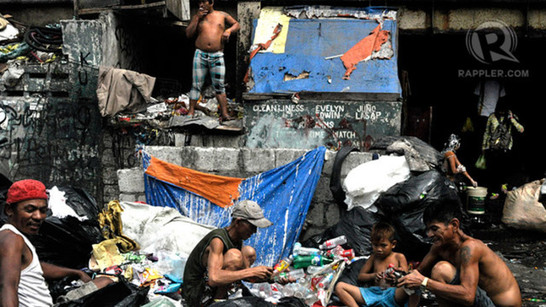
Indigent Filipinos belong to the government’s fifth COVID-19 vaccine priority group or A5
The Department of Health (DOH) said on Monday, June 14, that local government units (LGUs) can start vaccination of the indigent sector, in addition to the existing priority groups, if they have enough supply.
“This is allowed, but it will depend on the supply. So if local governments see that they can do this based on their allocations, they can do it because the guidelines are there; the pronouncement is there – they won’t be violating anything,” Health Undersecretary Maria Rosario Vergeire said in Filipino during a press briefing.
Indigent Filipinos belong to the government’s fifth COVID-19 vaccine priority group or A5, following health workers or A1, senior citizens or A2, persons with comorbidities or A3, and economic frontliners or A4.
The government has been focused on vaccinating health workers since March 1, then senior citizens and persons with comorbidities followed around a month later. Vaccination of economic frontliners started just on June 7.
Vergeire said that if LGUs already want to start vaccinating those in the indigent sector, they can use vaccines procured by the government and doses donated by the COVAX global facility.
“But then they will need to check their supplies and how we will be able to manage so that we don’t end up lacking [doses] for other sectors of the population,” she said.
Under the DOH’s guidelines, LGUs must coordinate with the Department of Social Welfare and Development (DSWD) field office in their respective localities for the list of indigent residents based on the National Household Targeting System for Poverty Reduction (NHTS-PR).
For individuals belonging to A5 but not part of the DSWD’s NHTS-PR, LGUs can undertake “other verification mechanisms” for identification.
LGUs are also in charge of registering and verifying eligible vaccine recipients part of the indigent sector, and should identify barriers that make it difficult for their constituents to gain access to vaccines, the DOH said.
While the government has rolled out vaccines since March, the vaccination program has moved slowly as deliveries remain erratic and doses are insufficient to cover the first priority groups. – Rappler.com
Drug war victims urge Bensouda: Get ICC to arrest Duterte before you go
Jun 14, 2021, Lian Buan
Manila, Philippines
The DOJ drug war review is ‘not comprehensive, nor transparent,’ says Rise Up, an organization of relatives of those killed in the bloody war on drugs
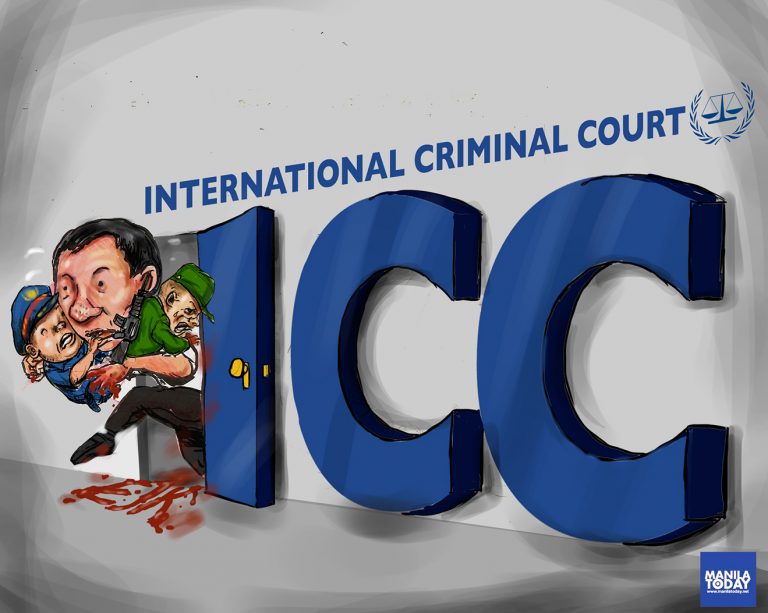
A day before International Criminal Court (ICC) Prosecutor Fatou Bensouda retires, a group of relatives of those killed in the bloody drug war made a last-minute plea that she request the judges to open an investigation and issue an arrest warrant against President Rodrigo Duterte.
In its fourth communication sent to the Office of the Prosecutor on Monday, June 14, the group Rise Up said: “[We] stress on the urgent need to open an investigation into crimes against humanity in the Philippines, and for the Court thereafter to issue a warrant of arrest against President Rodrigo Duterte and hold him while trial is ongoing.”
Bensouda will retire on Tuesday, June 15, and under the Rome Statute, she has to request authorization from the ICC’s pre-trial chamber (PTC) to open the investigation where summons and arrest orders can be issued.
Article 57 of the Rome Statute also says the PTC can issue the orders and warrants at the request of the prosecutor, which Rise Up is urging Bensouda to do before she leaves.
The ongoing process now is a preliminary examination that does not identify a respondent, whether that’s Duterte or anyone else. It is an inquiry into what is called a “situation” of the Philippines.
But last December 2020, Bensouda released a report saying the OTP has found “reasonable basis” to believe that crimes against humanity were committed in Duterte’s war on drugs.
Doubts on ICC’s effectiveness
The ICC has been criticized that its processes are ineffective, since some cases take too long, and the lack of State cooperation sometimes makes their investigations almost futile.
The ICC has been working on this, with experts noting this period is a very decisive moment for the Court to prove its relevance to global justice.
Progressive lawyer Neri Colmenares of the National Union of Peoples’ Laywers (NUPL), Rise Up’s counsel on record in the communications, acknowledged that Duterte in power can mean a total lack of cooperation from government agencies.
Colmenares said opening an investigation “shouldn’t be too hard” on Bensouda and the ICC because it’s not yet a verdict of guilt.
Colmenares is banking on hope that “there will be no President Duterte in 2022.” Duterte’s daughter, Davao City Mayor Sara Duterte-Carpio, is being pushed by many among his President’s allies to seek the presidency.
“We hope that the next president will cooperate with the ICC and make sure that the families of the victims get the justice they have long searched for. We are hopeful that the next president will make sure that Duterte is held accountable for his crimes,” said Colmenares.
Advertisement
Bensouda has promised that the next move will be announced by the end of June, but what she does or does not do, will still be carried over to the term of her successor, British counsel Karim Khan, who assumes office Wednesday, June 16.
Khan is familiar with the Philippine situation, having visited the country in 2018.
The Philipines remains a non-member of the ICC, after the Supreme Court junked petitions questioning the legality of Duterte’s unilateral withdrawal. Asked about the decision’s impact on the drug war, Supreme Court Associate Justice Marvic Leonen said the High Tribunal “tries to avoid getting into political issues such as, for example, the drug war in general.”
The DOJ drug war review
On Sunday, June 13, the Department of Foreign Affairs (DFA) uploaded a video of Justice Secretary Menardo Guevarra giving updates to the United Nations joint program on human rights. He again touted the “significant progress” of the Department of Justice (DOJ) drug war review.
Rise Up called this review in their communication to the OTP “neither comprehensive nor transparent.”
Guevarra was referring to 52 cases forwarded to the DOJ panel by the Philippine police where their internal investigators have established administrative liabilities on the part of the policemen.
Fifty-two out of 7,884 people killed in police operations as of August 2020 “is a drop in the bucket,” said Rise Up lawyer Kristina Conti.
“It comes too late, it’s Year 4 of the war on drugs. Many things have happened. The police station in Caloocan where records were have caught fire….It is not the genuine investigation envisioned by the Rome Statute,” said Conti in a virtual press conference with Rise Up mothers on Monday.
The Rome Statute says a case can be considered admissible by the ICC if there is a lack of genuine ability or willingness for the State to prosecute by itself the killings.
There have been too few cases that reached the judicial mill out of either the 7,884 killed in police operations or the estimated 27,000 total killed, including deaths by vigilantes.
The Philippine National Police’s openness to share records with the DOJ only came about with the appointment of its new chief, General Guillermo Eleazar, with Guevarra admitting the sealed records before made their review difficult.
Then the data-sharing was narrowed, from all records, to just 52 for now, because of Duterte’s concerns about putting national security at risk if other people get access to the police records.
“This lack of access to and of free flow of information is a major obstacle to any genuine investigation within the country. In the Philippines, it has been practically up to victim’s families and allies to undertake proper documentation and case-building for prosecution of perpetrators,” said the communication.
Conti, during the press conference, said: “The State is unwilling and unable to genuinely investigate these killings. It’s time for the ICC to take jurisdiction.”
Asked for his reaction, Guevarra said: “All matters pertaining to the ICC are handled solely by the DFA. We respect the opinion of people who are critical of what we are seriously trying to do.”
Llore Pasco, mother of brothers Juan Carlo and Crisanto Lozano both killed in May 2017, said there is fear of increased intimidation if the ICC takes the next step.
Pasco said over the last years, barangay officials with policemen sometimes dropped by and still asked for her sons.
“Kung natatakot, oo natatakot. Pero hindi naman puwedeng magtago sa takot,” said Pasco.
(If we’re afraid, of course we are afraid. But we cannot hide in fear.)
Pasco said she and fellow mothers of those killed in the drug war are ready to testify.
“Handa na kaming humarap, kung ano man ang mangyayari. Habang tayo’y natatakot, lalo tayong tinatakot,” said Pasco.
(We’re ready to face the ICC whatever happens. The more we are afraid, the more they will make us fearful.) – Rappler.com
Rare earth metals at the heart of China’s rivalry with US, Europe

Agence France-Presse /June 13, 2021
NEW YORK — What if China were to cut off the United States and Europe from access to rare minerals that are essential to electric vehicles, wind turbines and drones?
At a time of frequent geopolitical friction among those three powers, Washington and Brussels want to avoid this scenario by investing in the market for 17 minerals with unique properties that today are largely extracted and refined in China.
“The expected exponential growth in demand for minerals that are linked to clean energy is putting more pressure on US and Europe to take a closer look at where the vulnerabilities are and the concrete steps these governments can take,” said Jane Nakano, a senior fellow at the Washington-based Center for Strategic and International Studies.
In 2019, the United States imported 80 percent of its rare earth minerals from China, the US Geological Survey says.
The European Union gets 98 percent of its supply from China, the European Commission said last year.
Amid the transition to green energy in which rare earth minerals are sure to play a role, China’s market dominance is enough to sound an alarm in western capitals.
Cars and turbines
Rare earth minerals with names like neodymium, praseodymium and dysprosium are crucial to the manufacture of magnets used in industries of the future like wind turbines and electric cars. And they are already present in consumer goods such as smartphones, computer screens and telescopic lenses.
Others have more traditional uses, like cerium for glass polishing and lanthanum for car catalysts or optical lenses.
This week the US Senate passed a law aimed at improving American competitiveness that includes provisions to improve critical minerals supply chains, following a similar executive order issued by President Joe Biden in February.
Washington aims to boost production and processing of rare earths and lithium, another key mineral component, while “working with allies and partners to increase sustainable global supply and reduce reliance on geopolitical competitors,” Deputy Director of the National Economic Council Sameera Fazili said Tuesday.
Boosting US production
The best hope for boosting American production can be found at the Mountain Pass mine in California.
Once one of the major players in the sector, the mine suffered as China rose and ate up its market share, aided by Beijing’s heavy government subsidies.
MP Materials relaunched the mine in 2017 and aims to make it a symbol of America’s industrial rebirth, saying the concentration of rare earths at its site is one of the world’s largest and highest-grade rare earth deposits, with soil concentrations of seven percent versus 0.1 to four percent elsewhere.
The company’s aim is to separate rare earth minerals from each other via a chemical process, and then by 2025 manufacture the magnets that industry uses — as market-leading Chinese firms currently do.
The project was supported by the US government, while a Chinese firm is a minority shareholder.
Elsewhere, Australian company Lynas has won several contracts in the United States, including an ore refinery in Texas for the military that was supported by the Defense Department.
Complications for Europe
In Europe, Bernd Schafer, CEO and Managing Director of rare earth mineral consortium Eit Raw Materials, said this month that an “action plan” will soon be presented to the European Commission on how to boost production.
Europe, however, faces a more complicated path to achieving this goal, said David Merriman, a specialist in batteries and electric cars for London-based consultancy Roskill.
“Europe is expected to rely on importing raw materials or semi-processed materials and become more a processing base or recycling base,” he said.
China is expected to remain dominant for some time to come, but Schafer said that if recycling is scaled up, “20 to 30 percent of Europe’s rare earth magnet needs by 2030 could be sourced domestically in the EU from literally zero today.”
The desire to accelerate rare earth production comes amid a shortage of semiconductors, which are essential for the computing and automotive industries and mostly manufactured in Asia.
The scarcity “has caused global manufacturers to think about their supply chain in a new way, and think about vulnerabilities,” a spokesman for MP Materials said, adding that several European automotive and wind power firms are already in contact with the company.
A republic, never a monarchy
Opinion, Philippine Daily Inquirer / June 12, 2021
A secret society plotting to mount a revolution against the Spanish colonizers, the Katipunan was discovered by Spanish authorities when in 1896 the sister of Teodoro Patiño, a member of the KKK, found out about the plot and told the Mother Superior of the orphanage where she lived. The nun in turn informed the parish priest of Tondo about the organization, prompting him to rush to the colonial authorities, thus setting off a manhunt for those involved in the plot or even just suspected of supporting the Katipunan. With their backs against the wall, Katipunan leaders, led by Andres Bonifacio, Teodoro Plata, Ladislao Diwa, and others, declared the onset of the Philippine Revolution against Spain.
Among those arrested in the sweeping operations against the Katipunan were 13 prominent citizens of Cavite who were executed by firing squad two weeks after the outbreak of the revolution. The “Trece Martires” or Thirteen Martyrs consisted of businessmen, entrepreneurs, military leaders, a physician and a pharmacist, an educator, a public servant, and even a tailor. All over the islands, scores of other citizens fell under the military might of the Spanish crown, even as poorly armed Katipunan forces began their fight for freedom.
The culmination of the Katipunan uprising was the declaration of independence from Spain on this day 123 years ago. Of course, that independence was short-lived, since even then the United States had already “purchased” the Philippines from Spain and was determined to impose colonial governance on the islands, setting off the bloody Philippine-American War that resulted in the re-colonization of the islands until the end of American rule in 1946.
Today, Filipinos are at least nominally independent, or living in an independent republic. And yet, well over a century since that foundational struggle for freedom, Filipinos find themselves grappling with unexpected, if not unprecedented, challenges not just to their quality of life and individual liberties, but also to their sovereignty and territorial integrity. A supposedly “friendly country” flexes its military might to trespass our borders and occupy our islands, exploiting our natural resources and even endangering our food security. But what do our political leaders do? Not only do they hesitate to assert our sovereignty, they also discard hard-won victories in international venues that have recognized our authority over waters and islands within our borders.
Meanwhile, at home, age-old problems continue to plague our people. Majority of Filipinos are brutalized by social inequity, and seemingly never-ending poverty, while rapacious ruling classes and political dynasties exploit the weaknesses in the country’s democratic structures to perpetuate themselves in power.
The everyday indignities and injustices of a fragile, fraying republic have now all been exacerbated by a sweeping public health calamity, where the incompetence of government functionaries and leaders has resulted in growing numbers of the sick and dying and continued vaccine skepticism, while delaying, interminably it seems, economic recovery and a return to some semblance of normalcy and stability. Why have our neighbors managed the pandemic crisis so much better, at much higher levels of efficiency and much lower levels of state repression?
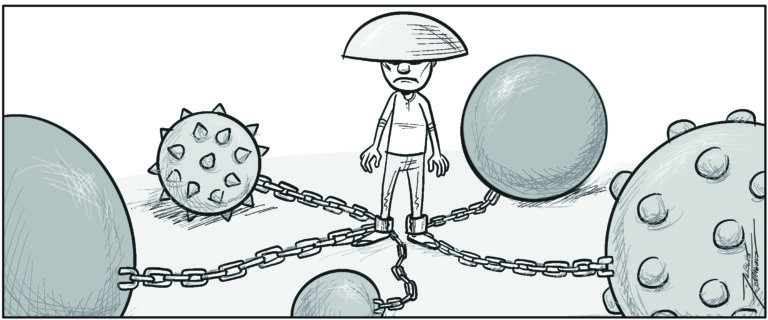
We have long taken pride in our claim of being the first independent republic in Asia. But this boast is empty of any real achievement in terms of bettering the lives of most Filipinos today, who remain hampered by hunger, by lack of opportunity, by an uncertain future.
In June 1898, after the Philippines had wrested its freedom from Spain, Apolinario Mabini issued “The True Decalogue,” where, as sociologist and Inquirer columnist Randy David put it, “he instructed Filipinos on the meaning and responsibilities of citizenship in a modern state.” The “brains of the revolution,” said David, hoped to see his countrymen “confidently assert themselves as free citizens of a republic, rather than live as docile subjects of a monarchy or of a few homegrown political dynasties.”
“Strive for the independence of your country, because you alone can have a real interest in her aggrandizement and ennoblement…,” Mabini wrote. And “Strive that your country be constituted as a republic, and never as a monarchy: a monarchy empowers one or several families and lays the foundation for a dynasty; a republic ennobles and dignifies a country based on reason, it is great because of its freedom, and is made prosperous and brilliant by dint of work.”
All that sacrifice and effort for a truly liberated nation and an enlightened, empowered race: Would Mabini and our other heroes and martyrs be able to say, looking at the current state of the country they had birthed, that it’s all been worth it?
Choices For Unified Opposition Slate Bared; Isko, Nancy Decline 1Sambayan Invite

Janvic Mateo, Katrina Hallare, Saturday, June 12, 2021, OneNews.ph
Political coalition 1Sambayan on Saturday, June 12, revealed the list of nominees that it will consider as possible candidates for president and vice president under a unified opposition slate next year.
The nominees, whom the group said have agreed to undergo their selection process, include Vice President Leni Robredo, Sen. Grace Poe, former senator Antonio Trillanes IV, CIBAC Party-List Rep. Eddie Villanueva, Batangas Rep. Vilma Santos-Recto and human rights lawyer Jose Manuel “Chel” Diokno.
Video messages from Robredo, Trillanes and Villanueva were played during the event, while Poe and Santos-Recto issued separate statements saying they have no plans for 2022.
Diokno, meanwhile, said he is very honored by the nomination even though he never aspired for those positions.
1Sambayan convenor and former Supreme Court senior associate justice Antonio Carpio said all six candidates have agreed to support their final decision on who will run under a unified opposition slate.
“Our purpose is to unite all the democratic forces, to come up with one slate. The first thing that we ask any candidate who wants to be considered is ‘will you abide the decision of the 1Sambayan?’” he said during the virtual event where the names of the nominees were released.
“If you are not chosen, you have to support the candidate that we choose. All of them so far have agreed to abide by the decision of 1Sambayan, by the convenors,” he added.
The coalition has yet to release the names of those being considered for the Senate slate.
Robredo is the chairperson of the once-ruling Liberal Party, while Poe is an independent who lost to President Duterte in the 2016 presidential elections. She was re-elected to a second term as senator in 2019.
Like Poe, Villanueva also has an experience running for president – in 2004 and 2010, which were won by former presidents Gloria Macapagal-Arroyo and Benigno Aquino III, respectively.
Trillanes, who was Poe’s running mate in 2016, is a member of Magdalo Party-List, which is part of the 1Sambayan coalition.
Santo-Recto, former mayor of Lipa and governor of Batangas before joining Congress in 2016, was previously part of LP. She and her husband Sen. Ralph Recto joined Nacionalista Party in 2018.
Meanwhile, Diokno – chair of Free Legal Assistance Group and former dean of the De La Salle College of Law – ran an unsuccessful campaign for Senate in 2019. He was part of the opposition slate known as Otso Diretso.
No Isko, Nancy?
Manila Mayor Francisco “Isko Moreno” Domagoso and Sen. Nancy Binay have declined to be included in the list of potential opposition candidates, according to Carpio.
He said Domagoso, who was initially interested in the process, asked them to remove his name from the list of those being considered as opposition candidates.
“We have talked to him and he said he was interested. But the other day, he wrote us saying that he wanted his name taken out of the list of nominees,” said the former magistrate. “We respect that so we have removed his name for possible candidate for president or vice president.”
The Manila mayor, who is being pushed by some groups to run for higher office, has yet to announce his plans. His reason for asking his name to be removed from the 1Sambayan list has yet to be disclosed.
Read More: Isko Moreno: The Right Time Will Come To Talk About Politics
Meanwhile, Carpio said Binay – whom they thought was a possible candidate for vice president – informed them that she is not interested in running for the presidency or vice presidency.
Like Poe, Binay was re-elected to a second term as senator in 2019 and will serve until 2025.
Sen. Panfilo Lacson, who is also considering another presidential run, earlier declined to join the selection process of 1Sambayan for a unified opposition slate.
Asked why their group invited Lacson given that he is a proponent of the anti-terrorism law, Carpio said there is aa referee on the matter, referring to the pending petitions against the law before the High Court.
“We may have differences with Sen. Ping Lacson on the anti-terror law but that will not define our relationship because that issue will be decided by the Supreme Court,” he said.
“If the Supreme Court says that the anti-terror law is constitutional, we abide by that. If the Supreme Court says the anti-terror law is unconstitutional, we expect Sen Lacson to abide by that,” he added.
Selection process
1Sambayan, which includes members from across the political spectrum, has yet to release the timeline for the selection process, which will include a online voting and interviews with the choices.
But former foreign affairs secretary Albert del Rosario said winnability is not the only factor that they will take into account in selecting the final slate.
“Character, capability and track record will also be considered,” he said. “Consultations with different sectors are ongoing. We have heard from the youth, women, farmers, OFWs (overseas Filipino workers), the health experts and many others. They are eager to participate in this drive for national recovery.”
After the selection process, which is expected to end before the filing of certificates of candidacy in October, Carpio said their group will take part in the campaign.
“Of course the candidates belong to their own political parties, they will have their own political machineries. But we will put up our political machinery for 1Sambayan to campaign for the entire election slate of the 1Sambayan, from president to the Senate,” he said.
“We will have our own political machinery, separate from the political machineries of the parties that compose the 1Sambayan,” he added.
While 1Sambayan has its own stance on various issues, Carpio said they jointly formulate a final platform with the selected standard bearers to take into account their positions.
“It will be give and take, we’ll have to come out with a common platform after we have chosen them,” he said.
Read More: Selection Of Unified Opposition Bets For 2022 To Begin June 12
‘Filipinos deserve better’
Led by former government officials and representatives from so-called “pro-democracy” groups, 1Sambayan seeks to field a unified slate against the administration candidate in next year’s polls.
The coalition noted how Duterte won the plurality of votes in 2016 because of the different candidates that broken up the votes.
“The understanding of everybody is that unless we are united, we cannot win in 2022. The unifying force is that we have the majority, but the majority will become a minority if they are divided,” Carpio said during the group’s launch in March.
He stressed that Filipinos deserve to have a better government, describing the present Duterte administration as incompetent.
“Our economic development has been set back not only because of the pandemic but also because of the mishandling by the present administration of the response to the pandemic,” he said.
“Instead of focusing on effective measures to contain the pandemic and on jumpstarting economic recovery, the present administration has wasted precious time and resources on charter change, shutting down mass media, threatening businesses with cancellation of franchises, threatening the academic freedom of universities and terrorizing legitimate dissenters with surveillance and arrests,” he added.
Aside from Carpio and Del Rosario, other convenors include former SC justice and ombudsman Conchita Carpio-Morales, former party-list congressmen Neri Colmenares and Renato Magtubo, former Commission on Audit commissioner Heidi Mendoza, former Negros Occidental governor Rafael Coscolluella, retired admiral Rommel Ong, anti-corruption advocate Fr. Albert Alejo and Rickie Xavier.
Reds say Masbate incident will be investigated internally

June 11, 2020, Kodao.org
The National Democratic Front of the Philippines (NDFP) rejected calls by Government of the Republic of the Philippines (GRP) agencies to surrender New People’s Army (NPA) fighters suspected to be behind the deaths of two civilians in Masbate City last Sunday.
In a statement, the NDFP said it asserts its duty to investigate the incident under its Comprehensive Agreement on Respect for Human Rights and International Humanitarian Law (CARHRIHL) with the GRP.
“Under the CARHRIHL, in conformity with their respective separate duties and responsibilities, the NDFP has sole jurisdiction over complaints against units and personnel of the (NPA), in the same way that the GRP has the sole jurisdiction over complaints against its own armed units and personnel,” it said.
NDFP’s assertion came after police and military officers dared the NPA to turn those suspected to have perpetrated the killings over to the GRP.
The Commission on Human Rights made the same demand, saying the NPA “should identify all those responsible and surrender them to the lawful authorities to face justice within the court system.”
The NDFP however pointed out that the CARHRIHL established the Joint Monitoring Committee (JMC) as the principal mechanism to monitor the implementation of the CARHRIHL, under which the deaths of footballer Keith and his cousin Nolven in a bomb blast should be investigated.
At present, the NDFP-nominated section is open and functioning but the GRP-nominated section had been inactive even as both the GRP and the NDFP have agreed in 2016 to reconvene the JMC to start investigating the thousands of complaints of violations filed since opening in 2004.
“The NDFP welcomes the urgings of all concerned for the necessary investigation and wishes to have the full chance to do the investigation and make the report to the GRP-NDFP (JMC) if and when convened to deal with the case,” it said.
Their own legal system
The NDFP however said the investigation of the Masbate incident should be within the NPA command structure and frameworks of the Communist Party of the Philippines (CPP), NDFP and the People’s Democratic Government (PDG) the Communists claim to have established in areas under their control.
“The NDFP will make sure that certain questions are answered by a thoroughgoing investigation,” it said.
The group said it will seek answer to questions, such as:
1) If true, which NPA unit and personnel are involved?
2) Is there no case of the enemy committing the crime and falsely ascribing it to the NPA?, and
3) Is there no local feud involved?
“There should be no rush to judgment, presumption or insinuation to the effect that the entire revolutionary movement and entire revolutionary forces are guilty of a criminal offense, negligence or error for which certain individuals may be liable on the basis of a full and complete investigation,” it said.
Under its responsibility and direction and within PDG’s legal system, the NDFP said the investigation must be started and completed within the NPA command structure.
“[This is] to fully and completely establish the facts and prepare any appropriate charges before any procedure to prosecute and try the case before the military court of the NPA or people’s court,” it explained. # (Raymund B. Villanueva)