By Pia Regalado for Reportr, Esquire Philippines Online
From your neighborhood Starbucks to the Senate session hall, Tuesday’s rotating brownouts in Luzon spared no one and the operator of the power grid, NGCP, has been serving advance warnings in the last few days.
For June 1 alone, the National Grid Corporation of the Philippines placed the Luzon grid under red alert for 11 hours, from 10:01 a.m. to 5 p.m. and 6:01 p.m. to 10 p.m. This could persist for six days, the NGCP said.
There will be discomfort from the heat and inconveniences (or relief) from disrupted MS Teams or Zoom calls because of the brownouts. On a more serious note, this could disrupt cold storage for COVID vaccines that require electricity, said Sen. Sherwin Gatchalian, the Senate energy committee chairman.
Gatchalian demanded an explanation from the Department of Energy for the brownouts.
Why are these brownouts happening?
Simply put, brownouts happen when the power supply is not enough to meet the demand.
The DOE said that the high heat index pushed the demand for power. Unscheduled outages at Luzon power plants contribute to the dwindling supply. Ageing power plants, which malfunction frequently, are also to blame.
When this happens, privately-owned NGCP, which links power generators to distribution utilities, announces alert notices:
White alert means there is sufficient supply
Yellow alert means power reserves are low
Red alert means power is insufficient, resulting in rotational brownouts or manual load dropping
What is being done to avoid power shortages?
There are short-term solutions. Those at home are requested to be more energy efficient, by unplugging appliances when not in use, clean fans and air conditioners frequently to ensure unimpeded airflow, use compact fluorescent lamps or LED bulbs, and defrost the refrigerator when the ice in the freezer reaches 1/4 inches thick.
The Department of Energy also has an interruptible load program (ILP), which is implemented by Meralco, where big businesses with generator sets will be alerted to switch on their gensets when NGCP fires off red alert notices. This gives room for more energy supply for residential areas customers, lessening the likelihood of rotational brownouts.
There are also long-term solutions.
The Luzon grid, which generates the most power compared to the Visayas or Mindanao grid, experiences a deficit when the demand exceeds the supply. According to officials, at least 400 MW is needed as reserve to prevent rotational outages.
How to build reserves? More power needs to be produced. There are power supply agreements (PSAs) pending with the Energy Regulatory Commission (ERC), Meralco said. If approved, this means more power plants built and an increase in energy generation.
Currently, the Luzon and Visayas grids are interconnected. In 2018, the Mindanao-Visayas Interconnection Project (MVIP) was launched to connect the three power grids into one unified grid, the NGCP said. Once complete, it could help deliver excess capacity from the Mindanao grid to Luzon grid.
It was supposed to be completed by December 2020, but COVID-19 travel restrictions and damaged fiber optic submarine cables hamper its completion.
This story originally appeared on Reportr.world. Minor edits have been made by Esquiremag.ph editors.
Vice President Leni Robredo’s recent remark that she is still open to run as president next year is a “welcome development,” opposition coalition 1Sambayan said on Sunday, June 6.
As this developed, 1Sambayan convenor and lawyer Howard Calleja said during an interview on DZMM TeleRadyo that the coalition’s process for choosing its nominee will still be “transparent.”
“Masayang development ito. Always welcome naman ang pagsabi ni Vice President Leni na bukas ang option niya at gusto niya isa at unified ang opposition (This is a good development. We always welcome Vice President Leni’s remark that she’s open to running and that she wants a unified opposition).”
1Sambayan had said it is highly considering the nomination of Robredo as the opposition’s standard-bearer. Aside from the vice president, Senator Grace Poe, former Senator Antonio Trillanes IV, and Manila Mayor Isko Moreno are also being considered.
Calleja maintained that the coalition is “inclusive,” so it is open to talk with Senators Manny Pacquiao, Panfilo Lacson, and Senate President Vicente Sotto III.
“As we start with being inclusive, very important is to unify the country again, to have the Filipino people together…hindi lang sa eleksyon (not only in the election) but more importantly into progress and development for everyone,” he said.
“Open din naman kami (We’re open). Sabi ko nga (As I said), as long as they fall within initial vetting…then we leave it to the people and to the entire country including whatever characteristics or data sets we need,” Calleja added.
After former Camarines Sur 1st District Representative Rolando Andaya Jr. claimed that Robredo is set to run as governor of their home province, the vice president posted a short statement on her Facebook page saying that she remains open to run as president.
However, she also did not rule out the possibility of running for a gubernatorial post in Camarines Sur.
Her spokesman Barry Gutierrez said in a recent interview on One News, that although Robredo respects the process of 1Sambayan, she also has her own process to go through.
“Respecting the process simply means that she understands the need for the opposition to unite around a common candidate. She thinks that the 1Sambayan process is a good venue for actually attempting to reach this particular unity,” he explained.
On Sunday, Robredo said over radio station dzXL that she wants to contribute to making sure there is a united opposition to go against the administration’s bets next year.
Calleja said 1Sambayan is awaiting the decision of two more possible candidates for the presidency and vice presidency, adding that they will not prioritize anyone.
“Wala pong right of first refusal or equity of the incumbent (There’s no right of first refusal or equity of the incumbent),” he added.
Reportr. World, Esquire Philippines, May 31, 2021,
The Pro-Trump protester was swept to jail.
The pro-Trump protester who wielded a walis tambo (broom) during the U.S. Capitol siege on Jan. 6 has been arrested, the U.S. Department of Justice said.
Federal agents in Norfolk, Virginia sent Kene Brian Lazo to jail on Friday, May 28, four months after being listed as a “person of interest” by Washington DC police. Authorities did not mention his nationality.
He joined hordes of then President Donald Trump’s supporters who stormed the U.S. Capitol after the losing presidential candidate claimed he was cheated in the November 2020 elections and mounted a rally to overturn the vote. On that day, lawmakers were scheduled to make Joe Biden’s victory official, making Trump a one-term president, which is rare for America.
He faces charges for:
Knowingly Entering or Remaining in a Restricted Building or Grounds Without Lawful Authority
Disorderly and Disruptive Conduct in a Restricted Buildnig or Grounds Without Lawful Authority
Disorderly Conduct on Capitol Grounds or in a Capitol Building
Parading, Demonstrating or Picketing in a Capitol Building
Lazo, who was dressed to stand out wielding a walis tambo, a makeshift Captain America shield, and the U.S. flag as his cape, was captured by authorities with the help of social media. A U.S. District Court document explained how a federal agent found his online posts, including photos of his costume posted a day before the riot, which confirmed his identity.
By Arianne Merez For Reportr, Esquire Philippines, May 28, 2021
In the continuously evolving COVID-19 pandemic fight (and dictionary), authorities have introduced a new term to Filipinos: population protection.
Forget herd immunity as the yearend goal. The government is now eyeing population protection against COVID-19 before the end of the year as more vaccines are expected to become available to Filipinos.
The shift in terminologies is due to the changing criteria that come with “herd immunity,” said COVID-19 vaccine operations center chair Health Usec. Myrna Cabotaje, and Dr. Ted Herbosa, who advises the country’s pandemic task force.
“Very important na yung goal natin maintindihan talaga kasi bagong sakit itong COVID-19. Hindi pa natin alam how it will behave,” Herbosa said in a Palace press briefing Thursday.
What is population protection?
Population protection means preventing and minimizing deaths by vaccinating the most vulnerable to COVID-19 first.
“Ang ating term ngayon ay really ‘population protection’ We prevent hospitalization. We prevent and minimize deaths by prioritizing,” Cabotaje said.
“The bigger the population that is vaccinated, we have population protection so hindi magkakahawaan. Kung may magkahawaan man, this will be very mild. And hindi naman transmissible usually kapag nabakunahan ka na, hindi ka na makaka-transmit o kung maka-transmit ka man ng infection ay very mild ang symptoms,” she said.
To achieve this, Dr. Herbosa explained that the following priority groups should receive COVID-19 vaccines by the target November 2021:
A1 Priority: Health Workers
A2 Priority: Senior Citizens
A3 Priority: Persons with Comorbidities
A4 Priority: Economic Frontliners
A5 Priority: Poor and Marginalized
“Ang population protection, ibig sabihin nun ‘yung high risk groups napigilan natin mamatay o magkaroon ng severe illness na napakamahal ang ginastos sa ospital,” Herbosa said.
How is population protection different from herd immunity?
Population protection is an initial target on the way towards herd immunity.
As explained by Usec. Cabotaje, population protection is concentrating mass vaccination efforts in limited geographic areas.
In the case of the Philippines, these are urban hubs reporting high COVID-19 cases or the so-called NCR Plus 8—Metro Manila, Bulacan, Pampanga, Laguna, Batangas, Cavite, Rizal, Cebu, and Davao.
But for herd immunity, Cabotaje said there needs to be continuous “full protection.” This means taking into consideration variants of the virus, the need for booster shots after the vaccine and the population needed to be vaccinated to achieve it.
“We are shifting to the term ‘population protection’ through mass immunization kasi po iyong ating herd immunity, marami pong mga kaakibat na mga criteria,” she said.
“We are considering the variant. We are considering the regular definition of the herd immunity na magkakaroon ka ng protection, ng full protection na tuluy-tuloy. Kasi ngayon, hindi pa natin alam kung kailangan ng mga booster shots at tsaka iyong mga ibang bakuna ay naa-address pa iyong ating mga variants,” she said.
Herd immunity is defined by the World Health Organization as “the indirect protection from an infectious disease that happens when a population is immune either through vaccination or immunity developed through previous infection.”
Government Target
Initially, the government eyed vaccinating at least 70 million Filipinos by the end of the year to achieve herd immunity. It later however lowered its target to around 50 million people across the country, citing the limited global supply of vaccines.
Most recently, authorities are now eyeing “population protection” with a focus on the so-called NCR Plus 8 by the end of the year.
The Philippines, as of May 25, has fully inoculated 1,029,061 Filipinos against COVID-19. This means they have received two doses of the vaccine.
At present, the country’s COVID-19 vaccination program covers health workers, senior citizens, and persons with comorbidities. Economic frontliners are eyed to be included by June.
Fifty years ago, six students from Mindanao State University successfully hijacked a plane and brought it to China.
By Justin Umali | May 11, 2021, Esquire Philippines online
These days, it would be hard to believe that Fructuoso Chua, Jr. ever led an exciting life. A first glance shows nothing more than an old man living a quiet life with his dogs. But first glances are always treacherous, and behind Chua’s calloused hands are memories of a journey that sought to reveal revolutionary truths.
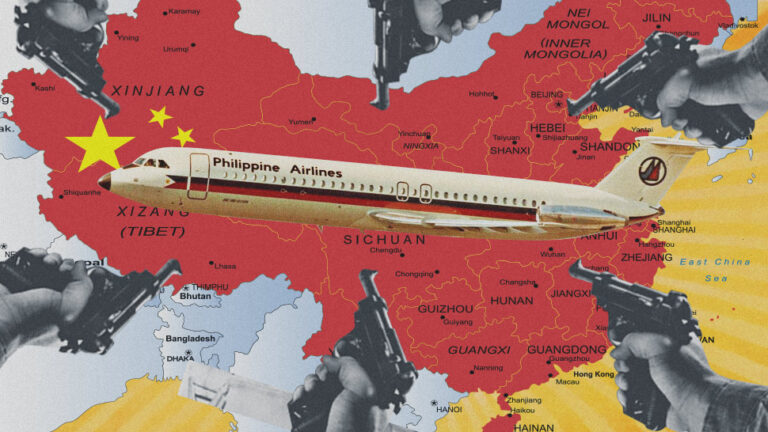
Fifty years ago, on March 30, 1971, six students from Mindanao State University successfully hijacked a plane and brought it to Maoist China—the first time such an event happened in the world. They stayed for a few years and experienced first-hand life under the Great Proletarian Cultural Revolution. Then they went home and were arrested.
Chua was one of the hijackers.
Seeking Revolutionary Truths
In Chua’s words, what led him to perform such an undertaking was his “search for revolutionary truths.” The year 1971 was a volatile time for the world, and the 28-year-old MSU student felt it in his bones. Three years before, Jose Maria Sison and 12 others reestablished the Communist Party of the Philippines under Maoist lines. The year after saw the establishment of the New People’s Army. The year after that saw the greatest wave of demonstrations that shook the nation at its core—the First Quarter Storm.
From the streets of Manila and the factories of Laguna to the haciendas of Negros and all the way to Marawi, students, farmers, workers, and everybody in between felt the call of national democracy. They raised their placards and unfurled their banners: “Down with imperialism, feudalism, and bureaucrat capitalism!”
The same waves existed in other countries. In Vietnam, the North Vietnamese were well on their way to revolutionary victory against decades of colonialism. In India, Charu Majumdar and the Naxalites were rapidly gaining strength in Calcutta and elsewhere. Not even the imperialist heartland was safe: In the United States, the Black Panther Party declared that “white capitalism” can only be stopped with “socialism.”
All these tremors pointed to one epicenter: China and Mao Zedong Thought. Socialist victory in 1949 and the subsequent Great Proletarian Cultural Revolution of the ’60s ignited thousands of fires all over the world. They were like candles dancing in the night.
All of these left Chua curious. He was determined to find out what Maoism was, what socialism meant, and what made it so alluring. He had been curious since high school, when he spent his idle time reading up on socialism in China and the USSR.
In college, Chua took up Political Science and found five people just as curious as he was: Glen Rosauro, Edgardo Tigulo, Domingo Baskiñas, Edgardo Mausisa, and Daniel Lobitaña. For them, reading theory just wasn’t enough. So they formulated a plan.
They would just have to go to China and see for themselves.
Hijacking PAL Flight BAC-111
To be clear, going to Maoist China was not an impossible task. Foreigners were allowed to visit, and they often did. Students, intellectuals, journalists, and people from all walks of life would organize trips to China, see the Chinese countryside, and learn from proletarian experience.
It was Cold War politics that complicated matters. The Philippines, then a “staunch” U.S. ally, had no diplomatic ties to China. The United Nations at the time considered the Republic of China (Taiwan) to be the legitimate Chinese state and refused to recognize the People’s Republic of China.
Nevertheless, the six students from MSU came up with a plan to visit the center of Mao Zedong Thought. Their first plan was to rent a yacht and sail it straight to China. But they thought better.
The six conducted weekly film showings to raise funds. Eventually, they had enough money to go to Manila and buy six plane tickets to Davao. They had exactly enough for the plane tickets, and little else. But they would have to hold their hunger for now; there was a whole world to win. The only thing between them now was a Philippine Airlines BAC-111 flight from Manila to Davao.
The plan was simple enough: Five minutes after takeoff, two hijackers would go to the cockpit and hold the pilots at gunpoint. They would then demand to reroute the plane to Peking, China.
Five minutes passed by and the first step of the plan was underway. Two hijackers stood up and began to make their way to the cockpit when they were approached by two flight attendants getting ready to distribute snacks to passengers. Thinking quickly, they pretended to be looking for the lavatory so as to allay suspicion. The plan, simple as it was, was already unraveling at the seams.
The minutes were tense. Fifteen minutes passed by and the passengers were busy eating their snacks. Unnoticed, the two men stood up and slipped into the cockpit.
A commercial flight from Manila to Davao today takes roughly an hour and a half from takeoff to landing. By 20 minutes, the plane would be thousands of kilometers in the sky, above the thousand islands of the Philippine archipelago, which seem like dots from that altitude.
At that height, the world seemed so insignificant. Ferdinand Marcos was plotting martial law. His armies were in the countryside chasing communists, who seemed to gather strength with each state-sanctioned atrocity. Manila was full of activists searching for meaning in an increasingly cruel world.
None of these thoughts raced through Chua’s head in those crucial moments. He was afraid. This was his first flight. It hardly dawned on him that riding an airplane was much like riding a bus. Hijacking one should be like hijacking a bus; though that wasn’t something he had tried either.
Chua felt the plane turn around. A flight attendant named Elizabeth approached him and told him that somebody in the cockpit wanted to see him. This was the signal. Chua and the remaining three companions stood up and drew their pistols, before urging the 44 passengers and five crew members to remain calm. He entered the cockpit to negotiate with the pilot, Captain Misa. At this point, the plan seemed to go smoothly.
But not quite. Misa informed the young hijacker that there wasn’t enough fuel to reach China, and requested to refuel in Hong Kong. Secretly, Chua feared that they would crash somewhere in the sea, out of fuel and out of hope. Chua agreed to the request.
Chua feared another thing: That they would be assaulted on reaching Hong Kong. A negotiation assured them that only a fuel truck and one crew member would approach the aircraft. In exchange, 19 passengers would be allowed to go free. The refueling took two and a half hours, but it was successful.
The six hijackers then asked for charts going to Peking. The Hong Kong authorities informed them that flights only went as far as Guangdong, which had an international airport. They agreed and changed their course to Guangdong. The flight took 40 more minutes before they landed in the Guangzhou Baiyun International Airport. It was 12 midnight.
Living in Socialist China for Six Years
The Chinese government welcomed the hijackers with an indefinite stay. The BAC-111 they hijacked was returned to Hong Kong the next day with the rest of the passengers and crew. Chinese officials welcomed the six hijackers and gave them food, which they finished as if they were starving.
The hijacking was a success; they had made history. It was a unique kind of hijacking. In 1968, Leila Khaled hijacked a flight from Rome to Tel Aviv on behalf of the Popular Front for the Liberation of Palestine. Others like D. B. Cooper used hijackings as tools for their heists. But Chua and the others’ goals were loftier: They wanted to see the truth.
For the next six years, they experienced that truth. In their first year and six months, they worked in a state farm in Hunan harvesting peaches. In the afternoons they would study Chinese. Outside of work, they would integrate themselves with the masses, learn from them, and learn with them. After that, they were asked to choose a field they wanted to excel in. Chua decided to work in an electronics factory. His fellow hijackers chose other fields like medicine, language, or engineering.
Work in a socialist country was nothing like employment under capitalism. There are no managers and no bosses. There is no capitalist who owns the factory. In China, workers had a say in all aspects of production, since they owned the factories.
In 1960, workers from the Anshan Iron and Steel Company created the Angang Constitution, which summarized their own experiences in running the factory and defined management practice. By 1971, most industrial factories in China followed the same model.
Agriculture was the same. Most farms were owned collectively by the communities or the Chinese state. China’s peasantry was in the process of modernizing and moving away from centuries of feudal landlord-peasant relations.
For the six hijackers, they managed to experience all of it; at least, for a short time.
Facing the Consequences in Manila
Things had changed by 1977. Mao Zedong had died the previous year. The zeal that carried the Cultural Revolution had long since waned, and bourgeois reformers like Deng Xiaoping were getting ready to make their return.
Something else stirred within the hijackers: the desire to go home. It turned out that leaving was harder than it seemed: As illegal immigrants, they couldn’t just return to the Philippines. The Chinese government took them as far as Macau, where they asked for assistance from a local church. The church helped them return to Manila, where they were promptly arrested.
Chua, Rosauro, and the others spent four years in Bicutan on charges of robbery. The Anti-Hijacking Law was only created on June 19, 1971, months after their successful heist, and so was not available to be used against them. But a charge must be filed for a supposed crime, and their supposed crime was stealing an airplane.
For the six hijackers, this is where the story ends. They were released after four years. Details about their lives were scarce after that. Today, Chua spends his days tending to his farm some kilometers away from the noise of city life. Rosauro had since passed on. Tigulo met Lilibeth Demetrio in 1985 in Cagayan de Oro and was married soon after.
The world has since turned enough times that the 1971 hijacking and the six years that followed seemed like just another episode. Today, we hardly hear much about who they are and what they did and much less what they saw. Mao’s China has long since disappeared into the night. The Red Sun has set and an imperialist one has risen under the guise of “socialism with Chinese characteristics.”
But some things live on. For Chua, memories live on. For the rest of the world, the old tremors of 1971 can still be felt, if you put your ears close enough to the ground.
Source: Obinque, Riel Benedict. (2016). Seeking the ‘Revolutionary Truth’: Recalling the 1971 Philippine hijacking incident. Retrieved from https://bit.ly/3uKLMq6.
Plant outages amid high temperatures prompted the National Grid Corporation of the Philippines (NGCP) to place the Luzon grid under red alert on Monday, May 31 – the first time it has done so since June 2019.
A red alert means there is insufficient power supply in the grid.
The Department of Energy (DOE) said the red alert would be in effect from 1 pm to 3 pm on Monday. As of 4 pm, the NGCP had yet to announce whether the red alert had been lifted or extended.
This was the initial list of areas told to expect rotational blackouts:
Parts of Isabela
Entire province of Quirino
Olongapo City
Parts of Quezon
Parts of Camarines Sur
Parts of Meralco-serviced areas
The NGCP later said the following areas would also be hit by rotational blackouts from 2 pm to 3 pm:
Ilocos Norte
La Union
Zambales
Quezon
Camarines Norte
Albay
Metro Manila
Energy Undersecretary Felix Fuentebella said the blackouts would last under one hour.
The NGCP projected that demand would peak at 11,514 megawatts, while supply is at 11,729 MW. That would leave only a 215-MW reserve.
According to officials, there should be a 400-MW reserve to prevent rotational blackouts.
Plant outages
On Monday, planned outages led to 435 MW in lost capacity. For 2021 so far, total outages, including unplanned plant shutdowns, have reached 1,285 MW.
Energy Assistant Secretary Redentor Delola said there is a possibility that yellow and red alerts would “last for the next couple of days” because of the lost capacity.
Plant outages amid high temperatures prompted the National Grid Corporation of the Philippines (NGCP) to place the Luzon grid under red alert on Monday, May 31 – the first time it has done so since June 2019.
A red alert means there is insufficient power supply in the grid.
The Department of Energy (DOE) said the red alert would be in effect from 1 pm to 3 pm on Monday. As of 4 pm, the NGCP had yet to announce whether the red alert had been lifted or extended.
This was the initial list of areas told to expect rotational blackouts:
Parts of Isabela
Entire province of Quirino
Olongapo City
Parts of Quezon
Parts of Camarines Sur
Parts of Meralco-serviced areas
The NGCP later said the following areas would also be hit by rotational blackouts from 2 pm to 3 pm:
Ilocos Norte
La Union
Zambales
Quezon
Camarines Norte
Albay
Metro Manila
Energy Undersecretary Felix Fuentebella said the blackouts would last under one hour.
The NGCP projected that demand would peak at 11,514 megawatts, while supply is at 11,729 MW. That would leave only a 215-MW reserve.
According to officials, there should be a 400-MW reserve to prevent rotational blackouts.
Plant outages
On Monday, planned outages led to 435 MW in lost capacity. For 2021 so far, total outages, including unplanned plant shutdowns, have reached 1,285 MW.
Energy Assistant Secretary Redentor Delola said there is a possibility that yellow and red alerts would “last for the next couple of days” because of the lost capacity.
“We are able to maintain a reserve level of 1,000 MW to 1,200 MW. Now that we no longer have Ilijan (natural gas plant), we are left with 400 to 600 MW. But with the additional planned outage of San Roque (hydroelectric plant), that brought us to the red alert level,” Delola said.
Fuentebella reiterated the department’s stance that sufficient reserves are needed and warned that penalties could be imposed on generation companies.
“We were highlighting this need since two years ago. Sadly, we don’t want to impose any penalties, but we really have to make those accountable responsible for the situation,” Fuentebella said.
The DOE said the GNPower Mariveles and Sem-Calaca coal plants have been offline since February 2021 and December 2020, respectively.
The NGCP also raised a yellow alert for 11 am to 1 pm on Monday. A yellow alert does not necessarily mean power outages.
Earlier, the DOE said it was not expecting power outages for the dry season as long as there would be no additional plant shutdowns.
The DOE also said on Monday that demand is dependent on the heat index as well, since a 1°C increase in temperature could lead to a 100-MW increase in power demand.
The last time the Luzon grid was placed under red alert was for certain hours from June 18 to 21 in 2019. – Rappler.com
Neil Jayson Servallos, Philippine Center for Investigative Journalism, Saturday, May 29, 2021, OneNews.ph
Online sexual exploitation of children surged during the pandemic, when many Filipinos lost their jobs. More than 1.29 million images and videos of child abuse materials produced in the country in 2020 – triple the number reported in 2019.
The coronavirus pandemic forced Carmen Lirio*, 31, to close down in March 2020 a snack stand she was running in front of a school in the town of Baliwag in Bulacan, a province just outside the country’s capital.
She has five children. Unless she found another way to earn money, the entire family would have to rely on her husband’s meager salary as barangay tanod or village watchman.
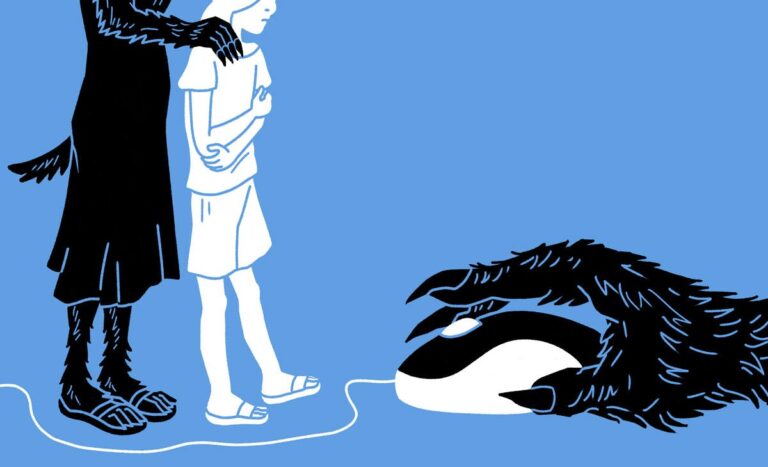
This was the quandary that led Carmen to sell her children online for sexual exploitation. She was arrested in January 2021 over allegations that she had streamed live shows of her 8-year-old daughter and sent naked clips and photos of her 11-year-old son to paying customers abroad.
“[My husband] earns P1,600 ($32) monthly. My baby still needs infant milk formula,” Carmen told the Philippine Center for Investigative Journalism (PCIJ) as she attempted to explain how she could do such things to her own children.
PCIJ met Carmen in January at the Women and Children Protection Center (WCPC) inside the police headquarters in Camp Crame, where she was detained. She agreed to be interviewed.
Carmen said she started out doing live shows on the internet and sending her photos to customers in Australia, the United States (US), and the United Kingdom (UK). She did not finish elementary school, but her English was enough for the necessary communication.
“I wrote in my profile that I was looking for help to buy food. They told me they’d take care of it,” she said.
One day, a frequent customer seemed uninterested during a call. She got worried. “I asked the foreigner if he wanted a solo show. He said no. He wasn’t talking much. I thought to myself, maybe he wanted a child and he just didn’t want to say it,” she recalled.
“When I told him I had a daughter, he suddenly became jumpy. I sent him videos of my child.”
For months until her arrest, she allegedly sold clips of her children doing various performances for fees that ranged from P150 ($3) to P2,500 ($50).
Livestream abuse, where the perpetrators can talk to their victims and instruct them to perform specific sexual acts on camera, are more expensive compared withto taped videos and photos.
1.29 million images, videos of child abuse
The Philippines has been tagged as the global epicenter of livestream sexual trafficking of children, based on data from the US-based National Center for Missing and Exploited Children (NCMEC) and the Philippine Internet Crimes Against Children Center (PICACC).
Cases surged during the pandemic as many Filipinos lost their jobs. Technology companies reported that more than 1.29 million images and videos of child abuse materials came from the Philippines in 2020. This was more than triple the number in 2019 or before the pandemic hit.
From March 1 to May 24, 2020 – in the early weeks of the lockdown – the Department of Justice (DOJ) reported 202,605 cases of OSEC or a 265 percent increase compared with the same period the previous year.
Social networking giant Facebook also found 279,166 images of child sexual abuse and similar content on its site from March to May 2020.
According to a study by the Washington-based International Justice Mission (IJM), the children’s own mother or another female relative is often the trafficker in many cases in the Philippines.
Col. Sheila Portento, who leads the Anti-Trafficking in Persons Division of the WCPC, said the mothers often justified their actions by saying they did not inflict harm on their children because there was no physical contact with the pedophiles.
WCPC is the lead unit of the Philippine National Police (PNP) in dealing with OSEC.
Mothers also told their children that “it wouldn’t hurt if mommy” touched them upon the instructions of the customers, she said.
“I keep asking myself if they’re not terrified of their actions. It seems not. Their moral fiber seems very thin,” Portento said.
There were more than a dozen inmates at the WCPC lock-up cell in Camp Crame during PCIJ’s visit. Most of them, like Carmen, were mothers who sold their own children for sexual abuse online.
One who was weeping inside her cell, and who was holding a rosary so tightly in her fist, admitted to taking videos of her nine-year-old daughter performing oral sex on her father. Investigators who rescued the child found the video in her storage disks.
She, Carmen, and the rest of the women gathered to pray when the sun was about to set at 6 p.m.
The disconnect has left a bad taste in the mouth of the police, many of them also Catholics. An investigator said one of the inmates had a Santo Niño statue – a Filipino representation of Jesus when he was a child – outside the room where her child was being abused.
Short of saying that they are not faithful Catholics, Irish priest Shay Cullen said these kinds of people only performed the rituals of the church but did not understand that faith also demanded commitment to human rights and human dignity.
Cullen founded a child rights organization in Olongapo City, Preda Foundation, which rescues sexually and physically abused children and offers them treatment and recovery programs.
“(For them) it’s only rituals. Like you go there, you get the sacrament and you’re saved,” he said.
Mother blackmailing children
The relationship between mothers and abused children is often complicated. In many instances, the children are subjected to different forms of emotional blackmail, Portento disclosed.
She recounted a rescue operation in Pampanga province in 2020, where a 16-year-old victim screamed at the sight of police officers who were there to rescue her. She was quick to defend her mother and tried to drive the cops away from the house where she was being abused.
But the girl’s attitude changed when the cops whisked her mother away in handcuffs. “Will my mother be jailed?” she asked the social workers.
When they told her she might, the girl said: “I hope she rots in prison because she’s a demon.”
In another rescue operation in Batangas province, Portento recalled a 10-year-old victim bawling inconsolably when her mother was arrested. She carried the child to a room where she couldn’t see her mother in handcuffs and spoke with her to ask why she was still defending her mother.
The girl replied: “If I don’t do as I’m told, we can’t buy milk for my younger sibling.”
“Convincing, guilting the child was easy,” Portento said. “Mothers don’t even have to lift a finger because their children trust them. If there’s one person the child knows would protect them at all costs, it’s [supposed to be] their mother.”
Mothers have also blackmailed their children into thinking that their family’s livelihood and survival depended on their cooperation.
“I talked to a mother facilitating OSEC. She was the same age as I was, and her kid was the same age as my youngest daughter. I told her: ‘How could you do this? How did you convince her to do this?” Portento noted.
The mother supposedly told her daughter that their electricity supply would be cut if she didn’t perform for the online customers.
But they weren’t as cash-strapped as the mother would like her to believe. When the cash transfer was made, the mother told her she’d buy her new shoes in exchange for the “trouble.”
“That’s how shallow and selfish [these mothers could be],” Portento said.
Help from other countries
The real extent of online child abuse in the country is hard to ascertain. In many cases, OSEC is a secret crime, one that usually has no witnesses.
IJM reported that 793 OSEC victims were rescued in law enforcement operations from 2011 to May 2020. About half were under 12 years old and 57 percent of the perpetrators were relatives or close family friends of the victims. The youngest was a three-month-old infant.
IJM is part of the Philippine Internet Crimes Against Children Center (PICACC), an alliance also composed of the PNP and the National Bureau of Investigation (NBI), as well as the UK’s National Crime Agency, the Dutch National Police and the Australian Federal Police.
The total number for 2020 was not yet available as of posting. (The NBI declined to provide data to PCIJ, citing confidentiality.)
OSEC was once run by organized criminal syndicates but it turned into a cottage industry in the past decade, with perpetratorsdriven by poverty and aided by technological advancements that allowed easy connection to paying customers.
A cheap web camera and an internet connection are basically what they need to set it up.
Widespread English proficiency among Filipinos is another factor why OSEC thrives.
The countries where the paying customers come from have come to help the Philippines address the problem.
The DOJ receives cyber tip line reports from the US-based National Center for Missing and Exploited Children (NCMEC), for example.
The organization established by the US Congress receives millions of reports of child sexual abuse and exploitation from social networking and electronic service companies like Microsoft, Google, Facebook, Twitter and more.
The tips typically include the IP addresses of Filipino facilitators and other the perpetrators of abuse.
A study published by IJM in 2020 showed that 64 percent of OSEC cases filed in the Philippines from 2014 to 2017 were initiated by referrals from international law enforcement agencies. Most cases came from the US or Scandinavian nations (22 percent), Australia (12 percent), UK (seven percent), Canada and New Zealand (two percent).
“Referrals from foreign law enforcement counterparts have exploded during the pandemic. Kids are forced to stay at home and many people lost their jobs,” Lt. Noeralyn Tamayo, a PICACC Philippine police deputy, said.
Remittance centers
One way the crime is being tracked is through the remittance centers. The financial service providers that allowed the country’s army of overseas Fipino workers to easily send money to their relatives back home have also been used by foreigners abusing Filipino children online to pay the facilitators.
The Philippine government’s Anti-Money Laundering Council (AMLC) has required remittance centers to submit suspicious transaction reports (STRs) based on a study containing a “typology” of OSEC-related transactions.
AMLC Executive Director Mel Georgie Racela said the typology was essentially a list of red flags that should prompt financial institutions to report a transaction as suspicious and related to OSEC.
“What you’ll do is scrub that database to determine whether or not your customers are part of that study and then you will report an STR on those customers or persons of interest in the study,” Racela told the PCIJ.
For example: If the amount of money sent to the Philippines was worth at least P2,500, came from a country under the AMLC’s watchlist on OSEC, and did not come from a relative, the compliance officers of remittance centers, banks and electronic money apps can flag these transactions and send them to the AMLC for investigation. The AMLC sends these reports to law enforcement agencies like the PNP and NBI.
From January 2019 to June 2020, remittances from the US recorded the most number and the highest value of suspicious transactions – 10,927 reports involving P39.6 billion.
Recipients of these suspicious transactions were mostly in the provinces of Rizal, Cebu, Davao del Sur, Bohol, Iloilo, Bulacan, Quezon, and the cities of Taguig and Manila.
From 2015 to 2018, about 3,000 persons of interest in child trafficking and exploitation were referred to the AMLC for money laundering probes, Racela said .
“We did an update to cover 2019 to the first half of 2020. So that’s one and a half years, and you’ll be interested to know that persons of interest increased from 3,000 to 23,000 only for that period. So adding it up, it would be 26,000 POIs,” Racela told PCIJ.
The AMLC has yet to publish a new study, but Racela said they were also expecting an “exponential increase.”
Cat and mouse operations
Since the PNP hatched its first operation against OSEC in 2015, it has rescued 680 children sexually trafficked online in 202 operations.
From March 2020 to May 2021 alone, police rescued 245 kids in 75 different operations.
“I get the creeps. I am distressed for the victims,” Police Lt. Col. Lucrecio Rodrigueza Jr. said.
“This country prides itself with the maxim: ‘Ang kabataan ang pag-asa ng bayan (the youth is the hope of the nation),’ but because of these crimes, not only are we destroying the future of these kids, we’re also destroying our country’s future,” he added.
He joined a team that rescued eight children in Camarines Sur on May 7, in an operation that required officers to wear hazmat suits as protection against the coronavirus pandemic. He couldn’t shake the image of a two-month-old infant bawling in the arms of a police officer as they arrested the mother, Jocelyn, who exploited her 12-year-old daughter.
She had forced her to undress in front of a laptop while pedophiles from the US, Europe, Australia and even the Philippines asked her to spread her legs and perform sexual acts. Sometimes her mother guided her hands. Police suspected that a sex toy they found during the search was also used on the child.
He shuddered at the thought of what could have happened to the baby if a pedophile heard it wailing at the background of her sister’s live show.
The criminals are fast to adapt to increased monitoring from law enforcement agencies, however, underscoring the challenges in making significant gains against OSEC.
Perpetrators used to be concentrated in Metro Manila, where facilitators set up dens that looked like call centers. “Since more busts and raids have been conducted, they have dispersed into provinces,” said Police Maj. Joseph Villaran, ACG’s spokesman at the time of the interview. He now teaches digital forensics at the PNP Academy.
They’ve also changed their set up into guerilla-type operations, he said. “They make use of one computer nowadays, which makes it difficult [for law enforcers] because they have decentralized. Not only one person is handling the whole operation, they’ve multiplied,” he added.
An IJM heat map identified Metro Manila and Cebu as the areas with the most number OSEC facilitators in 2010 to 2017.
In Pampanga and Lanao del Norte, at least six to 21 facilitators have been identified, while there were at least four in Cavite and Negros Occidental.
Bulacan, Batangas, Leyte, Bohol and Davao del Sur, had one to three facilitators each.
The toll on investigators
It’s a job that has taken its toll on investigators
The has been a surge in referrals and cyber tip line reports, but the WCPC remains understaffed.
The shortage is still manageable, according to Portento. But poring through horrendous images of abuse and exploitation has affected the officers’ emotional wellbeing.
“We can’t help but be emotionally affected, too. But we have to fight it,” Rodrigueza said.
WCPC has field units in Luzon, the Visayas and Mindanao. This means that if the field unit in Visayas, which is located in Cebu City, needs to conduct an operation for OSEC in Tacloban City, agents need to travel for hours to get there.
The Women and Children Protection Desks in cities and municipalities mainly deal with cases of violence against women and children. They are not allowed to handle OSEC cases.
“Dealing with OSEC needs technical skills,” Portento said.
The typical training program in handling OSEC cases, both in operational and cybercrime capacities, is largely offered abroad. Aside from cybersecurity and operations, WCPC officers also work with foreign law enforcement agencies when Filipinos fall victim to trafficking schemes abroad.
Right now, the PNP leadership and lobbyists are thinking of prodding Congress to turn the WCPC into the Women and Children’s Protection Group, which would mean increased staffing and more resources.
The WCPC investigators said the public has a big role to play in fighting OSEC, for instance by stopping an online culture where men fetishize children and contribute to their continued abuse.
While females appear mainly responsible for facilitating the exploitation of children, males have been the target of pornsite channels that promote videos using search engine keywords that intentionally or unintentionally make sexual objects out of children, even if the actors in these videos aren’t children.
These porn sites have been the subject of investigations last year by the US media for allowing channels to monetize child rape content.
Police Maj. Lalaine Marty, a PNP child cybercrime protection officer, said these channels should not be allowed to monetize content that use such titles and keywords. People should cringe – not get sexually stimulated – when they see these materials, he said.
People should recognize that it’s not pornography. It’s abuse, she said. It’s a crime.
*Names of perpetrators are also withheld to protect the identity of their victims, with whom they are related. All quotes were translated into English.
*Neil Jayson Servallos, an M.A. Journalism student at the UST Graduate School, originally wrote this story for one of his reporting classes. It was expanded into a series with the editorial guidance of the PCIJ.
*Illustration by Alexandra Paredes
*This article is supported by the Judith Neilson Institute’s Asian Stories project, in collaboration with ABS-CBN News, the South China Morning Post, The Korea Times and Tempo in Indonesia.
By: Eunice Barbara C. Novio, INQUIRER.net /May 24, 2021
“Despite our situation here, we still send money to our families in the Philippines,” said Mara, a Filipino teacher.
She has an employment contract with Bangkok Metropolitan Administration (BMA), which operates public and private schools around Bangkok. She lives with her husband, also a teacher, and two young daughters.
Mara thought everything would return to normal, although the “new normal” when Thailand had zero-case in July 2020, isn’t what it is now.
Resumption of face-to-face classes was interrupted in December during the second wave of coronavirus infections that started in Samut Sakhon. It was contained shortly.
A third wave began in late March 2021 in Thonglor, a known nightlife district for high society in Bangkok, and pubs in Pathum Thani. The widespread infection worsened during the Songkran Festival in April when people traveled home for the holidays.
Mara has not received her salary for March. Her contract stipulated a no work, no pay scheme and only face-to-face classes.
Hotel, entertainment, and food industries are reeling from the stringent measures imposed by the government. Thousands of migrant workers, including Filipinos, had their visas and work permits revoked during the closures. The Thai Immigration Bureau is providing visa amnesty to those “stranded” which may end soon.
“Since December, our hotel in Bangkok has been closed,” Zherrie, a Filipino hotel worker, says. Fortunately, she was able to get compensation from social security.
To augment their incomes, both Mara and Zherrie are doing online business, selling Filipino food, items, or cosmetics.
But not all have the capital to start one.
“Helping-hand” spirit
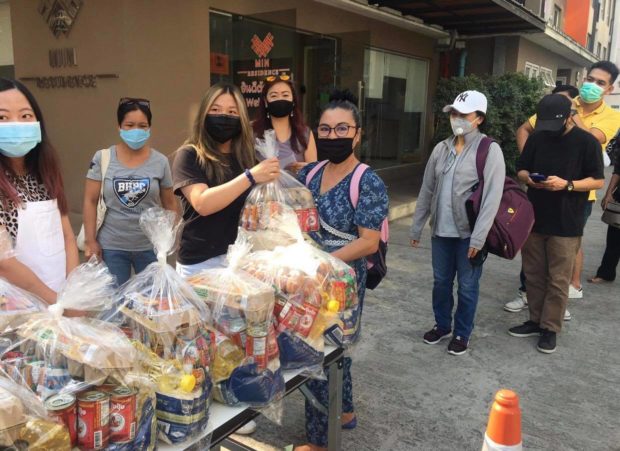
Since the pandemic started, Bing Macatangay Arias, the interim vice president of United Filipinos in Thailand (UFT), spearheaded a food distribution project for Filipinos who either temporarily lost their jobs or are out of work.
Dubbed “Helping Hand Spirit of Filipino Constituents,” the project started with 259 food packs in March 2020. UFT estimated that it has already distributed over 20,000 food packs as of May 21. These had been distributed to 70 provinces in Thailand with most distributed in 20 areas in Bangkok and Nonthaburi. Donors and sponsors support the project.
The support comes from Filipinos, Thais and business groups, like Fast-Track Global and other individuals in Thailand and abroad, said Arias.
The food pack for an individual consists of five kilos of rice, condiments, noodles and sardines that may last for three weeks. It costs around 300- 350 Baht (between 450-550 Philippine Peso). Arias said there have been individual requests for financial assistance and medicines, milk or diapers.
The food packs are distributed by area coordinators in different provinces. Mara and Zherrie are coordinators in the food distribution in their designated areas.
Arias says there is still a growing need for food packs that may last as long as the pandemic hinders economic activity in Thailand.
An estimated 18,000 Filipinos reside in Thailand, taking jobs in teaching, management, engineering, architecture, hospitality, households, and business.
Embassy’s COVID-19 response
Last May 21, the number of COVID-19 cases in Thailand has reached 123,066 with 735 deaths and 79,504 recoveries. There are also some reports of Filipinos who tested positive for SARS Cov2, the virus that causes COVID-19, and had recovered.
According to a Reuters report, Thailand has administered coronavirus vaccines to over 2 million people out of its 66 million population.
The nationwide vaccine rollout will start in June. Teachers must be vaccinated in time for the opening of classes.
In an e-mail to INQUIRER.net, the Philippine Embassy said it “welcomes the initiative of Filipino community groups in Thailand to help each other during this time”. The embassy says that the effort was also in line with its “Bayanihan” efforts in Bangkok, Chiang Mai, Phuket and other Thai provinces at the onset of the pandemic in April 2020.
The embassy consular team says that Filipinos in need of assistance for Philippine government repatriation flights “funded by taxpayers, which is the government program of the Department of Foreign Affairs and its embassies” may avail themselves of the help but on a first-come, first-served basis, once funds are available for these flights.
Those returning home are also encouraged to avail themselves of financial assistance and loans from the Philippine government under the National Reintegration Center for OFWs. The Department of Labor and Employment (DOLE) has the DOLE-AKAP program, while the Overseas Workers Welfare Administration (OWWA) has programs for OWWA members and their dependents in the Philippines.
Since 2020, hundreds of Filipinos in Thailand are returning home. In March, April, and May, dozens of Philippine Airlines (PAL) flights have been cancelled due to the surge in COVID-19 cases in the Philippines. This resulted in a daily cap of 1,500 to 2,000 arriving passengers at NAIA that Philippine authorities are implementing.
In an e-mail, the Philippine Embassy says that it was working with PAL and authorities in Manila for additional passenger slots for flights to Manila. On May 12, there were 144 PAL passengers able to go home.
Mara and her family have chosen to remain in Thailand. Schools are expected to open on June 14.
“We have no savings yet. We will stay here. God is good,” Mara says.