Home Blog Page 82

Rights groups slam killings of activists in Calabarzon raids

0

Mar 7, 2021 Rappler.com

MANILA, Philippines

(3rd UPDATE) Human Rights Watch says the operations ‘appear to be part of a coordinated plan by the authorities to raid, arrest, and even kill activists in their homes and offices’

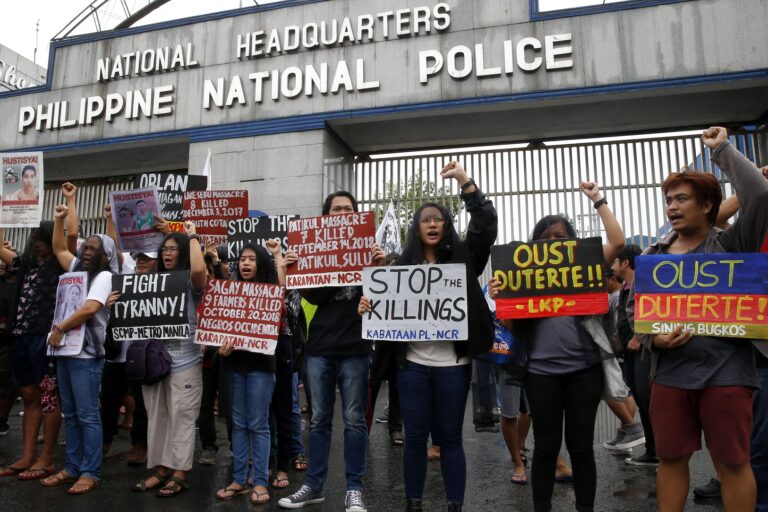
Human Rights Watch (HRW) denounced the crackdown on activists in the Calabarzon region, where 9 were killed and 6 were arrested by authorities on Sunday, March 7.

In a statement, HRW deputy Asia director Phil Robertson said their group is “seriously concerned” about news reports on the raids conducted by police and the military in various provinces in Calabarzon.

The operations come two days after President Rodrigo Duterte ordered the Philippine National Police (PNP) and the Armed Forces of the Philippines (AFP) to “kill” and “finish off” communist rebels in encounters.

“Based on these reports, these raids appear to be part of a coordinated plan by the authorities to raid, arrest, and even kill activists in their homes and offices,” said Robertson.

He also said these raids “are clearly part of the government’s increasingly brutal counterinsurgency campaign.” Robertson then pointed out that this campaign “no longer makes any distinction between armed rebels and noncombatant activists, labor leaders, and rights defenders.”

HRW also noted that the raids happened in provinces under the jurisdiction of the AFP Southern Luzon Command, whose head is Lieutenant General Antonio Parlade Jr.

Parlade is also the chief of the government’s National Task Force to End Local Communist Armed Conflict. He has repeatedly red-tagged multiple personalities.

Robertson then urged the government to look into the spate of killings.

“The Philippine government should act now to investigate the use of the lethal force in these raids, stop the mayhem and killings that [have] gone hand in hand with the practice of red-tagging, and respect the rights of Filipinos to exercise their civil and political right, and dissent.”

‘Bloody Sunday’

Karapatan said it is appropriate to call March 7 “Bloody Sunday.”

In a statement, Karapatan secretary-general Cristina Palabay said the “Duterte regime is now unleashing the unbridled horrors of fascism and the crackdown on dissent upon the Southern Tagalog region using the same dirty tactics.”

“The fascist Duterte regime spares no day in its murderous campaign of state terror with the arrests and killings of labor leaders, organizers, activists, and human rights workers in Tokhang-style raids in Southern Tagalog today – along with peddling the same lies and dirty tactics, from the bogus search warrants, the ‘nanlaban’ (fought back) narrative to the tanim-ebidensiya (evidence-planting) scheme to justify these arrests and killings,” she added.

Kapatid, a group of families of political prisoners, condemned the arrest of one of its members, 61-year-old Nimfa Lanzanas.

“We call for their immediate release from detention as we believe that the cases being lodged against them are all fabricated to stop them from doing the work they do, which is to simply help people and stand up against injustices,” Kapatid spokesperson Fides Lim said.

The Public Interest Law Center (PILC) also denounced the incidents, adding that the series of attacks and relentless red-tagging clearly show the “real targets of [Duterte’s] kill order.”

“President Duterte and the police and military have shown no qualms targeting and killing unarmed civilians especially those who are critical of his administration,” PILC said in a statement. 

“We hold them accountable for this spate of assault on activists.” – Rappler.com
Bill seeking presumption of guilt of drug suspects ‘alarming’ – Amnesty International

0

By: Daphne Galvez – Reporter /INQUIRER.net / March 03, 2021

MANILA, Philippines — A bill at the House of Representatives seeking to allow the presumption of guilt of drug suspects is an “alarming knee-jerk reaction” to the shootout between the police and drug enforcement agents, Amnesty International (AI) said in a statement issued on Wednesday.

Butch Olano, AI section director,  said House Bill No. 7184, which was passed on third and final reading at the House, on Tuesday, showed  “a dangerous disregard for human rights guarantees under domestic and international law.”

Olano noted that the bill was passed was only a week after the “misencounter” between members of the Philippine National Police (PNP) and the Philippine Drug Enforcement Agency (PDEA) that left two police officers, two PDEA agents, and a PDEA informant dead.

“HB 7814 further encourages arbitrary arrest and detention of drug suspects and will likely facilitate the use of torture and other cruel, inhuman and degrading treatment,” Olano said.

“The lack of judicial supervision that the bill endorses would practically allow security forces to commit further human rights violations with increasing impunity,” he added.

Olano said the government’s war on drugs had evolved so that it “limits basic procedural guarantees and other legal remedies.”

“Given its implications, especially in the context where thousands upon thousands have already been killed in the ‘war on drugs’, this bill is an alarming knee-jerk reaction to the PNP-PDEA ‘misencounter’ that is more an issue of government intelligence-gathering and protocols than of the law,” he added.

The group called on the House to withdraw the bill.

It also called on the Senate to “resolutely junk” any proposal that would violate basic human rights guaranteed in the Constitution and enshrined in the international human rights law and principles.

A failed war

0

EDITORIAL

Philippine Daily Inquirer / March 03, 2021

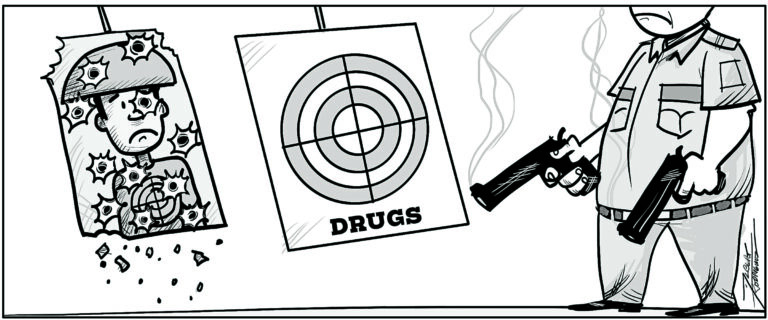
Can it be that the administration is now seeing the horror of President Duterte’s war on drugs? The video message of Justice Secretary Menardo Guevarra on Feb. 24 to the United Nations Human Rights Council (UNHRC) suggested as much, appearing to prove that the Philippines’ legal and judicial systems are working the way they should, cognizant of the principles of accountability vis-à-vis violations of the law and of human rights.

Guevarra presented the results of a review of the war on drugs at the UNHRC’s ongoing 46th session, citing critical flaws in the President’s centerpiece drive. (In apparent response to global expressions of outrage over the antidrug campaign, Guevarra announced in June 2020 the creation of a government panel to review police operations in which deaths occurred.)

He said half of the operations reviewed showed a failure to follow standard protocols in inter-agency coordination and even in the processing of crime scenes. Regarding the police’s ubiquitous “nanlaban” narrative — in which ostensibly armed drug suspects are killed in the course of resisting arrest—he said the recovered weapons were not subjected to requisite ballistic examination and other tests as well as ownership verification.

Those are surprising remarks from the justice secretary who has been uncritical of the antidrug campaign that continues to elicit outrage both here and abroad. The Philippine National Police counts almost 6,000 dead in those operations in the past four years but human rights groups say the number can be at least four times higher.

In July 2019, the UNHRC adopted a resolution calling for a comprehensive report on the human rights situation in the Philippines. In June 2020, the Office of the High Commissioner for Human Rights (OHCHR) issued a report documenting widespread rights violations and persistent impunity in the country. And in December 2020, the Office of the Prosecutor of the International Criminal Court cited “reasonable basis” to believe that crimes against humanity had taken place under the Duterte administration. (Angered by what he deemed interference in the country’s affairs, the President withdrew the Philippines from the ICC in March 2019.)

Yet, while initially surprising, Guevarra’s remarks are hardly novel. That standard protocols were ignored by law enforcers is a constant finding in independent inquiries and a common experience of residents of mostly impoverished communities where these operations took place. And to belie the “nanlaban” narrative as well as boost suspicion of planted evidence, the OHCHR cited police reports in which cops repeatedly recovered guns bearing the same serial numbers from different victims in different sites. As though, the weary observer may conclude, they didn’t even care if the modus operandi were found suspect.

Guevarra told the UNHRC that relevant agencies were working on the recommended prosecution of policemen; he made no mention of the accountability of high officials. Palace mouthpiece Harry Roque crowed that the panel’s work “is proof to the whole world that contrary to the claims of our critics …we are in discharge of our state obligation to investigate and prosecute violations of the right to life.” He is blind to the fact that of 4,583 inquiries done by the PNP’s Internal Affairs Service from July 2016 to May 2019, only one case, involving the teenager Kian delos Santos, resulted in the murder conviction of three cops.

The Commission on Human Rights said it had no participation in the review despite the government’s promise of close cooperation with it.

Commenting on Guevarra’s remarks, Phil Robertson, deputy Asia director of Human Rights Watch, said: “These killings were baked into the ‘drug war’ model from the start, with the police prepared to act because they knew that not only can they get away with it, but that they’re supposed to get away with it.”

Chilling and unforgettable were the President’s words on the killing of 32 drug suspects in “one time, big time” police operations in Bulacan on Aug. 15, 2017. He found it encouraging, an efficient use of excessive force: “Maganda ’yun,” he told members of the Volunteers Against Crime and Corruption in a speech. “Makapatay lang tayo ng mga another 32 every day, then maybe we can reduce what ails this country.”

Well, not quite. For all the blood spilled, for all the killings that have grievously impacted thousands upon thousands of families and earned global censure for the Philippines, the drug problem remains. The unresolved smuggling of “shabu” worth billions of pesos festers.

“Let’s not pretend anymore,” said Sen. Panfilo Lacson, a former PNP chief. “The drug war really failed because the drugs are still there. … Sad to say, the government’s antidrug efforts have not succeeded.”

PH calls attention of U.S. State Dept., senators on rising hate crimes vs Asians

0

By: Christia Marie Ramos – Reporter / INQUIRER.net / March 01, 2021


MANILA, Philippines — The Philippines has called the attention of the United States Department of State as well as several American senators on the rise of anti-Asian attacks there.

Philippine Ambassador to the U.S. Jose Romualdez said he sent a note verbale to the U.S. State Department last week.

“We are very concerned about it. We already called the attention of the State Department at sinabi namin sa kanila na mukhang binibiktima yung mga Asian Americans dahil ang tawag nga ng gobyerno dito noon ay ‘China virus’,” Philippine Ambassador to the U.S. Jose Romualdez said in an interview.

(We are very concerned about it. We already called the attention of the State Department and told them about this rising number of victims of anti-Asian attacks, the government before referred to Covid-19 as the ‘China virus.’)

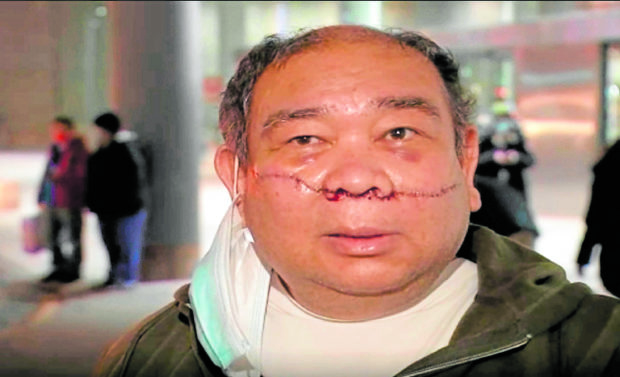
“Siyempre marami sa ating mga kababayan na may lahing Chinese…they were taken advantage of, pero yung malaking incident na nangyari sa New York, yung ini-slash. ‘Yan talagang medyo matindi so we were really concerned about it,” he added.

(A lot of our fellow Filipinos here have Chinese ancestry…they were taken advantage of, but a prominent incident was the one in New York, the slashing incident. That’s really extreme so we were really concerned about it.)

Romualdez was referring to an incident involving a 61-year-old Filipino American, who was slashed across the face in a New York subway train.

Romualdez said he also wrote letters to several U.S. senators to call their attention on the rising incidents of hate crimes against Asian Americans.

“I wrote letters to the some senators who are [part of their] justice committee at yung sa racial discrimination committee ng U.S. Senate. Sinulatan ko, calling their attention na medyo matindi na itong ginagawa sa mga Asian Americans dito sa America,” he said.

(I wrote letters to the some senators who are [part of their] justice committee and the racial discrimination committee of the U.S. Senate. I wrote to them, calling their attention to the violent incidents against Asian American here in America.)

There are 4.5 million Filipino-Americans in the U.S., according to Romualdez.

The largest Filipino community (1.5 million residents) is in California.

Earlier, the Philippine Embassy in the U.S. advised Filipinos to exercise “utmost caution” amid the recent incidents of violence against Asian Americans.

Philippines begins legally rolling out first COVID-19 vaccines

0

Mar 1, 2021, Sofia Tomacruz

MANILA, Philippines

(3rd UPDATE) Dr. Gerardo Legaspi, director of the University of the Philippines-Philippine General Hospital, is the first to get the vaccine

Editor’s Note: The nurse who administered the first shot to Dr Gerardo Legaspi is Charleuck Santos, not Sherlock Cruz. Cruz was the name provided by the Philippine Information Agency, and was corrected by the Department of Health.

The Philippine government on Monday, March 1, started distributing the first shots of a coronavirus vaccine, setting off an unprecedented and ambitious effort to inoculate at least 50 million people by the end of 2021. 

At 9:40 am, the first COVID-19 vaccine in the country was legally administered by nurse Charleuck Santos to Dr. Gerardo Legaspi, director of the University of the Philippines-Philippine General Hospital (PGH), one of the few coronavirus-designated hospitals in the country.

Along with Legaspi, Food and Drug Administration Director General Eric Domingo, government medical adviser Dr Edsel Salvana, and vaccine czar Carlito Galvez Jr. were also vaccinated.

The hopeful step opens a new chapter in the Philippines’ fight against the pandemic in spaces that have catered to the sickest. The disease has so far killed over 12,300 and infected over 576,000. 

Along with PGH, vaccinations on Monday take place among health workers at the Lung Center of the Philippines, Dr. Jose N. Rodriguez Memorial Medical Center and Sanitarium (Tala), Veterans Memorial Medical Center, Philippine National Police General Hospital, and Victoriano Luna Medical Center. 

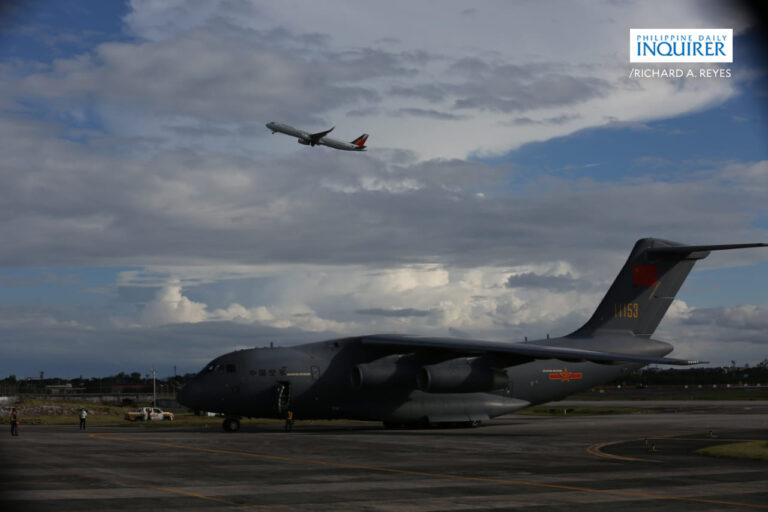
Doses of Sinovac’s CoronaVac were used for the start of the Duterte government’s first rollout, after arriving in the country through a transport plane of the People’s Liberation Army of China on Sunday, February 28. The delivery of 600,000 Sinovac vaccine doses, a donation from China, was witnessed by President Rodrigo Duterte, Health Secretary Francisco Duque III, and vaccine czar Carlito Galvez Jr. 

Inoculations took place after the Philippine Food and Drug Administration (FDA) issued emergency use authorization (EUA) for CoronaVac last Monday, February 22. Sinovac was the latest to be granted emergency approval in the Philippines, though its vaccine was the first to arrive after delays in paperwork stalled vaccines from the global COVAX Facility, which were initially supposed to arrive in mid-February.

Health workers were identified as the first group to receive the Sinovac vaccine, though their participation came after intense deliberation on whether to include them in the rollout. The FDA earlier said data from Phase 3 trials in Brazil, where a lower efficacy of 50.4% was observed, led experts not to recommend its use for priority groups. 

But with vaccine supplies scarce and the delivery of different brands uncertain, vaccine experts decided health workers should be given the chance to receive an available vaccine since they are most exposed to COVID-19.

In the meantime, as more vaccines have yet to be delivered, those who choose not to get the Sinovac vaccine are given assurances they will not lose their place in the government’s prioritization. 

At PGH, health workers were reluctant to receive the Sinovac vaccine. Days before the rollout on Saturday, February 27, the PGH Physicians Association urged officials to wait for the review of the country’s Health Technology Assessment Council (HTAC) before using donated Sinovac vaccines.

Health experts pointed out the HTAC’s review was necessary as the body “does not solely focus on cost minimization issues for the State, but also include “ethical, legal, social, and health system implications.”

Legal vaccinations

Health workers and government officials who chose to receive Sinovac’s vaccine on Monday were among the first to be legally vaccinated in the Philippines.

Last December 2020, Duterte himself revealed that members of his security aide were among the first to receive Sinopharm’s vaccine despite it lacking the required emergency authorization. (READ: 5 nagging questions the Duterte gov’t has not answered on its use of unregistered vaccines)

Along with the Presidential Security Group, former presidential special envoy Ramon Tulfo Jr. admitted to being inoculated with smuggled vaccines from Sinopharm along with other government officials in October 2020. He had also offered to supply the Sinopharm shot for President Rodrigo Duterte after the Chief Executive expressed interest in receiving the unapproved vaccines. – Rappler.com

Anita Magsaysay Ho’s ‘Tinapa Vendors’ Sells for P84 Million

0

By Mario Alvaro Limos

Anita Magsaysay-Ho became the first woman to ever win the grand prize in the prestigious Art Association of the Philippines competition in 1952. According to curator and historian Lisa Guerrero Nakpil, her winning entry, “The Cooks,” quickly set off a publicized contest to own it as both influential newspaper columnists and rich collectors vied for this treasure, even resorting to attacking each other in the press to gain that privilege. 

A similar intense auction battle ensued at the Asian Cultural Council Auction 2021 at the Leon Gallery when Magsaysay-Ho’s “Tinapa Vendors” went under the gavel on February 27, selling for a record P84 million

The piece is considered a favorite of Magsaysay-Ho, which was why it fetched such a high price from a starting bid of P12 million. 

“In this magnificent Anita marketplace, the vendors caress this noble fish as if they were fine silks or jewels. This bounty, after all, is not just a way of life but a means to make a living. The central figure holds up a slim fish to her nose, delicately sniffing it as expertly as a French perfumer to divine its properties. The other women have various reverent expressions as they tend to the flat baskets filled to the brim with the fish, an auspicious symbolism of the plentifulness that can be found even in the simplest of lives,” writes Nakpil.

For “Tinapa Vendors,” Magsaysay-Ho used her favorite medium: egg tempera. It consists of colored pigments mixed with a water-soluble binder medium, usually glutinous material such as egg yolk.

“Tinapa Vendors, which Mrs. Ho considers her favorite among the market scenes she has done, is in her favorite medium, egg tempera,” wrote Purita Kalaw-Ledesma, doyenne of the Art Association of The Philippines.

According to Nakpil, Anita made the Renaissance medium of egg tempera so famous that the Philippine Association of Poultry Growers had offered to make her its ambassadress. 

“The subtle shadings and durable condition that egg tempera gives to a painting is certainly very much evident in this masterpiece,” wrote Nakpil. (Esquiremag.ph)

PH receives first shipment of Covid-19 vaccines from China

0

By: Daphne Galvez – Reporter/INQUIRER.net / February 28, 2021

MANILA, Philippines — The Philippines received its first shipment of Covid-19 vaccines on Sunday, with the arrival of 600,000 doses of the vaccine made by China-based drugmaker Sinovac Biotech.

The military aircraft from China carrying the Sinovac vaccine doses donated by the government of China touched down at the Villamor Air Base in Pasay City on Sunday. The arrival of the donated vaccines was welcomed by government officials.

The arrival of the China-made vaccines will pave the way for the government to kickstart its Covid-19 vaccination program on Monday.

On Monday, over 500,000 vaccine doses from AstraZeneca are expected to arrive.

Frontliners Reject Sinovac: ‘We Deserve the Best’

0

By Ara Eugenio for Reportr

Photographer Jerome Ascano was on the scene to capture the frustrations of Filipino frontliners with the government. 

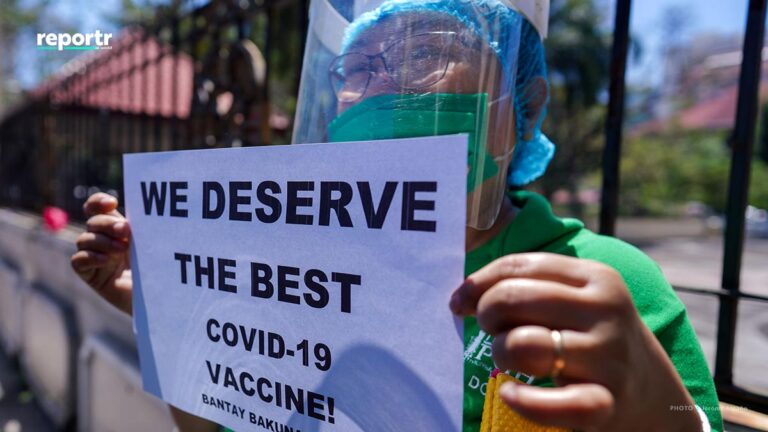
Medical frontliners thronged the Philippine General Hospital Friday to protest a COVID-19 vaccine rollout using one made by China’s Sinovac, saying they were promised a different jab.

Members of the All UP Workers Union-Manila and PGH health workers said they “deserve the best COVID-19 vaccine.” The group said they were supposed to get the vaccine from Pfizer and BioNTech, which is more effective according to laboratory and real-world tests.

The Food and Drug Administration cleared Sinovac’s CoronaVac for emergency use, except for frontliners, citing its efficacy rate of 50.4%. Presidential spokesperson Harry Roque said the FDA’s statement amounted to a recommendation instead of a prohibition.

ALSO READ:

How Does Sinovac Compare to Other COVID Vaccines?

Philippines to Receive First COVID Vaccines from Sinovac on Feb. 28

“The important thing to remember here is whatever vaccine comes, we should welcome it because it will definitely make a difference in helping control the spread of this infection, and the first area where we should control it will be in the hospitals,” UP-PGH Director Gab Legaspi said as he accompanied Roque in delivering news of the rollout.

As the biggest COVID-19 referral hospital in the country, PGH has been conducting simulations for the arrival of the Pfizer vaccine since early February.

“Ang aming preregistration, nagpakitang 94% ay may consent for vaccination. Pero dapat maging tapat ako: nung kinuha namin ang consent nila, Pfizer vaccine ang aming pinaghahandaan,” said Legaspi.

This story originally appeared on Reportr.World. Minor edits have been made by the Esquiremag.ph editors.