Home Blog Page 84

Artists, allies, to do another online concert for De Lima’s release

0

By: Gabriel Pabico Lalu – Reporter/INQUIRER.net / February 21, 2021

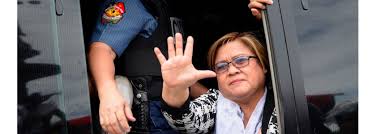
MANILA, Philippines — Several artists and musicians are expected to participate in an online concert in support of Senator Leila de Lima, who remains in detention for drug-related charges.

A statement from De Lima’s office said the online concert, “Leilaya! Mga Tinig at Himig ng Paglaya,” will be held on Wednesday, February 24 — to mark the senator’s fourth year in detention.

Among the musicians who will participate are Agot Isidro, Ebe Dancel, Bugoy Drilon, Gary Granada, Bituin Escalante, Bayang Barrios, Cooky Chua, Pochoy Labog of Dicta License, True Faith, Mae Paner, and Pinky Amador.

De Lima’s allies in the opposition — Vice President Leni Robredo, Senator Franklin Drilon, Senator Risa Hontiveros, and Senator Kiko Pangilinan — will also join the concert and will give their messages of solidarity.

“Renowned musicians, artists, activists, and political and religious leaders here and abroad will gather in another online community jamming to express their support for opposition Senator Leila M. de Lima who will be marking her fourth year in unjust detention on Feb. 24,” De Lima’s office said.

“The online community jamming will be available for audience viewing through live streaming of Free Leila Movement, Free Leila Committee, and the official Leila de Lima Facebook pages at 7:30 pm on Feb. 24,” it added.

This is not the first concert held online for De Lima during the Covid-19 pandemic.  Last August 28, supporters including those who will perform on Wednesday also greeted the senator on her birthday, along with wishes that she be given freedom.

De Lima is detained at the Philippine National Police Custodial Center in Camp Crame for drug-related charges after she was accused of mismanaging the problem of illegal drugs inside the New Bilibid Prison (NBP) while she was Justice secretary.

She is also accused of receiving payoffs from drug lords — a claim that she vehemently denies.  De Lima has insisted numerous times that her imprisonment is mainly due to her criticisms of President Rodrigo Duterte’s war against illegal drugs.

De Lima earlier won one of the three drug cases filed against her by the Duterte administration in connection with alleged involvement in a conspiracy to promote drug trade at the NBP.

Can COVID-19 vaccines prevent infection, transmission? Not necessarily, says expert

0

Sheila Crisostomo (The Philippine Star) February 21, 2021

MANILA, Philippines — Vaccines for COVID-19 do not necessarily prevent infection and transmission of the virus but it could protect those inoculated against severe illness, an official of the Department of Health (DOH) said on Friday night.

Enrique Tayag, DOH director for Knowledge Management and IT Service, explained that clinical trials for COVID-19 vaccines are not yet finished but these were released by manufacturers through an emergency use authorization (EUA) issued by regulatory authorities of countries.

This means that people can still get infected although “there will be no severe COVID-19,” he said in an interview with The Chiefs on Cignal TV’s OneNews.

“(From) what we know…it proves that it protects against severe COVID-19 and prevents hospitalization,” the former DOH chief epidemiologist added in reference to the case of a 43-year-old overseas Filipino worker in Mandaue City in Cebu.

The OFW had two doses of China’s Sinopharm vaccine while still in the United Arab Emirates. He went though a 14-day quarantine after arriving in Cebu. However, when tested before flying back to the UAE, he turned positive for the virus.

Four of his household members were also found infected, although it could not be ascertained if they got the virus from him.

Tayag said that “timing is important for vaccination” as a person could already be “incubating” the infection when vaccinated. He also underscored the need to get the complete two shots to acquire maximum protection.

A 24-year-old OFW from Canada also tested positive for COVID-19 after arriving in Cebu last Feb. 9. She was swab tested on Feb. 14, the fifth day of her quarantine, and found positive. It turned out that she was given her first dose of Pfizer vaccine last Jan. 13 in Canada but failed to get the second dose.

Meanwhile, the Philippine General Hospital (PGH) is targeting to inoculate close to 1,000 health care personnel and non-medical workers per day once the vaccines from Pfizer-BioNTech arrives.

Hospital director Gerardo Legaspi said that, based on their simulation, they could give shots to 975 individuals per day.

“If we want to vaccinate 975 people – because one tray per day – we will need nine vaccinators and 54 monitoring (seats),” he said at a recent briefing organized by the Department of Health.

Based on pre-registration, at least 94.1 percent or 5,745 of the 6,316 workers PGH workers have signed up for vaccination. These are composed of health workers, non-medical personnel, student-interns and consultants, among others, regardless of employment status.

According to Legaspi, the simulation revealed they could inoculate six people per vial with the “saline solution” they are using. However, to get six doses from one vial, they would have to use “low-dead space syringes.”

The PGH, he said, is having difficulty in finding a supplier for this syringe type.

He also foresees a “big bottleneck” in the screening procedures and recommended that the DOH allow them to forego blood pressure screening for those who are not hypertensive.

“Taking BP and pulse takes time. If they are not hypertensive to begin with, maybe we can (do away with it),” Legaspi explained.

He noted that their registration activities allowed them to know the quantity of vaccines needed and to do “eligibility checks.”

Some ‘rescue’

0

Philippine Daily Inquirer / February 20, 2021

Was it a rescue or a raid?

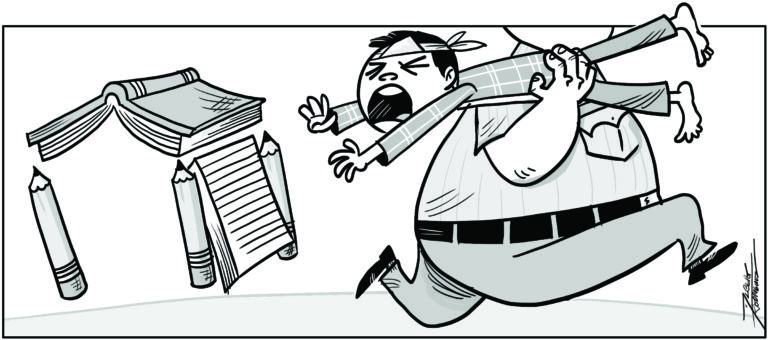
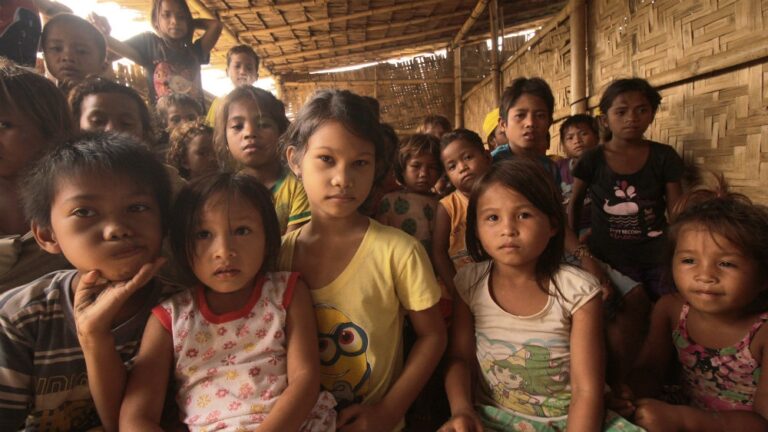
On Monday, police swooped down on the University of San Carlos (USC) in Talamban, Cebu, and forcibly took into custody at least 19 lumad students in what Central Visayas police chief Brig. Gen. Ronnie Montejo claimed was a “rescue operation.”

Montejo said the indigenous children “were taken by group members without their parents’ consent” and had not returned home since 2018. He added, without presenting proof, that the minors “underwent (communist) indoctrination and (were) asked to attend rallies (in Cebu City).”

In a statement, officials of the Society of the Divine Word, the congregation that supervises the USC, said the religious order had hosted the lumad students in March 2020 as part of their support for the bakwit, or evacuee, school program of the Cebu archdiocese. The students were supposed to return home after completing their modular schooling in April 2020, but the COVID-19 lockdown trapped them in the city. With the easing of quarantine restrictions, plans were made to return the IP (Indigenous People) minors to their homes, though this had to be done in batches because of considerable logistics needed for swab tests, transportation, and food allowances, said the statement signed by Fr. Rogelio Bag-ao, provincial head of the SVD Philippines Southern Province, and Fr. Narciso Cellan Jr., USC president. At least four minors had been sent home while another batch was scheduled to return this week. “Here, no rescue need ever be conducted because the presence of the lumad in the retreat house was for their welfare and well-being,” the priests stressed.

On Wednesday, the police filed charges of kidnapping and serious illegal detention—a nonbailable offense—in Davao del Norte against seven adults arrested in the raid.

Video taken during the incident casts serious doubts on the police narrative of a “rescue,” and the kidnapping and illegal detention charges they filed shortly after. Instead of welcoming their release as most kidnapped victims would, the IP minors were seen screaming, cowering in fear, and struggling against their “rescuers,” who had to bodily carry out some of them.

National Security Adviser Hermogenes Esperon insisted that the police operation was covered by a warrant, but did not—could not?—answer a reporter’s query on what complaint was indicated in the warrant and which court and judge had issued it.

The social welfare department itself, which was given custody of the IP minors, contradicted the official narrative. According to social welfare officer Annie Suico, based on her interviews with the children, there was no “child warrior training” as the police had alleged. “Sulat at basa lang ang tinuturo ng mga guardian nila,” Suico said, adding that the children were in good condition at the time of their “rescue.”

In a TV interview, police Lt. Col. Aurora Rayos, public information officer of Central Visayas’ PNP, claimed the police “rescue operation” was prompted by some parents’ report that their children had not come home for two years now. But why would these parents complain about their missing children only two years after the fact? And couldn’t the police have instead facilitated a reunion between parents and minors, with social workers and local officials mediating in case of conflict? Why resort to a violent “rescue” that would have traumatized the lumad minors further?

Then again, this incident is but the latest in the long history of harassment and violence directed at the lumad, even during previous administrations. Recall how, in 2015, North Cotabato Rep. Nancy Catamco spearheaded a similar “rescue” operation on displaced lumad camped in the Haran mission house of the United Church of Christ in the Philippines in Davao City, with anti-riot police, soldiers, and paramilitary men descending on the compound and rounding up the terrified evacuees. The operation was supposedly to “persuade” the lumad to return home after they fled military conflict in their land.

After his second State of the Nation Address in 2017, President Duterte threatened to bomb lumad schools for allegedly teaching “subversion” and “communism.” Later addressing lumad leaders, Mr. Duterte said he would personally choose the investors who would develop their ancestral domain to spur economic activity in the region. Following the administration’s bent, the Department of Education in 2019 closed down 55 lumad schools for alleged noncompliance with DepEd requirements. At least 178 lumad schools have been shut down since 2016, according to the Save Our Schools Network.

The lumad are driven from their lands, deprived of schools and livelihoods, targeted and brutalized even in the places where they have sought refuge. As lumad leader Datu Tungig Mansumuy-at lamented of the police and the military: “They don’t want us to study or have rights. They don’t want us to have our own lands. They want all of us to die.” Who can blame him and his people for such sentiments?

Computer Professionals’ Union warns against using Lyka app

0

Feb 17, 2021, Victor Barreiro Jr.

Non-governmental organization Computer Professionals’ Union (CPU) warned on Sunday, February 14, about the potential dangers of using the Lyka social media platform, citing security and privacy risks.

Lyka is a social media app in which users are incentivized to use the app by sharing content to earn Gems (Gift card in electronic mode), which can be cashed out for real money.

In 2019, a Lyka press release called the app a “social wallet that pays for passion,” as the app’s users and content creators “have the ability to connect with other influencers and brands getting paid instantly.”

According to a Facebook post by the CPU, some of the details within Lyka’s privacy policy are cause for concern.

CPU cited one section which details what information the app collects from users. These include names, addresses, contact details, as well as IDs and bank details.

“All these data, when collated together, form a very clear picture of someone’s identity and allows unscrupulous users to use these data for nefarious means,” CPU said.

Another section within the privacy policy notes Lyka may “disclose your Personal Data to other users and our partners and to service providers engaged by us to assist us to provide services to you or who otherwise process Personal Data for purposes described in this Privacy Policy or notified to you when we collect your Personal Data,” but does not necessarily state who else will have access to your data.

Lyka may also disclose the personal information of users’ to actual or potential buyers in the event of a merger or acquisition of any part of Lyka’s business, CPU added.

CPU said that, aside from bugs in the application, Lyka also has issues with account management, as accounts lack the ability to be deactivated. Some Lyka users are also apparently unable to cash in their earned Gems.

Warned CPU, “Since there’s no transparency as to who will have access to our personal data, users will not have visibility over how data will be handled, enabling Lyka and its partners to do whatever they please with the data they amassed. One example of companies selling personal data for profit is Facebook’s numerous data-sharing deals done in order to gain an advantage and profit share.”

Rappler has reached out to Lyka for a comment. – Rappler.com

Bishop Pabillo on Ash Wednesday: Speak out for Lumad arrested in Cebu

0

Feb 17, 2021, Robbin M. Dagle

MANILA, Philippines

The outspoken Bishop Broderick Pabillo is the latest church leader to push back against the ‘red-tagging’ and arrest of the Lumad

Bishop Broderick Pabillo opened the season of Lent on Ash Wednesday, February 17, by urging Christians to lend their voices to those in need, including the Lumad students and teachers recently arrested in Cebu. 

The outspoken Pabillo, acting head of the Archdiocese of Manila, is the latest church leader to push back against the “red-tagging” and arrest of the Lumad who were part of the “bakwit school” program.

Isa ring mahalaga sa alay-kapwa ay pagbigay ng ating boses sa nangangailangan ng ating boses (Another important aspect of offering oneself is giving voice to those who need it),” Pabillo said in his Ash Wednesday homily aired over church-run Radyo Veritas.

So hindi naman tama ‘yun, na imbis na i-appreciate na natutulungan ‘yung mga Lumad na mga taga-Mindanao, sinira ang mga eskuwelahan nila, at tinuturuan doon, aakusahan pa ngayon (It is not right that instead of appreciating that the Lumad from Mindanao are being helped and taught after their schools were destroyed, they are still accused),” the prelate said.

Cebu Archbishop Jose Palma earlier co-signed a statement defending the Lumads’ presence inside University of San Carlos (USC)-Talamban.

On February 15, at least 26 Lumad students, teachers, and elders staying at the USC-Talamban campus were taken into custody by the Philippine National Police (PNP) Central Visayas.

A video posted by Save Our Schools (SOS) Network shows the Lumad children screaming as the police took them away.

Police claimed that this was part of a “rescue” operation for children, whom they allege were undergoing “warfare training” by elements affiliated with the New People’s Army. PNP chief Police General Debold Sinas said it was the children’s parents who asked help from the Davao del Norte local government to “locate” their “missing” children.  

The USC administration has denied this claim. A joint statement by the Archdiocese of Cebu, the Societas Verbi Divini (SVD) Philippines Southern Province, and USC administration clarified that the “bakwit school” program was initiated by the Archdiocese of Cebu-Commission on Social Advocacies with the SOS Network.

“Here, no rescue need ever be conducted because the presence of the Lumads in the retreat house was for their welfare and well-being, and all throughout, they were nurtured, cared for, and treated with their best interest in mind,” the joint statement read. – Rappler.com

So where is the vaccine?

0

Editorial,

Philippine Daily Inquirer / February 17, 2021

A survey by the Department of the Interior and Local Government found that only 3 of 10 Metro Manila residents want to be vaccinated against COVID-19. It’s a major problem given the DILG target of 80 percent of the National Capital Region’s population, and again underscores the need for a science-based drive to inform Filipinos of the urgency of fortifying themselves against the coronavirus, and of pulling together for the nation to achieve herd immunity. The Inquirer health columnist, Dr. Rafael Castillo, has provided a guide to help Filipinos make an informed choice.

The DILG has said it would continue making the rounds to push immunization. But its survey finding puts in context the results of yet another survey: that of the 10 members of the Association of Southeast Asian Nations, the people of the Philippines are the least satisfied in their government’s response to the COVID-19 pandemic. In “The State of Southeast Asia 2021” online poll taken by the Asean Studies Centre in Singapore from Nov. 18, 2020, to Jan. 10, 2021, Vietnam led citizen satisfaction with 96.6 percent, followed by Brunei with 93.9 percent, and Singapore with 92.4 percent. Among Filipinos, 17.9 percent “strongly disapproved,” and 35.8 percent “disapproved” of their government’s response; only 6 percent “strongly approved,” and 19.4 percent “approved” of it.

It’s unfortunate that the government’s talking heads wouldn’t give the survey outcome the time of day. An ally of President Duterte, Albay Rep. Joey Salceda, also claimed that the poll was “not a scientific survey” and that its results did “not reflect the sentiment of the man and woman on the street.” He also panned a supposed attempt “to politicize something that isn’t meant to be so,” as though in reducing the numbers to mere PR, he didn’t actually politicize the issue himself.

The Department of Health sensibly said it recognized “the sentiments expressed… and values the voice of the Filipinos.” It also pointed out that the government’s response to the pandemic “is only as good as the institutions [that] implement it, and the people who comply with it…” Quite right. Per the survey results, Filipinos deemed COVID-19 their “most pressing concern,” and 72.2 percent said Mr. Duterte’s administration must “encourage more scientists and medical doctors to contribute to public policy discussions and heed their advice.” For a year now, retired generals have been pushing the most important levers in the government’s response. While doubtless aware of the pandemic’s disastrous effects, they must also know that the public they serve expects their life-and-death decisions to be grounded in science, and common sense.

Or, simply, compassion for the now doubly impoverished so as not to deepen the rift between privileged and powerless (as when, for example, Sen. Koko Pimentel is found blameless in gadding about despite testing positive for COVID-19, while idled jeepney drivers get clamped in jail for seeking state attention to their penury).

Filipinos dismayed by incoherent policy statements issued by the Inter-Agency Task Force for the Management of Emerging Infectious Diseases would hardly be surprised by the survey’s low approval numbers. The announced-then-deferred reopening of cinemas and game arcades effective Feb. 15 — a decision made in the face of prevailing quarantine conditions and rising COVID-19 cases, and without consulting local government heads — added to public bewilderment and anxiety. To be sure, the economy badly needs a boost, but the public also needs reason, vision—and the swift disbursement of stimulus funds.

The fact is that Filipinos are not getting it straight from their leaders. The single most significant question now concerns the vaccine, for which — after the ceremonial signing of papers as well as artful dry runs for airport arrivals and transport to cold storage, including possible interruptions that involved mock mass actions complete with placards—there is still no signed supply agreement as we write. Yet a delivery date had been boldly set at midmonth!

With the admission of both vaccine czar Carlito Galvez Jr. and Health Secretary Francisco Duque III that the enabling documents are yet nonexistent, what’s holding things up?

Why exactly is the Philippines so bereft? Who’s in charge? Even Bangladesh, financially strained for valiantly continuing to host the Muslim Rohingya who fled Myanmar, and the North African nation of Algeria have begun their vaccination rollouts. And all the Palace can say is that the President has consented to be jabbed in public.

The love story of Carol and Mike

0

This requested write-up on our love story almost didn’t come to be. For how does one compress almost 50 years of being each other’s “significant other” in a few hundred words and with a few remaining hours to the deadline? And what would be worth other people’s short attention span in this digital age? Hopefully I can paint a picture of what a baby boomer love story looks like.

For one thing, our love story is kind of boring in the sense that he was my first and only boyfriend who I married after eight years of being together. Not that there were no other suitors. But he had a knack for pulling my leg with his tall stories (and in the process making me laugh at my own gullibility). For example, he made me cry, an insecure freshman student at UP (student number 69-something) and he, already reviewing for his Engineering board exams, when he insisted that my AB Psychology course was a “certificate course” that would not make me amount to much after graduation. Of course, I protested to no avail until he had reduced me to tears. 

With this victory in hand, the guy who was nine years my senior began his courtship in earnest. He subsequently told me in his quiet, unassuming way, “You are not being presumptuous if you think that I like you.” His straightforward approach to wooing caught me completely off guard for I had become used to younger men my age who would resort to various circuitous ways of expressing the same thing. He eventually got my assent to become his girlfriend (yes, in those days, such things were kind of categorical) after about two years of pursuit, with the First Quarter Storm and the Diliman Commune as panoramic political backdrop.

Considering that during the heady years of my involvement in student activism, my boyfriend was already starting his professional career, one would expect that we would inevitably grow apart, politically and personally. But he was a steadfast, caring and understanding person who stood by me through thick and thin — my winning by a landslide in the last UP student council elections; going underground during martial law; becoming a political prisoner; and then going back to school for another seven years (four of them in med school where one is mostly either studying or trying to catch up on one’s sleep). 

One thing that he proved to me early on: he was a person of his own convictions and that he would not become a national democratic activist just because I was. In fact, when a rumor spread that I was actually a government spy pretending to be an activist, he said he did not for a moment believe it, but if he found out that it was true, he would have no qualms about breaking off our relationship. How is that for principles?

Fast forward to married life and raising a family. What comes to mind now are two things that could have strained an otherwise loving relationship. One was the matter of earning enough to keep body and soul together during hard times; the other, was raising our children. My poor husband thought that, with his small business and my medical practice, we would be able to earn enough to live independently, if modestly, from our parents. Unfortunately, his business almost ran aground after a bad deal while my work in a non-profit NGO meant a rather meager salary. It’s a good thing that, for some uncanny reason, we both loved “antiques” (actually, hand-me-down stuff) that he repurposed to make functional or decorative so we were able to make do. But what really saved us, for which he now says he will be forever grateful to me, is that my activist orientation kept me content (happy even) with our frugal lifestyle.  He said he never felt pressured to keep earning more so we could go on vacation trips, buy a late-model car or go on shopping sprees. 

On the other hand, being a dedicated activist while raising one’s children can be really difficult and a source of strain, if not conflict, in one’s marital life — especially in those times when I had to leave home and the kids were just toddlers because of security concerns. It was always a balancing act as far as I was concerned while, with my husband, it was always family first. His unstinting dedication to raising our children to be the beautiful persons they are now are what kept us whole as a family. This I have to acknowledge.

When I told my husband that I was writing some sort of account of our love story for Humans of Pinas, he only had this to say. “Make sure you do not revise history by saying that it was I who courted you and not the other way around.” We both had a hearty laugh with this standing joke in the family.

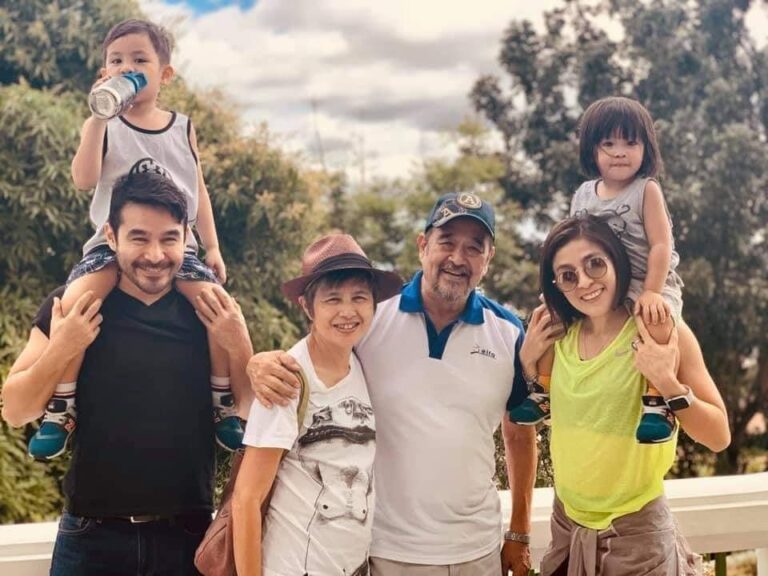
Dr. Carol Araullo, a doctor by training, activist by choice, columnist by accident, proud mother of two, and happy partner to a “liberated” spouse. (From Humans of Pinas Facebook page)

UK, Germany want exemption from deployment limit of Filipino healthcare workers

0

By: Daphne Galvez – Reporter/INQUIRER.net/February 15, 2021

MANILA, Philippines — The United Kingdom and Germany are seeking an exemption from the 5,000 per year limit on deployment of Filipino nurses and other health care workers, with the latter hoping to hire some 15,000 Filipino medical workers.

Labor Secretary Silvestre Bello III revealed on Monday that representatives of the two nations are negotiating with the Philippine government for an exemption from the deployment cap.

“We are now negotiating with the United Kingdom because the United Kingdom government has requested that they be exempted from the deployment cap of 5,000 cap a year and it is under negotiation,” he said in a Senate hearing.

“Another country, which is Germany, is also requesting for a deployment of 15,000 medical workers and these are all subject to discussion,” Bello added.

Bello explained that the deployment cap does not cover returning workers as it will only cover new hires.

In November last year, the Department of Labor and Employment (Dole) announced that President Rodrigo Duterte had already lifted the deployment ban on health-care workers, but only up to 5,000 were allowed to leave every year. 

Last year, the government suspended the deployment of doctors, nurses, and healthcare workers abroad to preserve human resources in fighting the novel coronavirus pandemic.