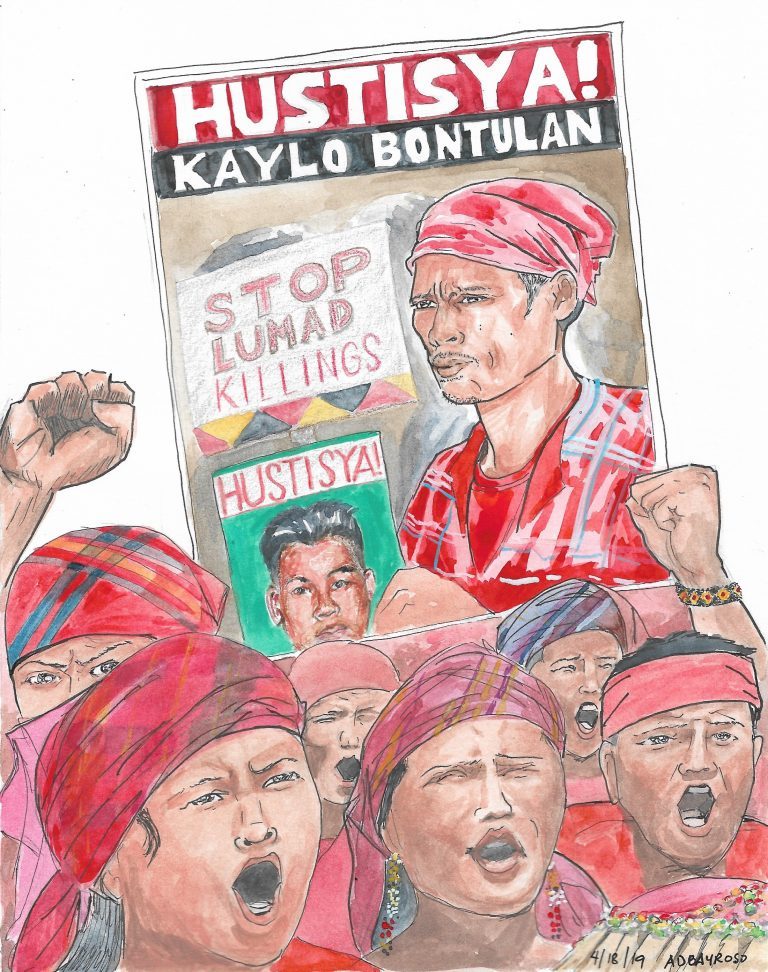
The post Grief and rage appeared first on Bulatlat.
IBON Facts & Figures: “Alternative to Power Privatization” [Excerpt]
![IBON Facts & Figures: “Alternative to Power Privatization” [Excerpt]](https://pinoyabrod.net/wp-content/uploads/2019/04/FFE_Alternative-to-Power-Privatization-768x576.jpg "IBON Facts & Figures: “Alternative to Power Privatization” [Excerpt]")
Amid power interruptions because of combined forced power outages due to maintainance and various power plants’ system problems, we share the introduction of the December 2014 IBON Facts & Figures issue titled “Alternative to Power Privatization”:
“When the Philippine government privatized the electric power sector in 2001, it promised cheaper and sustainable supply of energy due to the competition induced by the entry of other players. Years upon years after the Electric Power Industry Reform Act (EPIRA) was passed, the country is still burdened by the most expensive and still unstable electricity in Asia. Despite this, the government maintains that privatization is working.
“In many countries in Europe and Latin America, there is a growing trend of bringing back public ownership and management of power and other energy utilities because of the failure of privatization and globalization policies. Other countries have taken steps away from privatization despite the continued push of neoliberal institutions for more privatization projects.”
#MalalangEkonomiya
#MayMagagawa
#PeopleEconomics
#BeyondElections2019
Mga abugado humingi ng proteksyon sa Korte Suprema
Ayon kay Atty. Edre Olalia, pangulo ng NUPL, layunin ng petisyon na mabigyan sila ng proteksyon ng Kataas-taasang Hukuman laban sa mga banta at red-tagging sa kanilang mga kasapi.
Who is really for Filipino farmers and PH agriculture?
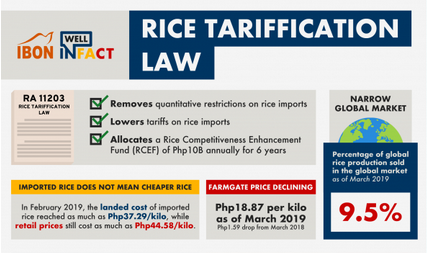
The Rice Tariffication Law supposedly ensures food security by liberalizing rice imports and making farming globally competitive. However, Filipino farmers see it as a threat to their livelihood. Some vouch for it, while others side with the dissenting voice. Who’s who?
Makabayan bloc sues AFP for electioneering, red-tagging
Members of Makabayan bloc filed on Wednesday, April 17, an election-related complaint against the Armed Forces of the Philippines (AFP) for online electioneering and red-tagging.
Don’t insist on low poverty threshold, address jobs crisis, gov’t told
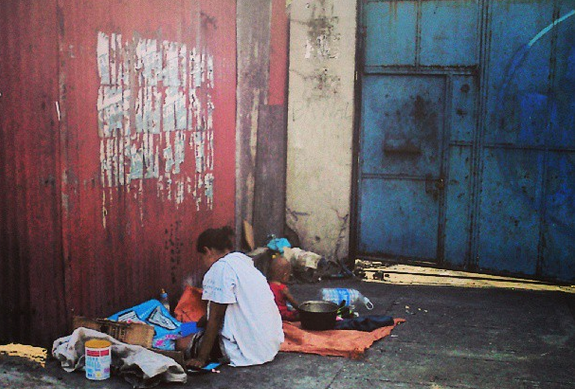
The National Economic and Development Authority (NEDA) recently attributed reduced poverty in the first semester of 2018 to the rising quality of jobs under the Duterte administration. But research group IBON said that dismal jobs creation, the magnitude of joblessness, poor quality work, and meager wages give away the true picture of Philippine poverty. The group stressed that government needs to first admit that there is a jobs problem to embark on real solutions to poverty.
Very weak job creation indicates an economy in crisis that deprives people of livelihoods, IBON said. Job generation in the first two years of the Duterte administration was the worst in six decades and nine administrations. Employment grew by an annual average of only 0.2% in in 2017 and 2018 compared to the 1.6%-3.9% annual average under the administrations since the time of Diosdado Macapagal in the 1960s.
IBON added that the persistence of joblessness and underemployment, where even those employed seek additional work, underscores the inability of the economy to generate enough stable and decent work. The group estimates the unemployment rate to have grown from 9% in 2016 to 10.3% in 2017 and 9.9% in 2018. In 2018, IBON estimates 4.6 million unemployed and 6.7 million underemployed Filipinos.
IBON also underscored that wages remain far below what households need on a daily basis. NEDA claims that poverty fell due to higher incomes from wages and salaries especially among the poorest families. IBON however pointed out, for instance, that the Php575.18 average daily basic pay of wage and salary workers in January 2018 is not even enough at 60% of the estimated Php955 National Capital Region family living wage at that time.
It should also be noted, said IBON, that the methodology of poverty and unemployment statistics obscures the real situation of poverty and unemployment. The unrealistically low poverty threshold results in millions of Filipinos not being counted as poor. Similarly, the definition of unemployment since 2005 results in millions of jobless Filipinos, including discouraged workers, not being counted as unemployed millions.
Rather than hyping supposedly on-track poverty reduction, the Duterte administration should count the real numbers of poor and unemployed Filipinos. This is the only real basis for an effective strategy for poverty alleviation, said IBON.
The Filipino people deserve a comprehensive and broad-based poverty alleviation strategy that includes enabling the economy to create jobs, raise people’s incomes and livelihood, and increase economic production and capacity for consumption. Government can embark on this instead of setting such a low poverty threshold and harping on reducing the number of poor just by changing the way they are counted, IBON said.
GRIEF
A Manobo woman wails on the last night of Datu Kaylo Bontulan’s wake at the evacuation center inside the UCCP Haran Compound on Monday. Bontulan was among the leaders of the Lumad communities from Talaingod, Davao del Norte who fled their homes since 2015 due to militarization. He died on April 7 during a military operation in Kitaotao, Bukidnon. (Mara S. Genotiva/davaotoday.com)
CPJ finds ‘shrinking space for free press in PH’


“This is a very great concern for the CPJ and the international community, because the Philippines has long enjoyed a very robust free press. We are concerned that not a lot is being done to protect your (Filipino journalists) ability to work without fear of retribution, prosecution, and attack.”
By ALYSSA MAE CLARIN
Bulatlat.com
MANILA — A high-level mission of the Committee to Protect Journalists (CPJ) raised alarm over the “shrinking space for free press in the Philippines” in a press conference, April 16.
CPJ believes that the attacks and threats critical media organizations are receiving are politically motivated.
The New York-based group cited the 11 legal cases filed against Rappler and the cyber attacks against small media outfits.
Leading the group is CPJ’s Board chair Kathleen Carroll, she’s joined by CPJ Asia Program Coordinator Steven Butler, and Alliance for Journalists’ Freedom director Peter Greste in meeting a wide range of journalists and government officials.
The group met with the presidential task force on media security, the secretary of the Department of Justice Mark Perete, as well as a wide group of journalists and media groups such as Bulatlat, Kodao Productions, AlterMidya, and the National Union of Journalists in the Philippines April 15 to get first-hand information about the situation of the media in the country.
“Government forces are finding new and increasingly sophisticated ways to shut down press freedom so the attacks on Rappler and others have a chilling effect across all journalists. That is profoundly damaging the country’s democracy,” Greste of ACF said.
“Our concern, not just about Rappler, but on the broader impact on the freedom of the press on the Philippines,” said Butler.
Carroll said that what concerns them most were two things: one; most journalistic killings have yet reached conviction, and second; the task force assigned for media concerns brush off the big issue of cyber-attacks against news organizations in the Philippines.
“Not taking the (cyberattacks) as an issue is a mistake, and we hope that they reconsider, ” she said.
Carroll also deemed the “red-tagging” of journalists and media people to be “very frightening.”
“This is a very great concern for the CPJ and the international community, because the Philippines has long enjoyed a very robust free press. We are concerned that not a lot is being done to protect your (Filipino journalists) ability to work without fear of retribution, prosecution, and attack,” said Carroll.
The group is set to publish its official mission report on it’s website after finalizing all the details.
The Philippines ranks fifth on CPJ’s Impunity Index, which measures the extent to which the killers of journalists escape punishment. The 2009 Maguindanao massacre, in which 32 of those killed were journalists, remains the worst single incident of journalist killing in CPJ records. Not a single conviction has yet been obtained for these murders.

The post CPJ finds ‘shrinking space for free press in PH’ appeared first on Bulatlat.