By Veronica Silva Cusi The Philippine Reporter LJI Reporter
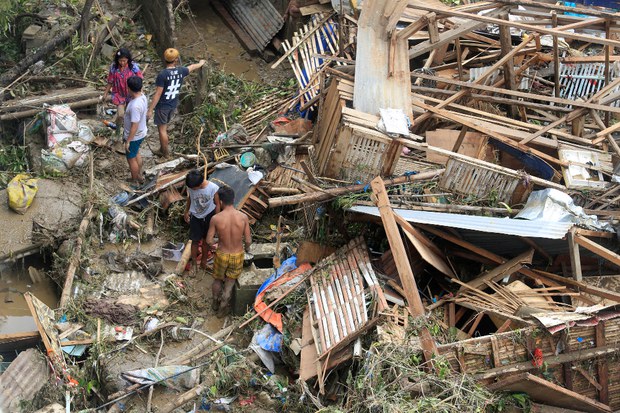
Wanting to share a little of the blessings from the quality of life abroad, some Filipino-Canadians have come together to send help to victims of Typhoon Odette (international codename: Rai) last Christmas.
Groups such as Migrante Canada, the University of the Philippines Alumni Association of Toronto (UPAAT) and the Philippine Advancement Through Arts and Culture (PATAC) have organized some fundraising events or simply called out for help on behalf of the thousands of individuals affected by the typhoon.
Migrante Canada, a member of an international coalition helping out migrants and their families, have raised almost $7,000 as of January 3. They relaunched SAGIP Migrante last December in cooperation with Consortium for People’s Development – Disaster Response (CPD-DR), consortium of organizations helping in disaster relief and rehabilitation.
SAGIP Migrante has been at the forefront of the group’s efforts to extend help to kababayans back home. Last year, Sagip Migrante also raised funds for those affected by the Taal Volcano eruption and Typhoon Rolly. When super typhoon Haiyan struck in 2013, claiming 6,000 lives, Sagip Migrante also helped.
Migrante Canada secretary-general Stefanie Martin told The Philippine Reporter that for Typhoon Odette they are working with allies and network members, such as BAYAN (Bagong Alyansang Makabayan/New Patriotic Alliance) to raise funds.
She added that Migrante Canada also supported the relief efforts of BAYAN Central Visayas earlier on when the typhoon hit the Visayas and Mindanao regions. BAYAN Central Visayas assessed the situation and the needs of those affected. They distributed 1,864 relief packs of food, masks, hygiene products, clothes, blankets and towels in Metro Cebu. BAYAN Central Visayas worked with Alibyo Cebu-Ayuda Network and UCCP (United Church of Christ in the Philippines) West Visayas Jurisdictional Area in this effort.
According to the website ReliefWeb, a humanitarian information service by the United Nations Office for the Coordination of Humanitarian Affairs (OCHA), Typhoon Rai affected 16 million people, with 2.4 million needing assistance. Funds totalling $107.2 million are requested in the relief efforts.
Martin added that Migrante International and its global chapters such as Migrante Canada have been working with the Consortium “as they are directly connected with the various relief and disaster response in different regions in the country.”
“The delivery of support from abroad is more guaranteed especially after the typhoon as most of the communications lines and electricity are not yet restored,” Martin added.
On its website, Migrante Canada said they “continue to urge and demand the Philippine government to release calamity funds and to respond quicker to provide immediate relief and assistance to the victims of Typhoon Odette.”
UPAAT said in an email to members (this reporter included) that they have launched the “Sagip Pilipinas program, a fundraiser to benefit the victims of this disaster in Antique.” They said they are working with University of the Philippines Visayas Student Council to deliver relief efforts to the Philippines.
Also last December, PATAC held a Tulong Paslit (Help a Child) virtual benefit concert. The Eventbrite description stated that “a group of concerned Filipinx Canadians and local artists came together to raise fund of the Task Force for Children of the Storm (TFCOS) Philippines.”
—————-
ERRATUM:
This story has been amended to correct the role of Stefanie Martin in Migrante Canada. In the story on January 7, 2022 I misidentified her as “chairperson.” She is, in fact, the secretary-general of Migrante Canada and Danilo De Leon is the chairperson.. My sincere apologies for the oversight.
It is futile to validate a degree that only exists in the arms of strong propaganda machinery.
Today, a degree can be used as a political weapon.
A Bachelor’s degree represents three things: competencies that are typical of any graduate of a prestigious institution, the network that comes with being affiliated with the said institute, and of course, written proof of one’s intellect. Just like any other job, decorating your resume by including a degree goes beyond satisfaction and pride as a working professional. However, it is only then when we truly realize that the moment we start counting our achievements is the time we abandon the true sense of academic triumph.
Structuring the Oxford DegreeNarrative
The matter of BBM’s Oxford Degree gave birth to the following narratives:
Outright denial of factual statements – Most supporters tend to deny factual statements coming from valid sources. In this case, their biases dominate their capacity to validate sources of information (something that is typical for a country that does not provide substantial support to educating its citizens at such heights). Their lack of informational literacy, much less their critical thinking skills keeps supporters from providing the benefit of the doubt, using distrust as its main source of blockage to counter the validity of factual evidence.
A Special Diploma is the same as a Bachelor’s Degree – This is a surprising narrative that emerged out of a genuine attempt to do research about the issue. However, this case is equally problematic, or may perhaps be even worse to the former, since it is a matter of interpreting and responding to factual evidence. Oxford’s statements ranged from “did not finish his degree” (Oxford PH Society, 2021) to “only got a special diploma.” Although the words “a special diploma is not a degree” were already stated, supporters remain keen on defending BBM’s merit. But in this case, the mere mention of the Special Diploma is enough to solidify and rekindle their support to BBM even though they were already being straight-up lied onto their faces. Given that, this narrative could also breed sub-narratives mentioning that “at least BBM is still affiliated with Oxford” even though the presidential aspirant himself lied and blatantly promoted himself as an Oxford graduate of a Bachelor of Arts in Philosophy, Politics and Economics (PPE) degree – far from a mere Special Diploma in Social Studies.
We do not need educated leaders – This is by far the most annoying out of all narratives that may have already took the internet by storm. This sudden shift to appreciating BBM as an honest man is nothing short of futile fanaticism in the sense that even though they have already recognized the invalidity of BBM’s Oxford degree, their pride as supporters do not allow them to admit total defeat. Instead, this leads them to commit yet another one of the Filipinos’ most disgusting cultures – crab mentality. It is also worth giving them credit for realizing that they can utilize BBM’s weakness and turn it into a strength by pointing out that the highly-educated ones are more capable of exploiting the common man compared to those who appear “humble.” It is through this narrative that BBM takes the moral high ground, still retaining his identity as someone who is trusted by his supporters, with or without the Oxford degree. This narrative can also go as far as saying that there is no perfect candidate, or that all candidates (or any other presient in history) has lied and has even committed crimes such as graft and corruption. Although, these narratives begs the question: does supporting a non-educated person mean that we are normalizing the entry and re-entry of criminals in public service?
Respect my opinion – No questions asked. This is the peak of intellectual stubbornness that is unrivaled and typical not only to the educated, but most especially to those have not attained any academic opportunity. This is the peak of what it means to be a fanatic – to surrender before logic but not admit defeat.
Ultimately, these narratives give way to the most despicably hypocritical stances a loyalist could possibly patronize:
It is not about the degree. It’s about the person.
A lot of us could actually learn a thing or two from BBM’s indefatigably relentless defense of his Oxford degree because it entails what most people have already fallen guilty to in terms of judging one’s character. To most Filipinos, a degree is only an over-glorified decoration that gives licenses for one to be self-righteous and arrogant.
Education has now lost its true sense. It is now a means for one to be promoted to a higher ranking in society. And although BBM presents himself as someone who represents the layman, his pursuits to force himself into an educated disposition prove just how shallow his views are when it comes to education as well as representing his unsung tendencies to be elitist, ready to throw the toiling masses under the bus at the first chance he gets.
For BBM, an Oxford degree would amplify the range of his capacity to exploit.
BBM as an Intellectual
It cannot be denied that BBM holds an incredible amount of influence and stature as a political individual. This leads us to ask the question as to why his party is so hell-bent on proving the validity of his Oxford degree?
According to MIT Brain and Cognitive Scientist Prof. David Rand, social media provides people with little to no opportunity to slow down their consumption of information, further exacerbating their tendency to patronize false information that is consistent with their biases.
“People who believed false headlines tended to be the people who didn’t think carefully, regardless of whether those headlines aligned with their ideology” (Rand & Ross, 2018).
This factoid is of focal importance especially when it comes to promoting BBM as an intellectual candidate. The BBM personality needs something that is easy to remember and is more likely to be conspicuously scrolled upon, bearing that phantasmagoric micro-memory of BBM as a smart politician.
It is easier to remember BBM speaking in fluent English. It is easier to remember BBM inserting a few trivia then and there.
Instead of going through specific detail, idealizing BBM as an intellectual on the superficial level is much easier and way more impactful compared to actually going through the specifics of his degree.
BBM may have also realized that out of all the legitimate presidentiables for 2022, he is by far the only one who is academically inferior to a point that he is even beneath Manny Pacquiao in terms of sheer academic merit.
An Oxford degree (or at least the reputation of being affiliated with Oxford) could at least put him at par with the other candidates for president.
However, nothing about him is worth noting as derivative from an Oxford education. As far as we are concerned, BBM’s only advantage is that he is gunning for the presidency under the shadow of his dead, rotting corpse of a father.
Without the dictator Marcos, who knows who BBM might have been.
But then again, it doesn’t really matter. With or without the degree, BBM benefits from the intrigue.
The fact that BBM’s degree has been the talk of the town since 2015 already solidifies and ensures his presence in the online arena. It doesn’t matter if the comments and reviews are negative; what we have to understand is that social media has the capacity to spread a single piece of information through continuous engagement.
As long as BBM is being talked about, his mere presence contributes to the “association game” that feeds on our biases, may it be negative or supportive.
From likes to comments to shares, it all works for the benefit of BBM, and he knows that.
For BBM, the quest to prove the validity of his Oxford degree is nothing more but a means for him to enjoy free advertising.
MANILA, Philippines – Tinatakbuhan pa rin ni presidential aspirant Ferdinand “Bongbong” Marcos Jr. ang $353 milyong multa na pinababayaran sa kanya ng isang korte sa Estados Unidos bunga ng pagsuway niya sa desisyon kaugnay ng kasong isinampa ng mga biktima ng Martial Law ng kanyang ama.
Ayon sa mga dokumentong nakalap ng Rappler, inutusan ng United States District Court at Court of Appeals si Marcos Jr. at ang ina nitong si Imelda na magbayad ng $100,000 kada araw simula noong 1995 bilang multa sa pagsuway nila sa isang naunang desisyon ng korte.
Noong Nobyembre 20, 1991, nagpaunang utos ang US District Court of Hawaii para pagbawalan ang mga Marcos na galawin ang kanilang mga ari-arian sa Amerika habang nililitis ang class suit ng human rights victims ng diktadura ng yumaong Ferdinand Marcos.
Noong 1995, nagbaba ng hatol ang District Court of Hawaii na dapat magbayad ang mga Marcos ng $2 bilyon bilang danyos sa mga biktima ng rehimeng Marcos. Kaya noong Pebrero 3, 1995, naging permanente ang utos na huwag galawin ang mga ari-arian dahil dito kukunin ang danyos.
Nilabag nina Marcos Jr. at Imelda ang utos ng korte sa US nang makipagkasundo sila sa gobyerno ng Pilipinas noong Hunyo 1992 na paghatian ang mga ari-arian ng diktador. Ibinenta nila ang ilang artwork sa Amerika, at saka pinaghatian ang napagbentahan.
Noong Disyembre 1993, pumirma ng dalawa pang kasunduan sina Imelda at Marcos Jr. kasama ang pamahalaan ng Pilipinas. Ang mga kasunduan noong 1993 ang mas detalyado – ibibigay sa pamilya Marcos ang 25% ng ari-arian, at hindi nila kailangang magbayad ng buwis. Bilang kapalit, ibabasura rin ang mga kriminal na kaso laban sa buong pamilya.
Sabi ng US District Court of Hawaii, nagamit ang mga kasunduan noong 1993 para patagong maprotekahan ng mga Marcos ang $365 milyon na yaman sa Switzerland.
Ang mga kasunduang ito ay paglabag sa utos ng korte sa Amerika na huwag galawin ang kanilang mga ari-arian duon. Bilang parusa sa pagsuway sa utos ng korte, ang arawang multa na dapat bayaran ng mga Marcos ay umabot na sa kabuuang $353 million noong 2011. Ang $353 million ay katumbas ng P18 bilyon kung susundin ang palitan ng dolyar at piso nitong Huwebes, Enero 13, 2021.
Contempt o pagsuway
Ang lahat ng ito ay tinatawag na contempt judgment, o hatol na parusa para sa pagsuway sa korte.
Sa utos na pagmumulta, pinangalanan ng United States District Court at Court of Appeals sina Marcos Jr. at Imelda bilang kinatawan ng estate o mga ari-arian ng yumaong diktador.
Ayon sa hatol ni Judge Manuel Real ng District Court of Hawaii sa kanyang desisyon noong Enero 25, 2011, ang pagmamatigas at sadyang pagsuway ng mga Marcos sa korte ay nagdulot ng pinsala sa mga biktima ng pang-aabuso ng karapatang pantao.
Pinagtibay ng US Court of Appeals Ninth Circuit ang desisyong ito noong Oktubre 2012. Sinabi ng korte na ang $353 milyong contempt judgment ay maaaring ipatupad ni Celsa Hilao. Siya ang ina ng estudyanteng aktibistang si Liliosa Hilao na pinahirapan at pinatay noong Martial Law, at isa siya sa mga kasapi ng makasaysayang class suit laban sa yumaong diktador.
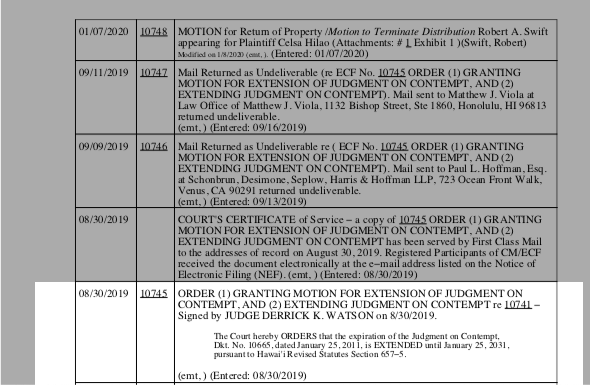
Noong Agosto 2019, nagpasya ang bagong hukom ng District Court ng Hawaii na si Derrick Watson na patagalin pa ang bisa ng hatol hanggang Enero 25, 2031 – maaari pang singilin sa mga Marcos ang multang $353 milyon sa loob ng susunod na siyam na taon.
SOURCE. A page from the docket records of the US District Court of Hawaii for the case of Estate of Ferdinand E. Marcos Human Rights Litigation
Nararapat na parusa
Inapela ng mga Marcos ang hatol sa US Court of Appeals. Para sa kanila, walang bisa at namumuwersa ito.
Nang pinagtibay ng US Court of Appeals ang hatol ng contempt noong 2012, sinabi ng korte. “Kahit pa tama ang mga Marcos na may pamimilit sa parusang ito, malinaw rin na ito ay kaukulang kabayaran.”
Dagdag ng US Court of Appeals: “Ipinaliwanag din ng district court na ang multang $100,000 kada araw ay tama lang dahil ang pagsuway ng mga Marcos sa utos ng korte ay direktang nagbibigay-pinsala kay Hilao, kabilang ang $55,000 na nawawalang interes kada araw at ang iba pang nawawala [sa mga biktima] dahil sa sadyang pagpapatagal ng mga Marcos sa kaso.”
Bukod sa pagtakas sa hatol na contempt, hindi pa rin binabayaran ng mga Marcos ang $2 billion na danyos na naipanalo ng mga human rights victims noong 1992. Noon kasing nagpetisyon ang mga biktima sa korte sa Pililipinas na sila ang maningil sa mga Marcos, nagdesisyon ang Court of Appeals sa Pilipinas noong 2017 na wala raw jurisdiction ang korte sa Hawaii.
Kapag pumunta sina Marcos Jr. at Imelda sa Amerika
Nagagawa man nilang takasan ang contempt judgment na ito, mahihirapan namang pumunta si Marcos sa Amerika.
Halimbawa, kapag nanalo si Marcos bilang pangulo at pumunta siya sa Amerika, hudyat itong maipatupad ang hatol ng mga korte roon. Maaari ring humiling ang mga abogado ng biktima ng subpoena para pilitin si Marcos na harapin ang korte at magpaliwanag. Ayon ito kay Robert Swift, ang Amerikanong abogado na sumusubok bumawi ng US assets ng mga Marcos para ipamahagi sa mga martial law victim.
na balewalain ang hatol hanggang mawalan ito ng bisa sa 2031? https://c451ece40882acea17f1c493f50d60ae.safeframe.googlesyndication.com/safeframe/1-0-38/html/container.html
MANILA, Philippines – Tinatakbuhan pa rin ni presidential aspirant Ferdinand “Bongbong” Marcos Jr. ang $353 milyong multa na pinababayaran sa kanya ng isang korte sa Estados Unidos bunga ng pagsuway niya sa desisyon kaugnay ng kasong isinampa ng mga biktima ng Martial Law ng kanyang ama.
Ayon sa mga dokumentong nakalap ng Rappler, inutusan ng United States District Court at Court of Appeals si Marcos Jr. at ang ina nitong si Imelda na magbayad ng $100,000 kada araw simula noong 1995 bilang multa sa pagsuway nila sa isang naunang desisyon ng korte.
Noong Nobyembre 20, 1991, nagpaunang utos ang US District Court of Hawaii para pagbawalan ang mga Marcos na galawin ang kanilang mga ari-arian sa Amerika habang nililitis ang class suit ng human rights victims ng diktadura ng yumaong Ferdinand Marcos.
Noong 1995, nagbaba ng hatol ang District Court of Hawaii na dapat magbayad ang mga Marcos ng $2 bilyon bilang danyos sa mga biktima ng rehimeng Marcos. Kaya noong Pebrero 3, 1995, naging permanente ang utos na huwag galawin ang mga ari-arian dahil dito kukunin ang danyos.
Nilabag nina Marcos Jr. at Imelda ang utos ng korte sa US nang makipagkasundo sila sa gobyerno ng Pilipinas noong Hunyo 1992 na paghatian ang mga ari-arian ng diktador. Ibinenta nila ang ilang artwork sa Amerika, at saka pinaghatian ang napagbentahan.
Noong Disyembre 1993, pumirma ng dalawa pang kasunduan sina Imelda at Marcos Jr. kasama ang pamahalaan ng Pilipinas. Ang mga kasunduan noong 1993 ang mas detalyado – ibibigay sa pamilya Marcos ang 25% ng ari-arian, at hindi nila kailangang magbayad ng buwis. Bilang kapalit, ibabasura rin ang mga kriminal na kaso laban sa buong pamilya.
Sabi ng US District Court of Hawaii, nagamit ang mga kasunduan noong 1993 para patagong maprotekahan ng mga Marcos ang $365 milyon na yaman sa Switzerland.
Ang mga kasunduang ito ay paglabag sa utos ng korte sa Amerika na huwag galawin ang kanilang mga ari-arian duon. Bilang parusa sa pagsuway sa utos ng korte, ang arawang multa na dapat bayaran ng mga Marcos ay umabot na sa kabuuang $353 million noong 2011. Ang $353 million ay katumbas ng P18 bilyon kung susundin ang palitan ng dolyar at piso nitong Huwebes, Enero 13, 2021. https://www.youtube.com/embed/qPpB5LbAHGk?autoplay=0&rel=0&enablejsapi=1&modestbranding=1&origin=https%3A%2F%2Fwww.rappler.com&iv_load_policy=3&mute=0&controls=1&playsinline=1&showinfo=0&widgetid=1&embed_config=%7B%22adsConfig%22%3A%7B%22adTagParameters%22%3A%7B%22iu%22%3A%22%2F15125093%2Fyt_pfp%22%7D%7D%2C%22nonPersonalizedAd%22%3Afalse%7D
Contempt o pagsuway
Ang lahat ng ito ay tinatawag na contempt judgment, o hatol na parusa para sa pagsuway sa korte.
Sa utos na pagmumulta, pinangalanan ng United States District Court at Court of Appeals sina Marcos Jr. at Imelda bilang kinatawan ng estate o mga ari-arian ng yumaong diktador. https://c451ece40882acea17f1c493f50d60ae.safeframe.googlesyndication.com/safeframe/1-0-38/html/container.html
Ayon sa hatol ni Judge Manuel Real ng District Court of Hawaii sa kanyang desisyon noong Enero 25, 2011, ang pagmamatigas at sadyang pagsuway ng mga Marcos sa korte ay nagdulot ng pinsala sa mga biktima ng pang-aabuso ng karapatang pantao.
Pinagtibay ng US Court of Appeals Ninth Circuit ang desisyong ito noong Oktubre 2012. Sinabi ng korte na ang $353 milyong contempt judgment ay maaaring ipatupad ni Celsa Hilao. Siya ang ina ng estudyanteng aktibistang si Liliosa Hilao na pinahirapan at pinatay noong Martial Law, at isa siya sa mga kasapi ng makasaysayang class suit laban sa yumaong diktador.
Noong Agosto 2019, nagpasya ang bagong hukom ng District Court ng Hawaii na si Derrick Watson na patagalin pa ang bisa ng hatol hanggang Enero 25, 2031 – maaari pang singilin sa mga Marcos ang multang $353 milyon sa loob ng susunod na siyam na taon.
SOURCE. A page from the docket records of the US District Court of Hawaii for the case of Estate of Ferdinand E. Marcos Human Rights Litigation
Nararapat na parusa
Inapela ng mga Marcos ang hatol sa US Court of Appeals. Para sa kanila, walang bisa at namumuwersa ito.
Nang pinagtibay ng US Court of Appeals ang hatol ng contempt noong 2012, sinabi ng korte. “Kahit pa tama ang mga Marcos na may pamimilit sa parusang ito, malinaw rin na ito ay kaukulang kabayaran.”
Dagdag ng US Court of Appeals: “Ipinaliwanag din ng district court na ang multang $100,000 kada araw ay tama lang dahil ang pagsuway ng mga Marcos sa utos ng korte ay direktang nagbibigay-pinsala kay Hilao, kabilang ang $55,000 na nawawalang interes kada araw at ang iba pang nawawala [sa mga biktima] dahil sa sadyang pagpapatagal ng mga Marcos sa kaso.”
Bukod sa pagtakas sa hatol na contempt, hindi pa rin binabayaran ng mga Marcos ang $2 billion na danyos na naipanalo ng mga human rights victims noong 1992. Noon kasing nagpetisyon ang mga biktima sa korte sa Pililipinas na sila ang maningil sa mga Marcos, nagdesisyon ang Court of Appeals sa Pilipinas noong 2017 na wala raw jurisdiction ang korte sa Hawaii.
Kapag pumunta sina Marcos Jr. at Imelda sa Amerika
Nagagawa man nilang takasan ang contempt judgment na ito, mahihirapan namang pumunta si Marcos sa Amerika.
Halimbawa, kapag nanalo si Marcos bilang pangulo at pumunta siya sa Amerika, hudyat itong maipatupad ang hatol ng mga korte roon. Maaari ring humiling ang mga abogado ng biktima ng subpoena para pilitin si Marcos na harapin ang korte at magpaliwanag. Ayon ito kay Robert Swift, ang Amerikanong abogado na sumusubok bumawi ng US assets ng mga Marcos para ipamahagi sa mga martial law victim. https://c451ece40882acea17f1c493f50d60ae.safeframe.googlesyndication.com/safeframe/1-0-38/html/container.html
Ganito rin ng mangyayari kung si Imelda ang pupunta sa Amerika.
Kung hindi pa rin sila magbayad o hindi sumunod sa subpoena kahit nasa US pa sila, sinabi ni Swift sa email sa Rappler, maaaring ituring iyon na pambabastos sa korte at maaari silang ikulong hanggang makapagpaliwanag sila tungkol sa kanilang mga ari-arian.
Bakit mahalaga ang isyung ito?
Tumatakbo pagkapresidente si Marcos Jr. sa Mayo 2022. Kung siya ay patuloy na sumusuway sa hukuman sa loob ng 27 taon na, ano ang pipigil sa kanya, kung siya’y maging pangulo, na patuloy na balewalain ang hatol hanggang mawalan ito ng bisa sa 2031?
Bukod sa pinag-uusapang multa na $353 milyon, mayroon pang P125 bilyon na nakaw na yaman ng mga Marcos ang nililitis hanggang ngayon para mabawi ng gobyerno at maipamahagi sa mga Pilipino.
Hanggang ngayon ay itinatanggi ni Marcos Jr. ang pagnanakaw ng kanyang ama at pamilya kahit na P174 na bilyon na ang nabawi ng gobyerno na nakaw na yaman ng pamilya Marcos.
Pati ang buwis na dapat nilang bayaran para sa ari-ariang nasa kanila pa ay hindi pa rin nareresolba. Sa ilang petisyon sa Commission on Elections na nagtatangkang humarang sa kandidatura ni Marcos Jr., sinabing nakakasama sa mga Pilipino ang hindi pagbabayad ng pamilya Marcos ng buwis sa kanilang ari-arian. Isa na namang Ferdinand Marcos ang sangkot, ayon sa kanila, at ang Junior na ito ang umaagaw ng perang dapat ay para sa mga Pilipino. Rappler.com
By: Neil Arwin Mercado – Reporter /INQUIRER.net /January 13, 2022
MANILA, Philippines — The P328 billion worth of “ill-gotten” wealth and unpaid taxes from the Marcos family may no longer be recovered if former senator Ferdinand “Bongbong” Marcos Jr. gets elected as president, former Supreme Court associate justice Antonio Carpio said Thursday.
During the 1Sambayan TAPATan media forum, Carpio said Marcos Jr. may even abolish the Presidential Commission on Good Government (PCGG) which is primarily tasked to recover ill-gotten wealth accumulated by former president Ferdinand Marcos Sr., his family, relatives, and subordinates.
The PCGG, created by Executive Order No. 1, the first edict that the late Corazon Aquino signed shortly after assuming power after People Power 1, is still trying to recover more than P125 billion worth of Marcos assets—which were allegedly part of the family’s ill-gotten wealth.
“That’s really the problem. If Bongbong Marcos becomes president, I do not expect the P125 billion to be recovered anymore. He’ll probably abolish the PCGG,” Carpio said.
Aside from this, Carpio said the Marcos family also owes the government P203 billion in estate tax.
“There’s a bigger problem because he owes the government P203 billion as of now for the estate tax. He has been ordered by the court to pay, he refuses to pay up to now,” Carpio said.
“Nobody seems to hold him into account for that. If he becomes president, lalo na (all the more). Goodbye na ‘yan (That’s a goodbye). That P203 billion, if you do not collect that in five years, you do not even send a demand letter that prescribes, hindi mo na makolekta yan (you can no longer collect that),” he added.
Atty. Vic Rodriguez, chief of staff and spokesperson of Marcos Jr., refused to respond to Carpio’s remark saying it is “purely speculative.” He also described Carpio as someone who “espouses divisiveness.”
“We do not respond to a purely speculative scenario concocted by the same man who espouses divisiveness instead of national unity and [has] wrongly led equally righteous groups and individuals like him, in filing the numerous nuisance petitions against presidential aspirant Bongbong Marcos,” Rodriguez said in a text message to INQUIRER.net.
“His signature ‘yellow political tirades’ purposely meant to foment intrigue such as this are better left ignored,” he added.
MANILA, Philippines – The administration of President Rodrigo Duterte has yet to respond to a request by United Nations (UN) special rapporteurs for updates regarding the “Bloody Sunday” killings in March 2021 and other attacks against human rights defenders in the Philippines.
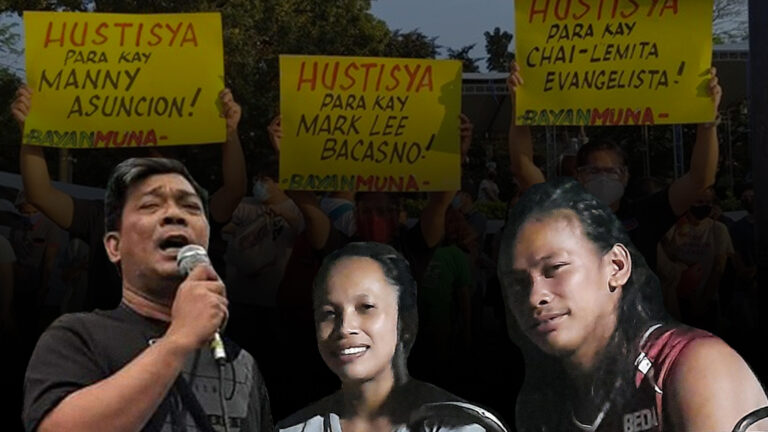
In an official communication made public on Tuesday, January 11, four UN experts asked the Duterte government to provide updates on its investigations into killings of human rights defenders Emmanuel “Manny” Asuncion, Mark “Makmak” Bacasno, Melvin Dasigao, Chai Evangelista, and Ariel Evangelista.
The five were among those killed during the Bloody Sunday in March 2021. The Department of Justice in December 2021 has charged 17 cops for murder over the death of Asuncion.
The UN experts asked the Duterte government for the “steps taken to prevent similar killings occurring in the future. If no inquiries have taken place, or if they have been inconclusive, please explain why, and how this is compatible with the Philippines’ international human rights obligations.”
The letter was sent to the Philippine government on October 28, 2021 and was only made public after 60 days. The Duterte administration failed to respond within this period, according to a post published on website of UN special rapporteur on human rights defenders Mary Lawlor, one of the signatories.
Aside from Lawlor, the letter was also signed by three other UN experts:
Morris Tidball-Binz, special rapporteur on extrajudicial, summary or arbitrary executions
Clément Nyaletsossi Voule, special rapporteur on the rights to freedom of peaceful assembly and of association
Fionnuala Ní Aoláin, special rapporteur on the promotion and protection of human rights and fundamental freedoms while countering terrorism
Justice Secretary Menardo Guevarra on Tuesday told Rappler that he is still checking as the communication might have been sent through the Philippine Embassy in Geneva.
This is not the first time the UN experts have raised the killings of rights defenders, among other human rights violations seen in the Philippines, including the violent war on drugs.
While the October 2021 communication cited a response from the government to a previous 2020 letter, the UN experts said it only informed them that the communication “was sent to the capital for consideration.”
“We regret that no substantive response has been received to date, addressing the allegations of extrajudicial killings included in the communication, or answering the questions to [the Duterte government] in relation to these allegations,” they said.
A quick look in the publicly-available UN special procedures database, where government responses are also posted, shows that the Duterte administration only replied to two out of six official communications sent to them in 2021. The government has also yet to reply to an October 8, 2021 letter concerning cyberattacks against alternative media outlets Bulatlat and Altermidya, and Karapatan.
Deteriorating situation for defenders
UN special rapporteurs also expressed “grave concerns” on the continued attacks against human rights defenders under Duterte, highlighting that they “continue to receive information that, rather than improving, the situation for human rights defenders in the Philippines continue to deteriorate.”
“We are seriously concerned by the information which would indicate that these individuals have been targeted in response to their legitimate exercise of the right to freedom of expression, as well as the right to freedom of peaceful assembly and of association,” they said.
The slain human rights defenders cited in the communication by the UN experts are part of the hundreds killed since Duterte took office in 2016.
As of August 2021, rights group Karapatan had documented 421 incidents of killings since July 2016, while there were also 504 recorded cases of frustrated killings. (READ: Prelude to 2022? Thousands of grassroots organizers arrested, hundreds killed)
“We reiterate our call [to the PH government] to take urgent and effective steps to ensure the safety and security of human rights defenders and to create an enabling environment for them to carry out their peaceful and legitimate human right activities,” the UN experts said. – With reports from Lian Buan/Rappler
Many parents of kids who grew up in the ‘80s and ‘90s were able to send their kids to school with the help of College Assurance Plan or CAP. The founders of the company—Enrique A. Sobrepeña Jr., James Marsh Thomson, Rafael E. Evangelista, Ernesto M. Espaldon, and Romulo M. Espaldon—hit upon (what was then) a brilliant idea: ask for small, regular payments from clients (mostly parents preparing for their children’s education) in exchange for a guarantee of full payment of tertiary-level tuition. Parents were assured of the money for their kids’ education, and CAP had a steady source of revenues. It was a win-win for both sides.
“The CAP traditional pre-need plan was conceived in 1980 to provide parents with an inflation-free savings vehicle that guarantees payment to the school of tuition fees due when the beneficiary of the plan enters college,” CAP said on its website, which is now defunct.
For a time, the scheme worked. CAP became the pre-need company of its day, inspiring other companies to replicate its business model and offer their own plans to clients. But today, CAP is a shell of its former self. In a now infamous case that has become a cautionary tale for the insurance industry, the company crashed and burned in the 2000s, unable to pay its obligations to its clients, many of whom, in turn, lost their hard-earned life savings.
But how could a once-thriving company with what was thought to be a foolproof business model suddenly crumble? What exactly happened to CAP?
What happened to CAP
The collapse of CAP was the result of a combination of factors, foremost of which were the deregulation of fees for private colleges and universities in 1992, the Asian financial crisis of 1997, and enforcement of new rules that measured the value of CAP’s finances and found it severely lacking, which eventually hastened its demise.
We’ll go over each one and try to explain it without getting caught up in extraneous details.
First, tuition deregulation. Prior to 1992, the average annual increase in college fees was only around 10 to 15 percent. But that year the Department of Education (then called the Department of Education Culture and Sports) issued DO 16 that essentially allowed schools to set their own guidelines covering tuition subject to consultations. Between 1990 and 1995, average tuition surged by as much as 275 percent. And between 1996 to 2000, tuition increased by another 26 percent, according to this paper submitted by undergraduate business administration students of Xavier University-Ateneo de Cagayan in 2015.
That proved to be a major hurdle for CAP. With skyrocketing school fees, what the company was earning from the premiums paid by its clients was no longer enough to cover the claims.
“For instance, CAP said that fees at the Ateneo de Manila stood at P9,200 in 1990, but swelled to P37,000 per semester in 2000,” the paper said.
Other educational pre-need companies adjusted their offerings because of this development; instead of promising to cover the entirety of the fees—however much it was—the firms would instead only offer fixed value plans, or those with a pre-determined amount at the time of the plan’s maturity.
But CAP went another route; it continued to offer its traditional educational plans, ostensibly as a strategy to maintain its position as the company that had the best plans in the market. While the company did manage to attract more business in the beginning, it may have proven to be a costly mistake in the long run.
Financial crisis and Actuarial Reserve Liability
The Asian financial crisis, which decimated many other companies and industries at the time, also had a hand in pummeling CAP’s business.
During its heyday, CAP invested its revenues in things like real estate, which helped grow that money. Some of that money went into a trust fund that acted as sort of guarantee that the company had enough funds to cover its obligations to its clients, as well as have plenty left over as income. This, in itself, wasn’t bad; it’s common practice for companies to invest the money it receives from clients. The problem was that CAP allegedly invested much more of its funds than what was allowed by regulators, which at the time was the Securities and Exchange Commission (SEC).
Additionally, it was reported that CAP invested in real estate businesses owned by some of its board members, including Nasugbu Properties and Camp John Hay Development, which constituted clear conflict of interest.
By the time the crisis hit in 1997, CAP’s real estate properties dropped in value to almost half. Bobby Café, who was executive vice president of CAP, told The Manila Times in 2014 that the company was still able to operate during and after the crisis because it was able to replenish the trust fund with new capital from other sources.
In many accounts, it was the enforcement of a new rule by the SEC in 2002 that proved to be the beginning of the end of CAP. This new rule involved using what’s called the Actuarial Reserve Liability, or funds or assets set aside by insurance companies in case of future liabilities, to measure just how much reserve funds the company has in case they needed to pay clients immediately. But applying this valuation method on CAP meant that the company “did not have enough funds to cover the future requirements of its existing planholders.”
“In 2002, the deficiency in the trust fund was only P2.5 billion,” the Ateneo de Cagayan paper says. “By 2003, the deficiency had leapfrogged to P17.2 billion. Independent actuarians, however, calculate the deficiency then to have stood at P25.7 billion.”
In 2004, there were reports that CAP was finding it difficult to pay the tuition of its planholders, leading some schools like Ateneo De Manila University and the University of Santo Tomas to eventually terminate its arrangement with the company. This, in part, eventually led the SEC to revoke CAP’s license to sell its educational plans.
Grasping at straws
Faced with mounting problems—unable to pay its obligations to its clients and disallowed to sell new plans to generate revenues—CAP’s parent company College Assurance Plan Philippines Inc., filed a Petition for Rehabilitation with the Makati Regional Trial Court a year later, in August 2005. But the SEC opposed CAPPI’s rehabilitation and said so in a comment filed with the Makati RTC. This began a protracted legal battle between CAP and the SEC. Eventually, regulatory functions over the insurance industry was transferred from the SEC to the new Insurance Commission, which, along with the Pre-Need Code of the Philippines, was created through RA 9829 in 2009.
Needless to say, while all this was going on, thousands of confused and angry policyholders found themselves grasping at straws, wondering if they would ever see their money again. Many of them stormed the CAP offices in different parts of the country, demanding that they get their money back. According to the Ateneo de Cagayan’s research, from 1980 to 2003, CAP had a total of 780,603 (planholders), apart from 37,421 planholders that were fully served. Many of them have banded together in online communities such as Facebook groups for updates and to offer support to each other.
Meanwhile, CAP was placed under court receivership in December 2005, where it has been ever since. The Makati RTC approved a rehabilitation plan in 2013, which paved the way for the company to start paying the claims of its planholders. But the Supreme Court issued a TRO on the claims in order to “evaluate and decide on issues raised by the SEC.” As far as we could tell, payments to claimants have not resumed since.
Sources:
Case Study on College Assurance Plan by Rogerlyn Jaminal, Michelle Florence Ondong, Katrina Tan, Nikka Ugsod, Jude Cyril Viernes; Xavier University – Ateneo De Cagayan (February 23, 2015)
MANILA, Philippines – An infectious disease specialist said on Monday, January 10, that the spike in COVID-19 infections in virus epicenter Metro Manila is an “indication of massive and uncontrolled community transmission” of the highly contagious Omicron variant.
In a text message to Rappler, Dr. Rontgene Solante said the surge in cases is “an indication of how transmissible the virus is, three to fives times vs Delta, high secondary attack and high household transmission.”
Solante is part of the Philippines’ vaccine expert panel. He heads the adult infectious diseases and tropical medicine unit at San Lazaro Hospital, and is former president of the Philippine Society for Microbiology and Infectious Diseases.
Solante was reacting to the latest findings of Octa Research that the positivity rate, or the percentage of all COVID-19 tests performed that turn out positive, has reached 52% in the capital region.
A positivity rate of 52% means that one in two people tested turned out positive for COVID-19.
This comes as the country is once again dealing with a fresh surge in infections driven by Omicron variant, which is sweeping across the globe. In the Philippines, a record-high of 28,707 new infections were reported on Sunday, January 9, bringing total caseload to nearly 3 million.
The Philippines had detected 43 cases of Omicron, but there are concerns that the actual number may be far higher, as the Philippine Genome Center is only sequencing a small percentage of the positive cases.
The latest genome sequencing on January 2 showed that 60.41% or 29 of the 48 samples are positive for Omicron, including 19 local cases from Metro Manila, which has a population of more than 13 million.
Solante stressed that the massive transmission could also be attributed to public poor compliance with health protocols, such as physical distancing, wearing of face masks, and ensuring proper ventilation.
Nearly two years into the pandemic, the Philippine is still struggling to contain the spread of the virus. Solante said the fresh spike in cases has exposed the country’s gaps in its pandemic response, especially the government’s “inability to control the community transmission.”
“We allow early downgrading of the alert level when we saw cases going down at the expense of an imminent threat of an Omicron variant early December,” he said.
Before the holiday season, the entire Philippines was placed under Alert Level 2 and the government was mulling to even downgrade the classification to Alert Level 1. In two weeks’ time, cases started to spike again. Metro Manila and other high risk areas have been reverted to Alert Level 3 as the nation welcomed 2022.
What needs to be done?
To curb further virus transmission and respond to high infection rate, Solante emphasized the need for the government to strengthen implementation of the basic response – testing, tracing, and isolation.
He said that local governments should take a more proactive role in case management, such as isolation and access to basic health services. “[They need to] do house-to-house surveillance and tracking if possible,” he added.
In a statement on Sunday, January 9, Acting Presidential Spokesperson Karlo Nograles relayed the recommendations of the the sub-technical working group on data analytics of the government’s coronavirus task force to help address the increasing hospital care utilization rate. The sub-technical working group suggested the following:
Increase the bed capacity in Metro Manila and in the “NCR Plus” bubble
Integrate the monitoring of the capacity of temporary treatment and monitoring facilities (TTMFs) into the tracking of health systems capacity
Ensure that patients needing care are promptly and appropriately referred
Reassess the capacity of TTMFs, increase TTMF capacity where needed, and remove any referral quotas from hospitals
Other relevant health units have also been ordered to immediately check with Metro Manila hospitals to determine how COVID-19 bed capacity is being allocated, and to increase the capacity of telehealth and telemedicine outside the National Capital Region, said Nograles.
The group also recommended that the COVID-19 Laboratory Network step up RT-PCR testing capacity in “NCR Plus” areas, prioritize A2 and A3 populations for testing, fast-track the applications of new RT-PCR laboratories, and promptly provide supplies for swabbing and testing.
Meanwhile, the Community Response Cluster and the Department of the Interior and Local Government have been tasked to ensure that there are emergency operations centers with functional triage areas in all local government units, closely monitor those undergoing home isolation or quarantine through barangay health emergency response teams, and intensify active case finding in “NCR Plus” and in all areas under Alert Level 2.
Finally, the National Vaccination Operations Center was directed to increase vaccination rates outside NCR as soon as possible. – Rappler.com