Paolo Romero – The Philippine Star, December 4, 2021
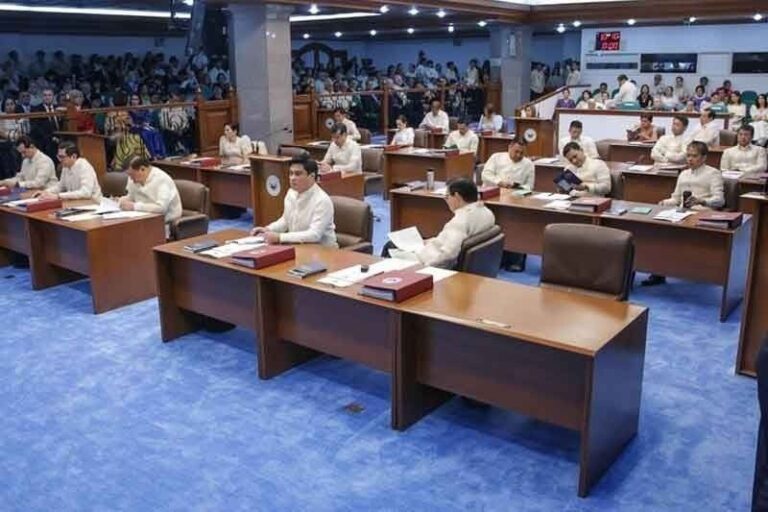
MANILA, Philippines — Pharmally Pharmaceutical Corp. the company at the center of the Senate investigation into alleged multibillion-peso corruption in the government procurement of COVID-19 supplies – may have made “ghost deliveries” of face masks, face shields and personal protective equipment (PPEs) worth at least P3 billion last year, senators said yesterday.
The suspicion of ghost deliveries first raised at the start of the Blue Ribbon committee inquiry into the P42-billion corruption scandal rocking the Duterte administration since August – was tackled at the resumption of the hearing of the panel that took note of missing documents and fictitious addresses of suppliers of Pharmally.
The hearing also saw Pharmally executives Mohit Dargani and Linconn Ong, who are detained at the Pasay City Jail, testifying again but still unable to produce source documents sought by the panel.
They were escorted in handcuffs to the Senate where they answered from separate rooms linked online and under watch of jail guards.
Sen. Richard Gordon, chairman of the committee, said the inquiry would continue despite repeated attempts by President Duterte to stop it, even as he reiterated his suspicion on the latter’s involvement in the alleged anomalies.
“We will not stop despite your low level tactics, who keeps on cursing, you’ve done nothing except to malign us (senators) because you could not show having any work done for our countrymen,” Gordon said in mixed Filipino and English.
“Do not lecture us that you’re better than us senators. The most ordinary people are better than you because they have principles. You’ve forgotten the principles taught to you by your parents,” he said.
Raymond Abrea, a private certified public accountant consulted for the inquiry, noted that based on its audited financial statements, Pharmally – which bagged a total of P11 billion in supply contracts from the Procurement Service of the Department of Budget and Management – had purchases of P7.2 billion but only P3.8 billion could be accounted for or were supported by documents.
With only a year before the most crucial Philippine elections in decades, nearly 40 media organizations and 300 journalists and media workers signed on June 17 a pledge to do a better job in reporting the campaign for President, Vice-President, and other national as well as local posts.
The pledge declared that every election “is a reckoning for democracy,” hence the duty of journalists “to provide accurate, reliable and essential information that will empower voters and encourage public discussion and debate.”
The signatories vowed to “put voters and the integrity of the electoral process at the center of (their) reporting” — to depart from the usual media focus on personalities, concentrate on the issues that matter to the citizenry, and make sure that the elections are clean and fair.
As part of the commitment to issue-focused reporting, they also pledged to look into and report on the track records of candidates, check and challenge false information and hate speech, provide the context of whatever events and issues may arise, monitor the independence of the State and other agencies involved in the elections, and encourage and support best practice in journalism.
The pledge basically reiterated the need for journalists to observe in the critical months ahead the professional and ethical standards that enable journalists to discharge the essential duty of truth-telling in behalf of the making of an informed electorate capable of making intelligent choices during elections.
Five months since, however, compliance with the pledge in much of the reporting on the politics of the campaign has been spotty at best. While some media organizations and practitioners have done a yeoman’s job of re-porting the political circus, their work in the context of the huge amounts of airtime and space that have been spent on the coverage of the prelude to the official campaign period in February 2022 has been the exception ra-ther than the rule.
Much of media coverage of what transpired as the Nov. 15 deadline for candidate substitutions came and went was no different from that of past election campaigns.
Glaring enough was the focus on personalities — on Sara Duterte, Ferdinand Marcos, Jr., Rodrigo Duterte, Christopher “Bong” Go, etc. — as that much awaited date passed.
The media closely covered what those worthies said and did without pointing out that, as they jumped from this or that “political party” and became their candidates, it had become quite obvious that keeping power and getting it are all that drive this country’s officialdom and pretenders to the Presidential throne.
It took political scientists to point this out and the truth that the groups that call themselves “political parties” have neither program nor principle and are mere vehicles of convenience for the realization of these and other power-seekers’ ambitions.
Neither was any context provided by much of the media reports on the disqualification complaints against Marcos Junior. Instead, they covered the usual caravans and parades, and quoted him and his lawyers as the Commission on Elections (Comelec) granted his appeal for an extension of the period within which he has to answer the complaints.
Only in the social media pages of some commentators were there any attempts at analysis, as it became evident that the Duterte-Marcos Axis has collapsed, and that Marcos’ disqualification in the context of growing doubts over Comelec inde-pendence would be advantageous to the Dutertes’ drive to remain in power at all cost.
Again, only some of the media provided contextual information on the suggestion that because Marcos and Sara Duterte are supposedly leading among the voters’ preferred candidates for President, they could enter into a term-sharing agreement. It could mean Sara Duterte’s completing the last three years of Marcos’s six-year term should they both win in 2022.
A handful of reports said it would be unconstitutional, and cited the provisions of the Constitution mandating separate six-year terms for the President and Vice-President as well as the rules of succession which say that a Vice-President can succeed a President only if he or she can no longer perform the duties of that office.
The rest reported it without that context, which could have led their audiences to mistakenly conclude that once in power, government officials can do whatever they please, including violate the Constitution. The exceptions stood out for the rarity of their dedication to providing the information voters need to prevent their again electing into office the bogus leaders that have made this country the development basket case of Asia.
The three dozen-plus media organizations and 300 journalists and media practitioners that signed the June 17 pledge seem like a lot, but they are not. There are thousands more that did not sign for a number of reasons, among them the different and often conflicting political and economic interests of corporate media that have long prevented the making of a community of shared values; the vast differences in the training of practitioners in the professional and ethical principles of journalism practice; the corruption and patron-client relations between some practitioners and their sources; and the fear factor engendered by the continuing harassment and killing of journalists.
The last has been even more of a media concern during the Duterte regime. Mr. Duterte himself aggravated it. After justifying the killing of journalists in 2016, he proceeded to insult reporters for asking questions about his health, persecuted media organizations and independent journalists for their supposed bias, accused individual journalists and media organizations of conspiring to bring down his regime, and orchestrated the shutdown of the free TV and radio services of ABS-CBN network.
His spokespersons have denied the “chilling effect” on the media of these acts and threats. But among their consequences is a decline in critical reporting, and the resulting dominance of the regime narrative on such issues as the extrajudicial killings and human rights violations that characterize its rule.
All the above factors contribute to the failure of the media to go beyond “he-said-she-said” reporting. So few are the exceptions that they escape the attention of much of the mass audience. There is also the uncritical ac-ceptance of such precepts as “objectivity” and non-interpretation that have been drummed into the heads of many practitioners by the journalism schools. The result is a fetish in reporting without analysis, critical discernment or context of the claims, no matter how outrageous, absurd, tasteless and dangerous they are, of this or that prominent, usually government source about an issue or event.
Meanwhile, the conflicting loyalties and interests of corrupt practitioners leads to many journalists’ being no more analytical than their cameras and sound recorders. The subservience of corrupt practitioners to this or that source also contributes to mass disinformation.
The result of the dominance in much of the media of the fear of provoking State retaliation for a critical report and of corrupt and business-as-usual practices is an information crisis — and multiple crises in Philippine governance and what little remains of Philippine democracy.
The failure of the mass of the electorate to vote wisely is among the lethal by-products of the media inability and/or unwillingness to provide their audiences not only with information on what happened, but, even more importantly, why— and what it means to them. Unless things change in the way the media report the circus that politics in this country has become, the consequences to the democratization process and the way this country is governed will condemn many more to needless suffering and even death.
LUIS V. TEODORO is on Facebook and Twitter (@luisteodoro). www.luisteodoro.com
By Michelle Chermaine Ramos The Philippine Reporter, Canada, December 03, 2021
According to the government of Canada’s vaccination coverage data updated November 15, 2021, 74.59% of the total population has been fully vaccinated while 77.97% has received at least one dose. However, there are still many who remain on the fence and there are those who vehemently refuse to be vaccinated for various reasons including thousands of healthcare workers. So, besides the constantly moving goalposts, what caused the protests and the erosion of public trust in the mandates not just across Canada and the U.S. but across the world?
The selective political correctness of the “Pandemic of the Unvaccinated”
Last year, when Trump referred to the COVID-19 virus as the “Chinese virus”, he was publicly slammed and accused of leading some people to blame Chinese Americans for the disease and for sparking hatred against Asians. Did the outbreak start in China? Yes. So why was Trump condemned for stating the truth? Because it was suggested that his statement allegedly stirred some people to target certain members of the population. It was deemed politically incorrect and hurtful.
Now, consider the fact that as early as this summer, several news outlets have been labelling this global fiasco “the pandemic of the unvaccinated” with some public figures going so far as to suggest that any future waves must be blamed on the unvaccinated. In a November 11, 2021 opinion piece published by The Globe and Mail, the headline reads “The pandemic is, more than ever, a pandemic of the unvaccinated”. The article goes on to say, “If you want to know what’s standing between Canada and a safe and enduring reopening, they’re it. Some are hostile, but many are merely hesitant, or afraid. Some are simply busy, and unaware of the risks they’re taking (and imposing on the rest of us).”
Are many of the hospitalized COVID-19 cases unvaccinated? Apparently so, if we’re going by the reports. However, have we not already witnessed how such statements have incited hostility and discrimination against the unvaccinated especially during the recent election? Why is this label not widely considered as hurtful or incendiary as “the Chinese virus”? Selective political correctness is unproductive, and the label stigmatizes and alienates the very members of the population they are trying to win over to their cause. The people on both sides of this debate have very valid fears and concerns that need to be addressed with compassion.
When the Toronto Star’s August 26, 2021 issue featured a front page with inflammatory tweets in large text stating that unvaccinated people did not deserve hospital beds and should die, that major faux pas stirred public uproar for further driving the wedge between the vaccinated and the unvaccinated by amplifying hate speech. This alarming division between Canadians has been aggravated since Prime Minister Justin Trudeau announced his decision to enforce mandatory vaccines for federal public servants in August, followed by the vaccine passports in September.
The difference between the “vaccine hesitant”, “anti-vax” and “anti-vax passport”
According to CTV News, the Ontario Ministry of Health confirmed that there are only two valid medical exemptions from COVID-19 vaccinations. You must either be allergic to an ingredient in the vaccines, which should be confirmed by an allergist or immunologist. The only other exemption is if you have suffered myocarditis or pericarditis after your first dose. During the recent election, the issue of mandatory vaccination was politicized resulting in the shaming of those who are “vaccine hesitant” who Trudeau has largely incorrectly labelled as “resistant” and “anti-vaxxers”. These are strong words that fuel hatred against those who are afraid of taking the vaccines for one reason or another. There is a difference between being “vaccine hesitant”, “anti-vax” and “anti-vaccine passport” and it is vital to note the difference between the three.
The hesitant are on the fence because of various valid concerns mostly surrounding the lack of long-term studies on the side effects of the mRNA technology in these vaccines, which were rolled out for the first time on a global scale for emergency use. Or, as you will read in the following interviews with vaccine injured victims, it is not surprising if many who know others injured like them are rightfully concerned. The anti-vax are those who are strongly opposed to vaccines including those traditionally made without the mRNA. And the anti-vaccine passport folks are those mostly concerned about government control infringing on personal rights and freedoms and the risks of inciting division leading to a tiered society.
A list of possible side effects from the COVID-19 vaccines as mentioned on page 17 of the FDA’s PowerPoint presentation from their October 22, 2020 meeting viewable on the FDA’s site.
Every choice has its risks. But it also depends which ones people are willing to take.
On August 20, 2021, The Toronto Sun reported that the Canadian Department of Health announced that they will cover the burial costs of any Canadian killed by federally approved vaccines, which just confirms the truth that these vaccines can and have killed some people. (https://torontosun.com/news/national/burial-costs-covered-for-canadians-killed-by-approved-vaccines) How comforting. This brings up the crucial subject of informed consent. If one of the risks of taking part in a medical trial involves the possibility of disability or death, then it is only ethical that the individuals be informed of the risks and have the right to choose for themselves whether or not they want to take those risks without fear of losing their livelihood or being shamed and discriminated against based on a personal health choice.
According to the U.S. National Library of Medicine’s clinical trials, the Pfizer-BioNTech COVID-19 vaccine effectiveness study will not be completed until the estimated completion date set for July 30, 2023. (https://clinicaltrials.gov/ct2/show/NCT04848584) Furthermore, the study to evaluate its safety for healthy pregnant women just started on February 16 this year and is ongoing until the estimated completion date set for October 15, 2022. (https://www.clinicaltrials.gov/ct2/show/NCT04754594?term=NCT04754594&draw=2&rank=1)
Also, the study for healthy children and young adults from 6 months old to 30 years old is still recruiting participants and ongoing until the estimated completion date set for July 23, 2024. (https://clinicaltrials.gov/ct2/show/NCT04816643).
The Justice Centre for Constitutional Freedoms (https://www.jccf.ca/) states that “the Canadian Charter of Rights and Freedoms is intended to ensure a ‘free and democratic society’. This includes the right to choose to receive or not receive a new vaccine, the right to travel interprovincially and internationally, and the rights of citizens to criticize and voice concerns about coercive government measures.” They also emphasize that “seeking exemptions to the law implies that the underlying law is valid, and it is our position that it is not. Canadians have constitutionalized protections for conscience, religion and security of the person including bodily autonomy. Mandatory vaccine policies, and legal discrimination against the unvaccinated minority, are a blatant violation of Charter rights and freedoms.”
“Believe in science”
Another incendiary phrase often used in the recent election to shame the vaccine hesitant is the insinuation that they don’t believe in science. According to science, and common sense, the population is not made up of cookie cutter bodies on which a one-size-fits-all solution can apply. The science behind the medical tests and procedures vaccine victims have undergone to diagnose their conditions prove so. Science also shows that both the vaccinated and the unvaccinated can still pass on the virus. According to a recent Advanced Epidemiological Summary report by Public Health Ontario, as of August 7, 2021, “there have been 314 reports of myocarditis or pericarditis following receipt of COVID-19 mRNA vaccines in Ontario” and that “the reporting rate of myocarditis/pericarditis was higher following the second dose of mRNA vaccine than after the first dose, particularly for those receiving the Moderna vaccine as the second dose of the series (regardless of the product received for the first dose) “. These are not the only side effects.
The missing information between the public messages and research trials
When the vaccines were first rolled out early this year, we were told that side effects, if any, would be very minor and that the vaccines were safe and we were assured that any possible serious side effects were extremely rare. The FDA’s Vaccines and Related Biological Products Advisory Committee knew as early as October 22, 2020, before the vaccines were administered to the public, that there was a long list of possible serious and fatal adverse event outcomes including death, stroke, autoimmune disease, vaccine enhanced disease, pregnancy and birth outcomes among others as you can see on page 17 of the FDA’s COVID-19 Vaccine Safety meeting presentation https://www.fda.gov/media/143557/download.
Disinformation is not sharing all sides of the story
In the midst of the public clashes between the pro-vax versus the anti-vax and the anti-vax passport camps, one major camp whose voices have been largely ignored by the mainstream media is that of vaccine victims whose cases are grossly underreported. These individuals believe in science since they decided “to do the right thing” or were socially pressured into taking the vaccine. People who are unwilling to take the shots are not selfish. Labelling them as such dismisses very valid concerns for their health and that of their loved ones. They did not anticipate that they would have an adverse or even fatal reaction until after they received their second shot.
Why is there a media blackout on vaccine injuries? Do unvaccinated lives matter? Do vaccine disabled lives matter? And do lost vaccinated lives matter? Are they merely collateral damage? Had this been the #MeToo or Black Lives Matter movement, would people respond with such apathy and accusations of “conspiracy theories” and the gaslighting of victims?
Mr. Trudeau warned “If anyone doesn’t have a legitimate medical reason for not getting fully vaccinated – or chooses not to get vaccinated – there will be consequences.” If by some slight chance he happens to read this article, I strongly urge him as a father, husband, brother and son to please see these human faces behind underreported “rare” cases which are not so rare after all. Science does not lie about these victims’ injuries. And if we’re going to hammer on the subject of numbers, the important math we should be concerned about is the current issue of division in our country.
Once upon a time, not so long ago as many are still alive to recall, the Jews were scapegoated by the Nazis as “spreaders of disease”. The German population did not become apathetic or hostile to the Jews overnight. The power of propaganda stirred fear and hatred, influencing neighbors to turn on each other, creating a tiered society that eventually led to the horrific Holocaust. Today, it is “the pandemic of the unvaccinated”. Words can divide or unite a nation. We cannot risk the dangers of segregation and the disintegration of society. As time unfolds, it will be interesting to see which side of history people will be remembered for.
By Veronica Silva Cusi LJI Reporter The Philippine Reporter, Canada, December 03, 2021
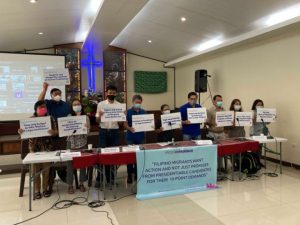
Overseas Filipino workers and migrants from across the globe on Thursday presented their 10-point agenda that they want candidates in the 2022 elections to consider in their platforms.
In a press conference hosted in Manila by Migrante International, overseas Filipinos worldwide urged political aspirants — the national candidates in particular — to help protect their rights, extend them more assistance, and relieve them of financial requirements imposed on them to work abroad.
The 10-point agenda is as follows: 1. Provide immediate cash aid (ayuda), free repatriation, and support for migrants and their families in view of COVID-19.
2. End illegal recruitment and human trafficking, particularly for women, and hold those found guilty accountable.
3. Increase the budget, including the General Appropriations Act (GAA), for government services for migrants, such as overseas absentee voting (OAV) and legal services of the Department of Foreign Services and Overseas Workers Welfare Administration (OWWA).
4. Save Mary Jane Veloso, a death row convict in Indonesia, and other Filipino death row convicts by giving them free legal services.
5. Open embassy, consulate, and the Philippine Overseas Labor Office (POLO) on days when needed, such as weekends, and in areas where there are Filipino communities in countries, territories, and states.
6. Provide services, health benefits, and security of tenure and protection for seafarers
7. Implement free, quality, and comprehensive public health services.
8. End extortion and forced and excessive fees, such as OWWA membership, Overseas Employment Certificate, and Philhealth premium, Social Security System premium and other fees imposed on migrant workers.
9. End red-tagging, militarization, human rights violations, and fascism, junk the Anti-Terror Law, abolish the National Task Force to End Local Communist Armed Conflict, and continue with the peace talks.
10. Abolish the Philippine export labour program, and “No” to the Department of Overseas Filipinos
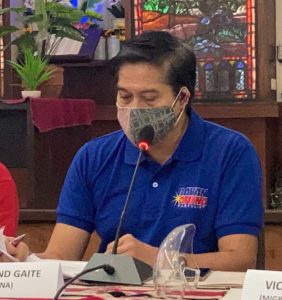
Bayan Muna Party List Representative Ferdinand Gaite. (Photo supplied)
Speaking at the worldwide press event via Zoom from Calgary, Alta., Migrante Canada chairperson Danilo Deleon called for an end to illegal recruiters who “prey on vulnerable Migrant workers desperate to go abroad to work and then find themselves in debt even before they leave the Philippines because of illegal recruitment fees.”
Migrante International chairperson Joanna Concepcion, speaking from the Philippines, said the agenda was a result of regional consultations from kababayans in the Luzon, Visayas and Mindanao, and national consultations held in November.
She said that from the consultations, many issues and concerns facing the overseas Filipino sector were raised. She said the 10-point agenda is a call to challenge presidential and national candidates in the 2022 elections to respond to OFWs and Filipino migrant groups’ demands.
Migrante Canada told The Philippine Reporter that they participated in the global meetings and consultations, including budget consultations where they were able to raise issues that affect kababayans in Canada.
Clarizze Truscott, vice-chairperson of Migrante Canada, said there were meetings of global chapters this year, and they participated in budget consultations with the Department of Foreign Affairs. Migrante Canada also covered issues about OAV and the needs of consular services in Canada “and pointed out where the gaps are.”
“We have had online global meetings and consultations since August with Makabayan Bloc representatives especially with Rep. Ferdie Gaite on OAV and the national budget for 2022 wherein we raised the issues and concerns from our respective regions or countries,” said Stefanie Martin, Migrante Canada secretary-general.
Migrante International and their alliance urged Filipinos in the Philippines and abroad to consider candidates who will include these demands in their election platform in the 2022 national and local elections in the Philippines.
Atty. Neri Colmenares, senatorial candidate and former Bayan Muna Party List representative, and Party List Representative Ferdinand Gaite of Bayan Muna joined Migrante International in the press event in the Philippines.
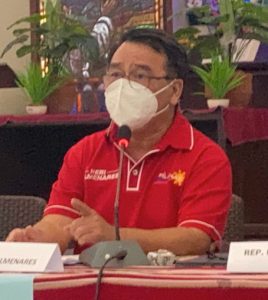
Senatorial candidate and former Bayan Muna Party List Representative Atty. Neri Colmenares. (Photo supplied)
Colmenares urged voters to consider candidates who have the interests of OFWs in their campaign platforms. “Kung walang konkreto na program (para saw OFWs), huwag maniwala (If there are no concrete programs for OFWs in the campaign platform, don’t believe in the candidate),” said Colmenares, a human rights lawyer.
However, more than the campaign platforms, he urged voters to consider the track record of candidates in supporting OFWs.
For his part, Rep. Gaite said Bayan Muna and the Makabayan bloc have been at the forefront of helping OFWs and their families and have been consulting with them even before the November consultations that resulted in the 10-point agenda. Migrante Canada said that the agenda resonates with Filipinos abroad, even those who cannot vote. Because of blood relations in the Philippines, whatever happens to Filipinos and friends and relatives in the Philippines, has an impact on the lives of Filipinos based abroad.
“Migrante Canada will continue to have discussions and reach out to our fellow kababayans to raise the issues of overseas Filipinos and Filipinos in general through the electoral agenda by challenging and seeking the commitment of candidates with clear plans and policies,” said Martin.
Allies and friends of Migrante International and their global chapters joined in the press event. Among these allies from Canada were MALAYA Movement and KABAYAN Canada.
—————————-
Veronica Silva Cusi is Local Journalism Initiative reporter.
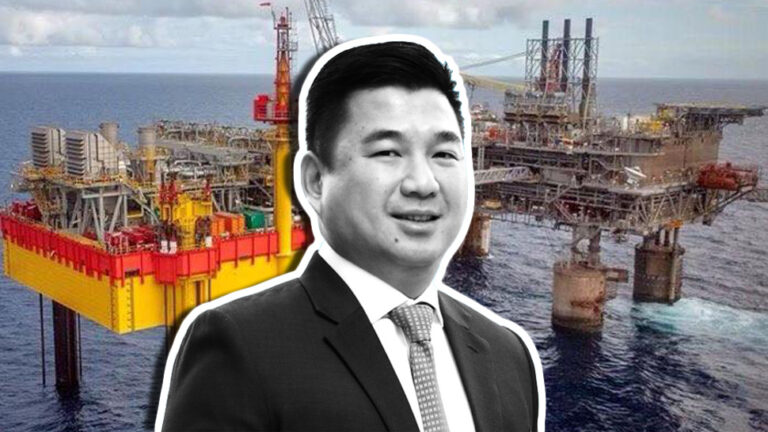
The transfer of the Malampaya Gas Field Facility to Malampaya Energy XP Pte., a unit of Udenna Corp, presents significant security risks, and thus ought to be revoked, the Philippine Bar Association (PBA) said in a statement.
The lawyers’ group urged the government to revoke to revoke the transfer of the gas field to the group controlled by Davao-based businessman Dennis A. Uy, who is a known ally of President Rodrigo Duterte.
The PBA called Malampaya Energy an “untested and unknown entity” and has asked the Department of Energy to intervene.
“We call on the DOE to put national interest first and attend to the matters that became the convenient premise for this questionable transfer,” the statement read.
Malampaya Energy XP acquired the shares of Shell Philippines Exploration BV (SPEX), which previously led the operations and maintenance of the gas field. Philippine National Oil Co. Exploration Corp. is a member of the consortium that operates Malampaya. Udenna Corp., in turn, owns a majority holding in Malampaya.
The PBA suggested that the original operators may continue running the gas field “rather than transferring the facility to an entity that presents significant security risks.”
“The government has not been shy in applying a militarized pandemic approach against ordinary citizens,” the group said. “That mindset would have been more suited in guarding a precious national asset.”
The PBA called “unsatisfactory” the assertion that the transfer is a private transaction and is thus not subject to review.
“It is not a simple matter of making the transaction transparent and understandable, and therefore acceptable. Malampaya is a critical piece of our national sovereignty and security. It cannot remain where it has been negligently left. The transaction requires immediate review.
“Malampaya is a crown jewel of the country’s Energy infrastructure,” it added. “That it ended up in the hands of an entity that is not technically or financially sound is beyond negligent, it is criminal,” the statement added.
The PBA’s statement follows the one issued by the Integrated Bar of the Philippines, which likewise called for the cancellation of the Malampaya deal with Uy’s company and asked the government to take over. Some lawmakers have raised questions about the financing capabilities and the expertise of the company to operate and maintain the gas field.
Responding to the IBP’s statement, the DOE said the group’s “sweeping statement against the Malampaya transaction without first checking the facts and applicable laws” has “unduly maligned” the department and its officials.
“The lawyers’ organization, which is supposed to uphold and defend the law, has fallen victim to hearsay and sheer allegations,” the DOE said. “The IBP’s thoughtless involvement, allowing itself to be used by unscrupulous interest groups, greatly disappoints.”
However, the DOE did not address issues pertaining to the transaction, but said it will “respond to any allegation against it in the proper forum and in due time.”
Party-list seats were first reserved for marginalized sectors of society
By Siegfred Deduro
The “party-list” system, originally designed to provide space for the democratic representation of marginalized sectors in the House of Representatives of the Philippines, has been taken over by political dynasties.
The inclusion of the party-list elections in the electoral system was a result of the political struggle against the Ferdinand Marcos dictatorship which was toppled by the People Power Revolution in 1986. Before the constitutional amendment that enabled the party-list system, it was almost impossible for the marginalized sectors to be represented in Congress. Elected positions from the municipal up to the national levels were monopolized by political dynasties as, historically, elections were won by those who had “guns, gold and goons.”
Article II Section 26 of the 1987 Constitution declares that the “State shall guarantee equal access to opportunities for public service, and prohibit political dynasties as may be defined by law.” However, to this day, no anti-dynasty law has been promulgated by the Congress, which is dominated by political dynasties, though a bill nearly succeeded in being approved in the 15th Congress. The bill passed the first and second readings but failed to make it in the final plenary voting. With the enactment of the Party List law in 1995 marginalized sectors gained space in the elite-monopolized Congress. This allowed sectors such as women, workers, farmers, indigenous peoples, and cooperatives to come together, and build coalitions to participate in government. Foremost among the successful party-list organizations were Left-leaning groups, for example, Bayan Muna (People First). Though outnumbered by members of political dynasties, party-list representatives became “fiscalizers” of the people within the legislature.
Some political observers suggest that the party-list system favors a more democratic representation. For instance, among 53 democracies around the world where there are single-member districts, only 7.3 per cent of legislators are women, but in legislatures elected entirely by a party-list, women make up 17.2 per cent of members. But not in the Philippines. Instead, political dynasties saw this system as a backdoor entry to Congress, a means to broaden their turfs and get access to pork-barrel benefits. For example, the son of former President Gloria Arroyo has served in Congress as a party-list representative. Political dynasties-sponsored party-lists win by cheating, vote-buying and patronage politics.
Aside from political dynasties, even billionaires have become legislators by registering as representatives of marginalized groups. For three years now, the country’s richest congressman has been Rep. Michael Romero of party-list group 1-Pacman or One Patriotic Coalition of Marginalized Nationals. His main family business develops and operates port facilities in the country, including the Manila North Harbor.
Veteran lawmaker Edcel Lagman, one of the principal authors of the Partylist System Act, emphasized that:
The purpose [of the system] is to afford and guarantee the marginalized sectors of having representation in Congress which they cannot win in the traditional district elections.
But in 2013 the Supreme Court decided that the party-list was not a reserved-seat system for particular sectors but a system of proportional representation where all types of organizations, including political parties, could participate.
Retired Supreme Court Chief Justice Artemio Panganiban noted that the current party-list system can be “manipulated” to serve the interests of a select few. He called for the urgent revision of the law.
Clearly, the most urgent need of the hour is for legislation to be passed to revise the partylist act and install permanent safeguards to prevent abuses and misuses of the system.
Political science Professor Jorge Villamor Tigno of the University of the Philippines Diliman observed that the inadequacies and conflicting features of the party-list system law can be traced back to its key designer—Congress—whose members may have looked upon the party-list organisations either as potential competitors or useful platforms in their quest to retain their positions of power and privilege. Either way, the lasting effect of the party-list system can be regarded as one that undermines (rather than reinforces) the legacy of People Power.
In the coming 2022 party-list elections, party-lists of the marginalized sectors face formidable challenges. On October 8, the last day of filing of Certificates of Candidacies (COC), a total of 270 party-lists filed their COCs, the overwhelming majority of which are controlled by political dynasties.
Furthermore, the government propaganda network has shifted focus from attacking “drug addicts” to activists, many of whom are party-list members. Online information operations against activists and progressive groups take off from the Rodrigo Duterte government’s drug war playbook—attack online, then kill.
Bayan Muna Iloilo city coordinator Jory Porquia was gunned down by suspected state agents on April 30, 2020, amid the COVID-19 pandemic.
On August 10, 2020, activist land rights defender and Anakpawis Party-list chairman Randall “Randy” Echanis, 72, was killed inside his home in Quezon City. His body bore multiple stab and gunshot wounds. Echanis had been active in opposing a new anti-terrorism bill, which the President signed into law in July 2020.
Human rights activist Zara Alvarez was shot and killed by unidentified gunmen in Bacolod City on August 17, 2020. She had been receiving death threats for more than a year. Alvarez was a former campaign and education director and paralegal in Negros for the human rights group Karapatan. Amid the pandemic, she had been coordinating and conducting relief operations as part of a community health programme. She was the 13th member of Karapatan to be murdered since Rodrigo Duterte came to power in 2016. Other Negros Island-based activists reportedly received threatening messages through their social media accounts saying, “You’re next.”
The government has even moved to disqualify activists from joining the party-list race by branding them as legal fronts of the communist movement. Against forbidding odds, genuine party-lists of the marginalized sectors have to rely on effective campaign strategy, their organized mass base and support of opposition allies to overcome and neutralize the formidable advantages of the party-lists of political dynasties in the coming 2022 elections.
On September 27, the Fifth National Convention of the progressive Makabayan Coalition elected a mixture of seasoned legislators and first-time congressional candidates for its official slate in the 2022 election.
From the party-list groups forming the Makabayan bloc—Alliance of Concerned Teachers (ACT), Anakpawis, Bayan Muna, Gabriela, and Kabataan—six candidates for the 19th Congress are former lawmakers who held party-list posts.
The coalition has vowed to mobilize its constituency nationwide to launch a strong electoral campaign that adapts to current state-instigated terrorism and restrictions amidst the COVID-19 pandemic.#
= = = = =
Kodao publishes Global Voices articles as part of a content-sharing agreement.
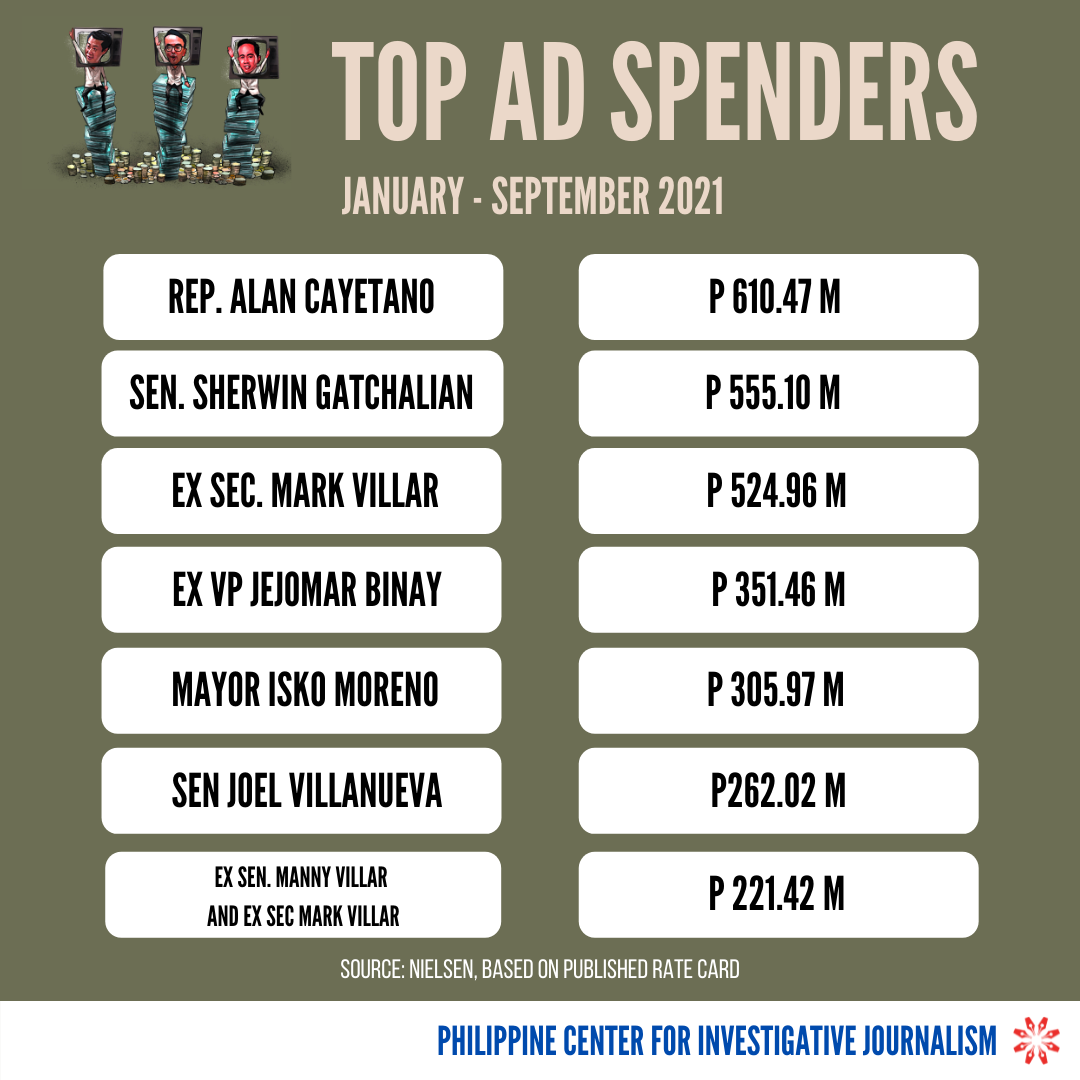
Alan Peter Cayetano, who initially aspired for the presidency, was the top ad spender from January to September 2021. But this was overshadowed by the combined ads of Senate aspirant Mark Villar and members of his family.
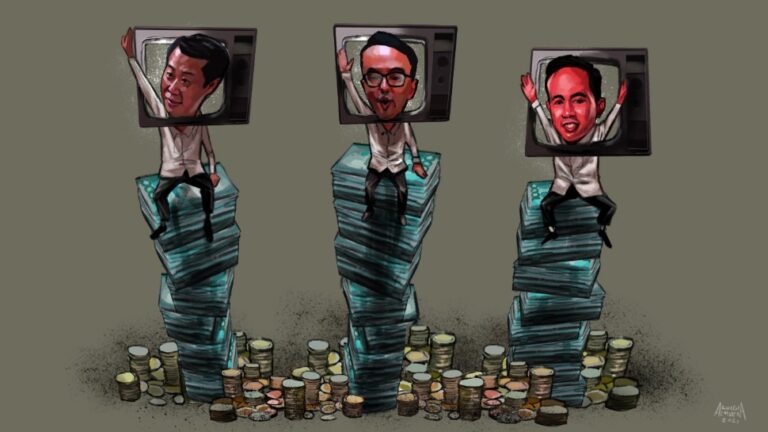
Aspirants in the 2022 Philippine elections ran tens of thousands of television, radio, print, and billboard advertisements worth P3.67 billion ($72 million) from January to September 2021–before filing their certificates of candidacies (COCs)–demonstrating how expensive it is to run for public office in the Philippines.
“It is important for voters to consider it a red flag when their candidates spend so much,” said former elections commissioner Luie Tito Guia. “Hindi mo alam ang (You don’t know their) motivation for running if they are willing to spend that much,” he said. The tally by the Philippine Center for Investigative Journalism (PCIJ) came from Nielsen’s monitoring of potential candidates’ ad spending beginning January 2021. The amounts were based on published rate cards, but industry players and ad buyers interviewed by PCIJ said candidates could get discounts.
Despite huge ad spending, Cayetano had a poor showing in presidential surveys.
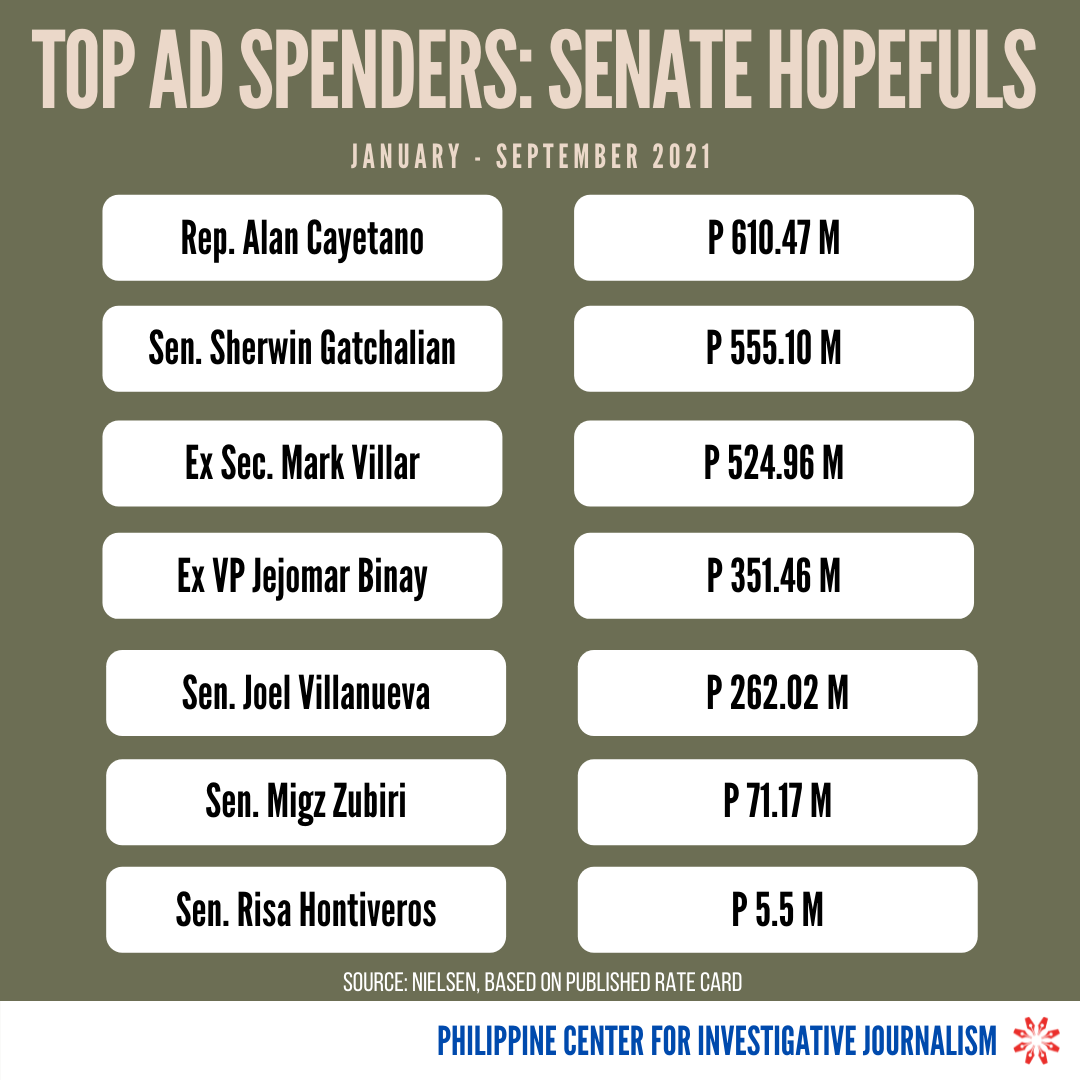
Former House speaker Cayetano was the top ad spender during the nine-month period, running ads worth P610.4 million ($12.2 million).
TV took the bulk of Cayetano’s spending as he plotted a presidential campaign. He ran a total of 584 TV ad spots worth P595.5 million ($11.9 million) in various networks, the bulk of which were aired in September (P185.7 million). He also aired radio ads worth P14.8 million from January to September.
In October, when the filing of COCs began, Cayetano dropped his presidential bid and instead filed his COC for the Senate, where his poll numbers were better.
Sen. Sherwin Gatchalian, who is seeking reelection, followed Cayetano, running ads worth P555 million during the nine-month period based on rate cards.
Gatchalian poured money on radio ads, airing 16,436 spots worth P420.2 million. It’s an average of 60 radio spots a day from January to September.
The lawmaker, the son of businessman William Gatchalian and who ranked 10th in the 2016 elections for senator, started airing TV ads only in September, or a month before the filing of COCs. He aired a total of 177 TV spots worth P134 million.
Gatchalian himself was rumored to be eyeing the vice presidency after the publication of print ads that showed him alongside Davao City Mayor Sara Duterte — worth P1.3 million — from May to June.
PCIJ reached out to the senator and a campaign staff member requested for Nielsen’s data, but he had yet to issue a statement as of this writing.
The campaign staff member told PCIJ that the senator enjoyed “more than 30 percent discount” based on rate cards. She said the senator’s family paid for the ads.
PCIJ also reached out to Cayetano, but had yet to receive a response.
Spending on Online Ads
The Nielsen data PCIJ had access to did not include candidates’ spending on online platforms, which required a separate subscription.
Facebook is transparent with its advertising data through the Ads Library, a tool that records spending on social issues, elections or politics. It showed total spending of P129 million on the platform from August 2020 to November 2021, although the list was not exclusive to politicians.
Gatchalian was the top spender on Facebook, running a total of 746 ads worth P7.8 million from August 2020 to November 2021.
PCIJ has no access to data on candidates’ ad spending on Youtube, TikTok, and other popular social media platforms.
Senate Hopefuls are Top Spenders
Photo by PCIJ.
Senate hopefuls spent more than the aspirants for president on traditional media ads, based on Nielsen’s monitoring.
Mark Villar, the former public works secretary who also comes from big business, ran ads worth P524.9 million and was the third top spender during the nine-month period.
He doubled down on his spending in September, running 428 TV spots worth P354.7 million and making him the top TV ad spender that month. He ran an average of 14 ad spots a day, accounting for 25% of all candidates’ total ad spend on TV during that period.
Villar also topped radio ad spend in September, recording 3,559 radio spots or an average of 118 ads a day. The ads were worth P91.4 million and accounted for 29% of the total radio ad spend that month.
He started running his own ads only in August but his heavy spending was reminiscent of the campaign strategy of his own father, former Senate president Manuel Villar Jr., who consistently topped ad spending in elections where he was a candidate.
He also appeared in 162 separate TV ad spots worth P174.2 million and 1,645 radio ad spots worth P47.1 million, which were headlined by his father, in June and July 2021.
Photo by PCIJ.
Villar’s mother, Senator Cynthia Villar, also ran print ads worth P8.1 million while his sister Camille, who represents Las Piñas in the House of Representatives, spent P559,535 on ads.
Combining their advertisements, the Villars emerged as the top ad spender during the nine-month period, overtaking Cayetano.
PCIJ reached out to Mark Villar’s staff but had yet to receive a response.
Former vice president Jejomar Binay and another senator seeking reelection, Joel Villanueva, were the fourth and sixth top spenders. They ran ads worth P351.4 million and P262 million, respectively.
Former vice president Jejomar Binay and another senator seeking reelection, Joel Villanueva, were the fourth and sixth top spenders. They ran ads worth P351.4 million and P262 million, respectively.
Marcos recorded just P165,552 in ad spending, which went to print ads published in July 2021.
After Moreno, Senator Panfilo “Ping” Lacson was the second top spender, running ads worth P182.1 million.
Lacson started running ads in August and doubled down on spending in September, when he spent P133.4 million on TV ad spots and P26.3 million on radio ad spots.
Vice President Maria Leonor “Leni” Robredo aired ads worth P120 million. Unlike other candidates, she poured her resources on radio spots. She topped ad spending on the platform among presidential aspirants in September after running 1,602 spots worth P57.8 million.
Before September, she aired radio ads worth P51.8 million.
Robredo started running TV ads in September, but aired only 16 spots worth P9.5 million based on rate cards. She also ran six print ads worth P784,143.
Senator Emmanuel “Manny” Pacquiao and Senator Christopher Lawrence “Bong” Go had limited ad spending on traditional media during the nine-month period.
Pacquiao ran P890,079 in ads, mostly in print. A group called United Muslim Supporters of Pacquiao also published print ads worth P48,600 in July.
Go’s ads, worth P131,718, were also mostly in print.
Both Pacquiao and Go have enjoyed considerable media exposure through the news, however. Pacquiao had a boxing bout in August while Go was always present during President Rodrigo Duterte’s televised speeches and events.
Senator Francis “Kiko” Pangilinan was the top spender among aspirants for vice president. Like his running mate Robredo, Pangilinan poured his resources on radio ads, spending almost all of his P21.7-million ad budget on the platform. He also ran print ads worth P76,638.
On top of ads she shared with Gatchalian, Davao City Mayor Sara Duterte ran separate ads worth P8.9 million on radio and P2.8 million on billboards.
A movement that sprung from her local party Hugpong ng Pagbabago — the Ituloy ang Pagbabago Movement — also spent P2.1 million in outdoor ads in September.
Senate President and television host Vicente “Tito” Sotto III, the survey frontrunner, recorded only P75,622 in spending. But he enjoyed a high-profile comeback on popular noontime show “Eat Bulaga” to reunite with his former co-hosts, before announcing his 2022 bid.
Local Politicians, Party-List Groups
Local politicians and party-list groups also recorded considerable ad spending.
Gov. Amado Espino III of Pangasinan and a number of politicians from the northern Luzon province spent heavily on radio ads.
Espino was among the top spenders, recording P92.5 million worth of radio ads and beating many national candidates on the platform.
Other Pangasinan politicians who spent heavily on radio were Mangatarem Mayor Balong Ventenilla (P60.7 million) and San Carlos City Mayor Julier Resuello (P9.7 million).
They topped the list of local politicians included in Nielsen Media’s list.
Two party-list groups recorded considerable ad spending –– Cancer Party List (P10.7 million) and Ako Bicol Party-list (P10 million).
Several politicians placed ads but didn’t file their COCs in October. Among them were Senator Grace Poe (P63.7 million), palace spokesperson Karlo Nograles (P47.7 million), Transportation Secretary Arthur Tugade (P10.4 million), Senator Nancy Binay (P193,745), and Senator Eduardo “Sonny” Angara (P188,904).
From opportunistic generals to kangaroo courts, some things don’t seem to change.
By Justin Umali | May 15, 2019, www.esquiremag.ph
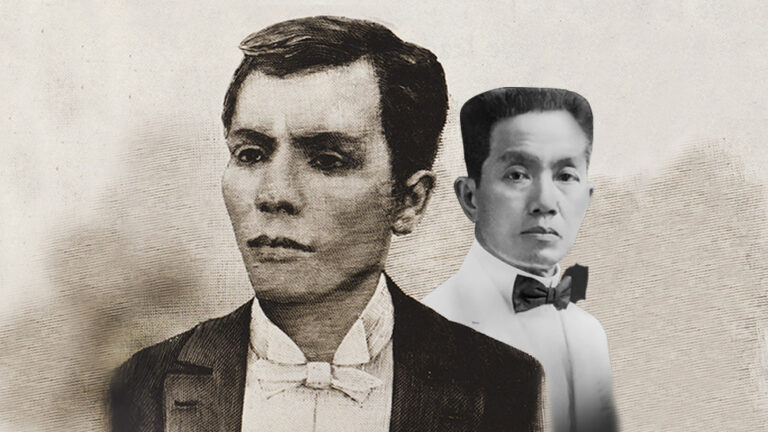
One hundred twenty-two years ago, one of the most pivotal events in Philippine history occurred: Two brothers, Andres and Procopio, were killed in the mountains of Marogondon. The execution of the Bonifacio brothers on Emilio Aguinaldo’s orders signified a new change in the Philippine Revolution, one that would ultimately lead to the Pact of Biak-na-Bato and Aguinaldo’s exile to Hong Kong.
Multiple anecdotes have been written about the incident, and the story of Bonifacio’s trial and execution are well-known, but some details still remain unclear even now. Here, a look back at the events leading to that fateful day.
Two Boys Falling Out
Why did Aguinaldo send Bonifacio to his death? The conflict ultimately started after the events of the Tejeros Convention. Bonifacio, who felt that the Magdalo faction maneuvered to rig the elections (tenuous at best; most of the Cabinet was from Bonifacio’s Magdiwang), stormed out and declared the results of the convention null and void, drawing up the Acta de Tejeros with 44 other generals signing the document. Meanwhile, Aguinaldo was surprised he was even elected President. He was busy in Silang when word came that he won an election.
The moments after Tejeros were tense for both parties. Bonifacio made his way to Naic with 40 other generals, including some of Aguinaldo’s men, to further denounce the results of Tejeros, creating the Naic Military Agreement. They declared that all military forces be consolidated under Pio del Pilar or face treason.
When Aguinaldo heard of this, he made his way to Naic to see what was going on himself. Though suffering from malaria at the time, he managed to reach the town and confronted Bonifacio, who was meeting with Aguinaldo’s generals Artemio Ricarte, Mariano Noriel, and del Pilar. The two were surprisingly civil: Bonifacio invited him, saying, “Magtuloy po kayo at makinig sa aming pulong.” Aguinaldo replied, “Salamat po, at marahil kung ako’y inyong kailangan, disin sana’y inanyayahan ninyo ako,” before leaving.
The Arrest at Indang
Aguinaldo took his time before deciding to act, taking care not to alienate Bonifacio’s supporters. Noriel and del Pilar immediately went back to Aguinaldo’s side, as did others. Bonifacio decided to camp near Indang with around 1,000 men, corresponding with Emilio Jacinto and Julio Nakpil up north and drawing up plans for an offensive in Laguna. This would prove to be fatal, however, as Bonifacio’s courier, Antonino Guevara, failed to deliver the messages and instead spent the time around Indang. The Supremo was left waiting for replies that never came.
Meanwhile, reports from Severino de las Alas and Jose Coronel reached Aguinaldo. By this time, Aguinaldo had finished consolidating his power base among the Cavite elite, giving him the confidence to act. Armed with allegations of Bonifacio burning down a village and ordering the burning of a church in Indang, he decided to exercise his prerogative as President and arrest Bonifacio, dispatching Agapito Bonzon and Jose Ignacio Paua to arrest the Supremo.
What happened next would live in infamy. Bonifacio received the party cordially, but were met with attack. Bonifacio ordered his men to stand down, refusing to fight his “fellow Tagalogs,” cries that were made in vain. A few shots were fired, and Bonifacio was shot in the arm by Bonzon and stabbed in the neck by Paua. Bonifacio’s brother, Ciriaco, was shot dead. His other brother, Procopio, was beaten. His wife, Gregoria de Jesus, was raped by Bonzon. Bonifacio, starved and wounded, was carried in a hammock to Naic, where Aguinaldo waited.
The Arrest at Indang
Aguinaldo took his time before deciding to act, taking care not to alienate Bonifacio’s supporters. Noriel and del Pilar immediately went back to Aguinaldo’s side, as did others. Bonifacio decided to camp near Indang with around 1,000 men, corresponding with Emilio Jacinto and Julio Nakpil up north and drawing up plans for an offensive in Laguna. This would prove to be fatal, however, as Bonifacio’s courier, Antonino Guevara, failed to deliver the messages and instead spent the time around Indang. The Supremo was left waiting for replies that never came.
Meanwhile, reports from Severino de las Alas and Jose Coronel reached Aguinaldo. By this time, Aguinaldo had finished consolidating his power base among the Cavite elite, giving him the confidence to act. Armed with allegations of Bonifacio burning down a village and ordering the burning of a church in Indang, he decided to exercise his prerogative as President and arrest Bonifacio, dispatching Agapito Bonzon and Jose Ignacio Paua to arrest the Supremo.
What happened next would live in infamy. Bonifacio received the party cordially, but were met with attack. Bonifacio ordered his men to stand down, refusing to fight his “fellow Tagalogs,” cries that were made in vain. A few shots were fired, and Bonifacio was shot in the arm by Bonzon and stabbed in the neck by Paua. Bonifacio’s brother, Ciriaco, was shot dead. His other brother, Procopio, was beaten. His wife, Gregoria de Jesus, was raped by Bonzon. Bonifacio, starved and wounded, was carried in a hammock to Naic, where Aguinaldo waited.
Ghosts of the Revolution
Bonifacio’s death marked a clear shift in the Katipunan and the Philippine Revolution in general. Bonifacio, Supremo, the Great Proletarian, was born of the masses and connected with the Katipunan’s nationalist and anti-colonial struggle.
In stark contrast, Aguinaldo and his men were part of the liberal educated ilustrado bourgeoisie. Aguinaldo himself was part of the Cavite elite and grew up surrounded by the trappings of privilege and upper middle class comfort. Bonifacio, on the other hand, grew up having to work to survive when his parents passed away.
The change in leadership transformed the aims of the revolutionary movement and essentially doomed it to failure. At its core, the revolutionary movement was an anti-colonial and anti-feudal struggle led by the masses through its leader, the Supremo Andres Bonifacio. When Aguinaldo and his faction took over the struggle, it lost its anti-feudal character—why would Aguinaldo wish to remove the very system he benefited from?
This disconnect between the leadership’s aims and that of the people was what ensured that the Katipunan would not succeed. Ultimately, Aguinaldo led the revolution to exile, then to American colonialization; both far removed from Bonifacio’s ideal.
And yet, Bonifacio lives on in the struggle for true independence. A hundred years on, some things didn’t change. The nation is still dominated by foreign interest, semi-feudal relationships, and systemic profiteering at the expense of the Filipino people. Andres Bonifacio may have perished in the mountains of Marogondon, but his spirit still inspires and leads the Filipino people in their search for freedom.
Ghosts of the Revolution
Bonifacio’s death marked a clear shift in the Katipunan and the Philippine Revolution in general. Bonifacio, Supremo, the Great Proletarian, was born of the masses and connected with the Katipunan’s nationalist and anti-colonial struggle.
In stark contrast, Aguinaldo and his men were part of the liberal educated ilustrado bourgeoisie. Aguinaldo himself was part of the Cavite elite and grew up surrounded by the trappings of privilege and upper middle class comfort. Bonifacio, on the other hand, grew up having to work to survive when his parents passed away.
The change in leadership transformed the aims of the revolutionary movement and essentially doomed it to failure. At its core, the revolutionary movement was an anti-colonial and anti-feudal struggle led by the masses through its leader, the Supremo Andres Bonifacio. When Aguinaldo and his faction took over the struggle, it lost its anti-feudal character—why would Aguinaldo wish to remove the very system he benefited from?
This disconnect between the leadership’s aims and that of the people was what ensured that the Katipunan would not succeed. Ultimately, Aguinaldo led the revolution to exile, then to American colonialization; both far removed from Bonifacio’s ideal.
And yet, Bonifacio lives on in the struggle for true independence. A hundred years on, some things didn’t change. The nation is still dominated by foreign interest, semi-feudal relationships, and systemic profiteering at the expense of the Filipino people. Andres Bonifacio may have perished in the mountains of Marogondon, but his spirit still inspires and leads the Filipino people in their search for freedom.