Home Blog Page 57

Pinoy migrants say no to repeat of dictatorship

0

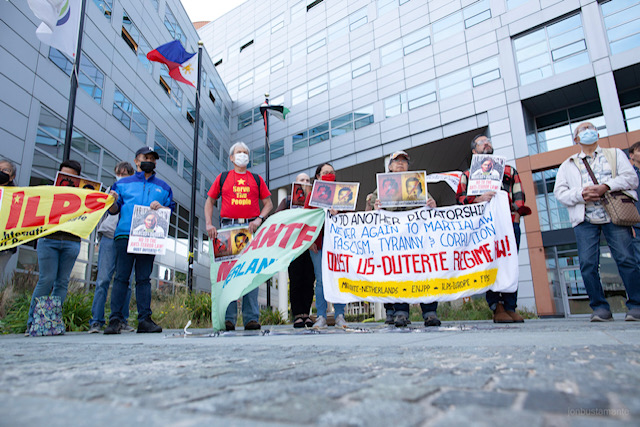
In time for the 49th year of Marcos’ declaration of fascist rule, Filipinos in the Netherlands and Dutch solidarity network for the Filipino people’s struggle for peace and justice held a protest demonstration at the Statenkwartier in The Hague where the Philippine embassy, World Forum and the United Nations International Residual Mechanism for Criminal Court are located.

The action condemned the atrocities during the country’s dark years under martial law as well as how the current Philippine president follows Marcos’ blueprint of human rights violations and plunder of the country’s natural wealth and treasury.

The calls of Filipinos overseas and solidarity network:
No to another dictatorship!
Never again to martial law, fascism, tyranny and corruption!
No to US imperialism! Oust Duterte!
Long live international solidarity!

Organized by Migrante Netherlands (Filipijnse Migranten in Nederland) with Pinay sa Holland GABRIELA (Filipijnse Vrouwen in Holland), International League of People’s Struggle – Europe, Europe Network for Justice and Peace in the Philippines, BAYAN Europe, Nederlands-Filippijnse Solidariteitsbeweging (Dutch-Filipino Solidarity Movement, Revolutionaire Eenheid (Revolutionary Unity) and Friends of the Filipino People in Struggle.

READ https://bit.ly/MigranteNLStatement

#neveragain #neverforget #OustDuterte

People’s determination prevailed

0
(First person account of the people’s protests in Manila during the anniversary of Marcos’ declaration of martial law in 1972, September 21, 2021 – Ed).

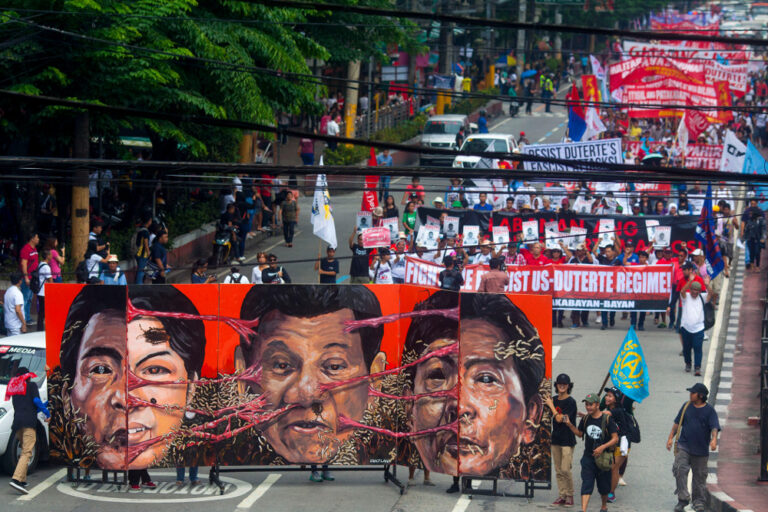
Blockhouse. This was the tactic used by the Philippine National Police to prevent participants from massing uip in the #TamaNa #WakasanNa rally at Liwasang Bonifacio (September 21, 49th anniversary of the declaration of martial law – Ed). This is despite having had an agreement with the Manila local government unit and coordination meeting with the Manila Police Department officials yesterday.

Policemen were deployed along possible lanes and gathering spots from Welcome Rotonda, along España road and all possible ways towards Liwasang Bonifacio. Even underpasses were obstructed. Pedestrians were also stranded because of the restrictions. Elements from the Philippine Navy were also deployed as reinforcement for the whole operation.

But no one was startled. Protesters determination was not diminished.

The protesters have anticipated this sabotage and blockade plan. They were able to deny the police the opportunity to completely block the protesting members of Bayan that planned to assemble at Plaza Gomburza. They forewent the meetup. No more march towards Liwasan.

Playing cat and mouse. Covert and guerrilla strategy. Make them be blind to our next move. Use the wide roads and narrow alleyways to our advantage, there are openings and passages that they cannot fully guard and block. Our perseverance they will not be able to quell.

One by one, the people were able to penetrate and converge at the Liwasang Bonifacio. The plaza became full of protesters in no time. The police was surprised of what the people had accomplished. Those who were intercepted and water-cannoned by the blocking police at the Sta. Cruz bridge from Plaza Lacson were able to push through and join the mass gathering. Those who got stopped along Espana road held a separate program in Welcome Rotonda.

On the anniversary of the declaration of martial law, an attempt was made to suppress the right to assembly and expression. Duterte is molded after Marcos. But like Marcos who was overthrown by the people, the corrupt and plunderer in Malacañang failed to stop the militant action of the people that happened today.

The dictator Marcos failed then. Duterte’s tyrannical regime will fail today. The people’s discontent is raging. The corrupt, fascist, torturous and puppet nature of the Duterte regime continues to be exposed. The rift within the camp of the ruling elites is widening. And soon, the people’s uprising will be thunderous.

Congratulations for the successful action earlier. Although their blockade may have separated us, we triumphed on insisting to assemble and hold programs at Welcome Rotonda and Liwasang Bonifacio.

Until next time. Onwards!

How Much Will COVID-19 Cost the Philippines?

0

Over the next 10 to 40 years.

By Paul John Caña   |   Sep 20, 2021, www.esquiremag.ph

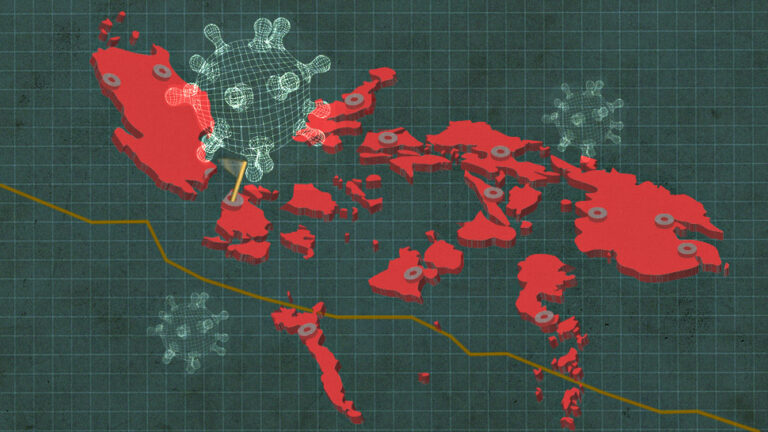
The total cost of the COVID-19 pandemic on the Philippines from the time it started in 2020 up to the next 10 to 40 years is estimated to reach a total of P41.4 trillion, according to the National Economic Development Authority (NEDA). 

In a report obtained by Esquire Philippines, NEDA broke down the estimated cost into P4.3 trillion in 2020 and P37 trillion in the “long run,” or over the next 10 to 40 years.

Based on NEDA’s calculations, consumption and investment will also be lower in the next 10 years “due to lower demand in sectors that require social distancing (such as amusement tourism, restaurants, public transportation), which means tax revenues will also be lower.

“Workers productivity will also be lower due to death, illness, and lack of schooling. The impact on productivity is likely to be permanent (i.e. over 40 years of working age).”

NEDA also presented some sobering facts about the impact of COVID-19 on the country’s economy and the people:

1. There are now over 2.3 million cases of COVID-19 and 35,500 deaths in the Philippines as of September 16, 2021.

2. Community quarantines (of varying levels) have now been enforced for 18 months.

3. Economic growth for the Philippines was at -9.6 in 2020.

4. Of about 1,000,506 businesses in the country, 111,052 (10.1 percent) reported to have closed temporarily, while 3,807 (0.4 percent) reported to have closed permanently.

5. At the peak of the health crisis, 8.7 million workers lost their jobs; and unemployment rate reached a sky-high of 17.6 percent.

6. Total household wage and income loss reached P1.04 billion in 2020, with an average of P23,806 per worker.

7. At the peak, one in four people in the National Capital Region was hungry.

According to NEDA, from P19.5 trillion in 2019, the Philippine economy (GDP) would have grown 9.5 perent to P21.4 trillion in 2020. Instead, because of the pandemic, the economy shrank 8.1 percent to just P17.9 trillion. The agency points to a sharp decline in productivity for the contraction: from an average increase of about 1.8 percent from 2010 to 2019, to -7.1 percent in 2020.

Tourism, which was one of the hardest-hit sectors of the pandemic, plummeted 61.2 percent—from P2.5 trillion (or 12.8 percent of the country’s GDP) in 2019, to just P973 billion (5.4 percent of GDP) in 2020. 

Impact on education

NEDA paid particular attention to the effects of the pandemic to education. 

“School year 2020-21 did not have face-to face-learning,” the report said. “To our knowledge, no other country in East Asia closed their school for face-to-face learning for an entire year.

“Globally, there is evidence that children are only mildly affected by COVID-19 and rarely infet their teachers.” 

The report further said that only some three million households (or about 12.5 percent of total households) have children and seniors living together, and that enrollment has declined by 1.1 million “due to the lost income of parents and the inability of some students to engage in distance learning.”

Some 865 private schools have reportedly shut down because of the pandemic, the report added. 

Citing studies in the U.S., NEDA notes that online learning is only around 52 percent as effective as face-to-face learning, and that other forms of learning (such as modules) may be less effective and is estimated at 37 percent as effective as face-to-face learning.

In NEDA’s own survey, nearly 60 percent of families have at least one parent who skips work to teach their children, which results in 25 percent foregone income. 

Finally, NEDA notes that the current school year will begin with still “no face-to face learning and there is still uncertainty when we will allow students to go to school physically.”

Highlighting the consequences of the closure to face-to-face schooling—including less learning, lower future income and lower productivity, and lower competitiveness—NEDA says “the pandemic and school closure are exacerbating the already unequal access and lower quality of education in the Philippines.” 

All in all, NEDA estimates the total cost of te face-to-face school closure at P11 trillion in lost wages—P230 billion in 2020 and P10.795 trillion over a 40-year period (or the average working life of a person).

Impact on health

NEDA also released data and estimates on the state of health in the country. The most troubling findings include the following:

1. Philhealth claims for high-burden diseases such as cancer, diabetes, and hypertension have dropped by 75 percent during the pandemic, which means that people are deferring health treatments due to the lack of resources for healthcare, mobility restrictions, or the fear of getting infected in hospitals.

2. Around one in three children below five years old are stunted (short for their age), one in five are underweight, and one in 17 are wasted (low weight for their height).

3. Unwanted pregnancies increased by 320,000 over the 16-month quarantine period. The share of pregnant women receiving pre-natal care also dropped from 99 to 61 percent.

4. More than half of Filipino workers faced a mental health challenge and 23 percent of workers thought about quitting their job.

Due to the pandemic, life expectancy for Filipinos could be cut short by one year to as much as four years, NEDA said, citing studies by the World Health Organization, the U.S. Centers for Disease Control, and various universities. The Philippine Statistics Authority says the current life expectancy of Filipinos is 71 years for males and 77 for females.

“Many people who recover from COVID-19 experience other health concerns (e.g., brain fog, weakness, respiratory damage),” the NEDA said. “Many more people will become unable to work fully due to the inability to get treatment from other diseases. Both of these lead to lower productivity.

“In addition, there are also additional healthcare costs associated with these various diseases and sickness,” the agency added.

What needs to be done

To ensure a strong recovery in 2021 and 2022 with growth rates of four to five percent and seven to nine percent, respectively, NEDA, which ic currently headed by Karl Kendrick T. Chua, recommended the following:

1. Accelerating vaccination of all adult Filipinos to reach 70 million by end-2021 by expanding vaccination sites, including work sites, removing artificial barriers, and using technology to reduce the wait and processing time.

2. Managing risks better, opening the economy safely, allowing selected family activities to resume, allowing limited face-to-face schooling, and imposing localized lockdowns in highest risk areas, which is currently being piloted in NCR. Remember: the most restrictive community quarantines only postpone the surge. What will reduce the surge is the PDITR (Prevent-Detect-Isolate-Treat-Reintegrate).

3. Implementing the recovery program, in particular the timely use of the 2021 budget, and reprioritizing the budget to the most important programs.

NEDA also said it would work “with Congress to refine the 2022 budget allocation and future budgets to address deficiencies in investments in physical and human capital to close the gap faster.”

Ricky Lee on Martial Law Whitewashing: ‘Para Akong Binubura. It Hurts’

0

By Rachelle Siazon for PEP.ph

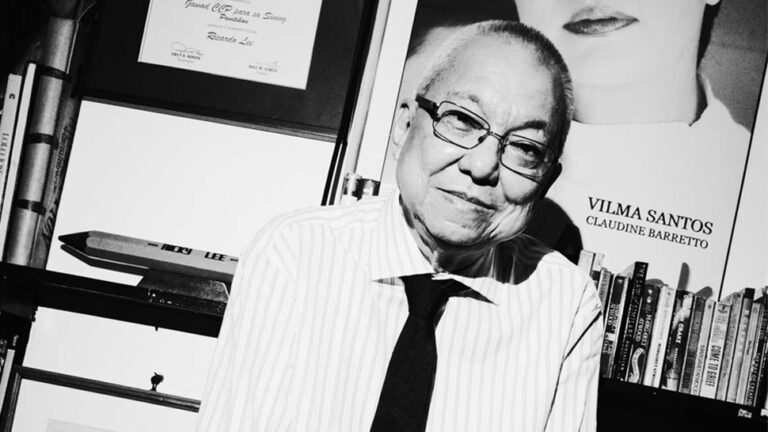
Award-winning Filipino writer Ricky Lee admitted that he is affected whenever information spreads aimed at erasing the truth that took place during martial law.

Ricky said this when he was interviewed by veteran GMA-7 journalist Howie Severino on The Howie Severino Podcast on September 13.

Howie asked Ricky about the upcoming 49th anniversary of the declaration of martial law on September 21, 2021.

The late President Ferdinand Marcos, who served as President for 21 years, declared martial law on September 21, 1972. That lasted until January 17, 1981.

The Marcos dictatorship was finally overthrown due to the historic EDSA Revolution or People Power on February 22 to 25, 1986.

How Ricky Got Detained During Martial Law

Ricky testified that he was one of those who experienced human rights violations during the martial-law era of dictator Ferdinand Marcos. 

He was in his 20s, studying English at the University of the Philippines and living in the Narra Dormitory, when his books were confiscated in 1972.

He decided to join the fight to end the Marcos dictatorship.

 “Di pa ako naka-graduate sa UP. So, nung nag-declare ng martial law, at kinonfiscate ang mga libro ko…

“I was an activist already at that time, joining rallies, and so on and so forth. So, I dropped out of school.

“I never finished schooling because of martial law. I got involved full time already.”

But Ricky clarified, he never held a gun.

The place where Ricky used to live was raided.

“Hindi ako humawak ng baril. Hindi ako marunong humawak ng baril up to now…”

“Tinatanong ako, ‘Asan ang baril?’ Sabi ko, ‘Hindi ako marunong humawak ng baril…’”

When the military detained him in the Fort Bonifacio detention cell then, it was clear to him that he had no sufficient reason and that what he had suffered was against the law.

“They found reason na hindi naman legitimate reason. Because pag hinuhuli ka nun, ang tawag sa iyo detainee, hindi prisoner.

“Wala naman talagang charges. Hindi mo alam kung bakit. Dini-detain ka lang nila para di ka makakilos. Hindi ka maging aktibista. So, dini-detain kayo.

“Walang hearing, walang charges, at hindi mo alam kung kailan kayo makakalabas, kasi detainee kayo.”

In the middle of what he went through then, Ricky alleged how Marcos covered up the situation of their detainees because they expressed their attitude against important issues happening in the country.

“There was a time nasa loob kami ng detention sa Fort Bonifacio, sa TV, ini-interview si President Marcos nun at sinasabi niya, ‘There are no political prisoners in this country.’

“So, nagtingininan kami lahat. ‘So, ano tayo?’ So, yun. Walang charge. You never know kung hanggang kailan ka makakalabas. Hindi mo alam ang reason ba’t ka dinetain.”

On Historical Revisionism: ‘Para akong binubura. It hurts.’

Howie asked Ricky how he feels when reading information or if someone comes across his video or any online content that changes the version of history or if it is called historical revisionism.

Because of his personal experience of the incident during martial law, Ricky feels that disinformation about the issue is also erasing him.

“Unang-una, I feel bad kapag nakikita ko yung sinasabi mo, kasi feeling ko, para akong binubura. Parang binubura ako.

“Maski papaano, I think may na-contribute ako sa panahon na nangyayari sa atin yun, so parang nabubura lahat yun.

“So siyempre, I feel totally wiped out pag may nababasa akong ganun. So it hurts.”

Ricky believes that one needs to be observant and smart with the information consumed, because he thinks the changing version of history is chronic.

He explains, “Yung pagbubulag… Dati itinatago yung kabulagan. Ngayon, inilalantad nila nang paulit-ulit para matanggap.

“Yung itinatago, ang ginagawa ngayon, inilalantad, para maitago. Sa kakalantad, naitatago siya.

“Kasi umuulit-ulit. Nabubulag ang tao. Naitatago. So, nag-iiba ang paraan ng pagtatago.

“Naging mas tuso, nagiging mas maabilidad, mas maparaan, at in a way, naging mas successful.”

Aniya, patunay ang mga patung-patong na legal cases kaugnay ng corruption at human rights violation sa mga kalupitan noong panunungkulan ni Marcos.

Sabi ni Ricky ukol sa mga taong bulag sa katotohanan: “Pero di ko naman sila lahat masisisi, e. Kasi ang daming mga forces ang humaharang para makita ng tao yung totoong nangyari.

“Ang daming mga puwersa sa palibot na di kasalanan ng mga hindi nakakaunawa at nakakakita. So I am not blaming them.

“Pero sana makita nila. Kasi totoo yung nangyari.

“Ang daming mga ebidensiya at ang daming mga existing na mga documents, mga tao sa palibot, na ang daling kausapin para malaman mo yung totoong nangyari.

“In short, ang thinking ko, ang dali-dali makita yung totoo. Ba’t di makita yung totoo? So, may konting frustration sa level na yun.“

But Ricky still emphasized that whoever is the instigator of the sale of lies and misinformation should be held accountable.

Never Forget

Howie also asked Ricky that in the issue of “#neverforget” about martial law, what should the people not forget?

Ricky’s metaphorical answer is that he believes he has made a great contribution as a writer to help remove the barrier for the blind.

“Unang-una, hindi dapat tayo nakakalimot…

“So, meron kang history. Kung wala kang history—at totoong history, yung truth—hindi ka totoong nag-e-exist sa present in the real sense na, ‘Eto ako. Ito ang identity ko. Ito ang pupuntahan ko.’

“Hindi iyan magiging totoo until nakita mo nang totoo yung kasaysayan mo.

“So, I think mahalaga yung pinag-aaralan yung kasaysayan, writer ka man o hindi.

“Pero lalo na kung writer ka. Kasi trabaho mo magtanggal ng pagkabulag sa ibang tao.”

Removing Blinders on Issues

Ricky also believes that there is more than one way to present the truth on important social issues.

She connects this with mentoring aspiring writers in her workshop classes.

“Sa iba-ibang levels puwedeng mag-respond. Hindi ko sinasabi na lahat ng writers gumawa ng overt na political na kuwento, e.

“Kung ang ginagawa mong kuwento ay nagtatanggal ng harang sa mga manonood tulad sa mga disabled, halimbawa, and then gumawa ka ulit ng kuwento na nagtanggal ng maling trato sa gender sa gays…

“Dahil ang audience mo natatanggalan mo ng isa o dalawang harang, pagtingin sa issues na pulitikal, mas nakikita nila yun maski hindi ko ikuwento.

“Kumbaga, tumutulong ako matanggalan sila ng isang harang, then makikita nila yung ibang aspeto pa ng society na di ko kinukuwento. Pero dahil natanggalan na sila ng harang, mas nakikita nila.

“So, di ko nire-require, ‘Lahat kayo na writers dapat ito lagi isusulat niyo.’

“Kung saan kayo mahusay at nasaan ang passion niyo, dun kayo magsulat at magtanggal lang kayo ng harang.”

This story originally appeared on Pep.phMinor edits have been made by the Esquiremag.ph editors.

ICC order: Proceed

0

Philippine Daily Inquirer /September 18, 2021

And so it has come—the International Criminal Court’s (ICC) decision to open a full investigation into the charges of crimes against humanity against President Duterte for his administration’s centerpiece “war on drugs.”

The ICC’s Pre-Trial Chamber announced Sept. 15 that it had found “reasonable basis” to proceed with the official probe, as the “specific legal element of the crime against humanity of murder” has been allegedly met in the bloody crackdown that began as soon as Mr. Duterte warmed his seat in Malacañang in July 2016.

The Hague-based tribunal noted in its 45-page decision that Mr. Duterte’s flagship “war on drugs” campaign “cannot be seen as a legitimate law enforcement operation, and the killings neither as legitimate nor as mere excesses in an otherwise legitimate operation.” Also, there were indications that “a widespread and systematic attack against the civilian population took place pursuant to or in furtherance of a State policy,” and that the evidence pointed to the government’s failure “to take meaningful steps to investigate or prosecute the killings.”

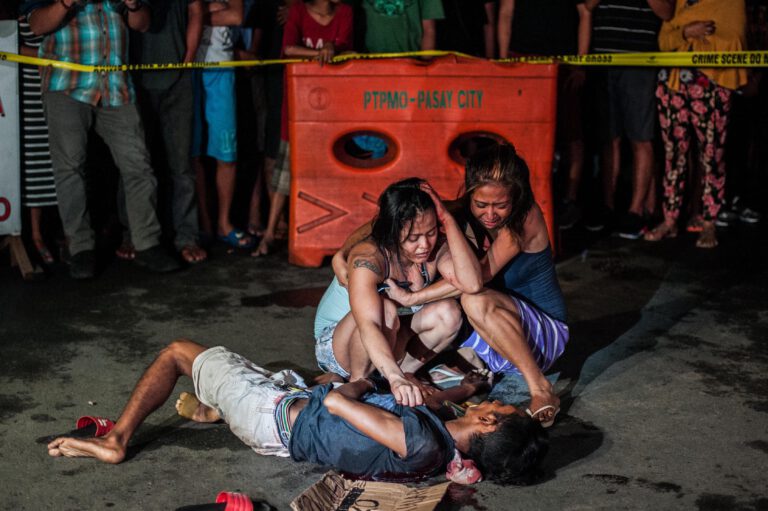
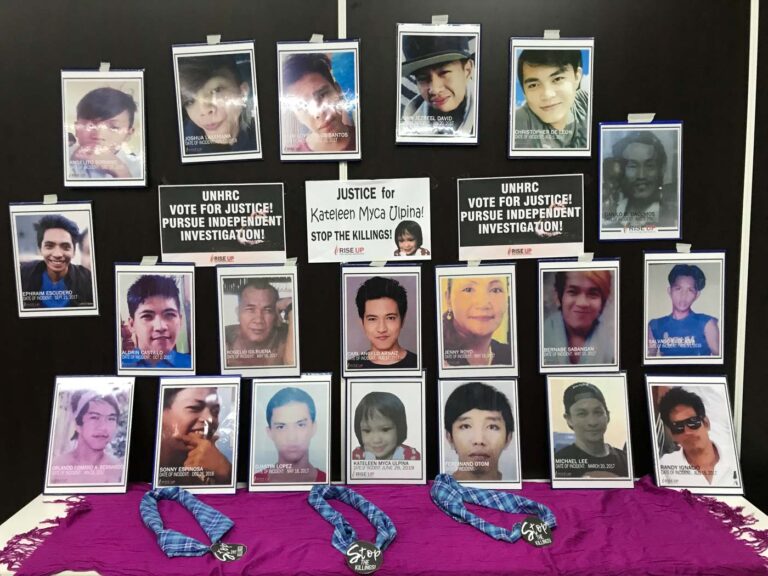
Philippine National Police data pegged the death toll of the drug war at 6,165 suspected drug suspects from July 2016 to June 2021. But human rights groups claim that as many as 30,000, mostly poor Filipinos including children, have died in the name of the anti-narcotics campaign.

The chamber’s three judges based their decision on a mass of evidence, including official issuances by Philippine authorities, documents from the United Nations and nongovernment organizations, press reports, and testimonies of victims’ kin supporting the request for an investigation filed by former ICC prosecutor Fatou Bensouda just before she retired in June.

Bensouda had said in her submission that there was indeed “reasonable basis to believe that the crime against humanity of murder was committed” due to the Duterte administration’s “war on drugs” campaign from July 1, 2016 to March 16, 2019, or before the Philippines’ withdrawal from the Rome Statute, which created the ICC, took effect.

Gathered information, she said, suggested that “state actors, primarily members of the Philippine security forces, killed thousands of suspected drug users and other civilians during official law enforcement operations,” and that the police and other government officials “planned, ordered, and sometimes directly perpetrated extrajudicial killings (EJKs).”

Ominously for Mr. Duterte and his lieutenants, the ICC will not limit itself to the killings under the current administration. Noting an earlier similar pattern of EJKs in Davao allegedly perpetrated by the so-called Davao Death Squad vigilante group, the ICC probe will also cover the period November 2011-June 2016 when Mr. Duterte served as vice mayor and then mayor of that city.

Responding to the electrifying announcement, Malacañang said the ICC probe will receive no cooperation from the Duterte administration, and that ICC investigators will not be permitted to enter the country.

Presidential legal counsel Salvador Panelo, summoning all the bravado he could muster, said the ICC investigation “neither bothers nor troubles the President and his administration.” Taking the same tack, presidential spokesperson Harry Roque insisted that the cases against Mr. Duterte “will just sleep due to the absence of cooperation, particularly from the police, and no evidence will really be gathered.”

No evidence? The families of the victims who had sought the ICC’s help have expressed their “overwhelming support” for and desire to take part in the international probe, according to the families’ lawyers. The grieving families have welcomed the ICC decision as a “glimpse of light” toward justice, and Edre Olalia, the president of the National Union of Peoples’ Lawyers, said he hopes it is “the beginning of the end to impunity.”

Bensouda’s successor at the Office of the Prosecutor, former British barrister Karim Khan, will now oversee the actual probe, and possible trial of the case, which could bestow on Mr. Duterte the ignoble distinction of being the first Southeast Asian leader to stand trial for crimes against humanity. The Pre-Trial Chamber stopped short of naming suspects but did explicitly cite President Duterte and Sen. Ronald dela Rosa, who led the drug war during his stint as PNP chief, for their public statements that seemingly incited or encouraged the killing of drug suspects.

Mr. Duterte will certainly stonewall all he can and fight these proceedings to the bitter end, but as a former human rights lawyer and champion of the ICC in the Philippines once said: “There will be no turning back. War criminals and perpetrators of genocide, crimes against humanity and aggression: Take heed. Your days are numbered.”

Those prophetic words, by the way, were uttered by Harry Roque—now Mr. Duterte’s chief defender.

Killing as state policy: 10 things the ICC says about Duterte’s drug war

0

Sep 16, 2021, Jodesz Gavilan

MANILA, Philippines

The International Criminal Court’s pre-trial chamber says killings of suspected drug personalities ‘has been frequently encouraged’ by President Rodrigo Duterte himself

The International Criminal Court has green-lit an investigation into widespread killings in the Philippines, perpetrated under President Rodrigo Duterte’s violent anti-illegal drug campaign.

The latest development comes a little over five years since Duterte’s flagship project started on a national scale, killing at least 6,181 suspected drug personalities in police operations alone, as of July 31. Human rights groups estimate the deaths to be between 27,000 and 30,000 to include victims of extrajudicial killings.

ICC pre-trial chamber on Wednesday, September 15, said there is reasonable basis for Prosecutor Karim Khan to start an investigation “in the sense that the crime against humanity of murder appears to have been committed, and that potential case(s) arising from such investigation appear to fall within the Court’s jurisdiction.”

What else did it say about the Duterte war on drugs? Rappler distills the 45-page decision into the 10 main observations submitted by the pre-trial chamber:

1. Killing was state policy

It is part of government policy to kill, according to the ICC pre-trial chamber, based on different information submitted by the Office of the Prosecutor. 

“The Chamber observes that it is also apparent, on the basis of the supporting material, that the attack took place pursuant to or in furtherance of a State policy,” the ICC pre-trial chamber said. 

The chamber took note of the information that perpetrators were “given cash payments, promotions, or awards for killings in the so-called ‘war on drugs’ campaign.” 

2. Killings in drug war campaign cannot be considered as ‘legitimate nor as mere excesses’ of anti-drug operations

The ICC pre-trial chamber said that killings in Duterte’s war on drugs that occurred between July 2016 and March 16, 2019, are not “considered a legitimate anti-drug law enforcement operation on the part of Philippine authorities” because of lack of due process. 

The Philippine National Police (PNP) also appeared to have ignored its own operational procedures and international standards concerning the use of lethal force.

“According to the available information, the so-called ‘war on drugs’ campaign did not incorporate any formal and reviewable decision-making system in individual cases, and did not afford the interested and affected persons a serious opportunity to participate in the process, or to contest the claims against them,” it said in the report. 

3. Killings were ‘frequently encouraged’ by President Rodrigo Duterte

Duterte’s violent rhetoric contributed to the widespread killings seen on the ground. The pre-trial chamber cited his frequent pronouncements both during his campaign for presidency, after he was sworn into office in 2016, and even during his time as Davao City mayor before this.

“The killing of alleged drug dealers and users, or even more broadly ‘criminals,’ has been frequently encouraged by Rodrigo Duterte,” the ICC said.

“He is also reported to have boasted of the level of safety in his city and stated that his approach to achieving that was: ‘Kill ’em all,’” it added.

The pre-trial chamber also mentioned the apparent encouragement from other officials: “The Chamber also notes that there is information that others, and in particular [then] Philippine National Police chief Ronald Dela Rosa, made similar statements, declaring that killing those involved in drugs was the intention in the so-called ‘war on drugs’ campaign.”  

4. Official government documents link killings to drug war

The ICC pointed out several official government documents covering Duterte’s anti-illegal drugs campaign, including some that hinted at killings as part of operations. 

“There is a clear link between killings and the government’s formal anti-drug campaign,” the pre-trial chamber said.

It cited the “significant” PNP Command Memorandum Circular No. 16-2016, which uses the word “neutralization,” pertaining to suspected illegal drug personalities. The ICC Prosecutor said the word was being used “in its euphemistic meaning of killing.”

“It is significant that a marked increase in killings of persons allegedly involved with drugs was reported following the assumption of the presidency by Rodrigo Duterte and issuance of CMC No. 16-2016,” ICC said.

The ICC also said that the decrease in the number of killings following the periods when the campaign were suspended in the past show that “the killings occurred in execution of, or because of, the state policy.”   

Still, despite these suspensions, the ICC pointed out killings “never ceased completely.”

5. There is ‘apparent unreliability and arbitrariness’ in the use of drug watch lists

The Duterte government’s war on drugs relies on its “apparent unreliability and arbitrariness” use of drug watch lists. 

“There is no information available as regards any formal status or procedural requirements applicable to such lists,” the ICC said, citing Amnesty International’s investigation that the watch list and the method “are deeply problematic.” 

It cited supporting materials submitted by the ICC Prosecutor, including anecdotes that some end up on lists because of problematic reasons and were often unverified.

6. Drug war targeted poor Filipinos

Human rights groups have repeatedly blasted the war on drugs as being anti-poor, only targeting small-time alleged drug personalities and not those who are part of huge drug syndicates. 

This is affirmed by the ICC pre-trial chamber in its decision, which said that supporting material established that the drug war “affected certain segments of the population disproportionately.” 

“Other supporting material points towards the conclusion that there is a pattern of harm predominantly affecting poor, low-skilled residents,” it said.

According to information the ICC received, victims were likely:

  • Male
  • Between the age of 20 and 40 years
  • Resided in poor communities, shantytowns, or pockets of poverty if they are based in cities 
  • Jobless or working in the informal economy, possibly as construction workers, tricycle drivers, scavengers, or “neighborhood watchmen”
7. ‘Private individuals’ killed people as part of war on drugs

Thousands of killings outside of police operations were still committed in line with Duterte’s violent campaign. 

The ICC pre-trial chamber said in its report that “it is sufficiently established, at the present preliminary stage of the proceedings, that private individuals killed persons as part” of the war on drugs. 

“The Prosecutor submits and the supporting material establishes sufficiently at the present stage, that the targeted victims were civilians suspected of being connected to illegal drug activities, such as persons on drug watch lists, persons who had been publicly identified as drug personalities, and those who had previously surrendered to authorities as part of Operation Tokhang,” it said.

There is indication, the ICC added, that the perpetrators were tapped by police, or took advantage of “a connection to the police” to carry out the killings. Some cases also saw suspects declare that they were “soldiers” of Duterte’s drug war. 

The ICC mentioned three different scenarios where people were killed outside of police operations: 

  • “Riding-in-tandem on a motorcycle or in a van, shooting the victims at close range, and swiftly leaving the area”
  • “Targeting victims at their homes”
  • “Killings in unknown circumstances, but with bodies disposed of in public locations, tied up and frequently displaying a cardboard sign purporting that the person was a drug user or dealer”

The ICC also highlighted that the Prosecutor identified three categories of suspects: 

  • Officers concealing their identity
  • Private individuals working under police 
  • Private individuals or groups “instigated to act” by the government’s war on drugs
8. There are still no ‘meaningful steps’ taken to investigate killings

The ICC pre-chamber took note of the lack of accountability and widespread impunity in the Philippines in relation to Duterte’s anti-illegal drugs campaign, affirming the long-running issues faced by families of victims. 

“The supporting material indicates that the Philippine authorities have failed to take meaningful steps to investigate or prosecute the killings,” the ICC pre-trial chamber said.

“It appears that only few cases have proceeded to trial, and that only the case of the murder of Kian delos Santos has proceeded to judgment,” it added.

The chamber also noted that the Presidential Communications Operations Office (PCOO) included the drug war deaths among the key accomplishments of the Duterte administration in 2017, as well as Duterte’s consistent rhetoric that he would protect his men who killed as part of their duty.

It was not mentioned in the ICC decision, but just in his last State of the Nation Address, Duterte said it was high time for Congress to pass a law that would give free legal assistance to state agents who would be charged for incidents related to the performance of their duty.

9. Drug war killings are ‘widespread and systematic’

The attacks under President Rodrigo Duterte has become widespread and systematic, the ICC pre-trial chamber said in its report. 

The killings are considered widespread because “the estimates of the aggregate number of victims, as well as by its territorial extent, comprising the entire territory of the Philippines,” even if the killings committed during the Duterte presidency covered by the ICC report were only between 2016 and 2019. 

The pre-trial chamber said the systematic characteristic was “discernible” based on how it had become state policy to kill.

10. There are similarities between the nationwide war on drugs and Davao City killings

The similarities between the killings under the nationwide drug war and those that occurred in Davao City when Duterte was mayor and vice mayor “merit further investigation,” including the systematic involvement of security forces. 

“Similarities in the modus operandi are also discernible,” it said, citing information that there were policemen from Davao City who were transferred to Metro Manila in 2016. 

The pre-trial chamber also noted Duterte’s track record of publicly “supporting and encouraging the killing of petty criminals and drug dealers in Davao City.” 

“These public statements are similar to those made before and during the so-called ‘war on drugs’ campaign, and indeed appear to form a coherent progression,” ICC said. – Rappler.com
‘Sorry for the loss of lives’

0

Philippine Daily Inquirer / September 17, 2021

Profuse apologies over the deaths of people do not normally leave a bad taste in the mouth. But President Duterte’s words of regret expressed last week did.

The President publicly apologized for the killing by the police of four Chinese nationals in a buy-bust sting in Candelaria, Zambales on Sept. 7. “I’m sorry for the loss of lives. Hindi natin ginusto ’yan. But I just hope that the countries (sic) from where these guys came from should understand that we have laws to follow,” said Mr. Duterte in a taped address aired on Sept. 8.

Filipinos by the tens of thousands have been killed in Mr. Duterte’s flagship drug war over the last five years; not one of the hapless victims, or their families, has merited an apology from the President over the loss of life at the hands of the police. The even more wrenching deaths of children caught in the crossfire or actually targeted in police operations were dismissed by Mr. Duterte as “collateral damage.” In one particularly callous instance, former police chief and now Sen. Ronald dela Rosa shrugged off the death of a toddler in a police raid in June 2019 with a nonchalant, “Shit happens.”

The Chinese drug suspects who were the subjects of the President’s apology were found to have with them some P3.4 billion worth of crystal meth or shabu—one of the biggest drug hauls this year. Mr. Duterte himself described one of those killed as among “the biggest shabu importers in the Philippines [and] a member of a transnational drug trafficking organization.” But apparently, so careful is the President of offending China that he felt he needed to publicly explain and atone for the deaths of Chinese nationals involved in crimes in the Philippines—a touch of sympathy and concern that his administration has never been able to summon for the scores of poor Filipinos felled by violent police operations.

In the twilight of his term, Mr. Duterte’s ardor for and accommodating attitude toward China remains seemingly undiminished. Recently, China requested the Philippine National Police to revive the project to establish “China help desks” in local police stations. PNP chief Gen.

Guillermo Eleazar said the project would “address concerns on the protection of overseas Chinese nationals and organizations” and would focus on “mutual law enforcement and security concerns involving the crackdown on illegal Pogo (Philippine offshore gaming operators) activities, telecom fraud, drug-related crime, and kidnapping.”

This project was first proposed by the PNP’s Chinese counterparts in 2020, after which makeshift “China help desks” began appearing in a number of police stations. But the move generated wide public backlash, and the police backtracked.

Now, the PNP says the revived project would likely be implemented “within the year.” But what for? Why allocate police resources already burdened with local peace and order responsibilities and the enforcement of pandemic-related ordinances to extending privileged assistance to a particular group of foreign nationals? How does “mutual law enforcement” work in this case? Will China also create “Philippine help desks” in Beijing and elsewhere and assign a portion of its police force to protecting Filipinos working in that country? And why now, when the millions of Chinese nationals that came to the Philippines with the boom in Pogos are largely gone, driven away by the pandemic and the reduction in Pogo activities?

Speaking of Pogos, Sen. Risa Hontiveros last week called out the state-run Philippine Amusement and Gaming Corp. (Pagcor) for its failure to collect the tax debts of 15 Pogos. Only three of the Chinese companies are still operating, while the licenses of the rest had been canceled, suspended, or placed under review. Per a 2020 Commission on Audit report, Pagcor had a total of P1.382 billion in overdue receivables as of Dec. 31, of which P1.365 billion was owed by Pogos. “Why were debts by Pogos allowed to get this big?” asked the senator.

Even at the height of the pandemic, while Filipinos were forced to hunker down in their homes under strict quarantine, the President allowed the operations of Pogos to continue, citing the need to raise revenues. The massive tax liabilities some of these companies have incurred, however, point to a curious forbearing attitude by the government. The Pogos’ tax problems also dovetail with the raft of other social ills their presence in the country has spawned, from corruption and bribery at the Immigration bureau for fake work visas, to drugs and prostitution, abductions and killings among Chinese nationals, money laundering, and illicit clinics treating Chinese COVID-19 patients.

But for China, only the most delicate of hands, it seems. And so for the deaths of Chinese suspects found to have engaged in that most heinous transgression in the President’s book—drug trafficking—Mr. Duterte has been quick not with condemnation but with a humble apology.

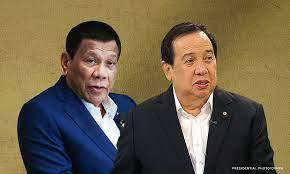
Gordon to Duterte: ‘You are not a President that Filipinos can respect’

0

By: Neil Arwin Mercado – Reporter/INQUIRER.net / September 17, 2021

MANILA, Philippines — Senator Richard Gordon on Friday continued his offensive saying President Rodrigo Duterte does not act like a president, and is not a president that the Filipino people can respect.

At the continuation of the Senate blue ribbon committee’s investigation on the government purchases amid the pandemic, Gordon minced no words in saying that Duterte’s reputation preceded him even during international conferences with other world leaders.

“Mahirap tangkilikin because you do not act like a president. Today, I tell you, you are not a President the Filipino people can respect,” Gordon said, addressing Duterte.

“Nobody talks to you in international conferences because nauna ‘yung reputation n’yo na mapagmura, mapusok, at talagang sinasabi nyo kill, kill, kill,” he added.

Duterte has recently made Gordon the butt of his regular Talk to the People address, which was supposedly conceptualized to apprise the public of how the government is responding to the challenges of the coronavirus pandemic.

In one of his tirades, the President made much ado over Gordon’s girth and lengthy interpellations, with a promise that he will campaign against the senator in next year’s elections.

But Gordon said he may not even run in the 2022 elections and turned the tables on Duterte who has accepted his nomination as the vice presidential candidate of the ruling PDP-Laban party.

“Wala akong ambisyon. Malamang hindi na ako tatakbo sa totoo lang. Ayoko na. Nakapagsilbi na po kami kaya wag niyo akong pagsabihan na ako mamumulitika dito,” Gordon said.

“Wala namang akong inaanunsyo. Kayo pa nagsabi, gusto ko mag-vice president. E sino ba ang tumatakbong vice president ngayon? Hindi ba kayo, Mr. President?” he added.

Gordon likewise turned emotional after Senate Minority Leader Franklin Drilon as well as Senators Francis Pangilinan and Risa Hontiveros voiced out their support towards Gordon for his “courage” amid the Senate blue ribbon committee’s investigation.

“Whether you accept it or not, these are times when courage must come out with what is happening. It is so difficult to live during these times,” Gordon said.

“I hope that our countrymen will find it in their heart to see the truth. I’m not saying that we are right all the time. Panindigan natin ang ating pagsisilbi sa bayan at pagmamahal sa bayan,” he added.

EDV