Home Blog Page 65

Filipinos in the Netherlands saddened by death of investigative journalist Peter R. De Vries

0

Peter R. de Vries  was well-known to the Filipino community and stood out for his fearless investigative reporting.

Thus stated Grace Punongbayan, a migrant and human rights advocate who used to work with Migrante Europe – a service foundation for Filipino Migrants, in describing renowned investigative journalist Peter R. de Vries, who succumbed to his injuries July 15 in a hospital after he was shot by assassins last July 6 in the center of Amsterdam after guesting on a TV program.

According to Punongbayan, De Vries was well-known in the Filipino community in the Netherlands for his courageous investigation of and reporting on the case of Bebe Pana- a Filipina married to a Dutch man who disappeared for months in 2001.

After Pana went missing and the police appeared to have faced a deadend on her whereabouts, Pana’s friends went to De Vries for help in finding her.

De Vries travelled to the Philippines to get to the bottom of the then unresolved disappearance of Bebe Pana who was later found dead and buried under the bathroom floor of a Dutch man. Despite a court ruling that there was no foul play in Pana’s death, and her Dutch husband was acquitted of accusations that he had a hand in her death, De Vries, according to several media reports, was unconvinced of her husband’s innocence in her death.

Gerry Teodoro, a Filipino freelance online journalist living in the Netherlands, on the other hand, said De Vries’ death should be condemned as a brutal assault against press freedom, and the right of journalists and media people to report on wrongdoings especially those involving the high and powerful in society. Teodoro likened the murder of De Vries to the killings of media people in the Philippines who were silenced because they exposed the extra-judicial killings, corruption and other crimes committed against the people.# (PinoyAbrod)

In Duterte’s drug war, justice is ‘nearly impossible’

0

Jul 15, 2021, Lian Buan, Jodesz Gavilan

MANILA, Philippines

In the last five years, when scrutiny of the police intensified, the Commission on Human Rights noticed that killings in police operations declined and deaths by vigilantes increased

At a glance:

  • The police made it extremely hard for families to secure the documents necessary for filing complaints.
  • When scrutiny of the police intensified, the Commission on Human Rights noticed that killings in police operations declined and deaths by vigilantes increased.
  • Deaths by vigilantes are considered hopeless cases.
  • Most of the small-time drug suspects charged by the government are opting for plea bargains.

Nahuli nila nang buhay ang anak ko, bakit nila pinatay?” (They caught my son alive, why did they kill him?)

Melody is talking about her 20-year-old son Mark (not their real names), who was killed by policemen in Bulacan in 2017. 

A police report identified Mark as “a drug personality” who supposedly robbed a person and fired at the cops who responded to the scene. The report said Mark was found with sachets of shabu. 

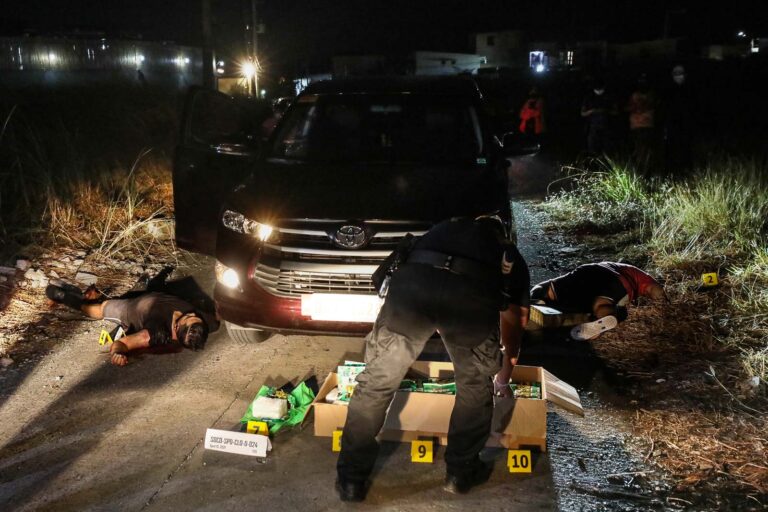
It is a story often told – a narrative of “nanlaban” that became the battle cry of the Philippine police to defend killing more than 7,000 people in their operations.

But Mark had ligature marks on his wrists. He was tied, said Melody.  “Ganyan ba ang nanlaban eh nahuli nila nang buhay?” said Melody. (They caught him alive, so how could he have fired at them?)

Rappler conducted interviews with drug suspects, their families, human rights groups, and government investigators, and their experiences show a centerpiece government campaign, running for five years, that make obtaining justice tremendously hard, and sometimes nearly impossible.

“The police are a key pillar of this system, but the decades of mismanagement, corruption, and abusive behavior by many in the Philippine National Police (PNP) have made it virtually impossible for victims of injustice in the drug war to run to it for help, let alone justice,” said Carlos Conde, senior researcher of international group Human Rights Watch (HRW).

‘Selective cooperation’

Melody wants to file a case, but getting police documentation in the drug war is a nightmare, she said.

Melody said she was given the runaround by different police stations, until one day she brought a priest with her. They accommodated her then, a month after her son’s death.

At the station, she was shown photos of her son at the morgue.

“Kitang kita ko na naitali ’yung anak ko. Ibig sabihin nahuli nilang buhay. Tapos sinabi ng doktor ay condolence, ang sabi, ‘Ang tanging maitutulong ko lang ay sasabihin sa medico legal ay sinasabing naitali siya,’” Melody told Rappler. 

(I saw that my son was tied, so they caught him alive. The doctor offered me condolences and said, “The only way I can help you is write here in the medico-legal report that he was tied.”)

A copy of the medico-legal report had the same date as the killing, saying there were ligature marks on both arms just above the wrists.

Gusto man naming magkaso, pero andaming nadi-dismiss, at sa panahon ngayon nakakatakot,” Melody said. (Even if we want to file a case, there are so many cases being dismissed, and it’s scary during these times.)

Even the Commission on Human Rights (CHR), mandated to investigate state abuse, is not spared.

Yes, nagiging selective iyong cooperation nila, depende lang siguro kung sa tingin nila, madedehado ba sila kung magbibigay sila ng dokumento o hindi,” CHR Central Visayas Chief Investigator Leo Villarino told Rappler in an interview.

(Yes, they’re becoming selective with cooperation. It depends on whether or not they it will be disadvantageous for them to give documents of a certain case.) 

Newly-installed PNP chief Guillermo Eleazar said, “as a general rule, a spot report is an exception to Freedom of Information policy.”

“Thus, we don’t really give copy thereof,” Eleazar told Rappler. He did not respond to follow-up questions.

‘They were arrogant at first’

Spot reports have never been privileged information before the Duterte administration. They were public records, accessible most especially to interested parties.

A church volunteer whom Rappler talked to on the condition of anonymity said that, “at the beginning of the Duterte administration, the police were very arrogant.”

“They would give the document because they felt nobody cares about these people anyway, [as if saying] ‘You’re just asking for a piece of paper. Duterte is behind us, we’re untouchable.’ We’re actually raising to the whole world how happy we are we killed so many people,” the volunteer said.

Lawyer Kristina Conti has scored one of the few legal wins against Oplan Tokhang. In August 2019, the Office of the Ombudsman ordered murder charges against local cops of Tondo, Manila, for killing 23-year-old epileptic Djastin Lopez in an operation on May 18, 2017.

Lopez was killed three months before the sensational case of 17-year-old Kian delos Santos. A CCTV footage of cops dragging Kian by the collar brought on international pressure and prompted President Rodrigo Duterte to pause the drug war.

In May that year, Lopez’s mother Normita and Conti were still able to get records that exposed police gaps. The spot report said Djastin was a murder suspect, but a subsequent post-operation report said what happened was a drug buy-bust. 

After Kian, police stations clammed up.

Conti said they had to rehaul their strategy. Lawyers were not encouraged to join families in trips to stations. Don’t ever say you need the document to file a case, families were briefed.

Jane Lee, whose husband was killed by vigilantes in March 2017 in Caloocan, told policemen she needed papers to be able to claim death benefits. 

Lee is now a volunteer of the human rights group Rise Up for Life. She accompanies mothers and widows to police stations. 

May isa na alas-dose nang gabi raw pinapabalik para makakuha ng police report,” Lee said. (One of our mothers was told to return to the station at midnight to get the police report.)

It meant do not come back at all.

The church volunteer said the ideal set-up would be for women to go in pairs, the one who has already done it will assist the other. The women are told to be gentle and cool. A member of the clergy joins them as a last resort.

There was a time when police stations told families to get the documents from Camp Crame. The problem with that, said Conti, was that at the national headquarters level, “they’re already on the defense.”

Malinis na, maayos na,” said Conti. (The story has been cleaned up, it’s been fixed.)

Templated

In an examination done by the Free Legal Assistance Group (FLAG), one of the two petitioners against the drug war before the Supreme Court, police reports tended to be templated, with several cases having the same story line. 

The suspects, who didn’t know each other, supposedly uttered these words before taking out their guns: “Putang ina, pulis ka!” (Son of a bitch, you’re a cop!)

CHR’s Villarino saw the same pattern in the documents they were able to obtain when the PNP was still lax.

“Halos pare-pareho ang mga laman, parang pinalitan lang ng pangalan at date,” he recalled. (You’ll notice that the reports were all of the same style, same content, as if they only changed the names and dates.)

“So we started trying to be very observant of each operation…exact same method of operation, exactly the same results after every operation,” Villarino said.

That is why human rights lawyers have always insisted that a death in an operation is for a judge to examine, not for the PNP to investigate internally.

“First year law students know that ‘nanlaban’ amounts to a claim of a justifying circumstance, which is a matter of defense and which means those who committed the killings should first be charged, not exonerated even without a trial,” said FLAG’s Ted Te, former Supreme Court spokesperson and an expert in criminal law.

The Department of Justice (DOJ) told Rappler it is finishing its report on the 52 cases forwarded to them by the PNP. It’s the response we got to our repeated requests to the DOJ for an interview for this story.

The 52 cases are where internal police investigators found administrative liability among their operatives. They are the only cases at this point that the PNP is willing to share with the DOJ; for all others, President Duterte is concerned about the national security risk in sharing information.

Before the DOJ created in June 2020 the review panel for cases of drug-related killings, the Philippine government allowed thousands of these cases to go unsolved because of presumption of regularity.

Still, the DOJ review panel moves on the imprimatur of Duterte, and settles for so few records at this point. 

The DOJ also denied Rappler’s Freedom of Information (FOI) request for its preliminary report, where, according to Justice Secretary Menardo Guevarra, they found non-compliance to protocols in cases of deaths in police operations. It would turn out later on that the preliminary review only reviewed “more than 300” cases out of the 7,000 deaths.

As CHR intensified its probe into deaths in police operations, Villarino said they spotted a sudden change. 

Biglang kumonti ang police operations na resulting in deaths, but unti-unti ring tumataas ang mga riding-in-tandem na ang mga pinapatay ay mga drug personalities din. There is a correlation in the decrease and the rise of riding-in-tandem killings,” he said.

(The number of police operations resulting in deaths decreased, but the number of riding-in-tandem killings rose.)

Deaths by vigilante are hopeless cases

Lee said that, beginning in 2016, their area in Caloocan City became a killing field, deaths coming one after another, but none among those left behind have the guts to pursue a case.

“’Yung mga namamatay, kakilala namin. Umiikot lang sa lugar namin. Alam ko ang istorya nila, pero hindi lahat nagpa-document kasi takot sila,” said Lee.

(We knew all those who were killed. It seems the killings are just happening around the place. I know their stories, but [their relatives] don’t document it because they’re scared.)

Lee suspects her husband’s death was a case of mistaken identity because he was close to people with drug links. But if the past five years taught them anything, it’s that if there is no perpetrator, there’s also no case to speak of.

“Tapos ang k’wento nung akin eh. Napanghihinahan ako pagdating doon,” she said. (That effective put an end to our story. I get discouraged because of that.)

That’s why pursuing cases remain far-fetched for Loida, not her real name,  who lost five relatives to vigilante killers between 2017 and 2019.

Three were killed by unidentified suspects – two were shot while the body of another was found floating in a river – while two died under strange circumstances while detained. All were accused of being involved in illegal drugs.

Loida has since moved houses a few times, prompted by news that certain people were asking around about her. She does this for the sake of the three children – her nieces and nephew – placed under her wing after their parents were killed in cold blood. 

Loida finds refuge in an organization working with women. “Kung wala sila, baka lahat kami, kasama ako at mga pamangkin ko, ubos na kami,” she said. (If it weren’t for them, we’d probably be all dead, myself and my nieces and nephew.)

Filing a case would mean constantly communicating with police officers, a risk she doesn’t want to take.

Hindi ako natatakot, pero wala akong tiwala talaga, sobrang wala akong tiwala sa mga pulis,” Loida said. “Alam ko darating iyon na kaparusahan sa kung sino man ang may sala, pero sa ngayon inuuna namin ay iyong bumalik iyong [kaligtasan] ng mga pamangkin ko.” 

(I’m not afraid. I just really don’t trust the police. I know there will come a time when those responsible will be punished, but right now I want to put the children’s safety first.)

Cops should do their jobs

It wouldn’t be the case if cops did their jobs. 

“If we find out that the police is not actually taking any action on killings by riding-in-tandem, that is when we conduct our own investigation, which will now also include iyong pagbabaya ng pulis (inaction on the police’s part),” Villarino said, adding that the most they would wait is three days for police to move.

Out of the 200 cases Rise Up for Life monitored, they were able to file complaints on six. It didn’t help that scene of the crime investigation in the Philippines was subpar. Death investigations were largely testimonial, said Conti, which made it nearly impossible to build a case because witnesses were not willing to speak.

“Sa context ng domestic prosecution, wala kang magiging recourse kasi wala kang perpetrator,” said Conti. (In the context of domestic prosecution, you will have no recourse because you don’t have any perpetrator.)

CHR had to make do with little resources at their disposal, but they also wanted to make sure they worked as fast as they could. CHR imposed a 90-day deadline to finish the preliminary investigation for drug-related killings. 

The commission has investigated at least 3,386 drug-related killings, as of June 18, 2021. Out of this number, 1,944 were killed during police operations, while 1,441 were killed by unidentified suspects. One case is considered an enforced disappearance. 

Of those, the CHR has filed 14 criminal cases in trial courts, 30 are pending with the Office of the Ombudsman, and 27 before city prosecutors.

To this day, the conviction of Kian’s killers is the sole proof of the Duterte government that there is justice for police abuses.

Retired International Criminal Court (ICC) prosecutor Fatou Bensouda said that, after three years of examination, she had concluded that Philippine officials, including the police, “paid vigilantes bounties for extrajudicial killings.”

“Sources suggest that police…took other measures in an effort to conceal the manner in which the killings occurred and to support claims of self-defense,” said Bensouda. She requested the pre-trial chamber to authorize an investigation into the drug-linked killings.

Plea bargains

Where there were so few cases filed for Tokhang deaths, there were tens of thousands cases filed for possession, sale, and trade of drugs. This is the other part of justice the government would like to highlight.

When Duterte took ffice, drug cases quickly took over Philippine courts, but with a dismal conviction rate in the beginning. By the end of 2017, the DOJ only had a 32.77% conviction rate for drug cases, an embarrassing showing for a government which promised to rid streets of drugs by putting away peddlers in six months. 

In April 2018, the Supreme Court issued a new plea bargain framework for drug cases, where small-time suspects could significantly cut their jail time if they admitted to a lesser offense. 

That shot up the DOJ’s conviction rate, reaching 78.22% by the end of 2018, an equivalent of 77,648 cases of conviction.

Cristina Flores is part of that 2018 statistic. 

Flores was arrested during a buy-bust in December 2016 in La Loma, Quezon City. Flores said she had gone home from a birthday party when cops came barging in to ask her to go with them to the barangay hall.

At the barangay hall, she was accused of selling drugs. Apparently, a neighbor outed her. She was taken straight to the police station and thrown in jail immediately.

Flores’ case was covered by the news. She accused policemen of faking the buy-bust. She said evidence of drugs was never recovered from her.

In 2017, the cops who arrested her were administratively relieved. 

Public interest in her story allowed her to hire a private lawyer, she told Rappler. They paid the lawyer a P10,000 downpayment. Her husband, a cab driver, ferried the lawyer to hearings for free and bought her food in lieu of fees. 

The lawyer was confident Flores would be acquitted. But Flores was getting sick inside jail. She had goiter and often experienced high blood pressure. The beds were so tiny, said Flores, and if you didn’t have money, you didn’t get “VIP treatment.”

There was a hearing in June 2018 that her lawyer could not attend. The public attorneys who were there proposed to her: what if you sign a plea bargain?

“Sabi sa akin, plea bargaining ka na para lumaya ka na. Tagal-tagal mo na, tagal ng proseso ng kaso. Kung gusto mo makita pamilya mo, mag-plea bargaining ka na,” Flores recalled what the Public Attorneys Office (PAO) told her.

(I was told, just get a plea bargain so you’ll be free. You’ve been jailed too long, the process is too long. If you want to see your family again, just get a plea bargain.)

Before that hearing ended, she was made to sign the plea bargain agreement. PAO Chief Persida Acosta did not respond to our request for comment.

Her lawyer was furious. Her husband was furious. She had thrown away their hard work, Flores was told.

“Okay na rin po iyon kasi ano, ang hirap po kasi sa loob ng bilangguan,” Flores said. (It’s still a good move, all things considered, because I was having such a hard time in jail.) She added that she could live with a criminal record, if that meant getting reunited with her children.

Conti called the plea bargain framework a way for government to “skew the statistics.”

Flores is now out, but they’ve moved homes out of fear.

“Kung hindi ako aalis sa lugar na iyon, maaaring maulit pa po iyon,” said Flores. (If I don’t leave that place, there could be a repeat of the incident.)

‘Systematic dysfunction’

“Your findings underscore the reality that the drug war exploits the systematic dysfunction of our criminal justice system,” Conde told Rappler.

“In a non-drug war context, seeking police assistance is already difficult; in a drug war context, it is near impossible, given their tendency to protect each other,” Conde added.

Which is why an ICC investigation is the most realistic option for many, despite the risks the move entails.

For CHR’s Villarino, it’s the victims and their families who know what’s best for them. After all, they were the eyewitnesses to the slow judicial process and climate of fear.

“They’re seeing that the ICC is the best opportunity for them to seek justice, so bakit naman natin sila pipigilan?” Villarino added. (Why should we stop them [from submitting testimonies]?)

Kung dito lang sa Pilipinas, wala kaming katiwa-tiwala,” said Lee.
(We no longer trust that we can obtain justice here in the Philippines.) – Rappler.com

Pandemic sinks PH poor even deeper

0

By: Kurt Dela Peña – Content Researcher Writer / INQUIRER.net /July 14, 2021

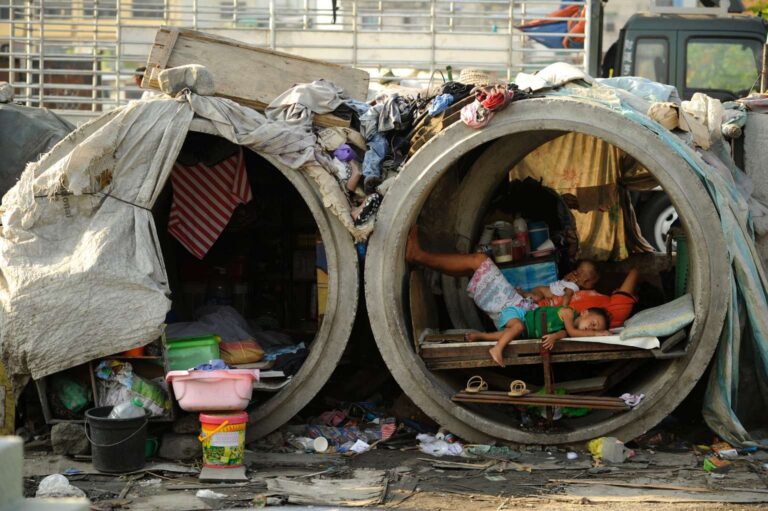
MANILA, Philippines — Many poor Filipino families might have thought they had already hit rock bottom before the COVID pandemic struck. At the bottom of many things, there would have been no option but to rise.

But the bottom kept sinking deeper for millions of Filipinos, especially when the pandemic struck.

Last May, a youth group in Isabela province distributed relief goods to families whose livelihoods were ruined by COVID lockdowns.

Remedios Ortiz, 45, was one of the hundreds who stood in line for hours to get help.

A mother of six, Remedios and her husband struggled to make ends meet before the pandemic. When the pandemic struck, what the couple thought was already the pit grew darker.

As Remedios received a bag with food and essential items from the youth group, she said in Ilocano: “We now have food to eat for this week.”

“My children will have food to eat,” she said. “I am thankful because they will not experience hunger, at least for a few days.”

COVID-19 pandemic drains poor

The Remedios family is just one of the millions of Filipino families fighting hunger regularly, with the COVID health crisis making matters worse.

Numbers can sometimes mirror but not always comprehend their plight.

Last Monday (July 12), the Social Weather Stations (SWS) said 16.8 percent, or an estimated 4.2 million families, experienced hunger “due to lack of food to eat” at least once in the past three months.

The survey showed that hunger is 20.7 percent (1.2 million families) in Mindanao, 16.3 percent (776,000 families) in the Visayas, 15.7 percent (1.8 million families) in Balance Luzon and 14.7 percent (496,000 families) in Metro Manila.

Residing in one of the barangays in Alicia town, Isabela province, Remedios and her family live solely on the income of Robert, her husband and a farmer, and her own earnings as a house help.

Remedios said her family was already living in poverty even before COVID struck, prompting quarantines that kept people indoors but which Remedios said made life tougher for them.

In 2020, the World Food Programme said millions of people worldwide “suffer from acute hunger.” It added that the COVID-19 pandemic “could now double the number, putting an additional 130 million people at risk of suffering acute hunger by the end of 2020.”

Because her husband cannot work in towns outside Alicia, especially during the worst of the year 2020, Remedios’ family struggles to survive on P200 a day.

The money should cover everything they need – food, hygiene products and others. With P200 per day, Remedios said it was “hard to have enough meals, especially for a family of eight.”

“My husband was not able to work outside the town,” Remedios said of the opportunity loss her husband suffered during the lockdown.

“That means he will not be able to bring home a bigger amount of income if compared to what he had before COVID-19. For my part, I am working as a house help,” she said.

The SWS said that in May, 49 percent of Filipino families considered themselves poor. At least 33 percent said they are borderline poor while 17 percent said they are not poor.

In the same SWS survey, 32 percent of families rated themselves as food-poor, 23 percent were considered not food-poor while 45 percent thought themselves to be on the borderline.

Not enough food

Remedios said while her family often gets to eat three times daily, they do not consume enough food to meet their bodies’ needs, especially when they are doing farm tasks.

“A can of corned beef and sardines are not enough for a day, especially because we are a family of eight,” she said.

After lining up at the church where the youth group distributed relief goods, she returned home with canned goods, noodles, vegetables, beans, rice, eggs, and fish that she considered to be “enough for days.”

SWS said that the 16.8 percent poverty rate in May 2021 is the combination of 14.1 percent (3.6 million families) who experienced “moderate hunger” and 2.7 percent (674,000 families) who experienced “severe hunger.”

Zero hunger

The United Nations included “Zero Hunger” as one of its Sustainable Development Goals, but it said that “after decades of steady decline, the number of people who suffer from hunger—as measured by the prevalence of undernourishment—began to slowly increase again in 2015.”

Nearly 690 million people, or 8.9 percent of the world’s population, are estimated to be hungry based on current estimates.

“The world is not on track to achieve Zero Hunger by 2030. If recent trends continue, the number of people affected by hunger would surpass 840 million by 2030,” said the UN.

The May 2021 rate was 0.8 points higher than 16.0 percent in November 2020. The rate translated to an estimated 4 million families.

In September 2020, six months after the start of the lockdown, the SWS reported a record-high 30.7 percent, or 7.6 million families, going hungry, which surpassed the previous peak of 23.8 percent that was recorded in March 2012.

Remedios’ family “grappled with the effects of the health crisis for months,” saying that cash aid would be helpful.

Bayanihan 3

She heard about the proposed Bayanihan 3, which allocates P401 billion to fund COVID response and recovery efforts, including the distribution of cash aid. But it isn’t a law yet.

In June, Sen. Risa Hontiveros urged the government to accelerate the disbursement of funds from Bayanihan 2 before it expires.

“We already have the money but that could be gone in an instant,” the senator said.

“We only have a few days before those funds expire but with the slow pace of spending, it’s already been given two chances,” she said.

“While that’s just sitting around, more and more people are getting desperate in a time of crisis. When are we planning to use that money?”

Last February, presidential spokesperson Harry Roque, who wants to run for senator in 2022, said 25 percent, or about one-fourth, of the P165.5 billion in Bayanihan 2 funds for COVID response and recovery has yet to be released.

Trolling on taxpayer money?

0

Philippine Daily Inquirer / July 14, 2021

Here’s a witty online quip: “How to say internet troll without saying internet troll? Social media specialist.” Provocatively said and reflecting present trends judging by declarations of disgust from such insiders as former personnel of the Presidential Communications Operations Office (PCOO) that, in their time, never had there been an occasion or a need to hire 375 contractuals in a year.

But that’s the beef of the Commission on Audit (COA) with the PCOO: The “unrestricted” hiring of 375 “contract of service” personnel in 2020 for P70.6 million, “resulting in the depletion of government funds which could have been used for other programs and projects…”

The PCOO, operating on a budget of P1.69 billion in 2020, saw fit to hire that many contractuals who included, according to the COA’s annual audit report, a scriptwriter, executive assistant, head writer, production specialist, videographer, social media specialist, driver, photographer, writer and media relations officer. A lawyer was also hired for the period October-December despite the existence of an in-house legal office. Etc.

The contractuals numbered more than twice the regular staff of 144 employees, making up 71.7 percent of the PCOO workforce and with 70 of them reporting directly to the office of Communications Secretary Martin Andanar. But, per the COA, there was neither sufficient justification for their hiring nor a statement of their functions. In fact, per the COA, there are no policy guidelines on the hiring of PCOO employees, particularly contractuals.

It’s a curious setup. And with national elections nigh, it abets suspicion of trolling activities in the very heart of Malacañang’s media arm—paid for by taxpayer money, too.

Not so, said the PCOO, oddly presenting someone other than its enthusiastic talking heads (for example, Undersecretary Lorraine Badoy, who would conceivably not be above Red-tagging state auditors the way she once did employees of the Senate and even of the judiciary). The heretofore unheard Undersecretary Kris Ablan cited the “need to hire additional personnel to augment the lack of manpower,” and identified the pandemic as having made the hiring of contractuals “essential, in order not to hamper delivery of basic services.”

Ablan described the PCOO contractuals as equipped with “highly technical skills.” He said they were social media specialists—graphic artists who designed and uploaded infographics to help explain to Filipinos the mechanics of the national ID program, the COVID-19 vaccines and the government’s response to the pandemic.

But creatives were skeptical. One, who runs a creative communication department, said they produced video spots and social media artcards without the benefit of 375 people, let alone P70 million. In the House of Representatives, Bayan Muna Rep. Ferdinand Gaite pronounced Ablan’s explanation “just unbelievable” and said a check of Facebook would show “a few infographics” that did not require “dozens of specialists to accomplish.”

The COA pointed out that the contractuals’ accomplishment reports did not reflect actual duties or tasks done for a period, and that they performed functions that were part of the regulars’ duties. Which leads the weary observer to wonder exactly what the hundreds of contractual personnel were and are doing at the PCOO office, now out of the Palace, the whole kit and caboodle having started renting space on the eighth floor of the Times Plaza building on UN Avenue in Manila.

In June, Sen. Panfilo Lacson told reporters that an undersecretary had begun organizing troll farms for the purpose of discrediting critics of the government and possible election opponents of the administration in 2022. He said two troll farms were planned in each province nationwide and named as his source an ex-staffer of his office who had been offered, but declined, a job in the farms.

“You can just imagine if [the plan] materializes and using the resources of the government, whether or not it is sanctioned by Malacañang,” Lacson said. We certainly could. Or, he said, the official concerned was maybe merely “overeager” and hot to trot out his/her skills— “pakitang gilas sa kanyang ginagawa.”

Ablan said PCOO’s social media specialists “do not equate to trolls” and “do not do what we normally understand a troll does.” Yet here’s the thing: 12 senators have signed Senate Resolution No. 768 seeking to look into the reported use of government funds for “troll farms that spread misinformation and fake news in social media sites.” The nonsignatories, surely not unfamiliar with this burning issue, proclaim how they stand.

How widespread is the squandering of taxpayer money on “troll farm operators disguised as [PR] practitioners and social media consultants who sow fake news…?” the senators ask. Hopefully, we will know soon enough.

Senators call for inquiry on alleged use of public funds for troll armies

0

Published July 12, 2021, Manila Bulletin Online

by Vanne Elaine Terrazola

Twelve senators are calling for an investigation on reports that public funds are being spent on troll farms that spread misinformation thru social media.

Senate President Vicente Sotto III, Senate President Pro Tempore Ralph Recto, Minority Leader Franklin Drilon, and Senators Nancy Binay, Leila de Lima, Richard Gordon, Risa Hontiveros, Panfilo Lacson, Emmanuel Pacquiao, Francis Pangilinan, Grace Poe and Joel Villanueva on Monday, July 12, signed and filed proposed Senate Resolution 768 asking the appropriate committee in the Upper Chamber to conduct an inquiry on the alleged state-backed and state-funded spreaders of false information.

The lawmakers recalled the information earlier disclosed by Lacson that an incumbent government undersecretary has allegedly been preparing troll farms across the country ahead of the 2022 elections — a claim that was denied by Presidential spokesperson Harry Roque.

They also cited Department of Finance’s (DOF) reported hiring of a public relations practitioner tagged by Facebook as an “operator behind a pro-Duterte fake account network”, pages of which were taken down by the social media giant in March, 2019.

They likewise recalled a similar social media consultancy contract in 2017 between the Department of Foreign Affairs (DFA) and a pro-administration blogger who was known for peddling “fake news” and hateful comments against critics of the government.

“The Duterte administration even appointed some of these bloggers and social media personalities to high positions in various departments and agencies in government,” their resolution read.

“Filipinos should know why government spends public funds on troll farm operators disguised as ‘public relations practitioners’ and ‘social media consultants’ who sow fake news rather than on COVID-19 assistance, health care, food security, jobs protection, education, among others,” the senators said.

In a statement, Pangilinan stressed: “We must not let pass the use of taxpayers’ money to malign and harass people who are critical to the government.

“This is dangerous for democracy, especially that elections are upcoming next year,” he raised.

“Organized trolls are weapons of mass distraction. The seeds of falsehood they plant ripen into hate ready to be harvested by those who are harmed by the truth,” Villanueva said in a separate statement, adding that “all political groups should commit to a troll disarmament.”

Earlier, Sotto appealed to Facebook to take actions to prevent troll operations during the 2022 elections.

Just recently, the Commission on Audit (COA) flagged the Presidential Communications Operations Office (PCOO) for spending over ₱70 million to hire 375 contractual employees in 2020.

This was triple the number of PCOO’s existing personnel, prompting claims that the contractuals were assigned to a troll farm.

PCOO officials, however, maintained that those hired were “social media specialists” given “highly technical tasks” and not trolls.

Stage icon Celia Laurel passes away at 93

0

By: Zacarian Sarao INQUIRER.net / July 13, 2021

MANILA, Philippines — Stage Icon, thespian, actress, and philanthropist Celia Diaz Laurel passed away at the age of 93 on Monday night.

Laurel’s passing was announced on her official Facebook account.

“Our star is home where she rightfully belongs. It is with profound sorrow that we announce the passing of our beloved CELIA DIAZ LAUREL yesterday, July 12, 2021 at 8:30 pm,” the post stated.

“Mrs. Laurel is survived by her children Suzie, Lynnie, Cocoy, David, Larry, and Iwi,” it added.

Laurel was also the wife of former Vice President Salvador Laurel and the mother of showbiz icons Victor and Iwi Laurel.

Apart from her legacy in theater acting, Laurel was also a set and costume designer at the Repertory Philippines.

She was also known as a painter, an advocate for the arts, and a writer.

Just last May, Laurel celebrated her 93rd birthday by launching a new book, “My Lives Behind the Proscenium.”

In the book’s foreword, her colleague Joy Virata described Laurel as someone who “never seemed to be flustered no matter that she was doing 10 things at the same time for Rep … and could keep calm in the often stormy atmosphere of a theater company with a stormy leader.”

Laurel was born in Talisay, Negros Occidental, in 1928, the youngest of six children born to Anselmo Sison Diaz and Concepcion Gonzalez Franco.


Filipinos across Canada respond to pandemic inequalities

0

by Megan Kinch ,  July 5, 2021  , Briarpatch, Canada

In April 2020, COVID began spreading through the Cargill beef slaughterhouse near High River, Alberta. Nearly half of the plant’s 2,000 workers tested positive for COVID – making it, at one point, North America’s largest outbreak linked to a single site. Workers later told media they had been pressured to stay at work, given bonuses if they didn’t miss a shift, cleared to continue working despite showing symptoms, and told they’d be temporarily laid off without pay should they choose to stay home for various reasons. At the time, close to 70 per cent of workers at the plant were of Filipino descent.

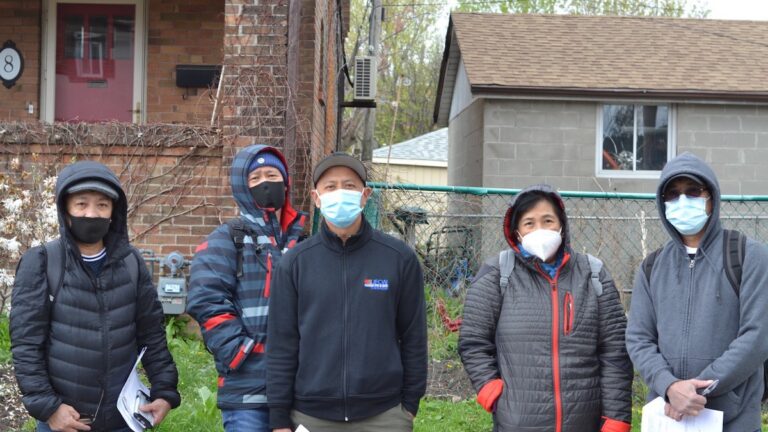
It was an early warning of how the rest of the pandemic would play out for racialized working-class people. The Filipino community, in particular, has faced compounding challenges: layoffs and lack of work while struggling to send remittances to family in the Philippines; rising anti-Asian racism and violence; fear of accessing health care if undocumented; inequitable vaccine access; and COVID spreading through multi-generational households with essential workers. I spoke to five Filipino activists about the outsized burden Filipino communities in Canada have faced under COVID, and how community members have organized to help each other weather the pandemic.

Winnipeg: Diwa Marcelino

While I talk on the phone with Diwa Marcelino, our interview is periodically interrupted when Marcelino, a delivery driver, needs to ask people to sign for packages. Marcelino also works with Migrante Manitoba, advocating for worker safety in animal slaughterhouses. He tells me that not everyone knows that “Manitoba is hugely Filipino,” and explains that in the homes of Manitobans, “Tagalog is the second most-spoken language after English.” 

The government of Manitoba collects statistics on COVID case distribution by ethnicity, and as it notes in its own March 2021 report, “Cases in Filipino people living in Manitoba show the greatest disparity in population size burden of COVID-19. Filipino women are slightly more affected [than] men.” Filipinos – who make up 7 per cent of Manitoba’s population – comprised 12 per cent of the province’s COVID cases. 

Workers later told media they had been pressured to stay at work, given bonuses if they didn’t miss a shift, cleared to continue working despite showing symptoms, and told they’d be temporarily laid off without pay should they choose to stay home for various reasons.

The same report shows that of the Manitobans who got COVID and reported their employment status, 30 per cent worked in the food manufacturing industry. Marcelino says that meat-packers, many of whom are Filipino, are especially at risk: working in close quarters, meat-packing plants employ migrant workers, who often face precarious employment that is out of the media spotlight. Marcelino adds that these workers are least able to weather being laid off or told to quarantine without pay. “A lot of workers in the meat factory who get the sniffles or get a cold, they have to stop work and isolate until they get a negative COVID test. It’s very unfortunate when, by the nature of their work and housing issues and pay and temporary work, they often live in congregate settings because they can’t afford to live in a house – and also because they are paid minimum wage and have nothing,” he says.

Marcelino tells me that Manitoba’s vaccine rollout “hasn’t prioritized work in the meat sector. They prioritize age demographics, but not the actual workers who are most affected. Vaccinations are not getting into the arms of these workers. This is month 16 of the pandemic and they still don’t have a shot,” he tells me in April. Later that month, bowing to pressure from unions, the Manitoba government would finally announce that certain front-line workers in hot-spot communities – including those in food processing facilities – would get priority access to vaccines. 

Toronto: Maria Sol Prieto-Pajadura 

In the midst of one of Toronto’s seemingly endless semi-lockdowns, TTC busses are full in the early morning. Low-income workers are still commuting to their jobs, even as bus service is limited due to the pandemic. I always seem to run into Sol – as Maria Sol Prieto-Pajadura is often called – on the TTC. She tells me she works two or sometimes three jobs in different locations – as a daycare worker and elder caregiver, depending on the season, and also as a community organizer with Migrante Canada. It seems impossible for one person to do this much, yet she seems calm and unhurried. 

“If you ride a bus right now, it’s mostly Filipinos going to work, because we work in the service industry: restaurants, coffee shops. We work in the factories,” she explains. “They are breaking their back to work on this essential work to support the economy of Canada, to support the health care of Canada, and yet we are invisible workers. Especially the undocumented, they are not being recognized.”

Toronto Public Health confirmed that they do not keep statistics on COVID-19 rates in the Filipino community. They do, however, keep statistics on the Latinx population, who work many of the same jobs as Filipinos in Toronto; the stats show that Latinx people are almost seven times more likely to get COVID-19 than white Torontonians. 

Christine Mandegarian, a Filipina woman who worked as a personal support worker in a care home in the hard-hit Scarborough region of Toronto, was the second health-care worker in Ontario to die from COVID back in April 2020. While her death was covered extensively in the mainstream press, her ethnicity was rarely mentioned – even though personal support work, like live-in caregiver work, is largely done by women of colour. In a report for the Broadbent Institute, professor Ethel Tungohan wrote that “despite the importance of ‘essential’ labour during this crisis, it is striking to note that mainstream media coverage has mostly ignored the contributions provided by Filipino healthcare workers specifically and all migrant healthcare workers more generally.” 

“If you ride a bus right now, it’s mostly Filipinos going to work, because we work in the service industry: restaurants, coffee shops.

Sol tells me about the work she’s been doing with Migrante Canada to support Filipino workers: “During the pandemic, most of our members are undocumented workers. So during this pandemic, they are the ones who have stopped working because of the lockdown or restrictions. But then they are not eligible for income support.” Without social insurance numbers, undocumented people were unable to apply for the Canada Emergency Response Benefit (CERB). 

“We keep on contacting our members to see how they are doing. If they get COVID, we assess them, tell them when and how to go to the hospital, and encourage them not to be scared because the hospital doesn’t need a health card for them to access health services right now,” Sol explains.

When workers fall sick or lose work, Migrante has stepped in to provide food and funds. “Together with other organizations, we founded Kapit-Bisig. It’s a mutual aid support network,” she explains. Mutual aid has deep roots in Filipino culture, Sol tells me, and the name “Kapit-Bisig” translates to “linking arms” in Tagalog. “We access FoodShare [a Toronto-based food justice project] to give food boxes to our members, and we accessed other NGOs that could access income support from the government and give it to vulnerable sectors of society,” she adds. 

“During the pandemic, most of our members are undocumented workers. So during this pandemic, they are the ones who have stopped working because of the lockdown or restrictions. But then they are not eligible for income support.”

Throughout my interviews, I hear again and again that the lives of Filipino community members in Canada are made more difficult by their precarious immigration status. “Immigration policies in Canada have always been discriminatory to migrant workers,” Sol tells me. “In [the] 1900s, when women came here from Europe to do care work, they got permanent residence. But when Caribbean women started doing caregiving work, they become disposable: they didn’t get permanent status [on arrival]. This continued with Filipinos, both being discriminated against on [the basis of] race and class.”

In April, the Canadian government announced it was creating new pathways to permanent residency for 90,000 essential migrant workers and international graduates on a first-come, first-served basis. While it’s a partial win, the Migrant Rights Network has estimated that the program’s restrictions exclude 1.18 million undocumented people, refugees, international students, and migrants in Quebec. Instead of restrictive, piecemeal pilot programs, migrant justice organizers continue to call for all migrants to receive permanent residency upon arrival in Canada.

Vancouver & Lower Mainland, B.C.: Alex

Alex – who asked that we use only his first name, because of repression against organizers – lives in Vancouver and organizes with a Filipino youth organization called Sulong. He says that migrant worker programs have structured the lives of many in his community, with countless people his age – in their 30s – having parents who came to Canada under the Temporary Foreign Worker Program as live-in caregivers. Today, “a large majority of working Filipinos are some form of migrant labour: Tim Hortons fast-food restaurants, or custodial staff [in] buildings, sometimes delivery truck drivers, or warehouse [workers] – but [the] majority doing some kind of service-based work,” he tells me. 

Alex says some long-term hotel workers have even been told by their bosses that if they were to return to work they would be forced to take a wage cut and be paid minimum wage.

He says that a lot of the Filipino community organizing in B.C. focuses on specific conditions in the Lower Mainland. For example, with astronomically high rents in the Vancouver area, CERB payments were not enough for laid-off workers to pay rent and meet their other basic needs. This became obvious in B.C.’s hotel industry, when thousands of hotel workers were laid off during the pandemic. Hotels have refused to guarantee that workers can return to their jobs once it’s safe to work, and Alex says some long-term hotel workers have even been told by their bosses that if they were to return to work they would be forced to take a wage cut and be paid minimum wage. Women make up over 60 per cent of hotel workers in B.C., and many of them are Filipina. In response, Unite Here Local 40 launched a campaign called “B.C.’s unequal women” to urge customers to boycott the hotels that won’t promise to bring workers back to their jobs. 

Despite pressure from Filipino groups over the last year, Alex says “the provincial government in B.C. does not keep statistics on specific ethnic/racial demographics on who is being affected [by COVID]. Dr. Bonnie Henry [B.C.’s provincial health officer] just denies the significance of that.” But he adds that it’s common knowledge that the disproportionate number of Filipina women who work as care aides in long-term care homes have been at high risk of contracting COVID. In April 2020, 70 per cent of B.C. senior care workers said they were experiencing a critical shortage of personal protective equipment like masks and hand sanitizer. To make up for low wages in private care homes, care aides often took jobs in multiple facilities, increasing their chance of contracting and transmitting the virus. In May 2020, Henry issued a single-site order for workers at 533 facilities in B.C., but it meant many workers struggled to make ends meet while they waited for the province’s $4/hour pay top-up to come through.

Links to the Philippines: Rosie Lucente & Jesson Reyes

“We don’t forget that the root cause of migration is because of conditions in the Philippines. That’s why we also fight to address those things,” says Rosie Lucente, the chairperson of the Filipino youth group Anakbayan Toronto. Lucente immigrated to Canada in 2019 and she explains that the struggles faced by working-class Filipinos in Canada “are compounded by what’s happening back home. We have to continuously support our families back home.” She says that it’s for this reason that Anakbayan Toronto advocates for national liberation and genuine democracy in the Philippines, where high rates of extreme poverty, extrajudicial police killings of left-wing activists, and President Rodrigo Duterte’s bloody, five-year-long “war on drugs” have led to a deteriorating human rights situation. 

“The economy in the Philippines is dependent on remittances from overseas,” says Jesson Reyes, the managing director of the Migrants Resource Centre Canada. According to the World Bank, 9.3 per cent of the country’s GDP came from remittances in 2019. “This is a deliberate economic policy,” Reyes adds, explaining that since the ’70s, the Philippines has prioritized training workers for jobs overseas to quell social unrest due to joblessness and poverty. 

“Not only is there not enough aid but there’s also a heavily militarized COVID lockdown under Duterte.”

He explains that the pressure to support relatives at home has put Filipinos around the world and in Canada in a tough position. For example, Filipinos make up about a third of workers on cruise ships around the world, and COVID restrictions meant that thousands were stranded at sea – sometimes for months – and then repatriated en masse to the Philippines. Reyes says that COVID has increased economic pressure on those who still have jobs abroad to send money back, even though they themselves are struggling. 

“Not only is there not enough aid but there’s also a heavily militarized COVID lockdown under Duterte,” Lucente adds. “There are military checkpoints in sections of the city. They’ve arrested tens of thousands of people during COVID. Community pantries are shut down as ‘acts of communist terrorism.’ So not only are our communities struggling harder, we are also worried about the political conditions back home.” 

Lucente says the Filipino-Canadian community’s strength comes from its organization – like the 26 groups from B.C., Alberta, Manitoba, Ontario, and Quebec that have joined the Kapit-Bisig network. “Among Filipino youth […] we have organizations banding together to fight for immediate things like our rights and welfare, wages, social issues but also for a better society in the Philippines at large,” Lucente notes. “We have organization.”

Megan Kinch is a union electrician and freelance writer living in Toronto. You can find her on Twitter at @meganysta.

PNP continues to cover up drug war killings, obstructing justice — int’l rights group

0

By: Zacarian Sarao -INQUIRER.net / July 06, 2021

MANILA, Philippines — Philippine security forces, particularly the Philippine National Police (PNP), have continued “perpetrating extrajudicial killings” and “obstructing justice” in connection with the probe of the Department of Justice (DOJ) into the Duterte administration’s drug war.

This was among the conclusions of the Second Report of Investigate PH, which was released on Tuesday by the international rights watchdog and made available for download on its website.

In that report, Investigate PH said the PNP has been covering up the circumstances of the killings during anti-drug operations, intimidating the families of victims and potential witnesses, and obstructing the review of most killings by the Department of Justice (DOJ).

“While the police claim that those killed in anti-drug operations were resisting – known as the ‘nanlaban’ (fought back) narrative – evidence indicates that unarmed victims have been executed either in their home, on the street or after being abducted, with weapons or drugs likely planted after,” the report said.

“Those killed in anti-drug operations are overwhelmingly poor people unable to assert their rights to due process,” it added.

In a hearing conducted by Investigate PH on May 18, photographer Vincent Go showed photographs of victims who were tagged as “nanlaban” wearing handcuffs and zip ties, indicating that there was no way they could have resisted arrest.

In the same hearing, a professor of forensic pathology, Dr. Raquel Fortun, said that she encountered these indications in five bodies that she had autopsied.

According to Fortun, these defensive wounds of victims were not recorded by the police. Some of the wounds, made by bullets, were on the wrists of victims “who were raising their arms in front of themselves as they were shot.”

One body had post-death incisions and sutures, indicating an autopsy had been done. But Fortun found out that it was not properly conducted.

The death certificates were also signed by physicians associated with the police, which, according to Investigate PH, indicates cooperation by medical professionals in the cover-up of extrajudicial killings — a violation of medical ethics.

Meanwhile, an Investigate PH commissioner, former Australian Sen. Lee Rhiannon, said that families of the victims also face “intense” pressure from police not to press charges.

“The impact of these killings do not end when the victim dies,” said Rhiannon during the launch of the second report.

“Funeral parlors often work closely with local police. Some extort huge fees from families before they can retrieve the body of their loved one. Pressure from the police for families to not lodge a complaint is often intense at this time and for years after,” she added.

Investigate PH also revealed that organizations that seek redress for the killing of one or more of their families, “come up against a brick wall of bureaucratic resistance from the police, the Ombudsman and the courts.”

Rubylin Litao, a representative of the organization Rise Up, told Investigate PH that she had filed six cases at the Office of the Ombudsman. While one managed to reach the Supreme Court, two were dismissed even after reconsideration. The other four have not yet even been resolved.

“Because of experiences like these, most families have no confidence in the Philippine judicial system,” said Litao in the May 18 hearing.

Last Feb. 24, Justice Secretary Menardo Guevarra said that irregularities were seen in more than half of the 6,000 anti-drug operations the PNP has conducted.

Because of this, the PNP allowed the DOJ to access 61 of its questionable cases related to the drug war. This was later reduced to 53 after the PNP stated that eight of the cases were on appeal.

In a televised public address, President Rodrigo Duterte also invoked national security, claiming that police documents from his administration’s anti-narcotics campaign should be kept secret since they contained confidential information about specific individuals.

This contradicted the Supreme Court’s ruling in 2018 declaring that records involving the deaths of drug suspects during police operations had nothing to do with national security.

“Secretary Guevarra is thus over-promising to the UNHRC, as part of his broad assertion that Philippine domestic remedies are adequate to the perceived human rights challenge,” said Investigate PH.

“The Duterte government has ensured the lack of accountability for police failing to follow standard protocols in thousands of cases of anti-drug operation killings. The Ombudsman has accepted all these killings as part of ‘regularity’ in police operations. The higher courts have also rejected claims by victims’ relatives, in favor of the police,” it added.

Duterte launched his war on drugs on June 30, 2016, the same day he took office.

Between July 1, 2016, and Dec. 31, 2020, the official government figures list 6,011 deaths in anti-drug operations.

The UN Office of the High Commissioner for Human Rights (OHCHR), however,  found that the figure as of March 2020 was at least 8,663. While other human rights organizations pegged the number at over 20,000.