Home Blog Page 72

Red-tagging victims: 7 freed after 2-month detention for helping lumad kids

0

By: Nestle Semilla – Reporter / Inquirer Visayas /May 14, 2021

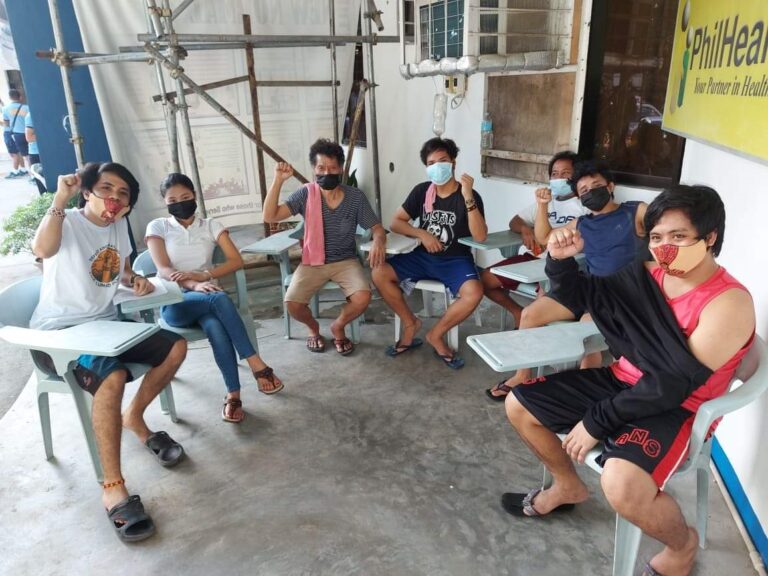
CEBU CITY—The Central Visayas police has freed seven persons arrested last February on suspicion that they were recruiting lumad minors and training them as “child warriors” of communist rebel movement.

The detainees, known as Bakwit School 7, were released around 6 p.m. on Friday (May 14).

Davao del Norte Prosecutor Norman Solis, who dismissed the charges against the detainees, signed the release order.

Lawyer King Anthony Perez, spokesperson of the National Union of Peoples’ Lawyers (NUPL) Cebu, said the dismissal of the complaints against the seven detainees validated the claim that persistent red-tagging of lumad, or indigenous peoples in Mindanao, by police and counterinsurgency operatives was baseless and unfounded.

“The indigenous peoples and their leaders have been victims of state terrorism because of their long history of struggle against the exploitation of their ancestral lands,” he said.

“The raid of the Bakwit School was intended to instill fear and thwart resistance by Filipinos who have grown frustrated and restless with the administration’s anti-poor and anti-people policies,” he added.

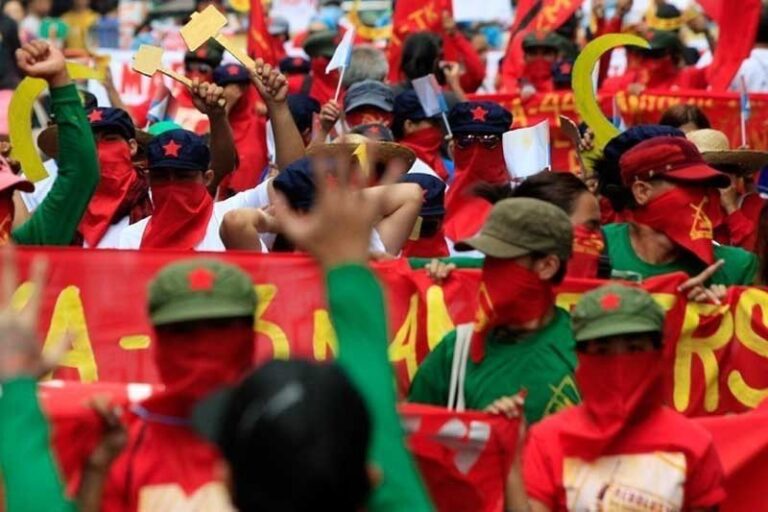
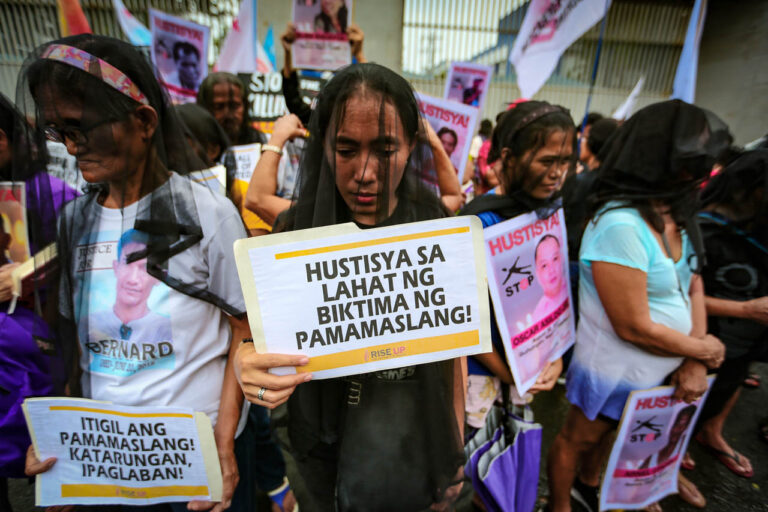
The seven were arrested by police inside the retreat house of the Societas Verbi Divini (SVD) on the University of San Carlos campus in Talamban on Feb. 15, 2021 and accused of child abuse, trafficking, kidnapping and serious illegal detention for helping shelter lumad children displaced by military operations against communist guerrillas.

They were teachers Roshelle Porcadilla and Chad Booc; lumad elders Benito Bay-ao and Segundo Melong; and students Jomar Benag, Moddie Monsimuy-at, and Esmelito Oribawan.

In a resolution dated May 5, 2021 but received by the detainees only last Tuesday (May 11) the Office of the Provincial Prosecutor of Davao Del Norte dismissed all the complaints filed by police for lack of jurisdiction, insufficiency of evidence and lack of probable cause.

Perez appealed to authorities to end intense militarization in indigenous communities, the exploitation of their ancestral lands and the continued violations of their rights.

“We also enjoin every Filipino to denounce the government’s red-tagging campaign which has been used to justify cracking down on human rights defenders and lawyers,” said Perez.

“We continue to assert that no amount of terror and intimidation will ever silence the people’s movement,” he said.

Terrorist designation opens assets of Sison, others to AMLC scrutiny

0

Jonathan de Santos (Philstar.com) – May 13, 2021

MANILA, Philippines — The Anti-Terrorism Council has designated 19 supposed members of the communist party’s Central Committee as terrorists, a move that will allow the Anti-Money Laundering Council to look into and freeze assets believed to be used to fund terrorism.

The lists of designated persons were in two ATC resolutions made public on Thursday and includes alleged members of the Central Committee of the Communist Party of the Philippines and New People’s Army as well as “individuals affiliated with local terrorist groups.”

The ATC designated the CPP-NPA as a terrorist group in December 2020. In a separate resolution, it also designated the Islamic State East Asia, Maute Group, Daulah Islamiyah “and other associated groups”.

The designations on Thursday came as the Supreme Court winds down oral arguments on petitions against the Anti-Terrorism Act over concerns that it is too broad and could lead to abuse and to a clampdown on dissent and on constitutional rights.

Government lawyers told the court that designation, as well as the government’s practice of labeling individuals and groups as “communist fronts”, is done based on evidence. They also said that designation does not authorize arrests, which proscription — done through a petition to a court — does.

Citing “verified and validated information”, the ATC said in its Resolution No. 17 that the supposed members of the CPP’s Central Committee are being designated “for planning, preparing, facilitating, conspiring, and inciting the commission of terrorism” as well as for recruiting members in terrorist organizations.

CPP founder Jose Maria Sison, who was among those designated, said he and his wife Julieta De Lima Sison “are not at all bothered by Resolution Number 17 (2021) which designates the two of us as ‘terrorists'”, saying the names included in the resolution “appears to be arbitrary, dubious and even contradictory or inconsistent.”

Sison, now chief political consultant of the National Democratic Front of the Philippines, added that the list “includes mostly publicly-known political consultants of the NDFP Negotiating Panel in the peace negotiations with the Manila government who are all entitled to the protection of the [Government]-NDFP Joint Agreement of Safety and Immunity Guarantees(JASIG) and other binding bilateral agreements.”

The government has taken the position that agreements like JASIG were either suspended or scrapped when the peace talks were cancelled in 2017.

In a statement on Thursday afternoon, the Communist Party of the Philippines said the ATC “merely recycled a very old list being maintained by military ‘intelligence'” in its decision to designate the supposed members of the Central Committee as terrorists.

In a statement, CPP information officer Marco Valbuena also pointed out that the council “claimed that those in the list are leaders of the CPP but cites no evidence to back their claims.”

He added some of the people designated by the ATC have been active in peace talks through the NDFP either as members of the negotiating panel or as consultants.

“Most of them are now in their sixties and seventies. Three of them are unjustly incarcerated. Throughout the past decades, they have courageously stood side by side with the people and struggled against dictators and tyrants. They all have sacrificed personal ambition and selfish interests,” the CPP said.

The Anti-Terrorism Act authorizes the AMLC to investigate property or funds “that are in any way related to financing of terrorism” as well as those linked to people believed to be “committing or attempting or conspiring to commmit…the financing” of terrorist acts. Groups accused of being “communist fronts” have also had their accounts frozen even without designation, however.

It is yet unclear how designated persons can appeal their inclusion in the list since the ATC is still working on its internal rules for delisting.

How to Read Political Surveys

0

By Erwin Colcol for Reportr , Esquire Philippines, May 6, 2021 

Arm yourself before the campaign season.

Nothing says election season in the Philippines like the trickle of opinion polls. Since the 1992 presidential vote, the first since the restoration of democracy six months prior, it has correctly gauged who is most likely to win.

Critics of the surveys say they’re used for mind conditioning while those who do it swear by data science. There’s another dimension to the skepticism leading to the 2022 elections — COVID-19. 

One year of stay-at-home orders has altered daily life, surveys included, with some being done by phone instead of the face-to-face interviews. Will the new normal affect the accuracy of the results?

One year is too early to predict the winner.

Let’s start with the basics. A survey done today simply reflects the pulse of the people when the questions were asked, and will not necessarily reflect on the outcome of the May 2020 vote, which is one year away, said political analyst Ramon Casiple.

Nothing says election season in the Philippines like the trickle of opinion polls. Since the 1992 presidential vote, the first since the restoration of democracy six months prior, it has correctly gauged who is most likely to win.

Critics of the surveys say they’re used for mind conditioning while those who do it swear by data science. There’s another dimension to the skepticism leading to the 2022 elections — COVID-19. 

One year of stay-at-home orders has altered daily life, surveys included, with some being done by phone instead of the face-to-face interviews. Will the new normal affect the accuracy of the results?

“The survey can only reflect what is the actual state at a certain time. You cannot have a survey today and expect the result to be the same one week from now, one month from now,” said Casiple, Executive Director of the Institute for Political and Electoral Reform, told reportr.

Election surveys merely ask the opinion of a respondent, and this could change depending on the positions a potential candidate take, or the situations they find themselves in.

“That’s why surveys are not really that reliable if you’re talking about candidates for a long period of time before the election,” he said. “The real answer will come only when he (the voter) is already thinking whom to vote.”

HOW TO REGISTER TO VOTE IN 2022:

Here’s Your Guide to #Halalan2022, First Step is Registration

For First Time Voters, Comelec Online Tool Makes Registration Easy

In the last two presidential elections survey frontrunners, then Senate President Manuel Villar (2010) and then Vice President Jejomar Binay (2016), saw their leads dissipate as the darkhorses rose, former President Benigno “Noynoy” Aquino III and President Rodrigo Duterte, respectively.

In 2004, former President Gloria Arroyo was statistically tied with the late movie king Fernando Poe Jr. in an election that was marred by allegations of widespread cheating. Only former President Joseph Estrada leveraged his early survey lead to victory in the 1998 polls, only to be ousted by EDSA Dos three years later.

In April, Pulse Asia  tipped the incumbent’s daughter, Davao City Mayor Sara Duterte-Caprio as the likely winner if the vote were held during the survey period, Feb. 22 to Mar. 3. She is followed by former Sen. Ferdinand “Bongbong” Marcos Jr. (13%), Sen. Grace Poe (12%), Manila Mayor Isko Moreno (12%) and Sen. Manny Pacquiao (10%). Vice President Leni Robredo herself got 7% while long-time presidential aide Sen. Senator Bong Go garnered 5%.

You should understand how surveys are done

Pulse Asia research director Ana Tabunda told reportr that the pollster follows stringent process in their pre-election surveys.

Tabunda said Pulse Asia still does face-to-face interviews in the household level, observing minimum health standards for COVID-19. This, she said, is because not all of their respondents have a cellphone or a landline to allow for phone interviews.

In the recent Pulse Asia election survey, a total of 2,400 respondents were asked who among the list of potential candidates they would vote for in 2022. Tabunda said they used random sampling in determining the respondents. This was done by sampling cities and municipalities in proportion to their population size, and then randomly selecting barangays and households.

In research, a random sample is picked out from a list, say a census of an entire barangay, using a formula that is meant to result in a group that is representative of the entire population.

The public, however, should take into consideration the “margin of error” in election surveys when looking at the results, Tabunda said.

“The error margin means, supposing a senatorial candidate obtains a voter preference of 46% and the error margin is +/- 2% because they have 2,400, that means we are 95% certain that 44% to 48% of Filipino adults will be voting for that senatorial candidate,” she told reportr.

Tabunda reminded the public that the results of election surveys should be taken as a “snapshot in time.”

“Those are opinions and attitudes of the people at that time the survey was taken. These perceptions and attitudes can of course change through time. That’s why we continue to collect a sample,” she added.

Why surveys are important

For University of the Philippines political science professor Jean Encinas-Franco, poll surveys help educate the public on how candidates fare during the election period. It also makes them aware of the issues related to the candidate.

Merong multiplier effect din in the sense that, why is this candidate faring well in the survey? Then it generates discussion and opinions. It kind of prepares the public for the upcoming elections. Potentially, they make them want to know more and look for information,” she told reportr.

For this reason alone, Encinas-Franco said election surveys should be properly done. The background and context of these polls, including whether it’s commissioned or not, should be disclosed to the public and laymanized for easy understanding, she added.

If a survey is done correctly, Casiple said it will measure the potential candidate’s winnability, without necessarily reflecting the outcome of the actual polls.

“Surveys show who the people are thinking of voting. It’s not the survey that determines the outcome of the election,” he said.

With the national elections still a year away, Casiple said the public would still have to watch out for who will actually run and wait for the results of election surveys just before May 9, 2022.

“The best time to know the possible result of that would be the time just before election,” he said.

This story originally appeared on Reportr.World. Minor edits have been made by the Esquiremag.ph editors.
Pinoys in London protest PH gov’t crackdown vs. critics

0

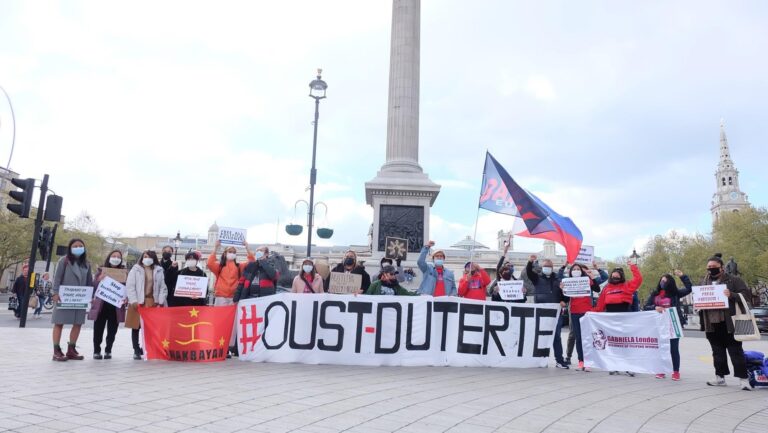
In London, Filipino migrants marched from the Philippine embassy to Trafalgar Square to protest the government crackdown on critics as well as the administration’s failed response to the pandemic. The migrants also condemned racism in the UK and called for the protection for undocumented migrants. The group Filipino Domestic Workers Association, together with Europe chapters of Anakbayan, Migrante, Gabriela, and Bayan, led the protest. They were also joined by members of the Iglesia Filipina Independiente Chaplaincy in London.

‘Far safer now’?

0

Editorial, Philippine Daily Inquirer / May 07, 2021

National Artist for Literature F. Sionil Jose stirred up a massive hornet’s nest among the public and his fellow writers when, in his May 3, 2021 column in another daily, he baldly declared: “It may turn out that for all his vulgar language, Rodrigo Roa Duterte may yet be, next to Magsaysay, the best president we ever had. All the criticisms considered, just remember this—the country is far safer now than at any other time.”

The man is, of course, entitled to his own opinion. As a prolific novelist, a giant of Philippine letters who remains remarkably unwearied at 96 years old, Jose can’t be faulted for having a surfeit of imagination—and the poetic license—to summon alternate realities at will.

But he is not entitled to his own facts. And the facts are, as laid out by fellow writer Krip Yuson in his incensed riposte to Jose’s claim: “Safe from what, Manong? A record-setting number of murders, assassinations and EJKs of journalists, lawyers, activists, progressives, indigenes, political opponents, critics, and the random poor alleged to have drug links…?”

A cursory glance at the news would easily show who has a better grasp of reality between Jose, and Yuson and the rest of the Philippine literati who strenuously begged to differ from their elder’s triumphalist claim of a “far safer” realm under the Duterte regime.

On Sunday, May 2, just one day before Jose touted the Duterte brand of law and order, Capiz administrator John Heredia was shot dead by two men riding tandem on a motorcycle. Heredia was an executive producer and host of a cable TV program and a former national director of the National Union of Journalists in the Philippines (NUJP).

The NUJP has documented 19 cases of killings, 37 cases of libel, 52 cases of intimidation, 20 cases of online harassment, etc.—in all, some 223 cases of attacks and threats against the press—since Jose’s “best president” took over.

The Commission on Human Rights warned that the Philippines is facing “a worse state of press freedom” after the country fell to 138th out of 180 countries in the 2021 World Press Freedom Index, two notches down from last year’s 136th slot.

Like the outspoken media, community leaders critical of the administration have been targeted by unknown assailants, or killed by police who typically “find” illegal firearms in the premises.

On April 25, barangay kagawad Froilan Oaferina III was shot to death when 30 policemen entered his house in Buhi, Camarines Sur, supposedly in search of illegal firearms. On April 15, it was urban poor leader Jesus Passon Jr., killed in Zone 4, Sitio Basurahan, Barangay Mambulac, Silay City. And on April 13, in Lumban, Laguna, it was Sangguniang Kabataan president Renzo Matienzo, shot dead by an unknown assailant who barged into his house.

Lawyers, too, have become frequent targets, with the National Union of Peoples’ Lawyers and the Free Legal Assistance Group reporting that 61 lawyers, prosecutors, and judges have been killed during the almost five years that President Duterte has been in office. These unabated killings prompted a rare Supreme Court statement on March 23 denouncing the incidents as “no less than an assault on the judiciary” and “acts that only perverse justice, defeat the rule of law, undermine the most basic of constitutional principles, and speculate on the worth of human lives.”

The Philippines is not any safer for environment activists. Last year, the country ranked second deadliest in the world for people defending the environment—43 killings in 2019, according to the London-based environmental watchdog Global Witness.

What about ordinary people? The undercurrent of anxiety is deep, as revealed in the November 2020 Social Weather Stations survey where 65 percent of adult Filipinos agreed with the statement: “It is dangerous to print or broadcast anything critical of the administration, even if it is the truth.”

As for the administration’s “war on drugs,” a December 2018 SWS survey found that 78 percent of voting-age Filipinos feared (“nangangamba”) that they or someone they know would fall victim to being killed under that bloody campaign. Far from ridding the streets of violence and crime, the impunity unleashed by the President’s pet project has run riot in the country: Per Sen. Dick Gordon’s tally, from Jan. 1 to March 17 of this year alone, there were 93 victims of riding-tandem shootings, 71 of whom died.

Even helping one’s hungry neighbors has become an unsafe activity, with government bureaucrats red-tagging community pantry organizers and exposing them to the perils of arrest or harm by anti-communist zealots. “Safer” is the last word anyone would associate with these chilling facts and figures. Unless, of course, the fiction in one’s mind has overwhelmed reality.

‘End quiet diplomacy’: Groups urge Canada to act vs abuse under Duterte

0

May 6, 2021, Jodesz Gavilan

MANILA, Philippines

Karapatan says supporting the Duterte government means ‘signing off not only on the constriction of democratic and civic space in the country but also [on] the rise of authoritarianism’

Human rights groups on Wednesday, May 5, urged the Canadian government to take necessary action against the “epidemic of rights violations” under Philippine President Rodrigo Duterte.

Speaking before a Canadian parliamentary hearing, Karapatan secretary-general Cristina Palabay emphasized that the Duterte government’s anti-terrorism framework is damaging democracy in the country.

“It is driving and enhancing state terror and framed in a way that quells political dissent and any of its perceived enemies,” she said.

According to Karapatan, at least 394 activists have been killed under Duterte, mostly land rights, indigenous, and environmental activists.

As it becomes “even more dangerous every day” in the Philippines, Palabay cautioned the Canadian government against further assisting the Duterte administration.

“It is apparent that funding, supporting, and cooperating with [the Philippine government] with this kind of framework is signing off not only on the constriction of democratic and civic space in the country but also [on] the rise of authoritarianism,” she said.

‘End quiet diplomacy’

Aside from killings of activists, casualties of the government’s anti-drug campaign remain high. Duterte’s violent war on drugs has led to at least 6,089 killed in police operations as of March 31, 2021, while groups estimate the number to be between 27,000 and 30,000 to include victims of vigilante-style killings.

Guy-Lin Beaudoin of the Quebec-based International Coalition for Human Rights in the Philippines (ICHRP) said it is time for the Canadian government to assure Filipinos that it will not tolerate rampant abuse.

“Canada must end its policy of quiet diplomacy,” he said.

ICHRP earlier urged the Canadian government to cease defense support to the Duterte administration in the aftermath of the “Bloody Sunday” crackdown which saw 9 activists killed in police and military operations in Calabarzon.

Beaudoin also called on the foreign affairs ministry and the Canadian embassy in Manila to “apply vigorously the tools” to protect activists and victims of abuse in the Philippines.

Journalists, youth groups, and even ordinary citizens, such as community pantry organizers, also face continued harassment. Many have been red-tagged or accused of having communist links.

With the dire situation in the country, Rappler chief executive officer Maria Ressa urged Filipinos, especially those with the means, to act against threats to Philippine democracy.

“This is the time for those who have power and money to step up and to bring up the values that are important for a democracy,” Ressa said in the Canadian parliamentary hearing.

“Because at this time, if you don’t, silence is complicity.” – Rappler.com

Heroes and history

0

Editorial, Philippine Daily Inquirer / May 05, 2021

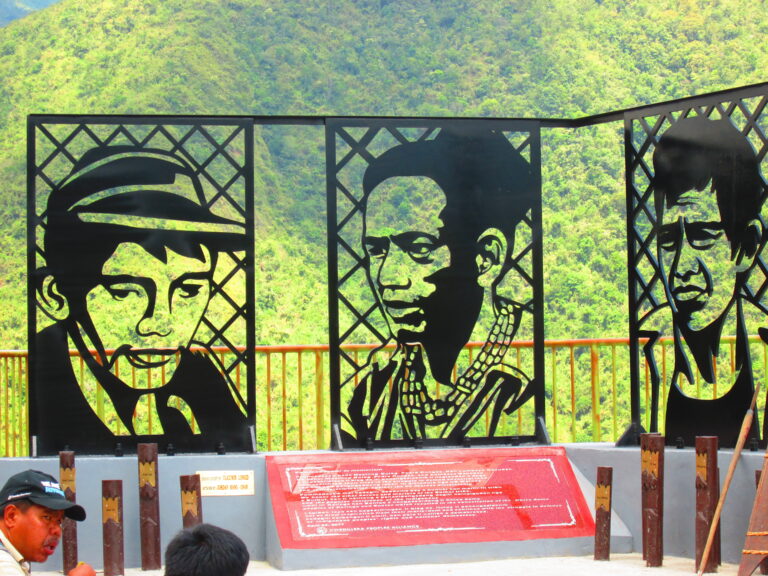
The struggle of the Cordillera people in the martial law era against the proposed damming of the mighty Chico River has again been given its rightful prominence with the restoration of the monument to Macli-ing Dulag and his comrades in its original spot on the Bontoc-Kalinga Road in Barangay Bugnay, Tinglayan, Kalinga.

The restoration was suitably symbolic, held on April 9, the Philippines’ “Araw ng Kagitingan” or Day of Valor. A formal unveiling is being scheduled — a necessary gesture, we agree: to perform the proper steps of ceremony where and when it is due. And Filipinos old and young will hopefully have another opportunity at learning about Dulag, Lumbaya Gayudan, and Pedro Dungoc, who led their people’s resistance in the late 1970s to a dam project backed by the dictator Ferdinand Marcos and which was to have been implemented by the National Power Corp. with funding from the World Bank.

The project involved the construction of four hydroelectric dams that would have displaced more than 100,000 residents of the provinces of Kalinga and Bontoc, and submerged a number of barangays as well as hectares upon hectares of rice fields. In resisting and ultimately stopping the project, the Cordillera people led by Dulag and his comrades defended their ancestral domain and exercised their right to self-determination. It’s a stringent and valuable lesson that other indigenous groups in similarly straitened circumstances nationwide can study and learn.

The Cordillera People’s Alliance (CPA) and the residents of Bugnay built the monument that was “first unveiled in 2017 to honor everyone who gave their lives to opposing the Marcos dictatorship,” according to a report by Inquirer correspondent Kimberlie Quitasol. In October 2020, the Upper Kalinga District Engineering Office of the Department of Public Works and Highways issued the group a notice of demolition, saying the monument constituted a road obstruction. This planned demolition outraged those aware of the monument’s history and drew protest from activist groups and the heroes’ families, particularly in light of the Kalinga Police Office’s alleged earlier receipt from its advisory council a recommendation that the monument be taken down for being “antigovernment.”

Last January, the deed was done: Masked men dismantled the monument’s metal panels featuring the images of Dulag, Gayudan, and Dungoc, as well as the commemorative inscription. The Kalinga police denied involvement in the crime and said it would investigate, but no results have been announced to this day. The act of vandalism on the historic symbol opened old wounds: Those in a position to remember harked back to the night of April 24, 1980, when soldiers attacked Bugnay in the dead of night and killed Dulag as he lay sleeping.

Since 1985, April 24 has been marked as Cordillera Day.

In expressing support and appreciation for the restoration of the monument, members of the Butbut tribe said: “The warm fires of kinship and history of struggle which we share are ablaze again…” The tribe’s statement posted online speaks to the necessity of unity in struggle and of keeping alive the memory of those who rose to the defense of shared values and aspirations: “It shall be through the eyes of our heroes that we shall dream of a life of dignity, justice and genuine peace, and it is with their spirit that we will hammer out and nurture a world for our children. We will not be cut down. Our solidarity that was tested through time will not be silenced by fear.”

In this era where ignorance, revisionism and willful politicking not only give heroes a bad name but also propagate untruth and a cross-eyed (therefore dangerous) perspective on political realities, it is imperative to keep oneself informed and aware. Sen. Bong Go is correct to apologize for saying in a commemorative speech that the hero Lapulapu was actually a Tausug ordered by the sultan of Sulu to check out the newly landed foreigners in 1521 — a claim apparently wistfully intended to bind him and his principal, President Duterte, both of them proud sons of Mindanao, to the chieftain of Mactan who led the resistance to the forces of a colonial power. Contrast his “full respect for history,” as the senator claimed in his online apology, with the ludicrous stance of movie star Robin Padilla, who said, incredibly, that in the absence of a video capturing an event, everyone is entitled to a “point of view” regarding Lapulapu and what transpired in Mactan.

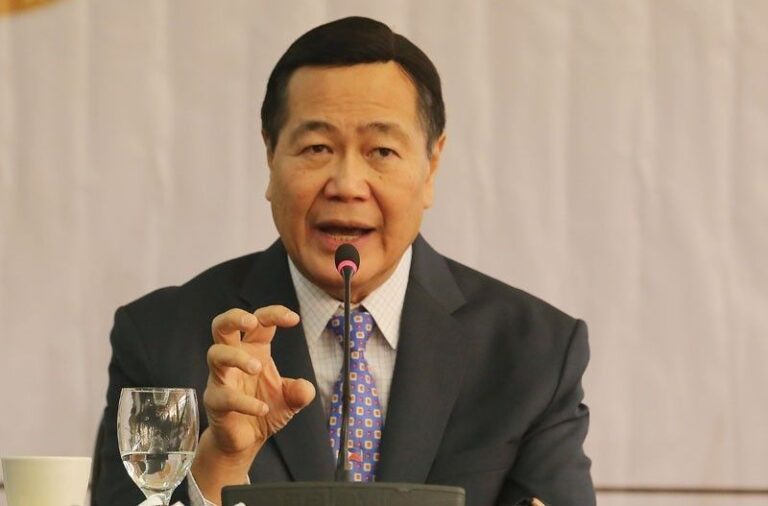
Duterte didn’t promise to fight for West PH Sea? That’s ‘grand estafa’, says Carpio

0

By: Frances Mangosing – Reporter/ INQUIRER.net / May 04, 2021

MANILA, Philippines—Retired Supreme Court Senior Associate Justice Antonio Carpio on Tuesday (May 4) said President Rodrigo Duterte’s denial that he brought up the West Philippine Sea during the presidential campaign in 2016 was tantamount to “grand estafa.”

In a stinging rebuke of the President, Carpio said Duterte was “admitting that he was fooling the Filipino people big time” with his false campaign promise.

“President Duterte cannot now say that he never discussed or mentioned the West Philippine Sea issue when he was campaigning for President,” the retired magistrate said.

“Otherwise, he would be  admitting that he was fooling the Filipino people big time.  There is a term for that—grand estafa or grand larceny.  Making  a false promise to get 16 million votes,” he said.

In a public address on Monday (May 3) night, Duterte said he never promised the people that he would “pressure” China and retake the West Philippine Sea during the 2016 campaign.

“I did not promise that I would pressure China. I never mentioned about China and the Philippines in my campaign because that was a very serious matter,” said Duterte.

During the presidential debates in 2016, Duterte said that he would ride a jet ski to the Spratlys to plant the Philippine flag there to assert Philippine sovereignty.

“Bababa ako at sasakay ako ng jet ski, dala dala ko ang flag ng Filipino at pupunta ako dun sa airport [ng China] tapos itanim ko. I will say, ‘This is ours and do what you want with me’,” he said at the time. Translated to English, this was what Duterte said: “I will go down and ride a jet ski bringing with me a Filipino flag and I will go there to the airport (of China) and plant it. I will say ‘This is ours and do what you want with me’.”

Malacanang said Duterte’s bravado during the campaign was just a joke.

Carpio said through these words, Duterte “expressly made his position known to the Filipino people when he campaigned for the presidency in 2016.”

A statement issued by the Duterte camp during the campaign also stated that he was in support of the arbitration case against China, Carpio said.

“As a Filipino, Mayor Rodrigo Duterte fully supports the case now pending in The Hague questioning China’s occupation of areas in the West Philippine Sea that the Philippines considers its territory,” Duterte’s camp said in a statement at that time.  “He is hopeful for a favorable ruling for the Philippines,” it said.

Carpio and Duterte have been feuding verbally over the West Philippine Sea with Carpio assailing Duterte’s seeming approval of Chinese incursions in Philippine exclusive economic zone and Duterte describing Carpio as part of a group of Philippine officials who did nothing to prevent China from building artificial islands inside Philippine EEZ.