Home Blog Page 90

We’ve been gunned down before: The danger Fil-Am activists face today

0

Jan 13, 2021, Angelica Lim

In 1981, Filipino-American union leaders Gene Viernes and Silme Domingo were gunned down in Seattle by state agents of the Philippine government under then-president Ferdinand Marcos. Viernes and Domingo were staunch critics of the Marcos dictatorship and organized solidarity relations between longshoremen in Seattle, Washington and the trade union movement in the Philippines. 

Now, 40 years later, another dictatorship in the Philippines threatens Filipino-American activists once again.

Last September 2020, Lorraine Badoy, Undersecretary of the Presidential Communications Operations Office of the Philippines, shared a graphic on Facebook depicting me with the label “Terrorist Propagandist.” The image was reposted from a page called “For the Global Public,” which released similar images targeting fellow national leaders of Gabriela USA and Bayan USA, describing our organizations as “Front Organizations of the Philippines Communist Terrorist Group.” 

The actual meaning of this “communist-terrorist” label remains elusive. However, it is clear how the Philippine government uses this term: not only as a tactic to smear and spread libel against activists, but as a warning signal, if not a precursor, to the killing of activists and political opponents. In this case, the attacks were focused on overseas Filipino activists of two organizations that advocate for the rights and welfare of Filipinos and for genuine democracy in the Philippines.

While the issue of red-tagging, or perhaps more accurately, “terror-tagging,” has long been an issue in the Philippines, state violence following cases of online terror-tagging has increased in the past year under the presidency of Rodrigo Duterte. Filipino human rights activists like Jory Porquia, Zara Alvarez, and Randy Echanis were all terror-tagged prior to their murders this year. In recent weeks, a group of Tumandok indigenous people, also previously terror-tagged for their activism against a dam project on their ancestral lands, were massacred while asleep in a joint operation of the Philippine military and police. 

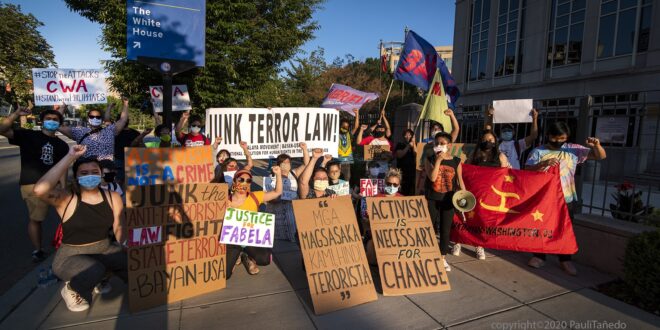
The recent passage of the so-called “Anti-Terror” Law in the Philippines this summer leaves activists even more vulnerable, including citizens of other countries outside the Philippines. Among the widely criticized provisions of the law is one that calls for the extradition and prosecution of overseas Filipinos and allies who participate in any actions deemed suspect in the eyes of the Philippine government. And if history has shown us anything, it is that the Philippine government views activism, even overseas, as a terrorist act. 

After learning of my being terror-tagged, my Senator, Jeff Merkley, expressed concern and raised the issue of terror-tagging with Philippine Ambassador to the US Jose Romualdez. Not to my surprise, Ambassador Romualdez followed this meeting by writing his own op-ed defending red-tagging.

In his op-ed, after making absurd and fact-less claims indicating the role of overseas Filipinos in conducting illegal drug trades to support communist-terrorists, Romualdez suggested that US leftists are trying to drive a wedge in between the Philippines and the United States, seemingly referring to the the growing movement to suspend US military aid to the Philippine military and police until such time when the systematic killings in the Philippines and human rights atrocities end and perpetrators are held responsible. 

This grassroots movement is gaining support from various US legislators like Senator Jeff Merkley; in July 2020, 55 representatives penned a letter to Romualdez expressing concerns over human rights violations in the Philippines and the Anti-Terror Law; later, in September 2020, Representative Susan Wild introduced the Philippine Human Rights Act, which takes up the people’s demand to suspend military aid to the Philippines until there is genuine accountability. 

Those of us who stand at the helm of this movement are human rights activists, not terrorists; while Ambassador Romualdez may suggest we are driving a wedge into US-Philippine relations, we are in reality pushing for genuine friendship and people-to-people solidarity. If our countries are to have a relationship built on mutuality and trust, it is the right time for the United States to end any support for the current Duterte administration and leaders like Ambassador Romualdez who stand behind the mass repression and killings happening in the Philippines. 

As Filipino-American activists, we’ve been gunned down before, but we’ve also faced and overcome the brutal repression under the Marcos regime. Now more than ever, we must rely on our history of struggle and resistance to tell the truth and expose the lies of the current regime’s desperate but untenable search for credibility. – Rappler.com

Angelica Lim is the International Solidarity Officer of Gabriela USA and is a founding member of the International Coalition for Human Rights in the Philippines

What you need to know about the pre-2022 push for charter change

0

Jan 12, 2021, Mara Cepeda

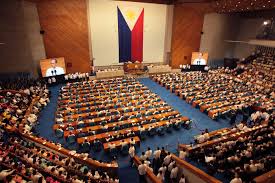
Charter change (Cha-Cha) is once again alive in Congress and lawmakers are pushing for it exactly a year before the campaign period for the 2022 presidential elections officially begins.

Critics are rightly raising red flags over the timing of this fresh bid to amend the 1987 Constitution.

Cha-Cha is a long, arduous process that entails thorough debates and spending money to conduct a plebiscite where Filipinos would vote on the proposed amendments.

Yet loyal allies of President Rodrigo Duterte are renewing their push for Cha-Cha right in the middle of the raging coronavirus pandemic. Never mind that the government is still scrambling to quell the rising number of cases and compete with other countries to buy enough COVID-19 vaccines for all. 

Politicians bent on running in 2022 will also be filing their candidacies by October this year, which means they would soon be preoccupied with their campaign strategies. 

House Speaker Lord Allan Velasco as well as Senators Ronald “Bato” dela Rosa and Francis Tolentino are justifying their renewed attempt to kick off Cha-Cha by just limiting the amendments to the economic provisions of the Constitution. 

They argued that easing constitutional restrictions on foreign ownership supposedly would help off-set the crippling effects of the pandemic on the Philippine economy.

They want these amendments to be done by Congress turning itself into a Constituent Assembly (Con-Ass), one of the 3 ways to amend the charter.

But this is just the latest twist in efforts to change the 34-year-old charter under Duterte, who has long wanted the country to shift to a federal system of government. 

This time, the President ordered Congress leaders to revive Cha-Cha – not with COVID-19 in mind – but to intensify his crackdown on leftist party-list groups.

Constitutional law professor Tony La Viña warned lawmakers can easily open the floodgates to tinker with any provision – even the entirety of the Constitution – once the Con-Ass is convened.

“Once you open up a Constituent Assembly, nobody can say that we cannot discuss anything else. So that is for sure. I can guarantee you that there will be political provisions that will be amended, and it will essentially be about the extension of terms,” La Viña told Rappler. 

Attempts in the previous 17th and current 18th Congresses have so far failed because senators were strongly opposed to Cha-Cha. Even now, senators questioned the timing and said it could be “one big step into quicksand.”

The closest the House of Representatives has ever been to amending the Constitution under Duterte was in 2018, when former president Gloria Macapagal Arroyo was still speaker. She shepherded the swift approval of a resolution that would have shifted the country to federalism. But it was “dead on arrival” in the Senate. 

Duterte and his allies, however, are clearly not giving up. The House committee on constitutional amendments is reopening its hearings on Wednesday, January 13.

Here’s what you need to know about the latest moves to amend the Constitution: 

What is charter change?

Cha-Cha is the colloquial term used to refer to proposing amendments or revisions to the Constitution

Amendments refer to changes that do not affect the overall structure and basic principles of the Constitution. Revisions are changes that involve alterations in the structure. 

Duterte-allied lawmakers are proposing amendments to Articles XII, XIV, and XVI of the Constitution. These essentially limit foreign investments in the Philippines to favor Filipinos in terms of ownership and management of natural resources, alienable lands, public utilities, education institutions, mass media companies, and other industries. 

What are the 3 modes to change the Constitution?

The charter allows 3 ways to introduce changes. These are via:

  • Constituent Assembly (Con-Ass) – It is convened when both houses of Congress come together as a body to propose amendments or revisions to the Constitution through a vote of 3/4 of all members. The charter, however, is silent on whether the House and Senate should be voting jointly or separately – a contentious issue that has led to a stalemate in past Cha-Cha attempts. 
  • Constitutional Convention (Con-Con) – It is a body of representatives distinct from the incumbent Congress. The delegates are usually elected through popular vote, but they may be appointed as well.  
  • People’s Initiative – It can only propose amendments through a petition of at least 12% of the total number of registered voters. The process is provided in Republic Act No. 6735 or the Initiative and Referendum Act. 
What provisions do Duterte allies want to amend now?

The Resolution of Both Houses (RBH) No. 2 penned by Velasco in July 2019 will be treated as the mother measure in the lower chamber. It proposes amendments to the so-called “restrictive” economic provisions in the charter.

Velasco’s RBH 2 is proposing to add the phrase “unless otherwise provided by law” on the constitutional restrictions that limit the participation of foreign investors in the governing body of entities based on their proportionate share in the capital. 

The same phrase would be added to provisions saying only Filipino citizens can control, own, and/or lease alienable lands, public utilities, educational institutions, mass media companies, and advertising companies in the Philippines. 

The addition of the phrase “unless otherwise provided by law” means Congress would be given the power to pass laws easing foreign investment restrictions in the country.

It also means lawmakers would be able to use legislation to lift the constitutional prohibitions on foreign investors – something Congress is not allowed to do at the moment. 

Velasco’s proposed amendments are similar to what Senator Win Gatchalian also wants under his RBH 1 that the latter filed in July 2019.

Senators Dela Rosa and Tolentino are less specific in their own RBH 2 filed only in December 2020. They want to change provisions on “democratic representation and the economic provisions of the Constitution,” but did not provide specifics. 

“Democratic representation” may then mean that the two Duterte allies want to introduce changes to the scope of power and even the term limits of elected officials.

What is their defense for Cha-Cha?

For Velasco, Dela Rosa, and Tolentino, allowing more foreigners to own and manage industries in the Philippines would supposedly help the country recover from the COVID-19 pandemic.

“Foreign investment plays a crucial role in the Philippine economy by supporting domestic jobs and the creation of physical and knowledge capital across a range of industries. The need to attract foreign capital is critical to support our economy’s recovery from COVID-19,” Velasco said in a statement on Wednesday, January 10.

But no less than Senate President Vicente Sotto III revealed why Duterte wanted them to revisit Cha-Cha: The President wishes to change the party-list system to boot out progressive lawmakers critical of him. 

What’s the problem with the pandemic justification for Cha-Cha?

Professor Herman Kraft, chair of the political science department at the University of the Philippines-Diliman, told Rappler that the problem with using the pandemic to justify Cha-Cha is that “charter change is a political response to what is effectively a technical problem.”

Kraft pointed out that current circumstances outside Congress indicate Cha-Cha will not just be about the economic provisions. There’s the controversy involving the roll-out of COVID-19 vaccines and Duterte himself wanting to change fundamental political issues on the party-list system. 

“If they insist on including all these issues and then justify a limited discussion and debate on the basis of the pandemic, then this is little more than a political exercise and not one that is directed at responding to the effects of the pandemic,” Kraft said.

Kraft also argued foreign investments would not immediately pour into the country once the economic provisions are amended.

“The coronavirus is still here and the effect of the vaccine is still months (if not at least a year) into the future. Changing the economic provisions of the Constitution will not immediately lead to investments pouring into the Philippines and pump-priming the country’s economic recovery,” he said. 

Professor La Viña also said it’s not logical to open up the economy to foreign investors when global trade is still unstable due to the pandemic. 

“It’s actually the worst time to change your economic provisions of your Constitution because things are in flux globally. Capital is not moving globally. Global trade is not at its best because of the pandemic. Countries are closing their borders, are tightening, are supporting their internal, domestic sectors and companies,” La Viña said. 

Cha-Cha’s underlying goal: Term extension?

When politicians push for Cha Cha just as their terms are about to end, critics cannot help but be suspicious about the underlying goal of extending and expanding their power. 

La Viña agrees, saying the timing of any attempt to change the Constitution is crucial.

“I’ve studied charter change for the last [several years], even the 1935 Constitution, and you can see that the pattern is always clear: The ones that really are economic or fundamental to the country is done in the first year or two. There’s no self-interest there,” La Viña said.

“But when you try to change the Constitution a year or two before a term ends, usually it’s about extending the term, usually it’s about self-interest. So I would think it’s not going to be any different from that,” he added. 

Malacañang already said Duterte is not after extending his term in this latest push for Cha-Cha. Velasco also said he is eyeing the conduct of the plebiscite for the proposed amendments to economic provisions to coincide with – and not cancel – the 2022 elections. 

For now, it’s in the best interest of Filipino voters to closely watch the Cha-Cha proceedings in the House and the Senate. Lawmakers’ true intentions, after all, are often revealed not by their media statements, but by their actions within the hallowed halls of Congress. – Rappler.com
PNP dismisses cop who killed mother, son in Tarlac

0

Jan 11, 2021 Rambo Talabong

Staff Sergeant Jonel Nuezca showed ‘his unworthiness to remain in the police service,’ says the Philippine National Police

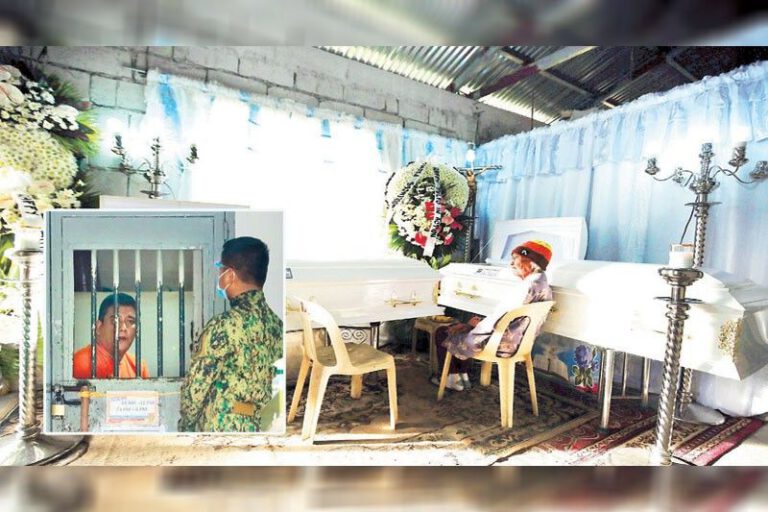
The Philippine National Police (PNP) has dismissed Staff Sergeant Jonel Nuezca, the Parañaque policeman who was caught on video shooting dead a mother and son in Paniqui, Tarlac on December 20, 2020.

PNP chief General Debold Sinas made the announcement on Monday, January 11, after the PNP Internal Affairs Service (IAS) recommended Nuezca dismissed.

Sinas said Nuezca’s dismissal was effective immediately.

In its report to Sinas about its administrative investigation, the IAS said it found Nuezca guilty of grave misconduct and conduct unbecoming of a police officer.

“Taking into consideration all the pieces of evidence submitted by the parties and the admission of the respondent, he seriously compromised his character and standing in the Philippine National Police, which shows his unworthiness to remain in the police service,” the report read.

For the twin killings on December 20, 2020, Nuezca has been charged with two counts of murder. During his arraignment on January 7, he pled “not guilty.” – Rappler.com

Christine Dacera case: Ayan na naman ang bobocops

0

Editorial, Jan 11, 2021, Rappler.com

“Sensational” ang balita tungkol sa pagkamatay ng flight stewardess na si Christine Dacera habang kasama ng 11 lalaki sa isang hotel. Ito ang klase ng kwentong susundan mo: maganda ang dalaga na nag-iisang babae sa grupo. Gwapo at mukhang mayayaman ang mga lalaki. Magkakasama sila sa isang kwarto. 

Sa unang tingin, madaling paniwalaan ang teorya ng pulis. “Rape-slay” daw ito at suspek daw ang 11 lalaki. Sabi pa ng pulisya sa isang pahayag, “Solved na ang kaso.”

Pero ano ba ang trabaho ng mga imbestigador? Ito ba’y magpagwapo sa harap ng camera at mabilis pa sa alas-singkong sabihing lutas na ang kaso? Ito ba’y magkasya sa obvious? Hindi ba trabaho ng imbestigasyon na siyasatin ang lahat ng anggulo batay sa mga ebidensya, at saka pa lang humusga?

Sabi ng mga kabarkada ni Dacera na kasama niya sa kwarto bago siya mamatay, “Bakla po kaming lahat.” Sabi pa ni Gigo de Guzman, “Never po ako nagkaroon ng sexual relations sa isang babae.” ‘Yan ang pinakamalaking bagay na sumira sa anggulong rape.

Pero may sagot diyan ang pulis. Ang bakla raw “’pag nakainom, lalaki pa rin.” Dito pa lang, kitang-kita na ang kabobohan ng pulisya sa psychology ng isang mahalagang grupo sa lipunan – ang LGBTQ+. Sabi nga ng mga bading sa social media, “Hindi tumitigil sa pagiging bading ang bading na lasing.” Sabi naman ng couturier na si Rajo Laurel: “Laging bakla ang bakla.”

Sabi pa ng isang pulis na tila nasarapang magpainterview: “May semilyang natagpuan sa genitalia ni Dacera.” Pero sa mismong otopsiya ng pulisya, walang bakas ng rape na nakasaad at “aortic aneurism” ang nakalagay na cause of death. 

Ano ba ‘yan? Hindi ba nakipag-usap ang pulis sa sarili nitong mga doktor?

Isa lang ito sa mga senyales na magiging circus ang kaso. Senyales din ito na bobo sa police procedure ang mga alagad ng batas. Higit sa lahat, senyales ito na wala silang paggalang sa due process na nakaukit sa batas.

Ang pinakamalaking “blunder” o pagkakamali: inembalma ang katawan bago isinagawa ang autopsy. Sabi nga ng forensic expert na si Dr Raquel Fortun, ibig sabihin, nahugasan na ang katawan at na-flush out na ang dugo. Halos wala na raw ebidensyang makikita sa katawan.

Tanong pa ni Fortun, kung namatay daw si Dacera dahil sa aortic aneurysm, bakit hindi nakalagay sa autopsy report ng pulis na nagkaroon ng “excessive internal bleeding” – bagay na nangyayari kapag nagkakaroon ng rupture?

Baluktot na proseso

Tila pundamental ang problema sa imbestigasyon: nagsimula ang pulis sa isang teorya, tapos pilit nilang isinaksak ang ebidensya sa teorya nila.

Sabi ni Fortun, ang “healthy attitude” sa anumang imbestigasyon ay magsimula sa “clean slate” at walang maagang konklusyon. “Tapos titingnan mo ang pisikal na ebidensya, saan ka ituturo ng mga ito. ‘Tsaka ka pa lang magbubuo ng hypothesis or teorya.”

Sabi naman ni De Guzman, “They never gave me a chance.” Hindi man lang siya binigyan ng pagkakataong ipahayag ang kanyang panig. “Andun ako sa himpilan ng pulis, handa magbigay ng pahayag, hindi nila kinuha ang panig ko. Ibinigay ko sa kanila ang address ko, ang cellphone number ko, dahil handa akong magsalita.“

Pagkatapos, binansagan siya at ang 10 niyang kasamahan na rapist at killer.

Kung tutuusin, sakit talaga ng mga otoridad yan – ang magbansag batay sa kathang-isip. Ang mga human rights advocates at aktibista binansagang komunista. Sa kasong Dacera, binansagan ang 11 binatang suspek sa pagpatay at paghalay, gayong sa mismong otopsiya nila’y walang bakas ng rape at mukhang namatay sa “natural causes” ang dalaga.

Sabi pa ni De Guzman: “Nasira ang buhay namin, hindi lang ni Christine, hindi lang ng pamilya niya, kundi pati buhay ko, buhay ng mga taong ‘yon [ibang suspek], at buhay ng pamilya ko.”

Maraming nilapastangan ang maling akusasyon at burarang imbestigasyon ng pulisya. 

Nabalahura si Christine Dacera nang ginawang krimen ang kanyang pagkamatay nang walang ebidensya: hinalungkat ng publiko ang buhay niya at pagkatao, na sa isang punto ay nalihis sa victim-blaming. Pinagpyestahan ang video niyang nagsasaya kasama ang mga kabarkada. Ipinagkait sa kanyang pamilya ang kapayapaang magluksa nang tahimik. Inilantad ng mga pulis sa galit ng publiko ang 11 kalalakihang bading na hinamak at inalipusta bilang mamamatay-tao at rapist.

Lahat ng ito sa isang kaso na, sa bandang huli, ay hindi naman malinaw kung may krimen. 

Tunay na krimen: pagsasantabi ng due process

Sa bandang huli, ang pinaka-casualty rito ay ang hustisya at ang bagay na dinadakila ng maraming police force sa buong mundo: ang due process.

Muli nating napatunayang incompetent ang pulis sa mga imbestigasyong kailangang gamitan ng utak. Muli nating napatunayang hindi mahalaga sa kanila ang hustisya. Halatang-halatang na pagpapapogi at pagpapabango ang importante sa pulis – at kung may sekswal na elemento sa teorya nila, mas maganda.

At ‘yan din ang kwento nina Hubert Webb at Paco Laranaga na ginugol ang kanilang kabataan sa kulungan. Sa bayang ito, talagang mababa ang kartada ng katotohanan.

Hitik ang buong 2020 sa mga kwento ng police brutality: ang kaso ng mag-inang Gregorio, ang pamamaril kay Winston Ragos, ang pambubugbog at pagkaladkad ng isang fish vendor na walang face mask, at ang pagkulong nang napakatagal sa mga quarantine violators. Ngayon namang 2021, sinampal tayo ng police incompetence.

Mananawagan pa ba tayong pagtatanggalin sila sa pwesto? Baka maubos ang kapulisan. At mangyayari ba, gayong nanunuot sa buto ang kanser ng pulisya at hindi ito kaso lang ng ilang “bad eggs?” Lalo na kung mismong Presidente ang nagsabing “shoot them dead?”

Tila may passes sa bad behavior ang pulis. Kaya’t wala tayong magawa kundi magalit. At nawa’y maging matagumpay tayo sa pag-iwas, paglayo, at pag-ilag sa mga alagad ng batas na magpapahamak, sisira, at maaaring pumatay sa atin.

Sabi nga ng awit ni Bamboo at Buklod na “Tatsulok:” Totoy makinig ka, ‘wag kang magpa-gabi | Baka mapagkamalan ka’t humandusay dyan sa tabi.

‘Yan ang pamana ng tokhang at ng institusyonal na pagsasantabi ng procedure at due process. ‘Yan ang pamana ng maya’t-mayang pagpatay ng pulis dahil “nanlaban” ang umano’y durugista. ‘Yan ang kawalan ng respeto sa human rights ng administrasyong ito.

Takot ba kayo sa kriminal? Habang aminado kaming may matitino pa rin sa serbisyo, mas nakakatakot ang mga bantay-salakay: ang mga pulis na walang kaluluwa at halang ang sikmura. – Rappler.com

Birth Certificates No Longer Required for Passport Renewal

By Kitty Elicay for SmartParenting.com.ph   |   Jan 16, 2020

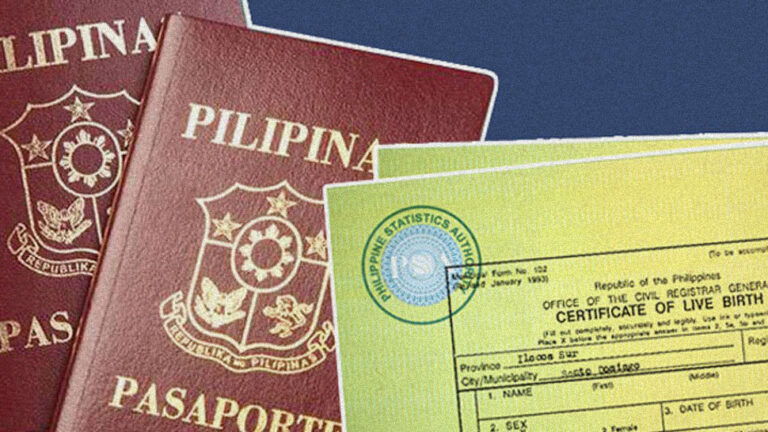
If your Philippine passport is up for renewal, then here’s some good news for you: submission of birth certificates is no longer required for passport renewals, according to the Department of Foreign Affairs (DFA).

Under DFA Department Order No.03-2019, which was signed in January 2019, birth certificates are no longer required for regular renewals, except for the following instances:

  • First-time passport applications
  • Renewal applications for lost or mutilated passports
  • Applicants in the DFA watchlist
  • Renewal applications of old brown and green passports bearing no complete middle name
  • Renewals requiring changes in personal information

If your Philippine passport is up for renewal, then here’s some good news for you: submission of birth certificates is no longer required for passport renewals, according to the Department of Foreign Affairs (DFA).

Under DFA Department Order No.03-2019, which was signed in January 2019, birth certificates are no longer required for regular renewals, except for the following instances:

  • First-time passport applications
  • Renewal applications for lost or mutilated passports
  • Applicants in the DFA watchlist
  • Renewal applications of old brown and green passports bearing no complete middle name
  • Renewals requiring changes in personal information

That means adult individuals who are renewing their passports only need the following requirements:

If your Philippine passport is up for renewal, then here’s some good news for you: submission of birth certificates is no longer required for passport renewals, according to the Department of Foreign Affairs (DFA).

Under DFA Department Order No.03-2019, which was signed in January 2019, birth certificates are no longer required for regular renewals, except for the following instances:

  • First-time passport applications
  • Renewal applications for lost or mutilated passports
  • Applicants in the DFA watchlist
  • Renewal applications of old brown and green passports bearing no complete middle name
  • Renewals requiring changes in personal information

That means adult individuals who are renewing their passports only need the following requirements:

  1. Confirmed online appointment
  2. Accomplished application form
  3. Personal appearance
  4. Current ePassport with a photocopy of the data page

For minors (below 18 years old), they would need the following requirements:

  1. Confirmed online appointment (if applicable)
  2. Accomplished application form
  3. Personal appearance of minor applicant and either parent or authorized adult companion
  4. Current ePassport with a photocopy of the data page
  5. Marriage Certificate (if only one parent is accompanying the child)
  6. Original and photocopy of proof of filiation or guardianship
  7. Passport or valid government-issued ID of either parent with one photocopy
  8. School ID (if applicable)

If you are applying for a passport for the first time, the DFA has also listed down valid identification cards that you can use, including their latest addition in August 2019: Postal IDs. This must be valid during the time of the passport application. Valid Postal IDs are those that were issued starting November 2016.

Here’s the full list of IDs that the DFA honors for passport applications:

  • SSS ID
  • GSIS ID
  • UMID
  • Postal ID
  • Driver’s License
  • Student Permit (Card Format)
  • PRC ID
  • OWWA or iDOLE card
  • Voter’s certificate (with voting record, dry seal, and signed by an election officer)
  • Senior Citizen ID
  • PNP Firearms License
  • School iD (enrolled or fresh graduate)
  • Airman license (issued August 2016 onwards)
  • Voter’s ID
  • Valid ePassport (for renewals)
  • Residence Card (for applicants overseas)

The DFA reiterates that they will not accept the following IDs for passport applications: Tax Identification Number (TIN) card, Pag-IBIG, PhilHealth, Barangay ID, Police Clearance, Barangay Clearance, SSS E-1 Form, LTO Driver’s License receipt, paper-format Student Driver’s permit, and company ID. Further, the NBI Clearance is only a supporting document for certain cases.

This story originally appeared on Smartparenting.com.ph. Minor edits have been made by the Esquiremag.ph editors.

Was it a coup? No, but siege on US Capitol was the election violence of a fragile democracy

0

January 7, 2021 1.10pm AEDT

Did the United States just have a coup attempt?

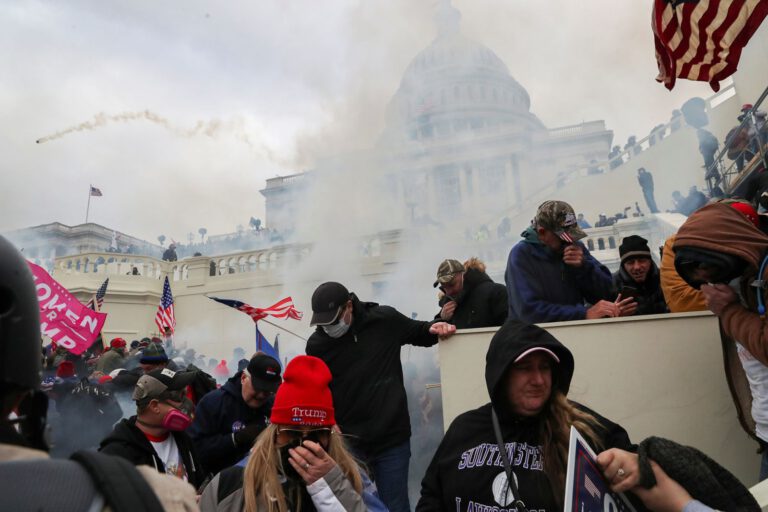
Supporters of President Donald Trump, following his encouragement, stormed the U.S. Capitol building on Jan. 6, disrupting the certification of Joe Biden’s election victory. Waving Trump banners, hundreds of people broke through barricades and smashed windows to enter the building where Congress convenes. One rioter died and several police officers were hospitalized in the clash. Congress went on lockdown.

While violent and shocking, what happened on Jan. 6 wasn’t a coup.

This Trumpist insurrection was election violence, much like the election violence that plagues many fragile democracies.

What is a coup?

While coups do not have a single definition, researchers who study them – like ourselves – agree on the key attributes of what academics call a “coup event.”

Coup experts Jonathan Powell and Clayton Thyne define a coup d’etat as “an overt attempt by the military or other elites within the state apparatus to unseat the sitting head of state using unconstitutional means.”

Essentially, three parameters are used to judge whether an insurrection is a coup event:

1) Are the perpetrators agents of the state, such as military officials or rogue governmental officials?

2) Is the target of the insurrection the chief executive of the government?

3) Do the plotters use illegal and unconstitutional methods to seize executive power?

Coups and coup attempts

A successful coup occurred in Egypt on July 3, 2013, when army chief Abdel Fattah al-Sisi forcefully removed the country’s unpopular president, Mohamed Morsi. Morsi, Egypt’s first democratically elected leader, had recently overseen the writing of a new constitution. Al-Sisi suspended that, too. This qualifies as a coup because al-Sisi seized power illegally and introduced his own rule of law in the ashes of the elected government.

Coups don’t always succeed in overthrowing the government.

In 2016, members of the Turkish military attempted to remove Turkey’s strongman president, Reçep Erdogan, from power. Soldiers seized key areas in Ankara, the capital, and Istanbul, including the Bosphorus Bridge and two airports. But the coup lacked coordination and widespread support, and it failed quickly after President Erdogan called on his supporters to confront the plotters. Erdogan remains in power today.

What happened at the US Capitol?

The uprising at the Capitol building does not meet all three criteria of a coup.

Trump’s rioting supporters targeted a branch of executive authority – Congress – and they did so illegally, through trespassing and property destruction. Categories #2 and #3, check.

As for category #1, the rioters appeared to be civilians operating of their own volition, not state actors. President Trump did incite his followers to march on the Capitol building less than an hour before the crowd invaded the grounds, insisting the election had been stolen and saying “We will not take it anymore.” This comes after months of spreading unfounded electoral lies and conspiracies that created a perception of government malfeasance in the mind of many Trump supporters.

Whether the president’s motivation in inflaming the anger of his supporters was to assault Congress is not clear, and he tepidly told them to go home as the violence escalated. For now it seems the riot in Washington, D.C., was enacted without the approval, aid or active leadership of government actors like the military, police or sympathetic GOP officials.

American political elites are hardly blameless, though.

By spreading conspiracy theories about election fraud, numerous Republican senators, including Josh Hawley and Ted Cruz, created the conditions for political violence in the United States, and specifically electoral-related violence.

Academics have documented that contentious political rhetoric fuels the risk of election-related violence. Elections are high-stakes; they represent a transfer of political power. When government officials demean and discredit democratic institutions as a simmering political conflict is underway, contested elections can trigger political violence and mob rule.

So what did happen?

The shocking events of Jan. 6 were political violence of the sort that too often mars elections in young or unstable democracies.

Bangladeshi elections suffer from perennial mob violence and political insurrections due to years of government violence and opposition anger. Its 2015 and 2018 elections looked more like war zones than democratic transitions.

In Cameroon, armed dissidents perpetrated violence in the 2020 election, targeting government buildings, opposition figures and innocent bystanders alike. Their aim was to delegitimize the vote in response to sectarian violence and government overreach.

The United States’ electoral violence differs in cause and context from that seen in Bangladesh and Cameroon, but the action was similar. The U.S. didn’t have a coup, but this Trump-encouraged insurrection is likely to send the country down a politically and socially turbulent road. (republished in Rappler.Com)

Clayton Besaw, Research Affiliate and Senior Analyst, University of Central Florida and Matthew Frank, Master’s student, International Security, University of Denver

True justice for Christine

0

Editorial, Philippine Daily Inquirer / January 09, 2021

By this time, Christine Dacera would have made her final journey home to her family in General Santos City (her interment is set for tomorrow, Jan. 10). But the questions around her death in a Makati hotel on New Year’s Day remain unanswered and, indeed, disturbing.

This despite the declaration by Makati police, back-stopped and gleefully announced by no less than Philippine National Police chief Debold Sinas, that the case was “closed” after the arrest of three male friends of Christine who celebrated New Year’s Eve with her in the same hotel room where she was found. With what seems like unseemly haste, Sinas also declared that Christine had been raped, based on bruises found on her body, and on other findings that, Sinas said on Jan. 6, he could not reveal at the time. He immediately ordered the arrest of all the other men who took part in the New Year’s celebration after the Makati police filed a “provisional charge” of rape with homicide against them. Sinas even went so far as to demand that the men surrender within 72 hours or, he said, “we will hunt you down using force if necessary”—even if no warrant has been issued against them.

The official cause of death as listed in the autopsy report was ruptured aortic aneurysm, which independent forensic pathologist Raquel Fortun said raises suspicions because it very rarely occurs in persons as young as Dacera, who was 23. Whatever, it is now too late to know for sure if indeed the PAL Express flight attendant died of natural causes, since Christine’s body was reportedly embalmed before the autopsy. This, noted Fortun, has made it impossible to gather further information on the real cause of death, including whether Dacera was indeed violated before her death.

Subsequent developments prove that the Makati police’s and Sinas’ action and celebration were indeed premature, based on sloppy procedures and quick conjecture. National Capital Region Police Office chief Vicente Danao admitted on Thursday that the arrest of three of Christine’s friends was based on insufficient evidence, comparing it to an unripe mango (“hilaw pa”).

Makati Assistant City Prosecutor Joan Bolina Santillan said as much when she ordered the release of the three friends in police custody and also directed the police to gather more evidence. She noted that the Makati cops failed to establish exactly how Dacera died, much less if she was killed or violated beforehand.

It isn’t just the Makati police and the PNP leadership who now sport red faces after their knee-jerk conclusions. Netizens who seemingly rushed to judgment on Christine, citing her supposedly errant behavior in going on a drinking spree with a group of male friends, even if all of them are said to be members of the LGBTQ community, are now taking back their harsh words. Many commenters who used her death as a platform to sound off on “rape culture” have apologized, citing the initial reports mainly quoting the police version of events on Christine’s passing. Truly, while victim-blaming, which so many bystanders engaged in following news of Christine’s fate, is reprehensible, so is rushing to pin the blame on people without evidence.

Much of the noise on social media and mainstream media can be traced back to the careless statements made by law enforcement officials, and more deplorably, to their shoddy investigative work and disregard for proper procedures and diligent sleuthing. Of course, who would not want and demand “Justice for Christine”? But neither should the public—especially Christine’s grieving family—be handed justice pursued with careless abandon and deception. Especially if that “justice” is merely an attempt by the police establishment to burnish its badly battered image after a series of embarrassments and scandals.

It’s not out of place, too, to remind the PNP that Christine’s death, while certainly worthy of attention and quick justice, is but one of many cases crying out for resolution. There have been thousands of killings of suspects as part of the war on drugs, and hundreds more killings of human rights lawyers, activists, community organizers, even government officials, all over the country. Still fresh in the public’s mind is one of the most glaring examples of police impunity: The double killing of mother-and-son Sonya and Frank Gregorio in broad daylight and in full view of witnesses, by police Staff Sergeant Jonel Nuezca in Tarlac shortly before Christmas—the outrage over which the police now seem intent to distract by latching on to the most lurid and sensational suspicions in Christine’s case and feigning extraordinary efficiency by declaring it “case closed” in a jiffy.

The PNP has plenty on its plate, not least of which is restoring its public standing as a bulwark of protection and service to the Filipino people. But slapdash, negligent operations and loose-lipped declarations are not the way to go.#

Killer cop Nuezca pleads not guilty of murder he was filmed committing

0

Franco Luna (Philstar.com) – January 10, 2021

MANILA, Philippines — Police SMSgt. Jonel Nuezca pleaded not guilty to carrying out the grisly killings of a mother and her son in Paniqui, Tarlac earlier in December despite being caught on camera doing so. 

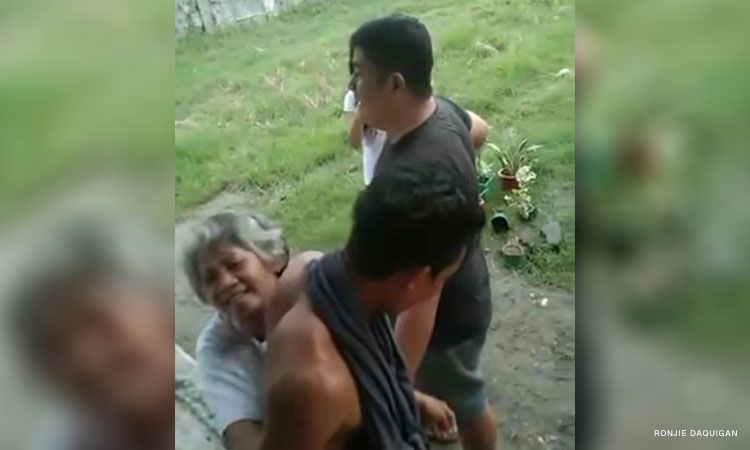
Videos of the incident spread like wildfire on social media in the days after the murders, showing Nuezca shooting 52-year-old Sonya Gregorio and her son Frank Anthony Gregorio—both unarmed—at point-blank range during an argument.

“Putangina, gusto mo tapusin na kita ngayon? (Son of a bitch, do you want me to end you right now?)” Nuezca is heard saying in the middle of a heated exchange with the two in the video.

He then suddenly pulled out a pistol, revealed later on to be his service pistol with the police, and shot them both in the head.

Despite this evidence, Police Brig. Gen. Valeriano de Leon, who serves as Central Luzon police director, told The STAR that Nuezca was arraigned at the Paniqui, Tarlac Regional Trial Court Branch 106 on Thursday where he entered a “not guilty” plea.

De Leon added that the next hearing for Nuezca’s case is scheduled on Thursday, February 4.

Police Gen. Debold Sinas, the chief of the national police, disclosed earlier that the resolution on the administrative cases filed against Nuezca is due Monday, January 11. The PNP’s Internal Affairs Service earlier expressed confidence Nuezca will be dismissed from the service given the video evidence held against him. 

According to Sinas, the killer cop has since been transferred to the Bureau of Jail Management and Penology in Tarlac. 

Calls for reform within the agency resounded in the days following the killings, when ranking government officials including Police Brig. Gen. Brandi Usana, the spokesperson of the PNP, were quick to condemn the killing but asserted that it was an “isolated incident.”#