Home Blog Page 100

Cullamat: Body of daughter killed in clash not a trophy to pose with

0

(Philstar.com) – November 30, 2020

MANILA, Philippines — Rep. Eufemia Cullamat (Bayan Muna) slammed the military for parading the body of her daughter who was killed in a shootout with the Philippine Army last weekend, saying it was disrespectful of soldiers to pose for photographs with the slain woman.

“She is not a thing, she is not a trophy to be paraded for military propaganda. You did not respect the dead, you are also disrespecting our family’s grief,” she said in a statement in Filipino.

The Philippine Army on Sunday reported that Jevilyn Campos Cullamat, 22, was killed in a shootout in barangay San Isidro, Marihatag in Surigao del Sur. She was the only casualty in the encounter, the military said.

One photo from the Philippine Army’s 3rd Special Forces Battalion, as posted by state-run Philippine News Agency, showed Jevilyn’s body laid down with weapons that the military seized, while the soldiers posed in the back while holding up a captured banner.

PNA has since taken down its tweet showing the photo.

The lawmaker asked the military to not use her youngest daughter’s remains as a trophy and to allow their family to mourn the loss and to honor her.

According to the rules of war under International Humanitarian Law, particularly Rule 25, permanent medical personnel — according to military reports, the younger Cullamat was a medic — “shall be respected and protected at all times: they may not be made the object of attack but may not participate in hostilities either.”

The Makabayan bloc at the House of Representatives also called for accountability of those who circulated the photos of Jevilyn where they said her body was “obviously posed” as if she was still carrying a rifle and with troops displaying her body with seized paraphernalia.

“We demand that all these photos be immediately withdrawn from government websites and those responsible for circulating them held accountable,” the Makabayan bloc added.

Cullamat says daughter ‘a heroine for Lumads’

Cullamat said she is proud of Jevilyn who loved her country and served as a heroine for Lumads. “We raised her to be patriotic, brave and with independent mind and beliefs,” she added.

“Her decision to join the armed struggle is not a simple thing, and is a result of the abuse we Lumads suffer and the grave poverty she witnesses. Her two eyes saw how the paramilitary killed out leader Dionel Campos, Datu Bello Sinzo and Alcadev Executive Director Emerito Samarca on Sept. 1, 2015,” Cullamat said.

A report by Kalinaw News, a wesbite run by the Civil-Military Operations Regiment of the Philippine Army, said Jevilyn served as a medic of the New People’s Army and belonged to the Sandatahang Yunit Pampropaganda Platoon of Guerilla Front 19, Northeastern Regional Committee.

“It is my great honor that I had a child who became a martyr and a fighter,” she added.

“There is no mother that will renounce her child who put away her own interests and laid down her life for the nation and to defend the land of our ancestors,” the lawmaker also said.

Calls to address roots causes of armed struggle

Kabataan party-list mourned the loss of Jevilyn as it reminded the military that disrespecting the remains of anyone, including rebels, is unacceptable. “The International Humanitarian Law states that the dead should be respected no matter the principle or beliefs,” they added.

Kabataan also reiterated their call to addressing the roots of the armed struggle in the country. They also noted that peace talks were terminated in 2017.

“Hangga’t hindi tinutugunan ng gobyerno ang kahirapan, kawalan ng lupa ng mga magsasaka, mababang sahod, kawalan ng trabaho, at sa halip ay pasismo ang isinasagot nito sa mamayang lumalaban, mananatiling may hahawak ng armas,” the group said.

(So long as the government fails to address poverty, landlessness of farmers, low wages, lack of jobs and instead answer the people who are fighting with fascism, someone will always take up arms.)

The Makabayan bloc, for its part, stressed that these social issues may be addressed by the peace negotiations. “Jevilyn’s death is a stark reminder instead to government that people continue to embrace armed struggle because of the continuous failure to address the root causes of the rebellion in our country,” they added.

Rep. Arlene Brosas (Gabriela party-list) also urged the government to stop using Jevilyn’s death to amplify red-tagging. “Only psychopaths and terrorists are capable of taking photo opportunities with a dead body,” she added.

The shootout happened amid an ongoing Senate probe on red-tagging of progressive groups including lawmakers under the House Makabayan bloc who are being accused without proof of being communist rebels. 

Brosas also urged the government to tackle long-term solutions to poverty, massive landlessness, agricultural backwardness, record high employment and lack of basic national industries. — Kristine Joy Patag with reports from Xave Gregorio

Unilever becomes wholly British company

0

Nov 30, 2020, Agence France-Presse

LONDON, United Kingdom

Unilever completes the merger of its Dutch and British corporate entities, forming a new group called Unilever PLC that is headquartered in London

Consumer goods giant Unilever said on Monday, November 30, that it has become a wholly British company, completing a historic merger of its Dutch and British corporate entities to end its double-headed structure.

The new group, Unilever PLC, will now be headquartered in London under a so-called unification strategy designed to make it more responsive to economic challenges including the coronavirus.

Unilever, which has experienced strong demand for hand cleaners and household cleaning products during the deadly COVID-19 pandemic, insisted there will be no change to its operations, locations, activities, and staffing levels.

“Unilever is pleased to announce the completion of the unification of its group legal structure under a single parent company, Unilever PLC,” it said in a statement.

“From today, and for the first time in its history, Unilever now trades with one market capitalization, one class of shares, and one global pool of liquidity, whilst also maintaining the group’s listings on the Amsterdam, London, and New York stock exchanges.”

Shareholders had overwhelmingly approved the move in September after the group had unveiled the plan in June. 

The company’s Dutch corporate entity Unilever NV had ceased to exist on Sunday, November 29, it added. 

“This is an important day for Unilever and we would like to thank our shareholders for their strong support of our unification proposals, which give us greater flexibility for strategic portfolio change, remove complexity, and further improve governance,” added Unilever chairman Nils Andersen.

The company’s food and refreshments division will continue to be based in Rotterdam. Britain will continue to be the base for both its home care and its beauty and personal care units.

Unilever was founded in 1930 after the Dutch margarine producer Margarien Unie merged with British soapmaker Lever Brothers, but had until now kept its dual-headed structure.

The firm – behind household brands including Dove Soap and Magnum ice cream – had attempted to move its corporate base from London to the Dutch port of Rotterdam in 2018. However, it had to back down after a revolt by shareholders in Britain.

Sophie Lund-Yates, equities anlayst at stockbroker Hargreaves Lansdown, said the move would make it easier to streamline operations, against an uncertain backdrop of both the coronavirus and Brexit.

“The biggest motivation for the single listing is to make streamlining the business an easier task,” she told Agence France-Presse.

“Coronavirus has made life a lot trickier, and revenue streams less certain, at a time when Unilever was already facing sluggish sales. A single parent company structure is simply a tool in its armory that will allow the group to flex its portfolio more efficiently.”

She added that the current climate of uncertainty may well have acted as a catalyst for this change, but was unlikely to have been the sole reason.

“The group needs to become more nimble to secure long-term growth, which is why we are seeing the demerger of the tea business. This is more about a long-term rejuvenation strategy than it is a political move.” – Rappler.com

[ANALYSIS] In times of crises, the youth is left behind

0

The youth is adversely affected in terms of employment opportunities, education and training, and mental health and well-being’

Nov 30, 2020, Fatemeh Halabisaz /Vincent Jerald Ramos

The Philippines has gone through a lot this year — from localized natural disasters such as the eruption of Taal Volcano in January and the Masbate earthquake in August, to the onslaught of strong typhoons this month that left multiple cities and provinces flooded, and of course, the COVID-19 pandemic. While these disasters and pandemics know no targets, the consequent economic effects disproportionately impact vulnerable groups in society. During and after periods of these crises, the youth is left behind. The youth is adversely affected in terms of employment opportunities, education and training, and mental health and well-being. In light of the ongoing calls for immediate action from the government, public policies ought to be targeted and proactive.

Pronounced unemployment gap in times of crises

As the 2008 Global Financial Crisis progressed, developing Asian countries also began experiencing slowdowns in their economic activity. While the Philippines has not technically experienced a recession then, the total unemployment rate rose to 6.7%, while the youth unemployment rate rose by 5.9% in January 2009 compared to the year prior. Youth underemployment also increased, where the total hours worked per week by young workers drastically fell in the years of and after the crisis. Therefore, the youth that worked fewer hours also experienced a decrease in their income.

This year, amid the pandemic, the Philippines is officially in recession and is facing significant headwinds in terms of employment. The PSA reports a record-breaking unemployment rate in April 2020 of 17.7%, approximately 7.3 million jobs, a steep increase from the unemployment rate of 5.1% last year. The situation is significantly worse for youth workers. Their unemployment rate has increased from 12.9% in April 2019 to a record-breaking high of 31.6% in April 2020, which was also when the ECQ was being observed. More youth are also classified as NEET or “Not in Education, Employment, or Training,” which means that more young Filipinos are not able to contribute to the country’s productivity, which is done either through employment or increasing their human capital through education and training. 

Clearly, the country is seeing the same negative pattern as a decade ago but on a larger scale, with higher unemployment rates, reduced hours worked, and even more difficulty in finding and securing jobs for youth, especially since many more experienced workers have also lost their jobs and may even be in competition with them for work.

On learning and entering the workforce

Aside from the immediate learning disruptions experienced, learning inequality is also observed. Students from more disadvantaged households find it difficult to continue their education since most of the financial burden from online distance learning falls on the student. An internet subscription alone is too high a cost for many Filipino households, coupled with the fact that the average internet speed in the Philippines is among the slowest compared to our neighboring counterparts.

Another impact of the pandemic on the youth is a more challenging school-to-work transition. Economic crises tend to cause mass unemployment and create an unhealthy job market, especially for novel entrants such as new graduates. Cockx (2016) finds that in flexible labor markets, it takes about a decade for new entrants during economic downturns to catch up to entrants that entered in healthier job markets. This is because of the highly persistent effect of initial labor market conditions — initial wages and employment strongly affect one’s future wages and job opportunities. In other words, young Filipinos now will be at an even greater disadvantage upon entering the job market and might not progress in their careers at the same speed compared to youth who entered the job market in times of economic prosperity. 

On mental health and well-being

Many youths around the world are ailed with stress and anxiety, which is exacerbated by the pandemic. ILO (2020) finds that 17% of youth aged 18-29 assessed themselves as “probably subject to anxiety or depression” compared to 11% of the cohort ages 30-34. Moreover, a significant portion of youth was never relaxed (35%), never optimistic (31%), and rarely felt connections with other people (29%) since the onset of the crisis. This is due to the fact that there is a disruption in the youth’s education and/or employment prospects and the uncertainty of their future. This is confirmed by the fact that 38% of youth around the world feel uncertain for their future careers, while 44% of youth who have since stopped their schooling fear that they will be off-track (ILO, 2020). 

There are many other confounding effects on the well-being of youth such as loneliness, isolation, loss of motivation, and unfortunately for some, possibly even violence and abuse at home. Mostly, the youth have taken their sentiments and grief to social media, which makes it difficult to quantify how much their well-being has been affected by this outbreak, but definitely shows that the effects of this pandemic on their mental health are not negligible. 

What government can do

The government has both the mandate and the ability to pay closer attention to the youth in its post-crisis economic recovery plans, keeping in mind that they are disproportionately affected during recessions. A combination of passive and active labor market interventions may provide immediate relief to the most vulnerable youth and give them the means to enter the job market. For instance, a job search allowance, conditional on participating in programs such as job fairs, application writing and interview workshops, and so forth, might help decrease youth NEET and increase youth labor force participation and employment. 

Since tertiary education has been found to boost future income and employment opportunities, consistent government funding and promotion of financial assistance programs such as UniFAST of the Commission on Higher Education (CHED) will induce more deserving students from lower-income households to enter college. 

Finally, an unemployment insurance (UI) program could also be an appropriate long-term labor market policy response. UI can improve the resiliency of a household through income and consumption smoothing during periods of crises where unemployment rapidly increases. Intuitively, a household that receives UI payoffs makes them less likely to fall into poverty. Further, households that receive these transfers would likely spend rather than save it. Therefore, during periods of crisis, UI can possibly increase economic activity, thereby augmenting deficiencies in aggregate demand during recessions. It is high time for the government to consider instituting an unemployment insurance program (see for instance HB 7028 or the PhilJobs Act of 2020 by Rep. Stella Quimbo) and give additional protection not only to the youth but to hardworking Filipino families. – Rappler.com

Fatemeh L. Halabisaz, MSc is an entrepreneur and manager as well as an independent researcher. She has experience in consulting for ERP software, in economic research for the Philippine government, and has had formal education from the Philippines, France, and the United Kingdom. 

Vincent Ramos is a Master of Public Policy student at the Hertie School of Governance in Berlin, Germany. He finished his Bachelor’s degree from the UP School of Economics and his current research interests are development, innovation, and labor.

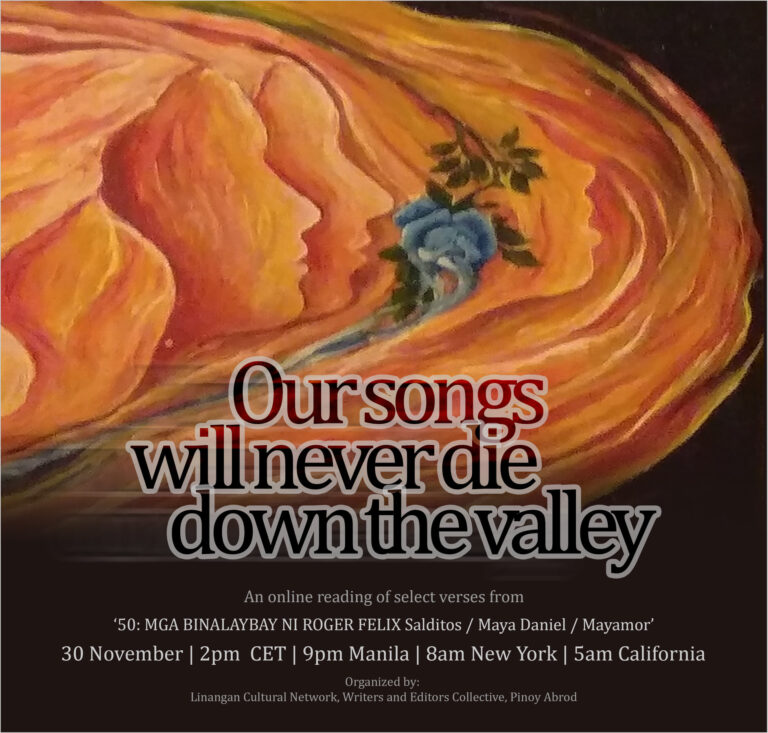
Maya Daniel Poetry Recital Nov 30 –

0

please wait for final announcement of link

‘Exodus’ of foreign nationals: Immigration says 2M foreigners left Philippines in 2020

0

(Philstar.com) – November 28, 2020

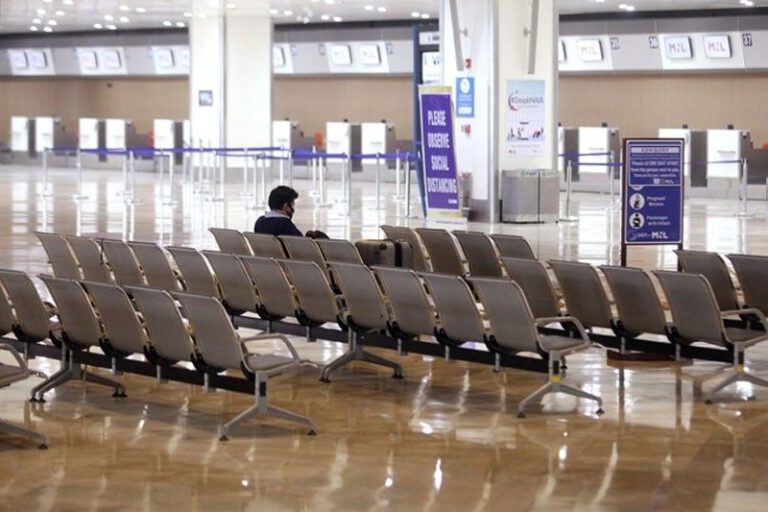
MANILA, Philippines — Millions of foreign nationals left the Philippines this year, the immigration bureau said Saturday, noting that the coronavirus pandemic has caused a mass departure not seen in recent memory.

“For 2020, 1.5 million [foreigners] arrived in the country but [2] million left. So, more people are leaving the Philippines and we [will] see this trend probably until the end of the year, or until the early next year that many leave while there is a pandemic,” Bureau of Immigration spokesperson Dana Sandoval said in Filipino during a virtual briefing aired over state-run PTV.

She further called this development an “exodus” of foreign nationals, seen in the country “for the first ime in history or [not seen] in a long time.”

The most foreign departures were recorded among Koreans with 400,000 exits, the bureau said earlier this week. It added that Americans and Chinese trail them with about 300,000 exits while the Japanese account for some 166,000 departures. 

Sandoval noted that this new trend will likely cause unfavorable effects on the already pandemic-crippled economy. 

“[F]or the past few years we have seen upward the trend of foreign arrivals here in the country following … the efforts of the Department of Tourism to invite foreign toursits here in the Philippines so we can see that it will have a big impact on our economy,” she said.

The COVID-19 task force this week decided to further ease inbound travel restrictions, allowing the entry of Filipino citizens’ foreign spouses and children starting December 7.

This was announced by presidential spokesman Harry Roque on Friday, who added that Filipino citizens along with their spouses and children would be allowed to travel to the Philippines too.

Thie move was lauded by the Department of Tourism as one that would reunite families and further revitalize an industry struck hard by the pandemic.

“Balikbayans are considered as a viable source market of the country for tourism, particularly extending to the second and third generation dependents who have yet to discover their parents’ roots,” Tourism Secretary Bernadette Romulo-Puyat said.

“The Filipino diaspora to date, has reached about 10 million. That is why we deem important the Filipino communities abroad as staunch partners in driving visitors to the Philippines,” she added.

— Bella Perez-Rubio with a report from The STAR

Filipina among Hong Kong’s new ‘unsung heroes’

By: Cristina Eloisa Baclig – Content Researcher/Writer/INQUIRER.net /November 27, 2020

MANILA, Philippines —  A Filipina domestic helper was awarded in the 8th Spirit of Hong Kong Awards on Thursday for her contribution to the Hong Kong community, particularly in her service to fellow domestic workers.

Rodelia Pedro Villar, 42, an OFW from Western Visayas became the first-ever Filipina to clinch the Lion Rock People’s Choice award. Villar was recognized for the support she provided the domestic worker community through Domestic Workers Corner, a group she founded in 2017.

Villar thanked the people who supported her and her group.

“Maraming salamat po. Dahil sa support niyo po ito ang narating natin,” she said. “ATIN po ito hindi lang akin. [K]ung wala kayo…wala [rin] ako sa Spirit of HK,”

(Thank you so much. We achieved this through your support. This is ours, not mine. Without you, I will not be a Spirit of Hong Kong awardee.)

Villar has been staying in Hong Kong for more than 17 years. Through her group, she was able to assist fellow domestic helpers who were victims of romance scams, sexual harassment, and termination of contracts.

“At Domestic Workers Corner, I want to focus on how to help members avoid getting into trouble,” she said in an interview with South China Morning Post (SCMP) last July.

The Spirit of Hong Kong Awards honors the remarkable contribution of community achievers.  The annual award is organized by SCMP and property developer Sino Group.

“Established in 2013, the Spirit of Hong Kong Awards shine a light on Hong Kong’s unsung heroes, celebrating the genuine spirit of charity, civic awareness and goodwill of these ordinary yet exemplary Hong Kong citizens,” SCMP stated on its website.

EDV

1 in 3 households globally report violence at home during pandemic – study

0

Nov 28, 2020, Michelle Abad

Manila, Philippines

A Save the Children study found domestic violence to be strongly linked to loss of income during the pandemic

About one in 3 households around the world reported violence at home during the COVID-19 pandemic, according to the findings of a new study conducted by Save the Children in 46 countries.

“Nearly one-third (32%) of the households had a child and/or parent/caregiver reporting that violence had occurred in the home, including children and/or adults being verbally or physically abused,” said the study titled, “The Hidden Impact of COVID-19 on Child Protection and Well-Being.”

The study also found that 1 in 6 children, and one in 5 parents or caregivers, reported violence at home during the pandemic.

Domestic violence was found to be strongly linked to loss of income. For children whose families lost their source of income, 19% reported violence and risk of violence in their homes. Conversely, for families who did not lose their income, 5% reported violence at home.

In the study conducted across 46 countries including the Philippines, a majority of children respondents also said they experienced an increase of negative feelings and psychological distress when lockdowns were imposed.

In April, as the pandemic began to spread significantly worldwide, children’s rights organizations had warned the public and the government to ensure the protection of Filipino children during lockdowns and quarantine restrictions.

The new study, released in November, manifested exactly what the groups had warned about.

Violence at home

The most common form of violence experienced by children is at the hands of parents or caregivers. The danger compounds for children who were in abusive households even before the pandemic.

“The pandemic increases the stress of parents and caregivers because of the fear of getting infected, the struggle to bring food on the table, and the continued uncertainties of the situation. Increased levels of stress can sometimes lead to increased aggression towards their children or their spouses,” said Wilma Bañaga, Child Protection Advisor for Save the Children Philippines.

However, the study’s findings may still not reflect the actual situation, due to a culture of underreporting. For instance, the number of children reporting there was violence at home (16%) was less than the number of parents or caregivers who said there was (19%).

In the households where violence was reported, only a small portion of both children and parents from the same household said there was violence, the study found.

In Asia, children reporting violence at home was pegged at 10.6%, slightly below the average rate of children’s reporting throughout all regions.

Save the Children also found that the more household income is lost due to COVID-19, the higher the reporting of violence in the home by both children and caregivers.

Emotional well-being

The study found that children across the world felt more sad, more worried, less safe, less happy, and less hopeful when the pandemic struck. This held true for both boys and girls, and that negative feelings were stronger among older children

Children were also unhappy the longer schools were closed. Around 82.5% of boys and girls whose schools closed, or could not go to class, reported an increase in negative feelings.

Meanwhile, children who played less often than before the pandemic were 3 times more likely to feel less happy. But keeping in touch with friends doubled the chances of children to feel happier and less worried.

Parent-child dynamic changes

Although there were reports of violence, a significant number of families reported having improved relationships during the lockdown, as they were happy to spend more time with each other.

But this was more significant in North and Latin America. The lowest reported improved relationships were in the Pacific region.

In almost all regions, parents and caregivers who had lost more than half their income in the pandemic tended to report better relationships with their children at 41%, compared to those who had not lost this amount of income, which was pegged at 36%.

Improved parent-child relationships were also common among parents who experienced deteriorating mental health and lacked access to parenting support.

There were also higher rates of increased positive parenting over negative or violent parenting methods. 

Positive parenting includes bonding, showing love and affection, and being more responsive to children’s needs. Meanwhile, negative parenting refers to being less patient and more aggressive, shouting, or use of physical punishment.

Recommendations

The study gave the following recommendations to better protect children during lockdowns that may continue to be imposed due to the COVID-19 pandemic:

  • Listen to children of all genders
  • Prioritize child protection within COVID-19 response plans
  • Designate social workers as essential workers
  • Provide funding and support for child protection programs
  • Strengthen high-quality mental health and psycho-social well-being programs.

“The impact of the COVID-19 pandemic to children will go beyond the health crisis. We call on parents, caregivers and local government leaders to strengthen our collective efforts to uphold children’s right to protection from all forms of physical or mental violence, abuse, exploitation, and neglect every day and in times of crisis,” said Save the Children Philippines chief Alberto Muyot.

Save the Children said the study “resulted in the most comprehensive survey of children and families during the COVID-19 crisis, to date”

It sampled 3 population groups: Save the Children program participants, specific population groups of interest to Save the Children, and the general public.

“The results presented in this report focus on data from our representative sample of 17,565 parents/caregivers and 8,069 children in our program participants group,” Save the Children said. – Rappler.com

Europe coronavirus death toll passes 400,000

0

Nov 28, 2020, Agence France-Presse

Paris, France

Europe is the second-worst hit global region after Latin America and the Caribbean

More than 400,000 deaths from the novel coronavirus have been registered in Europe, according to an Agence France-Presse tally compiled from official sources around 0800 GMT Saturday, November 28.

The second-worst hit global region after Latin America and the Caribbean, 400,649 people have died of COVID-19 in Europe among 17,606,370 confirmed cases. Of these, 36,147 occurred in the past week alone – the continent’s worst seven-day total since the pandemic began.

Britain accounted for almost two-thirds of the European deaths at 57,551 from almost 1.6 million infections, followed by Italy with 53,677 deaths and 1.5 million infections, France (51,914 deaths, 2.2 million cases), Spain (44,668 deaths, 1.6 million cases) and Russia (39,068 deaths, 2.2 million cases). – Rappler.com

Parts of Europe reopen stores while Los Angeles sees new virus curbs

Nov 28, 2020

PARIS, France

Most countries hope to ease their virus rules for Christmas and New Year, allowing families a respite before bracing for what the world hopes is one last wave of restrictions until a clutch of promising new vaccines kick in

Parts of Europe will reopen stores on Saturday, November 28, in time for the holiday season after progress in containing the coronavirus, but Los Angeles will halt nearly all gatherings with the pandemic surging across the United States.

Most countries hope to ease their virus rules for Christmas and New Year, allowing families a respite before bracing for what the world hopes is one last wave of restrictions until a clutch of promising new vaccines kick in.

Stores will lift their shutters in France on Saturday, while Poland’s shopping centers will also reopen.

Belgium is to allow shops to reopen from December 1, but keep the current semi-lockdown in place possibly until mid-January.

The move mirrors similar easing in Germany, Luxembourg and the Netherlands.

The Italian government partially lifted restrictions in Lombardy and Piedmont in the north, and Calabria in the south from Sunday, changing their alert levels from red to orange.

And Ireland has also announced a staggered easing of restrictions to allow some businesses to reopen and for families to gather ahead of Christmas.

Speaking in a televised address, Irish Taoiseach Micheal Martin said the upcoming festive period “cannot and will not be the kind of Christmas we are used to” but added the easing of restrictions would offer “some respite from the hardships of 2020 and in particular, the last 6 weeks”.

Germany, once a beacon of hope in Europe’s coronavirus nightmare, logged more than one million cases on Friday, while Russia asked India to help mass produce its controversial Sputnik vaccine.

Although the virus spread is slowing thanks to weeks of tough restrictions, Europe remains at the heart of the pandemic, recording more cases than the United States in the past week.

Until recently, Germany’s relative success in containing the virus had offered some sense of hope, with authorities putting in place some precautions that still allowed life to carry on almost as normal.

However, its measured approach has failed during the second wave, endangering the health of Europe’s biggest economy and weighing on the mood as the northern hemisphere heads into the winter holidays.

Germany’s Robert Koch Institute recorded more than 22,000 new daily cases on Friday, pushing the overall total beyond the one-million mark.

More worryingly, the number of COVID-19 patients in intensive care has soared from around 360 in early October to more than 3,500 last week.

LA restrictions

The United States surpassed 13 million total cases on Friday – the world’s highest – and officials were concerned whether gatherings on Thursday for the Thanksgiving holiday would further worsen the situation in the coming weeks.

Advertisement

The virus clouded the traditional “Black Friday” shopping day, but experts were expecting strong online sales.

Worry over the virus’s rapid spread led Los Angeles county to announce a temporary ban on gatherings of people from different households, with religious services and protests exempt. Rappler.Com