Home Blog Page 101

EU to use Magnitsky-style law to impose sanctions on human rights abusers

0

The Guardian, Daniel Boffey in Brussels, 27 Nov 2020

Provisionally approved act will allow EU to freeze assets and impose travel bans

The EU will take on powers to freeze assets and impose travel bans on individuals involved in human rights abuses from next month, after the bloc’s member states provisionally approved a European Magnitsky Act.

The restrictive measures – set to be formally signed off on Human Rights Day on 10 December, marking the 77th anniversary of the Universal Declaration of Human Rights – would target those involved in crimes ranging from genocide and torture to arbitrary arrests or detentions.

A leaked copy of the decision obtained by the Guardian says the legal act “establishes a framework for targeted restrictive measures to address serious human rights violations and abuses worldwide”.

The EU does not currently have the right to enforce travel bans on individuals as the competence lies with national governments, and its other sanction powers are geographically targeted.

The Dutch government initiated a discussion on the EU developing its own version of the US Magnitsky Act last November following a resolution from its parliament in The Hague.

The original US act signed by Barack Obama in 2012 was designed to target Russian officials deemed responsible for the death of the Russian tax lawyer Sergei Magnitsky.

Magnitsky was a Moscow lawyer and tax auditor hired to investigate a case of corruption in which a group of interior ministry officials managed to obtain a $230m rebate from the Russian state by fraudulently taking over three companies belonging to Hermitage Capital, an asset management firm.

The officials he accused had him arrested and thrown in jail, where he was beaten by prison guards. He died in custody in 2009 at the age of 37 after being refused medical treatment or family visits.

The European parliament has repeatedly called for the EU to adopt legislation similar to that enacted in the US to allow the bloc to target individuals irrespective of their nationality.

The eight members of the Nordic Council – Denmark, Finland, Iceland, Sweden, Norway, the Faroe Islands, Greenland, and Åland – had said they would adopt their own act if the EU failed to agree.

Latvia, Lithuania and Estonia, which border Russia, already have such legislation.

In 2018 a Magnitsky amendment to the Sanctions and Anti-Money Laundering Act was passed by the UK parliament to give the government the power to impose sanctions on people who commit gross human rights violations.

In July, in the first use of the powers, the British foreign secretary, Dominic Raab, announced sanctions against 49 individuals and organisations, including 25 Russians ranging from government officials to prison doctors and Moscow’s top prosecutor, Alexander Bastrykin, a close ally of Putin.

The EU framework will not carry Magnitsky’s name, following lobbying by the Dutch government which argued that no specific state should feel targeted. Vladimir Putin had been so enraged by the US act that he banned the adoption of Russian children by Americans.

Alexei Navalny, the Russian opposition leader believed to have been poisoned by the country’s FSB domestic spy agency, told the European parliament’s foreign affairs committee that EU sanctions should target his super-rich compatriots rather than those directly involved in his attempted murder.

He said: “There is no sense to sanction colonels or generals or some people who will definitely not travel a lot over the world and don’t have lots of estates and bank accounts in Europe.

“The main question is why these people are poisoning and killing and fabricating the election, and the answer is very, very simple: money. The EU should target the money and Russian oligarchs, not just old ones but new ones, the circle of Mr Putin.

“Just target Russian oligarchs.”

The new EU human rights sanctions regime was agreed by foreign policy experts from the 27 member states on Thursday and will be formally approved by ministers on 7 December, or more likely by written procedure on 10 December.
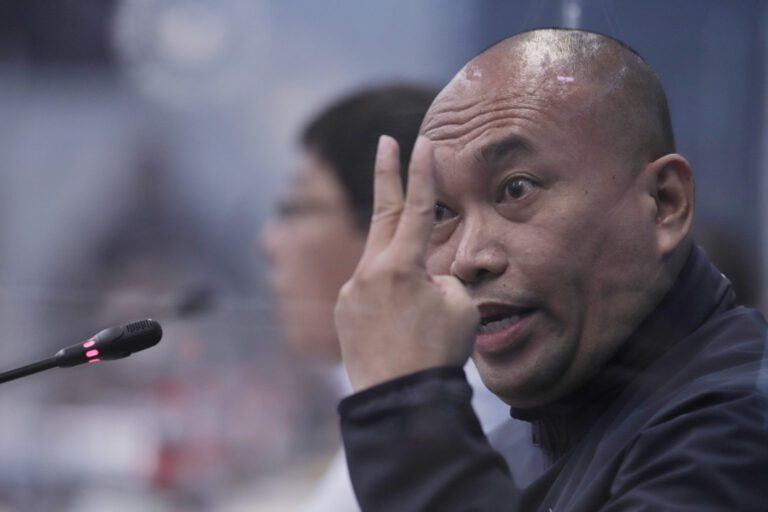

Anti-red ‘star witness’ told: Don’t continue selling your soul to the devil

0

By: Christia Marie Ramos – Reporter, INQUIRER.net /November 24, 2020

MANILA, Philippines — “Don’t continue selling your soul to the devil.”

Lawyer Jobert Pahilga issued this advice to Jeffrey Celiz, who earlier surfaced as the security sector’s “star witness” in the Senate investigation on the alleged red-tagging by military officials.

“We should examine the person of Mr. Jeffrey Celiz, do not believe hook line and sinker what he is telling,” lawyer Jobert Pahilga said Tuesday as the Senate defense panel resumed its probe. The first hearing was conducted last Nov. 3.

Pahilga, who Celiz supposedly tagged as a recruiter of the NPA in a radio interview in Iloilo, started off his statement by denying allegations against him.

“I am not a recruiter for the CPP (Communist Party of the Philippines)-NPA, I am a lawyer for the longest time for 18 years,” he added.

He then proceeded to cite Celiz’s previous service at the Iloilo City Hall from 2009 to February 2016, saying he was puzzled with the claim of the alleged former rebel that he was a former high-ranking official in the NPA.

“Kaya po nagulat ako sa kanyang pinagsasabi na siya ay isang napakataas na miyembro daw ng CPP na nasa operations command pa daw po siya,” Pahilga said.

(I was surprised by what he was saying that he was  a high-ranking member of the CPP and was even hearing the operations command.)

“Kaya ako ay nagtataka. Kung ganun pala e bakit nasa city hall siya ng Iloilo…hanggang nung February 2016?” he added.

(I was puzzled. If that’s the case, why was he working at the Iloilo City Hall until February 2016?)

In 2016, Pahilga noted that Celiz disappeared from public view following his inclusion in President Rodrigo Duterte’s so-called narcolist.

“Si Mr. Celiz sa tingin ko po ay natakot na mabiktima ng ‘Tokhang’ o kaya mabiktima ng drug war killings kaya ho siya nawala at nag-resurface bilang siya nang star witness ng NTF-ELCAC (National Task Force to End Local Communist Armed Conflict),” the lawyer said.

(I think Mr. Celiz was just scared of becoming a victim of Tokhang or drug war killings that’s why he disappeared and resurfaced as the star witness of NTF-ELCAC.)

But during a Senate hearing last Nov. 3 on red-tagging, Celiz claimed his inclusion in the list was part of a “government project.”

Upon knowing that Celiz surfaced at the Nov. 3 hearing as a “star witness,” Pahilga took to Facebook to question the alleged former rebel’s credibility.

“Nung malaman ko na siya na pala ang star or ace witness ng gobyerno, partikular ng NTF-ELCAC at siya yung pinaka-source ng information ng pangre-redtag ng mga legal personalities and organization, I made a Facebook post detailing how I know him and why I don’t believe his allegations and even dare to say that he is lying and he lies even to his handlers,” the lawyer told the Senate panel.

It was last Oct. 30 when the NTF-Elcac presented Celis, aka Ka Eric, as an alleged rebel leader who surrendered after 27 years with the guerrillas.

“Siya po ay isang legal na aktibista at parati po siyang naririnig ng mga tao noon nung siya’y aktibista pa sa Iloilo bilang spokesperson ng Bayan,” Pahilga, however, pointed out.

(He is a legal activist and he is prominent among the people in Iloilo as a spokesperson of Bayan.)

Pahilga also said he and his family are fearing for their safety after Celiz tagged him as a recruiter of the CPP-NPA.

“Gusto ko lang pong sabihin kay Mr. Celiz dahil ako’y tinawag niya na recruiter ng CPP-NPA, meron na pong mga taong umaaligid sa aming bahay sa Iloilo. Hinahanap at tinatanong na ako kung nasaan ako at nabanggit ang pangalan mo,” he said.

(I just want to say to Mr. Celiz that my home in Iloilo is being watched. They are looking for me and mentioning your name.)

“Kaya natatakot na po ang pamilya ko dahil sa iyong mga sinabi na walang batayan, natatakot ang pamilya mo na baka sila madamay, o baka ako ay mamatay rin,” he added.

(That’s why my family is scared because of your baseless allegation. my family is afraid that they will be dragged into this, or I may get killed.)

Former Bayan Muna Rep. Neri Colmeranes, during the hearing, also belied allegations made by Celiz in the previous Senate hearing.

Colmenares questioned Celiz for claiming having direct-personal knowledge that all members of the Makabayan bloc in the House of Representatives is a member of the CPP.

“Pero wala siyang patunay na nilabas,” he said.

(He showed no proof.)

“These are untrue, incredible allegations without competence,” he added.#

Maine Mendoza named Filipina OFWs’ new ‘champion’ as abuses rise due to pandemic

(Philstar.com) – November 26, 2020 – 12:08pm

MANILA, Philippines — To mark the International Day for the Elimination of Violence Against Women yesterday, actress and TV host Maine Mendoza was launched as the new “celebrity champion” of Filipina migrant workers via Babaeng Biya(hero), the national campaign of “Safe and Fair: Realizing women migrant workers’ rights and opportunities in the ASEAN region.”

According to non-government organization Safe and Fair Philippines, which organized the campaign, “Mendoza has proven herself to be a staunch ally of workers here and abroad through her personal endeavors and roles portrayed in TV and film projects.” 

The “Dubsmash Queen” was also chosen as new ambassador because she espouses the organization’s values of an empowered force who has the capacity to inspire her fellow women, especially during these unprecedented times. 

“For decades, Filipina migrant workers have faced, but have also stood up and campaigned against abuses, violence and labor exploitation. The violations continue, and have been worsened by the COVID pandemic,” shared International Labor Organization National Project Coordinator Rex Varona in a statement sent to Philstar.com.

“So we want to support the continued organizing, campaigns and advocacies of the women Overseas Filipino Workers (OFWs). We greatly appreciate Maine’s support and participation in our Babaeng BiyaHero campaign, since this will greatly boost the advocacy efforts of the women OFWs. Her involvement will help inspire more women OFWs to join the Babaeng BiyaHero journey towards ending violence against women, and in making labor migration safe and fair especially for women.”

According to United Nations (UN) Women National Project Coordinator Charisse Jordan, the current health crisis intensified the risk of gender-based violence due to isolation and restricted mobility. 

“With the lockdown, women migrant workers, including those who remained in destination countries or were forced to return home, are trapped with abusive family members, employers and perpetrators of sexual and gender-based violence,” she said. 

“Mobility restrictions have further reduced the ability of women migrant workers to seek assistance and access essential services such as psychosocial support, financial aid, or alternative shelter. Women migrant workers are inherently empowered, and with Maine’s support, we hope to further extend this message to the whole community – it is time we give back to our babaeng biyaheros – who have given so much for their families and our country.”

“I’ll always salute our Filipina migrant workers,” said Babaeng Biya(hero) Celebrity Champion Maine Mendoza. 

“I feel grateful to be a part of this initiative since it’s something close to my heart, especially after being exposed to a lot of opportunities that helped me understand their situation. I look forward to bringing awareness and educating more people about how we can create a culture of safety and security for our women here and abroad.”

Babaeng Biya(hero), a play on the words “biyahe” (Filipino for journey) and hero, aims to increase Filipina migrant workers’ and their families’ access to important information and essential services throughout the different phases of migration: pre-departure, in transit, on- site/abroad and upon their return. 

Now on its third year of implementation, the Babaeng Biya(hero) initiative can help out more Filipina migrant workers through its website, mobile app, helpline, and the upcoming “May I Help You?” information kiosk in major airports to be launched next month. 

This initiative also kick-started the global campaign, 16 Days of Activism Against Gender-Based Violence, from November 25 to December 10 (Human Rights Day). The Philippine version of the campaign is the 18 Days Campaign to End Violence against Women, which is extended until December 12, when the Philippine government signed in 2000 the United Nations Optional Protocols against human trafficking and smuggling.

Gender-based violence online

According to the State of the World’s Girls (SOTWG) Report 2020, a research conducted by Plan International across 31 countries with over 14,000 girls and young women, online abuse is silencing girls’ voices. More than 50% of girls surveyed from around the world have been harassed and abused online. Oe in four of the girls abused online feels physically unsafe.

In the Philippines, the report’s findings show that seven in 10 girls and young women have experienced harassment on social media; eight out of 10 have received threats of sexual violence online; and more than half are harassed online by people they know. The report also states that girls and young women with intersecting identities are more vulnerable to online harassment.

RELATED: Liza Soberano rallies influencers to uphold women’s, children’s rights during pandemic

Tiamzon couple’s lawyers claim trial not fair as witnesses were harassed, threatened

0

By: Gabriel Pabico Lalu – Reporter, INQUIRER.net, November 27, 2020

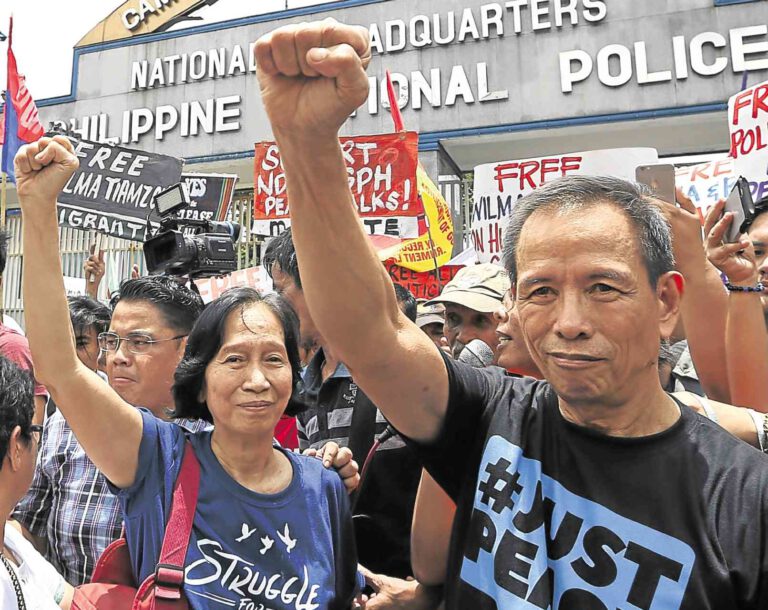
MANILA, Philippines — Spouses Benito and Wilma Tiamzon, who are members of the peace negotiating panel on the communist side, were deprived of a fair trial after witnesses who could have presented evidence in their favor were harassed, according to their lawyers.

In a statement on Friday after the couple was found guilty for kidnapping and placing three military officers and a member of a narcotics command under serious illegal detention, lawyer Rachel Pastores said that circumstances leading up to the promulgation of the case prevented the Tiamzons from defending themselves properly.

Pastores, managing counsel of the Public Interest Law Center (PILC), is the counsel for Benito Tiamzon.

“Benito and Wilma Tiamzon, like other peace consultants, were charged with trumped-up cases but could not effectively defend themselves in court because they and their witnesses are constantly subjected to threats to their lives, harassment, and surveillance,” she said.

“They could have easily presented evidence in their defense and dispute the clear lies of the lone prosecution witness, a high ranking member of the military,” she added.

Pastores and PILC further explained that the Tiamzons filed a manifestation about the dangers that witnesses face — just like what happened to other fellow peace consultants Randall Echanis and Randy Malayao.

Malayao was killed while asleep inside a bus at a pit stop in Aritao, Nueva Vizcaya, last January 2019, while Echanis was found dead with multiple stab wounds in his rented home in Novaliches, Quezon City, just this August 2020.

Atty. Edre Olalia of the National Union of People’s Lawyers (NUPL) meanwhile claimed that the cases were merely resurrected as another form of hardline attack against leftists in the country.

Olalia, whose NUPL represents Wilma Tiamzon, said that the proper charge should have been rebellion and not kidnapping because the communist armed struggle is considered to be waging a civil war against the current government — if they really committed the act.

“Politically motivated persecution and hardline attack ‘cause resurrected out of nowhere.  Dubious identification after 30 years,” Olalia said.

“Rebellion proper charge dapat instead of kidnapping [be]cause of [the] political offense doctrine of absorption, assuming [the] facts as true but not conceding,” he added.

The NUPL president also stressed that the Tiamzons are still covered by the Joint Agreement on Safety and Immunity Guarantees (Jasig), which provides progressive leaders some legal immunity as the peace process goes on.

However, the past administration maintained that the Jasig does not cover the Tiamzon couple.

On Friday, the Quezon City Regional Trial Court found the couple Benito and Wilma Tiamzon guilty of the cases filed in 2003, for an incident in 1988.

In its 18-page decision, Quezon City RTC Branch 216 Presiding Judge Alfonso C. Ruiz II sentenced the two to a penalty of reclusion perpetua or up to 40 years of imprisonment.

They were also ordered to pay complainant Lieutenant Abraham Claro Casis P75,000 as moral damages; P75,000 as civil indemnity; and P75,000 as exemplary damages. [ac]

De Lima outraged by continued EJKs amid pandemic

0

(Philstar.com) – November 26, 2020

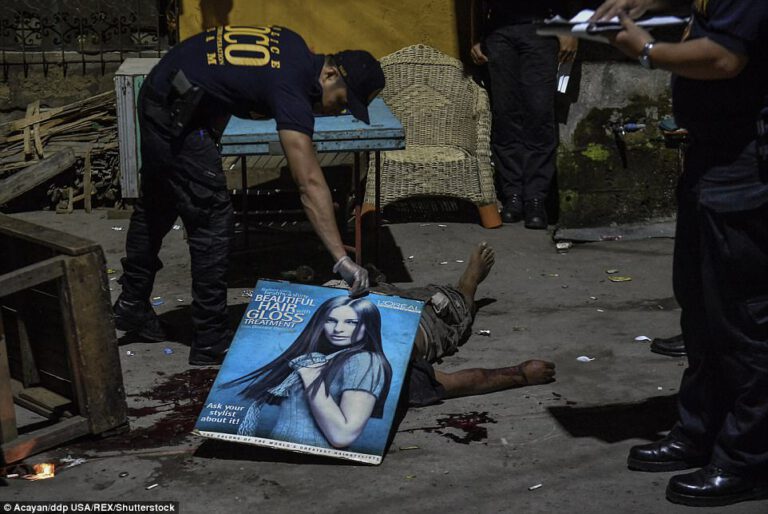
MANILA, Philippines — Sen. Leila M. de Lima on Thursday slammed the extrajudicial killings linked to the administration’s flagship campaign against illegal narcotics, particularly in the Quezon City slums, which she said were unhampered by the lockdowns caused by the coronavirus pandemic. 

The senator said the continued killings were “a product of the culture of killings” propagated by no less than President Rodrigo Duterte himself amid the ongoing global health crisis.

FACT CHECK: Reported increase in ‘drug war’ deaths amid pandemic is backed by gov’t data

Though administration officials deny the killings, the government’s own data corroborates the uptick in the killings linked to the so-called drug war, whose targets are often members of the urban poor according to rights groups. 

“When will these EJKs ever stop? EJKs per se are already diabolical and insane. But what’s more insane about all these is the fact that they all happened amid a pandemic where people struggle with ways to survive the crisis,” she said, stressing that there could be more deaths that remain unrecorded.

“How many more EJKs, mostly unreported, are happening out there? The evil of those behind these brutal killings is really frightening and disturbing,” she added in mixed Filipino and English.

De Lima cited the accounts of activist priest Fr. Robert Reyes, who claimed that another killing was recorded by his parish in October, which the senator pointed out is ironically located near the headquarters of the Philippine Drug Enforcement Agency. It was the 12th such killing in that area, the priest said. 

RELATED: Drug lord admits he never met De Lima or financed her senatorial campaign — lawyer

One victim, Melchor Unadhoy, was shot in the face with a sack jammed inside his mouth and with his fingers all crushed. He was 38 years old. Police from Baras, Rizal found his lifeless body and another victim at Brgy. Dinugay on October 11.

When the newly-minted chiefs of the Philippine National Police and the National Capital Region Police Office formally took up their posts in early November, the two signalled their intent to focus on and even intensify the administration’s drug war moving forward. 

De Lima, a staunch critic of the Duterte administration, urged the Filipino public to “tirelessly demand accountability for the unabated killings happening in the country to ensure justice for all EJK victims and their families left behind.”

“In the midst of the pandemic when thousands have died, become ill and worry about their safety, the culture of violence and murder has worsened,” she said in Filipino.

RELATED: Duterte tells human rights advocates: Look for another fight

As of this post, official police figures claim some 8,000 deaths that occurred in official anti-drug operations by police since Duterte’s term began in 2016. However, rights groups say the number may be as high as 30,000. 

The increase in killings comes despite an earlier pronouncement by Police Maj. Gen. Debold Sinas, now the chief of the Philippine National Police, that the controversial “Oplan Tokhang” would be suspended for authorities to focus more on implementing the COVID-19 quarantine. 

In a televised public address on Tuesday night, Duterte went as far as calling human rights advocates his “enemies,” telling them to “look for another fight.” 

“This is the result of having a government led by an evil president, a butcher who has no respect for the value of life and dignity of others. Soon, Duterte will be held accountable according to our laws, especially, for God’s law,” De Lima said in Filipino. 

READ: ‘Drug war’ deaths rise amid coronavirus pandemic — int’l rights monitor

— FrancoLuna 

Philippine gov’t, private sector to ink deal for 2M doses of AstraZeneca vaccine

0

Rappler.com, Nov 26, 2020, Pia Ranada

MANILA, Philippines

(UPDATED) This initial batch of vaccines will be funded by the private sector as the government continues negotiations for 20 million doses

Philippine vaccine czar Carlito Galvez Jr announced that the government and private companies are set to sign a deal for two million doses of AstraZeneca’s COVID-19 vaccine on Friday, November 27.

“This coming Friday, we will sign a tripartite agreement where we can buy two million doses of Astrazeneca of the United Kingdom. We will be with the private sector who donated,” he said in a virtual press briefing on Thursday, November 26.

These two million doses will be completely funded by private firms. The government is still negotiating with AstraZeneca for around 20 million doses paid for with public funds.

“The 2.2 million [doses] is private money. We have ongoing negotiations with AstraZeneca and our deadline is December for access to 20 million doses,” said Galvez.

Key to this agreement were the efforts of the embassy of the United Kingdom led by Ambassador Daniel Pruce. Galvez has been saying for days that he had been in talks with the embassy on vaccine supply.

The AstraZeneca vaccine is being developed with Oxford University in the United Kingdom.

The pharmaceutical firm has reported it was 70% effective against COVID-19. But experts have raised doubts after finding out that the second group of participants in the AstraZeneca trials were limited to people aged 55 and below, an age group with a lower risk of developing severe COVID-19 symptoms.

Advertisement

But it’s still a long way to go before the two million AstraZeneca vaccine doses are actually distributed to Filipinos. 

The vaccine will still have to pass the United Kingdom’s regulatory process and get approval from the Philippines’ Food and Drug Administration. This critical approval could come as early as May to July next year or late next year, said Galvez.

Half to private sector

The AstraZeneca vaccine requires two doses, hence the two million donated by the private sector on Friday will be enough for only one million people.

Christian Gonzalez of the Enrique Razon-led ICTSI (International Container Terminals Services Inc), one of the private companies making the donation, said the “vast majority” of these initial vaccine recipients will be “government employees, frontline health workers and other essential services workers” as designated by the Department of Health.

It’s not yet clear who is donating this first batch of two million doses but ICTSI has committed to donating this number of doses, based on Gonzalez’s remarks at a Tuesday Malacañang press briefing.

In the agreement between the government and big private firms, half of the vaccine doses to be shouldered by the companies will go to the government while the rest will go to the private sector.

Advertisement

“Fifty percent of this vaccine will be purely for the use of DOH under what is called equitable distribution to be determined by the government. The other 50% will be for the private entity to determine,” Gonzalez said on Tuesday.

ICTSI will use its share of the vaccine supply for its employees and those of the entire Razon Group, said Gonzalez.

But the firm will also devote some of their doses to employees of the Philippine Ports Authority, Bureau of Customs, and other essential port and logistics workers – frontliners who “made the biggest impact, especially at the beginning of the pandemic,” said Gonzalez.

Apart from Enrique Razon, other Filipino tycoons and businessmen have pledged to help the government secure COVID-19 vaccines. These include Lucio Tan, the Sy siblings, Ramon Ang, and Presidential Adviser for Entrepreneurship Joey Concepcion.

Concepcion, who is also founder of Go Negosyo, said the private sector aims to procure 2.5 million to 3 million doses of the AstraZeneca vaccine. The deal to be signed on Friday has an estimated cost of P600 million to P700 million.

This would mean the vaccination of up to 1.5 million people. The vaccine is expected to cost around P500 or $10 for two doses. 

Advertisement

The private sector has played a big role in the Philippines’ pandemic response. From donations of various goods, to testing employees and poor households, conglomerates have stepped in, as the government has drawn flak for how it is handling the crisis.

‘Affordable’

The vaccine czar told President Rodrigo Duterte that the AstraZeneca-Oxford vaccine was the most affordable vaccine among those being negotiated for by the government, priced at around $5.

At nakita natin ang AstraZeneca po maganda po dahil kasi non-profit po ang sa kanya at saka pinakamababa po ‘yung kanyang presyo, more or less $5 lang po,” he said during the November 23 meeting.

(We can see that AstraZeneca is good because it’s non-profit and they have the lowest price, more or less $5 only.)

Galvez praised AstraZeneca and the UK embassy for their “goal of providing equitable access” of the vaccine to developing countries like the Philippines.

Apart from AstraZeneca, Galvez has spoken of securing “20 to 50 million doses” of China’s Sinovac COVID-19 vaccine.

The Philippines aims to inoculate 60 million to 70 million Filipinos within 3 to 5 years. Some 35 million will belong to the first batch of recipients, a mix of poor households, healthcare workers, and frontline personnel.

To purchase these vaccines, the government is targeting a budget of P73.2 billion. Galvez is batting for a P150 billion fund in the 2021 national budget to shoulder expenses for a cold chain storage system necesary to distributing the vaccines. – Rappler.com

In joint plea, top PH lawyers urge SC: Stop anti-terror law now

0

Rappler.com, Nov 26, 2020, Rambo Talabong

MANILA, Philippines

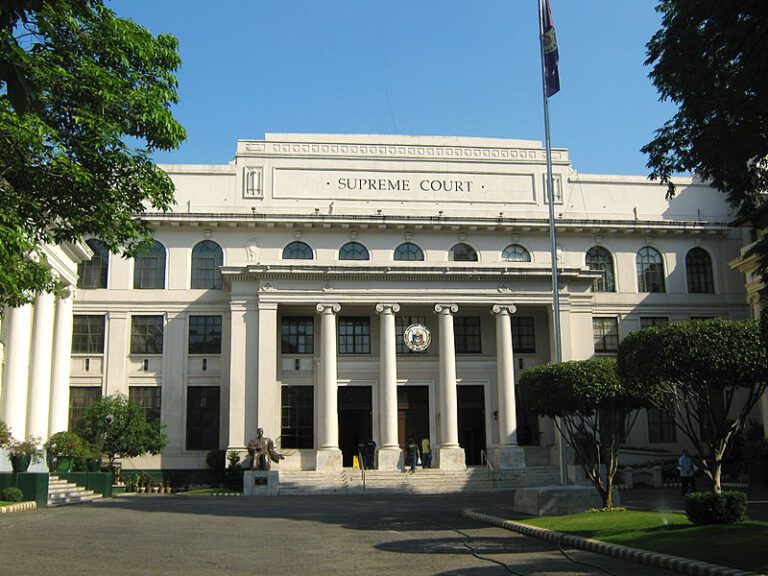
The top legal minds of the Philippines urge the Supreme Court to put a stop to the controversial Anti-Terror Law ahead of the oral arguments

The top legal minds of the Philippines united on Thursday, November 26, to reiterate their call to the Supreme Court to stop the controversial Anti-Terror Law.

Majority of the 37 petitioners against the terror law signed a joint motion to reiterate their prayers for the issuance of a temporary restraining order (TRO) and/or a status quo ante order, either of which would effectively stop the law’s effectivity until the SC decides on their petitions.

Some 24 lawyers, representing 24 of the 37 petitioners, signed the joint motion. The signatories include National Union of People’s Lawyers president Edre Olalia, Bayan Muna chairperson Neri Colmenares, and Albay 1st District Representative Edcel Lagman. Other petitioners who are based in the provinces are expected to join the call.

While it is a reiteration, the joint motion is a resounding plea asking the High Court’s justices to act expeditiously as the Philippine government implements the law that has been flagged as unconstitutional and dangerous for many Filipinos. (READ: What’s stopping Supreme Court from issuing TRO vs anti-terror law?)

Why the iteration?

The petitioners were alarmed by the Philippine government’s application of the law, 4 months since it took effect. The first reported application of the law was against two Aetas in Zambales accused of shooting soldiers.

“These reported cases are only those involving incidents of criminal prosecution. It does not include the implementation of its provisions involving acts like surveillance, ex parte examination of bank accounts and similar provisions,” the motion read.

The petitioners added that the military has been surveilling members of their team and that some of them have been red-tagged by the military, placing their lives in danger.

“We collectively submit that it is imperative and thus implore the Honorable Court to meanwhile issue the injunctive relief prayed for if only to prevent, in the meantime running up to almost two months before the oral arguments, any further implementation of the provisions of the assailed law which may impact on the lives, liberties and security of the petitioners and the public at large,” the petitioners said. – Rappler.com

Red-tagging UP

0

Editorial, Philippine Daily Inquirer / November 25, 2020

To see what is and to demand what should be: This is the stance of the students of the University of the Philippines that is provoking all manner of criticism from those frightened of what it could lead to. UP students are trained to examine the society in which they live, to identify and understand the roots of inequity and impoverishment, and to refuse to bow to the superior force that protects the status quo and the few that benefit from it. Thus the flurry of brickbats they generate when they protest; thus the swift red-tagging by both high officials and minor bureaucrats when they raise their voice at governance they deem inefficient and unjust.

“Academic freedom is essential for the life of the mind and for UP’s dual role as knowledge producer and social critic. We play the role of social critic from a position of evidence-based scholarship and moral courage. This role is a distinct service to the nation,” UP Diliman Chancellor Fidel Nemenzo said last week. He issued the statement in response to President Duterte’s threat to defund the premier university for supposedly doing nothing but criticize the government and serve as a recruitment base for communists.

“In keeping with its tradition of academic freedom, UP is a safe haven for civilized and intelligent discourse,” Nemenzo said. “But it has no place for intolerance, bigotry and red-tagging. Red-tagging in particular is dangerous, because it focuses on labels over substance and encourages intimidation and violence.”

The President’s spokesperson Harry Roque caused his boss’ tirade at last week’s Cabinet briefing when he reported that certain students were planning a strike to protest the government’s supposed anemic response to the devastation caused by Typhoon “Ulysses” and others that came earlier. The former human rights lawyer apparently grown soft on the cushions of privilege used the term “loko-loko” — crazies — in referring to the students in his report to Mr. Duterte, as though protesting government behavior or policy were an act of the deranged. The President initially said that the students were “taking [up] the cudgels [for] the poor ahead of your time,” that it wasn’t their problem but the government’s, and that the government was on the job. But he soon worked himself into a rant, saying UP students should drop out of school and spare their parents payment of their tuition—and he would “stop the funding.”

In fact, it was Ateneo de Manila University students who had called for an academic strike beginning Nov. 18, saying they would stop submitting class requirements “until the government heeds the people’s demands for proper calamity aid and pandemic response.” UP itself had called for a weeklong academic break to allow students, faculty, and other personnel to get their bearings after the violence of the typhoons; eventually, more than 3,000 students and faculty called for an end to the semester, saying it was “pointless” to continue in the face of the widespread devastation. But the Commission on Higher Education would have none of it.

Roque later explained that his boss “confused the proponents of the academic strike,” once more illustrating how badly served the President is by his inner circle. That “confusion” pushed him to take a defensive mode and to issue a threat to counter a perceived threat from the students. He said they shouldn’t even think of scaring him: “Huwag talaga kayong manakot kasi I will oblige you.” (The weary observer will recall other instances when the President took that defensive mode to utter stuff that will long be remembered, with a wince. Last August when a medical community exhausted from ministering to Filipinos stricken by COVID-19 pleaded for a break, he said that if health care workers wanted higher pay, they should join the police force: “Magpulis kayo.” At the Wallace Business Forum in December 2016, he bristled at the temerity of the Maute bandits who, he said, had threatened to attack Marawi City if the military operations against them were not stopped. “Go ahead,” he said. “Be my guest. I will wait for you there.” In May 2017, the five-month siege of Marawi began. The rehabilitation of the once-vibrant city and its people continues to plod along.)

The President’s threat to defund UP elicited sharp rejoinders from the public at large. Here’s one from law dean Mel Sta. Maria: “No single person can threaten the ‘defunding’ of UP. To defund is against the law.” Section 28 of Republic Act No. 9500 states that the lump-sum appropriation of UP “representing the responsibility of the national government for the continued growth, operation and maintenance [of UP] shall be included in the annual General Appropriations Act.”

All these while the problematic state of Philippine education was progressively worsened by the pandemic and the recent typhoons. Last heard from on the matter, as though he were on another planet, Roque said public schools “are not that affected very much.”#