Home Blog Page 110

‘Be a Liza Soberano’ in a country led by ‘macho fascists,’ a congresswoman appeals

0

By: Alex Brosas, INQUIRER.net, October 18, 2020

The Liza Soberano red-tagging saga continues, but more and more people continue to speak up to defend the actress.

Gabriela party-list Rep. Arlene Brosas was the latest to defend the Kapamilya star against a certain vlogger named Maui Becker. The vlogger took a swipe at Soberano after the latter participated in a recent webinar for Gabriela Youth’s “Mga Tinig ni Nene: Reclaiming Our Voices on the International Day of the Girl Child” via a Facebook live session.

“Her courage to speak out against gender-based violence amid the intensifying culture of impunity should be admired rather than silenced and criticized,” Brosas said in an interview with ABS-CBN yesterday, Oct. 17.

Brosas’ reaction came after Becker’s screaming vlog post, titled “LIZA SOBERANO, MIYEMBRO NA NG NEW PEOPLE’S ARMY?” (Liza Soberano, now a member of the New People’s Army?) on Oct. 15. The vlogger played Soberano’s livestream video while the star was talking about her hesitation in speaking about public issues. Becker later stated some harsh reactions about it.

“Nakakalungkot, hindi namin in-expect ang ganitong paninira kay Miss Soberano,” Brosas stated, noting that “hindi terorismo ang paglaban sa abuso.” (It’s sad, we were not expecting this type of attacks on miss Soberano. Fighting against abuse is not terrorism.)

“Be a Liza Soberano in this country being led by macho-fascist officials. We call on more public personalities to use their platforms to promote human rights, something that is badly needed today amidst the many forms of violence being promoted by the highest officials of the land,” Brosas added.

“I was afraid that people would judge me. They would say what do I know, I’m just a girl, I’m just an actress,” Soberano said in the video. To that, the vlogger replied. “Yes, tama. Ganon, intindihin mo na lang ang trabaho mo. Pero sige, kalayaan mo ‘yan pero make sure lang na knowledgeable ka sa mga bagay-bagay.”

(Yes, that’s right. There you go, just mind your job. But sure, you’re free to be like that. Just make sure that you are knowledgeable about things.)

The vlogger further slammed Soberano for supposedly not knowing the connections of Gabriela.

“Eh ngayon mukhang wala kang alam na ‘yung Gabriela ay salot sa lipunan, miyembro ng mga terorista at komunista, rebelde, NPA, front ng NPA. At wala kang ka ide-ideya. E kung ganyan na wala kang kaalam alam Liza, e manahimik ka. At hands off our children, Liza, you stupid b****,” the vlogger said.

(Right now, it looks like you don’t know that Gabriela is a plague in the society, members of terrorist and communist groups, rebels, NPA, NPA’s front. You don’t have any idea. If you don’t know anything, Liza, just shut up. And hands off our children, Liza, you stupid b****.)

Fans of Soberano were aghast at the supposed audacity of the vlogger to red-tag the actress, even warning the vlogger that what she did may qualify for a cyber libel case. The fans’ defense of Soberano also quickly sent the hashtag #DefendLizaSoberano trending on Twitter. Her manager Ogie Diaz has also spoken up to defend her while thanking her supporters. JB

What we know about the Philippines’ COVID-19 vaccine plans

0

Oct 21, 2020/ Sofia Tomacruz, Rappler.Com

MANILA, Philippines

Here’s what you need to know about the process of approving clinical trials, when a COVID-19 vaccine might be rolled out, and who might receive it first

Over 8 months into the pandemic, scientists around the world continue their search for a viable COVID-19 vaccine as countries continue to fight the spread of the new virus that has infected millions.

Here in the Philippines, a panel of vaccine experts under the Department of Science and Technology (DOST) has been reviewing a roster of potential vaccines with the interest of conducting Phase 3 clinical trials in the country.

Searching for a coronavirus vaccine: What PH clinical trials will look like

Filipino diplomats abroad have also been in talks with vaccine developers and manufacturers to make sure the Philippines has access to an effective vaccine once it becomes available. Among these are vaccines being developed in the US and China.

But these efforts are only half the challenge in ensuring Filipinos are able to receive a COVID-19 vaccine once it is ready for mass use.

While clinical trials and discussions take place with vaccine developers, any potential vaccine will still need to go through regulatory processes in the Philippines before studies here can begin, or the use of vaccines can be allowed. 

That includes vaccines President Rodrigo Duterte has shown a preference for – like Russia’s Sputnik V COVID-19 vaccine and those being developed by research and pharmaceutical firms in China or the United States’ Moderna. 

Here’s what you need to know about how the Philippines will approve trials, how they will be regulated, and when a COVID-19 vaccine might be rolled out to the public. 

What’s a clinical trial?

Clinical trials are a type of research that evaluates potential medical interventions that affect humans’ health. During trials, medicines, treatments, procedures, and devices may be tested to study or verify their clinical or pharmacological effects before they are approved for public use. 

Trials need to be carefully designed, reviewed, and approved before they can start. Like most clinical trials, tests for a COVID-19 vaccine consist of 3 phases to determine its safety and efficacy. 

In the Philippines, the Food and Drug Administration (FDA) is the body tasked with regulating clinical trials. 

Why regulate trials?

Clinical trials deal with humans as subjects. FDA Director General Eric Domingo said this means that in any study, “the primary concern is always their human rights and safety.” 

By regulating trials, there is oversight in the way these are crafted, ensuring that trials meet good clinical practice standards and are able to ethically conduct tests involving humans. 

What might this look like? Domingo said participants should be able to understand fully what trial they are volunteering to join, as well as its benefits and risks. Volunteers should also know what safeguards will be afforded them, like close monitoring, checkups, and health insurance. Participants should also be free to leave the study. 

In regulating trials, the FDA will also form its own panel of experts to review adverse events that could occur during trials. This will be apart from the clinical trial expert team and safety monitoring committee part of the DOST.

Aside from this, clinical trials are regulated to ensue the integrity of data collected, which will be used to determine whether or not a treatment is ultimately safe and effective. This is especially true in the case of vaccines, which require extreme safety since they are designed to be given to millions of healthy people.

Who can conduct trials?

Only establishments with an FDA-issued license to operate as a clinical trial sponsor or contract research organization can conduct trials in the Philippines. This ensures that the group carrying out the research is legitimate and has the capacity to conduct such studies. 

In the case of Phase 3 clinical trials for COVID-19 vaccines, interested groups will also need to secure the endorsement of the Philippines’ vaccine expert panel (VEP) and ethics review board. 

The added step in securing approval from the country’s VEP and ethics board is unique to COVID-19 vaccine trials, Domingo said, because the global search for a vaccine has become much more accelerated due to the pandemic. 

In this case, the VEP reviews data from Phase 1 and 2 trials of vaccine development companies that intend to conduct Phase 3 trials in the country. Meanwhile, the ethics board ensures that prospective trials will be carried out in such a way that the rights and health of volunteers are protected. 

What vaccine companies are interested in trials?

So far, health officials cited China’s Sinovac and Russia’s Sputnik V among candidate vaccines that could possibly see independent trials in the country. 

For Russia’s COVID-19 vaccine, the VEP is still evaluating data from phases 1 and 2 of its clinical trials. According to the New York Times’ vaccine tracker, this vaccine is a “combination of two adenoviruses, Ad5 and Ad26, both engineered with a coronavirus gene.” 

As for Sinovac, the VEP has endorsed this to the FDA. Domingo said the agency is anticipating the submission of its application for Phase 3 trials after it gets the endorsement of the ethics board. 

Vaccine experts under the DOST also earlier identified vaccines that were being developed by Sinopharm in China, as well as Addimune Corporation and Academia Sinica in Taiwan, as possibly conducting Phase 3 trials in the Philippines. 

Sinopharm, however, told Philippine health officials it was no longer interested in pushing through with Phase 3 trials in the country and was instead looking to head straight to providing possible supplies. (Over 1,000 Filipinos are participating in Phase 3 trials being done in the United Arab Emirates.)

These independent trials are separate from the World Health Organization’s solidarity trials for vaccines, which the Philippines will also participate in.

Domingo said it may take at least 21 days for FDA regulatory reviewers to evaluate and process applications of companies seeking to do trials. This includes 14 days for initial evaluation and a period of 7 days for applicants to respond to any clarifications. 

After this, the FDA is expected to issue a decision on applications in not more than 8 days after it receives the recommendation of regulatory reviewers. 

Vaccine experts earlier eyed to have Phase 3 trials start by October, though this has been moved to November 2020.

After trials, what happens next?

Once clinical trials are successfully completed and a vaccine is demonstrated to be safe and effective for humans, companies can apply for a certificate of product registration. The FDA is again in charge of evaluating and approving these. 

Conducting Phase 3 clinical trials in the Philippines is not a prerequisite for a vaccine to be registered for use in the country. 

In evaluating a vaccine or any type of medicine, the FDA reviews its scientific data and can also consult with other similar regulatory bodies in other countries to compare findings. 

Apart from this, the Philippines is also a participant in the Global Alliance for Vaccines and Immunization COVAX facility designed to guarantee rapid, fair, and equitable access to COVID-19 vaccines worldwide.

What is COVAX and why does it matter for getting vaccines to developing nations?

When will a vaccine be available – and who will receive it first?

Experts are hopeful that a vaccine may be available for wide use sometime during the first half of 2021. 

While many candidate vaccines are still in their development phase, manufacturers have also begun the work of preparing for production and distribution.

In the Philippines, the Department of Health (DOH) is in the planning phase of how to handle the complex procurement, storage, and distribution of vaccines once they are available. 

In administering the vaccines to Filipinos, the DOH has experience in carrying out mass vaccination programs through similar campaigns done in the past for vaccine-preventable diseases like measles and polio. 

Duterte earlier said he wanted the entire Filipino population inoculated with a COVID-19 vaccine “without exception,” adding that his goal was for the government to shoulder the costs for the country’s 113 million population. 

This remains unlikely for now. In reality, the DOH said it lacked P10 billion of the P12.1 billion needed to vaccinate an initial priority population of 20 million Filipinos.

Initial priority groups include health workers and indigent citizens. – Rappler.com

Sofia Tomacruz covers foreign affairs, the overseas Filipino workers, and elections. She also writes stories on the treatment of women and children. Follow her on Twitter @sofiatomacruz. Email her at sofia.tomacruz@rappler.com.


River of outrage

0

Editorial, Philippine Daily Inquirer, 21 October 2020

This paper’s banner photo on Oct. 17 illustrates what Philippine society has come to. The armed might of the state represented by at least 10 personnel in fatigues is on full display against the perceived threat posed by a mourner standing before a tiny open casket.

Curiously, two of the fatigues-clad personnel crowding the mourner each have a hand to the latter’s head. A comforting gesture? Unlikely. Such a gesture goes against the naked power on show, highlighted by the long firearm seen at the foreground. They appear to be merely adjusting the face shield of the mourner dressed in personal protective equipment — and, if one looks closely enough, handcuffed.

The mourner in the picture taken at Manila North Cemetery on Oct.16 is jailed activist Reina Mae Nasino and the body in the casket is that of her three-month-old child she named River. Those surrounding her are members of the Bureau of Jail Management and Penology and the Philippine National Police, which earlier, pleading lack of personnel, succeeded in cutting the three-day furlough granted Nasino by a Manila court.

The furlough was intended for Nasino to leave Manila City Jail and be present at the wake and subsequent interment of the baby wrested from her by the state late in August, on grounds that prison is no place to rear a child. It was cut to six hours in the last two days, which Nasino’s armed escorts spent ensuring there would be no privacy between the handcuffed mother and her dead child and even among Nasino and family members and lawyers, no interviews with the media, and no solemn burial.

Despite the claim of being short-handed, close to 50 PNP-BJMP personnel were deployed to La Funeraria Rey and the cemetery on Oct. 16. From accounts, the PNP-BJMP called the shots as to the day’s circumstances. There was no funeral procession — a ritual observed by many Filipinos still, in which the hearse proceeds from the wake to the cemetery at a stately pace followed by mourners on foot and others in vehicles trailing behind.

When the family’s anguished plea for the funeral ceremony to commence was finally heeded, the casket was brought down and loaded into the hearse. And then the hearse sped away to the cemetery, forcing the mourners to run to keep up — until they were no longer able to.

Thus did the state seize River from her mother, preventing a reunion even when the baby had fallen fatally ill; thus did it keep control of her corpse to the bitter end. Kapatid, the organization of family members of political prisoners, was quoted wearily wondering how this extraordinary cruelty could happen, on “this … day to bury a child whom the state deprived of a chance [to live].”

At the cemetery, under the sky’s unforgiving light, the Inquirer’s Marianne Bermudez takes the shot of the handcuffed Nasino gazing down at the baby that was torn from her embrace. Save for the two figures each with a hand to her head, the mother’s armed escorts are in postures suggesting indifference. Their faces are covered with masks and shields, and it’s unsure if they feel the sting of the unspeakable: A parent burying her child shatters the natural order of things. How much more outrage can be endured?

And can anything remotely like this tragedy occur if Nasino, who before her arrest helped make impoverished communities aware of the material conditions that keep them ignorant and powerless, were not of the same class? She is still to be tried for illegal possession of firearms and explosives—a charge she, her family, and her lawyers deny. Imelda Marcos was convicted of seven counts of graft yet law enforcers all but genuflect in her presence. The warlord Zaldy Ampatuan, charged with and later convicted of the murder of media workers and other civilians in Maguindanao, was given leave to attend a daughter’s wedding. Plunderers roam freely.

But online, certain quarters are portraying the 23-year-old Nasino as the sort of threat to national security targeted by the anti-terrorism law. One such, Metropolitan Manila Development Authority spokesperson Celine Pialago, had the nerve to call on those “sympathizing” with Nasino to “study why she was put behind bars” and “her role in society,” and to quit the “drama serye.” Incredibly, Interior Undersecretary Jonathan Malaya declared: “Truth be told, it was the leftist groups who caused the tension during the wake when they suddenly vented their ire on the BJMP officers who were just doing their jobs.”

Kareem Abdul-Jabbar called it as it is. In America at the height of the furor over the police killing of George Floyd, the NBA great wrote of black protesters as “people pushed to the edge” who “want to live, to breathe.” He added: “Worst of all is that we are expected to justify our outraged behavior every time the cauldron bubbles over.”#


Why Franciscans oppose plan to rename Del Monte, QC, to ‘FPJ Avenue’

0

By: Lito B. Zulueta, Philippine Daily Inquirer / October 19, 2020

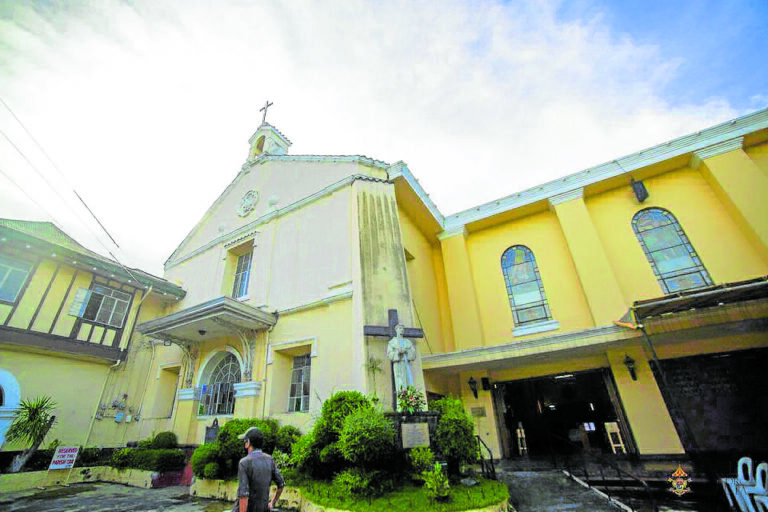
For the Franciscans lately, it has been a case of good news-bad news. The good news is that their ancient Church of San Pedro Bautista in Del Monte, Quezon City, has been elevated to a minor basilica by Pope Francis. But the bad news is that the Senate wants Del Monte Avenue to be renamed after Fernando Poe Jr., the late popular action star and losing presidential candidate in 2004.

In Senate Bill No. 1822, Sen. Manuel “Lito” Lapid, also an action star, has proposed the renaming since Del Monte Avenue is where FPJ Studios, the late actor’s famous eponymously named movie production company, is located.

In a statement opposing the bill, Fr. Cielo Almazan, OFM, head of the Philippine Franciscans, said “the first Christian community” was established in San Francisco del Monte, “from which Quezon City emerged in 1939.”

“Therefore, this area and their historical names are sacred to the civic and religious history of Quezon City,” Almazan declared.

Fr. Irineo Tactac III, rector and parish priest of the church, said Del Monte’s history goes deeper than FPJ Studios.

“Del Monte” district and avenue are shorthand for San Francisco del Monte, the original Franciscan retreat in that hilly place (“Monte” means “hill”) in the late 16th century. It was so named to distinguish it from San Francisco de Manila, the Franciscan church and mother house in Intramuros.

A historical marker installed in 1936 by the Philippine Historical Research and Markers committee, precursor of today’s National Historical Commission of the Philippines (NHCP), called the church the “Church of San Francisco del Monte.”

The Franciscan roots of the avenue and district are evident today. Locals continue to use “Del Monte” and “Frisco” (shorthand for San Francisco) interchangeably. Moreover, they continue to call N.S. Amoranto Street, which runs parallel to Del Monte Avenue, as “Retiro Street,” a historic reference to the Franciscan retreat house founded by San Pedro Bautista.

Papal basilica

Earlier, on Sept. 14, feast of the Solemnity of the Cross, Cubao Bishop Honesto Ongtioco led the canonical ceremonies and High Mass that declared Quezon City’s oldest Catholic church as a minor basilica. All four papal basilicas in Rome—St. John the Lateran, St. Peter, St. Mary Major and St. Paul Outside the Walls—are major basilicas; the rest outside of Rome are “minor.”

Minor basilicas are traditionally named because of their antiquity, dignity, historical value, architectural and artistic worth, and significance as centers of worship. A basilica must “stand out as a center of active and pastoral liturgy,” according to the 1989 Vatican document “Domus Ecclesiae: Norms for the Granting of the Title of Minor Basilica.”

Ongtioco said that with its declaration as a minor basilica, the church of Del Monte would have the “special privilege of special affiliation with the Holy See.” “We could say that we have a papal church in our midst,” he added.

He said that the historic significance of the Franciscan church is recognized by the Diocese of Cubao.

“In our diocesan coat of arms,” the prelate explained, “three hills are surmounted by a Franciscan cross: In the city set on a hill there stands the cross symbolizing the Franciscans who through this church began [their] missionary presence in what is now the Diocese of Cubao.”

During the ceremonies, the physical signs of the church’s status as a basilica were displayed, such as the intinnabulum, or bell, and the conopaeum, also called the ombrellino, a silk canopy designed with stripes of yellow and red, which are the traditional papal colors. (The colors are familiar to Catholics as the colors of the uniform of the Swiss guards in the Vatican.)Franciscan martyr

Spanish Franciscan Fr. Pedro Bautista (1542-1597) built the original church as a retreat house where the friars could recharge their spiritual batteries. It was also a novitiate house for friar-seminarians. San Pedro Bautista also served in the Franciscan mission territories in Laguna, Quezon and Bicol; he is generally credited today for having discovered the medicinal benefits of the hot springs of Laguna.

In 1593, the Spanish authorities of Manila sent him as envoy to Japan, where he was martyred during the anti-Christian persecutions in 1597. He was beatified in 1637 by Pope Urban VIII and canonized in 1862 by Pope Pius IX.

Today the San Pedro Bautista Church complex on San Pedro Bautista Street, Del Monte, Quezon City, also houses the San Gregorio Magno Friary or motherhouse of the Province of San Pedro Bautista, as the Philippine province of the Order of Friars Minor is known. It houses a museum providing a survey of Franciscan missionary history across the Philippines and Asia. Museumgoers can also visit the cave where San Pedro Bautista went on retreat to pray and contemplate.

‘Church of the Pope’

During the canonical ceremonies, the revised novena to San Pedro Bautista made by Father Tactac was introduced to the faithful. The novena is said every Thursday.

“We are thinking of new ways to promote the basilica for pilgrimage, especially on days [when] the faithful can gain the plenary Indulgence, one of the privileges of being a Minor Basilica,” he said. “We envision the church as a sanctuary where the mercy of God overflows for all.”

With the elevation of a Franciscan church to a basilica linked with the Pope, the friars “are even more challenged to be prophetic in their life and ministry.”

“The prophetic witnessing of the Franciscans is even more [required now] considering the present state of the country,” he added. “We need prophets to denounce the abuses and announce the Gospel imperative in today’s church and society.”

Tactac said that the canonical elevation should underscore the historic role of the Franciscans in Quezon City, arguing that that the Lapid proposal goes against NHCP guidelines that state “no public place should be renamed if the present name has attained a degree of historical association, has developed an importance of its own and has been sanctified by long usage by the people.”

“We believe that Del Monte Avenue has attained a degree of historical association, has developed an importance of its own, and has been sanctified by long usage [by] the people, that is, since 1590,” the friar said. “These are the reasons we are not amenable to renaming Del Monte Avenue as ‘Fernando Poe Jr. Avenue.’” —CONTRIBUTED

Learn about the factors affecting your WiFi signal and how WiFI mesh can help improve experience

Philippine Daily Inquirer, October 21, 2020

While the internet was always perceived as important, its impact to our lives has never been more highlighted than in the situation we are currently in. Who could have imagined that we can effectively work, learn, and play without going outside of our homes, right? It’s this reason why the internet has become more than just an added expenditure but a necessity for every household.

What’s common to every internet user in the country (and frankly, the world) is experiencing connection troubles such as slow speed and dropping signals. More often than not, these are caused by simple reasons that require equally simple solutions:

Distance from the router

The location of your router can affect your internet speed. That’s why it is best to place your WiFi router as close to the center of your home as possible and away from corners so that you can experience better reception throughout your house. Keep it elevated and also move devices that can compete for airwaves away your router.

Too many connected devices

When everyone else in the family is using the internet for work or online classes, chances are your internet connection can get slower. To boost the speed, you can try switching to another channel to reduce interference. A WiFi scanner is useful to easily identify the least used channel in your area.

WiFi signals being blocked by walls

Physical obstructions like walls, doors and appliances can possibly block the signals from your router from reaching some areas in your home.To get rid of this dilemma as well as the two mentioned above, it is best to invest in a mesh network.

A mesh network like Globe At Home’s TP-Link Deco M5  can do wonders to help you recreate the world right at home by providing wider coverage and steadier connection no matter where you are inside your house. The TP-Link Deco M5 is a mesh router system that helps eliminate WiFi dead zones and improves WiFi home coverage. It also has WiFi security and usage monitoring features that parents can use to oversee their children’s online activity and consumption.

Turn your bedroom into a boardroom, the living room to a home theater, and the kitchen to a classroom with your very own mesh network setup when you subscribe to Globe At Home UNLI Plans 2499 and up! These plans already come with 2 FREE TP-Link WiFi mesh units to power your network together with exclusive access to Globe At Home’s VIP hotline and Tech Squad services to help you properly install your setup. You may avail of these offers until November 30, 2020 only, so make the most out of it!

Enjoy new and upgraded experiences with your whole family with a fast and reliable internet connection with Globe At Home. To know more about this story, visit https://shop.globe.com.ph/broadband-plans


Cebuano priest is new papal chaplain

By: Ador Vincent Mayol – Senior Reporter, Inquirer Visayas/October 21, 2020

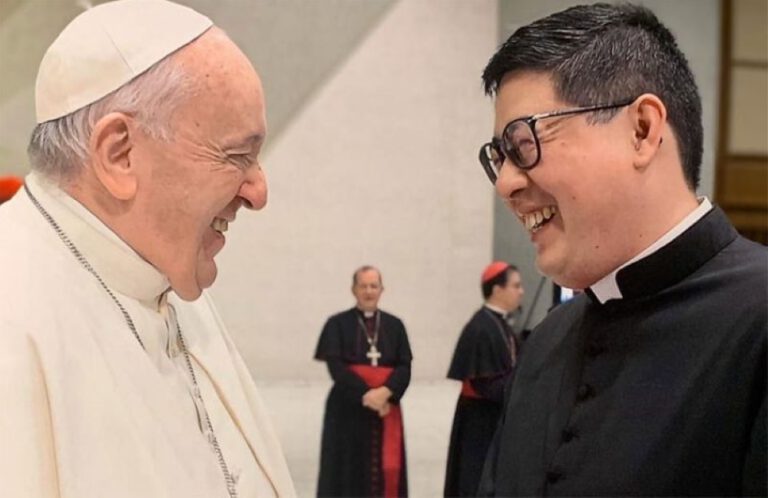
CEBU CITY –– Pope Francis has appointed a 36-year-old priest from Cebu City as a papal chaplain and member of his household at the Vatican.

As “Chaplain to His Holiness,” Fr. Jan Thomas Limchua, a young church diplomat, will carry the title “monsignor.”

Although the designation is given only to bishops, it can also be used to non-bishops who have important roles and duties in the Church.

“While I give thanks to the Almighty and His Holiness for such a privileged honor bestowed upon me, my family, and the Archdiocese of Cebu, I graciously ask for your continued prayers as I, with my limitations, commit myself more deeply to serve the Church with joy, humility, and generosity,” Limchua said in a Facebook post on Tuesday.

According to Msgr. Joseph Tan, spokesperson of the Archdiocese of Cebu, Limchua’s appointment is considered an honor for the Church.

“His (Limchua) appointment is an indication that Pope Francis is pleased with his service to the Pope and the Catholic Church,” he said.

“This is a symbol that he has served in the pleasure of the Holy Father and the entire Church,” he added.

Limchua finished his theological studies at the University of Navarra in Pamplona, Spain, and took his doctorate in Canon Law at the Pontifical Lateran University in Rome.

He was ordained a priest for the Archdiocese of Cebu in 2010.

He underwent his diplomatic formation at the Pontifical Ecclesiastical Academy, the diplomatic school of the Holy See.

In 2014, he entered the Diplomatic Service of the Holy See that served the Apostolic Nunciature in Benin and Togo (West Africa) as well as in Egypt.

Early this year, Limchua was appointed as an official of the Section for the Relations with States of the Holy See by the Vatican’s Secretary of State, His Eminence Pietro Cardinal Parolin.

Limchua is the third Cebuano to enter the diplomatic service.

The others were Archbishop Osvaldo Padilla, Apostolic Nuncio Emeritus to Korea, and his brother Archbishop Francisco Padilla, the Apostolic Nuncio to Guatemala.

LZB

Mockery upon mockery

0

EDITORIAL: Philippine Daily Inquirer / October 20, 2020

Among the very first official acts of the reconstituted House under new Speaker Lord Allan Velasco, hours after he replaced Alan Peter Cayetano, was to proclaim a controversial party list representative. On the first day of the special session called by President Duterte to tackle the 2021 national budget on Oct. 13, Ducielle Cardema was sworn in as representative of the party list group Duterte Youth, which has been hounded by issues of legitimacy since it won one seat in Congress during the 2019 elections.

The Duterte Youth’s many infractions and legal shortcuts have been the subject of protests at the Commission on Elections (Comelec), and its entry into Congress seemed to follow that disgraceful pattern: Cardema, it turned out, was included in the roll call of House members earlier in the day even before she was sworn into office that evening.

Election lawyer Emil Marañon, one of those challenging the validity of the Duterte Youth’s registration, questioned why Cardema assumed the position prior to taking the oath, which he said was a crime called “anticipation of duties of a public office” under the Revised Penal Code. “They breached a basic procedure in administrative law that you take an oath first before assuming office,” said Marañon. The premature move, he pointed out, was just another of a “series of illegalities and unconstitutional acts” that the Duterte Youth has done since it sought to become a party list group. “From the moment they filed their petition to register until now, they cannot seem to follow very simple rules. I don’t understand why they seem to feel that they are always exempted from the rules, all laws, including the taking of the oath.”

Marañon’s observations are not without basis. Since the 2019 elections, the Duterte Youth had been unable to take its seat because of myriad issues it faced at the Comelec. First was the group’s alleged failure to comply with the requirement for publication of its registration as a party list group, and then the sly move of its leader Ronald Cardema to substitute his name as the group’s first nominee, instead of his wife Ducielle, at the last minute—after office hours on a weekend before election day. The Comelec, in a later resolution, called this out as an act “undoubtedly with the clear intent of depriving the electorate the opportunity to be informed and to examine the qualifications and credentials of the nominees.’’

Cardema was not even qualified to represent the youth, defined as aged 25 to 30. The Duterte loyalist was 34 years old, and when challenged later on, amended his qualification to “young professional’’ when it was also found out he did not have a college degree or a profession. He held on to his post as chair of the National Youth Commission up to the very last minute despite the requirement that officials running for public office must resign for the campaign period, and presumptuously branded himself an “incoming congressman’’ even while his nomination was still in limbo.

When the Comelec’s first division finally ruled that Cardema was ineligible to be a youth representative, the public thought the farce was over. But then it cleared the way for another Duterte Youth nominee to be given a seat in Congress. Enter once again Ronald’s wife Ducielle. But wait—as Comelec Commissioner Rowena Guanzon pointed out, hadn’t she withdrawn her nomination?

And yet, wonder of wonders, the Comelec en banc—voting 4-1 (the four all appointees of President Duterte, Guanzon the lone dissenter)—decided to issue a certificate of proclamation to the group, enabling Ducielle to claim the seat.

In her dissenting opinion, Guanzon said the ruling was a “betrayal of the Constitution,’’ pointing out that the certificate of proclamation should only be issued when there is no more legal impediment for the issuance.

With two cases still pending against the group—one seeking the cancellation of its registration for failure to comply with statutory publication requirements, and the other to disqualify Ducielle for failure to comply with election laws—Guanzon’s position was that these are “constitutional and threshold matters’’ that must be settled first before a certificate of proclamation is issued.

The Comelec resolution, made on Sept. 9, was released to the public only on the night of Oct. 13, after Ducielle Cardema officially took her seat as a member of the House. Marañon and his fellow lawyers described the ruling as the “most unconstitutional act ever done by Comelec in its 80-year history.’’

The Duterte Youth’s unbridled ambition, enabled by this administration and the Comelec itself, has led to mockery upon mockery—of party list and election laws, of the people’s right to qualified candidates, of fair play and due process. This naked bastardization cannot be made to stand, and should be challenged all the way to the Supreme Court.#


DFA: 11,146 virus cases among Filipinos abroad with 1 new case

By: Consuelo Marquez – Reporter, Philippine Daily Inquirer, October 17, 2020

MANILA, Philippines — One more Filipino abroad has contracted the coronavirus disease (COVID-19), raising the number of infected Filipinos abroad to 11,146, the Department of Foreign Affairs (DFA) said on Twitter Saturday.

“Today, the DFA received a lone report from Asia and the Pacific, marking the third consecutive day of no new COVID-19 fatality, 1 new confirmed case, and no new recovery among our nationals abroad,” read the tweet.

Of the recorded number, the DFA said 3,151 are active cases while 7,184 have already recovered from the disease.

Meanwhile, the death toll among Filipinos abroad has reached 811. No new fatalities were reported on Saturday, the DFA said.