Home Blog Page 45

Fil-Can youth wins Bronze at WAKO World Kickboxing Championship

0

By Michelle Chermaine Ramos
The Philippine Reporter

FIL-CAN martial artist Tommy Gesell won a bronze medal in the Musical Forms/Weapons division at the 2021 World Association of Kickboxing Organizations (WAKO) Senior and Master World Championship. The tournament took place in Jesolo Lido, Italy from October 15 to October 24, 2021. Gesell first competed as part of Team Canada at the WAKO World Championships in Antalya, Turkey in 2019, where he placed fourth but was asked to perform in front of the Olympics committee at the gala night. This year, he was excited to witness how the musical forms division has grown since he last competed and expressed his admiration for his fellow competitors. “This time it grew times two—times three even. And we had world champion competitors in my division, which was really cool to see. So, I’m pretty proud of where I placed within that batch of competitors, because I know how amazing they all are as well,” he said.

Gesell has a third-degree black belt in Taekwondo and is an instructor at DeSantos Martial Arts School in Toronto where he started his martial arts training at seven. He was born in Canada to his Filipino mother, Leslie, and American father, Tom, who raised him to be a well-rounded individual. In addition to growing up performing as part of the DeSantos Martial Arts demo team in different festivals, sporting events and parades across the city, Gesell also plays the piano and saxophone and has done a few gigs as a child actor/model including a music video for Australian rock band The Getaway Plan, online commercials for Spider-Man and Angry Birds, Walmart flyers and the One of a Kind fashion show at the CNE. He is now a 21-year-old Business Management student and is on the Dean’s List at Ryerson University.

During our phone interview, I could tell that Gesell embodies one of the key character traits of black belt excellence. Despite all his talents, abilities, and achievements, he remains humble. We discussed how he adjusted his routine during the pandemic, the values instilled by traditional martial arts and how training from an early age has shaped his life.

TPR: How did you train for this tournament given that there was a pandemic and there was a time when all the dojos were closed?

TG: When COVID hit, I was more so focused on school going into my first co-op work term. I wasn’t attending the online classes as much as I wish I could have. One of my goals from the last competition when I didn’t place as well as I hoped was to learn more difficult tricks. So, I was teaching myself a couple gymnastics tricks and kicks from home in my backyard using this little gym pad that my neighbor gave me. I was teaching myself through winter and getting my cardio up running every day. Then once the school finally opened over the summer, I was able to start training there and doing private lessons with my coach and that’s when I really ramped up my training.

TPR: Speaking of traditional martial arts compared to the non-traditional styles like MMA that have gained traction over the years in gyms that teach purely fighting or competitive sports techniques without the character-building aspects of traditional practices…there seems to be a debate between camps on opposite ends of the martial arts spectrum. Fans of one end of that spectrum believe that maintaining old school traditions like katas, meditation, character development and other practices don’t apply in modern life. What are your thoughts on that?

TG: I feel like that kind of question is raised in movies like Karate Kid. Or the show Cobra Kai is kind of both sides of the spectrum where you have the traditional routes and Mr. Miyagi, what he’s teaching, and then you have Cobra Kai who’s just all about fighting and being aggressive and being the winner. And I feel like, of course, when you’re on opposite sides of the spectrum for Mr. Miyagi’s side, for example, it’s all traditional. It’s all about building your character. And I feel like that’s more of the journey type of thing. I didn’t compete a lot when I was a kid. It’s only kind of now that I’m just taking that in and utilizing the strengths and stuff that I’ve learned over the years. So, it’s more about the journey for me. For people that like to do MMA and that kind of thing, I feel like they’ll have a stronger background coming into it if they came from a traditional background. They’ll have a strong mindset coming into it. And I feel it’s definitely beneficial to come from that kind of background.

TPR: How has training since childhood impacted your life growing up?

TG: Well, the main thing for me is confidence. Before I started training at DeSantos, I was pretty insecure—as insecure as you could be for a second grader. And being bullied, just not being comfortable with who I am and my abilities and all that. So, I really learned to be comfortable with myself. I learned to be confident in front of others, performing in front of others, competing in front of others, and just striving to be my best. And then those principles of black belt that I’ve learned over the years, I’ve carried on to other aspects of my life. My self-discipline with my schoolwork has led me to be part of my co-op program, and land some of my co-op jobs. I have it on my resume because I feel like it’s valued a lot in other aspects of life, outside of just martial arts. I’ve even had recruiters tell me that one of the things that stood out on my resume was my martial arts training, because they know what having a black belt comes with, as a person. So just the mental standpoint, and where it’s brought me in my life mentally is just something I’m grateful for.

TPR: If given the chance to train or work with any famous martial artist, who would you choose and why.

TG: That’s tough. If you asked me this a couple years ago, I would have said, Jackson Rudolph. He was the main martial artist that I was watching for musical forms. And he’s one of the reasons I love competing in it. But I did get a chance to train with him because he came to my school. He actually helped me with my form when he was there. I guess in terms of celebrity, I’d have to say someone like Jackie Chan, just because I love his movies so much. I grew up watching him, and I just love him as a personality. So, I’d love to get to train with him, see what his workouts are like, ask him about his diet and stuff like that.

TPR: Do you have any plans of maybe getting into stunts and movies?

TG: That would be amazing. I’d love to see myself in the credits for like a Marvel movie. I guess you could say that’d be a huge dream as one of the stunt people in a movie like that. So, I guess I could say that’s one of my goals. Yeah, that’d be awesome.

TPR: So, what are your next plans?

TG: So, inside the dojang, my plans are to continue my training. I kind of took this week to focus on my school and get caught up with everything. But I went back to tournament training yesterday morning, which was really nice. It was great to be back on the floor.
Photo exhibit calls attention to plight of Pinay care workers during COVID-19

0

October 21, 2021

By Veronica Silva Cusi
The Philippine Reporter, CANADA

A photo exhibit that launched this week brings to light some policy implications on the plight of Filipina care workers in the ongoing pandemic.

Almost 200 photos are on display at the A Space Gallery in Richmond Hill, Ont., original photos taken by care workers who participated in the study conducted last year.

Using photo voices and participatory research, the project documents the lived experiences of 78 Filipina caregivers and personal support workers from across Canada. The photos were results of a kuwentuhan (talk-story) series of webinars where care workers were given the free hand to cover topics that concern them.

Ethel Tungohan, PhD, York University Associate Professor and project collaborator, told The Philippine Reporter that photo exhibit is one way to disseminate the findings and policy recommendations drawn from the study.

Through a series of webinars and photos taken by the care workers themselves, the study brings to light the vulnerabilities of care workers who have not been as widely talked about in the pandemic, said Tungohan.

She said that in discussions with collaborators in the project, including the Gabriela Ontario women’s group and Migrants Resource Centre Canada (MRCC), a non-profit services institution, they noted that caregivers, personal support workers, licensed practical nurses are not as widely talked about compared to other members in the community affected by COVID-19, such as the medical doctors and the patients.

“We needed to show … that care workers are affected [by the pandemic],” said Tungohan, who is York University’s Canada Research Chair in Canadian Migration Policy, Impacts and Activism (Tier 2), in a phone interview with The Philippine Reporter.

“[One] main finding [of the study] is that Filipina care workers have become more vulnerable during COVID-19. The type of care work that they do exposes the women to more experiences of vulnerability,” she said, adding that this is true especially for care workers who are live-in caregivers and those without citizenship status.

“We can see the intersection between immigration, labour, and health — all of which create more vulnerabilities for all the women involved,” she added.

The project documents the problems faced by care worker “tita’s” and “ate’s” – endearing and respectful terms Filipinos call Pinays – in the workplace using photography via smartphones.

Not only do the photos document the challenges they face during the pandemic, but they also show the resilience of Filipina care workers in finding ways to support themselves and their communities, and to fight back to attain a semblance of peace, explained Tungohan.

The online meetings also provided a sense of community gathering for the care workers, some of whom felt isolated.

Among the biggest challenges shared through the photos, which were discussed in the online meetings, were:

• The struggles of getting permanent residency status during COVID-19 when some services either slowed down or came to a halt to avoid the spread of the virus,

• No sufficient personal protective equipment,

• Having to drive from household to household but prevented from using the bathrooms in their workplaces, yet with most public spaces closed, and

• The risk of exposing their families to the virus after their work shifts.

“Every day, we stake our lives to work,” was a common comment by tita’s and ate’s shared, said Tungohan.

Other findings of the study include:

• Burnout among care workers,

• The feeling of lack of mental health support, and

• The feeling that many of their experiences were from long-held issues not resolved, such as precariousness of work that’s prone to abuse,

The project includes policy recommendations for action. Among these are:

• Equitable immigration policy changes,

• Protection for migrant workers in their workplaces,

• Funding supports to bodies that are looking after the migrant workers,

• Mental health supports,

• Systemic reforms in long-term care facilities to ensure fair compensation and a focus on public funding, and

• Continuous research on assessing working conditions to help in policy making.

“By visualizing the lived realities of Filipina care workers, we aim to make a meaningful impact on Canadian labour and immigration policies that affect them the most. As part of this project, we invite you to review, sign, and share our petition to call for rights and protection for Filipina care workers in Canada,” the exhibit invite reads.

The care workers themselves had a hand in deciding which photos are included in the exhibit, said Tungohan.

The exhibit is titled “Matatag: Filipina Care workers During COVID-19” and runs up to January 2022.

The study was funded by Social Sciences and Humanities Research Council.

Bong Go ‘controlling’ Duterte and is ‘one of country’s problems,’ says red-tagger Parlade

0

Nov 15, 2021 Jairo Bolledo

Manila, Philippines

(3rd UPDATE) The retired general who is running for president says this is common knowledge among the officer corps in the armed forces

The mouthpiece of government’s fierce anti-communist campaign described presidential aide-turned-senator Bong Go as one of the country’s problems who was “controlling” the decisions of President Rodrigo Duterte.

Retired Lieutenant General Antonio Parlade Jr, recently resigned deputy director general of the National Security Council, filed on Monday, November 15, his candidacy for president, a post that Go, – at least as of 3:30 pm Monday – is also aspiring for.

Asked why he was running against a fellow Duterte administration official, Parlade told reporters: “I cannot align with Senator Bong Go. I’m sorry but isa siya, kasama siya sa mga problema ng bayan natin (he’s among the problems of our country).”  

Parlade added, “I don’t want to elaborate on that but that’s very clear. You ask your people, you ask your constituents, you ask people in the government, you ask the AFP (Armed Forces of the Philippines) why.”  

Part of the problem is that Go was the one controlling the decisions made by Duterte, he said. “Wala akong beef with Senator Bong Go. I just don’t like the way he does things including controlling the decisions of the President,” This is common knowledge among officers and soldiers in the military and the Philippine Army, and even Defense Secretary Delfin Lorenzana, according to Parlade.

“You ask the AFP, you ask the Philippine Army, you ask the Secretary of [the] National Defense,” the longtime spokesperson of the National Task Force to End Local Communist Armed Conflict (NTF-ELCAC) said.

Parlade, former commander of the military’s Southern Luzon Command (Solcom), is seeking the presidency for the 2022 elections – a move that surprised many, as some sectors thought he was gunning for a senatorial post. He substituted Antonio Valdez of the Katipunan ng Demokratikong Pilipino, who earlier filed for president as an independent candidate. 

Only a few hours after Parlade’s remarks, both the AFP and the Army issued separate statements. 

“The AFP is and will remain non-partisan. Our mandate is clear. Our task is to ensure the peace and security of the elections and allow the will of the Filipino people to manifest and prevail,” AFP spokesperson Colonel Ramon Zagala said.

“We refrain from indulging our personnel to participate in any political activity and actions of our political aspirants and candidates in order for us to assist in the conduct of a just, safe, peaceful, and orderly election,” Army spokesperson Colonel Xerxes Trinidad said. 

Go’s denial

Go dismissed Parlade’s allegations, insisting that he was merely helping Duterte decide on the welfare of soldiers, such as increasing their benefits. “Tanungin natin ang mga kasama nya sa AFP, PNP, etc. Alam nila kung paano ako tumulong na maipatupad ang desisyon na ito ni Pangulong Duterte para sa kapakanan ng mga sundalo, pulis, bumbero at iba pa.”

Go stressed nobody can control Duterte. But he said he did not want to engage in a word war with Parlade as he respects the general, adding it was he who recommended him to be deputy director general of the National Security Council, which carried the rank of undersecretary. 

Lorenzana also described Parlade’s claim as “baseless.” In a statement, he said: “In the years I have known the President, he has always been his own man. The President stands by his own decisions, has always been firm in his directives to us, who are working for him, and is not as easily swayed or influenced by others as purported by the general.”

The defense chief also downplayed rumors of “brewing trouble or discontent” in the military.

Parlade is one of the most dominant voices in Duterte’s anti-insurgency efforts, constantly red-tagging activists, journalists, lawyers, and students. Despite these efforts, Parlade never got to the top post in the army or armed forces.

In 2019, Parlade was among the contenders to become the Army commanding general after serving as the AFP deputy chief-of-staff for Civil-Military Operations. However, then-Solcom chief General Gilbert Gapay was tapped by Duterte to head the 100,000 strong Army in 2019, and eventually the AFP.

Parlade’s last stint in the military is as commanding general of Solcom. Before he retired in July, Parlade resigned from the NTF-ELCAC. However, only a few months after his resignation and retirement, he was appointed by Duterte as deputy director general of the National Security Council.

 Meanwhile, President Duterte also addressed the issue in his talk to the people address late night Monday, saying Go “does not control me.”

“He does not control anybody. He does not control me. He is here to do his duty, na may matanungan tayo agad (so we can readily ask someone),” Duterte said of Go, referring to his longtime aide’s position as chairman of the Senate’s health committee.    – Rappler.com 

In Davao Region, Dutertes’ city remains nexus of drug trade

0

Nov 14, 2021 Inday Espina-Varona

MANILA, Philippines

PDEA’s raid on a beach party on November 6 also exposes the ties between one of Davao City Mayor Sara Duterte’s closest aides and high-value drug personalities

President Rodrigo Duterte uprooted his bloody Davao City war against suspected drug users, pushers, and big dealers in 2016, ordering enforcers to hunt down targets in the national capital and almost all major urban centers of the Philippines.

Around 6,000 have died in police operations since Duterte assumed the presidency, while human rights groups estimate up to 30,000 deaths to include drug suspects killed by vigilantes.

Yet with the end of Duterte’s term in sight, a Philippine Drug Enforcement Agency (PDEA) buy-bust operation on November 6 at a beach party in Barangay Pindasan, Mabini town, Davao de Oro, shows that his home city remains a nexus of the illegal drug trade in southern Philippines.

The raid also exposed the ties between one of Davao City Mayor Sara Duterte’s closest aides and high-value drug personalities, including a builder and pharmaceutical company owner billed as a key player in the illegal drug trade.

Many of the 17 individuals arrested at the Sea Eagle resort in Barangay Pindasan were Davao City residents, entrepreneurs, and young professionals, according to PDEA Davao Region Director Aileen Lovitos.

The PDEA bannered the raid as an achievement, a blow to a network of party-drug dealers and a big step in saving their “victims.”

Lovitos said that the main target of the November 6 operation, 33-year-old Davao City resident Revsan Ethelbert Elizalde, is a known source of party drugs across Southern Mindanao and other regions.

But more than Elizalde, the focus of news stories was Jefry Tupas, Mayor Duterte’s chief information officer at the time of the PDEA operation. 

It was Tupas’ presence at the by-invitation-only party – a two-hour drive from Davao City – that triggered a social media explosion that weekend of the raid. Photos showing Tupas at Elizalde’s birthday party swirled on Facebook and were passed around in chat groups. In at least one photo, she is shown together with Elizalde.

Sara Duterte said she fired Tupas the day after the raid. But she has not answered the question of why Tupas was in the company of the government’s “high-value” drug targets. The mayor’s information officer was close enough to Elizalde to get an invitation to his exclusive party. 

Lovitos had described the targets as hard to penetrate because of their “elite and discreet” nature. 

Tupas claimed she left the party an hour before the raid. But some of those arrested disputed this, telling the Davao-based Newsline Philippines that she was there, and that her name was in fact the first one mentioned by operatives after they had gathered all the partygoers in one area.

But law enforcers eventually separated Tupas from other partygoers after she introduced herself as Sara Duterte’s aide, her detained companions told Newsline. 

They also identified Tupas as the real owner of the items seized by the raiding team.

Who is Elizalde?

Tupas acknowledged that Elizalde was a friend in an interview with Rappler. She described him as “a builder; in construction.”

Elizalde has locked his Instagram and Facebook accounts.

His Twitter account is still up but only shows sporadic posts since he joined in June 2012. His last publicly visible post was in October 2013. From Twitter photos and those taken at his party, Elizalde has bulked up and taken on a more sophisticated look since 2012.

Elizalde isn’t just a builder. His Twitter account says he is a registered nurse and professional healthcare representative. 

However, he has since moved on from the pharmaceutical firm he identifies on the Twitter account and another that he listed in his 2016 application for a medical representative license from the Professional Regulatory Commission Board of Pharmacy.

Elizalde is now a licensed owner of his own pharma company.

Elizalde’s Instagram account, which is locked and only available to select connections, has “Prism Med/Prism Builders Inc.” right under his name and photo.

The Food and Drug Administration (FDA) lists him as a drug wholesaler and owner of PRISMMED PHARMACEUTICAL TRADING, with license number LTO-3000006015249. 

The company address is listed as Door 6 San Building, Bajada, Barangay Wilfredo C. Aquino, Agdao District, Davao City, Davao del Sur. The FDA issued Elizalde’s license for this company only on March 8, 2020, and it will expire on May 8, 2022.

The Newsline Philippines report on November 10 said the arrested targets claimed doctors were among the other partygoers allowed to leave by PDEA agents. That would fit in with Elizalde’s public profile. 

The PDEA’s press release on the raid said Elizalde is a resident of Catalunan Pequeño, Davao City. There is a June 11, 2021, letter to the Davao Light & Aboitiz Company asking for a permanent connection to his residence in Ciudad Verde Subdivision, a still relatively open new development in Ma-a, Davao City. 

Elizalde’s now deactivated Facebook account still appears on search engines, mentioning Prism Med Pharmaceutical. The same account also pops up as having been on Facebook’s Swahili language service. His construction firm has a now-deleted account on Facebook’s German language service.

Incidentally, Lovitos said party drugs in Southern Mindanao have been traced to Germany.

The PDEA regional chief said months of monitoring and surveillance of Elizalde stemmed from a February 2021 interdiction of a package of drugs from two Davao City residents. 

That operation led to a pair of cousins detained and charged after a controlled-delivery sting in Bacaca, Davao City. They were caught receiving a package of the party drug ecstasy, some tablets of LSD (lysergic acid diethylamide), and a packet of marijuana, with a combined value of just a little less than P1 million.

The drugs from the February raid, Lovitos said, came as mail packets from Germany. There is hardly any manufacturing of party drugs in the Philippines, according to the United Nations Office on Drugs and Crime (UNODC). These are mostly imported from Europe. 

Cracking open that case led the PDEA to Elizalde.

“He (Elizalde) has been our target for quite some time. Even in other regions, talagang matunog ang pangalan (his name is known); he has been the one that’s peddling party drugs in our area and neighboring regions,” Lovitos said.

She described the other arrested individuals as “young professionals, some of them in business enterprises and some of them privately employed.” 

“Sila talaga ang circle ng ating subject of operations,” Lovitos stressed. (They really are part of the circle of our subject of operations.)

This only makes her silence on Tupas, a name she could hardly utter, an intriguing puzzle to Davao residents and critics of the Duterte family.

Striking gold in Davao

Tupas and Elizalde share some common traits. They are non-Davao natives who have made it big in Mindanao’s premier city and international gateway.

Sara Duterte’s aide comes from a farming family. She was born in Kapalong, Davao del Norte, but grew up in Kabacan, Cotabato, amid rice farms. She graduated from the University of Southern Mindanao, with a degree in Development Communication.

Elizalde grew up in Tandag City, Surigao del Sur. Contrary to some news reports, his family was and remains middle-class. He attended the Jacinto Elpa National High School in Tandag and grew up in very different surroundings from the world of the famous clan that has vast holdings in sugar, shipping, insurance, mining, and media operations.

Tupas and Elizalde were considered bright pupils. Tupas, in an interview with the Daily Tribune, said she grew up interested in the arts. 

“I was into music. I was a natural when it came to dancing. I also developed my reading skills. I was in grade two when a grade five teacher would bring me to her class to demonstrate how to read to her pupils,” Tupas recalled.

A former high school classmate of Elizalde said he was in the star class, and pretty near the top of that class. 

Both were prone to slack off from studies but were bright enough to get high grades.

Elizalde’s classmate said they would sometimes cut classes, but that never affected his grades.

Tupas said in college, her love of reading and writing allowed her to get 1.5 or 1.25 grades even when she did not study the way teachers wanted her to.

Elizalde’s friend described a mild-mannered young man. Even in her younger years, Tupas was known for her feisty personality.

Elizalde’s classmate said they parted ways after high school but recalled vague news over the years of a stint as a flight attendant and then his work as a medical representative.

He remembered Elizalde as being low-key but always having an entrepreneurial streak.

“There was nothing back then that could foretell this,” Elizalde’s classmate said in Filipino. 

He recalled seeing Elizalde posting some luxury items on his Facebook page. “So you could tell may negosyo siya, maganda ang kita (he had a business and was earning well), but there was nothing exceptionally lavish.”

One of Tupas’ former friends said it was Jed Wong, her boyfriend, who introduced her to Elizalde.

In her interview with Tribune, Tupas said Wong worked in the business process outsourcing (BPO) industry. 

At least three of the arrested persons – all identified as “high-value” targets – have important positions in the city’s thriving BPO industry, jobs where they exercise authority over many young professionals.

In your backyard

Lovitos harped a few times on how party drug peddlers prey on “young professionals,” and called some of those arrested “victims” of drugs.

But when asked if her office had coordinated with the Davao City police, she said law enforcement agencies keep projects to themselves and coordinate only when they are about to launch an operation.

On November 9, Davao City police chief Colonel Kirby John Kraft told Rappler he knew nothing about any illegal activities involving Elizalde or Tupas.

Kraft claimed that the police in Davao City were intolerant of illegal drug activities, making drug possession and sale in the city become high-risk undertakings.

“Mahigpit kami sa Davao. Kaya ang sobrang mahal ng shabu dito,” Kraft told Rappler. (We’re very strict in Davao. That’s why the price of shabu here is very high.)

This is the same line that then-mayor Rodrigo Duterte spouted years back, saying he told pushers and users to get out of his city, or else. 

It is the same argument raised by Duterte family supporters, who note that the arrest, done outside of Davao City, is proof that their city remains safe.

Kraft and Lovitos skirt around the most important aspects of this scandal. 

The February arrests show that Davao City remains an important entry point of illegal drugs in Mindanao. The November 6 operation also shows both alleged traders and users as residents of the city. The latest operation also highlights how close raid personalities have come to the seat of power. – Rappler.com

Europe becomes COVID-19’s epicentre again, some countries look at fresh curbs

0

By Josephine Mason and Emilio Parodi, Reuters.com

  • Europe accounts for half of latest infections and deaths
  • Outbreaks stir fears over winter months, economic impact
  • Various nations consider unpopular curbs again
  • Vaccines not the silver bullet, experts warn

LONDON/MILAN, Nov 12 (Reuters) – Europe has become the epicentre of the pandemic again, prompting some governments to consider re-imposing unpopular lockdowns in the run-up to Christmas and stirring debate over whether vaccines alone are enough to tame COVID-19.

Europe accounts for more than half of the average 7-day infections globally and about half of latest deaths, according to a Reuters tally, the highest levels since April last year when the virus was at its initial peak in Italy.

Governments and companies are worried the prolonged pandemic will derail a fragile economic recovery. Countries including the Netherlands, Germany, Austria and the Czech Republic are taking or planning measures to curb the spread.

Caretaker Dutch Prime Minister Mark Rutte announced a three-week partial lockdown from Saturday, Western Europe’s first since the summer. “The virus is everywhere and needs to be combated everywhere,” Rutte said in an address on Friday evening.

The fresh concerns over what British Prime Minister Boris Johnson described on Friday as “storm clouds” over Europe come as successful inoculation campaigns have plateaued ahead of the winter months and flu season.

About 65% of the population of the European Economic Area (EEA) – which includes the European Union, Iceland, Liechtenstein and Norway – have received two doses, according to EU data, but the pace has slowed in recent months.

Take-up in southern European countries is around 80%, but hesitancy has hampered rollout in central and eastern Europe and Russia, leading to outbreaks that could overwhelm healthcare.

Germany, France and the Netherlands are also experiencing a surge in infections, showing the challenge even for governments with high acceptance rates.

To be sure, hospitalisations and deaths are much lower than a year ago and big variations by country in use of vaccines and boosters as well as measures like social distancing make it hard to draw conclusions for the whole region.

‘DON’T TAKE EYE OFF THE BALL’

But a combination of low vaccine take-up in some parts, waning immunity among those inoculated early and complacency about masks and distancing as governments relaxed curbs over the summer are likely to blame, virologists and public health experts told Reuters.

“If there’s one thing to learn from this it’s not to take your eye off the ball,” said Lawrence Young, a virologist at Warwick Medical School in the UK.

The World Health Organization’s report for the week to Nov. 7 showed that Europe, including Russia, was the only region to record a rise in cases, up 7%, while other areas reported declines or stable trends.

Similarly, it reported a 10% increase in deaths, while other regions reported declines.

The measures coming into force in the Netherlands include restaurants and shops ordered to close early and spectators barred from sporting events.

Germany will reintroduce free COVID-19 tests from Saturday, acting health minister Jens Spahn said on Friday. A draft law in Germany would allow for measures such as compulsory face masks and social distancing in public spaces to continue to be enforced until next March.

Austria’s government is likely to decide on Sunday to impose a lockdown on people who are not vaccinated, Chancellor Alexander Schallenberg said on Friday.

BOOSTER SHOTS

Most EU countries are deploying extra shots to the elderly and those with weakened immune systems, but expanding vaccination to more of the population should be a priority to avoid steps like lockdown, scientists said.

“The real urgency is to widen the pool of vaccinated people as much as possible,” said Carlo Federico Perno, head of microbiology and immunology diagnostics at Rome’s Bambino Gesù Hospital.

The EU’s medicines regulator is also evaluating the use of Pfizer and BioNTech’s vaccine in 5 to 11-year-olds.

Norway will offer a third COVID-19 vaccine dose to everyone aged 18 and older and will give municipalities the option of using digital “corona passes”, the government said on Friday. Norway has so far given a third dose only to those aged 65 and older.

From Dec. 1, Italy will also offer the third dose to people over 40.

“This (outbreak) will probably make the EU look at booster doses and say ‘we do need them pronto’,” said Michael Head, senior research fellow in global health at the University of Southampton.

CENTRAL, EASTERN EUROPE

Still struggling to ramp up shots, central and eastern European governments have had to take drastic action.

Latvia, one of the least vaccinated countries in the EU, imposed a four-week lockdown in mid-October. Its parliament voted on Friday to ban lawmakers who refuse vaccination from voting on legislature and participating in discussions.

The Czech Republic, Slovakia and Russia have also tightened restrictions.

Vaccines alone are not the silver bullet to defeat the pandemic in the long term, virologists say.

Several pointed to Israel as an example of good practice: in addition to inoculations, it has reinforced mask wearing and introduced vaccine passports after cases spiked a few months ago.

Measures such as spacing, masks and vaccine mandates for indoor venues are essential, said Antonella Viola, professor of immunology at Italy’s University of Padua.Reporting by Josephine Mason in London and Emilio Parodi in Milan; Additional reporting by Maria Sheahan in Berlin; Editing by Frances Kerry and Jon Boyle

Drug blowout in Davao

0

Philippine Daily Inquirer / November 12, 2021

Nothing drives home the dismal reality of the Duterte administration’s failed “war on drugs”—if that point still needs reiterating at this time, over five cautionary years later—than the raid last Saturday by agents of the Philippine Drug Enforcement Agency (PDEA) on a beach party in Davao de Oro, which yielded some P1.5 million worth of party drugs and other narcotics.

The drug-fueled blowout happened right in the home province and bailiwick of President Duterte. And that party, which led to the arrest of 17 individuals, had a local VIP in attendance: Davao City information officer Jefry Tupas, said to be one of the closest aides of Davao City Mayor Sara Duterte, the President’s daughter. Once news of the drug bust broke out, Tupas (who goes by the female pronoun) was immediately fired from her job. Sara Duterte’s terse statement on the incident—released on Nov. 9, or three days after the Nov. 6 raid—had nothing to say about the suspected involvement of her aide in the explosive issue of drugs, and neither was the mayor apparently inclined to know: “The details of the raid are known only to the PDEA officers in Davao de Oro and Ms. Tupas,” the statement said.

Tupas admitted to have been at the party with her boyfriend, but her official excuse was that she left the event an hour before the raid. Several of those arrested, however, told reporters a different story: Tupas was in fact among those caught and rounded up, and when the PDEA agents started identifying their targets, Tupas immediately disclosed that she was “a staff of Inday Sara.” Later, the same detainees recalled, Tupas and several others were released.

What could have emboldened the partygoers to flout the law under the noses of authorities in the Dutertes’ own backyard? Could the presence of Tupas among them explain the brazen attitude? And did Tupas in turn assume that she and her cohorts would get away with such activities given her ties to the powers that be? On the other hand, with all its clout, control, connections, and resources, how was it possible for the administration of Mayor Sara not to have any inkling about the suspect company kept by one of its most powerful officials?

Initially mum about the incident, the PDEA has now announced an investigation into the incident and Tupas’ involvement. Whatever the outcome of the probe, the incident is another blow to what little credibility is left of the administration’s vaunted drug war.

The drug problem is “swallowing” the country, Mr. Duterte himself admitted at a campaign rally in 2019. “You can read it every day … There are billions worth of drugs. Before, it was only thousands. Drugs, I cannot control, son of a b***h, even if I ordered the deaths of these idiots,” he said, referring to the thousands of drug suspects killed in police raids.

In June last year, the President described the police haul of 756 kilos of methamphetamine from another drug operation as proof that the Philippines has become a transshipment point for narcotics.

Then again, the program’s failure may be partly self-inflicted: The President, who has styled himself as the unforgiving nemesis of anything related to drugs, is conveniently forgiving when it comes to the drug-related scandals of allies and friends.

There’s former Customs commissioner Nicanor Faeldon, who escaped prosecution in the sensational P6.4 billion “shabu” shipment case in 2017. In the end, only the warehouse caretaker was charged, arrested, and detained for two years until the case was dismissed. Faeldon, meanwhile, was made the deputy administrator of the Office of Civil Defense.

Then there’s Mr. Duterte’s former Davao police chief Isidro Lapeña, who was relieved as Customs commissioner for the smuggling of an even bigger drug haul—P11 billion worth of shabu hidden in four magnetic lifters in a Cavite warehouse in 2018. Excusing his incompetence as more of naivete (“nalusutan”), the President promoted Lapeña to a Cabinet post as Secretary of the Technical Education and Skills Development Authority.

The administration’s glaringly uneven and differing standards in its antidrug campaign have only ended up undermining the program. The 2018 report of Eduardo Acierto, for instance, was ignored by the police and Malacañang despite its grave content: The former deputy director of the Philippine National Police’s Drug Enforcement Group revealed the possible links to illegal drugs of “presidential economic adviser” Michael Yang.

Acierto has since resurfaced and expressed willingness to testify against Yang, who has been implicated as the financier in the Pharmally controversy. Will the allegation get proper attention this time? Not likely, and for a depressingly familiar reason: Mr. Duterte is staunchly standing by his friend Yang, defending him to high heaven while excoriating the senators digging into the Pharmally mess.

Buhay Marino ngayon

Ni Beteng Peney

Maayong aga kalibutan,

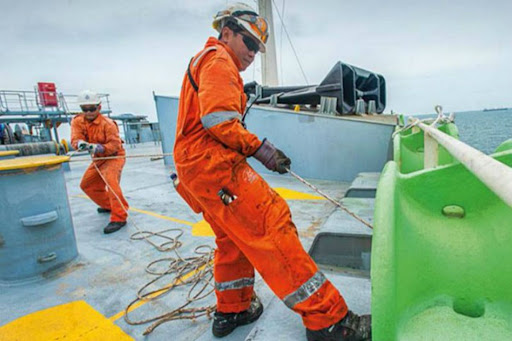
Laging tinatanong sa akin ng mga tropa lalo sa mga baguhan kung anu ang deperensya sa trabaho at kita ng mga “tangkero” (oil/chem tanker) at “alikabok” (gen. cargo/ bulk/ log ship), sagut ko.

MALAKI ANG KINAIBA NILA

Kung sa oil/chem mas may delikado sa kalusugan ang crew at may mahabang gamutan kung oras ka tamaan ng epekto ng kemikal, maraming training, istrikto ang patakaran, laging may vetting o inspection dito maraming preparasyon etc., etc.

Sa kita, karamihan sa kanila ay nakafix o sarado ang kontrata maliban lang sa konsiderasyon na OT (overtime -Ed.) ibinibigay may extra man pero di madalas. Meron ding pushing o pagtutulak ng kargamento sa loob ng tangke tulad ng produktong palm oil, molasses at iba pang malagkit na kargamento. Pero ito napakainit na trabaho dahil may init ang tangke na di bababa sa 50-60 degrees Centrigrade habang kayo ay nasa ibaba. Tawag namin dito laglagan ng bayag time. Kung tumapat ka naman sa mga kargamentong mataas na gradong kemikal masakit din sa baga. Sa paghuhugas ng tangke o tank cleaning may ilang kompanya o principal na nagbibigay ng bonus sa paglilinis ng tangke. Meron din na principal na “thank you” lang ang paghuhugas ng mga tangke.

Di lahat ika’ nga pero yung presenta ng delikado sa kalusugan ay nandun lagi. Sa mga oil/chem na alam ko back to back extra voyage nila ng mga “timonil” (driver ng bapor) ay umaabut ng 1,800 -2,500 US$(good principal/owner/operator ito).

Sa mga alikabok naman, kung puro bulk lang ang kargamento, tanging hatch cleaning at OT lamang ang extrang kita dito. Ang timonil dito ay karaniwan na ang kita ay nasa 1,450-1,800 US$ (good principal/owner/operator ito).

Yun lang hindi delikado at walang kemikal na kargamento, fresh lagi ang bagá may pa bbq party pa madalas syempre may mamam. Kung mapalinya ka sa general cargo, may ginhawa ang bulsa ika’ nga. Dahil madalas ang operation dito ng mga crew sa deck o “cobierta” ay “stevedoring” kung saan sila ang kumakarga at nagdidiskarga ng mga kargamento. Yun ay may kaakibat na kontrata sa pagitan nila at nang charterer.

May tawag din silang “movements of cargo” o paglilipat ng kargamento sa kabilang bodega o itabi sa Bodega para sa panibagong kargamentong ikakarga.

Karaniwang kita ng timonil dito kung back to back votage silang mangangamay ay may kita na sa pagitan ng 1,700-3,200 US$ (good principal/owner/operator ito).

Kung sa troso o log ship na bapor, lashing (pagtatali) at unlashing o pagkalas ng tali, ang kita o extra dito. May OT din, hatch cleaning, lashing wire, bulldog/wire grips kung saan may bumibili nito sa pierto na bibibilang na scrap pagkatapos idiskarga ang troso. Extra kita din ng mga crew ito. Minsan may mga insentibo ring binibigay kung makakahuli sila ng “daga” (mababa bigayan) at “ahas” (mataas bigayan), ang kita ng mga timonil dito sa pagitan ng 1,400-2,500 US$ (good principal/owner/operator ito). Yun lang “maresgo” ang trabaho dito, “pusoyan” (walang tulugan) araw araw kang makipagpatintero sa troso habang naglalayag. Araw-araw din ang “pagtitisa” o paghihigpit sa mga kableng nakatali o kadena. Walang swerte kung maipit ka pa sa pagitan ng troso.

Lahat ng mga yun ay subok ko na. Ilan sa mga tropa ko ang namatay na nakita ko, naaksidente o nalason.. lahat din ng mga iyun ay may delikado at panganib araw araw na nakaabang anu mang klase ng bapor. Sabi nga’ sugal ang lahat pati buhay para sa pamilya at kinabukasan.

Sa akin, kung ako lang ang masusunod, sa mas mababa ako lalagay na delikado at panganib na sitwasyon sa bapor.

Yun lang midyo kaunti lang ang kita ika’ nga, at hindi ka makahindi kung anu mang bapor na ibinibigay sayo ng manning sa oras na sakay ang kailangan mo, dahil sa tawag ng pangangailangan para sa pamilya. Tanggap na ang ganitong kalakaran na laging nakasugal ang buhay at kinabukasan para sa minamahal na pamilya.

Mahirap ang buhay ng marinero talaga

Dikta din ng mga lahat nang ito ng kahirapan at kakulangan ng trabaho sa Pilipinas. Ganun din ang kawalan ng siguradong trabaho at sa tumataas na bilihin sa merkado. Nandyan ang malupit na kontrakwalisasyon, malawakang tanggalan sa trabaho. Ilan lang yan sa mga bagay na nagtutulak sa bawat Pilipino na lumabas ng bansa, makipagsugal ng kapalaran dahil sa kahirapan. Ang lahat ng mga ito ay malinaw na dikta ng neoliberalismo  kapitalismo at pabayang estado. Sa kabilang banda, kapit tuko ang mga ganid na pulitikong nagtatamasa sa bulok at nakakasulasok na sistemang burukrata kapitalismo.

Pero taas noo pa rin, dahil natatangi sa buong mundo ang kalidad at talentong marino ng mga PILIPINO.

Ganyan ang marinong Pilipino, hindi takot, hindi rin pabaya at higit sa lahat may taglay na galing.

Mabuhay ang Pilipinong marino.

“Serve the people”

Fact check: Did Pope Francis publicly support Bongbong Marcos’ presidential bid?

0

Philstar.com November 11, 2021 |

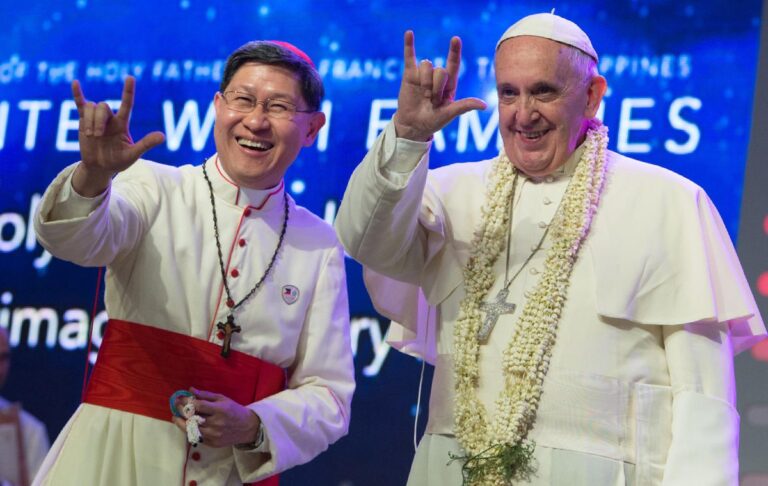
MANILA, Philippines — A graphic circulating social media claims that Pope Francis referred to Bongbong Marcos as “an intelligent leader” and that the Pope “hopes” Marcos wins the presidency in 2022. 

CLAIM: On November 9, the first graphic was published claiming Pope Francis has publicly backed the presidential bid of Bongbong Marcos, the son of the former dictator, which media outlets refuse to report. 

RATING: This is fake

FACTS:

What the full posts said 

One post shares a graphic supposedly quoting Pope Francis as saying: “BBM is an intelligent leader. I hope he win in 2022 (sic.)”

“This isn’t being reported by the yellow media. If they’re jealous, their eyes are closed. Lugaw, any last words?” the caption reads in Filipino.  Philstar.com screengrab as of Nov. 10, 6:19 p.m.

What they left out

The Pope has never released such a statement. 

The original graphic by ABS-CBN News includes a quote from the Pope saying: “When we are tempted to judge others badly, we must rather reflect on our own weaknesses.”

“It is good to ask ourselves what drives us to correct a brother or a sister, and if we are not in some way co-responsible for their mistake,” he adds. 

Essential context 

The Catholic Church in the Philippines has had a rocky history with the Marcos family.

Pope John Paul II famously visited the country in February 1981, a time when human rights violations at the hands of state forces were well-documented, and spoke out against the dictatorship of former president Ferdinand Marcos in the late strongman’s very presence.

In a speech in Manila, the Pope at the time urged the government to uphold human rights as he was quoted as saying:

“Even in exceptional situations that may at times arise, one can never justify any violation of the fundamental dignity of the human person or of the basic rights that safeguard this dignity. Legitimate concern for the security of a nation, as demanded by the common good, could lead to the temptation of subjugating to the State the human being and his or her dignity and rights. Any apparent conflict between the exigencies of security and of the citizens’ basic rights must be resolved according to the fundamental principle—upheld always by the Church—that social organization exists only fοr the service of man and for the protection of his dignity, and that it cannot claim to serve the common good when human rights are not safeguarded.”

Marcos lifted martial law on January 17, 1981, nearly a month before the Pope’s visit, by way of Proclamation 2045. This was, according to Albert Celoza’s Ferdinand Marcos and the Philippines: The Political Economy of Authoritarianism, meant to “minimize papal criticism of his regime.”

The Pope also refused to stay at the Coconut Palace, which the Marcoses had built specifically for him. 

Why does this matter?

The same post, published on a group called “POGINGSANDRO next generation MARCOS Pa rin,” has been steadily circulating on social media the past few days. 

As of Wednesday night, the post has garnered over 4,800 likes and 2,300 shares on Facebook. 

CrowdTangle, a social media monitoring tool, counts over 400 posts mentioning Marcos and the Pope together in the past week, which have garnered a collective 41,900 interactions. 

Franco Luna with a report from Kristine Joy Patag 

This story is part of the Philippine Fact-check Incubator, an Internews initiative to build the fact-checking capacity of news organizations in the Philippinesand encourage participation in global fact-checking efforts.