Home Blog Page 64

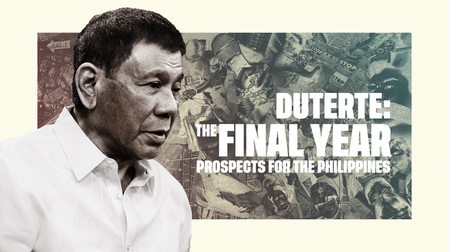
Unfulfilled promises loom over Duterte’s final SONA

0

Jul 25, 2021, Pia Ranada

MANILA, Philippines

In his last year in power, President Duterte plays catch-up on his promises, struggles to lift the country from the pandemic, and faces a possible International Criminal Court probe into his drug war

Like monsoon clouds bringing rain to most parts of the country, President Rodrigo Duterte’s string of unfulfilled promises loom over his final State of the Nation Address (SONA).

To be delivered at 4 pm on Monday, July 26, at the Batasang Pambansa, it is the second SONA to take place amid a raging COVID-19 pandemic.

Only four days before the much-awaited speech, health officials confirmed the local transmission of the feared Delta variant of the coronavirus, a development that threatens to stall already sluggish economic recovery.

How the Duterte administration will shepherd the country out of the pandemic is the biggest question to hound his last year in power and will be a major topic in his Monday speech.

Budget Secretary Wendel Avisado has told Rappler that funding for vaccine booster shots and the creation of a virology institute or a center for disease control will be budget priorities in 2022.

But Duterte’s performance will also be measured by how far he has come in fulfilling major promises from 2016, when he assumed the presidency. One such promise, an “unrelenting” drug war, haunts his last year in power and beyond with the International Criminal Court set to decide on a formal investigation in the coming months.

Riding a global wave of populist leaders, Duterte was elected into office after presenting himself as a swashbuckling crime-buster who would lift the downtrodden masses from the quagmire created by “oligarchs” and elites from Manila. He promised to nix drug crimes, end unfair labor practices, purge corruption, and bring peace and order. (READ: Duterte’s legacy, in his own words)

These tall orders, many unfulfilled, cast a shadow over Duterte’s Monday speech and the countdown to his last year as President. 

Drug war

Duterte miserably failed in his vow to suppress drugs and criminality within “three to six months” of his first year as president. He admitted this himself, claiming he did not foresee corruption within police ranks that made the promise unrealistic.

There’s no doubt, however, that Filipinos feel and fear his drug war. Throughout Duterte’s term, police raids turned streets bloody all over the country while still-unidentified gunmen, often on motorcycles, killed mayors, lawyers, priests, activists, and even a doctor. Drug addicts filled up covered courts and basketball courts to surrender, only for some of them to die at the hands of vigilantes.

There have been at least 8,663 drug-related deaths since the start of the anti-drug campaign, based on June 2020 figures from the office of the United Nations High Commissioner for Human Rights.

Human rights groups say the drug war death toll could be as high as 20,000 to 30,000 if extrajudicial killings are included. Despite this, drug war victims see little hope of getting justice in the courts. Authorities have made it difficult for families of victims to obtain documents they can use to file complaints.

Violent words like “tokhang” and “nanlaban” became part of everyday linggo, and it became normal for the highest official of the land to claim some people didn’t deserve human rights.

A majority of Filipinos support the drug war, but a majority also believe it’s abuse-ridden, according to surveys. For many, it’s enough that Duterte’s words are scaring off drug addicts and peddlers and that’s one reason why, according to Pulse Asia’s Ana Tabunda, he is on track to becoming the country’s most popular post-Marcos president.

But Duterte’s most well-known promise also haunts his last year in power and even beyond his presidency. The International Criminal Court is set to decide in the coming months if it will formally open an investigation into crimes against humanity committed on his watch. The court’s former chief prosecutor Fatou Bensouda has declared there is basis to believe the state backed the extrajudicial killings. 

Corruption

nother promise Duterte has admittedly fallen short of is weeding out corruption in government. Although he is proud of firing “hundreds” of officials and “exposing the oligarchy,” his last major move to curtail corruption is to create a “mega task force,” which has so far not led to any legal cases, much less, convictions. Far from championing transparency, Duterte has not publicly released his 2018, 2019, and 2020 SALNs, unlike his Cabinet members and Vice President Leni Robredo.

Federalism

Duterte gave up on this promise in the middle of his term, even if it would have been the most far-reaching and important legacy of his presidency. Key members of his Cabinet, most notably top Duterte adviser Finance Secretary Carlos Dominguez III, were against federalism. His allies in the Senate were lukewarm to it. Now the only major change in the Constitution his allies are pushing is to loosen restrictions on foreign investors. (READ: What you need to know about the pre-2022 push for charter change)

Peace and security

Duterte’s shining achievement was to sign the Bangsamoro Organic Law and get it ratified. The fruit of decades of the government’s on-and-off peace negotiations with Muslim rebels, this is a feather on the cap of the first Mindanaoan president.

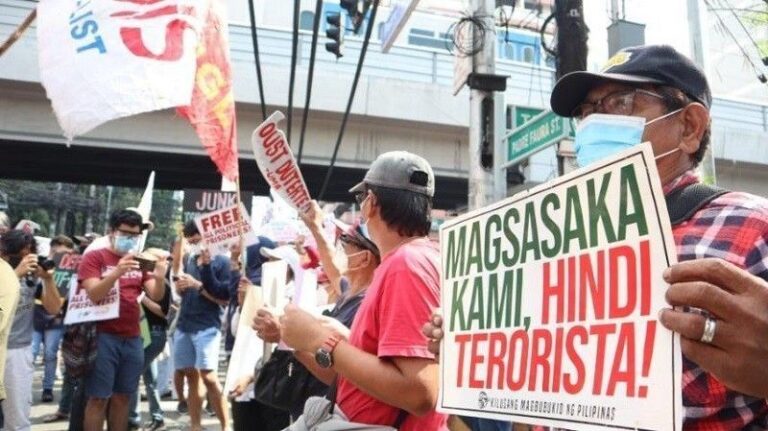
In stark contrast is the peace process with communists. What began as his cordial, even warm, relations with the Left deterioriated into name-calling, deadly ambushes, and now terrorist designations even for the communist party’s political arm which used to negotiate with the government.

But despite the creation of the Bangsamoro region, not everything is peachy in Mindanao. Duterte declared martial law because of a five-month siege on Marawi City by Muslim extremists. There were a string of terror attacks in Sulu, Zamboanga City, Sultan Kudarat, and even his hometown of Davao City. The long-drawn rehabilitation of Marawi and the lack of compensation for residents who lost their homes, some to new government projects, is fomenting distrust.

Pro-poor policies, ending contractualization

Duterte can be credited for several landmark populist measures – mostly the work of lawmakers which he signed off on when it got to his desk. These include the universal health care law, free tertiary education law, and the Free Internet Access in Public Places Act. These measures were not Duterte’s brainchild, but, in the case of the law providing free tuition in public colleges, he resisted opposition from his economic managers.

However, Duterte failed on his promise to end contractualization, despite Congress being dominated by his allies.

After vetoing the creation of a coconut levy trust fund in 2019, Duterte finally signed the law that is supposed to allow coconut farmers to benefit from taxes collected from them during the Marcos dictatorship – another one of his promises.

Protecting the West Philippine Sea

Duterte failed to make good on his promise to fight for the West Philippine Sea, a promise many Filipinos believed was exemplified by his vow to go there on a jetski. Only four months before the President’s SONA, Chinese ships started swarming features in Philippine waters. His “friendship” with Chinese President Xi Jinping did not stop China from passing a law that allows its Coast Guard to fire upon foreign vessels in waters it claims.

Duterte, however, tried. He’s brought up the Hague ruling in meetings with Xi, to the dismay of Chinese officials. He dutifully followed the script at the 2020 United Nations General Assembly, where he used strong words to assert the Hague ruling. Yet, a year later, he called the landmark ruling as nothing but trash, parroting Chinese officials. In total, Duterte’s performance on this front is characterized by mixed messaging coupled with a still worrisome situation in the West Philippine Sea.

Legacy trains, infrastructure

Duterte promised he would leave behind new train lines as his infrastructure legacy, to ease Metro Manila traffic and bring development to regions outside the capital. But not a single track of the promised Mindanao railway has been built. The promised Subic-Clark Railway is targeted to be completed in 2023 yet, and a commercial contract for it was signed only in January 2021.

For a comprehensive tracker of the status of all of the government’s infrastructure projects, click here. What Duterte managed to complete was the LRT-2 East Extension project which was started in the previous administration. (READ: [ANALYSIS] 10 Build, Build, Build projects that started before Duterte) – Rappler.com

Athletes parade in empty stadium as Tokyo Olympics opens in shadow of pandemic

0

Jul 23, 2021, Reuters

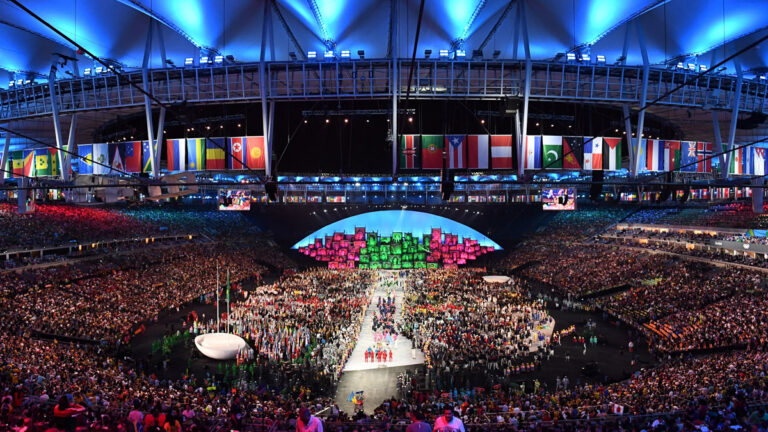
In an opening ceremony marked by simplicity, one tradition held on – athletes from all over the world paraded into the Olympic stadium to represent their nations, for the first time their smiles hidden behind masks and most countries represented by both male and female flag bearers.

But the opening ceremony o Friday, July 23, normally a star-studded display teeming with celebrities, lacked the usual glitz with fewer than 1,000 people in attendance, strict social distancing rules and signs calling on spectators to “be quiet around the venue.”

Regardless, it marked a coming together of the world, with an audience of hundreds of millions around the globe and at various stages of the pandemic tuning in to watch the start of the greatest show in sport.

Members of the Canada delegation wore patches in the color of the rainbow, the symbol of the LGBT community, on their uniform jackets.

Other athletes were also expected to make statements about equality and justice and most nations were represented by a man and a woman after the organizers changed their rules to allow two flag bearers.

The opening also featured fireworks in indigo and white, the colors of the Tokyo 2020 emblem, and gave a nod to Japanese tradition represented by giant wooden Olympic rings linked to the 1964 Games.

A vastly smaller number of athletes, about 20 per nation, marched in the teams’ parade, with many flying in just before their competitions and due to leave shortly after to avoid infections.

Delegations tried their best to liven the mood. Uganda, wearing bright traditional costumes, did a few measures of a dance, while the Argentine delegation jumped up and down on entering.

There were also a variety of masks, from plain blue or white surgical masks to others in the colors of the national flags or emblazoned with national seals.

But several groups, including Kyrgyzstan’s Olympians, paraded maskless, marking an awkward contrast with the majority and sparking an angry reaction on Japanese Twitter.

Athletes marched to the music of some of Japan’s best-selling video games such as “Dragon Quest” and “Final Fantasy,” as country names on placards were shown in speech bubbles often used in manga cartoons.

Olympics without fans

Postponed for a year, organizers were forced to take the unprecedented step of holding the Olympics without fans as the novel coronavirus is on the rise again, taking lives around the world.

The opening video featured at the stadium recapped Japan’s path to the Games and the challenges the world has faced since the selection of the Japanese capital as host in 2013.

It showed how the coronavirus struck in 2020, with lockdowns forcing the unprecedented postponement only four months before the Games were due to open, setting off a roller-coaster period of uncertainty and preparations in isolation for the athletes.

A moment of silence was held “for all those family and friends we have lost,” especially to the coronavirus, and mention was made of the Israeli athletes slain at the 1972 Munich Games.

Japan had billed the Olympics as an echo of the 1964 Tokyo Games, which marked the country’s return to the world stage after its devastating World War Two defeat, but this time showcasing its recovery from the 2011 earthquake, tsunami and nuclear crisis.

Japanese Emperor Naruhito and International Olympic Committee (IOC) president Thomas Bach, both masked, entered the stadium and bowed to each other before sitting down socially distanced.

The giant wooden rings were carried onto the field on a platform, guided by the light of many paper lanterns. They were made of lumber from trees that grew from the seeds borne by athletes from nations participating in the 1964 Games.

Only 15 global leaders are in attendance, along with Emperor Naruhito, who will formally open the Games as his grandfather Hirohito did in 1964, and US First Lady Jill Biden.

The ceremony was marked by high-profile absences, including former Prime Minister Shinzo Abe, who wooed the Games to Tokyo. Top sponsors also stayed away, highlighting strong opposition to the event in COVID-fatigued Japan.

Hundreds of protesters carrying placards that read “Lives over Olympics” protested around the venue yelling “Stop the Olympics.”

Only a third of the host nation have had even one dose of vaccines, prompting worries the Games could become a super-spreader event. More than 100 people involved with the Olympics have already tested positive.

The Olympics have been hit by a string of scandals, including the exit of senior officials over derogatory comments about women, jokes about the Holocaust and bullying.

The Games run until August 8.

About 11,000 athletes from 204 national Olympic committees are expected, along with a team of refugee athletes competing under the Olympic flag. – Rappler.com

Groups say NDFP terror tag closes door for peace with Reds

0

By: Ryan D. Rosauro -Inquirer Mindanao / July 23, 2021

CAGAYAN DE ORO CITY––The designation of the National Democratic Front of the Philippines (NDFP) as a terrorist organization by the Anti-Terrorism Council (ATC) has shut any chance of reviving the peace process between the government and communist rebels.

“This designation tragically closes the door to what is truly called for: a peaceful resolution of the Government of the Republic of the Philippines (GRP) and NDFP conflict,” said a statement of the Philippine Ecumenical Peace Platform (PEPP), a group of religious leaders from various denominations pushing for a negotiated settlement to the communist rebellion in the country.

The statement was signed by Archbishop Emeritus Antonio Ledesma, Rt. Rev. Rex B. Reyes Jr., Bishop Reuel Norman O. Marigza, Rev. Aldrin Penamora, Sr. Mary John D. Mananzan, and Bishop Emeritus Degracias S. Iniguez Jr.

“The ATC buried 29 years of laborious and painstaking agreements and gradual steps toward peace. The government seems to be ignoring that peace is a sacred right of all people and guaranteed as a fundamental duty of the state,” the PEPP lamented.

The recent actions of the ATC, the PEPP noted, “confirms that the Anti-Terrorism Law is a huge hurdle to the promise of peace for everyone as it is being used as a weapon in a total war against so-called terrorists.”

ATC Resolution No. 21 said the NDFP is an integral part of the Communist Party of the Philippines (CPP) and its armed wing, the New People’s Army. The resolution added that the NDFP continues to recruit people to join the communist movement.

The ATC further noted that the NDFP has recently named Julieta De Lima, wife of CPP founding chair Jose Maria Sison, as the interim chair of its negotiating panel. An earlier ATC resolution tagged De Lima and Sison as terrorists.

As the political arm of the CPP, the NDFP has been involved in on-and-off peace negotiations with the government since 1987.

Several breakthroughs were achieved in the negotiations during the early part of the administration of President Duterte until it hit a snag on the issues of the release of political detainees and a bilateral ceasefire. By December 2017, Duterte has terminated the negotiations.

A statement by De Lima said the ATC resolution hammered the “needless nail in the coffin of the GRP-NDFP peace negotiations.”

The group Pilgrims for Peace said the ATC resolution “bodes ill for human rights, democracy and the quest for peace under the Duterte administration.”

“The war hawks are hell-bent on killing peace negotiations and instead pursuing all-out war in the government’s counterinsurgency program as well as casting a wide net of suppression against all opposition and dissent through state terror as embodied in the Anti-Terrorism Act of 2020,” the group added.

The NDFP National Council has warned of more attacks against its members and other activists “who will be arbitrarily tagged as NDFP members and associates.”

NDFP chief political consultant Jose Maria Sison said “the diabolical purpose” of the designation “cannot be understated because this has been preceded by the murder of NDFP consultants,” among them Randy Malayao, Randall Echanis, the couple Agaton Topacio and Eugenia Magpantay, the couple Antonio Cabanatan and Florenda Yap, Reynaldo Bocala, and Rustico Tan.

Sison also pointed to the arrest and detention of other NDFP personalities on trumped-up charges, such as Vicente Ladlad, Adelberto Silva, Rey Casambre, Renante Gamara, and Ferdinand Castillo.

PEPP appealed to the government to rescind the terrorist tag on the NDFP and “recognize the lasting devastation this will have on the Filipino people’s trust in the government’s competence to resolve internal conflicts through peaceful negotiations.”

The group also appealed to both parties to return to the negotiating table.

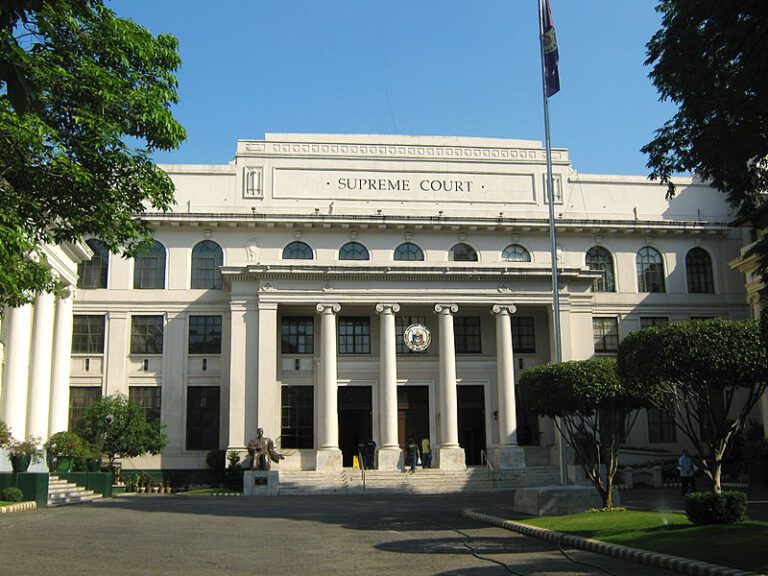
Duterte can’t evade ICC, end treaty on his own – Supreme Court

0

By: Marlon Ramos – Reporter /Philippine Daily Inquirer / July 22, 2021

MANILA, Philippines — The Supreme Court has ruled that President Rodrigo Duterte cannot invoke the Philippines’ withdrawal from the Rome Statute to skirt the investigation by the prosecutor of the International Criminal Court (ICC) of charges that he committed crimes against humanity in the killings of thousands in his brutal war on drugs.

Voting unanimously, the 15-member tribunal also held that the President could not arbitrarily terminate international agreements without the concurrence of the Senate.

In a stinging rebuke of the position of Duterte and Malacañang, the high court ruled that as a state party the Philippines was bound to recognize the jurisdiction of the ICC and cooperate with its processes even after its withdrawal from the treaty that created the international court.

“Withdrawing from the Rome Statute does not discharge a state party from the obligations it has incurred as a member,” the court said in a 101-page decision authored by Associate Justice Marvic Leonen.

“Consequently, liability for the alleged summary killings and other atrocities committed in the course of the war on drugs is not nullified or negated here,” it said in its March 16 resolution, exactly three years after the government filed its notice of withdrawal from the treaty.

A copy of the decision was released to the media only on Wednesday.

No cooperation

The court pointed out that the country’s withdrawal became effective on March 17, 2019. This means that all acts committed by Duterte and other public officials up to that date were still within the ambit of the ICC’s jurisdiction.

The court said this was clearly spelled out in Article 127(2) of the Rome Statute, which the Philippines joined in November 2011.

“Even if it has deposited the instrument of withdrawal, it shall not be discharged from any criminal proceedings. Whatever process was already initiated before the [ICC] obliges the state party to cooperate,” it said.

Malacañang has said repeatedly that the president will not cooperate with the ICC probe since the Philippines had withdrawn from the Rome Statute.

Duterte on Saturday reiterated his own argument that the treaty had no legal effect because it was not published in the Official Gazette.

Presidential spokesperson Harry Roque had also argued that the country’s judicial system was working and therefore the president could not be prosecuted and tried in the ICC.

Bensouda move

Duterte ordered the country’s withdrawal from the agreement a month after then ICC Prosecutor Fatou Bensouda announced that she would start a preliminary examination of the complaints against him.

Before stepping down from her post last month, Bensouda had requested the ICC’s pretrial chamber to begin an official investigation of the allegations against Duterte.

Former ICC Judge Raul Pangalangan, the first Filipino to serve on the international tribunal, had also stated that the withdrawal was not an excuse for Duterte to disregard the ICC’s authority.

“Article 127 of the statute says that the court retains jurisdiction even after the withdrawal,” Pangalangan said in an online forum last month. “It retains jurisdiction over all crimes committed in its territory while it was still a member of the Rome Statute.”

The treaty states that a country’s withdrawal “shall not affect any cooperation with the [ICC] in connection with criminal investigations and proceedings in relation to which the withdrawing state had a duty to cooperate and which were commenced prior to the date on which the withdrawal became effective.”

Not absolute

The high court’s ruling was issued in connection with petitions filed by opposition senators led by Sen. Francis Pangilinan and two other groups questioning the legality of the president’s decision to withdraw from the treaty.

The court dismissed the petitions for being moot. It said it had no authority to invalidate the Philippines’ withdrawal from the treaty since it was already accepted and acknowledged by the United Nations, and that the government had met the requisites in annulling the agreement.

But the high court recognized the Senate’s authority in rescinding treaties it had previously approved, declaring that the president’s prerogative to unilaterally set aside an international agreement was “not absolute.”

“The President had no sole authority and the treaty negotiations were premised not only upon his or her own diplomatic powers, but on the specific investiture made by Congress,” the court said.

“In sum, at no point and under no circumstances does the President enjoy unbridled authority to withdraw from treaties or international agreements,” it declared.

Pangilinan and the other petitioners had argued that Duterte should have first sought the Senate’s concurrence before the Philippine government moved to withdraw from the treaty.

NTF-ELCAC says it welcomes junking of raps vs Aetas whom troops tagged as NPAs

0

(Philstar.com) – July 19, 2021

MANILA, Philippines — The government’s anti-communist task force and the National Commission on Indigenous Peoples — a member of the task force — welcomed the dismissal of raps against two Aeta farmers filed by military personnel who accused them of being communist rebels.

In a joint statement, the National Task Force to End Local Communist Armed Conflict and the NCIP welcomed the dismissal of the violation of the Anti-Terrorism Act of 2020 case against Japer Gurung and Junior Ramos.

“The decision has clearly shown that our justice system works, hears and decides cases fairly, without fear or favor,” the two agencies said.

The Olongapo Regional Trial Court Branch 97 granted Gurung and Ramos’ Demurrer to Evidence, filed through the Public Attorney’s Office, and held that the prosecution failed to “discharge the burden of providing the identities of the accused as the perpetrators of the crime of violation of Section 4 of [Republic Act 11479].”

The court noted “material inconsistencies” in the affidavit and witness testimonies of two soldiers and held that the arrest of Gurung and Ramos was invalid.

In same statement, agencies red-tag rights group

In same statement, the NTF-ELCAC and NCIP went on to red-tag rights alliance group Karapatan and accused it of “exploiting” the case against Gurung and Ramos to boost the call to void the Anti-Terrorism Act of 2020.

“Both the NTF-ELCAC and the NCIP ceaselessly worked together to remove our IP brothers from the exploitative clutches of the CPP-NPA-NDF including their front organizations, like Karapatan, so that their case will the justly heard under our system of laws,” the joint statement read.

The National Union of Peoples’ Lawyers, a legal assistance group that has also been red-tagged by the government, had been representing the Aeta farmers before NCIP and the PAO swooped in to take the case over.

NTF-ELCAC and NCIP claimed activist groups were “exploiting this case” to drum up resistance against the Anti-Terrorism Act. But it was personnel of the Armed Forces of the Philippines that filed the case against the two farmers in the first place.

IPs as petitioners against anti-terrorism law

Indigenous peoples are among the petitioners against the anti-terrorism law before the Supreme Court. The group led by Kalipunan ng mga Katutubong Mamamayan ng Pilipinas officer Beverly Longid, then told the court that “inextricably and inexplicably linked to the right to self-determination is the right to oppose, criticize, and dissent from development aggression and the policy of militarization that comes with it.”

Faced with IP opposition to so-called development projects on ancestral domain, state forces have often resorted to red-tagging, the petitioners said. After they are accused of being communists or terrorists, it would then be easy for military and paramilitary forces to “silence or cause untold human rights abuses on vocal dissenters, and thereby subdue the indigenous peoples’ assertion of their rights.”

“The passage of RA 11479 will even potentially increase the instances of this red-baiting on three grounds: its vague provisions, its disregard for the context of the indigenous peoples, and its giving more power to State forces, most of whom have been at the forefront of the abuses against the indigenous peoples,” the IP petitioners added.

Countersuit vs soldiers?

Lawyer Marlon Bosantog, NTF-ELCAC spokesperson for Legal Affairs and IP Concerns, told reporters in a message that the task force has “no plan at this point” to file charges against the soldiers who filed complaints against Gurung and Ramos.

The Armed Forces of the Philippines is also a member of the NTF-ELCAC.

In their petition filed and later junked by the Supreme Court, the Gurung and Ramos said they were fleeing with their families in August 2020 when, after sharing a meal with soldiers, they were told they are under arrest for being NPA members.

They said they were tortured and forced to confess to being NPA members.

Lt. Gen. Antonio Parlade, task force spokeperson at the time, accused Inquirer.net reporter Tetch Torres-Tupas in February of writing “propaganda” when she wrote about Gurung and Ramos’ SC filing where they also told the court that they were tortured while in military detention.

He also incorrectly claimed that Torres-Tupas used Human Rights Watch and alternative media Kodao, which he tagged as “propaganda machines of the CPP” as reference in her article, when she only cited the pleading filed before the high court.

In a statement in September 2020, the AFP denied allegations of torture, saying the operations in San Marcelino were legitimate and done by the book.

“Among those apprehended during the operations were Communist Terrorist Group (CTG) members belonging to the same IP community who perpetrated the baseless accusations of human rights violations,” the Philippine News Agency quotes Maj. Gen. Edgard Arevalo, AFP spokesperson at the time, as saying.

Bosantog said they will look into how the two Aeta farmers would want to move forward. “What I understand is that they, and the community, will help in the peace initiative of the government to remove violence in their ancestral lands,” he added. — Kristine Joy Patag

Governments used Israeli spyware to monitor journalists, civilians – report

0

Jul 19, 2021 Gelo Gonzales

MANILA, Philippines

About 50,000 phone records are found in a leaked list of surveillance targets by government clients around the world

Governments around the world have been found to have used spyware called Pegasus – made by Israel’s NSO Group – to spy on civilians including journalists and human rights activists, according to reports under The Pegasus Project launched on Monday, July 19. 

The Pegasus Project is a collaborative investigative report by a consortium of 17 international media outlets led by journalism nonprofit Forbidden Stories, with technical assistance from Amnesty International’s Security Lab. 

The ongoing reports stem from a leak obtained by Forbidden Stories and Amnesty International that contains 50,000 records of phone numbers linked to individuals targeted by governments in countries known be clients of NSO Group. Where possible, Security Lab’s performs forensics on a device suspected to be infected with the spyware to confirm the listing. 

Among the 50,000, 180 journalists were tagged in the leaks working at prestigious media companies, including the Wall Street Journal, CNN, the New York Times, Al Jazeera, France 24, Radio Free Europe, Mediapart, El País, Associated Press, Le Monde, Bloomberg, Agence France-Presse, the Economist, Reuters and Voice of America.

Azerbaijan had about 48 journalists in the list, said to be critics of repression and corruption. India and Morocco had 38 journalists each while the United Arab Emirates had 12.

When the device of a target is successfully infected through app vulnerabilities or malicious links, the Pegasus spyware is able to exfiltrate all data on the device. This allows governments to read confidential messages, discover a reporter’s sources, listen to calls, see their photos, track their movements, and record conversations by activating the microphone. 

“Knowing that a country can so easily penetrate your phone, it inevitably means that you have to always be thinking about your phone as a potential surveillance device,” American investigative journalist Bradley Hope, then of the Wall Street Journal at the time of his inclusion in the government surveillance list, told The Guardian. “It will just remind me that at any time I could be carrying around a vulnerability with me.”

In a separate report, PBS’ Frontline honed in on another surveillance victim: Hatice Cengiz, the fiancée of murdered Saudi journalist Jamal Khashoggi.

In the short video report, Frontline, through Security Labs’ assistance, verified Cengiz’s phone had been infected with Pegasus, with traces of activity around the time that Khashoggi was murdered on October 2, 2018.

Analyzing Cengiz’s two devices, one old and one new, a tech expert at Security Lab said, “The new one seems clean to me. The old one however has some traces that seem consistent with what we’ve seen.”

“So on the 6th of October 2018, [that day] seems to have been [when the device was] first compromised, with some additional traces on the 9th and then the 12th – which as you know, obviously, is pretty timely within the context [of the Khashoggi murder] obviously.” 

The NSO Group has denied the claims against its government clients, including any association with the Khashoggi murder, and said that in the past it had shut off client access to Pegasus in the event of violative acts, and would continue to investigate claims of misuse. 

“The NSO Group is on a life-saving mission, and the company will faithfully execute this mission undeterred, despite any and all continued attempts to discredit it on false grounds,” said the company.

Amnesty International’s forensic methodology for discovering Pegasus is outlined here. – Rappler.com

‘It’s terrifying’: Merkel shaken as flood deaths rise to 188 in Europe

0

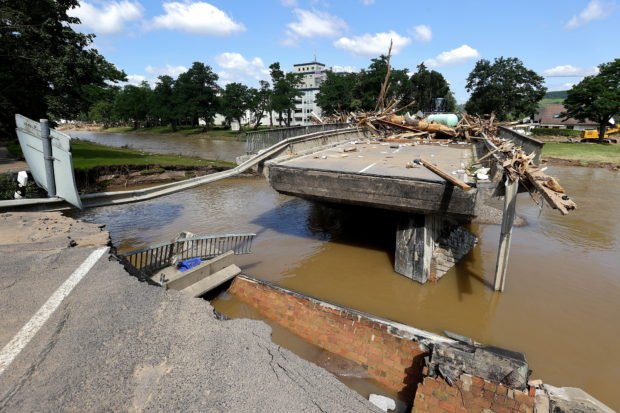
BERCHTESGADEN/BISCHOFSWIESEN, Germany — German Chancellor Angela Merkel described the flooding that has devastated parts of Europe as “terrifying” on Sunday after the death toll across the region rose to 188 and a district of Bavaria was battered by the extreme weather.

Merkel promised swift financial aid after visiting one of the areas worst affected by the record rainfall and floods that have killed at least 157 in Germany alone in recent days, in the country’s worst natural disaster in almost six decades.

She also said governments would have to get better and faster in their efforts to tackle the impact of climate change only days after Europe outlined a package of steps towards “net zero” emissions by the middle of the century.

“It is terrifying,” she told residents of the small town of Adenau in the state of Rhineland-Palatinate. “The German language can barely describe the devastation that’s taken place.”

As efforts continued to track down missing people, the devastation continued on Sunday when a district of Bavaria, southern Germany, was hit by flash floods that killed at least one person.

Roads were turned into rivers, some vehicles were swept away, and swathes of land were buried under thick mud in Berchtesgadener Land. Hundreds of rescue workers were searching for survivors in the district, which borders Austria.

“We were not prepared for this,” said Berchtesgadener Land district administrator Bernhard Kern, adding that the situation had deteriorated “drastically” late on Saturday, leaving little time for emergency services to act.

About 110 people have been killed in the worst-hit Ahrweiler district south of Cologne. More bodies are expected to be found there as the floodwaters recede, police say.

The European floods, which began on Wednesday, have mainly hit the German states of Rhineland Palatinate, North Rhine-Westphalia as well as parts of Belgium. Entire communities have been cut off, without power or communications.

In North Rhine-Westphalia at least 46 people have died. The death toll in Belgium climbed to 31 on Sunday.

Aid up, power down

The scale of the floods mean they could shake up Germany’s general election in September next year.

North Rhine-Westphalia state premier Armin Laschet, the CDU party’s candidate to replace Merkel, apologized for laughing in the background while German President Frank-Walter Steinmeier spoke to media after visiting the devastated town of Erftstadt.

The German government will be readying more than €300 million euros ($354 million) in immediate relief and billions of euros to fix collapsed houses, streets, and bridges, Finance Minister Olaf Scholz told weekly newspaper Bild am Sonntag.

“There is huge damage and that much is clear: those who lost their businesses, their houses, cannot stem the losses alone,” Scholz said.

There could also be a 10,000 euro short-term payment for businesses affected by the impact of the floods as well as the COVID-19 pandemic, Economy Minister Peter Altmaier told the paper.

Scientists, who have long said that climate change will lead to heavier downpours, said it would still take several weeks to determine its role in these relentless rainfalls.

Belgian Prime Minister Alexander De Croo said the link with climate change was clear.

In Belgium, which will hold a national day of mourning on Tuesday, 163 people are still missing or unreachable. The crisis center said water levels were falling and a huge clean-up operation was underway. The military was sent into the eastern town of Pepinster, where a dozen buildings have collapsed, to search for any further victims.

About 37,0000 households were without electricity and Belgian authorities said the supply of clean drinking water was also a major concern.

Bridge battered

Emergency services officials in the Netherlands said the situation had somewhat stabilized in the southern part of Limburg province, where tens of thousands were evacuated in recent days, although the northern part was still on high alert.

“In the north, they are tensely monitoring the dykes and whether they will hold,” Jos Teeuwen of the regional water authority told a press conference on Sunday.

In southern Limburg, authorities are still concerned about the safety of traffic infrastructure such as roads and bridges battered by the high water.

The Netherlands has so far only reported property damage from the flooding and no dead or missing people.

In Hallein, an Austrian town near Salzburg, powerful floodwaters tore through the town center on Saturday evening as the Kothbach river burst its banks, but no injuries were reported.

Many areas of Salzburg province and neighboring provinces remain on alert, with rains set to continue on Sunday. Western Tyrol province reported that water levels in some areas were at highs not seen for more than 30 years.

Parts of Switzerland remained on flood alert, though the threat posed by some of the most at-risk bodies of water like Lake Lucerne and Bern’s Aare river has eased. (18 July 2021, Inquirer.net)

Interview with Dr. Chandu Claver: On Indigenous Peoples in PH and Canada

0

By Veronica Silva Cusi
The Philippine Reporter, Canada

For an earlier issue (June 11 to 24, 2021), The Philippine Reporter spoke to him at length to help the Filipino community in Canada understand Indigenous Peoples in Canada and the Residential Schools.

Owing to the vast insights and experience he shared as an Indigenous Filipino, this second story — in the form of a Q&A — will delve into the history of Philippine Indigenous Peoples and what they share with Indigenous Peoples of Canada, particularly on the fight to keep their heritage and lands.

Dr. Claver urges immigrant Filipinos to look back at their colonial history to understand Indigenous Peoples in Canada.

His messages will hopefully be valuable especially to the new generation of Filipino-Canadians.

The Philippine Reporter (TPR): Please tell us something about your being an Indigenous Filipino.

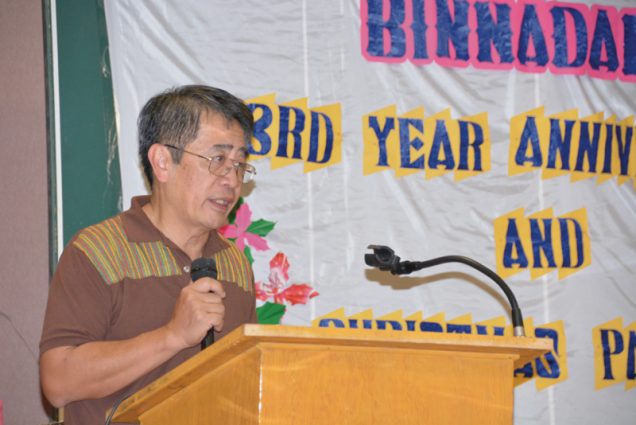
Dr. Chandu Claver: Both my parents come from the Bontoc and Igorot tribes. We number around 1.2 million people based on our ancestral lands in the Cordillera Region in the northern Philippines. … Igorot is a collective name for many of the people of the Cordillera … comprised of several ethnolinguistic groups.

TPR: Why should the Filipino immigrant community try to understand about Indigenous Peoples in Canada?

DCC: First thing that we should remember is that before the Spaniards came in the 1500s to the Philippines — before they conquered the Philippines — everyone was Indigenous. Everyone who was living in the Philippines before Spaniards came could be considered as Indigenous in the modern sense. When the Spaniards came, they conquered the Philippines and for 300 years they put in systems through two methods — through force and deception. They were able to assimilate most of the Filipinos to the Spanish culture.

Colonial Resistance

Ano nangyari sa iba? [What happened to the rest?] The Igorots, the Lumads, the Moros? What happened was they resisted assimilation … When the Spaniards came, they resisted by retreating to the more difficult terrain — the mountains and deep forests. In the face of the great military strength of the Spaniards, these Filipinos retreated to the mountain vastness and the forest, and tried to defend themselves from the invasion of these foreigners; they resisted assimilation.
When you fast track now to the modern times, you now have Indigenous Peoples who are now assimilated into the mainstream culture — whether it’s Spanish or American [i.e.,] Western culture. So, we have now the mainstream Filipinos who were previously Indigenous but now have been assimilated into the modern Western culture. But there also remained other Filipinos who have resisted assimilation and exist with their culture up to now. [These are] the Igorots, the Aetas, the Moros and the Lumads — just to mention a few.

Residential Schools

In Canada, we have a colonial power that came to Canada and tried to assimilate the Indigenous People, the original people who were living in Canada. The difference though between the Philippines and Canada was in the way that they were assimilated. Residential Schools were done in order to forcibly … accelerate the assimilation of the indigenous People into the modern Western culture. But the First Nations, the natives resisted.

Similarities

We, the Igorots, for example, the Lumads, the Moros in the Philippines are very similar to the First Nations because they do resist … they try to resist assimilation. They’re willing to live in the modern ways, but they both have a history of resisting assimilation from their culture.

Kung tutuusin natin, [come to think of it] … any Filipino who comes to Canada should remember that we were … once previously Indigenous. What you are seeing here in Canada are Indigenous People who have resisted assimilation, and, in the process, they have been really parang [like] severely attacked. There was an attempt to forcibly remove their culture from their individual spirits. It has been attempted with the Residential Schools.

Lessons

Those are things that Filipinos should contemplate and remember. Because if you start remembering that you will now see a connection [to what happened in Residential Schools]. I think a lot of Filipinos do not want to think that way. Because even in the Philippines a lot of mainstream Filipinos still look down on Indigenous Peoples. … They look down on the Igorots, they look down on Lumads and the Moros. That’s not right, but … I understand that there is a lack of understanding. And that is where we should be focusing: people who are more enlightened should start giving education with regards to that.

Fight for Natural Resources

Why did the colonizers try to force to assimilate [Indigenous Peoples]? In the case of the Philippines, … [this is] because Indigenous Peoples live in very rich natural resource-based areas. These areas are very rich. There were a lot of military expeditions … [for the king of Spain] to conquer the Cordillera … for the gold.

After the feudal system of the kings comes a capitalist system wherein the needs of capitalist production become more – iron, metal, hydropower, timber. These areas of Indigenous Peoples are valuable. When capitalism was in full swing in the late-1800s and into the 1900s, there was a drive to actually get all those resources. That was the reason we have American mines in the Philippines since the 1900s.

Here in Canada, it’s the same. The reason they [colonizers] tried to assimilate forcibly was that they really want their [Indigenous Peoples] resources. … The difference between the Philippines was we were conquered before capitalism. However, with Canada, the growth of capitalism was already in its beginnings. When the colonizers invaded [Canada] there was a need to fast track things, meaning forcing people, and that, in my personal opinion, is the one thing that could have pushed the idea of doing Residential Schools — to accelerate assimilation.

Indigenous Lands as State Resources

TPR: And in recent times there are also companies in the Philippines who are there for the same reason — to grab the resources from Indigenous Peoples? (For background information on Canadian firms’ alleged human rights violations in the Philippines, please see the previous story on ‘We eat death, rape, threats for breakfast every day’ on May 28 to June 10, 2021 issue of The Philippine Reporter)

DCC: In the Philippines, there is a struggle between the Indigenous Peoples and the system. Indigenous Peoples have now recognized that they are under attack because of their resources, and they want to defend [their land] because that is their ancestral land.

Remember that culture is based on the land. The costumes, the rituals, the songs — everything developed because that is how the people understood the land in their interaction with nature, in their interaction with the land. Cultural practices and traditions … are based on the land.

That is why they [the state] have never wanted to give [land] titles to the people living there. From the time the Americans came in 1900 to the time the Americans left, the practices have continued in the different Philippine republics — to keep indigenous lands as public lands. From 1960s up to now, Indigenous Peoples in the Philippines have been fighting … and they have had advances because of their resistance as well as advocacy. They’ve had also victories.

For example, they were able to enshrine in the 1987 Philippine Constitution that Indigenous Peoples, especially the Igorots [in the north] and the Moros in the south [of the Philippines], have the right to self-determination. … But the Philippine state has tried time and time again to delay or to lessen the interpretation of the Constitution by coming up with irrelevant law. Any law that they come up with is kulang [not substantial]. They actually came up with The Indigenous Peoples’ Rights Act [of 1997], but that falls short because it does not give IPs control or management of natural resources in those lands. Because that is what the state or the system doesn’t want to give up – their control of the resources. Unlike in the lowland areas you have the right to the land you claim by title.

Indigenous peoples struggle to preserve themselves. Because once mainstream or capitalism or government destroys the land, you now are destroying the basis of culture. … Anything that supports life is in the land – the trees, the water, the air, anything underground — all of those support lives. They support the existence of the people living on those lands. That is indigenous worldview

Contrast that to the capitalist worldview which looks at resources in compartments. A logging company looks at the trees as trees alone. When they cut the trees, they do not see that it actually destroys the land by reducing water retention. … The mining companies look only at the minerals. They do not care if your open pit starts to have effluents that destroy the water that kills the rivers.

TPR: What’s your message to Filipinos who may not know about Indigenous Peoples in the Philippines and Residential Schools?

DCC: The thing is migrant Filipinos came here for only one reason — economic reason. It is natural for people to say: ‘Why do I have to learn that the problem [with Indigenous Peoples]?’ I say, you are living in a society … where there’s a lot of issues in this country. … It is selfish to think only about you and yourself without thinking about why you came here and why you chose Canada. … We should also remember that Indigenous Peoples are part and parcel of that society … It’s the same when you’re in the Philippines.

The Igorots, Lumads and the Moros have an issue that affects you because you are living in a system that tries to justify the repression of these people. And if you say ‘Wala akong pakialam dyan [I don’t care],’ you’re actually contributing to their repression. You benefit from that repression. Part of the material benefits you have come from the repression of Indigenous Peoples.