By: Gabriel Pabico Lalu – Reporter / INQUIRER.net/March 23, 2021
MANILA, Philippines — “Is this act of China the tradeoff for the vaccines it has donated — this trampling on our sovereignty? This should not be ignored. The government should strongly condemn this,” House Deputy Minority Leaders Carlos Isagani Zarate said in a statement issued on Monday.
Zarate, who represents the party-list group Bayan Muna, issued the statement following reports that over 200 Chinese militia boats were spotted in the Juan Felipe Reef — an area within the exclusive economic zone and continental shelf of the Philippines.
The Philippine government has filed a diplomatic protest against the incursion, Foreign Affairs Secretary Teodoro Locsin said on Sunday. Meanwhile, Defense Secretary Delfin Lorenzana also called on China to recall the ships as the reef is within the EEZ and part of the country’s continental shelf.
Despite several diplomatic protests made against it, China has enjoyed renewed ties with the Philippines ever since President Rodrigo Duterte stepped into office in 2016.
As proof of the friendship between Manila and Beijing, the first doses of the COVID-19 vaccine that the country received — CoronaVac from Sinovac BioTech — were donations from China.
Duterte clarified, however, that the donations from China come with no strings attached.
Zarate, who is part of the progressive Makabayan bloc in the House, also took a swipe at the Armed Forces of the Philippines (AFP), urging them to focus on guarding the country’s territories rather than spending time over red-tagging activities.
“Maybe the reason why China has become spoiled and more aggressive was that the Armed Forces of the Philippines and the police have become busier with their red-tagging and attacking activists and critics of the government rather than guarding our territory against the incursion of other countries,” Zarate said in Filipino.
“China’s coast guard and maritime militia has continuously harassed our fisherfolk and barricaded our traditional fishing grounds like Bajo de Masinloc or Panakot Shoal. They harvest our giant clams and fish on our exclusive waters. They have also been used as advanced forces to secure islands, islets or sand bars that China would militarize,” he added.
According to reports that came out early Sunday, the Philippine Coast Guard (PCG) informed the National Task Force West Philippine Sea (NTF-WPS) that 220 ships had been in a line formation near the Juan Felipe Reef since March 7.
The NTF-WPS then warned against the possibility of overfishing and destruction of the marine environment with so many ships over the reef — which is just around 175 nautical miles west of Bataraza, Palawan.
“Julian Felipe Reef may be next to be occupied by imperialist China if the Duterte administration does nothing about it,” Zarate said.
“Among others, the government should push for joint Coast Guard patrols with other claimants in the South China Sea like Vietnam, Malaysia, and Brunei, so as to discourage China’s bullying tactics,” he added.
She Was Filipino Food’s Greatest Champion. Now Her Work Is Finding New Fans.
Years after her death, the writer Doreen Gamboa Fernandez is gaining a following among Filipino-American chefs for the way she explored the cuisine from the bottom up. By Ligaya Mishan July 30, 2019
When their safe houses in Manila were no longer safe, the rebels took shelter at the airy bungalow of Doreen Gamboa Fernandez, a sugar planter’s daughter turned literature professor and food writer.
It was the 1980s, and the Philippines was still in the grip of the strongman Ferdinand Marcos. In a later interview, Ms. Fernandez recalled how her university colleagues had chided her for writing restaurant reviews in such precarious times: “How can you sit there and do the burgis” — Tagalog for bourgeois — “things you do?”
But the leaders of the National Democratic Front knew Ms. Fernandez as an ally. She dressed their bullet wounds and fed them elaborate meals in a dining room hung with art by the Cubist painter Vicente Manansala and the Neorealist Cesar Legaspi.
Then, while her guests recuperated by the pool in the cool shadow of a great acacia, she retreated to her desk and resumed the task of documenting the indigenous cooking traditions — scorned and ignored during centuries of colonialism — of an archipelago spanning more than 7,000 islands and nearly 200 languages.
Hers was a quiet act of subversion. She revolutionized Filipino food simply by treating it as what it is: a cuisine. Ms. Fernandez trained her attention on dishes low and high, from humble carinderias, the roadside stalls where the staff obligingly shooed away flies, and polished “tablecloth” restaurants that had once served almost exclusively American and Spanish food. In the 1950s, she noted, “one did not take bosses, foreigners, dates or V.I.P.s to have Filipino food at a restaurant; it wasn’t considered ‘dignified enough.’”
Her prose was crystalline, at once poetic and direct, whether describing “the distinctive rasp and whisper” of crushed ice in the dessert halo-halo, or freshly cut ubod, the pith of the coconut palm, “that just an hour before had been the heart of a tree.”
In one essay, she outlined the dismantling of a 10-inch-long ulang (freshwater shrimp), opening the head “to catch every bit of orange-creamy delicious fat” and sucking the juices to the tips of the whiskers. In another, she cataloged the textures of the fluted giant clam: “the chewy black mantle, the fat soft center like an oyster supreme, and the muscle which is the best — white and crisp as a pear.”
By 2002, when she suddenly died at age 67 while visiting New York, “she was truly an icon,” said Belinda A. Aquino, the founding director of the Center for Philippine Studies at the University of Hawaii at Manoa. Ms. Fernandez’s reputation was international: Raymond Sokolov, a former New York Times food editor, said she was “the most impressive food writer and historian I ever encountered.”
And yet this woman — a literary stylist to rival M.F.K. Fisher and a groundbreaking culinary ethnographer who transformed the way Filipinos saw their food — is barely known in the United States, even among Americans of Filipino descent.
This may be because, until recently, Filipino food itself was an unknown in America. Dishes like kare-kare (oxtail braised with ground peanuts), laing (taro leaves steeped in coconut milk) and dinuguan (pork blood stew) were made almost exclusively by Filipinos for Filipinos, cooked at home or served at the steam-table joints known as turo-turo (point-point, which is how the food is ordered), often half-hidden at the back of a grocery store or next to a carwash.
“When you look for Filipino food, you don’t tell anybody,” said Charles Olalia, the chef of the year-old restaurant Ma’am Sir in Los Angeles. “You go by yourself to the turo-turo.” But as the population of Filipino-Americans continues to grow — to an estimated four million today from a little over two million in 2000, accounting for nearly 20 percent of all Asian-Americans — a new generation of chefs and restaurateurs is bringing the food to the fore.
In the past few years, ambitious Filipino restaurants and pop-ups have been embraced across the country, including Bad Saint in Washington, D.C., Lasa in Los Angeles, Pinoy Heritage in San Francisco, Musang in Seattle, Karenderya in Nyack, N.Y., and Tanám in Somerville, Mass.
Still, negative stereotypes about Filipino cooking — as “smelly” or “weird” — persist, said Catherine Ceniza Choy, a professor of ethnic studies at the University of California at Berkeley. Those born to the cuisine have had to grapple with a sense of shame and uncertainty about its place in America, and their own. In Ms. Fernandez, these immigrants and children of immigrants are finding a champion of food long maligned and misunderstood.
Born in 1934, when the Philippines was under American rule, and christened Alicia Dorotea Lucero Gamboa, Ms. Fernandez was always called, personally and professionally, Doreen. (In the Philippines, childhood nicknames tend to last for life.)
Her mother, among the few women of her time to get a medical degree from the University of the Philippines, was assigned to the lone clinic in the genteel town of Silay, in the province of Negros Occidental. Her father was a hacendero, a member of the landed class and the son of a former mayor, who rode out to the cane fields each morning before dawn and courted his future wife by promenading on a horse around the clinic.
Although small, Silay was known as “the Paris of Negros” — a rich cultural capital. (The local sugar planters hosted an annual ball in Manila so sumptuous, the women were said to wear diamonds the size of giants’ teardrops and change gowns 18 times.) But in a reminiscence published in 2002, what Ms. Fernandez remembered most vividly were the church bells that “punctuated the day” until 6 in the evening, when children would stop in their tracks to pray the Angelus, a Roman Catholic devotion.
Unlike the town’s Spanish colonial-era manses, the Gamboa house was built in the 1920s, the family “having ordered practically everything from Sears, Roebuck,” said Maya Besa Roxas, Ms. Fernandez’s niece. During World War II, it was commandeered by the Japanese, then by the Americans. (Gen. Douglas MacArthur paid a visit.)
The family was evacuated to a farm near an air-raid shelter, where, Ms. Fernandez later wrote, “the food was good” — camote (sweet potato) and cassava roots “boiled and dipped in sugar,” and wild berries and weedlike greens that grew among the cane. Her mother improvised a churn to turn carabao’s milk into butter, and when a pig was slaughtered, the children stuffed the meat into intestine casings to make chorizo.
After the war, Ms. Fernandez went to Manila for college and stayed up late at the jazz joint Café Indonesia, eating gado-gado (salad with peanut sauce) while the trumpeter Toots Dila blew his horn. She met the interior designer and architect Wili Fernandez there; they married in 1958. He was the one tapped to write restaurant reviews, in 1968, for The Manila Chronicle.
“He said, like the male chauvinist that he was, ‘Sure I’ll eat, and she’ll write,’” she told an interviewer in 1999. The column, “Pot-au-Feu,” appeared with their joint byline, although the writing was hers alone.
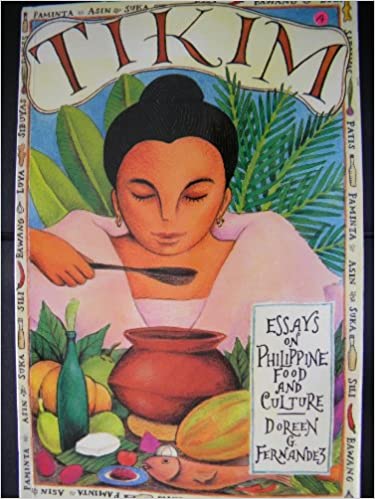
At first she was unsure of the task. “How many words are there for ‘delicious’?” she wrote in the introduction to her 1994 essay collection, “Tikim.” (The title comes from the Tagalog verb tikman: to try a little taste.)
She soon realized that there was more to food writing than merely sensory description. It required “choosing the words that echoed, that reverberated,” she wrote. “And then it was making the readers hear the silence between the echoes, and themselves load them with memory, sensation, and finally meaning.”
In 1972, Marcos imposed martial law and shut down the Chronicle along with most of the country’s newspapers. Shortly after, Ms. Fernandez began teaching at Ateneo de Manila University, where a number of professors had gone underground to fight the regime.
She shared their ideals, but was “not the type you can drag into the streets to carry a placard,” Ms. Aquino said. Instead, Ms. Fernandez contributed in her own way, transcribing revolutionary lectures and acting as a courier for the opposition on her trips abroad. In one possibly apocryphal story, she disguised herself as a nun to visit a friend in prison.
At a 2002 memorial to Ms. Fernandez, Rafael Baylosis, the onetime general secretary of the Communist Party of the Philippines, recounted how she tended his injuries after he was shot by government forces. (Mr. Baylosis is still a rebel leader, protesting the policies of President Rodrigo Duterte.)
After the Chronicle’s demise, Ms. Fernandez wrote about food for Mr. and Ms., a lifestyle magazine whose glossy format camouflaged an anti-Marcos agenda, and, starting in 1986, for The Philippine Daily Inquirer, where her column “In Good Taste” ran for 16 years.
Her work took on a mission: to recover the past. “There was and still is a mountain of knowledge suppressed or glossed over by colonial education,” said Karina Bolasco, the former head of Anvil Publishing, which printed “Tikim.”
On the job, Ms. Fernandez ate everything, but only spoonfuls of sweets, as she had suffered from Type 1 diabetes since she was young. In her 50s, she received a kidney transplant from a nephew. (Her husband, who also had diabetes, died in 1998; they had no children.)
Ms. Bolasco used to accompany Ms. Fernandez on her restaurant forays and witness “the legendary injection” of insulin: “She raised her blouse and matter-of-factly plunged the syringe while describing to me the kind of cuisine the restaurant was famous for.”
If she liked a dish, she might hum a little tune. If she didn’t, “she was never mean,” wrote Chelo Banal-Formoso, her last editor at the Inquirer, in a 2002 notice informing readers of her death.
Her laugh “was discreet but ticklish,” recalled Felice Prudente Sta. Maria, a fellow food writer and friend. “She came from a generation bred to be polite even when criticizing and disagreeing.”
In a tribute after her death, the journalist (and future legislator) Teddy Casiño described Ms. Fernandez as “a transformed burgis.” Approached with a tale of distress, she immediately pulled out her checkbook.
Still, she never quite shed the assured aura of the aristocrat, even in her preferred uniform of denim and comfortable flats — “no jewelry, no expensive watches, no heels even at formals,” Ms. Bolasco said.
Ms. Fernandez wore her hair in a bob that turned silver in her 60s. For Jonathan Chua, the dean of the School of Humanities at the Ateneo de Manila, the curves of her face called to mind Mrs. Potts, the teapot voiced by Angela Lansbury in the animated film “Beauty and the Beast.”
Some of her readers today might be surprised to learn that she didn’t cook. This wasn’t unusual for an educated Filipino woman of her time. A housekeeper made the memorable meals served to guests.
But Ms. Fernandez never took this labor for granted, and in her work she honored it, focusing on home cooks, sidewalk vendors and those who rely on the earth’s bounty — farmers, fishermen and foragers, who know “when the maliputo (yellowfin jack) enter the Pansipit river to spawn; when and where the wild edible fern is to be found; which bananas have which sweetness or flavor; which mushrooms are safe and what rains bring them.”
On a trip to New York in June 2002, Ms. Fernandez fell ill and died of complications from pneumonia. She was so prolific that she had left behind weeks of columns, along with two unfinished book manuscripts.
For the Filipino-American chefs and restaurateurs now seeking out Ms. Fernandez’s works, it isn’t easy: They were published only in the Philippines and are almost entirely out of print.
After opening Bad Saint in the fall of 2015, Genevieve Villamora bought everything from Ms. Fernandez’s oeuvre that she could find, scouring used-books websites. Today, copies can command more than $700, if they are available at all.
Mr. Olalia, the chef at Ma’am Sir, raided his mother’s bookshelves, and hunted for rare imported compilations at Now Serving, a Los Angeles cookbook shop opened in 2017 by the chef Ken Concepcion and his wife, Michelle Mungcal. Ms. Ponseca was lucky enough to receive “Tikim” in the mail, sent out of the blue by an Instagram follower.
“The victors always tell the story,” Mr. Olalia said. But Ms. Fernandez’s research showed that Filipino food was more than a motley of imposed external influences. Ingredients and techniques from other cultures weren’t simply borrowed, but adapted and “indigenized,” as she put it, to please the local palate.
Last year, Ms. Choy lobbied the Dutch publisher Brill to reprint “Tikim.” In a foreword to the new edition coming out in December, the San Francisco chef and activist Aileen Suzara praises Ms. Fernandez for upending the colonial narrative and evoking “the luminous possibilities of a living culture.”
In the Philippines, Anvil is readying a reissue of “Tikim,” at a time when the country is once more beset by extrajudicial violence and government crackdowns on the press.
With Ms. Fernandez’s intellectual rigor and commitment to clarity, “she wouldn’t have survived this era of deep fakes and truth decay,” Ms. Bolasco said.
Or maybe, she added, “she would have been the fiercest warrior to fight them.” (From the New York Times, 2019)
‘Let there be no doubt, the Supreme Court stands with them,’ the Court assures members of the legal profession
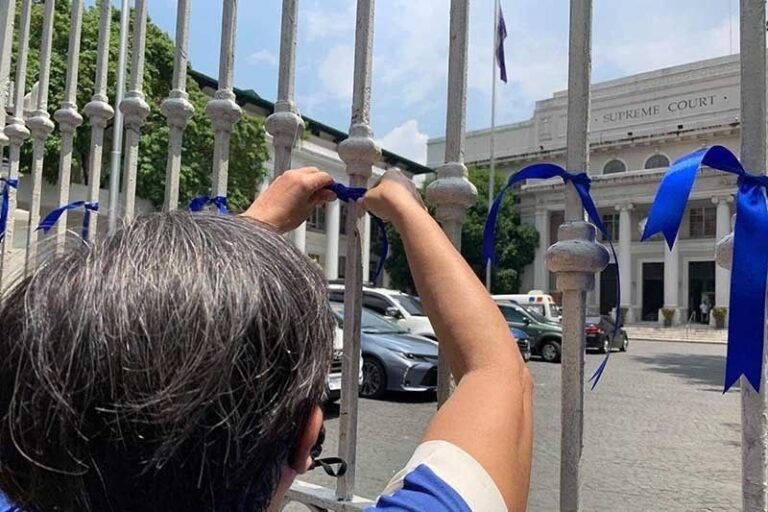
In a rare move, the Supreme Court en banc on Tuesday, March 23, issued a statement condemning the killings of lawyers, judges, and prosecutors, and vowed to look into institutional changes to better protect them.
The 15 justices agreed on making the unprecedented move of issuing a collective public statement amid mounting pressure from lawyers demanding decisive action from the Supreme Court.
“The Court condemns in the strongest sense every instance where a lawyer is threatened or killed, and where a judge is threatened and unfairly labeled,” the justices said in a statement read by Spokesperson Brian Keith Hosaka after their en banc session Tuesday afternoon.
“We recognize the bravery of all the judges and lawyers who show up to administer justice in the face of fear. Let there be no doubt, the Supreme Court stands with them,” the Court said.
“At no more fitting time than now should the Judiciary remain undaunted, with a clear vision of taking courage, enforcing the law, and upholding the supremacy of the Constitution,” it also said.
The Supreme Court has provided a clear timeline to assess what institutional change can be made. From that day, March 23, to the end of April, it asked courts and law enforcement agencies to furnish it with “relevant information to shed light on the number and context of each and every threat or killing of a lawyer or judge within the past 10 years.”
“We also urge the public – including public interest organizations, lawyers and judges’ groups – to provide us with vetted information on any incident of such threat or killing,” the Court said.
All this information will be submitted to the Court through its Public Information Office (PIO).
“In so doing, we can assess what revision or institutional change is necessary to effectively and efficiently further protect our basic rights,” said the Supreme Court.
“The Supreme Court calls upon the entire Judiciary and all members of the legal profession to remain strong, steadfast, and unwavering in the duties they swore an oath to fulfill,” it added.
Based on the last consolidated data, there have been 61 lawyers, judges, and prosecutors killed in the last 5 years of the Duterte administration. This is a disproportionate number because the same data would show only 49 lawyers, judges, and prosecutors were killed in a span of 44 years under the presidencies of Ferdinand Marcos to Benigno Aquino III.
Institutional changes
The last time the Court en banc issued such a public statement was in 2018, when 13 justices had to clarify the parameters of then-Chief Justice Maria Lourdes Sereno’s “wellness leave” – a different kind of upheaval for the Court.
One of the concrete moves laid out in the Court’s statement on Tuesday is an automatic conversion of letters which contain specific incidents to petitions for, “but not limited to,” writs of amparo or habeas data.
There have been criticisms that these writs have become ineffective especially under President Rodrigo Duterte.
“Based on the information provided, the Court will then decide on the next courses of action, including the amendment of the relevant rules, or if necessary, the creation of new ones,” the Supreme Court said.
The Supreme Court will also coordinate with law enforcement to investigate the red-tagging of Mandaluyong Judge Monique Quisumbing-Ignacio, who was linked to communists after she freed two activists.
“We do not and will not tolerate such acts that only perverse justice, defeat the rule of law, undermine the most basic of constitutional principles, and speculate on the worth of human lives,” said the Court.
‘Finally’
Lawyers’ groups welcomed the Supreme Court’s “comforting and reassuring” statement.
“Finally, the Court has spoken. It is generally both comforting and reassuring to the legal community even as it took some precious time to happen and at great cost,” said Edre Olalia, president of the National Union of Peoples’ Lawyers (NUPL).
The attack on NUPL’s Angelo Karlo Guillen moved many lawyers to join the calls and demand the Supreme Court for decisive action.
After nearly a month of mounted and coordinated events pressuring the Court to do something, the justices agreed en banc to speak.
“The Bench and the Bar, as well as the public, can rest assured that we will continue to unflinchingly comply with our constitutional duty to act decisively when it is clear that injustices are done,” said the Court.
The judiciary has been under scrutiny for being allegedly complicit to injustices, pronounced in the arrests and killings of activists through search warrants, and the death of an infant because of the passivity of courts.
The justices said they always operate “within institutional restraints.”
“But it is far from resigned to spectate as clear breaches of constitutional rights are carried out beyond its halls. We remain conscious of our role to ensure that the rule of law is resilient and effective in a just, fair, and timely manner,” said the Court. – Rappler.com
By Paul de Guzman March 20, 2020, Tatler Philippines
Are we Filipinos because we love music, or do we love music because we are Filipinos?
This feature story was originally titled as Historical Notes, and was published in the August 2008 issue of Tatler Philippines
Seems as if music is the one field in which Filipinos can’t help but succeed. We send a singer to an international competition and he or she will almost certainly come home with a prize, if not the top prize. Let a homegrown show band play at a cruise ship or the bar of a chain hotel and it’s sure to give guests a good time. Still, winning international singing competitions or entertaining hotel guests doesn’t begin to speak of how much music means to Filipinos. To be Filipino is to have a soundtrack album built into your life—there’s music for every occasion or emotion. Nothing is too mundane to be unworthy of music.
Because music is valuable, our cultural heritage has become rich, colourful, and vibrant—just like the people who create it. But few of us can truly claim to having a fine understanding and appreciation of our cultural heritage. Felipe de Leon Jr., professor of art studies at the University of the Philippines Diliman, says that being unaware of the beauty of our culture is a liability. The lack of cultural awareness muddles our sense of identity.
Getting in touch with our musical roots—and understanding that music says as much about us as history and the other arts—can have the grandeur of looking deep into our souls, as well as the simplicity of knowing our name.
De Leon says that Filipinos are “among the most highly relational people in the world”—we simply love to connect with others. We work in big groups. A party that doesn’t involve the entire community is unimaginable, when a Filipino woman has to go to the restroom, her friends often tag along, no questions asked. To most Filipinos, being close to others—and the self disclosure and inquisitiveness involved in connecting with others—often trumps privacy.
The preference for a sense of community in favour of individuality manifest itself in traditional Filipino music. Whereas classical Western music strictly follows the seven-note diatonic scale (the “do re mi”) with sharps and flats in between each note, traditional Filipino music has “no isolated notes,” de Leon points out. The music of indigenous cultures and even of many Muslim and Christian Filipinos tends to be “bridged by slides or a microtonal continuum.”
For example: If a Western singer could go from “mi” to “fa” in one step, the traditional Filipino singer sees that single step as a big jump, since many notes lie between “mi” and “fa”, notes that Westerners don’t even know exist. This is why you often encounter the hagod style of singing in Filipino music, where the singer glides or slides between notes.
Traditional Filipino music also speaks of how we perceive time. Before the arrival of Westerners, Filipinos didn’t have a strict concept of how time should be divided. There were no seconds that made up a minute, no minutes that made up an hour, no hours that made up a day. Filipinos didn’t think of time as something that should be divided into small components, but as something that is huge and whole, something that moves like a stream. Because of this, there is also a flowing quality to our music. This is most evident in the way members of the Kalinga tribe play the tongali (nose flute), which sounds fluid and graceful.
INDIVISIBLE FROM LIFE
Regardless of which part of the country we are in or which ethnic group we belong to, we will always have music playing in the background of our daily activities. Sometimes, it even takes centre stage.
Many indigenous cultures even see music as something that can never be detached from their lives—some cultures don’t even have a generic term for vocal music, or even “music” in general (CCP Encyclopedia of Philippine Art, 1994). These are the Filipinos who live “closest to nature” says de Leon. These include the peoples of the Cordillera, the Mangyan, the Aeta and the lumad (indigenous communities) of Palawan and the Mindanao highlands.
Adds de Leon: “Life to them is an indivisible whole. Art, myth, ritual, work and activities of everyday life are all integrated into one. Spirit and matter, God and nature, the visible and invisible worlds are not a dichotomy but interpenetrate in many ways. Of all Filipino subcultures, indigenous art is the most integrated with everyday life, multifaceted and participative.”
There are songs to celebrate every turn of the life cycle—the Kalinga sing an owiwi to talk about a child’s life, or a dagdagay to predict what will happen to him in the future. They also have music to accompany the first time a child is bathed outside the house (dopdopit) or to celebrate the first time a child wears a necklace (kawayanna). They sing songs for married couples, which include the tamuyong, a prayer for blessing; the dango, a sort of “thank-you” song; and the dangdang-ay, a love song that serves to entertain. Songs for death are also present, such as the Bontoc’s didiyaw. The Ifugao, meanwhile, sing the bangibang to avenge someone who died unexpectedly.
There are songs for work. The Aeta call their work songs duduru, and pray before planting by singing a panubad. The Bontoc sing the sowe-ey while pounding rice, the Kalinga the daku-yon while hunting bats, the Batac the didayu while making wine, and the Ilongot the dinaweg while catching boar.
The music of many of our indigenous cultures is often improvised and communal. “The culture puts emphasis on the creative process rather than on the finished product, making conception and performance simultaneous activities,” says de Leon. “Musical form is open-ended to provide maximum opportunity for creative communal interaction,” he adds.
When Islam arrived in the country in the 14th century, the culture and way of life of many of our indigenous peoples were enriched. It was the time when, according to de Leon, “West Asian mysticism” began to blend with “Southeast Asian animism”.
Inevitably, the music of the Moro—the Magindanaw and Tausug, the Maranaw and Yakan, among others—also manifested the influence of Islam’s arrival. Although all prayer is now directed to Allah instead of to nature and the spirits, many of the old qualities of indigenous music remained. There were still songs to celebrate movements in the life cycle and song for work—such as kwintangan kayu, which is performed by the Yakan for the growth of rice; bata-bata, a Tausug lullaby; and dikir, which is sung by the Maranaw during a wake or a funeral.
A wealth of religious music also developed after the arrival of Islam. This consisted of vocal music that corresponds to the Friday call to prayer (Salathul Juma), Ramadan (Tarawe) and the birth of Muhammad (luguh maulud).
Musical instruments also speak of the character and values of the Filipino Muslim. The gong, although present in most indigenous cultures, is one of the most distinctive. It can be used alone or in a row (kulintang). Writing for the Cultural Centre of the Philippines (1989), Antonio Hila points out that the kulintang ensemble is considered the “most cultivated of the region’s musical expressions.” It is not only used to entertain family and guests but “also serves as a venue for social interaction and group solidarity and for learning ethical principles.”
THE SPANISH INFLUENCE
The Spanish colonisation changed Filipino music forever. The Spanish brought with them their own musical traditions and instruments, which dominated Filipino musical expression in the last 400 years. And through contact with other Spanish colonies, music from the Americas (Cuba and Argentina, among others) also had an influence on our music. The mathematically precise divisions, not to mention the strict forms of Western music were alien to the native Filipino. Soon the locals adopted these forms and traditions.
Music was used by the friars to convert Filipinos to Roman Catholicism. The friars taught children their strange music—often speaking of a God that was alien to them, in languages that were equally alien. The children were also made to sing in church. After their musical education, these children were made to teach other children the white man’s music.
This “pay it forward” mode of music teaching reached its peak when Filipinos started writing their own misas and cantatas. Marcelo Adonay started as an altar boy at the San Agustin Church, learned music on his own and at the Colegio de Niños Tiples, and by the 1860s started writing celebrated religious music that earned for him the reputation “Palestrina of the Philippines”.
The arrival of foreign secular musical forms also led to the creation of new ones, such as the balitaw and the sarswela. De Leon points out that contrary to popular belief, the quintessential Filipino love song is not the kundiman but the danza. The danza, which developed and became popular during this period, was influenced by the habanera and the tango. Running in 2/4 time, it was the template from which such later love songs as “Dahil Sa ’Yo” and “Hindi Kita Malimot” were made.
The kundiman, meanwhile, is only occasionally a love song. According to de Leon, the kundiman is “devotional and spiritual,” which corresponds to its running in triple metre—long considered to represent the Holy Trinity in medieval Western music. Enduring examples of the kundiman are Jocelynang Baliwag, which inspired the revolutionaries of Bulacan in 1896, and the later “Bayan Ko“.
AMERICAN ARRIVAL
Western influence became even more widespread with the coming of the Americans. Not only did they bring their language, educational system and way of life; they also brought with them their music. American popular music brought the notion that music could be used purely for entertainment—hence the popularity of dance halls, vaudeville, radio and movie music.
Naturally, Filipinos started writing and performing music in the mode of American popular music. Katy de la Cruz, for example, reigned as “queen of bodabil (vaudeville)” during this period and even after the Second World War, and popularised the jazzy classic,”Balut“.
The American colonial period saw Filipinos mastering the Western classical idiom, as they started performing and creating classical pieces. Operas, which became popular in the country, produced such talents as Jovita Fuentes, who received acclaim for her international performances.
Composers trained in classical composition premiered works that were infused with a distinctively Filipino sensibility. Nicanor Abelardo, besides writing European-style classical pieces, created art songs in the mould of the kundiman—”Mutya ng Pasig“, “Nasaan Ka Irog“, and “Kundiman ng Luha“, among others.
The classical composers of the period showed and proved themselves equally adept in creating popular pieces. Francisco Santiago wrote not only “Concerto in B-flat minor” and the art song or kundiman “Madaling Araw” but also the music for numerous sarswelas.
Even after the Philippines became a republic, the many ephemeral forms of American popular music continued to attract Filipinos.
Some of the most popular artists in the decades following the World War II were great mimics—artists who sound almost exactly like their foreign counterparts like a local Elvis Presley (Eddie Mesa) and Perry Como (Diomedes Maturan). The practice of translating the lyrics of songs into Filipino also became prevalent. Rico J Puno, for instance, adapted “The Way We Were” into the song “Luneta”.
But there were also a number of “original” voices that emerged during this period, some of them using the time’s dominant musical forms as a model for their compositions, or borrowing from earlier traditions. Examples are “Hahabolhabol”, as popularised by Bobby Gonzales and Sylvia La Torre; “Magellan” and “Mag-Exercise Tayo Tuwing Umaga”, written and performed by Yoyoy Villame.
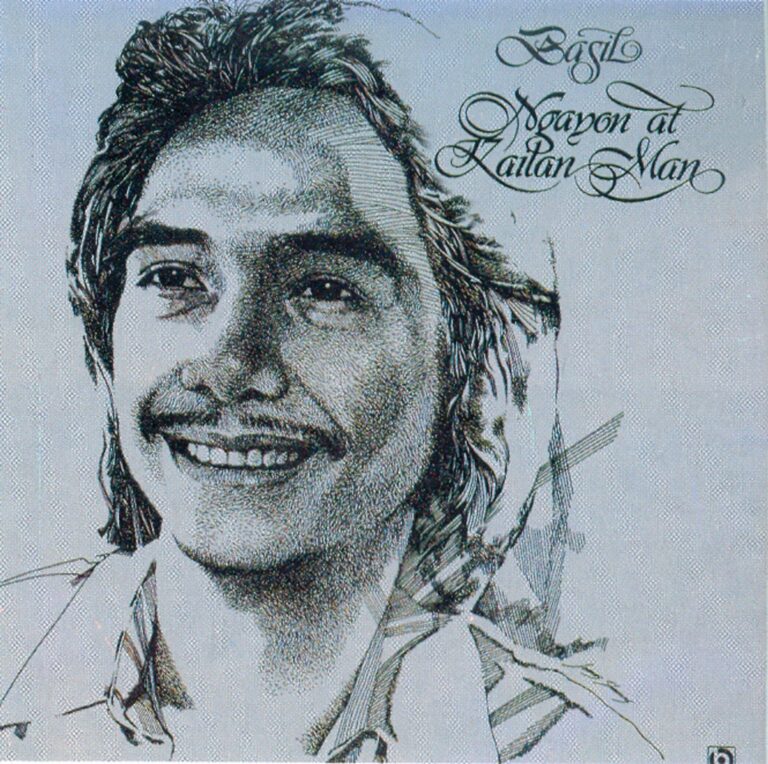
Over the years, pop composers, musicians and performers came to be embraced by a progressively larger segment of their target audience, making the entity that came to be known as Original Pilipino Music (OPM) not only highly commercially viable but accessible and formally diverse. There were ballads (such as George Canseco’s “Ngayon at Kailanman”) and rock songs (“Ang Himig Natin” by the Juan de la Cruz Band), as well as disco, jazz and rap songs.
Artists also tried harder to bring more “originality” to the concept of OPM by borrowing from the music that is originally Filipino—that is, the music of indigenous cultures. They used indigenous musical instruments together with “modern” electric guitars and synthesisers.
Folk-pop, although initially influenced by American folk musicians, quickly evolved to become a truly Filipino musical form. Music conceived and produced in this mode often had a sociopolitical bent. Among the artists who excelled in this fi eld were Freddie Aguilar (“Anak”), Florante (“Ako’y Pinoy”) and Heber Bartolome (“Tayo’y mga Pinoy”).
DIVERSITY AND HERITAGE
The diversity in musical styles, subjects and traditions reflects the many facets of our musical heritage. It also speaks of the vibrancy of our culture—some beliefs and practices remain the same, others adapt to the changing times, still others are created to respond to emerging needs.
Sadly, the Filipino capacity to adapt can be far more dynamic than our need to preserve old practices and traditions. Because of this, many of the things that make us truly Filipino are disappearing. But there are efforts at preserving our musical heritage and making it accessible to the public. For instance, the Filipinas Heritage Library (FHL), houses the Himig Collection: nearly 2,000 vinyl recordings that represent many forms of Filipino music, such as indigenous, Spanish and American-influenced, folk and pop. The records invite us to listen closely to our story as Filipinos in all its intricate glory, and be reminded that music and the soul are indivisible.
As of 2019, the Filipinas Heritage Library and Ayala Museum underwent a renovation and are expected to reopen this 2020.
Evelyn Macairan (The Philippine Star) – March 22, 2021
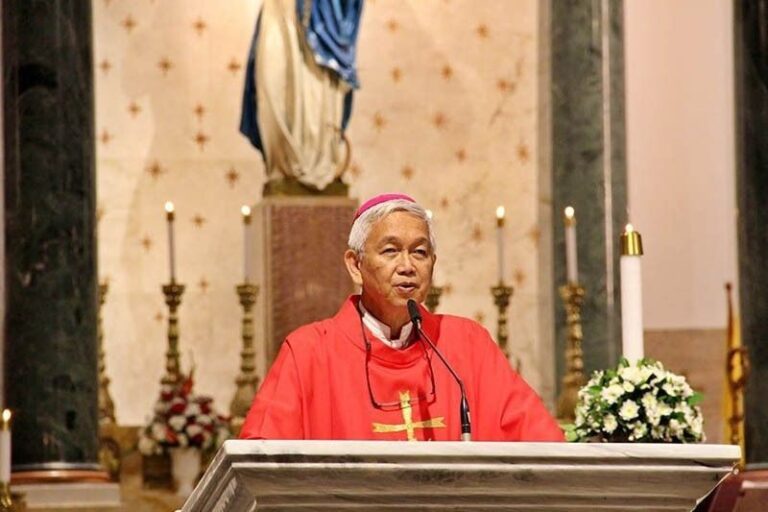
MANILA, Philippines — With the national elections set for May next year, Archdiocese of Manila apostolic administrator Broderick Pabillo asked the faithful if they are content with how the incumbent leaders are running the country.
In his homily for the Fifth Sunday of Lent, Pabillo talked about how “we have to let go of the old to get hold of the new.”
“This has an important meaning not only in our personal (lives), but for our country as well. Are you satisfied with the way they are running our country? Is this the best that we can achieve? If you are content, then let us continue with the present administration. But if you believe that the Philippines can be more than this, that we would not always be the one lagging behind… If you believe that the Philippines can go higher, then let us change the present system and those who are implementing it,” he said.
He said it is necessary to let go of the old in order to hold on to something new. “We have to die to the old to bring about a new reality. This is the paschal mystery. This is true for our personal lives, and this is true for our country also or for any situation of life, for that matter,” he added.
The prelate said the Philippines had already been left behind by neighboring countries in Asia such as Vietnam, Thailand, Malaysia and Indonesia.
Many Filipinos are living more difficult lives compared with how they did years before because of the COVID-19 pandemic, with the lockdown imposed by the government leading to many becoming unemployed and the scarcity of relief goods, according to Pabillo, chair of the Catholic Bishops’ Conference of the Philippines-Episcopal Commission on the Laity.
He said the vaccines that arrived are not enough for the people despite the large sums of money allocated and loaned to purchase the much-needed doses against the disease.
‘Bully President’
The recent Social Weather Stations (SWS) survey showing that a majority of Filipino adults believe that it would be dangerous to be critical of the present administration is an indication that Filipinos are being intimidated by a “bully President,” according to retired Novaliches bishop Teodoro Bacani.
Bacani yesterday emphasized that the SWS survey reflected badly on the country’s leaders, as many Filipinos hesitate to criticize the government not out of respect but fear.
“We have a bullied people led by a bully President. The greater part of our people live in fear and not in respect or affection for those in power. Imagine, the people are afraid of their public servants,” Bacani said.
“We need leaders whom we can follow with respect and admiration. Only the people can bring this about with God’s grace. May God give us the leaders we need in these trying times,” he added.
The latest SWS survey showed that 65 percent of Filipinos agreed that it is dangerous to publish or broadcast anything critical of the administration, even if it is the truth. The survey conducted face-to-face interviews with 1,500 adults from Nov. 21 to Nov. 25 last year.
For retired Sorsogon bishop Arturo Bastes, people should not be afraid of criticizing its government and revealing the evils in the society.
“Filipinos should learn a lesson. Not to criticize the government can lead to dictatorship. We must have the courage to expose what is evil in society. We are a democracy. In our system, power emanates from the people. Those who govern are at the service of the people,” Bastes said.
“People have the right to criticize the government if it fails to do its duty of giving good service to the country. Totalitarian government like the one in China will not and cannot tolerate criticism,” the prelate said, adding the democratic system should be allowed to work.
“The 65 percent of adults surveyed should be taught that our democratic government gives us freedom of speech to express the wrongdoing of our government.”
Kristine Joy Patag (Philstar.com) – March 22, 2021
MANILA, Philippines — More than 100 lawyers on Monday wrote to the Supreme Court to propose amendments to rules on the issuance and service of search warrants in response to the killing of nine activists in bloody raids this month.
Led by National Union of Peoples’ Lawyers Neri Colmenares and Edre Olalia, 139 counsels asked the high court to “take immediate, concrete and responsive action” amid the killings and arrests of activists during implementation of search warrants issued by Metro Manila judges.
The lawyers said this has not only resulted in killings and arrests of people, but “also impacted on the public’s confidence in the integrity, prudence, and independence of judges.”
This is the latest push by lawyers to look into what they say is the “weaponization” of the rules of court, specifically in the search warrants that have led to the arrest of dozens of activists and the killings of others.
Simultaneous raids in the Calabarzon region on March 7 left nine activists, whom police have said were communist rebels, dead.
The lawyers said they propose a review of the procedure in the issuance of search warrants “towards ensuring that these are not issued perfunctorily but only after rigorous scrutiny by the courts, in accordance with constitutional standards and procedural safeguards, and bearing in mind the deteriorating human rights situation in the country.”
Review of memorandum circular
The lawyers proposed a review — with the participation of the Integrated Bar of the Philippines, other lawyers’ groups, and relevant civil society organizations — of A.M. No. 03-8-02-SC which allows Manila and Quezon City judges to issue warrants that can be implemented anywhere in the country.
Applicants for cases under the memorandum should also be limited to filing before the nearest court outside the subject area, but within the judicial region of that place, the lawyers said.
They also suggested that applications for search warrants filed with courts be raffled and distributed to other judges, which should also allow them to conduct thorough hearings before granting the orders.
“These proposed reforms will help ensure that the police cannot indulge in ‘forum shopping’ or choose their ‘favorite’ judges in filing search warrant applications,” they added.
Progressive groups have long called for a review of search warrants issued by Quezon City Judge Cecilyn Burgos-Villavert, which led to arrests of Bacolod and Manila activists in 2019 and of the “Human Rights Day 7” in December 2020.
The lawyers urged the SC to prohibit the “wholesale applications for search warrants and their consideration by a single judge.” Should there be multiple applicants, these must be distributed to other courts within the judicial region, they said.
Warrant served only during office hours
The lawyers also proposed that search warrants be served only during office hours, to avoid possible abuse by law enforcers and allow the subjects to call their lawyers. Should the operation be done beyond office hours or middle of night, the applicant must detail in the Return of the warrant the compelling reasons to do so, they said.
Police officials have stressed that warrants can be served at any time, and that serving them before dawn gives the raiding team the element of surprise.
Law enforcers must also document their operations, using body cameras or video-recording devices, and there should also be an express prohibition on restraint or relocation of the subject of warrant when search is being conducted, they added.
Before a case is submitted for resolution during inquest, the prosecutor must require law enforcers to submit the transcript of stenographic notes during the application hearings. The prosecutor must also be able to talk to the respondent to ascertain counter-allegations, they added.
In case of death during the service of warrant, the lawyers said this should be referred to immediate and automatic review of the implementation of warrant, and relevant documents must also be submitted to the Supreme Court.
The lawyers made a fresh plea to the SC: “The number of deaths resulting from the execution of search warrants has grown to an alarming level.”
“We ask the Court to initiate reforms to help ensure that judicial processes are not abused to violate the constitutional rights to life, liberty, security and property of all Filipinos and particularly based on recent events, activists and dissenters,” they added.
Chief Justice Diosdado Peralta said concerns on the issuance of search warrants, as well lawyers’ security concerns, will be on agenda on the en banc session on Tuesday.
Now that the vaccine is here, we can talk about herd immunity.
This time last year when COVID-19 was still a relatively new word flashing in every headline, herd immunity was being brought up as a possible alternative to lockdowns. The idea shot down quickly. As epidemiologists have discussed before, the only time to talk about herd immunity is when a vaccine is ready and not one second later.
Now that a vaccine is here, what exactly is herd immunity and how will the Philippines achieve it?
What is herd immunity?
Herd immunity occurs when enough people are immune to a virus that they can no longer become carriers of the virus and spread it to other people. It can occur when the majority of the population has been infected with the virus and developed antibodies to it, or when the majority of the population has been vaccinated against the virus and can no longer be carriers.
In short, herd immunity ensures that the virus essentially has nowhere else to go and can no longer spread and infect other people.
While most of the world relied on lockdowns and social distancing to battle COVID-19, Sweden used herd immunity as its coronavirus strategy. It’s a strategy that has drawn global criticism as Sweden now has the highest mortality rate among its Scandinavian neighbors. According to Australian epidemiologist Giden Meyerowitz-Katz, discussing herd immunity as a preventative measure before we have a vaccine is “simply wrong.”
But now that the vaccine is here, herd immunity is now a goal for every government health agency around the world.
How do we achieve herd immunity?
In order to achieve herd immunity in the Philippines, the majority of the Filipino population needs to be immune. This will happen through vaccination. The estimated threshold for herd immunity is said to be 70 percent, meaning 70 percent of Filipinos need to be vaccinated in order to achieve herd immunity.
According to Dr. Beverly Ho, a director at the Department of Health, herd immunity is being tackled with a three-level process by the Philippines’ health sector. Herd immunity can’t be achieved overnight. Instead, it must go through three tiers, so to speak, to achieve an immune population. According to Ho, the DOH’s first goal is to preserve the healthcare system so that it doesn’t collapse. This is where quarantines are most effective. An overflow of severe cases in hospital ERs and ICUs could damage the healthcare system, which already takes care of millions of patients with COVID and non-COVID cases.
DOH’s next goal is to radically decrease the morbidity and mortality of the COVID-19 virus. By preventing the spread of the virus through actions like social distancing, we prevent the virus from reaching the elderly or those with co-morbidities who could potentially die from the virus.
Once both goals have been achieved, the next goal is herd immunity, which can be achieved through vaccinations. In order for vaccinations to work, you need a functioning healthcare system to distribute the virus and a healthy populace to receive it.
How many people need to be vaccinated in order to achieve herd immunity?
According to Ho, the estimated herd immunity threshold for COVID-19 is currently at 70 percent. That means 70 percent of the population needs to receive the vaccine to stop the virus’ spread so it has nowhere else to go.
However, Filipinos have expressed their reluctance to receive the COVID-19 vaccine. Whether due to the impact of the Dengvaxia controversy or the country of origin of certain vaccines, only 46 percent of Filipinos want a vaccine, according to the Social Weather Station.
This time last year when COVID-19 was still a relatively new word flashing in every headline, herd immunity was being brought up as a possible alternative to lockdowns. The idea shot down quickly. As epidemiologists have discussed before, the only time to talk about herd immunity is when a vaccine is ready and not one second later.
Now that a vaccine is here, what exactly is herd immunity and how will the Philippines achieve it?
What is herd immunity?
Herd immunity occurs when enough people are immune to a virus that they can no longer become carriers of the virus and spread it to other people. It can occur when the majority of the population has been infected with the virus and developed antibodies to it, or when the majority of the population has been vaccinated against the virus and can no longer be carriers.
In short, herd immunity ensures that the virus essentially has nowhere else to go and can no longer spread and infect other people. ADVERTISEMENT – CONTINUE READING BELOW
While most of the world relied on lockdowns and social distancing to battle COVID-19, Sweden used herd immunity as its coronavirus strategy. It’s a strategy that has drawn global criticism as Sweden now has the highest mortality rate among its Scandinavian neighbors. According to Australian epidemiologist Giden Meyerowitz-Katz, discussing herd immunity as a preventative measure before we have a vaccine is “simply wrong.”
But now that the vaccine is here, herd immunity is now a goal for every government health agency around the world.
How do we achieve herd immunity?
In order to achieve herd immunity in the Philippines, the majority of the Filipino population needs to be immune. This will happen through vaccination. The estimated threshold for herd immunity is said to be 70 percent, meaning 70 percent of Filipinos need to be vaccinated in order to achieve herd immunity.
According to Dr. Beverly Ho, a director at the Department of Health, herd immunity is being tackled with a three-level process by the Philippines’ health sector. Herd immunity can’t be achieved overnight. Instead, it must go through three tiers, so to speak, to achieve an immune population. According to Ho, the DOH’s first goal is to preserve the healthcare system so that it doesn’t collapse. This is where quarantines are most effective. An overflow of severe cases in hospital ERs and ICUs could damage the healthcare system, which already takes care of millions of patients with COVID and non-COVID cases. ADVERTISEMENT – CONTINUE READING BELOW
DOH’s next goal is to radically decrease the morbidity and mortality of the COVID-19 virus. By preventing the spread of the virus through actions like social distancing, we prevent the virus from reaching the elderly or those with co-morbidities who could potentially die from the virus.
Once both goals have been achieved, the next goal is herd immunity, which can be achieved through vaccinations. In order for vaccinations to work, you need a functioning healthcare system to distribute the virus and a healthy populace to receive it.
How many people need to be vaccinated in order to achieve herd immunity?
According to Ho, the estimated herd immunity threshold for COVID-19 is currently at 70 percent. That means 70 percent of the population needs to receive the vaccine to stop the virus’ spread so it has nowhere else to go.
However, Filipinos have expressed their reluctance to receive the COVID-19 vaccine. Whether due to the impact of the Dengvaxia controversy or the country of origin of certain vaccines, only 46 percent of Filipinos want a vaccine, according to the Social Weather Station. ADVERTISEMENT – CONTINUE READING BELOW
In an interview with Summit Media, Ho addressed these concerns by reciting a popular quote among doctors today: “The best vaccine is the one in your arm.” She also reiterated that the efficacy of vaccines in the market when it comes to severe COVID cases is all almost 90 percent or above. Ho explains that while efficacy can vary in medium cases, which is essentially similar to the flu, almost all vaccines are effective when it comes to severe cases of COVID, which can result in death.
“When we talk about herd immunity, there has to be a percentage of the population that needs to have the ability to combat the infection. We’re talking about immunity to fight the infection such that when you have selected groups of people who won’t be able to get the vaccine, they will be protected,” explained Ho.
These individuals include children, pregnant and breastfeeding women, and people with extreme allergies, underlying conditions, and a compromised immune system. This essentially covers all persons with HIV/AIDS, immune diseases, transplant patients, and cancer patients taking immunosuppressive medicine.
Herd immunity acts as a shield for the individuals who are not qualified to receive the vaccine and are thus not as protected.
When will we achieve herd immunity?
It depends on how fast we can roll out the virus. As it is, it looks like it won’t be until late 2022 or early 2023 when we achieve herd immunity, according to the DOH.
By: Vincent Cabreza – Reporter/Inquirer Northern Luzon / March 21, 2021
The summer capital’s main trading zone has not only given livelihood to locals and migrants, but helped build a community
BAGUIO CITY, Benguet, Philippines — Freelance writer Luchie Maranan describes herself as “laking-palengke” (someone who grew up in the public market), as she remembers how the city’s marketplace gave her migrant family an opportunity to have a better life in a new city after the war in the late 1940s.
“Our parents Diego and Leonora migrated to Baguio from Batangas (province) in August 1949. They had heard that the mountain city could provide livelihood away from the quaint, rural villages of postwar Batangas,” said the 62-year-old Maranan, recalling in an email to the Inquirer a story shared by her parents.
s she was growing up, Maranan would hear her parents tell family members about how they sought shelter at the public market, just like what other new settlers did, paying a nearby hotel so they could bathe and use its toilets.
Her parents started from scratch and had to save up until 1952 to purchase stores at the Baguio public market.
The family’s dry goods stores were adjacent to the original Baguio Stone Market, built during the time of the Americans in the early 1900s, and which survived the Japanese occupation and bombing at the end of World War II in 1945.
**Photomapping of Baguio Market for Sunday story t0318luz2 **
MARCH 18, 2021
PHOTO BY EV ESPIRITU
Pioneers
“The Stone Market’s dim, cobblestone alleys were lined with well-lit shops owned by pioneering migrant families such as the Santiagos, Munsayacs, Contemprates, Bermudezes, Cuartelons and Datocs,” Maranan said.
“Our family’s stable and flourishing business would be disrupted when fire of disputed origin gutted a large section of the public market in February 1970, which affected the Stone Market building. Then again, another fire on March 15, 1970, … destroyed the dry goods section. [It was] caused by faulty … wiring, according to reports then,” she added.
What remained of the old market was a prewar concrete marker which, she said, was retrieved from the building’s basement many years later.
Maranan’s parents shifted to silver craft when they lost the family’s stores.
Now, more than 4,000 vendors make a living at the Baguio market, many of them migrant families who found new lives in what would become the country’s summer capital before and after the war.
Maranan is sharing her story to explain the passion behind a campaign to preserve the market from developers.
Like the wet markets of many communities in the country, the Baguio market has served as the economic lifeblood of this 111-year-old city since its establishment in 1913 by the American colonial government.
The market also serves as the public space where friends and neighbors eventually congregate.
In 2014, it became a rallying point for the city’s artists who turned sections of the market into a museum and bartered their paintings and sculptures for goods of equal value, saying they found inspiration in this worn-down, fairly disorganized center of Baguio commerce.
No changes
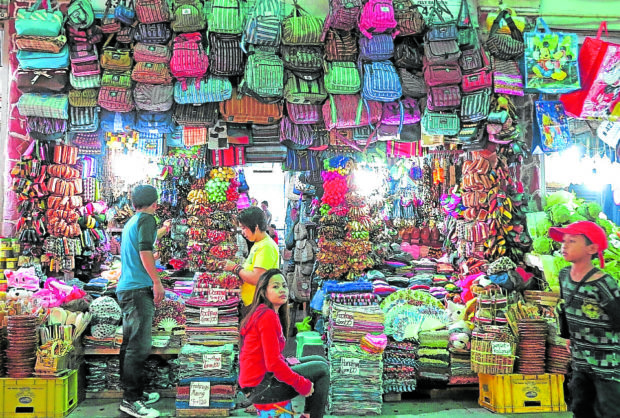
But what makes the Baguio market stand out is that almost everyone who has visited the summer capital also has fond memories about shopping for fresh vegetables and strawberries, jams, the popular walis tambo (broom), wood carving and souvenir items in its stalls.
Some officials believe this is the sentiment that has fueled public protests each time the Baguio government plans to build a modern market.
Except for a now rundown wet market building and a canopied trade area, no fundamental changes had taken place at the 6-hectare market in one of Baguio’s most expensive pieces of real estate.
The market was always rebuilt as a low-density infrastructure after being gutted by destructive fires in 1960, 1970, 1992 and 2008. It retained the same features after Baguio started recovering from the devastation brought about by the 1990 Luzon earthquake.
When the coronavirus pandemic struck, Mayor Benjamin Magalong entertained the unsolicited offer of two shopping mall developers to build a modern market, triggering new rounds of protests.
At a recent dialogue, many vendors said they wanted the market to be redeveloped without compromising its deep connections to the growth of the Benguet vegetable industry and to Baguio migrants who helped build the city.
Among them is 70-year-old Ifugao native Manuela Cruz, whose livelihood helped her get an education. She began working in Baguio as a 12-year-old store helper of a market trader who paid for her tuition.
Cruz inherited the vegetable stall she now operates, and raised enough money to get her four children through college.
Trade zones
She and other vendors are distributed in about 20 trade zones, like the “kaldero” (pots and pans) section and “tabako” (tobacco) sections, which were organized through a 1974 ordinance.
Since then, their numbers grew when previous Baguio administrations allowed even pocket parks in the market to be occupied with new stalls.
An environmental survey conducted by a technical working group that drafted a master plan for the market’s modernization last year observed “insensible interrelation of zones,” insufficient utilities to regulate waste, and poor use of open spaces as issues that needed correcting.
The market used to be much bigger, records also showed.
It is flanked by the Maharlika Livelihood Center, built in the 1970s, which took in Baguio’s souvenir shops that were displaced by fire, including Maranan’s family.
A shopping mall stands at an adjoining property once dubbed as the market’s “burned area.”
For frequent Baguio visitors, the main vegetable and souvenir alleys make up the market, so vendors have stories of meeting celebrities and political figures here, Cruz said.
“Local and foreign tourists teemed during summer and the ‘komboys’ (porters) could hardly carry loads of products bought, including inabel blankets, the ubiquitous brooms and everlasting garlands,” Maranan recalled.
She added: “Proof of having vacationed in the once City of Pines was not complete if one did not stuff their bayong with market produce.”
Hangar
Baguio residents, however, will make the extra effort to go deeper into the market, toward the vegetable wholesale area called “Hangar,” which they consider their “real market.”
The market is actually made of six postwar structures finished with the same Baguio stone used in the earlier market buildings, which were inaugurated in April 1952, said curator, author and archivist Erlyn Ruth Alcantara.
“In 1955, a government-issued aircraft hangar was moved into the market specifically for ‘native vendors’ and Benguet wholesale traders [which] became known as the Hangar market,” she said.
Alcantara said the city council of that period, which was dominated by migrants, decided “it was not fitting for a town of Baguio’s stature [to have] natives in loincloths and tapis (wraparound skirt) selling products in the open market.”
“In the early years, the mingling of people in tapis and loincloths — both buyers and vendors — added to the unique charm and character of the Baguio public market. Obviously the lowlanders in the 1950s saw it differently,” she said.
The Hangar is also the enduring link between Baguio and Benguet farmers who supply Luzon’s demand for salad vegetables.
But to Maranan, the market will always be at the center of how Baguio grew as a closely knit community.
“What made us special, ‘mga laking-palengke?’ Besides being known as offsprings of hardworking entrepreneurs, our ‘suki’ (repeat customers) both local, out-of-towners and foreign, forged friendly ties with our families, and watched us grow from kids who barely reached the top of the ‘estantes’ (store shelves), to business people ourselves, having inherited our parents’ honest and cordial relations with customers through the decades,” she said.
“The sense of community is so interwoven that customer relations are deepened and elevated into friendships,” she added.