Home Blog Page 85

Overseas Filipinos defy gloomy expectations, remit $33.2 billion in 2020

0

Feb 15, 2021, Ralf Rivas

MANILA, Philippines

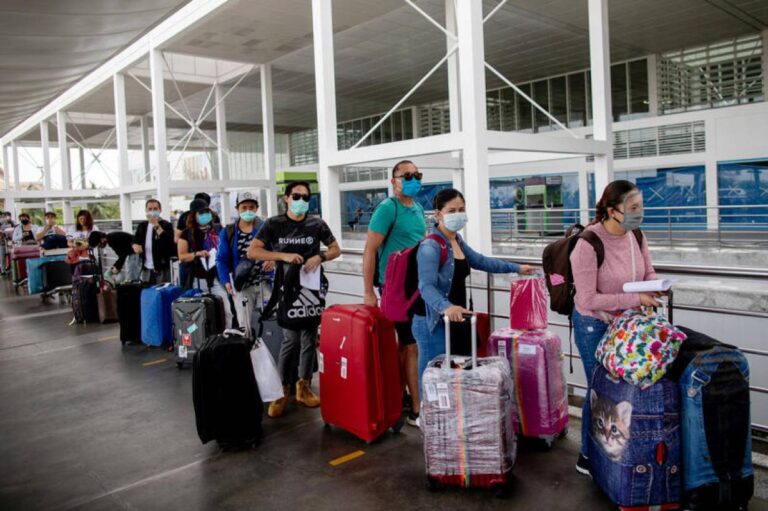
Remittances of overseas Filipinos contract by only 0.8% in 2020, beating economists’ expectations

Despite mass layoffs worldwide, repatriations, and lockdowns, remittances of overseas Filipinos (OFs) fell by only 0.8% in 2020, as workers found ways to send home much-needed funds to help support struggling loved ones in the Philippines.

Personal remittances from OFs reached $33.2 billion in 2020, data from the Bangko Sentral ng Pilipinas (BSP) showed.

The amount represents 9.2% of the Philippines’ gross domestic product.

Economists expected a much sharper drop due to the global recession.

However, ING Bank Manila senior economist Nicholas Mapa noted that the strength of the peso, brought about by the weakness of the Philippine economy, may continue to negatively impact households relying on dollars.

“For all the heroics displayed by our modern-day heroes, we do note the fading punch packed by once very potent [foreign exchange] flows from abroad. We note that adjusted for exchange rate movements, remittances are actually down more substantially than the 0.8% recorded by the BSP,” Mapa said.

In Philippine peso terms, Mapa noted, remittances have actually contracted by 4.8%.

“The remittance safety valve is further challenged with up to 420,000 overseas Filipinos repatriated due to job losses in their host countries, cutting off the steady stream of $500 usually sent home by each OF to their families back home,” he said. (READ: OFW tales: How some repatriated Filipinos are faring back home)

Mapa said vaccination rollouts across the globe brighten job prospects for OFs in the coming months.

By country source, cash remittances from Saudi Arabia, Japan, the United Kingdom, the United Arab Emirates, Germany, and Kuwait declined, while those from the United States, Singapore, Canada, Hong Kong, Qatar, South Korea, and Taiwan increased.

The US posted the highest share of the total remittances at 39.9%, followed by Singapore, Saudi Arabia, Japan, the UK, the UAE, Canada, Hong Kong, Qatar, and South Korea. – Rappler.com

Spiking prices and food security

0

Philippine Daily Inquirer /February 15, 2021

Inflation spiked last January to its highest in two years, catching government and private sector economists by surprise. Not only was the rate of increase in prices of basic commodities the highest since January 2019’s 4.4 percent, it also breached the government’s target range of 2-4 percent for 2021. The sad part is that the impact of high prices is terrible on poor households, as inflation for the bottom 30-percent income households climbed to 4.9 percent, also the highest in two years.

The culprit has been the rising price of pork, which was made expensive by the shortage in supply caused by the spread of the African swine fever (ASF) in hog farms across the country. The Philippine Statistics Authority (PSA) reported that the inflation for meat jumped to 17 percent in January from an already high 10 percent in December last year due to ASF-induced supply shortages. Compounding this was the seasonal tight supply for vegetables, with inflation for this commodity group jumping to 21.2 percent last month. Food accounts for about three-fifths of the inflation rate.

Economic officials said that upward price pressures started in October 2020 when pork supply tightened due to ASF, agricultural output was damaged by a string of typhoons in the last quarter, and mass transportation was still scant to ferry goods to areas that needed them, such as Metro Manila, because of the prolonged COVID-19 quarantine.

What is worrisome is the PSA’s projection that based on its survey trends, the high inflation environment could spill over to the coming months as price conditions — tight supply and logistical difficulties — remain in place. The danger with an extended period of high inflation is that it will prolong the country’s recovery from the recession caused by the pandemic as consumer spending, which fuels the economy, will be discouraged by expensive prices.

Since the problem is a shortage in supply, the solution should be to increase supply. The magnitude of this problem is evident in the 24-percent decline in the country’s hog inventory last January, which the PSA observed was the lowest annual starting stock in 25 years. Official figures also showed that the number of grower pigs (those used for breeding) was down by 29 percent. Eleven of the country’s 17 regions recorded lower outputs, while both commercial and backyard farms saw a sharp drop in their inventories, the PSA reported.

As the ASF pushed pork prices higher by as much as 44 percent, the government imposed 60-day price ceilings on pork sold in Metro Manila’s public markets and supermarkets. This, however, was met with protests from hog raisers and traders; they have refused to supply pork to market vendors since last week to allegedly cut further losses, further worsening the supply situation.

The country is estimated to now have a shortfall of 400,000 metric tons of pork. Industry experts say importing such volume will cost P60 billion at current prices. Stakeholders have yet to agree on how to approach the problem. While meat producers want the government to extend financial aid to the local industry to encourage hog raisers to reinvest, economists suggest reduced tariffs on pork imports to immediately quash the spiking retail prices.

While the government wants to do both, the short-term action needed is to decisively act on lowering tariff on meat imports and issuing in the shortest possible time the import permits to meet the huge supply shortfall. Only then can pork prices stabilize and go down. Given that the problem is a shortage in local supply, importation presents itself as the quickest solution to address the shortage. But this is, of course, merely a stop-gap recourse; more comprehensive structural retooling is needed to shore up and sustain local agriculture and prevent food insecurities from metastasizing, the way it has now.

Malacañang last week announced that it would convene a food security summit to tackle the spike in pork prices due to the ASF, along with other agriculture issues. It shouldn’t limit itself to those issues, but should also acknowledge and get to grips with the larger, more consequential picture long unaddressed but once again highlighted by the latest round of painful inflation: How to make the country self-sufficient enough in food that it wouldn’t have to scramble for imports and be at the mercy of foreign suppliers whenever emergencies and adverse conditions at home threaten the nation’s food supply.

Hundreds of thousands protest in Myanmar as army faces crippling mass strike

0

Feb 14, 2021, Reuters

https://www.rappler.com/world/asia-pacific/thousands-protest-myanmar-coup-after-night-fear-security-patrols

YANGON, Myanmar

(UPDATED) More than 384 people have been detained since the coup, says a monitoring group, in a wave of mostly nightly arrests

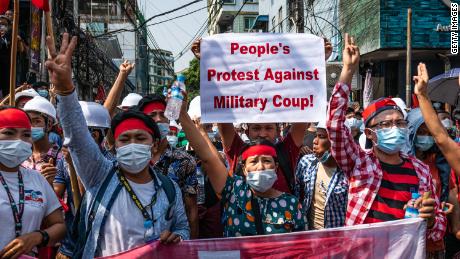
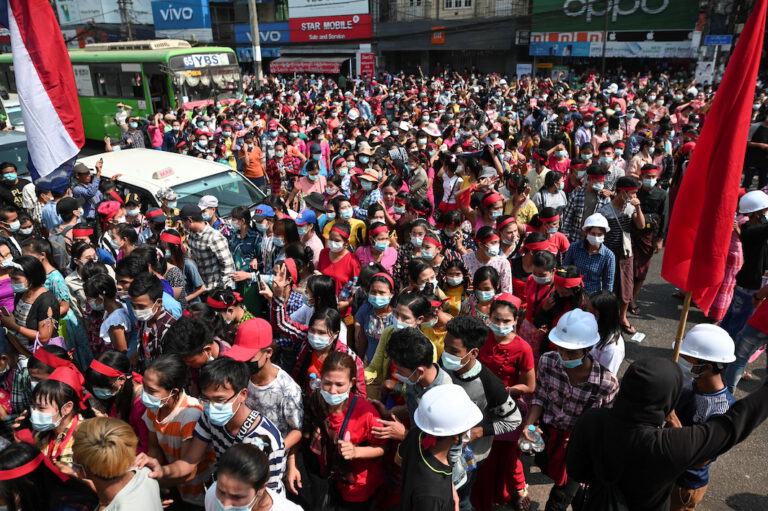
Hundreds of thousands of protesters took to the streets in Myanmar for a 9th day of anti-coup demonstrations on Sunday, February 14, as the new army rulers grappled to contain a strike by government workers that could cripple their ability to run the country.

Trains in parts of the country stopped running after staff refused to go to work, local media reported, while the military deployed soldiers to power plants only to be confronted by angry crowds.

A civil disobedience movement to protest against the February 1 coup that deposed the civilian government led by Aung San Suu Kyi started with doctors. It now affects a swathe of government departments.

The junta ordered civil servants to go back to work on Saturday, threatening action.

But hundreds of railway workers joined demonstrations in the commercial capital Yangon on Sunday, even as police went to their housing compound on the outskirts of the city to order them back to work. The police were forced to leave after angry crowds gathered, according to a live broadcast by Myanmar Now.

Soldiers were deployed to power plants in the northern Kachin state, leading to a confrontation with protesters who said they believed they intended to cut off the electricity to carry out nightly arrests.

“The military tried to control the electricity power sources since yesterday,” said Awng Kham, a local politician. “They might be able to control the power during the night while they are doing their business at night.”

Several power departments in Yangon said in Facebook posts that they would refuse to cut the power and expressed support for the protesters.

“Our duty is to give electricity, not to cut,” said one staffer, who asked not to be named for fear of retribution, adding that some of his colleagues were participating in the strike.

The government and army could not be reached for comment.

Richard Horsey, a Myanmar-based analyst with the International Crisis Group, said the work of many government departments had effectively ground to a halt.

“This has the potential to also affect vital functions – the military can replace engineers and doctors, but not power grid controllers and central bankers,” he said.

Mass protest

Hundreds of thousands of people protested across the nation after a fearful night as residents formed patrols and the army rolled back laws protecting freedoms.

Engineering students marched through downtown Yangon, the biggest city, wearing white and carrying placards demanding the release of ousted leader Suu Kyi, who has been in detention since the coup and charged with importing walkie talkies.

A fleet of highway buses rolled slowly through the city with horns blaring, part of the biggest street protests in more than a decade.

A convoy of motorbikes and cars drove through the capital Naypyitaw. In the southeastern coastal town of Dawei, a band played drums as crowds marched under the hot sun. In Waimaw, in Kachin state, crowds carried flags and sang revolutionary songs.

Many of the protesters nationwide held up images of Suu Kyi.

Her detention is due to expire on Monday. Her lawyer, Khin Maung Zaw, could not be reached for comment on what was set to happen.

More than 384 people have been detained since the coup, the monitoring group Assistance Association for Political Prisoners said, in a wave of mostly nightly arrests.

“While the international community is condemning the coup, Min Aung Hlaing is using every tool he has to instigate fears and instabilities,” activist Wai Hnin Pwint Thon from the UK-based rights group Burma Campaign UK said on Twitter, referring to the military ruler.

‘Stop kidnapping people’

Residents banded together late on Saturday to patrol streets in Yangon and the country’s second-largest city Mandalay, fearing arrest raids as well as common crime.

Worries about crime rose after the junta announced on Friday it would free 23,000 prisoners, saying the move was consistent with “establishing a new democratic state with peace, development and discipline.”

Tin Myint, a Yangon resident, was among the crowds who detained a group of four people suspected of carrying out an attack in the neighborhood.

“We think the military intends to cause violence with these criminals by infiltrating them into peaceful protests,” he said.

He cited pro-democracy demonstrations in 1988, when the military was widely accused of releasing criminals into the population to stage attacks, later citing the unrest as a justification for extending their own power.

Also late on Saturday, the army reinstated a law requiring people to report overnight visitors to their homes, allowed security forces to detain suspects and search private property without court approval, and ordered the arrest of well-known backers of mass protests.

Suu Kyi’s National League for Democracy (NLD) won a landslide victory in a November election that the army said was tainted with fraud – an accusation dismissed by the electoral commission. – Rappler.com

How coconut oil could be Pinoys’ answer to Korea’s billion-dollar beauty industry

0

Kathleen A. Llemit (Philstar.com) – February 8, 2021

MANILA, Philippines — For over a decade now, South Korea has been known not only for its K-pop and K-dramas, but also for its beauty industry that has been expected to grow to more than $379 billion, according to an IBISWorld report cited by CNBC. 

In the Philippines, while many are into multi-step Korean beauty regimen, Dr. Jayvee Lalusis is not one of them. 

According to Dr. Jayvee, she has been using only one beauty product on her face since college: the Philippines’ own homegrown coconut oil.

Coconut oil, said Lalusis, helps her save on bottles of expensive sunscreen or moisturizer as it is a cheaper and affordable way to protect one’s skin from the harmful effects of the sun’s ultraviolet rays as well as to keep it moisturized for a healthy and youthful skin.

Dr. Mari-Ann Bringas, chair of chemistry and bio-nutrition at the Far Eastern University-NMRF and executive board officer at the Philippine Association of Academic Biochemists, cited some instances when the vaunted oil from the tree of life have been known to give the skin’s sheen and protection.

“In Polynesia, they put coconut oil on their skin every day because they believe it protects them sun the sun’s radiation. Coconut oil is a common ingredient in commercial sunscreens,” she said during a recent virtual press conference.

She also cited an in-vitro study on the anti-inflammatory and skin protective properties of virgin coconut oil (VCO) by Sandeep R. Varma, Thiyagarajan O. Sivaprakasam, Ilavarasu Arumugam, N. Dilip, M. Raghuraman, KB Pavan, Mohammed Rafiq, and Ragnesh Paramesh published on the Journal of Traditional Complementary MEdicine. It said that VCO has been traditionally used as a moisturizer since centuries by people in the tropical region. She said that clinical studies revealed that VCO improves the symptoms of skin disorders by moisturizing and soothing the skin. The study demonstrated the anti-inflammatory activity of VCO by suppressing inflammatory markers and protecting the skin by enhancing skin barrier function.

While coconut oil is taken from “kopra” or dried coconut flesh, VCO is obtained from fresh, matured kernel of the coconut by mechanical means with or without undergoing chemical refining, bleaching or deodorization.

Lalusis, Chief Executive Officer of GrowRich, the manufacturer of the first patented VCO hard gel capsule in the country, agreed.  

“Aside from taking it orally, my personal way of VCO is using it as a moisturizer and makeup remover. I open a capsule, sometimes two, and then massaage a small amount on the face for it to absorb. Then wash it off with a facial wash. You will immediately feel the difference,” she shared, adding that she has been awed at its efficacy since she discovered its uses when she was in college.

It was her parents, Dr. Edmundo Lalusis and Purisima, a chemist, who formulated GrowRich’s patented hard gel capsule form.

She continued: “Some friends use it for their scalp for dandruff. They find it more convenient to apply than the liquid form. Thrice-a-week application on the scalp can give noticeable improvement; daily application would achieve even better results.”

While the liquid form of VCO is often available in bottles, Dr. Lalusis shared that she prefers to extract the oil from a capsule.

“I want to use good quality oil. It is important to  note that the oil that is frequently exposed due to opening and closing of bottles makes it prone to contamination. Oxidation hastens rancidity. Such oil is not good because it can contain free radicals,” she explained.

With all these talks about coconut oil or VCO as the skin’s protector and nourisher, Dr. Bringas stressed a key point.

“VCO is all fats. We all know that anything oily you put on the skin will protect the skin. If you put another layer of protection that is not easily penetrable by water, that will give the sun protection you need. Apart from melanin, adding an additional layer of oil, which is the healthy oil, can block off the UV rays from the sun and definitely moisturize the cells. Your skin should be oily so that dirt will not go into your pores,” she said.

Patronizing our own coconut oil as a product, said Dr. Bringas, helps not only improve one’s beauty and well-being, but also our local farmers and the development of more studies that would strengthen the case of VCO as a COVID-19 treatment.

Group cautions public vs lucky charms containing toxic metal cadmium

0

By: Cathrine Gonzales – Reporter / INQUIRER.net /February 12, 2021

MANILA, Philippines — Good luck from charms might turn into a bad fortune, according to a local environment watchdog, if consumers won’t be keen enough to know that their prosperity amulets could be a vessel of poisonous substances.

EcoWaste Coalition on Friday warned of toxic chemicals in lucky charms, which lure many people especially around this time of Chinese New Year celebrations.

According to the group, it purchased and found some lucky charms laden with soaring levels of toxic metal cadmium.

“We caution consumers from buying and wearing lucky bracelets with ox components that are often made of cadmium alloy,” Thony Dizon, chemical safety campaigner of EcoWaste Coalition, said in a statement.

Dizon explained that cadmium belongs to the priority chemicals list or chemicals that the Department of Environment and Natural Resources-Environmental Management Bureau (DENR-EMB) has determined to pose an unreasonable risk to public health, workplace, and the environment.

The World Health Organization also listed cadmium among 10 chemicals of major public health concern.

EcoWaste said that of the 12 ox-inspired lucky bracelets it purchased for P35 to P250 a piece from retailers in Quiapo, Manila City, seven were found to contain elevated levels of cadmium ranging from 118,500 to 287,800 parts per million (ppm). The group used a handheld x-ray fluorescence analytical device to screen the samples for cadmium.

“These products would be illegal to sell in Europe, which prohibits cadmium equal to or greater than 100 ppm in jewelry due to the concern that children could be exposed to this toxic chemical through skin or oral contact with such jewelry,” added Dizon.

Cadmium is likewise classified as “carcinogenic to humans” by the International Agency for Research on Cancer, according to EcoWaste, noting the chemical is known as a reproductive and developmental toxin associated with reduced birth weight, premature birth, stillbirth, spontaneous abortion, and birth defects in humans, as well with behavioral and learning disabilities.

In 2016, the group requested the DENR-EMB to draw up a Chemical Control Order (CCO) for cadmium and its compounds after detecting high levels of cadmium in some cosmetics, electronic goods, jewelry, toys, and plastics, particularly tarpaulin materials.

EcoWaste said a CCO is urgently needed to prohibit, limit or regulate the use of cadmium, particularly in the production of certain products that could expose the public from “preventable sources of cadmium exposure,” or pollute the environment with cadmium through unsafe disposal practices.

The DENR-EMB has released a draft CCO for public comments in 2018 but it has yet to be signed and promulgated, it said.


Half of PSG’s Covid-19 vaccines from Sinopharm allocated to their wives

0

By: Cathrine Gonzales – Reporter / INQUIRER.net / February 12, 2021


MANILA, Philippines — Half of the 10,000 Covid-19 vaccines from China’s state-owned pharmaceutical company Sinopharm will be allocated to the wives of members of the Presidential Security Group (PSG), the Food and Drug Administration (FDA) said Friday.

FDA director-general Eric Domingo confirmed this in a text message to INQUIRER.net, saying the wives of the PSG personnel are “close contacts of the soldiers.”

Malacañang earlier announced that the FDA has issued a compassionate use license for 10,000 doses of the vaccines for PSG members.

Presidential spokesperson Harry Roque earlier said the vaccines may also cover families of the PSG personnel since the number of President Rodrigo Duterte’s security detail would not reach 10,000.

The issuance of compassionate use license means the vaccines can be administered even without the FDA’s emergency use authorization (EUA), which is being required for available Covid-19 vaccines to be legally administered in the country.

Sinopharm has yet to apply for an EUA in the Philippines’ FDA. Only Covid-19 vaccines from Pfizer-BioNTech and British-Swedish drugmaker AstraZeneca have so far secured this approval in the country.

But despite the nonissuance of an EUA or compassionate use authorization, some of the PSG’s personnel have already been vaccinated against Covid-19 as early as September, according to PSG commander Brig. Gen. Jesus Durante III.

He said PSG personnel, with the help of their medical team, administered the vaccines among themselves without asking permission from the President.

In December last year, the developer of Sinopharm vaccines said the inoculation shots are 79.34 percent effective at protecting people against the respiratory disease.

Thousands protest Myanmar coup despite internet ban

0

Feb 6, 2021/Reuters

yangon, myanmar

(UPDATED) In an upwelling of anger in the country’s largest city protesters chant, ‘Military dictator, fail, fail; Democracy, win, win’ and hold banners reading ‘Against military dictatorship.’

Thousands of people took to the streets of Yangon on Saturday, February 6, to denounce this week’s coup and demand the release of elected leader Aung San Suu Kyi despite a blockade on the internet by the junta.

In an upwelling of anger in the country’s largest city protesters chanted, “Military dictator, fail, fail; Democracy, win, win” and held banners reading “Against military dictatorship”. Bystanders offered them food and water.

Many in the crowd wore red, the color of Suu Kyi’s National League for Democracy (NLD) which won the November 8 elections in a landslide, a result the generals have refused to recognize claiming fraud.

Thousands marched on Yangon’s City Hall. Drivers honked horns and leaned out of their cars and raised the three-finger salute, a gesture returned by protesters. Some of them held up NLD flags or pictures of Suu Kyi and clapped and danced.

By evening, the protesters had mostly dispersed. But for a fifth night, a cacophony rose in the darkness as people banged on pots, pans and drums in a show of resistance even as power cuts affected many districts of the city.

Thousands more took to the streets in Myanmar’s second city Mandalay and its military-built capital Naypyidaw, home to the nation’s government servants, where demonstrators chanted anti-coup slogans and called for Suu Kyi’s release.

The protests built despite a blockade of the internet imposed after demonstrators first began to gather. All day, the state-run broadcaster MRTV showed scenes praising the military.

Monitoring group NetBlocks Internet Observatory reported a “national-scale internet blackout”, saying on Twitter that connectivity had fallen to 16% of ordinary levels. Witnesses reported a shutdown of mobile data services and wifi.

The junta did not respond to requests for comment. It extended a social media crackdown to Twitter and Instagram after seeking to silence dissent by temporarily blocking Facebook, which counts half of the population as users.

Facebook urged the junta to unblock social media.

“At this critical time, the people of Myanmar need access to important information and to be able to communicate with their loved ones,” Facebook’s head of public policy for Asia-Pacific emerging countries, Rafael Frankel, said in a statement.

The United Nations human rights office said on Twitter that “internet and communication services must be fully restored to ensure freedom of expression and access to information.”

Norwegian mobile network provider Telenor ASA said authorities had ordered all mobile operators to temporarily shut down the data network, although voice and SMS services remained open.

Myanmar civil society groups appealed to internet providers to resist the junta’s orders, saying in a joint statement they were “essentially legitimizing the military’s authority”.

Telenor said it regretted the impact of the shutdown on the people of Myanmar but said it was bound by local law and its first priority was the safety of its local workers.

Amnesty International’s deputy regional director for campaigns, Ming Yu Hah, said shutting down the internet amid a coup and the COVID-19 pandemic was a “heinous and reckless decision”.

International fallout

Army chief Min Aung Hlaing seized power alleging fraud, although the electoral commission says it has found no evidence of widespread irregularities in the November vote.

The junta announced a one-year state of emergency and has promised to hand over power after new elections, without giving a timeframe.

Nobel Peace laureate Suu Kyi, 75, has been charged with illegally importing 6 walkie-talkies, while ousted President Win Myint is accused of flouting COVID-19 restrictions. Neither has been seen since the coup. Their lawyer said they were being held in their homes.

NLD member Aung Moe Nyo, chief minister of the Magway region, said on Facebook before the shutdown: “It is not OK to let the country fall under junta government. I am very much thankful to those who oppose this, to those government staff who oppose this. This act is to save the country.”

Sean Turnell, an Australian economic adviser to Suu Kyi, said in a message to Reuters on Saturday he was being detained.

Australia’s government, without naming Turnell, said it had summoned the Myanmar ambassador to register “deep concern” over the arbitrary detention of Australian and other foreign nationals in Myanmar.

A civil disobedience movement has been building in Myanmar all week, with doctors and teachers among those refusing to work. Every night people bang pots and pans in a show of anger.

The protests in Yangon would resume on Sunday, demonstrators said. One, who asked not to be named, said: “We will go and protest again tomorrow. If they arrest one person, we will try to pile in and fill up the truck as a group.”

The coup has sparked international outrage, with the United States considering sanctions against the generals and the UN Security Council calling for the release of all detainees.

It has also deepened tensions between the United States and China, which has close links to Myanmar’s military. Secretary of State Antony Blinken pressed top Chinese diplomat Yang Jiechi in a phone call on Friday to condemn the coup, the State Department said.

The generals have few overseas interests that would be vulnerable to international sanctions, but the military’s extensive business investments could suffer if foreign partners leave – as Japanese drinks company Kirin Holdings said it would on Friday.

Suu Kyi spent 15 years under house arrest after leading pro-democracy protests against the long-ruling military junta in 1988.

After sharing power with a civilian government, the army began democratic reforms in 2011. That led to the election of the NLD in a landslide victory four years later. November’s election was meant to solidify a troubled democratic transition. – Rappler.com

Food even more expensive, pushing inflation to 4.2% in January 2021

0

Feb 5, 2021, Ralf Rivas

MANILA, Philippines

(UPDATED) Poor Filipinos struggling to pay water and electricity bills now have more problems to worry about, as food prices jump amid the coronavirus crisis

Other than the COVID-19 crisis and unemployment, Filipinos now have even more problems to worry about as food prices are on the rise.

The Philippine Statistics Authority reported on Friday, February 5, that inflation surged to 4.2% in January 2021.

The latest figure is higher than the 3.5% recorded in December 2020 and the 2.9% posted in January 2020.

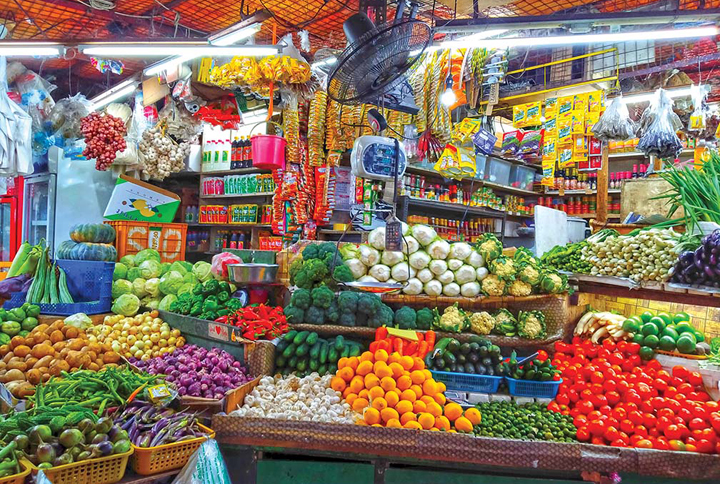
Food and non-alcoholic beverages pushed inflation up in January, with meat (17.1%), vegetables (21.2%), and fruits (9%) posting the highest increases.

National Statistician Dennis Mapa said pure meat pork in Metro Manila went as high as 77% and up to 45% in areas outside the National Capital Region (NCR).

Transportation costs also continued to rise, posting an 8.6% inflation rate. This is mainly due to higher fares for tricycles (46.7%), jeepneys (6.4%), and buses (4.5%).

Regions

Inflation in Metro Manila stood at 4.3%, higher than the national average, mainly due to higher food prices.

Rice, which has a heavy weight on the food index, accelerated by 2.3% in January. Corn prices soared by 40.9% during the month.

Inflation in areas outside NCR went up by 4.2%. 

Cagayan Valley posted the highest inflation rate at 8%, while the Zamboanga Peninsula had the lowest at 0.2%.

Inflation for poor income households surged to 4.9%.

‘Slowflation’

ING Bank Manila senior economist Nicholas Mapa described the latest inflation episode as “slowflation” or the uptick in prices of goods amid a recession.

“We expect inflation to remain elevated in the coming months with base effects and persistent cost side pressures to force the headline close to or above the 4% level,” Mapa said.

Bangko Sentral ng Pilipinas officials earlier said the uptick was merely “transitory,” but Mapa noted that these breaches tend to be “sticky” as “supply conditions only normalize after the next harvest season.”

The uptick in food inflation comes as the economy struggles to come out of recession due to the pandemic, leaving millions with no jobs, and utility companies and landlords start collecting deferred payments from last year.

President Rodrigo Duterte earlier heeded the call of the Department of Agriculture (DA) to cap prices of pork and chicken for 60 days, as unscrupulous traders allegedly jacked up prices.

Farmers and meat processor groups, however, doubt that Duterte’s executive order can be enforced.

The DA has also eyed lowering tariffs on pork and rice to tame prices, but senators questioned the proposal as it would hurt local farmers.

The government’s economic team expects inflation to settle within target between 2% and 4% this year. – Rappler.com