Home Blog Page 91

New Year’s Day tragedy: What really happened to Christine Dacera?

0

By: Consuelo Marquez – Reporter /INQUIRER.net / January 07, 2021

MANILA, Philippines — The shocking death of flight attendant Christine Angelica Dacera on New Year’s Day sparked queries and speculations all over social media.

The 23-year-old Christine was declared dead on arrival at a hospital after a New Year’s Eve party in a Makati City hotel where she was joined by more than 10 individuals.

Days later, circumstances surrounding her death remain unclear.

Police claimed that Christine was raped and killed while social media posts and suspects allegedly involved in the Dacera’s death contradicted this conclusion.

So what happened to Christine that night?

Here are the initial facts of the tragic night based on the police complaint lodged before the Makati City prosecutor’s office:

Dec. 31, 2020

Christine, along with Rommel Galido, Rey Ingles, Louie De Lima, John Pascual Dela Serna and Clark Jezreel Rapinan rented Room 2209 at the City Garden Grand Hotel in Makati City for their New Year’s Eve party.

At 11 a.m., dela Serna was the first to check-in at the room. An hour later, Christine joined him.

They were later joined by Galido, Ingles, De Lima and Rapina later that night, but no specific time was mentioned.

At around 10 p.m., the group started binge drinking to welcome the New Year. Galido noticed Christine was drinking tequila and rum coke.

Gregorio De Guzman, Valentine Rosales, Mark Anthony Rosales, Jammyr Cunanan and Eduard Madrid then joined Christine and her companions inside the hotel room.

It was Galido who invited the five new guests to the party.

Jan. 1, 2021

At 1:45 a.m., JP Halili arrived for the New Year’s celebration.

Based on a closed circuit television footage, Christine was last seen alive at 6:23 a.m. at the hallway of the 22nd floor of the hotel.

At 12:25 p.m.,  hotel employees received a call for assistance after Christine was found unconscious in the bath tub.

She was rushed to Makati Medical Center where she was declared dead on arrival.

The 23-year-old victim’s death certificate indicated that she died ofruptured aortic aneurysm, which could be because of very strenuous activity and possibly alcohol toxicity.

Reviving Christine, a friend

In an interview on ABS-CBN “Teleradyo” on Tuesday, De Guzman stressed that it was impossible her friend Christine was raped and murdered during the party.

De Guzman said he is an LGBTQIA+ community member and that he never had sexual relations with a woman.

On TV Patrol,  he also mentioned that he performed cardiopulmonary resuscitation (CPR) to try and save Christine, who had no pulse and was not breathing.

They loved Christine

Like him, De Guzman maintained that his other companions were all members of the LGBT community.

He also pointed out that Christine, the only girl in their group, loved hanging out with them.

He mentioned that Halili even helped stage a photoshoot for Christine during the party.

Tears

Despite seeing Christine unconscious, De Guzman said he held back tears because he tried to be strong for his companions, who were tearful during that night.

He said he only cried when Halili finally called up Christine’s mother, Sharon to deliver the bad news.

De Guzman also said he condoles with Dacera’s family because he cherished the 23-year-old flight attendant, who showed him “kindness” despite their short time together at the party.

Cause of death

Also interviewed over Teleradyo, De Guzman’s mother, singer Claire dela Fuente said they have a copy of official autopsy report showing that Christine’s laceration was healed.

There was also no semen found in victim’s body, based on the autopsy.

Citing the medico-legal report, dela Fuente said aneurysm was still Christine’s cause of death.

What the police are saying

Even without autopsy findings and a toxicology report, the Makati City police lodged provisional charge of rape with homicide against the  11 men last Jan. 4.

The Philippine National Police (PNP) also declared the case closed with the “arrest, indictment, and identification” of the suspects.

Halili, Galido and Dela Serna were detained after they surrendered to authorities.

Makati City police chief Colonel Harold Depositar believed that there was force inflicted on the flight attendant’s body because of contusions in her leg, knees and abrasion in her thigh.

Investigators also said there was evidence that Dacera was sexually abused.

Christine’s family and legal counsel, however, stressed that the death certificate was incomplete.

They believed that aneurysm was triggered by assault.

Sinas’ ultimatum

PNP chief Gen. Debold Sinas warned that they will launch manhunt against eight other individuals tagged in Christine’s death.

He said that if suspects fail to surface in 72 hours, police will go after them.

He also threatened to file a case to cite for contempt the suspects if they will not yield to authorities.

A day after the PNP chief’s ultimatum, the Makati City prosecutor’s office referred the complaints for further investigation, and ordered the release of Halili, Galido and Dela Serna.

he city prosecutor ordered the police to prove that Christine was actually raped and killed as well as determine the actual cause of the victim’s death.

Police were also ordered to submit DNA analysis report, toxicology/chemical analysis, and the histopathology examination report to the prosecutor. #
Philippines ‘not yet out of the woods’ of pandemic, DOH says

0

(Philstar.com) – January 8, 2021

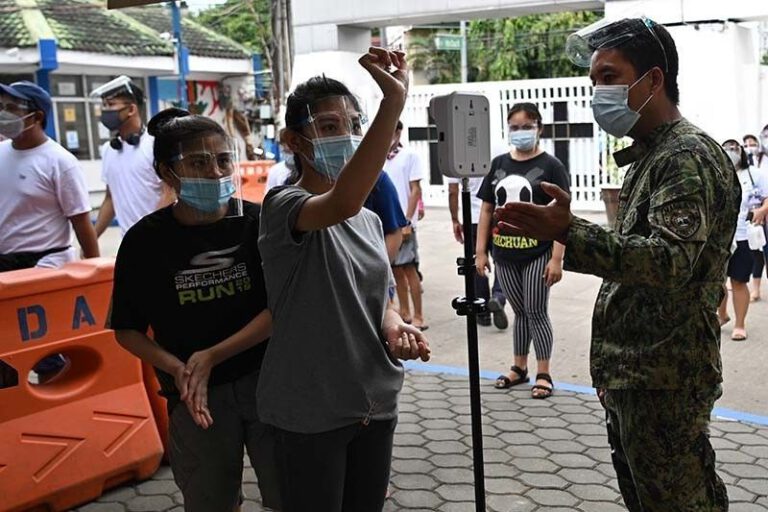
MANILA, Philippines — The public should remain vigilant and continue following mandated health protocols set by the government as the country is still “not out of the woods” in the fight against COVID-19, the Department of Health said Friday.

With over 483,000 COVID-19 cases, the Philippines has the second-worst outbreak in Southeast Asia following Indonesia but Malacañang claimed that the “worst is over” as it disputed projections that the Philippine economy will be the last in the region to recover from recession.

“I don’t think this is the time for us to make conclusions. At this point in our situation regarding this pandemic, we still have many factors and challenges that we need to face,” Health Undersecretary Maria Rosario Vergeire said, citing the threat of the new and more transmissible COVID-19 variant.

Experts warned that once the variant first detected in the United Kingdom reaches the Philippines and eventually becomes the most dominant form of the virus, it will lead to a much higher number of cases and deaths.

Vergeire also said the possibility of a post-holiday surge is still remains.

“We’re not out of the woods yet. Our recent trends are unstable… This is really because the effect of the decrease in the outputs of our laboratories,” she said, noting that outputs from testing hubs have decreased by as much as 30% since the beginning of the holiday season.

The agency earlier said that it can only be determined whether there was a post-holiday surge in COVID-19 infections by mid-January as more testing laboratories resumed their operations after the Christmas and New Year festivities.

‘Worst is over’

Presidential spokesperson Harry Roque on Thursday expressed confidence that the country’s economic prospects will be better in 2021.

“I think we have seen the worst and I think the entire government machinery agrees with this. We already know how our enemy COVID-19 looks like and this year won’t end without the vaccination of 50 to 70 million of our countrymen. We expect to achieve the 70% so we can have herd immunity,” Roque said.

“So don’t worry, the worst is over. As they said, we’ve hit rock bottom and the only way to go is up,” he added.

The new target of the government to inoculate as much as 70 million in 2021 alone depends on the global supply where 80% had already been procured by other nations.

So far, only 2.6 million doses of the vaccine developed by British-Swedish firm AstraZeneca have been secured by the country from a P600 million donation by the private sector

“Let me remind the people not to be complacent at this point. We’re not yet finished. Compliance to minimum public health standards must continue so we can prevent further increases in the number of cases recorded in the country,” Vergeire said.

Flattening the curve?

Foreign Affairs Secretary Teodoro Locsin Jr. also claimed, without basis, that the country’s epidemic curve has already flattened.

“It’s flattened. We don’t know why. I suspect it was the long and periodic lockdowns. It wasn’t science. But it took plenty of courage from those enforcing the lockdown because they had to be in the line of infection to keep as many of us in our places. Thank our generals,” Locsin, who is not a medical professional, said on Twitter.

The DOH has been cautious in addressing such claim and on Friday said it would “like to veer away” from the terms “curve” and “flattening.”

“What we know, just like what we have been explaining to everyone, especially now with our current situation that there are many factors affecting the daily reporting of cases, especially this holiday season… We can’t say it yet. We’re not certain at this point,” Vergeire said.

She stressed that the country is not seeing the full picture with the decrease in the number of tests being conducted.

“We need to wait for about one week or two weeks to see if there is really an increase in cases because of the holiday,” she added.

The country’s healthcare system is not overwhelmed at the moment—only 33% out of the 25,744 COVID-19 beds have been utilized.

But the Philippines still reporting thousands of cases daily, save for days when the country had fewer cases because of the decline in testing outputs.The COVID-19 situation of the country is a far cry from the situations in Taiwan and New Zealand which have kept their COVID-19 numbers low.

Moreover, the country’s positivity rate—or the percentage of people who have tested positive from all those who underwent testing—currently stands at 8.33%, higher than the benchmark of 5% set by the World Health Organization. 

Experts have also pointed out that flattening the curve does not mean the trend is irreversible. — Gaea Katreena Cabico with report from Alexis Romero

Is the blocking of Julian Assange’s extradition to the US a victory for free speech?

0

By Katy Dartford with AP  •  last updated: 04/01/202, Euronews.Com

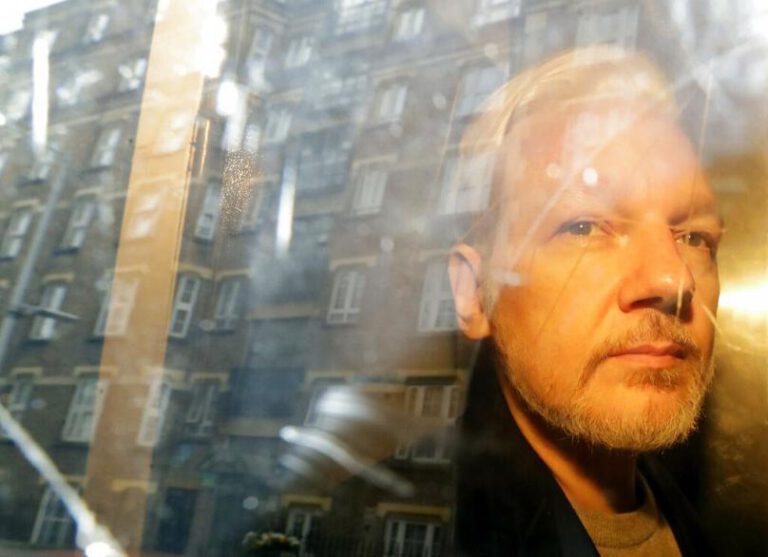
The decision by a British court not to extradite the WikiLeaks founder Julian Assange to the United States on espionage charges should be a relief to those interested in defending freedom of speech, according to Alan Rusbridger, the former editor-in-chief of the British newspaper, The Guardian.

Rusbridger, who now chairs the Reuters Institute for the Study of Journalism in Oxford, and is on the Facebook Oversight Board was once one of Assange’s biggest critics, calling him “a narcissistic egomaniac.”

But now he has warned that the US case against Assange should be a concern to all journalists.

“I’ve always said I’d stand by him for the stuff that we published together and while we’ve had our difference as people and indeed the way we did the story, I don’t think it’s appropriate to use the espionage act, which is basically about spying, to punish acts of journalism.”

US prosecutors have indicted Assange on 17 espionage charges and one charge of computer misuse – charges carrying a maximum sentence of 175 years in prison.

Lawyers for the 49-year-old Australian argue that he was acting as a journalist and is entitled to First Amendment protections of freedom of speech for publishing leaked documents that exposed US military wrongdoing in Iraq and Afghanistan.

‘The thin end of a very dangerous wedge’

For Rusbridger, the charges are for things that journalists recognisably do.

“Here we have an Australian journalist being prosecuted in the United Kingdom over the secrecy laws of the United States. Well, suppose an Australian journalist wanted to write about the Israeli nuclear weapons programme or the Pakistani nuclear weapons programme for example and a country were to use this attempted precedent to try and get somebody into jail in Pakistan or Israel for breaking local secrecy laws. I think anyone can see that’s the thin end of a very dangerous wedge.

“So whilst the judgment wasn’t very sympathetic to Julian Assange, I’m very glad that in the end, the judge ruled he shouldn’t be extradited to the United States.”

In the wake of the WikiLeaks revelations, several countries have toughened up laws over reporting on national security matters. Some argue that this is sensible in the digital age, where it is far harder to keep information under lock and key.

“The problem is when states complain about these kinds of journalistic activities, it’s embarrassment rather than security,” Rusbridger told Euronews.

“When states cite the national interest as a reason to suppress publication you have to treat that very carefully.”#

Who’s in charge?

0

Editorial, Philippine Daily Inquirer /January 05, 2021

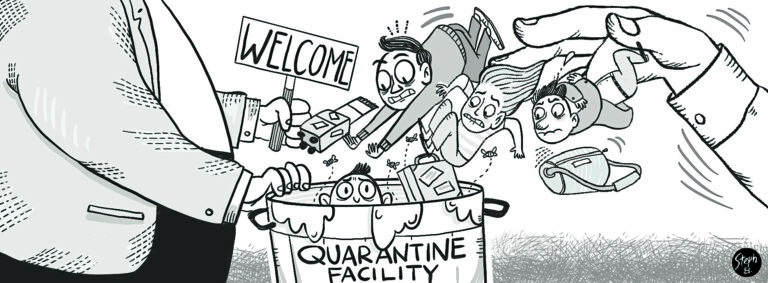
Yet another embarrassing gaffe by officials in charge of facilitating the quarantine of passengers arriving in the country happened when more than 100 Filipino and foreign passengers who arrived from the United States and South Korea on Dec. 29 were brought to a hotel where they were to spend their 14-day quarantine. The hotel was “dilapidated’’ and had filthy facilities, complained the passengers. “We are not quarantined, we are hostaged,’’ Fr. Alberic Lazerna, one of the passengers, told ABS-CBN.

By his and his fellow passengers’ accounts, the Canyon Woods hotel in Lemery, Batangas, had no running water, no internet provisions, rooms with moldy ceilings, and slimy bathrooms. The group to be quarantined included many foreigners, as well as children and an old man on a wheelchair.

Judy Sanchez, a balikbayan from the United States, said in the ABS-CBN report that the hotel looked like an abandoned building in Chernobyl, site of the nuclear accident that occurred in 1986 in Ukraine.

“Our room has no running water. The drainage is not working. Our bathroom is slimy, it’s like it was not being cleaned at all,’’ recounted Sanchez.

Worse, Lazerna said they were given just one food pack—consisting of rice, hotdog, and egg for breakfast. “It’s so sad we are showing the Philippines this way. This is unacceptable. This is frustrating and disgusting.”

Unacceptable is a mild word to describe the contemptible fact that after 10 months of community quarantine lockdowns, the concept of an efficient and systematic process for helping travelers go through the quarantine requirements still eludes our officials. Even more appalling is the official indifference to the travelers’ plight, with Bases Conversion and Development Authority president Vince Dizon, a deputy implementer of the National Task Force (NTF) Against COVID-19, quick to discount the accounts of Lazerna’s group despite photos and videos confirming the unsanitary conditions and general state of disrepair at the facility.

“This is a proper hotel even though it does not have a five-star rating. But because we want to help passengers traveling to the country, this is provided for free,’’ he said.

Would Dizon consider quarantining himself in that hotel for 14 days? Nobody is asking for a five-star hotel, just a clean and safe facility where travelers can stay without risk of contracting the virus or worrying about unclean surroundings.

Dizon pointed out as well that passengers have the option to quarantine in a better hotel but they must shoulder the cost. In other words, because the facility is provided for free, local and foreign travelers should meekly accept what the government considers passable, or “puede na.’’

Do government agencies even inspect the facilities they use for quarantine, to ensure that these accommodations are at the very least clean and provide the basic necessities such as water, food, and communication facilities? It is clear from the ordeal of Lazerna’s group which agencies were not up to scratch. The passengers arrived at the Naia at 10:30 p.m. on Dec. 29, waited for hours for their buses, left the airport at

4 a.m., and arrived at the hotel at 10 a.m. the following day. Lazerna pointed out there were no health, transport, or tourism officials who came to help them. The “runners’’ who assisted them at the hotel did not have identification cards, while the hotel itself appeared not to have expected their arrival.

The buck-passing was underway as soon as the travelers’ ordeal made it to the news. Overseas Workers Welfare Administration administrator Hans Leo Cacdac noted that his agency was not in charge of Lazerna’s group since they were not returning overseas Filipino workers or OFWs. Nonetheless, he said OWWA sent buses to transport the passengers to the hotel upon the request of the Philippine Coast Guard.

So who is in charge? It is ironic, and infuriating, that this question still needs to be asked given the many task forces and the virtual squadron of “czars’’ the government has formed to deal with the pandemic. The IATF and the NTF actually include practically all government departments in the COVID-19 response. And then there are the “czars’’—testing czar (Dizon), vaccine czar (Carlito Galvez Jr.), contact-tracing czar (Baguio City Mayor Benjamin Magalong), isolation czar (Public Works Secretary Mark Villar), etc. And yet, incoming travelers already worried about getting sick during their flight still have to suffer something like Canyon Woods?

While the hapless Filipinos in Lazerna’s group were still waiting for rescue, it was reported that the embassy of South Korea promptly moved to get their citizens out of the hellish situation. Let that embarrassment sink in—if that is at all still possible among officials of this administration.#

Gordon: Who’s behind vaccine smuggling?

0

By: DJ Yap – Reporter /Philippine Daily Inquirer / January 04, 2021

MANILA, Philippines — Who are they protecting?

The commander and troops of the Presidential Security Group (PSG) could just be the fall guys in the smuggling into the country and use of an unauthorized COVID-19 vaccine from China on selected Cabinet officials and presidential guards, Sen. Richard Gordon suggested on Sunday.

The chair of the Senate blue ribbon committee said he did not believe the claim of the PSG commander, Brig. Gen. Jesus Durante III, that the vaccine was procured on his own initiative, adding that Durante’s loyalty to President Duterte, while admirable, should be within the bounds of law.

“No, no, I don’t believe that. General Durante, I don’t believe you. I’m sure you did that out of loyalty, but certainly there are other people who had themselves inoculated [with the unauthorized vaccine],” he said.

Fall guys

“[They were made to take the fall]. That’s my speculation. We should find out who really brought in [the vaccine], because that guy should be prosecuted,” Gordon said in a radio interview.

“Who brought them in? Who were given the vaccines? Who did they talk to? If they’re really Chinese, then the government should determine who brought those Chinese medicines here and treated our people like guinea pigs,” Gordon said.

“I think some friends of ours tried to do a good deed, like ‘I obtained some vaccines, so use them already …’ But it’s not right … That is considered smuggling. That is considered illegal use of a medicine that has not been approved. That is considered reckless, and they could have endangered themselves,” he said.

Gordon said Durante’s loyalty was a “good trait to have” in a PSG chief, but not to the extent of violating the law.

“Because he violated the law, he should consider resignation. But I think, being the gentleman that he is—I don’t even know him and I’m not saying he should resign, I’m saying he should consider it—the blame would be pinned on him,” Gordon said.

“I wouldn’t want to be in his shoes,” he added.

Whoever ordered and allowed the entry of the unauthorized vaccines from Chinese pharmaceutical company Sinopharm should be held liable for smuggling and reckless use of illegal medicines under the Food and Drug Administration (FDA) Act, according to Gordon.

‘Someone powerful’

He said he did not believe Durante could have made the transaction without the backing of “someone powerful.”

Sinopharm, on the other hand, should be fined “at the very least,” he said. “They could also be blacklisted because there was deliberate intent [to circumvent the law].”

Gordon lamented how the illegal acquisition of the Sinopharm vaccine benefited only the privileged and those in power.

“Some are more equal than others. But if some were brought in, they should have been brought in at the same time. I don’t take away their right to be vaccinated, but there’s a right way and a wrong way of doing it,” he said.

Gordon added that those behind the vaccine smuggling could not hide behind good intentions as an excuse.

“Good faith is not enough to defend against a criminal act. They can’t just say, ‘I didn’t mean it, or my intention was good.’ The law is ‘mala prohibita,’ meaning you don’t need intent to be prosecuted, as long as you were caught in possession of a smuggled item or you’re directly in possession of a controlled item,” he said.

Durante disclosed in a TV interview last week that the presidential bodyguards received their first dose in September and the second in October, and that they vaccinated themselves without help from medical professionals.

Without identifying the person who provided the vaccine, the PSG commander claimed it was his own decision to make the request and that he did not ask for permission from Mr. Duterte to have the presidential guards vaccinated.

The President mentioned the PSG vaccinations during a televised meeting with health experts in Malacañang on Dec. 26. He identified the vaccine used as the one developed by Sinopharm.

But according to the FDA, the vaccine has not been registered for local use and distribution.

The FDA, Bureau of Customs and National Bureau of Investigation are looking into the illegal entry and use of the Sinopharm vaccine in the country.

Senate Minority Leader Franklin Drilon last week said Durante would be summoned to an inquiry by the Senate committee of the whole to explain the procurement of the vaccine and the presidential guards’ self-inoculation using the unapproved drug.

PSG defended

On Sunday, chief presidential legal counsel Salvador Panelo defended the PSG, saying the presidential guards should be commended for taking a risk to themselves to protect the President.

“They put their lives on the line to protect the President from being infected with the virus … The PSG’s action, aside from being legally valid, is consistent with—and pursuant to—its duty of securing the life of the President at all cost,” he said in a statement.

Panelo noted that the efficacy of the vaccine used by the PSG was not 100 percent and that the drug had no FDA approval. But being front-liners, he said, the presidential guards put themselves at risk to accomplish their mission.

“Consciously endangering one’s own life is not a crime. Instead of being criticized, these sentinels of the President should be commended for putting their lives on the line to protect the President,” Panelo said.

Countering assertions that the vaccine is not registered with the FDA, he said such statements presupposed commercial transactions for which the presidential guards could not be held liable because they only used the vaccine.

He also said the presidential guards’ actions had not caused any damage or injury to the public or anyone.

Double standard

But what message do the Filipino people get when high-ranking government officials allow the smuggling and use of an unauthorized vaccine on selected officials and soldiers, Vice President Leni Robredo asked.

Speaking on her Sunday radio program, Robredo said she shared the public’s sentiment that not only did the whole thing violate the law but also showed a double standard in the government.

“The rule is that whether donated or purchased, there are government agencies that need to approve it before it can enter the country,” she said. “We agree that uniformed personnel surrounding the President do need to be prioritized, but why wasn’t protocol followed, why were laws broken?”

The Vice President pointed out that other countries were already rolling out COVID-19 vaccines to their citizens but the Philippines don’t even have vaccines.

“[And yet] some [special people] have already been inoculated [without] following regulations,” she said.

The controversy, she said, has sent the message to the people that smuggling vaccines is “OK as long as you have the means and outside connections.”

With reports from Jerome Aning and Krixia Subingsubing

While Duterte threatens ‘crisis,’ Senate vows to probe gov’t vaccination program

0

Jan 5, 2021, Sofia Tomacruz

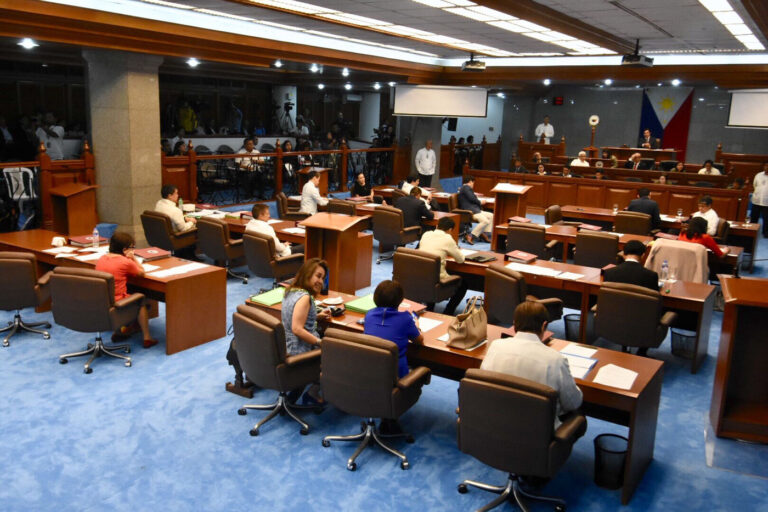
Despite threats from the Chief Executive, Senators are poised to launch a hearing into the Duterte government’s readiness to mount a COVID-19 vaccine program, citing constitutional duties that allow them to investigate the critical health campaign. 

Lawmakers in the upper chamber agreed on this much – saying details of what a mass immunization program might entail, and how far concerned officials have prepared for the unprecedented effort were among topics that should be tackled when it convenes into a Committee of the Whole on Monday, January 11. 

But whether the hearing will breach beyond these and question the use of unregistered vaccines by President Rodrigo Duterte’s security detail remains uncertain as Senators were split on the scope the investigation should take. 

Chances the searing issue would be tackled were made all the more unlikely after President Rodrigo Duterte barred the Presidential Security Group (PSG) from cooperating in a congressional hearing. 

Duterte on Monday night, January 4, warned lawmakers of a potential “crisis” should they summon his security detail to divulge information on the unregulated vaccine efforts which he himself first revealed. 

“I might just decide to not allow them to – to ignore your summons. So you choose. It’s bad for you, sorry, I don’t care. It’s bad for the country, maybe,” the Chief Executive said in a recorded address.

Separation of powers

Hours after Duterte made the remarks, Senate President Vicente Sotto III, who will preside over the hearing next week, said the President must have been “misinformed” since he was not inclined to invite the PSG to the investigation. 

“The topic of my hearing is the roadmap for the P72.5 billion for vaccines. Who in heaven’s name told him I’m calling for the PSG? I think the President is being misled,” Sotto told reporters on Tuesday, January 5. 

Senator Panfilo Lacson echoed Sotto’s position, saying the focus of the Senate’s probe should be on the government’s efforts to procure COVID-19 vaccines for Filipinos. 

He tweeted, “It is awful that the Senate hearing wants to focus on investigating the PSG personnel who allowed themselves to be inoculated instead of asking why we have no vaccines yet, unlike many other countries. Let’s ask again – who dropped the ball?” (READ: Why did the Duterte gov’t take months to sign a vaccine deal with Pfizer?)

But while this was his preference, Lacson said issues related to vaccination efforts against the virus should not be ignored and that Congress had the power to invite resource persons who would aid the purpose of the hearing. 

Ang sa akin, mas importante muna ‘yung immunization ng 110 million Filipinos kaysa mag-focus tayo sa iilang personnel ng PSG… Hindi ibig sabihin noon na kakalimutan na din ‘yung ibang related issues. Hindi natin isinasantabi ‘yung mga related issues na talagang related naman sa pangunahing issue,” Lacson said in an interview with Teleradyo. 

(For me, the immunization of 110 million Filipinos is more important than focusing on several PSG personnel… But this does not mean that we forget other related issues. We won’t brush aside issues that are truly related to the foremost issue.) 

In a statement, Senate Minority Leader Franklin Drilon said while Duterte can invoke executive privilege to prevent the PSG from appearing in a hearing, lawmakers should still investigate the unregulated use of illegal vaccines in the country. 

Drilon said this was necessary to cover gaps in the Food and Drug Administration Act and strengthen the Bureau of Customs to prevent similar situations in the future. 

“The President, in effect, is invoking executive privilege, which is a recognized power of the President…. But to investigate in aid of legislation is also a valid exercise of legislative power. There is no preventing Congress from eliciting information in aid of legislation from other resource persons,” he said. 

Public interest

Senator Francis Pangilinan said while it was up to senators to decide on whether they will tackle the PSG’s early immunization, lawmakers had the “responsibility” to probe the readiness of the Duterte government to deliver COVID-19 vaccines to Filipinos. 

The Senate earlier adopted Pangilinan’s resolution for the Senate to convene into a Committee of the Whole to look into the Duterte government’s vaccination program. 

Kung hindi pa handa at nagkakanya-kanya at iba-iba ang direksyon ng mga ahensya ng Executive branch, responsibilidad at tungkulin ng Senado sa ilalim ng Saligang Batas na magsilbing check and balance at busisiin ito,” Pangilinan said in a statement. 

(If the different agencies of the Executive branch are not yet ready and are going their own ways in different directions, it is the responsibility of the Senate under the Constitution to serve as a check and balance and investigate this.)

The opposition senator said if the PSG’s vaccination efforts were an indication of uncoordinated efforts and a messy rollout, it was important to determine its implications on the government’s plans to ensure a smooth and effective rollout of the scarce product. 

In an interview with ABS-CBN, Senator Risa Hontiveros said the Senate, as a separate and co-equal branch of government, was determined to investigate the Duterte government’s vaccination plan “warning or no warning, from any other member, even the highest of any other branch of government.” 

“We would be remiss in our duty if we did not pursue this…. Kung may isang branch of government na nagkukulang (If one branch of government is falling short) then the other branches, including our own in the legislature, must and I believe, will step up,” she said.

Whether or not the PSG will attend the Senate’s hearing, Hontiveros said the implications of unregulated vaccination activities were clear. 

“If as early as now the government cannot control unverified and possibly life-threatening vaccines from entering the market, people’s trust in any COVID-19 vaccine, even if officially distributed, will only go down,” she said. – Rappler.com


Philippine History Was Removed From High School Subjects. This Petition Seeks Its Return

0

By Mario Alvaro Limos, Esquire Philippines, January 2021  

Philippine History was removed from the curriculum in 2014

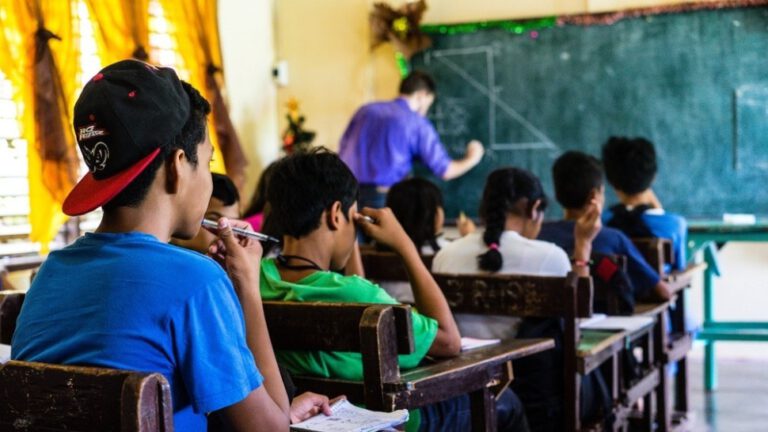
In 2014, the Department of Education removed Philippine History from the curriculum of high school students. Now, a petition is calling for its return. 

In 2017, education secretary Leonor Briones defended the move, saying “While Philippine History, as a subject, is no longer part of the junior high school curriculum, discussions of events in Philippine history are naturally integrated in several subjects.”

So we checked the Minimum Learning Competencies (aka the DepEd’s curriculum guide for all schools in the country). 

In the curriculum guide for Araling Panlipunan (Social Studies), there is no mention of “Pilipinas,” “Kasaysayan,” or “Kasaysayan ng Pilipinas” in the learning competencies for Grade 7 to 10. Araling Panlipinan used to house the Philippine History subject. 

In the AP curriculum, Grade 7 is dedicated to the study of Asian History, Grade 8 for World History, Grade 9 for Economics, and Grade 10 for Contemporary Issues. 

On Change.org, tens of thousands of signatures have been collected calling for the return of Philippine History to the core subjects in high school.

In 2014, the Department of Education removed Philippine History from the curriculum of high school students. Now, a petition is calling for its return. 

In 2017, education secretary Leonor Briones defended the move, saying “While Philippine History, as a subject, is no longer part of the junior high school curriculum, discussions of events in Philippine history are naturally integrated in several subjects.”

So we checked the Minimum Learning Competencies (aka the DepEd’s curriculum guide for all schools in the country). 

In the curriculum guide for Araling Panlipunan (Social Studies), there is no mention of “Pilipinas,” “Kasaysayan,” or “Kasaysayan ng Pilipinas” in the learning competencies for Grade 7 to 10. Araling Panlipinan used to house the Philippine History subject. 

In the AP curriculum, Grade 7 is dedicated to the study of Asian History, Grade 8 for World History, Grade 9 for Economics, and Grade 10 for Contemporary Issues. 

On Change.org, tens of thousands of signatures have been collected calling for the return of Philippine History to the core subjects in high school.  ADVERTISEMENT – CONTINUE READING BELOW

“Philippine History is no longer taught as a dedicated course of critical thinking and analysis in both junior high school and senior high school,”  reads the petition.

“Its removal from the secondary education level obstructs the cohesion of study on Philippine History in basic education.”

Currently, Philippine History is being taught to students in Grades 5 and 6. (Grades 3 and 4 students learn about geography, culture, civics, and the basics of government.) Students would only study Philippine History again if they take such a course in college seven years later. 

“We firmly believe that a cohesive follow-up on the advancement on the study of Philippine History should be considered for each tranche in basic education: for elementary (middle childhood), junior high school (mid-adolescence), and senior high school (late adolescence),” reads the petition

As of this writing, the petition has collected 48,738 signatures. Its target is to get 50,000.

Sign the petition

Filipina nurse awarded British Empire Medal for ‘outstanding work’ during COVID-19 pandemic

0

By: Christia Marie Ramos – Reporter/INQUIRER.net /January 02, 2021


MANILA, Philippines — A Filipina nurse in the United Kingdom has been awarded a British Empire Medal in recognition of her outstanding work amid the COVID-19 pandemic.

Charito Romano, a staff nurse at the Arbrook House Care Home in the UK, was among those included in Queen Elizabeth II’s New Year’s honors list.

British Ambassador to the Philippines Daniel Pruce congratulated to Romano for receiving the award.

“Many congratulations to Staff Nurse Charito Romano, from the [Philippines], awarded a British Empire Medal in the #NewYearsHonours for her outstanding work at Arbrook House Care Home in the UK during the #Covid19 pandemic,” Pruce said on Twitter.

Last October, a British Empire Medal was awarded to Filipina nurse Minnie Klepacz for her “tireless work to support her colleagues and community” during the COVID-19 pandemic.

Klepacz works as a matron for ophthalmology and leads the hospital’s Black Asian Minority Ethnic Network at the Royal Bournemouth Hospital.

Filipino nurses in the UK have been lauded as “unsung heroes” in the country’s fight against COVID-19.

Recently, the Department of Labor and Employment said 26 more Filipino nurses in the UK have contracted COVID-19 as a new variant of the virus was reported there.#