Home Blog Page 93

Tarlac shooting ‘isolated case’? Filipinos dig up stories proving otherwise

0

Dec 23, 2020, Sofia Virtudes

MANILA, PHILIPPINES

It is not the only recent case of police brutality, and Filipinos fear it won’t be the last

The cold-blooded killing of mother and son Sonya and Frank Gregorio served as a reminder of one of the grim realities that the country continues to suffer: the culture of impunity.

Police Senior Master Sergeant Jonel Nuezca pulled the trigger on the mother and son outside their house in Tarlac, following a heated argument over boga, an improvised cannon commonly used during New Year. He was charged with two counts of murder.

The incident, which happened only 5 days before Christmas, was caught on video and immediately went viral on social media.

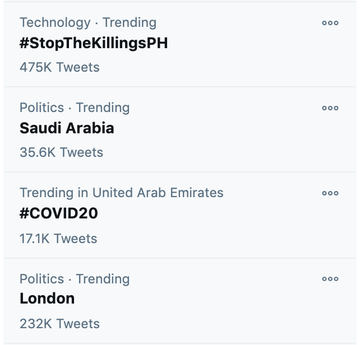
The video sparked public outrage online, with hashtags #StopTheKillingsPH, #JusticeForSonyaGregorio, and #PulisAngTerorista landing in the top Philippine Twitter trends on Monday, December 21. Filipinos decried the police brutality under the Duterte administration.

Interior Secretary Eduardo Año called the Tarlac shooting an “isolated” incident, but Filipinos knew better.

Confounded by Año’s claim, many took to social media to recount the incidents of police brutality and killings in the Philippines.

A group called Hacktibista has been keeping a running list of abuses and violations by the police and the military, the latest addition to the list being the Tarlac shooting.

The list compiles news reports on various cases involving the police and military, including violent protest dispersals, rape and sexual abuses, and extrajudicial killings.

On Facebook, a 2019 post by former Cebu City mayor Tomas Osmeña was again brought to light. The post featured policemen who appeared to have repeatedly abused and assaulted civilians, including a baby, during an anti-drug operation in a barangay in Cebu.

Osmeña added that Philippine National Police chief General Debold Sinas, then the Central Visayas regional police director, “refused to identify these men.”

https://www.facebook.com/tommyrosmena/posts/2814007085306134

Twitter user @BIENsays curated a thread showing that the Tarlac case was not at all isolated, and that police brutality has long persisted in the country.

This year alone, in another case that was also caught on camera, Filipinos witnessed the unjust killing of Winston Ragos by the police, who were eventually proven to have planted evidence at the crime scene.

Found in the same thread were the following stories, all of which happened just this year:

The Jolo shooting, where 4 Army intelligence officers were gunned down in broad daylight by policemen;

The case of 15-year-old Fabel Pineda, who was killed after filing a molestation complaint against two cops, with her alleged molesters being the prime suspects in her killing;

And the Baguio kidnap-slay case in November, where 25-year-old Harjan Lagman was abducted and beheaded allegedly by anti-drug policemen.

Others listed down the names of the victims of impunity and police brutality throughout the years, reminding the public of the horrendous fate that these Filipinos suffered in the hands of the police, the very force that was tasked to “serve and protect” them.

For these netizens, it was not so hard to see that the murder of Sonya and Frank Gregorio was no one-off case. The abuses and violations by the police, most recently the Tarlac shooting, are all telling of the systemic problem that is impunity. – Rappler.com

‘How many were not filmed?’: Calls to end police brutality renewed after cop killed mother and son in Tarlac

0

By Catalina Ricci S. Madarang – December 21, 2020, Philstar.com/Interaksyon

Calls to end police brutality dominated conversations online on Monday after a cop was caught in a viral video killing an unarmed mother and son in Paniqui, Tarlac.

Police officer later identified as Senior Master Sergeant  Jonel Nuezca on Sunday shot 52-year-old Sonya Gregorio and her son, Frank Anthony Gregorio, 25, over an altercation regarding the latter’s use of “boga,” an improvised noisemaker used during the holidays in the Philippines.

Nuezca, who was reportedly assigned to the Parañaque City Crime laboratory, surrendered at the Rosales Pangasinan Municipal Police Station an hour after the incident.

He also turned over his PNP-issued 9mm semi-auto pistol that was used in the crime.

In an interview with GMA News’ “Unang Balita,” Police Lieutenant Colonel Noriel Rombaoa, chief of the Paniqui Police, said that the suspect went to the victims’ houses to confront them.

“Pumunta yung police sa bahay ng biktima at nagkaroon ng pagtatalo, naungkat ang matagal na nilang alitan sa right-of-way,” he said.

Nuezca refused to say anything except he regrets shooting the two victims, Rombaoa added. He also stated that the former will face a double murder complaint from the local police.

Data from Police Regional Office III chief Police Brigadier General Val de Leon showed that Nuezca had faced grave misconduct or homicide cases in May and December last year. However, these cases were dismissed due to lack of substantial evidence.

Nuezca had faced grave misconduct (homicide) cases in May and December 2019. Both, however, were dismissed due to lack of substantial evidence.

Stop the killings

Several hashtags and the phrase “My father is a policeman”
dominated the top five spots on Twitter Philippines’ trending list on Monday as concerned Filipinos and human rights advocates called to end police brutality in the Philippines.

The phrase was uttered by the daughter of Nuezca during the altercation between the victims and her policeman father, seconds before the Gregorios were shot dead.

Nuezca’s daughter also received backlash online for this remark. Twitter user @lakwatsarah, said that the daughter might have been raised to believe that her father is above the law.

“She was probably raised to believe he can shoot anyone who messes with them. He shot them. He made that choice. The daughter is a victim of his parenting,” she said.

Aside from this phrase, the hashtags in the local Twitter’s top trending list as of writing are:

  1. #StopTheKillingsPH with over 670,000 tweets
  2. #JusticeforSonyaGregoria with over 360,000 tweets
  3. #EndPoliceBrutality with over 286,000 tweets
  4. #Pulisangterorista with over 191,000 tweets

The calls for justice for Sonya and Frank Gregorio were also launched on Facebook.

Progressive groups such as the League of Filipino Students and Gabriela Youth issued separate statements that denounced Nuezca’s brutal act and other cases of abuse and killings in the Philippines.

‘How many were not filmed?’

Meanwhile, Interior Secretary Eduardo Año said that the shooting incident in Paniqui is an “isolated incident.” He also said that “the sin of Nuezca is not the sin of the entire Philippine National Police.”

“This is an unfortunate but isolated incident. While there are unfortunate incidents like this, the vast majority of our PNP personnel perform their sworn duties everyday with honor and integrity to protect and serve the people,” Año said.

Writers Emiliana Kampilan or “Dead Balagtas” and Alfonso Manalastas, however, noted the possible deaths at the hands of the police and the military that were not caught on camera.

Bar 2019 topnotcher Kenneth Manuel echoed the similar view and questioned if there were more underreported victims.

“Minsan mapapaisip ka na lang, ilan na kaya nakitil nito pero hindi lang naibalita? Mas mapapaisip ka, ilan kaya sa kanila ang kayang pumatay ng ganito?” Manuel wrote.

Several concerned Filipinos also questioned this possibility, while citing that drug suspects were killed before because they allegedly fought back or “nanlaban” but there were no videos to prove them.

Detained Sen. Leila De Lima in 2018 called out the government and former presidential spokesperson Salvador Panelo for using the “nanlaban” narrative.

“I cannot allow Panelo to continue to poison the public’s mind with the Duterte administration’s oft-repeated but flawed proposition that the increasing number of deaths due to the crackdown on drugs was because suspected drug offenders have all resisted police arrest with violence,” she said in December 2018.

Meanwhile, others lamented the Christmas bonuses police officers received despite the reported brutality.

“Tapos mas mataas ang bonus ng mga pulis kaysa health workers?” he said.

Not the first time

Data from World Population Review showed that in 2020, the Philippines ranked third among the countries with the highest cases of police killings wherein 3,451 people were killed or a rate of 322 victims per 10 million people.

In a September report from US-based Human Rights Watch, citing government data, the PNP killed 50% more people between April and July of this year despite the ongoing novel coronavirus pandemic.

HRW noted that this figure is only for deaths in police anti-drug operations.

Last June, the rising cases of police abuse in the Philippines which happened before and during the pandemic were juxtaposed to the killings perpetrated by the police in the United States.

The death of George Floyd, a 46-year-old black American who was killed by a police officer in Minneapolis triggered a nationwide campaign for equal rights for all people of color.

RELATED: ‘I can’t breathe!,’ ‘Tama na po’: Police brutality in US, Philippines juxtaposed

Duterte’s ‘shoot-to-kill’ remarks

Some Filipinos blamed such rogue activities among PNP members on President Rodrigo Duterte’s continuous “shoot-to-kill” remarks since he took office in 2016.

In a televised address aired last December 16, Duterte denied ordering the police to “shoot to kill” civilians.

“May mga pulis na talagang may ano sa — diretso salvage ganoon. Wala akong inutos na ganoon. Remember, in all of my utterances, ang galit ko ‘yan when I say, ‘Do not destroy my country, the Republic of the Philippines, who elected me as President. Do not destroy our sons and daughters because I will kill you.’ Sabi ko — hindi ko sinabi, ‘They impede, they will kill you.’ The military will… I said, ‘I will kill you,’” the said.

“Pero sabi ko, ito, ‘Go out and destroy the apparatus.’ Iyan. Pagka nagkabarilan diyan in destroying the apparatus, goodbye ka. Kaya sabi ko, ‘Ako, I take full responsibility for my order.’ ‘But remember,’ I said, ‘enforce the law in accordance with what you have learned then self-defense.’ Defense of ano ‘yan. Stranger kung kasama mo. In law it’s called a stranger, maski kilala mo. Defense of relative,” he also said.

‘Walk the talk’

Amid the outrage on Nuezca’s brutal act both Paniqui Police chief Rombaoa and PNP chief Police General Major Debold Sinas reminded their colleagues to observe “maximum tolerance.”

“Sa mga kasamahan po natin sa pulisya, dapat self-control kasi nga maximum tolerance tayo, tayo ang may armas. Kung merong umaagrabiyado sa atin merong right forum po riyan, pwede nating kasuhan, not to the point na gagamitin natin ang baril natin,” Rombaoa was quoted as saying.“Lagi nating tandaan ang ating sinumpaang tungkulin bilang tagapagpatupad ng batas. We should walk the talk in the PNP,” Sinas said. #
Rage and fury over cop’s killing of mother and son: ‘No license to kill’

0

Dec 21, 2020, Iya Gozum, Rappler.Com

MANILA, Philippines

What quiet Christmas? Filipinos watch in shock the killing of a mother and her son

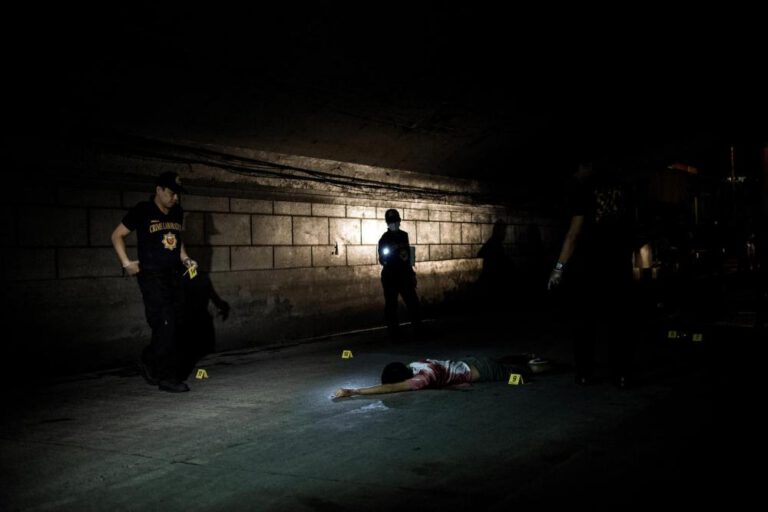
The police killing of a mother and her son in Paniqui, Tarlac, on Sunday, December 20, sparked anger online as Filipinos prepared for their Christmas week.

Police Corporal Jonel Nuezca shot dead Sonya Gregorio and Frank Gregorio over an argument with Frank.

Nuezca’s daughter also witnessed the killings, as the video showed. Nuezca is officially assigned in Parañaque but is from Paniqui.

The video triggered anger and calls to end police brutality. #StopTheKillings, #JusticeforSonyaGregorio, MY FATHER IS A POLICEMAN, and #PulisAngTerorista top Philippine Twitter trends on Monday morning, December 21.

Calls for justice were amplified even outside the Philippines. With almost half a million tweets, the hashtag #StopTheKillingsPH was among the top trends in Singapore and Dubai as of 1 pm. #JusticeForSonyaGregorio ranked third in Singapore trends with 265,000 tweets.

In this latest crime committed by a police officer, enraged citizens again questioned the police’s mandate of protecting Filipinos from crime.

“Who do you call when the police murders?” Filipino netizens ask – a question that resonates with many parts of the world that have suffered from police brutality and are campaigning to reform, defund, or completely abolish the police force.

Many connected the crime to the climate of fear and impunity under the “bloodstained administration,” blaming President Rodrigo Duterte himself.

Allegations of human rights abuses and killings hound the Duterte regime, and the police have been at the forefront of a bloody war on drugs.

Contributing to the climate of fear, Duterte’s rhetoric “may have incited violence and may have had the effect of encouraging, backing or even ordering human rights violations with impunity,” said the United Nations Human Rights Office in a recent report.

Many netizens are saying that the police shooting in Tarlac is not an isolated case, but a reflection of lawlessness.

Why not abolish the PNP?

Jan 30, 2017, Teddy Casiño

It is a chronic violator of human rights. It is also the biggest criminal syndicate in town.

As coercive apparatuses of a particular political and socio-economic system, police and military forces are the only agencies legally permitted to use violence and force in preventing citizens from violating that system’s laws and regulations.

With that power comes great responsibility as well as immense potential for abuse. The challenge then is for policemen and soldiers to develop the extraordinary fortitude and integrity to remain upright.

This challenge is made extremely difficult in a political system dominated by foreign and elite interests, and where corruption and patronage is the name of the game. The police, as the servants and protectors of that flawed system, will necessarily end up just as rotten as the corrupt and abusive politicians and operators that run it.

In the first part of this two-part series, we saw how after more than a century of serving colonial masters, local dynasties and oligarchs, and after experiencing absolute power under martial law, today’s Philippine National Police (PNP) has become hopelessly mercenary and criminal. It has developed its own internal mechanisms to make use of the oppressive and corrupt systems of governance to keep its own masters in power and enrich its own set of elites – officers coming almost entirely from the Philippine Military Academy (PMA).

Far from its motto “To serve and protect,” the PNP has become a tool to  oppress our own people and repress their social and democratic movements. From gunrunning, drug trafficking, kidnap for ransom, prostitution rings, protection rackets to illegal gambling operations, it’s like SM – they’ve got it all.

Abolition as an option

Of late, there have been efforts to strengthen the PNP’s internal checks and balances, with Senator Panfilo Lacson suggesting that PNP Director General Ronald “Bato” de la Rosa handpick 100 of his most trusted men to cleanse the ranks. It’s not that these things have not been tried in the past. It’s just that they eventually fail.

The most radical suggestion I’ve heard to reform the PNP is to fire all officers from senior superintendent up to director general. But that would still fail to address the deep-seated, systemic problems of the police force and will only give rise to a new breed of corrupt officials.

Sometimes, the only way to fix a problem is to get rid of it.

Abolishing the PNP will mean firing everyone, from General Bato to the lowliest PO1 de la Cruz. This is the ultimate strategy to dismantle the deeply entrenched mafia and corrupt power structures in the PNP.

This will also mean creating a new police force from the ground up, with new policies, structures and mechanisms to prevent the new police from getting to where it is now. 

This new police agency will have to steer clear of the PNP’s long history and tradition as a mercenary military and para-military institution. It should be truly civilian in character, community-centered in its function, professional and fully transparent and accountable to the public in its operations.

The following conditions would probably be crucial in creating such an agency: 

  • That no graduate of the Philippine Military Academy should be allowed to hold a position. This effectively breaks the PMA mafia that has lorded it over the PNP for decades. Seniority and rank should not be a factor in the selection of appointments to the new police force. Members of the defunct PNP should be required to undergo a stringent performance review, reorientation and retraining before being accepted to the new agency. 
  • That PNP elements involved in criminal activities and human rights violations should be seriously prosecuted, punished and prohibited from joining the new agency. 
  • That full power and accountability over the police should be given to the local government units, with the Department of the Interior and Local Government (DILG) exercising effective oversight. The selection of provincial police directors should be transparent and undergo a process of public scrutiny and selection. 
  • The police force should be somehow organically meshed with the local baranggay peace and order machineries to ensure quick and seamless police response at the most basic levels. The top-heavy structure of the police force be turned on its head, with emphasis on community-based and community-centered operations;
  • Respect for human rights should be at the core of police education and training. This will serve as the internal check on police brutality, abuse and impunity.
  • The police internal affairs mechanism should be reoriented as a watchdog type agency in coordination with the Office of the Ombudsman, the Commission on Human Rights (CHR), and human rights and anti-crime groups. Said office should be headed by credible human rights advocates. 
  • The Philippine National Police Academy (PNPA) should be liberated from its militarist mindset and become more of a civilian institution producing professional law enforcement officers. Adequate training, facilities and resources be put in place to upgrade and professionalize the police force in all levels.
  • That the salaries and benefits of police officers be increased to attract better personnel, improve morale and reduce corrupt practices. 

As with most sweeping reorganizations, the challenge is how to accomplish this in the swiftest but least disruptive manner. This is a matter probably best left to organizational experts.

Abolition in the context of social reforms

Of course, whatever benefits can be had from the abolition of the PNP and the establishment of a new police force can be easily undermined or squandered by the very same corrupt politicians, power brokers and criminal protectors that have benefitted from the old system. 

Thus, the PNP’s abolition should be done in the context of more comprehensive reforms to democratize the country’s political structure and culture as well as institutionalize mechanisms for transparency and accountability. This would include electoral reforms, a strong law protecting whistleblowers, a freedom of information act covering all branches of government, the abolition or reduction of political dynasties, and a radical cleansing of the judicial system, among others. Without these, a newly formed police force will surely succumb to the old ways.

There are two opportunities in the horizon for such sweeping changes – the proposed shift to a federal system of government proposed by Pres. Rodrigo Duterte, and the ongoing negotiations between the government and the National Democratic Front of the Philippines (NDFP) for a comprehensive agreement on political and constitutional reforms. Taken jointly or separately, these opportunities for political reform can be the avenue for the police force’s much needed overhaul.

It goes without saying that the public, particularly the progressive social movements, will play a crucial in this project as time and time again, we have seen how the traditional wielders of power have hijacked previous efforts to reform the system. – Rappler.com

(Teddy Casiño served as the partylist representative of Bayan Muna for 3 terms, from 2004-2013. Prior to his stint in Congress, he was secretary-general of the Bagong Alyansang Makabayan and was a columnist for BusinessWorld. He earned his degree in sociology from the University of the Philippines at Los Baños in 1993.)

The real war, the bigger enemy

0

Editorial, Philippine Daily Inquirer / December 20, 2020

It’s an old story that has been retold so often it’s become something of a cliché.

As The History Channel tells it, “at the first light of dawn on Christmas Day (in 1914), some German soldiers emerged from their trenches and approached the Allied lines across no-man’s-land, calling out ‘Merry Christmas’ in their enemies’ native tongues. At first, the Allied soldiers feared it was a trick, but seeing the Germans unarmed they climbed out of their trenches and shook hands with the enemy soldiers. The men exchanged presents of cigarettes and plum puddings and sang carols and songs. Some Germans lit Christmas trees around their trenches, and there was even a documented case of soldiers from opposing sides playing a good-natured game of soccer.”

The night before, the troubled air around the trenches of World War I resounded with the voices of soldiers singing Christmas carols across the lines, “and at certain points the Allied soldiers even heard brass bands joining the Germans in their joyous singing.”

A German lieutenant would recall later: “How marvelously wonderful, yet how strange it was. The English officers felt the same way about it. Thus, Christmas, the celebration of Love, managed to bring mortal enemies together as friends for a time.”

Yes, only for a time. The unofficial Christmas truce of 1914 was never repeated through the years of World War I, and there are no tales surviving of similar moments of amity and quiet in the wars to follow.

Here in the Philippines, the communist insurgency and the armed response, which has lasted for over 50 years, the longest such conflict in this part of the world, has been marked around this time of the year with ceasefires that last from a few days before Christmas to shortly after New Year. While there are no documented cases of New People’s Army (NPA) fighters and soldiers and police approaching each other in brotherly embraces, the ceasefire period is at least marked by quiet and an easing of tensions.

But from time to time, stories emerge of ambushes and killings that disrupt the fragile peace of the time. And the latest of such incidents, apparently, were enough for President Duterte to declare that not only would there be no ceasefire this year, there would be no more such attempts at temporary peace until the end of his term.

“There will be no ceasefire ever again under my term (as President),” the President declared in a weekly address to the nation. “For all intents and purposes, the ceasefire is dead. Wala na ’yun, matagal na ’yun.”

The declaration follows on the heels of the military’s announcement that it would not recommend a ceasefire this Christmas season with the CPP-NPA. An official statement accused the insurgents of violating their own ceasefire declarations, which it said shows the insurgents’ “incapacity for sincerity.” The military then accused the CPP-NPA of using the ceasefire to strengthen their organization. “They venture on peace talks only to give themselves the chance to regroup, refurbish, recruit new members, and recoup their losses. And with these many hard lessons of the past, we will not allow them to trample upon our people’s bona fide desire for peace—not this holiday season—not until we have decisively defeated this menace to society.”

It is of course expected for the military and police, and by extension the President himself, to refuse to allow the communists any opportunity to beef up their ranks and strengthen their own capacity to continue their armed campaign.

But the intransigence and hostility even to the mere possibility of talking peace and calling for a brief lull to the fighting come at an unfortunate time. We are in the middle of a pandemic that has killed thousands of fellow Filipinos, along with more than a million around the world. Logic and simple humanity demand that at such a challenging time, all our resources, our capabilities, our attention, and our care be devoted to protecting the vulnerable, treating the sick, and comforting the orphaned and grieving. Then there is the economic disaster that the lockdowns and quarantines, the isolation and social distancing, have caused, leading to a catastrophic economic and social disaster. Our attention cannot be diverted any further.

And yet, ever since the administration’s firmly shutting the door to any talk of peace, the country is seeing an escalating campaign against suspected communist leaders and sympathizers, labor and community organizers, media folk and outspoken individuals. Then, too, are the unabated assassinations and summary killings, most recently those of a doctor and her husband, who was the sole caregiver serving the health needs of her city.

We are in the midst of a war. The enemy is not found in trenches across a frightening no-man’s-land. The enemy is unseen and unheard, but just as lethal and more stealthy. Would not a Christmas ceasefire between the armed partisans of a different conflict better help focus our efforts toward the real war, the bigger enemy?#

[OPINYON] Doon sa amin

0

Dec 20, 2020, Pam Maranca

Sabi nung katrabaho ko na Puti/White dapat daw ang Amerika katulad na lang ng mga Asian countries, tulad ng Pilipinas. Kasi sa Pilipinas daw kapag sinabi ng pangulong huwag lumabas ng bahay o kaya ay magsuot ng mask dahil pandemic, sumusunod ang mga tao at hindi na nakikipagtalo pa. Manghang-mangha sya na ang bilis nating sumunod sa mga ipinag-uutos ng gobyerno natin. Dito kasi sa Amerika lalabanan ng mga mamamayan ang mga ganung kautusan. My rights! Bukambibig ng mga Amerikano. May karapatan silang magprotesta sa kapitolyo ng probinsya na may bitbit na mga assault rifles. May karapatan silang magsalita nang masasakit laban sa mga immigrants. May karapatan silang tumangging mag mask ngayong panahon ng pandemic. May karapatan silang tumangging magpabakuna kung ayaw nila, kahit isa pa silang healthcare worker.

Sabi ko hindi uubra sa atin sa Pilipinas ang nangyayari ngayon sa Amerika: una, dahil hindi nakagawian ng mga Pilipinong maging makasarili; at ikalawa, dahil gustuhin man ng Pilipinong ibalandra at igiit ang karapatan nya, sa kalye man o sa social media, asahan na nya ang pagbisita ng mga armadong kalalakihan kinagabihan. Hindi ko na lang ipinaliwanag yung huling bahagi. Mukhang sapat na sa kanyang masunurin tayo at hindi makasarili. Dahil dito sa Amerika, mahirap itawid ang kaisipan tungkol sa mga bagay, pangyayari, at sitwasyon na hindi nila nakagisnan. Dahil paano mo nga ba ipaliliwanag ang amoy ng kapeng barako? O amoy ng kanal? O amoy ng dugo sa kalye kinaumagahan?

Ipinagmamalaki ko lagi sa kanya na sunud-sunuran man ang Pilipino sa kahit na sinong naging pangulo nito, ilang lider na ng bansa ang nakalasap ng paghihimagsik natin. Dahil may hanggahan ang lahat. Dahil kapag ikaw ang may-ari ng bahay, hindi mo ito hahayaang angkinin, lapastanganin, at babuyin ng kahit sino. Lalo na ng bisita. Ano nga ang sinabi ng pangulo noong 2019: “As far as I’m concerned, I’m the owner, and I’m just giving the fishing rights.” May-ari. Isa sa mga pinakapaborito nyang salita pagdating sa usaping panunungkulan sa bayan. Kaya naman pala wala syang patumangga sa pagtapak at pagyurak sa Karapatan ng pinamumunuan nya: Karapatang mabuhay, Karapatang mag-organisa nang mapayapa, Karapatang ipahayag ang pananampalataya, Karapatan nang malayang pananalita, Karapatang tumayo sa harapan ng lahat bilang isang babae nang hindi hinuhubaran nang buong bayan.

At ano nga ba ang pinakahuling kalapastanganan ng pangulong ito (sa napakahabang listahang kailangan nating itatak lagi sa isipan): paghahain ng search warrants at warrants of arrest sa mag-asawang retired NDF leaders alas-tres nang madaling araw na nauwi sa pag-aarmas at panlalaban daw ng dalawang matandang iginugupo na ng sakit. Sabi ng anak ng mag-asawa, “Mahigit-kumulang 50 ang nag-operate.” Sabi ng PNP chief: “Wala sa tanda ‘yan.” 

Advertisement

Sa buong mundo, virus ang malupit na kalaban ngayon. Mahigit isang milyong pagpanaw na pinilit labanan ng bawat bansa. Dahil hindi ito natural na pagkamatay. Hindi katanggap-tanggap mawala nang isang iglap ang kahapon lamang ay malakas na kaanak. Pero sa atin, tila kulang pa ang bilang ng bangkay. Mukhang nakakita ng tamang pagkakataon ang mga may binabalak – mainam palang  taguan ng kasamaan ang lilim ng pandemya. Dahil lito at takot ang Pilipino, ito ang itinakdang panahon ng administrasyon para gapangin ang mga kinikilalang kalaban.

Ang hirap mang tanggapin ng lahat ng ito, ipinagmamalaki ko pa rin dito sa Amerika kung saan ako nanggaling.  Kahit kailan hindi maiintindihan ng Puti kong kaibigan na ang pagsunod na nakikita nya mula sa mga Pilipino ay hindi dahil sa takot sa namumuno pero sa kagustuhang isalba ang buhay ng iba – hindi lang sa virus pero mas higit sa hindi mapangalanang lagim na nangyayari sa kapaligiran nya. Ni hindi ko nga ma-Ingles yung salitang malasakit kasi parang wala itong katumbas. Pero sana dumating ulit yung araw na iisang boses tayong magsabing “Akin ang bahay na ito at hindi sa iyo. Tama na ang pahahari-harian mo.” Sa ngayon namamayani ang karahasan, kabastusan, at kahambugan sa buong bansa. Sa pag-angat ng popularidad ng pangulo, lumabas ang itinatagong yabang at pagkamakasarili ng Pilipino. Parang isang higanteng rumaragasang tren ang pangulo na sinasagasaan ang sinumang nasa daan, at andun nakakunyapit sa bawat barandilya nito ang mga tagasunod niya, walang iniintindi sa mundo: nagkakasayahan at nagsasightseeing. Dahil bakit nga ba kailangang may pakialam? Dahil bakit nga ba kailangang buksan ang puso sa paghihirap ng iba? 

Umangat ang popularidad ng pangulo dahil marami nang Pilipino ang nagsawang sumukob sa anino ng kapangyarihan. Panahon na para maging bida. Yung tipong kaya nilang sabihan ng “gago, bobo, at putang ina mo” ang mga kinaiinisan nang walang kagatol-gatol. At sino pa nga ba ang pinakamabisang lider at kakampi kundi ang may nagbabagang kamao. Kapag may nagtangkang sumaway sa kanila, alam na ang kahihinatnan ng tampalasan.

Kaya nang umangat sa kapangyarihan ang kasalukuyang pangulo, andun ang mga taong ito na tila langaw sa likod ng kalabaw. Sila ang nagdadala ng sakit sa Pilipinas na kumikitil nang libu-libo at patuloy na nagbibigay-buhay sa isang mamamatay-tao. – Rappler.com

Si Pam Maranca ay isang Filipino Physical Therapist na nakatira ngayon sa Dallas, TX.

At least 2 dead, hundreds flee floods due to Tropical Depression Vicky

0

Dec 19, 2020, Agence France-Presse

MANILA, Philippines

Vicky has affected some 1,525 people in 13 barangays in the Northern Mindanao, Davao, and Caraga regions as of Saturday morning, December 19

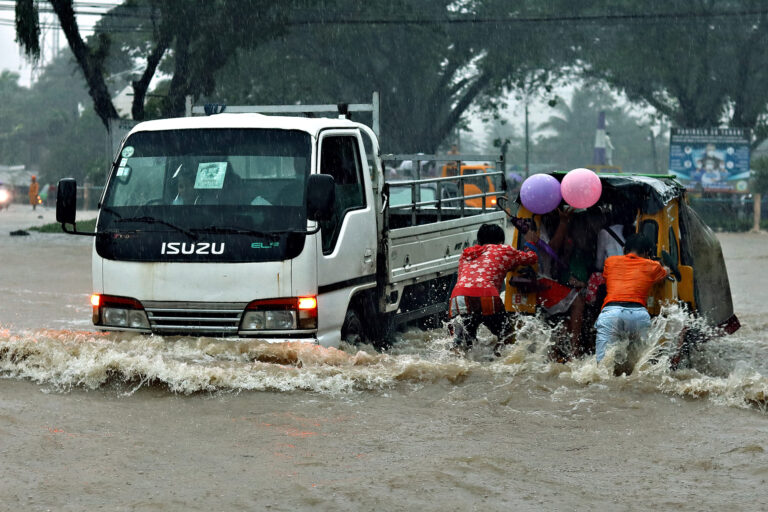
At least two people were killed and hundreds forced to flee their inundated homes in the Philippines as torrential rain caused by Tropical Depression Vicky triggered flooding and landslides in the storm-battered archipelago, officials said on Saturday, December 19. 

Huge waves smashed into a coastal village on Lapu-Lapu island in the central province of Cebu on Friday night, wiping out dozens of houses and leaving around 290 people homeless, Mayor Junard Chan said on Facebook.

Photos posted online by the mayor showed piles of wood and bamboo near the few houses still standing after the region was drenched by heavy rain.

Rescuers retrieved the bodies of two elderly women who were killed when a landslide hit an area of Mahaplag town before dawn in the nearby province of Leyte, police officer Racquel Hernandez said.

A boy was also pulled from the rubble of his home and treated for his injuries, Hernandez told Agence France-Presse.

Meanwhile, the National Disaster Risk Reduction and Management Council (NDRRMC) has so far released one situation report on Tropical Depression Vicky. The report contained no information about casualties.

The NDRRMC, a national agency, verifies and consolidates reports of casualties from local governments and other sources on the ground. As a result, it tends to be slower in releasing casualty counts from disasters.

The agency said Vicky has affected some 1,525 people in 13 barangays in the Northern Mindanao, Davao, and Caraga regions, as of 8 am Saturday.

At least 9 incidents of flooding and 1 landslide were reported in the Caraga region.

The Philippines is hit by an average of 20 storms and typhoons every year, which typically wipe out harvests, homes and infrastructure in already impoverished areas.

The latest storm comes after a succession of typhoons in recent months pummeled the country, taking the lives 148 people, destroying hundreds of thousands of houses, wrecking cash crops and leaving swathes of the country without power. – with reports from JC Gotinga/Rappler.com

Colossal irresponsibility

0

Editorial, Philippine Daily Inquirer / December 19, 2020


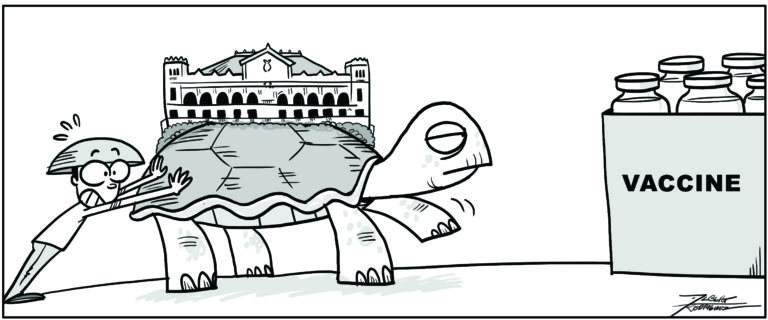
The Duterte administration’s response to the COVID-19 pandemic appears to be a series of air balls, the latest of which, according to government officials themselves, is its failure to secure a reliable, affordable vaccine as early as next month. For a government that has pinned its hopes on a vaccine to be able to recover somehow from the pandemic and a crippling economic slump, its most recent misplay amounts to a colossal, unbelievable case of irresponsibility.

Foreign Secretary Teodoro Locsin Jr. first tweeted that “somebody dropped the ball” in facilitating an agreement with Pfizer that could have helped the country secure at least 10 million doses of the vaccine by January at the earliest. Sen. Panfilo Lacson eventually revealed that it was Health Secretary Francisco Duque III’s “indifference” that caused the failure to submit a crucial document—the confidentiality disclosure agreement (CDA)—required by Pfizer.

The accusation has sent the health secretary—who has faced repeated calls for his resignation over the mishandling of the pandemic—hemming and hawing. “There’s no such thing that I did not act quick enough,” Duque said in an interview with ANC’s “Headstart” last Dec. 17. “The thing is, you go through a process, when you go through a process you cannot just be hurrying things… You have to be prudent and cautious especially since you’re talking about a brand-new and novel vaccine.”

Duque said the Pfizer vaccine uses the mRNA technology, which has “never been tried or tested,” and that it is his duty as a doctor to “ensure the safety of our vaccines.” The “back and forth” on the document between the Department of Health (DOH) and other government agencies took, by his account, four months, from the time Pfizer provided the Philippine government an overview up to the time Duque signed the agreement—but only after it took two months for the Office of the Executive Secretary to determine that it should be the DOH signing off on such a crucial document.

The opportunity to secure the Pfizer vaccine eventually went to Singapore, which expects to receive the first doses later this month—the first Asian country to do so.

Officials have since gone on to say that negotiations with Pfizer are still ongoing, although previous statements indicated that the government’s top choice is a vaccine from China’s Sinovac, CoronaVac, which is expected to be delivered by the first quarter next year.

Duque’s invocation of prudence and caution to justify his actions is curious, because CoronaVac is still undergoing the third and crucial stage that would determine not only its efficacy but also the side effects, while, on the other hand, the Pfizer vaccine has shown a 95-percent efficacy rate according to its Phase 3 trial data. The Pfizer vaccine has been approved for emergency use in the United States and has also secured approval in the United Kingdom.

There are indeed many other vaccine choices, several of which are in fact cheaper than the Sinovac vaccine, which costs P3,629 for two doses. The cheapest is Novavax (P366), developed by a small American company, of which 10.7 million advance orders have been secured by New Zealand; AstraZeneca (P610), whose early clinical trials are said to have shown good immune response; and the UN-backed COVAX Facility (P854), which even Cambodia, China’s staunchest ally in the region, has opted for and will provide—for free—to its citizens.

So, as observers have noted, why the seeming “fixation” on a Chinese vaccine given the other choices in the market? Health reform advocate Dr. Anthony Leachon pointed at the “unusual speed” with which the government has processed the approval to secure 25 million doses of CoronaVac despite it not having regulatory documents yet, whereas other vaccines have already published their results in peer-reviewed journals. Leachon’s comments prompted a bizarre broadside from presidential spokesperson Harry Roque, who, instead of clarifying the issue, lashed out at Leachon, saying President Duterte had repeatedly cursed the former adviser to the Inter-Agency Task Force for the Management of Emerging Infectious Diseases for his temerity to speak up (“kung anu-ano sinasabi mo…”), but that these had been edited out of the President’s weekly pre-taped briefings.

“What is the game plan?” asked Sen. Francis Pangilinan, echoing the concern foremost in the minds of Filipinos as the country continues to lag behind Asian neighbors in its response to the pandemic. The Duterte administration cannot duck its responsibility to provide answers: Its COVID-19 vaccination program would cost taxpayers P82.5 billion, a budget that would cover only 22 million people for inoculation with CoronaVac, compared with 135 million if it’s AstraZeneca, and 225 million if it’s Novavax. The World Health Organization’s recommendation for achieving herd immunity is to vaccinate 70 percent of the population (about 75 million of 107 million Filipinos). The way Malacañang is going about this momentous task, however, that may well be asking for the moon.#

Pre-Colonial Gold In The Philippines: What We Know Of Its Origins, Cultural Value, And More

0

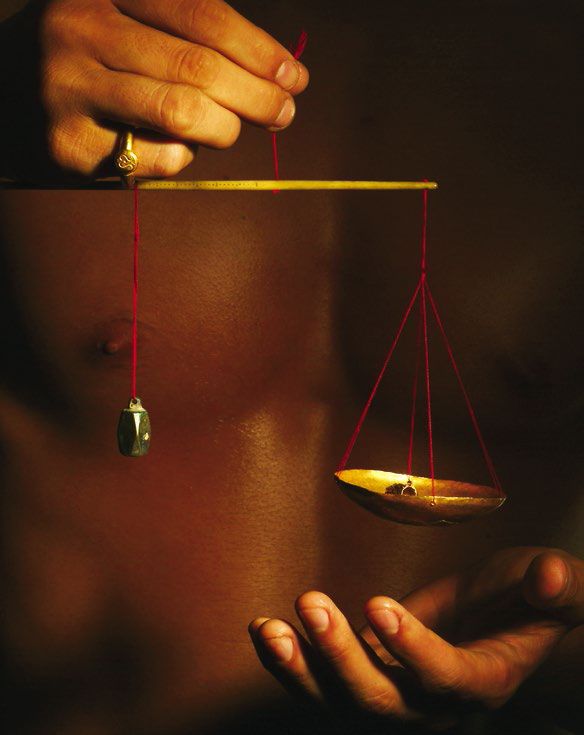
“Pieces of gold, the size of walnuts and eggs, are found by sifting the earth in the island of that king who came to our ships,” chronicled the explorer, Antonio Pigafetta, about Raja Siagu upon the Spaniards’ arrival in Butuan during the Magellan expedition. “All the dishes of that king are of gold and also some portions of his house as we were told by that king himself. He had a covering of silk on his head, and wore two large golden earrings fastened in his ears … At his side hung a dagger, the haft of which was somewhat long and all of gold, and its scabbard of carved wood. He had three spots of gold on every tooth, and his teeth appeared as if bound with gold.”

One can only imagine the awe that overcame these European explorers when they discovered such a rich and elaborate society. Even today the Philippines possesses one of the world’s largest gold deposits, and there is evidence that mining began as early as 1000 BC. By the time the Spanish conquistadors reached Philippine shores, the islands had a flourishing culture that traded in the precious metal and citizens adorned themselves in gold to display status.

It was in 1975, during an extensive construction project, that the Butuan archaeological site was discovered. During the excavation that followed, an enormous wealth of artefacts was unearthed: from high fired ceramics from China and Southeast Asia and Persian glassware, to impressive open water boats called balanghals, and one of the most significant findings of pre-colonial gold. “From excavations in Butuan in the 1970s and the irregular gold recoveries from the 1960s to the 1980s, as well as written Chinese sources from the Song Dynasty, Butuan appears to have been a thriving polity with a hierarchical social structure, and engaged in trade with neighbouring Southeast Asian cultures and China,” shares the curator of Ayala Museum’s Gold Exhibit, Florina H Capistrano-Baker, about the forgotten kingdom.

On another construction site in 1981, heavy machinery operator Berto Morales discovered approximately 22 pounds of gold pieces, now known as the Surigao Treasure. Some of these valuables showcased to rave reviews, intriguing an international audience at The Asia Society in New York in 2015, an exhibit also co-curated by Baker. “We as a people are always searching for our identity, but when you see this collection you think ‘Oh my goodness, that is the core! That is who we are!’”

For a country whose pre-colonial ancestry has left meagre evidence—no grand monuments or architectural structures and very few original manuscripts— these beautifully crafted solid gold pieces are a direct link to our heritage. “The pre-colonial gold bears witness to an advanced society with cultural ties to other, better-known cultures in Southeast Asia such as Java. It demonstrates that we had the technical skills and resources to produce these wonderful objects. It also suggests familiarity with Hindu-Buddhist ideas that have largely been erased from our cultural memory.”

Seasoned collector, Jomari Treñas, is fascinated by this intermingling of societies and how they are clearly translated in the designs. “You see the different cultures in the gold-making, such as the gold heads or earrings with figures that have very Indian influences. This one pair that I have is an interesting specimen: shaped like a Garuda, a mythological bird derived from Hindu and Buddhist beliefs, it shows clear evidence of cross-cultural exchanges even before the colonial period.”

Gold was not strictly for women; in fact, men of high rank were more adorned than women, as seen on the very detailed illustrations in the pivotal late-16th century manuscript The Boxer Codex. “They had daggers, belts, sashes, rings, bangles, brooches … Even the clothing was adorned in finely flattened solid gold appliqués,” Treñas explains. One of the most prized pieces from his collection is a golden dagger sheath covered in intricate carvings. “It is made of hammered gold and is covered in beautiful geometric designs that look almost Etruscan.”

Pre-colonial gold discoveries come from all over the archipelago. Treñas’ exposure to pre-colonial gold began in his home province of Iloilo, when his mother started purchasing pieces from a find in Oton in the 1960s. “They had lots of pieces of gold jewellery with trade beads and my mother would purchase them for her to wear!” Currently all newly excavated gold belongs to the nation; however, collectors can still add to their own private troves through the numerous auctions and sales alimented by other private collections.

“In many pre-colonial Philippine societies, one’s life began and ended with gold,” explained Baker in the book Philippine Ancestral Gold, published by Ayala Museum in 2011. “Small pieces of gold were placed in a bag with a new-born infant’s umbilical cord after childbirth; prestigious gold ornaments were worn during life-crisis ceremonies and milestone events; spectacular golden treasures and heirloom porcelain were interred with the elite to ensure a successful journey to the afterlife.”

Through numerous efforts made by the public and private sector to document and preserve these precious artefacts, it seems as though this journey is secure. Centuries later, the memory of this halcyon society is embalmed in its gilded remnants, still vibrant and glittering today.#