Home Blog Page 94

Extenders, Ilocano style

0

By: Elsie Kalaw Santos (Contributor) – INQUIRER.net /December 19, 2020

TARLAC — Mayantoc is a rice-producing town in the western side of Tarlac, five kilometers from the Romulo national highway. Its people are Ilocanos with relatives in the neighboring town of Camiling. It was a barangay of Camiling until 1916 when then American Governor General Francis Burton Harrison granted the move of several Filipinos led by Francisco Santos to declare Mayantoc a separate town.

In Mayantoc, one encounters a traditional way of preparing food for special events. The host family slaughters one animal, be it a cow, pig, or goat, and cooks all the viands using the different parts of that animal — skin, organs, entrails, and bones aside from the meat. The strategy is to prepare food pangkaadwan (Ilocano for “for many”). It is the Ilocano solution to the need to extend the amount of food that will be served to all the attendees, invited or not. That is all right in a town where bloodlines run deep; in Mayantoc, no one leaves a party hungry.

In formal celebrations, invited guests are led into a reception area where they are seated and properly served. The uninvited watch from a distance and wait until they are led to a separate buffet table or handed packed meals. It is a re-spectful crowd that does not jostle with each other for food. Everyone leaves the event smiling, exchanging stories about the event. Not a few leave with packed meals for the family member left at home.

Hope Santos Fajardo, who has lived all her 43 years in Mayantoc says, “During our town fiesta or at weddings, the hosts prefer that their guests go home busog (with full stomach). It would be shameful for the hosts if they run out of food to feed everyone.”

Generally, cows and pigs are slaughtered for big events like weddings, birthdays, political victories, funerals, town fiesta, or the baptism of the first grandson. The kalding (Ilocano for goat) suffices for gatherings of family members on an annual visit to their hometown.

Fajardo’s cousin, Regina Jocelyn Caluya, who once had a catering business says, “We can make different dishes from the internal organs of pigs like Igado (a dish using mostly liver), crispy dried dinuguan, and the usual chicharon bulaklak. The traditional pata recipe is lauya (pork bones boiled with papaya). The head, neck, ears can be cooked into crispy sisig. The meat is cooked into embutido and asado. The bony parts are cooked into adobo and menudo.”

Fajardo adds sweet sour pork to the menu derived from a slaughtered pig. “Some Ilocanos refer to sweet sour pork as pantran-pantran. The reddish color of the dish reminds them of the red Pantranco buses that used to ply the Manila-Tarlac route.”

The menu from slaughtered cows includes a more elaborate lineup: beef steak, bulalo (boiled beef bones with ligaments and tendons), nilaga (boiled beef chunks), pinapaitan, and kilawin.

“The food cooked from a cow vary depending on the occasion,” says Caluya. “The dishes served at weddings are more special than the food served after a funeral for example. More people gather after a funeral so the food prepared are pangkaadawan so that the food have less ingredients like vegetables.”

Cooking Kalding

Ello Cabrera, 77, is a rice farmer who has mastered the art of cooking kalding dishes, especially pinapaitan. When requested to cook kalding, Cabrera chooses a doe that is two- to two-and-a-half years old as he says it has the right balance of meat and fat. From a sacrificed kalding, the Ilocanos prepare their premium dish, pinapaitan, as well as caldereta, kilawin, and sinampalukan. To prepare all these dishes, Cabrera uses the internal organs and entrails (offal), meat, skin, and bony parts (head, knees, legs). The only parts he discards are the drained blood, the teeth, and the hooves.

Cabrera cooks kalding in a makeshift kitchen in the backyard a few meters away from the poso (water pump). In his kitchen team are a butcher and at least two assistants. He doesn’t measure ingredients but is fully dependent on tantsa (estimate) based on pinagraman (Ilocano for taste).

If it is a lunch event, Cabrera’s team starts work at dawn to give ample time for chopping and boiling the different kalding parts. With its neck slashed and its body drained of blood, the kalding is lifted and rotated slowly over the fire. The objective is to clean the skin of all hair until it is clear and smooth.

The butcher slits the belly to extract the offal. He handles the tiny, fine intes-tines (or what the butchers call the liblibro (Ilocano for books; the butchers say the intestines look like a stack of books in their original state) and the gall bladder (apdo) with special care as these have the pait for pinapaitan. He then separates the meat from its skin before these are chopped.

Cabrera cooks the pinapaitan first. It is a soupy concoction with an aroma the locals find heavenly, prepared with the chopped offal, initially with just the liblibro for the bitter flavor. If the concoction is not bitter enough for Cabrera’s hardy Ilocano tastebuds, the chopped apdo is added as well. Locals scoop pinapaitan onto a cup and slowly sip the steaming hot broth, breathing in the aroma with much gusto.

The caldereta is cooked with the meat that has been separated from the skin. The sinampalukan is prepared with the kalding’s bony parts— the legs, the knees, and the head—that have been chopped into serving pieces. Sampalok (tamarind) leaves are added.

To make kilawin, the beer drinkers’ pulutan (appetizer taken with alcohol), Cabrera douses the chopped skin of the kalding (may still have a thin layer of meat) with the juice of kalamansi and mixes in chopped onions.

When the cooking is done, Cabrera sits against a tree while sipping on his cup of pinapaitan. “Bawa’t higup masarap (Every sip is delicious),” he sighs with a toothless grin.#

120K OFWs still awaiting repatriation; more in 2021

By: Dona Z. Pazzibugan, Jerome Aning, Philippine Daily Inquirer / 05:30 AM December 18, 2020

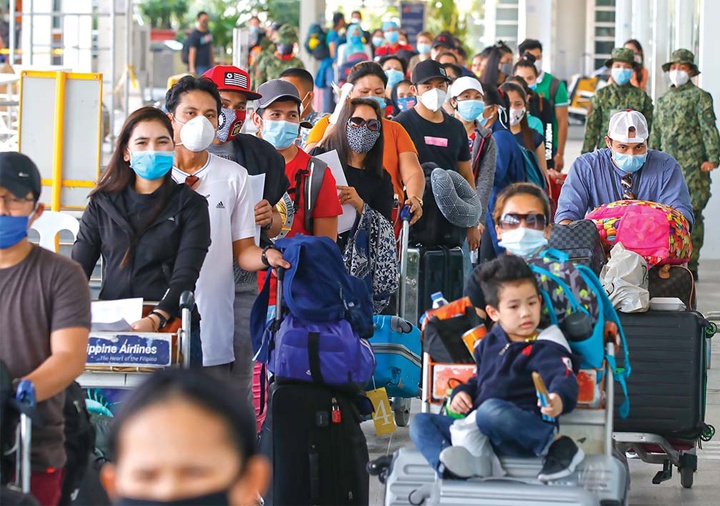
MANILA, Philippines — More than 126,000 overseas Filipino workers (OFWs) are still waiting to be repatriated nearly a year into the COVID-19 pandemic, according to a Department of Labor and Employment (DOLE) official.

The OFWs have asked to be returned home after their jobs were affected by the global economic slump due to the health crisis, said Alice Visperas, director of the DOLE’s International Labor Affairs Bureau.

But 82,000 other displaced Filipinos have decided to remain in their host countries to look for other jobs, Visperas said.

The government has flown or shipped home more than 550,000 pandemic-displaced OFWs, including seafarers since the start of the year, she said. More than 370,000 of them have been transported to their home provinces, she added.

80,000 more coming

The government task force in charge of the repatriations is expecting 80,000 more OFWs to come home in the first half of next year, the chief of the Overseas Workers Welfare Administration (OWWA) said on Thursday.

Returning workers are given a one-time P10,000 financial assistance, while those who are still abroad and were afflicted with COVID-19 are entitled to $200 cash benefit, OWWA Administrator Hans Leo Cacdac said during the Laging Handa public briefing,

Cacdac assured returning OFWs of free government services, such as swab testing, lodging in hotel quarantines and transport to their home provinces.

The Philippines used to send more than 5,000 OFWs daily before the pandemic. Deployment has yet to fully normalize, said Cacdac, who once headed the Philippine Overseas Employment Administration.

“We are seeing that the deployment of our fellow countrymen is normalizing, slowly but surely, of course. Our deployment rate as compared to the pre-COVID period has not yet returned, but it has risen to 20 to 40 percent now,” he said.

Money remittances

Cacdac said he expected dollar remittances to also return to normal. OFWs tend to remit more to their families home, he noted.

The OWWA head also described as a “welcome development” the approval on third reading of a House bill giving OFWs 50-percent discounts from service fees imposed by banks and remittance centers on money they send to their families, regardless of amount.

“It is just right that as much as possible, the remittances of our OFWS are fully received by their families. We thank the legislators who proposed this measure,” he said.#

Alternative media groups sue NTF-ELCAC over continued red-tagging

0

Kristine Joy Patag (Philstar.com) – December 18, 2020

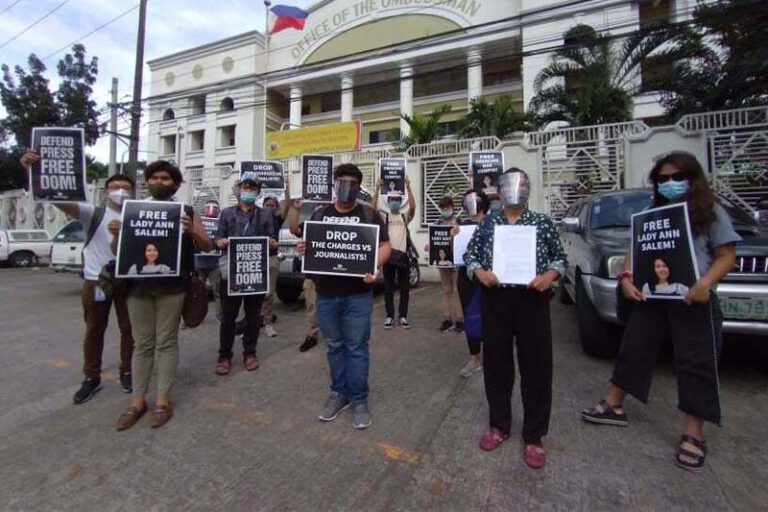
MANILA, Philippines — Alternative media network AlterMidya and three members of its network have asked the Office of the Ombudsman to dismiss three officials of the government’s anti-communist task force over their baseless red-tagging, a practice that puts those labelled as rebels and terrorists in danger..

AlterMidya, Bulatlat, Kodao Productions and Pinoy Media Center, through the National Union of Peoples’ Lawyers, filed criminal and administrative complaints against three officials of the National Task Force to End Local Communist  Armed Conflict.

Named as respondents are NTF-ELCAC spokespersons Lt. Gen. Antonio Parlade Jr. and Lorraine Badoy, and its Executive Director Allen Capuyan. Badoy is also an undersecretary at the Presidential Communications Operations Office while Capuyan is concurrently chair of the National Commission on Indigenous Peoples.

The four media outfits accused them of violation Republic Act 3019 — the Anti-Graft and Corrupt Practices Act — and RA 6713 — the Code of Conduct and Ethical Standards for Public Officials and Employees.

They asked the Ombudsman to place the three officials under preventive suspension during the investigation and ultimately dismiss them from service with forfeiture of benefits.

This is the latest legal action seeking accountability from the NTF-ELCAC over its officers’ red-tagging. Starting February this year, complaints against the task force have been filed before the Office of the Ombudsman—from IBON Foundation, Rep. Carlos Zarate (Bayan Muna party-list), rights alliance Karapatan, Rep. Sarah Elago (Kabataan party-list), NUPL lawyers themselves, with alternative media groups themselves being the latest to sue.

From social media posts to Senate hearing

In this latest suit, the four media outfits noted that Parlade, on May 12, accused Altermidya, Bulatlat and Kodao of being “long-time cohorts” of, and of being created by the Communist Party of the Philippines. Badoy repeated Parlade’s accusations in a reworded Facebook post.

The red-tagging continued at the Senate. In a hearing on December 1, Capuyan showed a presentation alleged that AlterMidya and its member organizations are part of the CPP’s National Propaganda Bureau.

AlterMidya has rejected the allegations. Journalism professor and AlterMidya chairperson Luis Teodoro said in response to the testimony at the Senate that “the fundamental ethical and professional responsibility of truth-telling in journalism has always been AlterMidya’s guiding principle…concerned as it is with the need to develop the well-informed public vital to a democracy.”

“It is no one’s ‘front’ and owes its allegiance only to these principles,” he also said.

Parlade has also issued subsequent statements still linking the complainants to the communist rebels. The complainants noted that official Facebook pages of police and military units tagged them and their regional correspondents as fake journalists or having links to communist rebels.

“The actions of Respondents have directly and indirectly emboldened other state agencies and personnel to baselessly and maliciously label members of alternative media organizations as ‘propagandists’ of alleged ‘communist terrorists,’” they added.

The alternative media groups also noted that the pronouncement of the respondent NTF-ELCAC officers were posted on several social media platforms and some have appeared in state-run media outlets like the Philippine News Agency.

“There is no doubt that Respondents’ unlawful statements were official acts of the government under the rubric of its ‘whole-of-nation approach’ to counterinsurgency,” they said.

“For publishing critical views and perspectives on current affairs and engaging in pro-peoples journalism, Complainants have been unfairly vilified, even as they are clearly legal organizations of media practitioners—unarmed civilians—whose espousal of press freedom is essential to Philippine democracy,” they said.

The media outfits stressed that they have not been involved in terrorism nor in instigating others to take up arms.

“Thus, the statements issued by the Respondents, not being founded on any facts and unsupported by such evidence, should even be considered defamatory, as these remarks impute the commission of the crimes of rebellion and terrorism onto the complainants, when this could not be farther from the truth,” they added.

Alternative media punished for critical news reporting

The media groups also stressed that the NTF-ELCAC’s statements placed their members in grave danger, as red-baiting is “essentially an incitement to his or her deprivation of liberty on trumped-up criminal cases, if not physical harm or even death.”

The complainants cited the arrest of Lady Ann Salem, editor of alternative news outfit Manila Today, last Dcember 10. She is accused of illegal possession of explosives and firearms, a charge she denied.

“Undue injury was also caused to the public. Red-tagging Complainants brought a chilling effect on the press, as well as on discourse and debate, stifling the free expression of dissent. Respondents, thus, served as witting instruments of tyranny and repression,” the complaint read.

“Complainants have been targeted for their critical and independent reporting on issues affecting the marginalized and oppressed sectors. They are being persecuted for publishing progressive and alternative views on matters affecting the Filipino people—progressive ideas that are anathema to the current tyrannical regime,” they told the Ombudsman.

They added: “The actions of Respondents are aimed to intentionally and severely deprive Complainants of the right to practice independent and advocacy journalism, as well as their right to free expression and speech, especially in relation to issues that the Respondents deem critical of the administration they are blindly and obsequiously serving.”#

EU COVID-19 vaccinations to start December 27

0

Dec 17, 2020, Agence France-Presse

BRUSSELS, Belgium

‘It’s Europe’s moment. On 27, 28 and 29 December vaccination will start across the EU,’ says European Commission chief Ursula von der Leyen.

The EU is to start COVID-19 inoculations on December 27, European Commission President Ursula von der Leyen said on Thursday, December 17.

“It’s Europe’s moment. On 27, 28 and 29 December vaccination will start across the EU,” she tweeted.

Her spokesman Eric Mamer told journalists the rollout was conditional on the European Medicines Agency authorizing the use of the Pfizer/BioNTech vaccine when it meets on Monday, December 14.

Britain and the United States are already inoculating people with that vaccine under emergency national authorizations.

The EU is carrying out a coordinated vaccination program across its 27 member states to ensure fair access to doses.

The European Commission has sealed contracts with 7 suppliers of potential vaccines to ensure all adult EU citizens will eventually be able to be inoculated.

Member states will decide who gets priority for the injections, but the elderly and healthcare workers treating COVID-19 patients will be at the front of the queues.

The vaccine developed by US giant Pfizer and German firm BioNTech has proven to be 95% effective in global trials where two doses are injected 3 weeks apart.

In Europe, that vaccine is produced in a Pfizer facility in Belgium and sent out in trucks and planes. It must be stored at -70 degrees Celsius (-94 degrees Fahrenheit) to keep it viable, but can be transported for short periods at 2-8 degrees Celsius. – Rappler.com

Angel Locsin Gets Candid About Her Advocacies—Education, Female Empowerment, Indigenous Rights, And More

0

Dorynna Ontivero, Tatler Magazine Philippines, December 4, 2020

Having played many strong and dynamic characters on television and film, Angel Locsin looks to the future and shares her passion for helping others through her own philanthropies

“You can’t put yourself in a box because you’re afraid of other people’s opinions,” the actress Angel Locsin said firmly over a Zoom call. “You have to live for yourself. [If you don’t], you’re not being truthful to others or worse, you’re being dishonest with yourself.” In the industry for almost two decades, Angelica Colmenares (more popularly known as Angel Locsin) is no doubt a veteran in Philippine show business.

Having played various iconic characters on local primetime television, Locsin has become a household name over the years. Laidback and confident, she spoke passionately about causes dear to her heart and how she’s adapted to being in the spotlight. “When you’ve been in the industry for a long time—not to brag—or when you’ve received several acting awards, you become hungry for achievements outside your craft. If you’ve previously been noticed for your looks, outfits or how sexy you are, you eventually want to be known for something more than your physical attributes,” Locsin shared. “I want to be remembered for how I’ve been able to make other people feel that ‘I’m here’, ‘I care’. That for me would be the bigger achievement.”

It was a gloomy Saturday as many Filipinos braced themselves for another storm to come. For a country that encounters an average of 20 typhoons a year, not many anticipated just how devastating Typhoon Ondoy (International Name: Ketsana) would be. According to the United Nations Office for the Coordination of Humanitarian Affairs (Unocha), it brought a month’s worth of rain in just 12 hours when it swept across Metro Manila and parts of Central Luzon on September 26, 2009. At least 140 people perished, and half a million people were displaced from their ruined homes.

“When all this was happening—seeing people on the news being evacuated, dying, their houses flooded—these were people whose faces we knew. Our friends, co-workers, relatives, even many of us were victims ourselves,” Locsin remembered the devastating weekend. “Of course, as an actress, I have plenty of shoes, clothes, bags that I don’t necessarily need. [During that time], I had a moment to realise how excessive [all] that was. So, together with Anne [Curtis], we began a Shop and Share project. We wanted to help the victims through fund-raising for rehabilitation, relief, or anything else needed at the time. That’s where it really started for me.” 

Locsin became increasingly more active with social causes since then. Although she always donated or lent a helping hand whenever possible, it was this event that pushed her to be more involved. When the pandemic finally came into public consciousness early this 2020, Locsin was instrumental in raising millions of pesos for the #UniTENTweStandPH campaign, a social media call that successfully raised funds for 135 hospitals by providing 246 isolation tents and 21 sanitation tents, including various other necessities like air conditioning units and PPE supplies. All this was done during a time when most were scrambling to address the quick uptick in Covid-19 cases in the Philippines. She even brought back the Shop and Share project in May of this year.

When asked about what she’s learnt in the past months, she said, “Simple things like drive-thrus, delivery [services], mani-pedis, hair salons…things like that, we’ve taken all for granted. If there was any good thing to be gleaned from this pandemic, it’s that families have gotten closer. We’ve gotten to know each other more, really talk and bond. But I’ve also learnt that we have to develop more skills so that we become less dependent on other people.” Although the year is coming to an end, Locsin pointed out that the fight is far from over.

“There really is such a thing as ‘donor’s fatigue’; it’s understandable. We just have to remind ourselves that it’s on us to support each other and that help doesn’t equate to cash or goods only. Simple words of support go a long way, especially for our front liners. Wag natin kakalimutan makipag-kapwa [let’s not forget to be one with others]. Although we’re all in survival mode, it [still] makes a big difference to think outside oneself.”

Besides being an advocate for frontliners, Locsin has also been very vocal about education, which has completely migrated to the online space nowadays. “I’ve been hearing stories of students giving up or committing suicide, it’s very sad. I think it’s important to let young people know that if they feel they aren’t able to give their best right now, that’s okay. If possible, seek help from friends, classmates or even your teachers—try not to let the pressure get to you,” she gave a few words of encouragement. As a public icon, Locsin isn’t a stranger to external pressures or stress. She mentioned that to unwind, she takes a step back to assess who she truly is. A tip, perhaps, that’s also applicable to those facing the stresses of virtual work.

2020 has been a year of epiphanies and monumental changes. Everyone’s tried something new or have taken up a hobby to cope with quarantines and lockdown. For Locsin, this brought an opportunity to explore her longtime dream to be a farmer. “Even before plantito/ plantita[ s] were a thing, I’ve always wanted to put up a farm; I just wasn’t able to focus on it because I was always so busy. I’ve had a piece of land that’s been waiting to be developed. Now, I’m [finally] beginning that project. I want to help the environment, the community and those who need jobs or more food supplies,” she shared.

Locsin has faced criticism online for being vocal about the causes she espouses. But she is adamant to use her platform to speak her truth. “At some point, of course, [being an actress] was about making a livelihood, but now, I understand why I’m lucky enough to be in this position,” she explained. “When people approach you and ask for help to spread awareness about education, the rights of indigenous people—or any cause really—if you care for others, it’s second nature to speak up.”

In 2009, Locsin visited Lianga, Surigao Del Sur where she talked to the Lumad community and found an understanding of their way of life. She has since been vocal about the rights of indigenous Filipino people who often face many socio-political challenges. “First of all, when you say ‘fighting [for rights]’, people often assume you’re on the offensive right away. But that’s not always the case. Listening is part of it too—to let them feel like you hear them, and you are one with them,” she clarified. She recalled a moment that struck a chord with her during one of her visits to the community. “There was an elder who was crying because it was a deep honour for their clan to finally have one of them graduate from elementary school. Education is that important to them. They want to learn how to read and to understand their rights. I think that’s what we [all] aim for when we go to school, [to be more competent in the world],” she related.

Perhaps one of Locsin’s most iconic and memorable acting roles was her portrayal of Mars Ravelo’s superhero, Darna. First appearing in Filipino comics in 1950, the character is dear to audiences nationwide. So, when Locsin took on the role, her fans were ecstatic. Nowadays, due to her charity work, many have dubbed her the ‘real- life Darna’. “[That character] symbolises empowered women. Literature is a big help, yes, but there is more we can do,” Locsin said. “There is a wrong connotation that if you call yourself a feminist, you’re somewhat of an amazon, that you’re too tough. But it’s true that being a woman encompasses many things. You can be sensitive, graceful, but also know and stand for your right to contribute to society on your own terms.”

Locsin has long been an advocate for women empowerment, joining various community counselling groups and lending her voice to organisations that seek to end violence against women and children. According to the Global Gender Gap Index reports released by the World Economic Forum, the Philippines ranked 10th, 8th and 16th in the world in 2017, 2018 and 2020 respectively on this issue. Despite these relatively high ratings, Locsin noted that there remain many injustices and more can be done with regards to gender equality in the Philippines. “Even in show business, our salaries are lower. Why? We put in the same [if not more] effort into our work. All we’re fighting for is equal opportunity,” she stated. “I don’t think many realise women do all these things while wearing four-inch heels, too!”

There have been many inspiring women the worldover but Locsin was eager to point out just how much she admired the late Gina Lopez and Mother Teresa alike, both of whom inspired her to lead a life in service of others. “To me, [those] who encourage other people, who use their voice for the voiceless and promote volunteerism… these are those I find the most influential,” she noted.

From playing superhero characters on screen to being close to one in real life, it’s difficult not to admire Locsin for her drive to make the most of her platform. It’s not always easy to shift gears especially when you’ve lived majority of your life in the spotlight, but she does so without effort. Easy-going yet principled, Locsin is definitely more than meets the eye. For this award-winning actress, her life’s purpose goes beyond the screen. “We are all entitled to our opinions,” she said. “But you’re also entitled to choose whom you listen to.” As the limelight follows her, Locsin proves that her greatest role yet is one that is unfolding today—a woman with a deep passion for a better and kinder world.


Get a digital copy of Tatler’s December 2020 issue for free on Magzter.

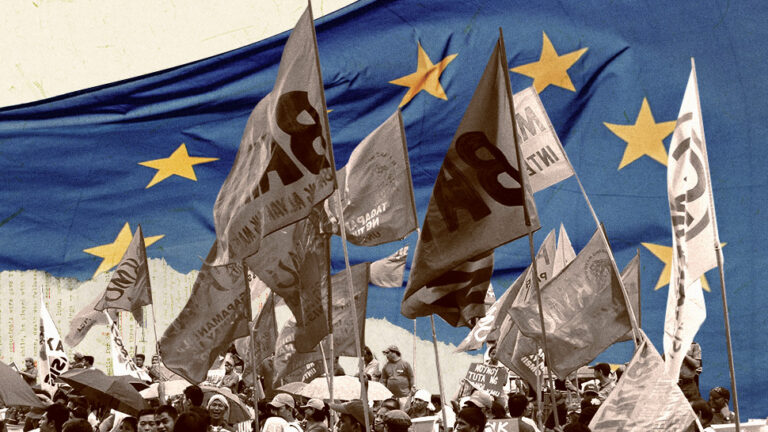
No More Trips to Europe: EU Will Ban Entry of Human Rights Violators Worldwide

0

Paul John Cana, Associate Editor, Esquire Philippines, December 15, 2020

Human rights violators will have to look for another vacation spot after the European Union approved a new law targeting tyrants and demagogues. 

The new law gives the EU the power to ban travel and freeze funds of individuals and entities responsible for, involved in or associated with serious human rights violations and abuses worldwide, no matter where they occurred. Persons and entities in the EU will be forbidden from making funds available to those listed, either directly or indirectly.

This is the first time the EU passed such a framework, which “applies to acts such as genocide, crimes against humanity and other serious human rights violations or abuses such as torture, slavery, extrajudicial killings, arbitrary arrests or detentions.”

Other human rights violations or abuses can also fall under the scope of the new law “where those violations or abuses are widespread, systematic or are otherwise of serious concern as regards the objectives of the common foreign and security policy set out in the Treaty (Article 21 TEU).”

The decision “emphasizes that the promotion and protection of human rights remain a cornerstone and priority of EU external action and reflects the EU’s determination to address serious human rights violations and abuses.”

All 27 member-nations of the EU signed off on the new law, which is very similar to the United States’ Global Magnitsky Act. The American law sanctions any official worldwide responsible for or connected to corruption and human rights violations. Similar laws have also been passed in countries such as Estonia, the United Kingdom, Canada, Lithuania, and Latvia.

The EU law’s main difference to the Magnitsky Act is that the former does not include corruption.

In the Philippines, the Magnitsky Act was cited when Senator Ronald “Bato” Dela Rosa’s US visa was canceled earlier this year. Although no reason was given, the assumption was that it was related to the Senator’s links to human rights issues while he was chief of the Philippine National Police.

The EU first launched preparatory work to establish the “human rights sanctions regime” in December 2019 and approved it last November 17. It was fomrally announced last December 17.#

Coalition formed to look into alleged abuses, update UN rights panel on Philippine situation

0

Bella Perez-Rubio (Philstar.com) – December 17, 2020

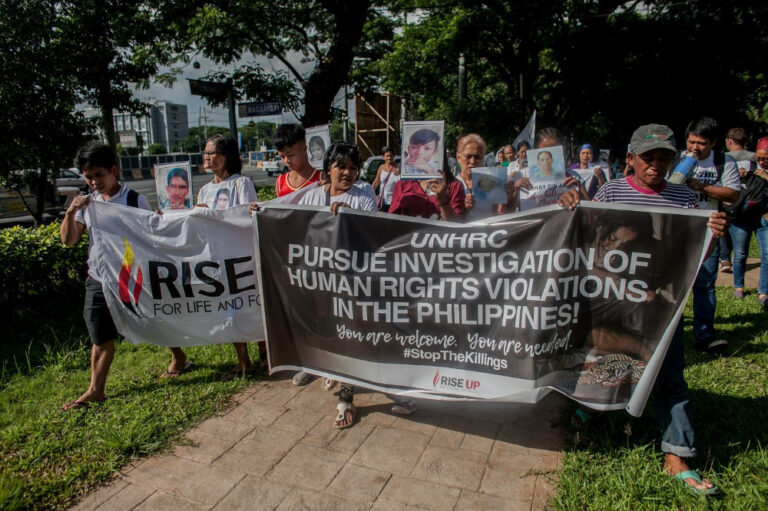
MANILA, Philippines — A coalition of civil society groups has been formed to conduct an inquiry into alleged human rights violations in the Philippines in response to what they characterize as a severe escalation of abuses in the country.

The Independent International Commission of Investigation into Human Rights Violations in the Philippines (Investigate PH) “is an initiative of peoples from all over the world concerned about the state of human rights in the Philippines,” its website reads.

The project was organized primarily by the International Coalition for Human Rights in the Philippines (ICHRP) and its commission members include high-ranking members of the US-based National Lawyer’s Guild (NGL) and the International Association of Democratic Lawyers (IADL), a former Australian senator, as well as several general secretaries of churches in the US, Canada, and Germany.

The National Union of People’s Lawyers, Karapatan and Rise Up for Life and Human Rights also serve as local partners to the initiative.

“The [UN] High Commissioner for Human Rights Ms. Michelle Bachelet presented a well-researched and documented report of human rights violations in the Philippines to the 44th Session of the UN Human Rights Council in June this year, but the 45th Session took it no further. This is despite the severe escalation of human rights violations we are aware of in the Philippines in 2020,” ICHRP Global Council Chairperson Peter Murphy said in an online media briefing held Thursday.

Philippine government: No EJKs, no climate of impunity

The government has said that it recognizes and protects human rights and earlier this year announced a review of cases where “drug personalities” were killed in operations under the Duterte administration’s “war on drugs.” An initial report of the Department of Justice-led review is expected out this month.

The Philippine government has also maintained that allegations of abuses are a narrative that the political opposition is using to discredit President Rodrigo Duterte. It has also said that rights concerns raised from abroad are an interference in domestic issues.

In June, Justice Secretary Menardo Guevarra told the United Nations Human Rights Council that claims of impunity for killings have “no anchor in a system that provides every avenue to examine, establish and pursue a claim of wrongdoing by a State actor, if such claim is substantiated with facts.”

The justice secretary also called on “human rights mechanisms” to “exercise due diligence in validating allegations brought before them by parties.”

Guevarra went on to say the independence of Philippine courts has been shown in the conviction of retired Army general Jovito Palparan as well as the conviction of members of the Ampatuan clan over the gruesome Maguindanao Massacre in 2009.

The DOJ secretary also said that the Philippine National Police is “obliged by its internal mechanism” to automatically conduct a probe into operations with deaths involved, even if no complainant has come forward.

“Civil society and the international community continue to press for an independent, international investigation. In response, the [ICHRP] has organized InvestigatePH to create a space for the international community to help ensure that justice is served to victims and their families by providing new data to update the Bachelet report, and thus create the favorable climate for the Human Rights Council, the [UN] General Assembly and the International Criminal Court to do their work,” IHCRP’s Murphy said Thursday.

Lawyer Jeanne Mirer, co-chair of progressive bar association NLG, who also serves as president of the NYC chapter of the IADL, said that the findings of the probe would be made available to the UN as well as to the Filipino people and to other governments.

How will the probe be carried out?

NUPL president Edre Olalia, who also serves as IADL transitional president, said one of the objectives of the probe is to determine if tangible domestic remedies and mechanisms are available. If such remedies are available, the probe will then verify if they are able to provide regress and protections against human rights violations.

“The question is: Are these domestic remedies genuine? Are they effective? Are they accessible?” Olalia said at the same virtual briefing.

He also listed the following as the main areas of the inquiry:

  • killings, disappearances, arbitrary arrests and detention
  • persecution of different sectors
  • restriction of freedoms
  • killings related to drug trade/drug use
  • violations related to the pandemic
  • violations of int’l human rights law

“The sources will be varied and very expansive: the victims, the relatives, the sectors, the committees, the human rights defenders, civil society, and even resource persons and experts, and of course the Philippine government and international government and civil society organizations,” he added.

According to Olalia, both face-to-face and virtual interviews would be employed throughout the probe.

He added that the “timeline would be contemporaneous with the three succeeding sessions of the [UN] Human Rights Council in February, in June, culminating in the 40th session in September of next year.”#

More cops test positive for drug use

0

Emmanuel Tupas (The Philippine Star) December 17, 2020

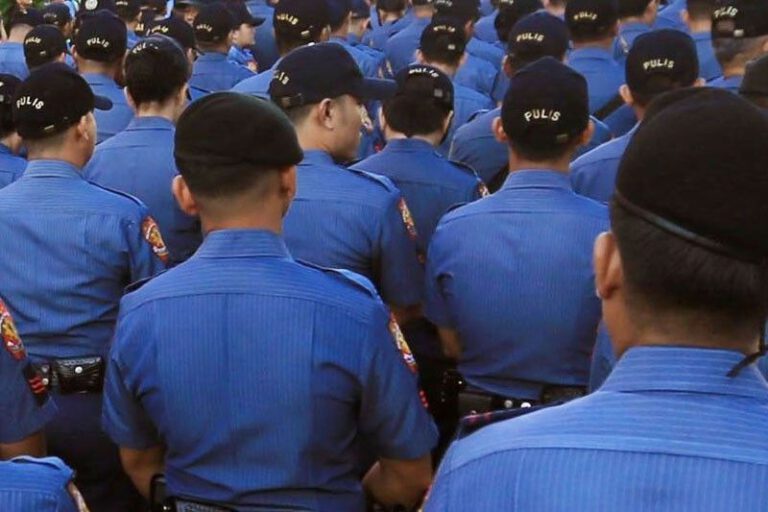
MANILA, Philippines — The number of police officers who tested positive for illegal drugs increased by 42.85 percent this year.

Fifty police officers were found to have used illegal drugs this year compared to 35 in 2019, Philippine National Police-Internal Affairs Service (PNP–IAS) records show.

A total of 461 police officers and 10 non-uniformed personnel have been found hooked on illegal drugs since July 2016.

The IAS has resolved 459 of the cases. Five died while in service while 12 are either pending or forwarded to the PNP Directorate for Investigation and Detective Management.

IAS inspector general Alfegar Triambulo expressed concern over the increase in the number of drug users in the police force.

“Tumaas imbes na bumaba kaya very alarming,” Triambulo said in a phone interview.

PNP chief Gen. Debold Sinas has intensified random drug testing to weed out drug users among their ranks.

Police officers caught using drugs face dismissal from the service.

Sinas said they are studying whether to return the authority to resolve these cases to police chiefs and regional directors to fasttrack investigations and punishment.

Triambulo said they welcome Sinas’ proposal as it would allow them to focus on other administrative cases, including those filed by civilians against erring police officers.

“Cases involving internal discipline like illegal drugs and AWOL (absent without leave) will be the responsibility of the commanders,” he said.

Triambulo said there is no backlog in cases involving police officers using illegal drugs.

He said they have only two pending cases, one of which could be resolved by January next year.