Home Blog Page 98

Duterte’s disowning narcolist is ‘the height of hypocrisy’ – Human Rights Watch

0

By: Gabriel Pabico Lalu – Reporter /INQUIRER.net / 11:45 PM December 09, 2020

MANILA, Philippines — President Rodrigo Duterte’s distancing from the so-called narcolist that is being blamed for the killing of Mayor Caesar Perez of Los Baños, Laguna, is “the height of hypocrisy” and a way to steer clear of any responsibility, international observer Human Rights Watch (HRW) said in a statement issued on Wednesday.

Phil Robertson, HRW deputy director for Asia, said Duterte could not deny having a hand in the narcolist — which consists of the names of government officials with alleged links to the drug trade — as had relied on it to fuel popular support for him even when he was mayor of Davao City.

“Throughout his entire political career… President Duterte has used his target lists as a political tool to intimidate people, including politicians opposing him. During his Davao years, he would read out on TV the names of people he accused of involvement in illegal drugs. Many listed were later killed by the Davao Death Squad,” Robertson said.

“For Duterte to now claim that he had no hand in these lists is the height of hypocrisy. For him to disavow how these lists were used by law enforcers to violate the civil liberties and human rights of those listed is not only disingenuous – it is cowardly,” he added.

During his pre-recorded televised briefing on Monday, Duterte said that the narcolist was not his creation but was based on intelligence reports from the military, the police, and other law enforcement agencies.

According to Robert Laviña, the Los Baños municipal administrator, Perez started getting death threats in 2019, months before the midterm elections, after Duterte read on live television his name as one of the officials in the narcolist.

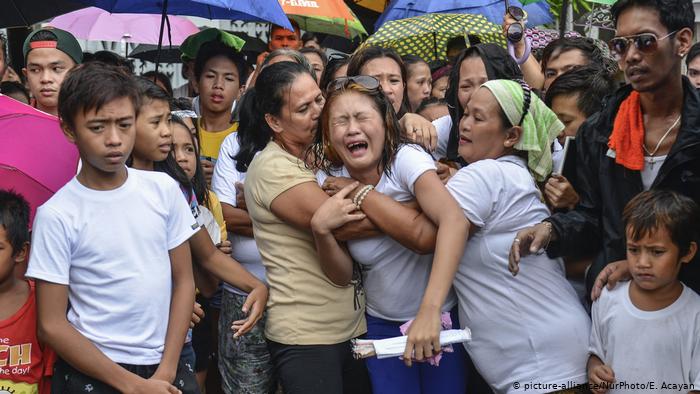
Perez was shot in the back of the head twice, just a few steps away from the Los Baños municipal hall. He was rushed to a hospital where he died while being revived.

Duterte condoled with the Perez family, insisting that the narcolist was not his.

“I’m sorry that your father died the way it happened,” Duterte said. “But if you tell me about that list — that’s not mine. It’s a collation— all of  it — of the intelligence reports from drug enforcement agencies and the intelligence of the military, police.”

Still, relatives and close aides of the mayor insist that the narcolist was partly to blame for his killing.

And the HRW stressed that international rights groups and other watchdogs should look into the matter.

Duterte has been the subject of international scrutiny due to rights issues arising from his war against illegal drugs.

“Duterte’s lists and the resulting violence are part of what international accountability mechanisms such as the International Criminal Court and the UN Human Rights Council must investigate,” Robertson said.

“The proof of violence unleashed by these lists can be counted in the bodies lying on the streets. There is no denying that listing people on such target lists results in the violation of the rights of these people,” he added.

Duterte’s critics had been suggesting that an investigation be conducted by the United Nations Human Rights Council. But UN members eventually opted instead to call for greater cooperation among themselves to strengthen efforts to protect human rights in the Philippines.#
FLAG slams Duterte’s red-tagging of Zarate as ‘irresponsible and dangerous’

0

By: Gabriel Pabico Lalu – Reporter/INQUIRER.net / 01:00 AM December 10, 2020

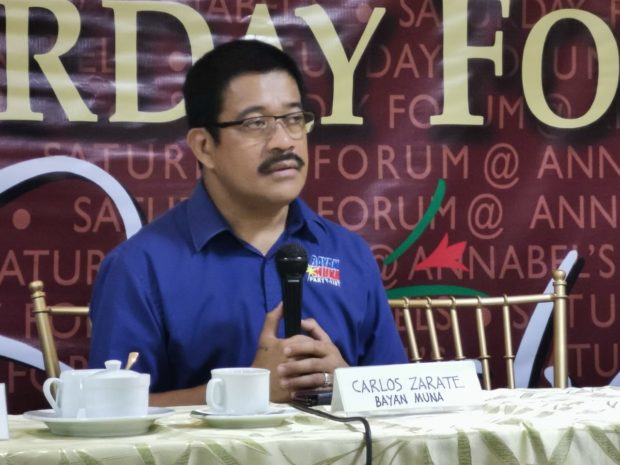
MANILA, Philippines — The Free Legal Assistance Group (FLAG) slammed on Wednesday President Rodrigo Duterte’s persistent red-tagging of Bayan Muna Rep. Carlos Zarate, calling it “irresponsible and dangerous” under the current political climate.

“This red-tagging is baseless and malicious,“ Chel Diokno, FLAG chair, said in a statement. “Such actions by the highest official of the land only subvert and hurt our already weak justice system.”

Diokno made the remark two days after the weekly pre-recorded briefing of Duterte during which he implied that Zarate supported the actions of the New People’s Army, the armed wing of the Communist Party of the Philippines (CPP).

“And at a time when government officials, judges, lawyers, and human rights advocates are being killed with impunity under Duterte’s rule, such red-tagging is irresponsible and dangerous — especially since such allegations are often the prelude to human rights violations, including harassment, unlawful arrest, torture, and threats to life,” Diokno added.

Zarate and other members of the left-leaning Makabyan bloc have constantly denied being members, much less officials, of the CPP.

He and other activists explained that they could condemn the rationale of the armed struggle as it would be tantamount to doing away with peace negotiations.

The Makabayan bloc has been dragged into discussions of CPP-NPA membership, especially after Jevilyn Cullamat, daughter of Bayan Muna Rep. Eufemia Cullamat, was killed in an encounter with the military.

Cullamat confirmed that her daughter was a medic in the NPA, but she insisted that her daughter’s decision did not reflect the stand of Bayan Muna and the Makabayan bloc.

After Duterte linked Zarate again to CPP-NPA, activists voice their support for Zarate and attested tohis contributions in the House of Representatives.

It was not the first time that Duterte criticized Zarate, who also hails from Davao City, his hometown. efore Duterte assumed office in 2016, there were talks that Zarate might be part of the Cabinet, as the choice of the National Democratic Front for the slots then reserved by the President for the left.

Duterte’s relationship with the left turned sour after a series of claims that NPA members ambushed the government’s security detail, which led to even more distrust between the two sides.

Diokno called on Filipinos to speak out against actions of the administration they did not agree with, saying they should not be intimidated by threats to stifle and demonize legitimate dissent.

“FLAG has seen in its decades of work: that it is when we are scared into silence that our rights are most under threat.  They will try to do this by making an example of those who remain outspoken against Duterte,” Diokno said.

“We call on all Filipinos to resist any attempt to intimidate us into silence. Our rights and freedoms hang in the balance,” he added.#

Filipino migrant worker fined $3,540 for breaking Taiwan’s quarantine rules

By: Cristina Eloisa Baclig – Content Researcher/Writer / INQUIRER.net / December 08, 2020

MANILA, Philippines — A Filipino migrant worker in Kaohsiung, Taiwan was fined $3,540 (around P168,000) on Sunday for stepping out of his quarantine room for eight seconds.

The migrant worker, who was under mandatory 14-day quarantine in a hotel, was caught by hotel personnel through a surveillance camera.

According to the information given by the city’s Department of Health to Taiwan’s official Central News Agency (CNA), the man left his room to drop off something for a friend who was also staying on the same hotel floor.

There are 56 hotels with over 3,000 rooms in the city that are designated as quarantine facilities. According to the city’s health department, the number of people under quarantine in the city spiked from 2,379 on November 22 to 3,859 on December 6.

CNA added that from November 1 to December 5, nine foreign migrant workers in Kaohsiung were caught violating quarantine rules. A fine of (New Taiwan dollar) NT$100,000 to NT$ 1 million is imposed for those who will break the city’s quarantine guidelines.

Last March, Taiwan’s foreign ministry announced that it will not allow the entry of foreign nationals to contain the spread of COVID-19.#

Global rights watchdog says PH civic spaces shrunk: Free speech, assembly now ‘repressed’

0

By: Gabriel Pabico Lalu – Reporter/INQUIRER.net / 08:00 AM December 08, 2020

MANILA, Philippines — A global rights watchdog has given the Philippines a lower grade in terms of how free its civic spaces are, noting that attacks against activists and the media meant that free speech and peaceful assembly have transitioned from “obstructed” to “repressed.”

In its report released ahead of the global Human Rights Day, the Civicus Monitor noted that the Philippines’ score worsened in 2020, just one step away from the lowest grade based on their five-point rating.

Civicus grades countries’ civic spaces through reports from partner organizations across the world, which are then used to categorize countries.  Ratings of “open” is the highest grade possible, as it denotes an almost unhampered civic space, followed by the “narrowed” rating, then “obstructed,” “repressed,” and “closed.”

The Philippines was rated “obstructed” in 2019, but is now given a “repressed” rating. This meant the country is only slightly ahead of four “closed” countries in the Asia Pacific Region: China, North Korea, Laos, and Vietnam.

According to Civicus, the worsening conditions of civic spaces in the country can be attributed to the shutdown of media giant ABS-CBN, prosecution of the administration’s critics, and the slay of human rights defenders.

“This year, the Philippines has been downgraded owing to its decline in fundamental freedoms. An ongoing attack on media freedom escalated when ABS-CBN – the largest media network – was forced off air, depriving people of critical information during the COVID-19 pandemic,” Civicus said in its report.

“Senator Leila De Lima, a prominent critic of President Rodrigo Duterte, has spent more than three years in detention on fabricated charges. Human rights defenders, such as Zara Alvarez and Randall Echanis, have been attacked and killed with impunity,” it added.

Echanis, a peace consultant and a peasant leader, and Alvarez, a human rights group’s staffer, were killed just a week apart.

Meanwhile, ABS-CBN remains non-operational since its franchise expired last May 4, as the House of Representatives panel voted against the provision of a new franchise. However, Malacañang and President Duterte denied having any hand on the decision from Congress.

‘Eroded civil freedoms’

But Civicus said that the decline in the Philippines’ score is also due to the policies adopted by the Duterte government.

“The Duterte government has incrementally chipped away at civic freedoms since it came to power in 2016 but this has further eroded over the last year,” Civicus Monitor’s Asia-Pacific Civic Space Researcher Josef Benedict said in a separate statement.

“In 2020, we have seen systematic intimidation, attacks and vilification of civil society and activists, an increased crackdown on press freedoms and a pervasive culture of impunity take root,” he added.

The Civicus report also took note of the recent issues with red-tagging, or some government officials’ alleged practice of linking protesters, human right workers, and other activists expressing legitimate dissent towards the communist armed movement.

They also considered the passage and enactment of the Anti-Terrorism Law — which brought more stringent measures against terrorism but was criticized for its supposed vagueness — as a factor in the shrinking of civic spaces.

“Others, like human rights defender Teresita Naul, have been criminalized or subjected to ‘red-tagging’ – a practice of labelling individuals and groups as communists or terrorists – as a result of their work,” Civicus said in its report.

“A new anti-terrorism law passed in July 2020 includes a broad definition of terrorism that gives law enforcers exhaustive powers and provides few safeguards against abuse, leaving it open to exploitation by those seeking to silence dissent,” it added.

Other ‘repressed’ countries

In the Civicus rankings for the Asia Pacific region, only nine countries managed to get a score of “open”: Taiwan, New Zealand, Palau, Samoa, Solomon Islands, Tuvalu, Marshall Islands, Micronesia, and Kiribati.

Other Asia Pacific countries classified with the Philippines in the “repressed” category include Afganistan, Brunei Darussalam, Cambodia, India, Myanmar, Pakistan, and Thailand.

All in all, 43 countries are under the repressed status, including Russia, several countries in Africa, and some South American countries.

The top factor for rights violation issues reported in the Asia Pacific region is the presence of restrictive laws, followed by censorship, harassment, detention of protesters, and disruption of protests — similar issues that activists have been claiming to exist in the Philippines.

Despite being backed by high satisfaction and approval ratings, President Duterte’s administration has been hounded by allegations that it disregards human rights.  The Chief Executive is also a vocal critic of how the human rights sector allegedly demonizes his war against illegal drugs.

In one occasion, Duterte asked why he should be blamed for the drug war deaths when going into the drug trade should be considered suicide.

Despite the brushes with the human rights circle, Duterte recently assured the international community of the Philippines’ commitment to upholding human rights.

Civicus Monitoring boasts of partnerships with over 20 watchdog organizations around the world, which have posted a total of 516 civic space updates from November 12, 2019 to October 31, 2020.

These updates that cover 153 countries are the triangulated and verified by Civicus, and are then used to rate each country.  In states that were not monitored by their partners, Civicus uses local, regional, and international sources to generate a score.#


‘Fantastic moment!’ Filipina nurse administers first Covid vaccine in UK

0

By: Neil Arwin Mercado – Reporter / INQUIRER.net /December 08, 2020


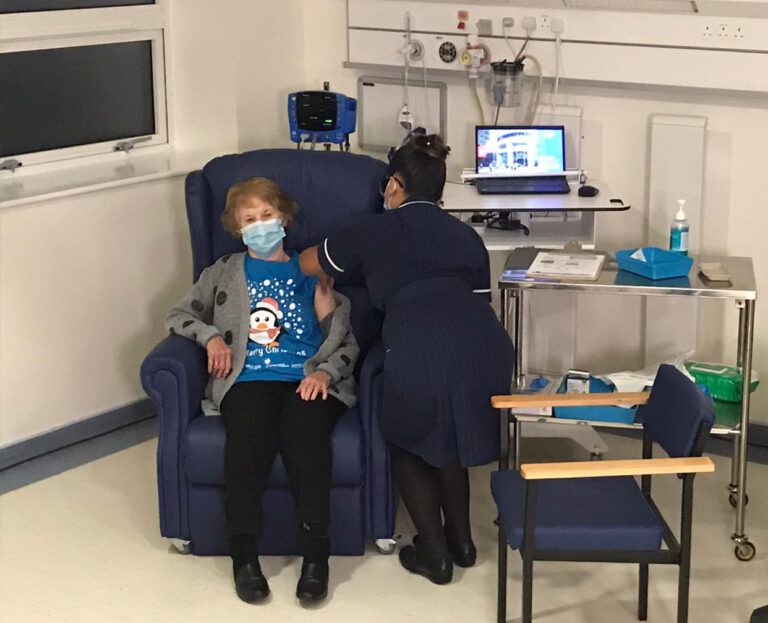
MANILA, Philippines — The coronavirus disease (COVID-19) vaccine given to the 90-year old British woman, who is deemed the first person to get inoculated outside clinical trials, was administered by a Filipina nurse.

In a tweet, the British ambassador to the Philippines and Palau, Daniel Pruce, said Filipina nurse May Parsons administered the vaccine to 90-year old Margaret Keenan.

Pruce thanked Filipino healthcare workers for their “enormous contribution” in the country’s fight against COVID-19.

“A fantastic moment! And great to see that the vaccine is administered by Nurse May Parsons from the Philippines – one of the many thousands of Filipino healthcare workers making such an enormous contribution to the #NHS (National Health Service,” Pruce said in a tweet.

In a report by The Irish Times, Parsons was quoted as saying that it was a “huge honour” to be the first in the country to deliver the vaccine to a patient.

The UK was the first country in the world to approve the Pfizer-BioNTech COVID-19 vaccine for use.

In the Philippines, COVID-19 cases surged to 442,000 as of Tuesday, December 8.

The Department of Health (DOH) said the total COVID-19 cases in the country is now at 442,785—of which 25,325 remain active.

Media groups, journ educators back AlterMidya amid red-tagging

0

(Philstar.com) – December 7, 2020

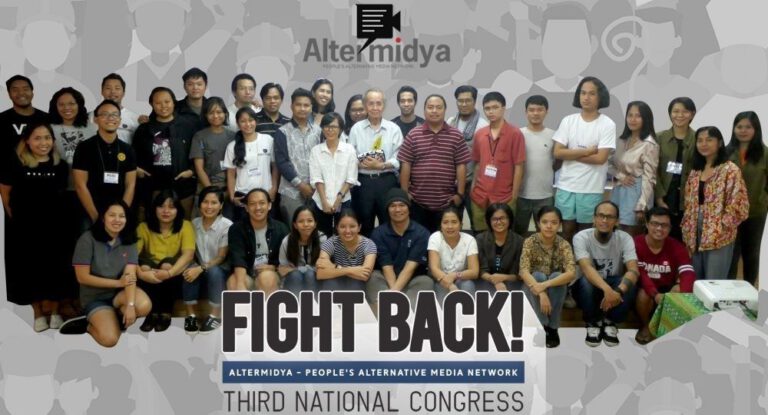
MANILA, Philippines — Different media groups and journalism educators on Monday backed alternative media network AlterMidya amid baseless red-tagging of an official of the government’s anti-communist task force.

Eleven Philippine press groups and journalism professors condemned the “callous, dangerous and evidence-less” red-tagging of AlterMidya network by the executive director of the National Task Force to End Local Communist Armed Conflict (NTF-ELCAC).

The media groups stressed that the accusation was done without proof and as an “out-of-context infographic, fraught with deadly consequences.”

Showing only a presentation to a Senate hearing on red-tagging last week, NTF-ELCAC executive director Allen Capuyan alleged that AlterMidya and its member organizations are part of the CPP’s National Propaganda Bureau under its institutional wing.

AlterMidya said it only copied a publicly-available list of its members and placed it under an “incredible” heading.

The media groups stressed that baseless red-tagging is a “devious form of disinformation,” and groups that faced such accusations have been harassed, demonized, while other individuals have been rolled, detained, assailed, even killed.

The Commission on Human Rights has not been remiss in reminding that red-tagging or linking of groups as terrorists is dangerous.

AlterMidya network

The groups also noted that AlterMidya offers “independent readings of national issues and events,” which a functioning democracy should welcome as part of a healthy public discourse.

“It is admirably committed to reporting on corruption, human rights abuses and environmental issues, as well as the plight of farmers and workers. And some of its institutional members, including but not limited is Bulatlat.com and Northern Dispatch have a well-deserved national reputations for high-quality journalism: hard-hitting, yes, but also rooted in the facts,” the statement further read.

The groups also added the alternative media network continues to do journalism even amid death threats and distributed denial of service (DDoS) attacks. “We therefore view this latest act of red-tagging with the utmost concern. It renders these community journalists even more vulnerable to abuse and violence, at the exact time we need more of their journalism,” they added.

The following groups signed the statement:

  • Asian Center for Journalism at the Ateneo de Manila University
  • Center for Media Freedom and Responsibility
  • Consortium on Democracy and Disinformation
  • Foundation for Media Alternatives
  • MindaNews
  • National Union of Journalists of the Philippines
  • Philippine Center for Investigative Journalism
  • Philippine Press Institute
  • Rappler
  • University of the Philippines Department of Journalism
  • VERA Files

The red-tagging of AlterMidya comes at a time when the highly assailed Anti-Terrorism Act of 2020 is in place, and arrests of progressive groups are feared.

AlterMidya for its part said they will “exhaust all means to fight back” against the “malicious smear campaign on [their] members.” — Kristine Joy Patag with reports from Xave Gregorio

Has the European Central Bank made the wealth gap wider?

0

PARIS, France

Dec 7, 2020, Agence France-Presse

The European Central Bank is accused of exacerbating financial inequality

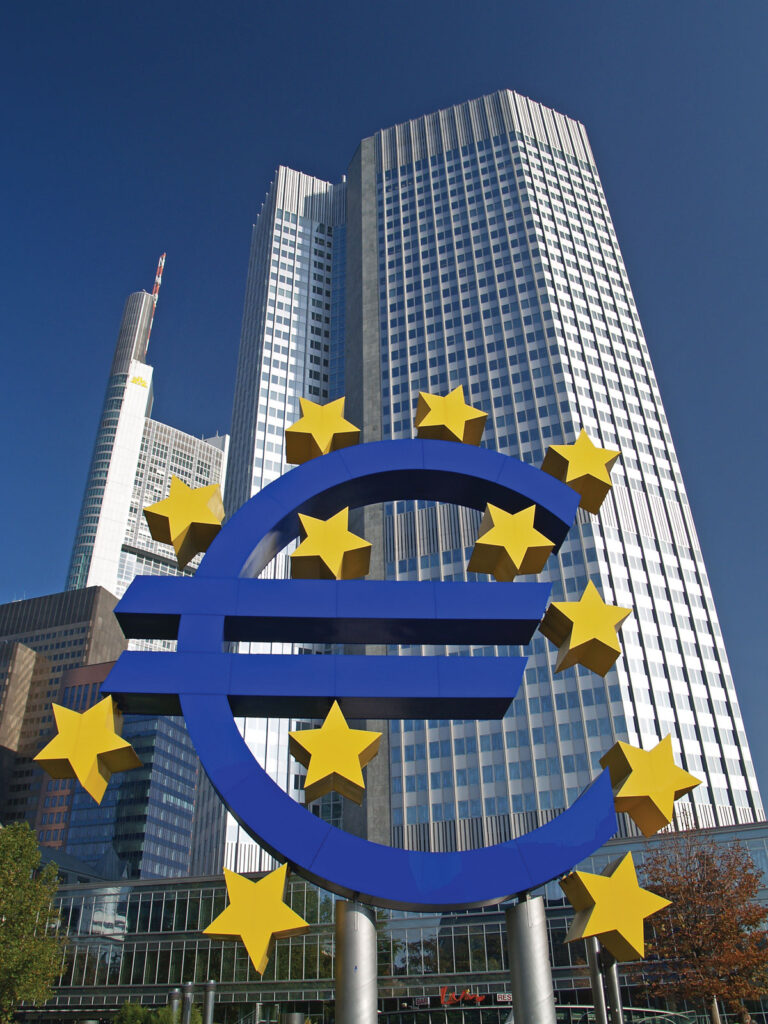
The European Central Bank (ECB) likely saved the eurozone from several financial crises, but it is also accused of exacerbating inequality with its ultra-loose monetary policies.

What policies are being questioned?

Under the direction of Mario Draghi and now Christine Lagarde, the ECB has purchased billions of euros worth of sovereign and corporate debt since 2015 to keep borrowing rates down in the eurozone and ward off additional crises.

The unconventional policy is known as Quantitative Easing (QE) and it has been implemented along with more classic methods of boosting the economy, such as ultralow interest rates that currently hover around zero.

The bank might unveil additional, or stronger, measures this week.

Does this make financial inequality worse?

“Asset purchases tend to mechanically widen the gap between the most wealthy and the least wealthy,” notes Jezabel Couppey-Soubeyran, professor of monetary policy at the Paris-1 University.

When it buys debt from financial institutions on secondary markets, i.e. after the debt has already been issued, the ECB and other central banks effectively lower the rate of interest that countries and companies must offer to obtain funds.

Investors often then turn to assets that involve more risk but which offer better returns, like stocks, causing share prices to rise.

That generally benefits shareholders such as investment groups and wealthy individuals.

Interest rates have fallen sharply since QE began, and are sometimes negative now for countries such as France and Germany, while the CAC 40 and DAX stock market indices have surged by more than 30% in the past 5 years.

Shareholders have obviously benefited as a result.

“It is certain, that [QE] has enriched this class of the population,” confirmed Frederik Ducrozet, a strategist at Pictet Wealth Management.

Low interest rates have also allowed wealthy households to benefit from higher real-estate values because demand has driven up prices in many metropolitan areas.

ECB chief economist Philip Lane acknowledged as much in a recent interview with the French financial daily Les Echos, by saying that the bank’s monetary policy had “immediate consequences for asset prices.”

He added that “the value of shares and property is higher which, of course, benefits those who own these assets.”

Do such policies help more modest households?

The ECB, which is based in Frankfurt, declined to comment on this question.

But in January 2019, two central bank staff said in a study that QE had helped reduce unemployment among the bottom 20% of wage earners in 4 countries – France, Germany, Italy, and Spain – and raised their wages.

Ultralow interest rates have also allowed less wealthy households to buy property, thus reducing inequality, they maintained.

That said, several ECB papers have concluded that such reductions have not been particularly significant.

And Couppey-Soubeyran pointed out that comparable statistics on unemployment between the eurozone and broader European Union do not demonstrate a large difference that could be attributed to ECB policies.

Have savers been taken to the cleaners?

The central bank acknowledges a negative impact on thrifty households that have seen the value of their savings decline owing to low interest rates.

The bank’s policy has had a “distributive” effect, and affected households that are net borrowers and those that are net savers in a “heterogeneous manner,” according to Eric Dor, research director at the IESEG School of Management.

ECB economists have argued that such negative effects were offset by support for employment and wages.

And Dor agreed that strong central bank support for wages, in particular those of poorer workers, “has more than compensated for the fact that some households have suffered an overall loss owing to net interest revenues.” – Rappler.com

Damage wrought by ‘Ulysses’ on agri, infra now over P19 billion — NDRRMC

0

(Philstar.com) – December 5, 2020

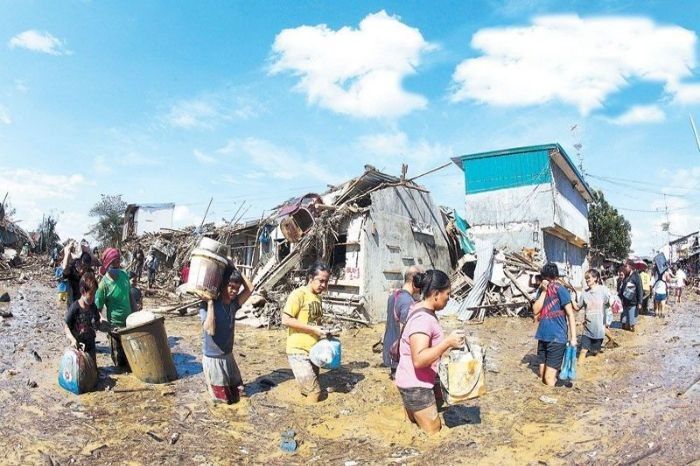
MANILA, Philippines — The destruction left by Typhoon Ulysses in its wake is now estimated to have cost over P19 billion in agriculture and infrastructure, latest data from the National Disaster Risk Reduction and Management Council showed.

The NDRRMC’s 24th situation report on the typhoon showed latest estimates as of 8 a.m., Friday. Related Stories NOAH isn’t gone but here’s what we lost when the project ended

Based on the report, the damage to infrastructure across the country is now priced at P12.01 billion.

Cagayan Valley leads the NDRRMC’s regional breakdown with P4.91 billion in infrastructure losses.

With less than half of Region II’s losses, Calabarzon comes in at a far second with P2.34 billion. Bicol and Central Luzon trail close behind with P1.98 billion and P1.87 billion in infrastructure damage, respectively.

Meanwhile, the NDRRMC said the estimated cost of damages on agriculture is currently at 7.25 billion.

Cagayan Valley took the hardest hit, incurring P2.12 billion in agricultural losses.

The region is trailed by Central Luzon which lost 1.37 billion, followed by Calabarzon with 1.26 billion.

“A total of 73 dead, 85 injured and 19 missing persons were reported in Regions II, III, CALABARZON, V, CAR, and NCR,” NDRRMC’s report read.

According to the agency, 4,816,741 individuals — over 1.77 million families — were affected by the typhoon. Of these, 92,667 persons — over 22,943 families — are still spread out across 411 evacuation centers.

Typhoon Quinta, Super Typhoon Rolly and Ulysses lashed Luzon for three consecutive weeks, beginning in late October and ending mid November, causing President Rodrigo Duterte to place the entire island under a state of calamity. 

— Bella Perez-Rubio