Home Blog Page 51

EU providing P47 million in humanitarian aid to Philippines

0

Pia Lee Brago – The Philippine Star October 18, 2021

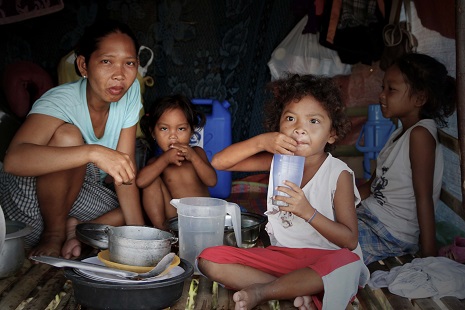
MANILA, Philippines — The European Union is allocating P47 million (€800,000) in humanitarian aid funding for the Philippines to respond to the rapid increase in COVID-19 cases in recent months.

The assistance will benefit 70,000 people in far-flung areas in Mindanao, it said.

“The unprecedented surge in COVID-19 cases threatens the lives and livelihoods of many in the Philippines, especially those living in remote areas like Mindanao where access to medical care can sometimes be limited,” Commissioner for crisis management Janez Lenar?i? said.

“This funding from the EU will ensure vulnerable and marginalized people receive vital health support to go through this difficult time,” Lenarcic said.

The funding will support a consortium of partners on the ground, such as the Action Against Hunger, CARE International and Oxfam International, in assisting the rollout of vaccination in Mindanao. This will also facilitate access to COVID-19 vaccines and support local governments and health care authorities in implementing their vaccination campaign.

The aid will also focus on improving hygiene practices while ensuring that marginalized people in 19 municipalities across Mindanao better understand the benefits of vaccination.

P37.5- million grant from World Bank

Meanwhile, the World Bank has approved a P37.5-million grant for the Philippines in ensuring useful and reliable conflict data for the formulation of conflict and disaster policy responses.

The Washington-based multilateral lender recently gave the green light for the $740,000 Philippines Conflict Monitoring Project financed by its State And Peace Building Fund.

Focused on the Bangsamoro region, the project is aligned with one of the World Bank’s Philippines Country Partnership Framework areas to address vulnerabilities by building peace and resilience and increase the availability of services in conflict-affected areas, including access to information.

“This aims to inform local decision-making, development and peace-building efforts and support the country’s gender action plan to reduce gender-based vulnerabilities associated with conflict and disasters,” it said.

Mindanao is home to roughly 25 percent of the country’s population but 39 percent are poor. In Bangsamoro alone, more than 50 percent of the population fall below the national poverty line, the bank noted.

The region has been experiencing weak delivery of basic social services such as education, health, water and sanitation and electricity, it said.

Bangsamoro has also seen major conflicts between the government and Muslim groups driven by various factors such as social injustice, alienation and exclusion, displacement of indigenous peoples from their ancestral domain, inter-ethnic conflicts, clan war and revenge killing.

Also causing conflicts in the region are land tenure and ownership disputes, competition for scarce natural and mineral resources, local election disputes, ineffective governance, lack of rule of law and service delivery, widespread poverty and unemployment. – Louise Maureen Simeon

[OPINION] To Christians voting for Bongbong Marcos

0

Oct 17, 2021, Jayeel Cornelio

In the context of our elections, for which the truth has already been sacrificed, many Christians must muster all the courage to first set themselves free

After service last Sunday, one young member of our congregation approached me to talk about, of all things, the elections.

While she has an inkling of whom to vote for, something troubles her.

It turns out that in her circle of friends, only she is not voting for Bongbong Marcos. Her friends – evangelicals all – are converting her to BBM. Apparently, his name would be brought up in every prayer meeting. To her it feels like they have the same zeal for the son of the dictator as they do for the Son of God.

And that troubles her. Deeply.

Christians for Bongbong

There is no doubt that Christians of all stripes have rallied behind Bongbong Marcos in the past. 

In 2016, the pastors of Church Without Walls International, an evangelical group, prayed over him and gave him their formal support. In response, Marcos thanked the ministers and echoed their call for national unity.

In the same year, a Pentecostal pastor was supposed to pray for the Duterte-Cayetano tandem at the end of their sortie in Laguna. When it was his turn, Bishop Jess Ramos publicly apologized to Cayetano before praying instead for Marcos to win the vice presidency. 

And when Iglesia ni Cristo (INC) and El Shaddai gave him their institutional endorsements, BBM must have felt that victory was at hand.

To be sure, religious endorsements are not always consequential, especially among smaller denominations.

But on some occasions they can make a difference. This was certainly the case in 2016. 74.5% of INC members followed their leaders’ call to vote for BBM. Without INC’s endorsement, Leni’s lead would have been wider. This is indicative of what may once again transpire in 2022.

In my view, however, religious endorsements in favor of BBM are problematic not just because the electoral race is a numbers game. 

In a piece I wrote in 2019, I expressed my disagreement with institutional endorsements, even if they were in favor of the candidates I thought should win. My reasoning then was simple: official endorsements by religious figures perpetuate the padrino system. 

Religious leaders, after all, are among our society’s power elite.

Noble intentions

But something makes it far more questionable when Christians are deliberately in favor of Bongbong Marcos. It does not matter whether they are ministers or lay.

To be sure, many of these Christians buy into BBM’s call for national healing. 

Reconciliation and forgiveness are staple, after all, in Christian theology. “Why cannot Filipinos forgive and forget what the Marcoses did? It is the Christian way to forgive the sinner and condemn the sin,” so the moral argument goes. 

So whenever BBM asserts that he is for national unity and moving on, which he always does, Christians with noble intentions for the country may readily fall for him.

This is where the problem lies. They forget that an intimate relationship exists between forgiveness and justice. While forgiveness might be an individual decision, justice is a social responsibility. (READ: Forgiveness demands justice)

The theology of forgiveness that Christians embrace is of course admirable. This, after all, is what infuses the Christian life with hope for the future.

But when applied to Bongbong Marcos, there is no hope.

Lies and more lies

There is no other way to put this. The son of the dictator is a liar. 

Whether it’s his Oxford degree or his father’s presidency, everything that comes out of his mouth is a lie. 

BBM, for one, claims that his father “brought the Philippines into the modern world.”

That is not true. His father and his father’s cronies plundered the nation, a fact that is well documented by no less than the Supreme Court. And just a few weeks ago, the Sandiganbayan ordered the return of stolen money. The order enforces an agreement that Imelda Marcos herself entered into with the Philippine government in 1991 to assign all properties in question to the latter.

Time and again, the son of the dictator has resisted calls for him to apologize. He never did, and never will. 

And no, he cannot claim that he was too young to be involved in corruption. 

In 1985, when he was 27, BBM became the chairman of the board of the Philippine Communications Satellite Corporation, a conduit of his family’s ill-gotten wealth. And according to the Sandiganbayan, private foundations registered in Switzerland, for which Imelda Marcos has been convicted, specifically named Bongbong, Imee, and Irene as beneficiaries of stolen money.   (READ: Why is it difficult for Bongbong Marcos to apologize?)

To make it worse, BBM himself is behind the historical distortions we now see on social media. Years ago he approached Cambridge Analytica with a simple task in mind: to change public attitudes towards the Marcoses. That now accounts for much of the online praises accorded Ferdinand Marcos and his Martial Law.

One is thus left wondering how Bongbong has the audacity to claim that his will be a “unifying leadership.”

Given all these lies, it is thoughtless for pastors to admonish Christians “na nagtuturo ng forgiveness pero may hashtag ka ng #neveragain #neverforget. Move on din kapatid.”  

The truth

In John 8, Jesus chose to directly confront the Jews who wanted to kill him. They also claimed that they were Abraham’s children, thus God’s chosen people. 

Jesus, in response, minced no words: “You belong to your father, the devil…the father of lies.”

I have no doubt that Christians out there, as honorable Filipino citizens, only want what is good for the country. I have no doubt, too, that many of them believe in the power of forgiveness.

But forgiveness is not an excuse for ignorance. Nor does it permit us to fall for the seduction of lies.

Christians proclaim that the truth shall set us free. This is as much true to every individual as it is to our society.

And so in the context of our elections, for which the truth has already been sacrificed, many Christians must muster all the courage to first set themselves free. – Rappler.com

Jayeel Cornelio, PhD is a sociologist of religion at the Ateneo de Manila University and a Fellow of the Institute for Studies in Asian Church and Culture (ISACC). He has taught at the Divinity School of Chung Chi College at the Chinese University of Hong Kong and was a postdoctoral fellow at the Max Planck Institute for the Study of Religious and Ethnic Diversity. Follow him on Twitter @jayeel_cornelio.

Robredo eyes localized peace talks, an old proposal rejected by NDF

0

Oct 16, 2021, Froilan Gallardo

CAGAYAN DE ORO, PHILIPPINES

Leni Robredo says the proposed localized peace talks form part of her road-to-peace program

Vice President and presidential aspirant Leni Robredo on Saturday, October 16, renewed calls for localized peace talks with communist rebels throughout the country as a step to forging an agreement with the National Democratic Front (NDF).

“Tingin ko kailangan may localized na paguusap. Mas maa-attain ang kapayapaan kung ang pinaka-root ng problema ma address (The way I see it, there is a need for localized peace talks. We can attain peace if we address the roots of the problem),” Robredo said.  

The root problems, she said, were poverty and inequality.

But the thing with such a proposal is, it has been made before and the NDF has rejected it, said Iglesia Filipina Independiente Bishop Felixberto Calang, co-convenor of the independent peace observer Philippine Ecumenical Peace Platform.

Robredo told reporters in Cagayan de Oro that the proposed localized peace talks form part of her road-to-peace program.

She arrived in Cagayan de Oro on Saturday morning to spearhead her Vaccine Express program at the PHINMA-Cagayan de Oro College in Barangay Carmen. 

Robredo also met with Cagayan de Oro Archbishop Emeritus Antonio Ledesma and Archbishop Jose Cabantan.

Bishop Calang said the NDF has maintained that the peace talks between the government and communist rebels should resume from where it was left off before it collapsed in 2017.

Have me

“For a peace initiative to proceed, both parties should come to an initial agreement. The challenge that the next administration would face is how to resume the stalled peace talks,” he said.

Calang said it was not the first time that the idea of holding localized peace talks was presented, and flatly rejected by the NDF.

He said presidential daughter Davao Mayor Sara Duterte also made the same proposal in 2017, and failed because the NDF found it unacceptable. –Rappler.com

Froilan Gallardo is a Mindanao-based journalist and an awardee of the Aries Rufo Journalism Fellowship

U.S. Military Delivers Four Drones Worth P200 Million to the Philippines

0

Mario Alvaro Limos, esquiremag.ph

The Philippines is now among the largest recipients of U.S. military assistance.

The Philippines will now have more eyes in the skies to guard the West Philippine Sea as its oldest military ally completed the delivery of four ScanEagle Unmanned Aerial Systems (UAS) worth P200 million to the Philippine Air Force (PAF).

The U.S. military has turned over the drones to the Philippines in a ceremony held on October 13 at the Clark Airbase in Pampanga. The event was also significant because of the history of Clark being a former U.S. stronghold in Asia. It also highlighted the strengthening ties between the Philippines and the U.S. as the former seeks to modernize its military in order to counter China’s military expansion in the West Philippine Sea. 

According to the U.S. Embassy in Manila, the United States provides the Armed Forces of the Philippines with grant assistance and expedited sales of arms and munitions to support its modernization goals and urgent maritime security, counterterrorism, humanitarian efforts, and disaster relief requirements.

What is the ScanEagle?

The ScanEagle is a small, long-endurance, low-altitude unmanned aerial vehicle (UAV) built by Insitu, a subsidiary of Boeing, and is used for reconnaissance. It does not need an airfield and can be launched using a mobile launcher that can be carried on warships and boats. 

The ScanEagle was launched in 2005 and is used by armed forces of the U.S., Canada, Australia, U.K., Singapore, Japan, Indonesia, Malaysia, Spain, the Netherlands, and Brazil, among others. 

Its main eye is composed of an electro-optical and infrared camera. Its communications system has a range of 100 kilometers. The aircraft can fly without landing for over 20 hours. 

The ScanEagle was widely used by the U.S. as an autonomous surveillance craft in Iraq and Afghanistan. 

The Philippines is Among the Largest Recipients of U.S. Military Hardware

In previous years, the U.S. had reluctantly transferred military hardware to the Philippines, often selecting aging equipment as part of military sales to the Philippines. 

In May 2021, former Senator Juan Ponce Enrile said he advised President Rodrigo Duterte not to count on arms support from the U.S.

Enrile recalled how the U.S. considered the Philippines “low priority” in terms of military support during the height of the Vietnam War when the Philippine government’s requests for military hardware were not granted. 

But times have changed. It cannot be denied that the Philippines is now among the high-priority countries when it comes to arms deals with the U.S. government. 

“The Philippines is by far the largest recipient of U.S. military assistance in the Indo-Pacific region.  Since 2015, the United States has delivered more than Php50.6 billion ($1.06 billion) worth of planes, ships, armored vehicles, small arms, and other military equipment to the Philippines, while training side-by-side with our Filipino allies,” the U.S. Embassy said in a statement

The North needs help

0

EDITORIAL, Philippine Daily Inquirer /October 15, 2021

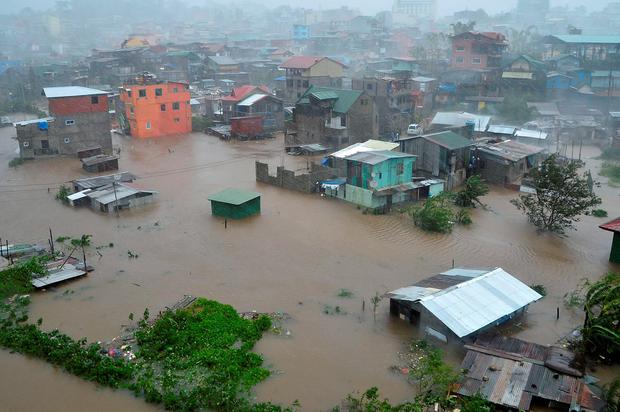
It was a scene “too hard to watch,” recalled Bobby Dumayag, Jr., whose now-viral video showed Cagayan farmers desperately chasing sacks of corn being carried away by floodwaters at the height of Severe Tropical Storm “Maring” on Monday. When the embattled farmers didn’t heed his warning about the dangerous currents, the 19-year-old working student decided to help them salvage their harvest rather than see their loans for fertilizer and seeds go down the dain. But it was too late. Dumayag said that only 20 out of 450 sacks of corn were saved.

In Baguio, rescuers dug out the bodies of a family of three whose house was buried in a landslide caused by Maring’s torrential rains. Earlier, three siblings aged 2, 6, and 8 perished on the way to the hospital after their house similarly collapsed under a mudslide in Benguet.

Per the latest reports, Maring left at least 19 confirmed dead, mostly from Ilocos Sur, Pangasinan, and Palawan; 13 are still missing. Some 50,000 families and 194,677 individuals were affected. Total agricultural loss is placed at P1 billion, with P29.4 million in the Cordilleras alone and P32 million in Cagayan, while infrastructure losses stand at P66 million. Agriculture officials said some 29,000 farmers and fisherfolk were affected. At least 109 houses in Central Luzon, Mimaropa, Caraga, and the Cordillera Administrative Region (CAR) were damaged. Fourteen incidents of landslides were reported, affecting at least 237 barangays mostly in the Ilocos region and CAR.

It’s been a double whammy as well for Batanes, which is currently in the grip of a COVID-19 surge, even as it is still recovering from the devastation wrought by Typhoon “Kiko” in September.

Weather reports said Maring dumped 625 mm of water in Baguio over 24 hours, much more than the calamitous Typhoon “Ondoy” in 2009, whose 455 mm of rain in as many hours marooned Metro Manila in murky floodwaters for days.

Live TV news footage documented the dire situation in northern Luzon, with entire households huddled on rooftops, bridges buckling under the pressure of rivers overflowing their banks, roads left unpassable by landslides and rising floods, and strawberry farms and rice and corn fields now underwater.

News of Maring’s devastation came as a surprise to many. There were no extraordinary warnings from the weather bureau and the National Disaster Risk Reduction and Management Council (NDRRMC), and no mention at all of the calamity unfolding as President Duterte gave a public address on Monday night. It was only through social media—the desperate posts of people in the battered areas and Vice President Leni Robredo’s tweets around 1 a.m. Tuesday morning appealing for help and providing updates—that most people got alerted about the disastrous floods sweeping across the country’s northern provinces. Was the government caught flatfooted by Maring, and was the NDRRMC remiss in warning provinces about the intensity of the howler?

For sure, some local government units (LGUs) and national agencies have been quick in their response to the disaster. Families were immediately ferried to evacuation sites, with the elderly and infirm riding the backs of Coast Guard personnel. The NDRRMC said some P700,000 worth of assistance have been provided the Ilocos region and CAR, mostly through food packs, hygiene kits, and cash aid. The Department of Agriculture said it has similarly set aside P172 million in rehabilitation funds for the affected farmers and fisherfolk, while Malacañang said it had deployed rescue personnel from the Armed Forces of the Philippines, the Coast Guard, the police, and the Bureau of Fire Protection and had allocated a P128-million fund to the social welfare department and P219-million worth of food packs to be distributed among 373,737 families.

But a more comprehensive solution to the perennial flooding that afflicts the region is clearly warranted. In November 2020, Cagayan was also inundated by massive floods brought on by Typhoon “Ulysses.” A study by the global management consulting firm McKinsey & Company, noted that “the climate hazards the (Asian) region faces in the future, from heat waves to flooding, are likely to be more severe, more intense, or both.” Countries in Asia must ensure that climate risk is incorporated in the urban planning and capital decisions of policymakers, the study said.

The North needs all the help it can get at this time, and national agencies, LGUs, and especially government officials preoccupied with election activities are called upon to channel their efforts, personnel, relief goods, rescue vehicles, and other available resources to the affected provinces.

Ordinary citizens can do their bit as well by donating goods and volunteering to help in the relief efforts. Among the relief channels are Unicef, the Inquirer Foundation, the Ateneo de Manila University, University of the Philippines’ IskoOps, ARMY Bayanihan, Innabuyog Gabriela Youth, BTS Army Cavite Fanbase, BLACKPINKFUNDS_PH, and Project Pay It Forward.

Pacquiao strikes Marcoses: Return ‘ill-gotten wealth’, apologize for abuses

0

By: Neil Arwin Mercado – Reporter /INQUIRER.net /October 15, 2021

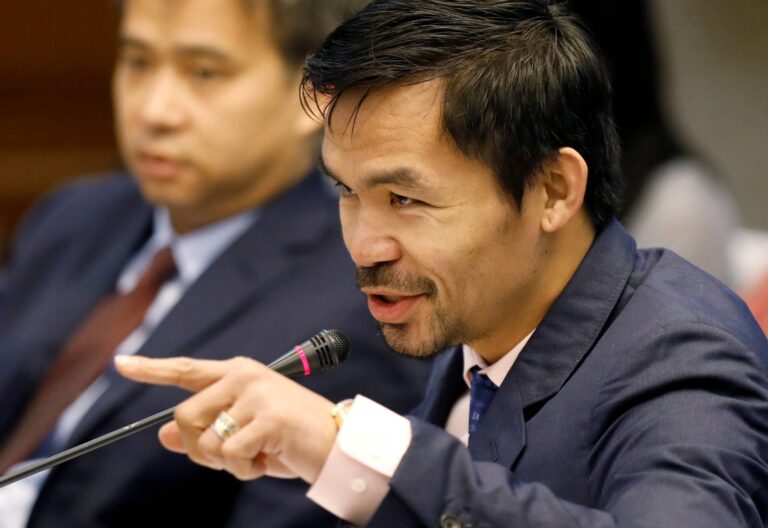
MANILA, Philippines — The Marcos family should return their ill-gotten wealth and apologize for abuses during the presidency of their late patriarch, presidential aspirant and Sen. Manny Pacquiao said Friday.

Pacquiao made the remark as he faces former senator Ferdinand “Bongbong” Marcos Jr., the son of the late president Ferdinand Marcos, for presidency in the 2022 national elections.

“’Yung issue ng yaman na hawak ng Marcoses ay kung anuman yung nanakaw nila sa ating gobyerno, kailangan siguro ibalik yung sinisigaw ng taumbayan,” Pacquiao said in an interview on ABS-CBN News Channel.

(Whatever ill-gotten wealth they have, they should return it to the government because the public is clamoring for it.)

Pacquiao likewise said he is open to review the cases related to the Marcoses’ ill-gotten wealth should he be elected as president.

Pacquiao also backed calls for the younger Marcos to apologize over the supposed abuses during the regime of his late father, former president Ferdinand E. Marcos.

“Sang-ayon ako dyan dahil kailangan kung nagkamali ka, marunong kang humingi ng patawad (I agree with it because if you made a mistake, you should know how to apologize),” Pacquiao said.

“Hindi yan tama na sabihin na wala pa siyang alam sa mga nangyayari noong panahon ng tatay niya… Hindi niya pwedeng sabihin na wala siyang alam,” he added.

(It is not right for him to say that he did not know the events during the time of his father… He cannot say he does not know anything.)

INQUIRER.net has reached out to Marcos and his spokesperson for a comment Pacquiao’s remarks.

Globe warns customers vs use of illegal repeaters, signal jammers

0
Jessica Fenol, ABS-CBN News

Posted Oct 14 2021

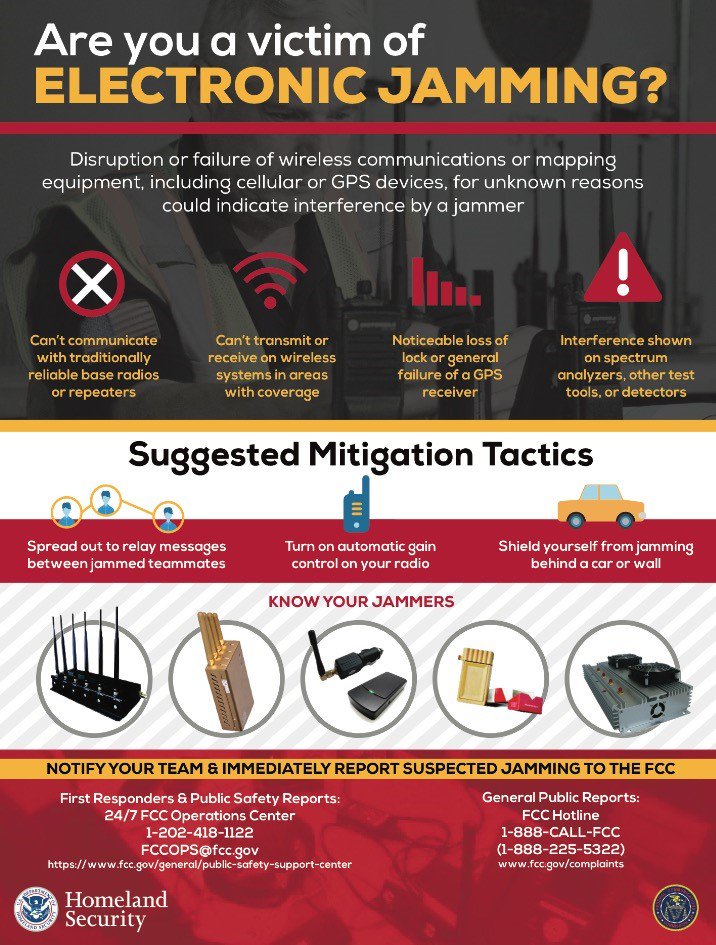
MANILA— Globe Telecom on Thursday said the public should refrain from using illegal signal boosters, repeaters and jammers which could cause “widespread interference” to critical telecommunication services. 

“These network disruptions include slow or failed connections, dropped calls and voice quality issues and even loss of cell phone signals,” the telco said in a statement. 

Illegal repeaters can be indoor or outdoor antennas and wireless adapters that boost network coverage which can interfere with airwaves and mobile signals for other customers, it said.

Cell signal jammers, meanwhile, block the signal and prevent anyone from using the service. This is usually used in concert halls or places of worship as well as in high-security areas to prevent disruptions, it said.

Globe warned jammers could be used to block cell signals that could disrupt critical service during disasters or the automated elections, which rely on cell signals at polling precincts.

The sale of the said devices has been prohibited since 2013 under the National Telecommunications Commission’s Memorandum Order No. 01-02-2013, the telco said. However, online shops, sellers and vendors still offer these illegal items. 

Globe said it conducts routine scans for illegal devices and provides the input to the NTC for appropriate action. Customers are advised to report suspected users and sellers of these illegal devices.

The Ayala-led telco said it also supports the NTC’s crackdown on illegal SMS alert blasting devices. 

The NTC earlier asked e-commerce platforms Lazada, Shopee and Facebook Marketplace to immediately stop the sale of SMS blasting devices on their platforms.

“Globe fully supports the recent NTC action to go after the sale of the illegal cell broadcaster, an equipment intended to serve the public during extreme periods of disaster,” it said.

An emergency alert, which appeared to promote the presidential bid of Ferdinand “Bongbong” Marcos, was sent to several individuals while he was filing his certificate of candidacy last week.

Globe Telecom’s Technology and Strategy Service Integration head Manny Estrada earlier said SMS alert blasting devices are being sold online. The telco executive also said the use of such items should be regulated. 

Lazada and Shopee said they have removed the “violative” items from their platforms upon the order from NTC.

Philippines scraps facility quarantine for fully vaxed travelers from ‘green countries’

0

By LLANESCA T. PANTI, GMA News Published October 13, 2021

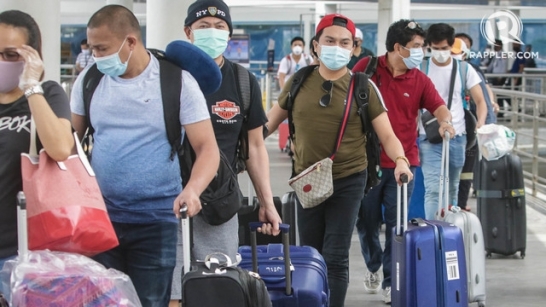
The Philippine government has removed the mandatory quarantine in a facility for inbound travelers fully vaccinated against COVID-19 from their country of origin classified as “green country” or with low risk of infection, the Palace said Wednesday.

Presidential spokesperson Harry Roque said the travelers must present a negative result of their RT-PCR test taken 72 hours before departure.  Upon arrival, they are instead required to undergo home quarantine for 14 days.

Countries classified under green countries or with low risk of COVID-19 infection are the following:

  • American Samoa
  • Burkina Faso
  • Cameroon
  • Cayman Islands
  • Chad
  • China
  • Comoros
  • Republic of the Congo
  • Djibouti
  • Equatorial Guinea Falkland Islands (Malvinas)
  • Gabon
  • Hungary
  • Madagascar
  • Mali
  • Federated States of Micronesia
  • Montserrat
  • New Caledonia
  • New Zealand
  • Niger
  • Northern Mariana Islands
  • Palau
  • Poland
  • Saba (Special Municipality of the Kingdom of Netherlands)
  • Saint Pierre and Miquelon
  • Sierra Leone
  • Sint Eustatius
  • Taiwan
  • Algeria
  • Bhutan
  • Cook Islands
  • Eritrea
  • Kiribati
  • Marshall Islands
  • Nauru
  • Nicaragua
  • Niue
  • North Korea
  • Saint Helena
  • Samoa
  • Solomon Islands
  • Sudan
  • Syria
  • Tajikistan
  • Tanzania
  • Tokelau
  • Tonga
  • Turkmenistan
  • Tuvalu
  • Vanuatu and
  • Yemen

Likewise, unvaccinated or partially vaccinated minor children traveling with their fully vaccinated parents or guardians will be required to observe the quarantine protocols corresponding to their vaccination status.

The rest of the inbound travelers who do not meet the above mentioned requirements are mandated to undergo a facility-based quarantine until the release of a negative RT-PCR test taken on the fifth day of quarantine.  In the case of foreigners, they will be required to secure hotel reservations for at least six days. 

In addition, a parent or guardian is obliged to accompany the child in the quarantine facility for the full term of the latter’s facility-based quarantine period.

The validation of COVID-19 vaccination status of overseas Filipino workers and their spouse, parents, and/or children traveling in the Philippines or abroad, non-OFWs vaccinated in the country and abroad, and foreigners vaccinated in the Philippines will be conducted with the inbound travelers presenting either their VaxCertPH digital certificate, Bureau of Quarantine (BOQ) / World Health Organization (WHO)–issued International Certificate of Vaccination (ICV) or Prophylaxis, or the national digital certificate of the foreign government where they were vaccinated. 

In the case of foreigners vaccinated abroad, they can present WHO-issued ICV, or the national digital certificate of the foreign government which has accepted VaxCertPH under a reciprocal agreement.—LDF, GMA News