Home Blog Page 62

Nagasaki marks atomic bomb anniversary with sombre ceremony

0

Kyoko Hasegawa (Agence France-Presse) – August 9, 2021

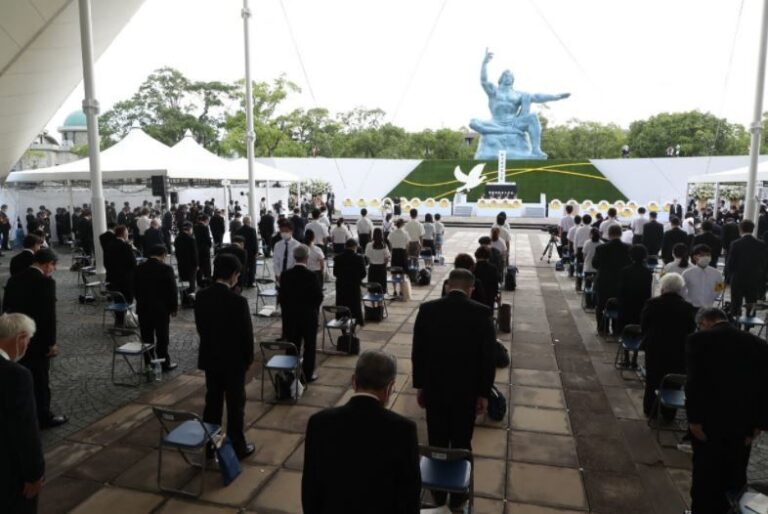
TOKYO, Japan — The Japanese city of Nagasaki on Monday commemorated the 76th anniversary of its destruction by a US atomic bomb, with the mayor calling for the global community to build on a new nuclear ban treaty.

Nagasaki was flattened in an atomic inferno that killed 74,000 people, three days after the nuclear bomb that hit Hiroshima. 

The twin attacks rang in the nuclear age and gave Japan the bleak distinction of being the only country to be struck by atomic weapons.

Survivors and a handful of foreign dignitaries offered a silent prayer at 11:02 am (0202 GMT), the exact time the second — and last — nuclear weapon used in wartime was dropped. 

For a second year, the number of people attending was much smaller due to coronavirus restrictions. 

The ceremony is the first since an international treaty banning nuclear weapons came into force last year.

“World leaders must commit to nuclear arms reductions and build trust through dialogue, and civil society must push them in this direction,” Nagasaki mayor Tomihisa Taue said.

The treaty has not been signed by countries with nuclear arsenals, but activists believe it will have a gradual deterrent effect.

Japan has not signed it either, saying the accord carries no weight without buy-in from nuclear-armed states.

The country is also in a delicate position as it is under the US nuclear umbrella, with US forces responsible for its defence.

“As the only country that has suffered atomic bombings during the war, it is our unchanging mission to steadily advance the efforts of the international community, step by step, towards realisation of a world free of nuclear weapons,” Japanese Prime Minister Yoshihide Suga said at the ceremony.

On Friday, Japan marked 76 years since the US dropped the world’s first atomic bomb on Hiroshima, killing around 140,000 people. 

Barack Obama became the first sitting US president to visit Hiroshima in 2016, but Washington has never acceded to demands for an apology for the bombings.

International Olympic Committee chief Thomas Bach travelled to Hiroshima in July, before the start of the Tokyo Games, to mark the start of an Olympic truce — a tradition that calls for a halt to global conflict to allow the safe passage of athletes.

But city officials were disappointed after the IOC refused a request to stage a minute of silence at the Games to mark Friday’s anniversary.

SC acts on bid to reshape writ of amparo, pre-trial remedies amid rise in red-tagging

0

By: Tetch Torres-Tupas – Reporter/INQUIRER.net / August 09, 2021

MANILA, Philippines—The Supreme Court has acted on the plea of advocacy groups and human rights defenders to address the “worsening state of human rights in the country.”

In a letter submitted last May, the advocates urged the high court to take a second look at existing rules on the writs of amparo, habeas data, habeas corpus, and other pre-detention and pre-trial remedies.

The writ of Amparo is a remedy available to any person whose right to life, liberty, and security has been violated or under threat. Like a writ of habeas data, it serves as preventive and curative roles to curb extrajudicial killings and enforced disappearances.

They said labeling or red-tagging being done by the government now has expanded from activists to members of the media and other sectors. They also sought safeguards in the issuance and service of warrants following incidents that led to nine individuals’ death early this year.

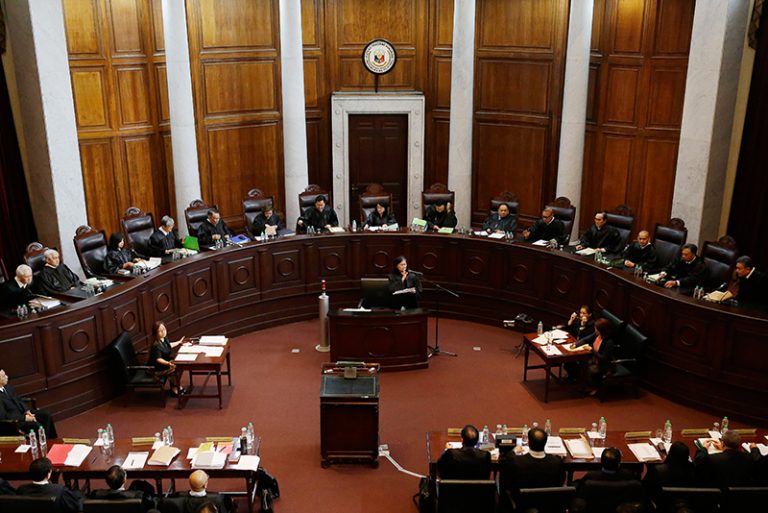
The high court, in a resolution, has referred the letter to the court’s Committee on Human Rights for appropriate action.

The Committee is headed by Associate Justice Marvic Leonen. The same committee also has the reports by the Philippine National Police and civil society groups regarding the death of members of the legal profession.

The submission before the high court was made by Bayan secretary general Renato M. Reyes, Jr., Karapatan secretary general Cristina Palabay, KMU secretary general Jerome Adonis, KMP secretary general Danilo Ramos, ACT secretary-general Raymond Basillo, COURAGE president Santiago Dasmarinas, and Bayan Metro Manila chair Raymond Palatino.

Others who joined in the submission include Marites Asis, the mother of political prisoner Reina Mae Nasino who was arrested on the basis of a questionable search warrant in Manila; Rosenda Lemita, mother of Ana Marie Evangelista and Rosalinda Salundanga whose relatives were killed during the “Bloody Sunday” in Batangas and Rizal, respectively.

Reyes said they welcome the action by the Supreme Court.

“Some of the issues raised have been addressed through the new rules on the issuance and service of search and arrest warrants. Other issues such as red-tagging and the filing of trumped-up charges in remote towns still need to be substantially addressed,” he said in a statement.

The Delta dilemma: How the COVID-19 variant is disrupting the world’s reopening plans

0

The Straits Times/Asia News Network / August 08, 2021

SINGAPORE — The Delta variant of the coronavirus has played havoc with governments’ plans to return life to some sense of normality.

Fresh outbreaks fueled by the highly infectious strain have forced major cities in China, Australia, the Philippines and elsewhere back into lockdown and spurred the authorities, particularly in Asia, to reimpose harsh restrictions as low vaccination rates leave people vulnerable to Covid-19.

Economies have taken a hit as manufacturing hubs like Thailand and Vietnam see their supply chains interrupted. Factories making goods for global brands are halting work and potentially missing out on the crucial holiday shopping season in major markets.

The wave of new infections has also seen the likes of Israel, Britain and the United States scramble to reinstate mask recommendations even among the vaccinated, as data emerges to show that more fully vaccinated individuals are also catching the Delta strain, and might be just as likely to spread it to others around them.

The Delta variant, first identified in India, has become by far the most dominant strain in many countries: It now accounts for almost all new Covid-19 cases in the US, Britain, Russia, Germany, South Africa and Singapore, among other countries.

‘Breakthrough’ cases

Studies show that the variant to date is the fastest, fittest and most formidable version of the Sars-CoV-2 virus, which causes Covid-19.

Scientists estimate that it is roughly 50 per cent more contagious than the Alpha variant first found in Britain, which in turn was about 50 per cent more contagious than the original strain detected in the Chinese city of Wuhan.

It has also proven more potent than its predecessors, capable of infecting fully vaccinated people.

Still, such individuals – even if infected with Covid-19 – remain far less likely than those who are unvaccinated to fall severely ill, require hospital care, or die from any known variant of the coronavirus.

US data shows that infections, hospitalizations and fatalities remain rare among those who are fully vaccinated.

More than nine in 10 of all new cases, hospitalizations and deaths in US states that reported on Covid-19 from the beginning of the year occurred among those who were unvaccinated or yet to be fully vaccinated, according to the Kaiser Family Foundation, a US non-profit organization that has been collecting and analyzing data on Covid-19 vaccinations.

In Singapore, the fully vaccinated made up about four in 10 of all new cases over the past month – a surprising statistic that can be explained by the fact that around 70 per cent of the population have already been fully inoculated, so the probability of encountering an infection in a vaccinated individual is significantly higher.

Aggressive contact tracing and testing measures would also have identified mild or asymptomatic infections that might not have surfaced otherwise.

Significantly, not one of the fully vaccinated people who were infected died, and current data shows that only one is in intensive care.

Health experts stress that cases of fully vaccinated individuals becoming infected with Covid-19, commonly called “breakthrough infections”, do not imply that the vaccines are ineffective.

“The risk (of infection) among vaccinated people should be closer to 0.0 per cent everywhere, but the fact that they are not is less a matter of some failure of the vaccines themselves than the fact that the virus is spreading so widely,” Dr James Hamblin, a public health policy lecturer at the Yale School of Public Health, wrote in his online health bulletin on Friday.

“The more people who refuse to get vaccinated, the more vaccinated people will get infected.”

Separately, the preventative medicine physician wrote on Twitter: “No one… ever claimed vaccines will stop the virus from landing on you. Vaccines prevent serious illness. They do that very well.”

Transmission risks

What about the chances of fully vaccinated people infecting others around them with the virus? The jury is still out on this.

In a study last month, Chinese researchers reported they had found early evidence that while those who are vaccinated and infected with the Delta strain do not necessarily get sicker, they do become more contagious and for longer.

The researchers said those infected with the Delta variant had on average about 1,000 times more virus in their respiratory tracts than people who caught the original strain.

“Let’s say you had to spend 15 minutes with an infected person in a closed room before you would be exposed to enough virus to get sick. Now we’re talking about 1,000 times that potentially,” civil and environmental engineering professor Linsey Marr at Virginia Tech, who studies airborne transmission of viruses, told The Wall Street Journal.

“So that 15 minutes become just a few seconds.”

Those infected with the Delta variant also started carrying detectable virus earlier than those who got the original strain (four days versus six days after exposure), the Chinese study found.

But another recent study by researchers at Imperial College London showed that fully vaccinated people with the Delta strain may be less likely to infect others. It found lower viral loads in the samples of these individuals than in their uninoculated counterparts.

They were also half as likely to be infected with the Delta variant than the unvaccinated, with a one in 26 chance of catching the virus, compared with a one in 13 chance for those not inoculated.

But a study by US researchers in Wisconsin, released late last month, suggested that fully vaccinated people might in fact be just as likely as the unvaccinated to spread the Delta variant to others.

A separate study from Singapore found the same, although viral loads decreased faster in the vaccinated group, rendering them less contagious sooner.

All four research papers have yet to be peer-reviewed.

“What makes the (Delta) variant worrisome is the fact that it is a more contagious version of Covid-19 and will find unvaccinated individuals and infect them at a high rate,” said Dr Amesh A. Adalja, a senior scholar at the Johns Hopkins Centre for Health Security in the US.

“If those unvaccinated are at high risk for hospitalization, and there are many of them in a geographic area, it could be problematic for hospitals.”

Looking to the future

The Imperial College London study estimated that a full course of a Covid-19 vaccine is 49 percent effective in preventing Delta infection – much lower than previous estimates from other studies.

Early data last month from Israel, where six in 10 people have been fully inoculated with the Pfizer-BioNTech vaccine, also suggested that the full two-dose course was only 39 per cent effective in preventing Delta infections.

Wary that the strain or other new variants might lower the effectiveness of existing vaccines, scientists are already looking into improving the shots, recommending boosters, or developing new ones that offer greater protection.

But data thus far suggests that current vaccines are still sufficiently effective in protecting people against severe illness from the Delta strain.

Four vaccines are currently approved for use in Singapore – Pfizer-BioNTech, Moderna, Sinovac and Sinopharm. The efficacy rates for the first two US-developed vaccines range from 64 per cent to 95 per cent, while the rates for the two Chinese-made ones have not been made clear by their developers.

“The takeaway message remains: If you’re vaccinated, you are protected,” said Dr Celine Gounder, an infectious disease specialist at New York’s Bellevue Hospital Center.

Philippines ends Tokyo Olympics as top Southeast Asian nation

0

MANILA, Philippines

With a historic gold, two silvers, and one bronze, the Philippines edges Indonesia for the distinction as the top performing Southeast Asian country in the Tokyo Olympics

The Philippines wrapped up its Tokyo Olympics campaign as the top performing Southeast Asian nation following its biggest medal haul in the history of the Games.

With a historic gold, two silvers, and one bronze, the Philippines beat out Indonesia for the distinction by winning multiple medals in a single Olympics for the first time since the Los Angeles Games in 1932.

Hidilyn Diaz set the tone for the Filipinos’ sterling Olympic stint, winning the Philippines’ first-ever gold medal after ruling the inaugural women’s 55kg division.

This inspired the rest of the 19-strong Filipino contingent, particularly the national boxing team, which produced the other three medals.

Nesthy Petecio became the first Filipina Olympic boxing medalist when she bagged the women’s featherweight silver, while Carlo Paalam captured the men’s flyweight silver.

Eumir Marcial added a bronze in the men’s middleweight class.

Indonesia finished with more medals at five, but the Philippines edged it by virtue of netting more silver medals.

The 28-man Indonesian contingent clinched one gold, one silver, and three bronzes – all coming from badminton and weightlifting.

Meanwhile, Thailand landed at third place among Southeast Asian countries with one gold and one bronze.

Outside the top three, Malaysia is the only other country from the region to win medals with one silver and one bronze. – Rappler.com

Anxiety over paltry lockdown aid: ‘We will die of hunger’

0

By: Jane Bautista, Meg Adonis – Philippine Daily Inquirer / August 04, 2021

MANILA, Philippines — Claire Ann Milan, 43, works as a hair stylist at a salon where she earns just enough to buy food and other daily needs for her household. Ronaldo Morales is a 49-year-old machinist at a car shop in Valenzuela City and the breadwinner for a family of six. Both will be made to fend for themselves when Metro Manila and nearby provinces are locked down for two weeks starting Friday.

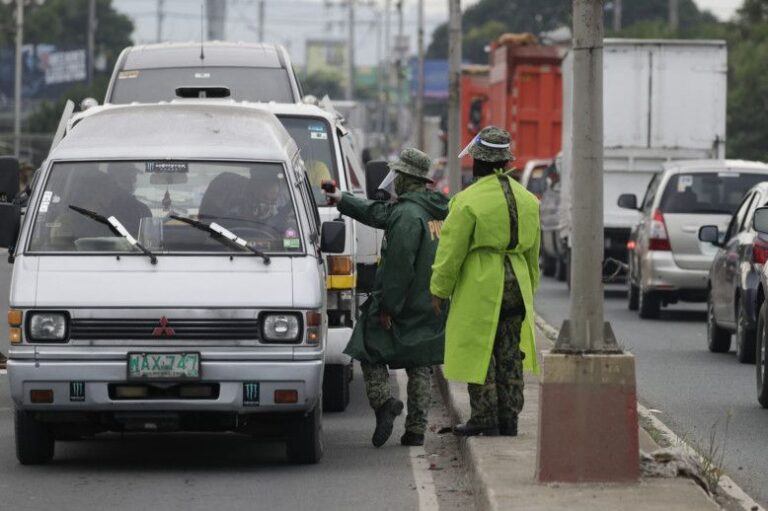
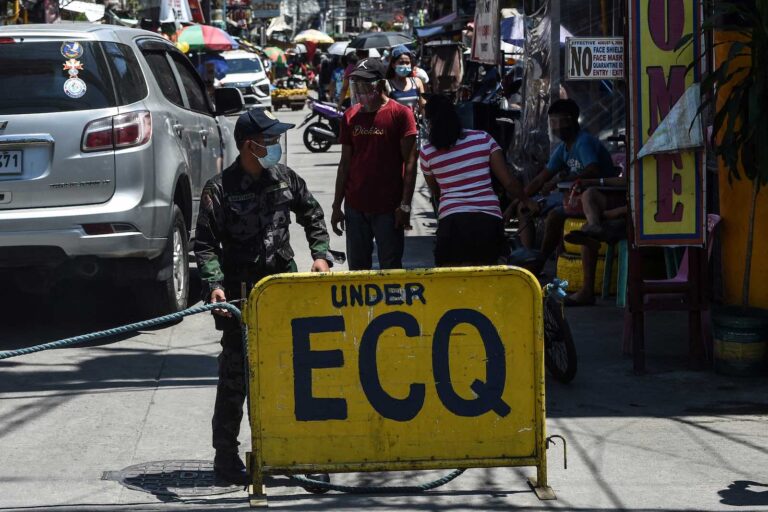
They are among the 167,000 Metro Manila workers expected by the Department of Labor and Employment (Dole) to be affected as the two-week enhanced community quarantine (ECQ), the strictest category in the fight against the pandemic, would force establishments in nonessential sectors, such as beauty and wellness and auto repair, to close shop.

“For us who work at the salon, it’s hard to have savings since we are not even minimum wage earners,” Milan said.

“As a responsible daughter, it is my duty to provide for my mother’s needs. But how will I do that if we are on a ‘no work, no pay’ [basis]?” she said.

“I can’t sleep because I keep on thinking that I have no idea how I will be able to support my family in the next two weeks. If I don’t have a job, then our family will have no money at all, no source of income,” Morales also told the Inquirer on Tuesday.

He said his family has never received financial aid from the local and national governments.

Presidential spokesperson Harry Roque earlier said that eligible residents of Metro Manila would receive cash assistance amounting to P1,000 per individual and up to a maximum of P4,000 for each household.

This would be equivalent to only P71.42 a day for an individual and a ceiling of P285.71 a day for a family.

For Aaron Altoveros, a minimum wage company driver, this was hardly enough to cover the needs of his family of five, with two kids having lingering illnesses.

He lamented that such “ayuda” would be insufficient since a single meal at an eatery already cost P70, adding that “if they are going to impose a lockdown and that is the only aid they will give … we will die of hunger.”

When ECQ was imposed on March 29 in Metro Manila, Bulacan, Rizal, Cavite and Laguna, the government provided financial assistance of P1,000 per individual with a limit of P4,000 per family, to benefit some 22.9 million individuals affected by the strictest lockdown in these areas.

The ECQ was originally set for one week but was prolonged for another week until April 11. However, no additional aid was provided to low-income residents during the extended period.

Altoveros said that if the government was going to impose a lockdown, it should allow businesses to continue operating so that families with only one breadwinner like his would not be adversely affected.

Partido Manggagawa chair Renato Magtubo on Tuesday urged the government to create a stimulus package intended to avert job losses.

He underscored the Nagkaisa Labor Coalition’s proposal to the Dole for unemployment support and work assistance guarantee, which should include a P10,000 income for those to be affected by the ECQ.

Depressing situation

In the 17 months since the COVID-19 crisis, Morales said he scrambled to find odd jobs, from painting to repairing cars. The money he earned, however, was still not enough to sustain his household.

Morales said he used to tell his family to make do with what little money they had as Filipinos were still unsure when the pandemic would end.

With another two-week ECQ, he said he sat down with his wife and children again.

“We often encourage each other to keep fighting poverty. Without my family, I don’t know where I would be now. It has been really depressing for all of us,” Morales shared.

Vie, a 35-year-old accounting staff based in Metro Manila, lost her job because of a previous lockdown.

As the family’s breadwinner, Vie resorted to selling various goods she considered popular online and helped her mother sell street food in their neighborhood.

She was also infected with COVID-19 in April, isolating her from her loved ones. Vie’s mother later suffered severe pneumonia and had to be hospitalized for a week, leaving their family helpless and without a source of funds.

“We are really scared to go out, to be honest. We thought that ECQ would be better since we won’t be obligated to go out, but it’s still difficult for us because of the ‘no work, no pay’ policy,” she said in an online exchange.

She noted that the P4,000 maximum aid for a family would last about a week to buy her family’s most basic needs such as rice and meat. Like Morales, she has not received even a peso from the government.

“We will have to make do with what we have. I’m thankful that I have friends who help me in any way possible but we’ll keep working hard,” Vie said.

“It’s like we’re begging on the street for the government to give us cash aid just to survive. But until when will we have to endure? Everyone is already having a difficult time because we have nothing left,” Morales said.

The cash assistance to some 10.7 million Metro Manila residents during the two-week lockdown would come from the P13.1 billion in savings of various departments and agencies, according to Roque.

He said an administrative order from the President issued in May had directed the government to identify savings from their respective appropriations under the national budget so that these could be tapped to help the administration’s pandemic response.

Money transfer

A lawmaker has also urged the government to use the “quickest and best way” to distribute cash aid to affected individuals in areas under ECQ.

BHW Rep. Angelica Natasha Co said it could distribute the cash aid through the Dole, the Social Security System, and the Government Service and Insurance System, which could use money transfer outlets as well as electronic payment systems.

For House ways and means committee chair and Albay Rep. Joey Salceda, a ramped up vaccination has a very direct role in the job security of millions of Filipinos.

“[Lockdowns] are no longer the best approach at this stage of the pandemic. More jabs will save jobs,” he added.

Truck ban suspended

While the movement of residents would be limited, Metropolitan Manila Development Authority Chair Benhur Abalos assured the public that the movement of trucks carrying essential items would be unhampered as the Metro Manila mayors have agreed to suspend the truck ban.

—WITH REPORTS FROM LEILA B. SALAVERRIA, JULIA M. AURELIO, NESTOR CORRALES AND INQUIRER RESEARCH

De Lima seeks Senate probe into gov’t contracts awarded to Bong Go’s kin

0

By: Christia Marie Ramos – Reporter /INQUIRER.net /August 03, 2021

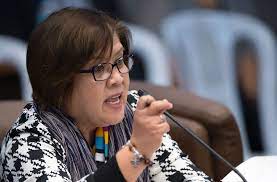
MANILA, Philippines — Sen. Leila de Lima is seeking a Senate investigation into the government contracts awarded to the firms owned by family members of Senator Bong Go.

In filing Senate Resolution No. 809, De Lima said the upper chamber should look into the circumstances surrounding these “controversial transactions” to determine whether plunder or violations against the anti-graft and corruption law were committed.

Go, in response to De Lima’s resolution, said he welcomes any corruption investigation.

“Basta ang importante ay lumabas ang katotohanan. Nirerespeto ko naman ang karapatan ng mga kapwa kong Senador pagdating sa ganyan. Nasa sa kanila yan kung gusto nila itong patulan pa,” he said in a statement.

(What’s important is that the truth comes out. I respect the right of my fellow senator when it comes to this. It’s up to the Senate if they want to consider the resolution.)

Go said he has nothing to hide, adding he would resign should it be proven that he stole “even a single peso” from public funds or has benefited from any government project.

“Tulad ng sinabi ko noon pa, kung mapatunayan na meron akong ninakaw ni piso sa kaban ng bayan o nakinabang sa proyekto ng gobyerno kahit isang sentimo, magre-resign ako,” he said.

(As I’ve said before, if it’s proven that I stole even a single peso from public funds or have benefited from any government project, I will resign.)

De Lima filed the resolution after former senator Antonio Trillanes IV accused President Rodrigo Duterte and his long-time aide, Go, of alleged plunder involving P6.6-billion in government projects.

The bulk of this amount, according to Trillanes, was from government contracts secured during the Duterte administration’s first two years.

De Lima said the Senate should investigate the allegations of conflicts of interest in the reported awarding of government contracts to the kin of public officials in order to identify and eliminate possible corruption in the implementation of infrastructure projects.

“It is imperative to verify whether acts that amount to taking undue advantage of one’s official position, authority, relationships, connections, and influence to the damage and prejudice of the people, have been committed in the Desiderio Go and Alfredo Go contracts with government,” she said.

“Close family relations were involved in possibly accessing influence from the highest office of the land, further considering that both contractors’ son and brother, respectively, is known to be the closest political associate of the Chief Executive who has direct control and supervision over the DPWH (Department of Public Works and Highways) as implementor of the contracted projects,” she added.

It was in 2018 when the Philippine Center for Investigative Journalism (PCIJ) first reported on the government contracts secured by the two companies owned by Go’s father and half-brother.

It was again brought to the public’s attention after Trillanes, in a video uploaded just last July, detailed the contracts secured by the companies of Go’s father and half-brother.

Both Malacañang and Go have already dismissed Trillanes’ allegations, saying they were “rehashed.”

“It behooves the Senate [t]o perform one of its key functions as legislative oversight and investigate such claims so as to ensure that these contracts were awarded to the CLTG Builders and Alfrego without the undue interference of close relatives in public office who have direct access to, and exercise unquestioned influence over the Chief Executive, the latter having the final say in said contracts,” De Lima went on.

De Lima, in her resolution, likewise stressed the need to investigate the problems arising from simulated joint ventures (JVs), citing the DPWH’s supposed lack of monitoring procedure in terms of actual participation of parties.

“While the parties are allowed to agree upon the terms of JVs, the law should ensure that the credentials that qualified the JV are indeed present during the implementation of the project. Legislation must be introduced to ensure that all members of JVs are held responsible for the delays and any shortcomings in the implementation of the infrastructure projects,” De Lima said.

“It is vital for public accountability to ascertain whether gaps in the law as they are presently written have been used to circumvent the policies behind them to the detriment of the public,” she added.

Reality on the ground disproves Roque’s ‘excellent’ grade for COVID response

0

By: Kurt Dela Peña – Content Researcher Writer/INQUIRER.net / August 03, 2021

MANILA, Philippines—”We were excellent.”

This was how presidential spokesperson Harry Roque described the Duterte administration’s COVID-19 response last March, a year after the pandemic reached Philippine shores initially through two Chinese tourists from Wuhan, a Chinese city where SARS Cov2, the virus that causes the disease, originated.

READ: Palace touts ‘excellent’ action vs COVID-19 as PH nears 365 days under community isolation

Weeks after Roque made the declaration, however, the Philippines registered 15,310 new cases, the highest single-day increase in infections.

The rate of increase in COVID cases at that time was considered serious enough to prompt the government to impose stricter lockdowns in Metro Manila and the provinces of Bulacan, Cavite, Laguna, and Rizal starting March 29.

READ: Metro Manila, 4 provinces under ECQ due to COVID-19 surge — Palace

The independent COVID monitoring group OCTA Research, however, said that while localized lockdowns may work against “variant-driven” increases, restrictions become more effective if imposed along with expanded testing, contact tracing and supported isolation.

READ: Magalong admits gov’t contact tracing efforts need improvement

According to data from the Department of Health (DOH), a 21.6 percent weekly positivity rate was reported last March 28 when 70,902 tested positive for coronavirus out of 327,748 total individuals tested for the week.

A week after the enhanced community quarantine (ECQ) was lifted, the weekly positivity rate was 16.7 percent last April 18 or 70,408 positive out of 384,086 tested.

In March 2020, when the first ECQ was imposed, the weekly positivity rate was 23.0 percent or 1,080 positive out of 4,687 tested. The rate was high compared to the 6.7 percent—70,408 positive out of 384,086 tested— last June 7, a week after Metro Manila eased to general community quarantine (GCQ).

While lockdowns greatly contribute to mitigating the spread of COVID-19, the Coalition for People’s Right to Health (CPRH) said that the government should also escalate “testing and tracing efforts” to “break the chain of transmission.”

READ: Duque admits no COVID-19 mass testing ever conducted since outbreak

The group said that in the Philippines, the positivity rate per week has been over 5 percent since December 2020 and has not declined to less than 10 percent since March 2021.

The group emphasized that coronavirus tests have been stagnant at 40,000 to 50,000 per day and that the national average of contact tracing is “one is to six.”

READ: Magalong: Contact tracing remains weakest link in PH COVID-19 response

“Since the surge last March 2021, cases have not decreased to less than 3,000 to 4,000 cases per day and it’s weird that in the Philippines, thousands of cases per day seemed to be normal when in other countries, the real concept of normal is having no COVID-19 case or at least an increase of a hundred per day,” said Dr. Joshua San Pedro, co-convenor of CPRH.

‘Record-high’ inoculations not enough

Recently, when the government kept boasting of “record high” vaccine injections—659,029 doses last July 27—the administration listened to experts and announced another round of lockdown, or ECQ, to start on Aug. 6 until Aug. 20. It was to prepare for Delta, a SARS Cov2 variant first found in India, and a surge in cases expected from it.

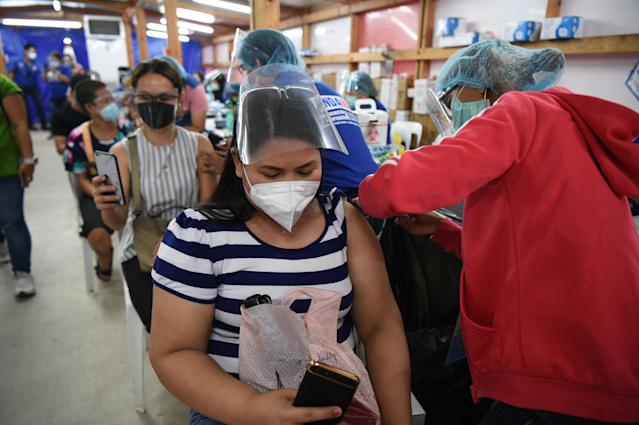
As of Sunday (Aug. 1), the DOH said that 20,863,544 vaccine doses had already been administered in the Philippines—9,115,963 already fully vaccinated while 11,747,581 individuals already given one dose.

However, the CPRH said that while inoculation against SARS Cov2 is essential, it was not enough to fight the virus if not done alongside enabling, proactive and grounded response to the health crisis.

READ: Dizon rejects mass testing, gov’t to continue ‘risk-based, targeted’ procedure

The group said the response it was referring to should involve the following:

• Free testing and medication for the infected
• Fast and intensified contact tracing and genomic surveillance
• Broad and fast inoculation efforts
• Aid for all Filipinos, especially individuals in isolation
• Strengthening the health system

Data from the DOH said that last July 27, the day a record-high total of vaccine doses were administered, the Philippines reported 7,186 new COVID-19 cases, the highest single-day increase in over six weeks.

San Pedro, pointing to the government’s inclination to believe that inoculation and lockdown are the “only way out” of the health crisis, said it was also essential to take a closer look at how many individuals are getting sick.

“At the end of the day, we should look at those infected by the virus. The fact is there are thousands of cases in the Philippines so it really reflects on the basic level of testing,” he said.

“It’s very hard because [without enough testing], even if we reach our vaccination target, COVID-19 cases will continue to rise,” added San Pedro.

A recent release from OCTA Research said Metro Manila’s 7-day average of new cases increased by 40 percent to 1,279 compared to 913 last week, saying that the growth rate suggested the possibility of community transmission of the Delta variant, which the US Centers for Disease Control and Prevention (CDC) said was as contagious as chickenpox.

The group also said that in Metro Manila, the number of people that one COVID-19 positive case can infect increased to 1.52 from 1.29 last week.

Failed health care system

The Filipino Nurses United shared the sentiments of San Pedro, saying that what the government has been doing since the beginning of the COVID-19 catastrophe is not enough.

“After more than one year of raging pandemic, the nurses and other health care workers have suffered much from the inadequacies and severe deficiencies of the government pandemic response,” said Jocelyn Andamo, the group’s secretary general.

The failure of containing the pandemic has caused overwhelming workload and tremendous risk for the health and lives of care providers “while their rights and welfare have continuously been hardly upheld and ensured,” she added.

READ: PH health workers: A pandemic of big work, small pay

Andamo said despite medical workers’ “long-standing” recommendation for the government to “hire nurses en masse,” there has been a reduction in health care workforce instead.

She said that the Health Human Resource Development Bureau of the DOH stated that with the national health budget cut in 2021, the number of deployed nurses was reduced by 12 percent or 2,319 slots for nurses.

“13,000 vacant plantilla positions of health workers since 2016 remain unfilled,” she said.

READ: Numbers dispute ‘Bato’ Dela Rosa on ‘Doctor Duterte’

San Pedro said that with failures in the health care system, inconsistencies in vaccination efforts became clear, asserting that until now, inoculation remains “slow and insufficient.”

“We have a record-high per day, but there are also times that it decreases because of lack of supply. Likewise, vaccines remain inaccessible for several individuals,” he said.

According to him, the government failed in dealing with the COVID-19 health crisis and that it’s “unfair” to always blame Filipinos for the increases in cases as did President Rodrigo Duterte in his previous televised briefings during which he threatened people violating health protocols with arrest and detention.

READ: People-blaming: Like rockfall disrupting steep PH vaccination climb

“The government deflects from who is really responsible for the COVID-19 response. It should realize that its response should be proactive and enabling,” said San Pedro.
Global spike in COVID-19 cases may lead to dangerous variants, scientists warn

0

The Statesman/Asia News Network / August 02, 2021

NEW DELHI — The third wave of Covid-19 lashing countries across the world is creating fertile breeding grounds for extra infectious and probably vaccine-resistant new variants, scientists warn.

The World Health Organization has announced an 80 percent average increase over the past four weeks in five of the health agency’s six regions, a jump largely fueled by the Delta variant.

According to virologists, the SARS-CoV-2 virus that causes Covid-19, might have already developed into extra threatening kinds which have, to date, evaded detection since they have not infected sufficient people, the Financial Times reported.

“We’ve been surprised more than once by the evolution of variants, though maybe we shouldn’t have been because the virus only recently moved into humans and is still adapting to its new hosts,” Nick Loman, professor of microbial genomics at Birmingham University in the UK, said, it reported.

“We’ve been humbled by this virus before and no one can predict confidently what will happen in the future.” Covid infections have surged to a mean of 540,000 per day, and a mean of just about 70,000 weekly deaths, the WHO stated this week. The faster rate of vaccination can reduce the probability of the emergence of a resistant strain.

On the contrary, lifting Covid measures such as mask-wearing and social distancing at a time when over a majority of individuals of the population have already been vaccinated, the probability of emergence of a resistant strain is greatly increased, revealed a recent study by Austria’s Institute of Science and Expertise, in the journal Scientific Reports.

“The institution of a resistant pressure at the moment might result in serial rounds of resistant-strain evolution, with vaccine growth taking part in catch-up within the evolutionary arms race towards novel strains,” it stated.

The scientists noted that evolutions of the virus are inevitable due to the best way the genetic code may be altered by errors within the copying mechanism throughout replication. Most mutations are impartial, however, sometimes one will increase the “health” of the virus, enabling it to contaminate human cells extra simply, the Financial Times reported.

“We’re making an attempt to know why Delta is extra transmissible,” said Maria Van Kerkhove, the WHO’s Covid-19 technical lead. “Among the mutations permit the virus to stick to the cell extra readily and due to this fact infect it.”

“The extra the virus circulates, the extra it’s going to change,” she warned. “Delta won’t be the final variant of concern you hear us speak about.”