Home Blog Page 89

QC cops try to arrest teenage students for painting anti-police mural

0

Jan 18, 2021, Rambo Talabong

Policemen under the Quezon City Police District (QCPD) tried to nab 4 student artists who were painting a mural saying “All cops are bastards,” but failed to do so after a paralegal stopped the attempted arrest.

Three QCPD policemen entered the Sitio San Roque compound in Quezon City around 2 pm on Monday, January 18, after a security guard tipped them off that the students were painting a protest mural.

The students – one 17-year-old, two 18-year-olds, and one 19-year-old – were with the Save San Roque movement and were painting walls with messages critical of the government.

The police tried to arrest them but the students were able to call for a paralegal to intervene. The paralegal, Nanoy Rafael of the Save San Roque movement, stepped in as police were about to arrest the students.

Pinalibutan sila ng pulis kaya sumugod ako doon. Ang paliwanag ko sa kanila, karapatan nila na manawagan nang ganyan. Naiintindihan ng kabataan ‘yan. Sila ang namili kung ano ang isusulat,” Rafael told Rappler in a phone interview.

(The police surrounded the students so I rushed there. I explained to the police that it was within the students’ rights to say that. The students understand that. They chose what to say.)

Rafael said the policemen carried fliers containing anti-communist messages. One of the policemen was also spotted carrying a pistol. The policemen only introduced themselves after Rafael asked them who they were. Rafael noted their names: Dimaporo, Guillermo, and Figueroa.

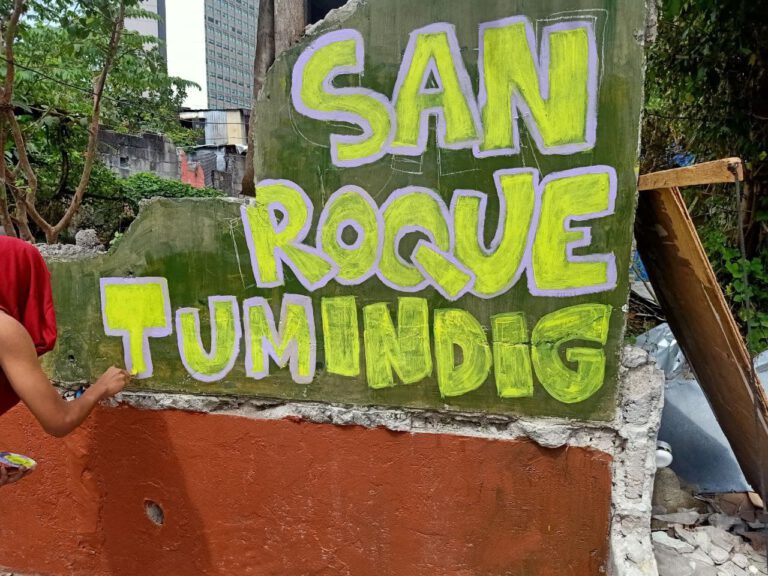
According to Rafael, the students painted murals as part of a project to to start a school and a tanimang bayan (community farming area) inside the sitio, which is one of the poorest in Quezon City.

The dialogue escalated, Rafael said, when he mentioned the Tarlac killings in December, where a Parañaque policeman was caught on video shooting dead a mother and son point-blank. He said the angered policemen ordered them to go the police station.

Aarestuhin na namin kayo. Sumama kayo sa presinto (We are arresting you. Come with us to the precinct),” Rafael recalled one of the policemen saying.

Rafael demanded that the policemen declare what law they violated. The police apparently mocked him in reply, saying, “Paralegal ka pero hindi mo alam ang batas (You’re a paralegal but you don’t know the law)?”

Rafael and the students refused to come with the policemen. They tried to take videos and photos, but the policemen demanded that they stop. Eventually, the police relented, but not without dropping threat, Rafael recounted.

Aaraw-arawin namin kayo. Uubusin namin kayo dito (You will face us every day. We will finish all of you),” Rafael recounted the police as saying.

This is not the first time that police were accused of abuse in the area. In April last year, 21 San Roque residents were arrested after staging a protest to demand help from the government.

They were detained for violating lockdown rules banning mass gatherings and protests, which the police have invoked in many anti-government demonstrations under the pandemic.

The same month, the Quezon City police also stormed the sitio’s community kitchens for allegedly violating lockdown rules.

Rappler sought the comment of the QCPD through its public information office, but it has yet to reply as of posting time. – Rappler.com

Varying prices of Sinovac COVID-19 vaccine raise alarm

0

By: DJ Yap – Reporter/Philippine Daily Inquirer / January 18, 2021

MANILA, Philippines — Sharp differences in the pri­ces of the Sinovac COVID-19 vaccine in the Philippines and neighboring countries smack of corruption, Sen. Panfilo Lacson said on Sunday.

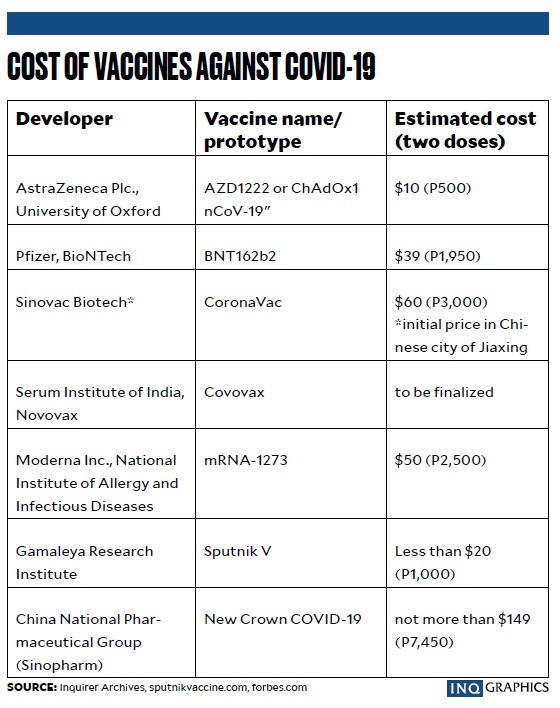
CoronaVac, the vaccine developed by the Chinese pharmaceutical company Sinovac Biotech, costs as little as $5 per dose, or about P240, in other Southeast Asian countries, but may be priced at $38, or more than P1,800, in the Philippines, Lacson said.

“The difference in prices of Sinovac vaccine at $5, $14 and $38 reminds me of an old story about how corruption is committed in three Southeast Asian countries—UNDER the table, ON the table, and INCLUDING the table,” he said in a post on Twitter.

“Here, it may cost $38.50 (P1,847.25) per dose but is co­vered by a confidentiality disclosure agreement,” he added.

Lacson cited a report in the Bangkok Post on Saturday saying the price of CoronaVac in Thailand was $5 per dose, based on figures from the World Health Organization and from the manufacturer. But a report in India Today on Tuesday said the price of CoronaVac in India was $14, or about P673, per dose.

Vice President Leni Robredo, speaking in her radio show on Sunday, also pointed out the varying prices of CoronaVac, citing a statement of Dr. Tony Leachon, a former adviser to the Inter-Agency Task Force for the Management of Emerging Infectious Diseases, that the price of the China-made vaccine, as reported by a Thai newspaper, was $5 in Thailand and $17 (P817) in Indonesia.

Robredo asked the Department of Health (DOH) for an explanation.

During budget deliberations in November, the DOH told the Senate committee on finance that the price of the Sinovac vaccine was P3,629.50 for the two-dose regimen.

The head of the government’s vaccine program, Carlito Galvez Jr., later disputed reports about CoronaVac’s pricing, claiming it was actually lower than the prices of other brands and was in the middle among seven drug manufacturers being eyed by the Philippine government as sources of COVID-19 vaccines.

Galvez, however, refused to disclose how much Sinovac had offered the government, citing confidentiality agreements.

‘Fake news’

In a radio interview on Sunday, presidential spokesperson Harry Roque said that while officials were still not allowed to disclose how much the Sinovac vaccine would cost the government, he could say that it would be around P650—closer to the price in Indonesia.

Roque called reports that the Sinovac shot cost over P3,600 “fake news.”

“China’s prices are not like capitalist companies that are market-dictated. They can adjust their prices accordingly, depending on who is buying,” he said. “That’s why Beijing doesn’t want to announce its prices, because other countries that are not as close to them would find out they might have bought at a more expensive price.”

In a subsequent tweet on Sunday afternoon, Lacson took note of the Malacañang statement, saying: “If it’s true that [the] government is now dropping the price of [the] Sinovac vaccine from P1,847.25 per dose to only P650, the Senate has probably done our share to save our people billions of pesos in the country’s vaccination program.”

Netizens, too, “can pat themselves on the back” for their outcry, he added.

A senior lawmaker, who asked not to be identified for lack of authority to discuss confidential negotiations, told the Inquirer that the cost of the vaccine could be lowered for governments on two conditions: if the country agrees to clinical trials, and if the country has the capacity to manufacture the vaccine locally.

Preference for Sinovac

During the Senate committee of the whole’s inquiry on the vaccination program last week, Lacson also noted that implementers of the vaccine program “apparently showed preference” for the CoronaVac maker, “which may fuel speculations that corruption is involved in the government’s dealings with Sinovac.”

“Sinovac has a track record of bribery, yet why insist on dealing with them?” he said in a radio interview on Saturday.

“Considering all these, can we blame the lawmakers and even our countrymen why they express suspicion in the government’s vaccination program?” he added.

Last week, Sinovac applied with the Food and Drug Administration (FDA) for emergency use authorization of its vaccine in the Philippines, but the regulator said the company submitted incomplete papers. Lacking were the results of Phase 3 clinical trials, the FDA said.

On Saturday, China’s Foreign Minister Wang Yi announced during a meeting with President Duterte in Malacañang that China would donate 500,000 doses of CoronaVac, but Sen. Francis Pangilinan said on Sunday that the donation should not influence the FDA into hastily approving the Sinovac vaccine.

“Science and the data and results of clinical trials should be the sole basis and not political goodwill,” Pangilinan said in a post on Twitter.

Critics have slammed the government’s plan to buy 25 million doses of CoronaVac, pointing out its steep price and poor showing in clinical trials.

The latest disappointing report about CoronaVac came from Brazil last week, with researchers returning a finding that the vaccine was only 50.4 percent effective, barely enough to gain regulatory approval.

Not done deal

At the close of the Senate inquiry on Friday, Galvez said the government had not yet paid for the 25 million doses and had only secured an advance market commitment from Sinovac to “lock in” a certain number of doses for the Philippines.

“So it’s not a done deal?” Sen. Nancy Binay asked.

“No,” Galvez replied. —WITH A REPORT FROM KRIXIA SUBINGSUBING INQ

EUA for Pfizer COVID-19 vaccine stays pending findings on elderly deaths in Norway

0

Gaea Katreena Cabico (Philstar.com) – January 18, 2021

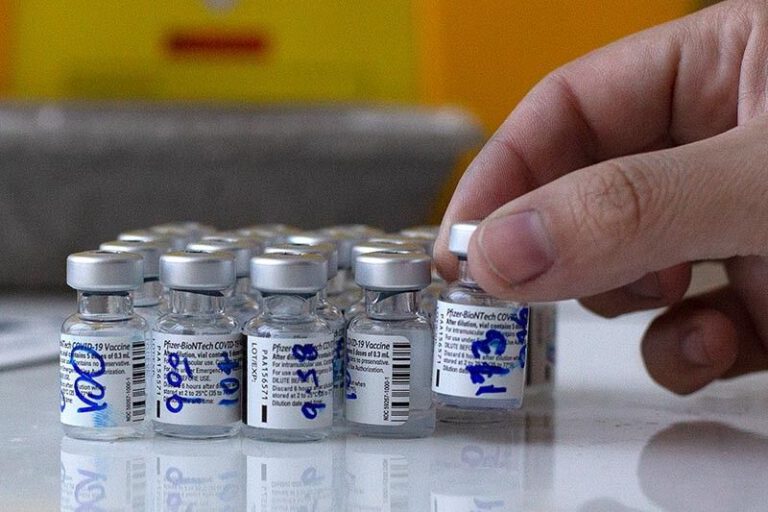
MANILA, Philippines — The Emergency Use Authorization granted by the country’s Food and Drug Administration to Pfizer’s COVID-19 vaccine stays as authorities wait for a report from the American drugmaker on the deaths of elderly people in Norway.

Pfizer is the only pharmaceutical firm that has so far obtained EUA from the local FDA for its vaccine, which has an efficacy rate of 95% in preventing COVID-19.

Health Undersecretary Maria Rosario Vergeire said the American drugmaker needs to submit a report to the FDA on the reported deaths of elderly people with serious underlying health conditions in Norway after receiving Pfizer shots.

“Once we evaluate the report, the FDA can decide on the EUA based on its conclusion. For now, there is no sufficient evidence yet to say that the deaths were caused by the vaccine so we will still be on status quo for the EUA we issued to Pfizer,” Vergeire said in Filipino.

During a House hearing on the government’s COVID-19 vaccination program, FDA Director General Eric Domingo said they are waiting for the final report from Pfizer and Norwegian agencies on the matter.

Old, critically-ill patients

Vergeire said the deaths should be understood in the context that the Pfizer vaccine was administered to old and critically-ill patients housed in a facility in Norway. 

“They’re saying this might just be coincidental because the patients are severely ill and even minor reactions to vaccine may have affected them,” the health official said.

“They would want to look at it further but for now, they are saying they don’t think it’s related. But of course, studies have to be done so we can be able to validate and say it there is causality or it was an effect of the vaccine,” she added.

In an interview on ABS-CBN New Channel, Dr. Edsel Salvana, an infectious disease specialist, said it is possible that Pfizer jabs may have “contributed to their demise but they (Norwegian authorities) are not categorically stating that it is the vaccine that caused the death.”

“It may have contributed because common side effects like fever, chills from the vaccination, which are pretty much harmless in young people, may actually stress out these elderly people who have a lot of other comorbid condition,” said Salvana, a member of the DOH Technical Advisory Group.

The authorization given by the FDA last week clear the Pfizer vaccine for use in people aged 16 and above. It can only be administered by health professionals who are trained to recognize and manage severe allergic reactions. 

British-Swedish firm AstraZeneca, Chinese drugmaker Sinovac Biotech and Russia’s Gamaleya also submitted applications for EUA to the country’s FDA. 

Ex-Solgen Cadiz, Chel Diokno lead team of lawyers to argue vs anti-terrorism law

0

Kristine Joy Patag (Philstar.com) – January 13, 2021

MANILA, Philippines — Former Solicitor General Jose Anselmo Cadiz leads the group of eight lawyers who will present, on the behalf of the 37 petitioners against the anti-terrorism law, in oral arguments next week.

In compliance with Supreme Court order, the petitioners on Wednesday submitted a joint manifestation informing the court of the eight lawyers who will argue on six clusters of issues in 37 petitions questioning the constitutionality of Republic Act 11479 or the Anti-Terrorism Act of 2020.

The oral arguments will be held on January 19, more than six months since President Rodrigo Duterte signed the controversial measure.

Since the law’s enactment, two Aetas have been charged for supposed violation of the law and the Anti-Money Laundering Council has been empowered to freeze assets related to the Communist Party of the Philippines and New Peoples’ Army, which the Anti-Terrorism Council has designated as terrorists.  

Temporary restraining order vs anti-terrorism law

The petitioners and Solicitor General Jose Calida, representing the government officials named as respondents, are given 45 minutes each to present their arguments.

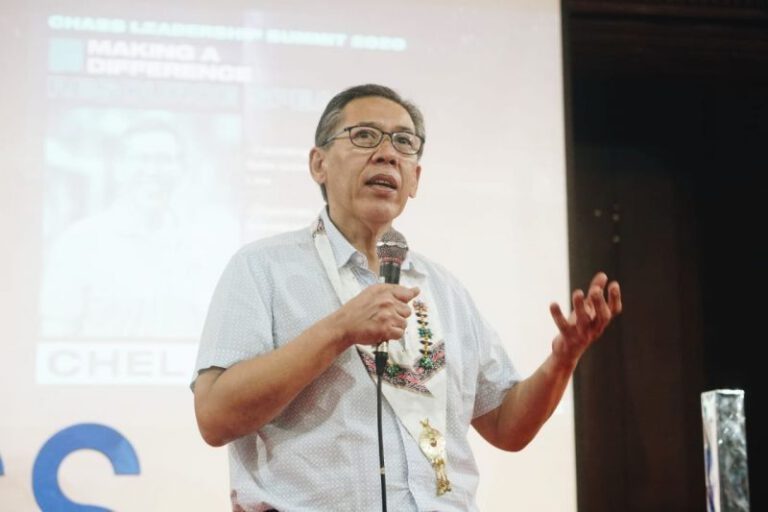
Former SolgenCadiz and lawyers Chel Diokno and Alfredo Molo III will present arguments on whether the petitioners have legal standing to sue and whether the petitions have an actual and justiciable controversy. They will also touch on arguments that Section 4 that defines terrorism is void for vagueness or overbroad.

Cadiz serves as legal counsel for the Integrated Bar of the Philippines, while Diokno, chair of the Free Legal Assistance Group, represents the opposition lawmakers, Framers of the Constitution, human rights lawyers and journalists. Molo meanwhile serves as the legal counsel of the University of the Philippines College of Law faculty, and former SC Justices Antonio Carpio and Conchita Carpio-Morales.

The three will argue for the issuance of a temporary restraining order or a status quo ante order —  the immediate relief that a majority of petitioners seek from the court — and RA 11479 should be declared as unconstitutional in its entirety should SC finds that the definition of terrorism, under Section 4, and the powers of the Anti-Terrorism Council are constitutionally infirm.

A majority of the petitioners had pressed the SC to issue a Temporary Restraining Order or Status Quo Ante Order to restrain the government from implementing the law months before the oral arguments.

Powers of the Anti-Terrorism Council

Lawyer Evalyn Ursua, representing journalists and artists, will present arguments on whether the powers of the ATC are unconstitutional and whether the Anti-Money Laundering Council’s authority to investigate and freeze assets violate the separation of powers and right to due process and right against unreasonable searches and seizures.

Under the law, the ATC may designate an individual or groups, upon finding of probable cause, as terrorists. Following this, AMLC may freeze their assets.

Rep. Edcel Lagman (Albay) meanwhile will present arguments against Section 29 of the law on Detention Without Judicial Warrant of Arrest.

Under this provision, law enforcers, upon authorization by the ATC, may take custody of a suspected terrorist for up to 14 days, extendible for another 10 days, before judicial authorities are informed.

Lagman will also discuss whether the powers of the ATC to authorize arrest and detention without warrant and based on mere suspicion are unconstitutional and violate several rights.

Other crimes penalized

Rights lawyer Neri Colmenares of the National Union of Peoples Lawyers meanwhile will discuss whether Sections 5 to 14 of the law, penalizing threats to commit terrorism, planning, training, preparing, and facilitating terrorism, conspiracy, proposal, inciting to terrorism, material support, and other related provisions violate the prohibition against ex post facto laws and bills of attainder.

The NUPL represents 44 activists, journalists, academics, religious and civil libertarians in the tenth petition filed against the law. The group of rights lawyers and its chapters also represent other petitioners.

An ex post facto law is that would penalize a crime that was committed when the act was not deemed illegal yet. The Bill of Rights states: “No ex post facto law or bill of attainder shall be enacted.”

The Moro and IP’s experience

Moro lawyer Algamar Latiph meanwhile will discuss whether the anti-terrorism law violates the Indigenous Peoples and Moro’s rights to self-determination and self-governance.

The Latiph petition cited several instances as recorded in jurisprudence that petitioners said would show “arbitrariness in the determination of ‘suspected person.”

IP’s have also assailed the law for violating their right to self-determination. In a petition prepared by constitutional lawyer Tony La Viña for IPs, they said: “This historical position of disadvantage along with the government’s neglect to respect and recognize indigenous peoples’ rights [has] often found government and indigenous peoples at opposing ends of huge government projects.”

They continued: “The indigenous peoples assertion of their rights and their consequent opposition to development aggression should never serve as a justification for red-baiting or red-tagging since it is but an exercise of their constitutionally guaranteed rights to self-determination.”

‘Climate of fear’: Western Visayas bishops hit killings of Tumandok indigenous

0

Christian Deiparine (Philstar.com) – January 17, 2021

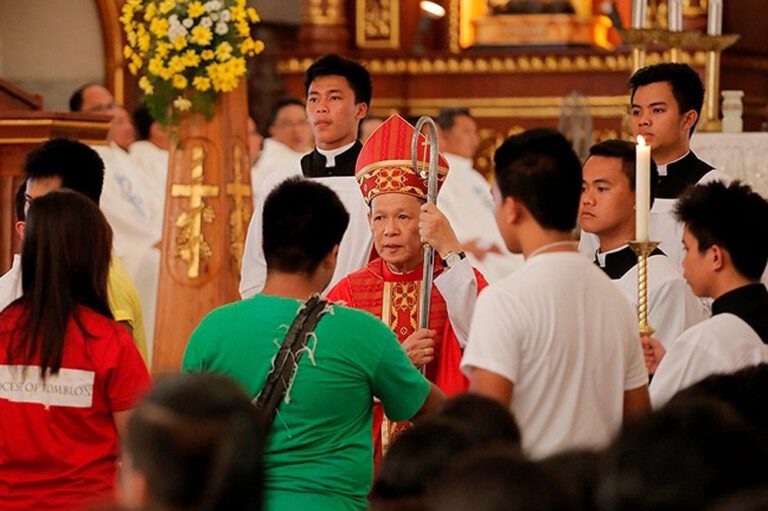
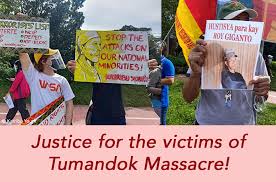
MANILA, Philippines — Catholic bishops from Western Visayas have condemned the killing of members of the Tumandok from state forces’ operation in end-2020, saying “little or nothing at all” has been done to serve justice.

The joint operation by the Philippine army and police had resulted in nine leaders of the indigenous group in Panay dead, while 17 others were arrested last December.

DOCUMENT: UN report on human rights abuses, persistent impunity in Philippines

They were said to have opposed a government-led project to build a mega dam in Jalaur in Iloilo, which they fear could submerge their ancestral lands and force them out of it. Prior to the incident, tribe members had also been “red-tagged” or linked as supporters or members of the communist armed movement.

“We empathize with the fear and insecurities of those displaced by the atrocities,” the bishops said in a January 15 pastoral letter. “We condemn in the strongest possible term, all the killings and especially, the killings of our brothers — the Tumandoks.”

A probe has since been launched by the human rights commission, while members of the Makabayan bloc in the House have sought a congressional inquiry over the killings and arrests.

Archbishops Jose Cardinal Advincula and Jose Lazo of Jaro along with six other bishops described the incident as having created a climate of “fear and uncertainty.”

The Capiz prelate, whom the Pope recently elevated as Cardinal, had served in the previous years as a member of the Commission for Indigenous Peoples within the Philippine bishops’ conference or the CBCP.

“Fear forced many to leave their communities and migrate to more secure places in the Poblacion or in the houses of relatives,” they said. “Fear also forced many to surrender to authorities to clear their names or admit that they were former members and supporters of the CPP-NPA.”

The Church leaders in Region 6 demanded that a comprehensive probe be held along with a dialogue “to listen to the legitimate cries” of the Tumandok, as well as reforms within law enforcement.

These include a stop to what they said was a militarization of indigenous communities, “that PNP and AFP follow conscientiously the ethical standards” in their operations and the use of body cameras by cops.

“We call on everyone to be highly vigilant in defending the sacredness of life in respective and protecting the rights of all,” they said. “We urge everyone to discern and pray for the will of God amidst all the killings and violations of human rights, and to act guided by the principles of nonviolent action.”

One bishop added that such had been a continuation of the “mass killings and arrests” of other activists in the central part of the country in recent months.

Members of the indigenous are among those who had been subject to “red-tagging,” an issue which has since heightened over the past year as led by government and military officials.

Often it has exposed those tagged to dangers, with activists and human rights advocates having to face threats to their life, intimidation and some ending up being killed.

In June 2020, the United Nations’ Human Rights Office said red-tagging has posed a “serious threat to civil society and freedom of expression” in its report on the situation in the Philippines.

No one is talking about the Tumandok Massacre

0

Jan 16, 2021, Rae Rival

‘The Build, Build, Build project is ruthlessly rolling on despite the urban and rural poor’s resistance…. Why is Duterte not working and designing people-funded projects with and for them?’

We mourn the death of Christine Dacera, but I cannot help but wish that the massacres committed in the past 4 years attracted the same media coverage.

Every day, I wake up to another update about Dacera’s case. I am grateful that the media is keen on following the story of a young woman’s alleged murder and has helped put the spotlight on victim-blaming, but every day, I still ask: why is no one talking about the death of 9 Tumandok leaders?

The Tumandok massacre was reported and forgotten after just one or two news articles. But if the media had followed the investigation of these brutal killings, I believe that the administration would be pressured to pursue the congressional investigation into the incident, which was filed by Makabayan Bloc representatives.

The massacres were orchestrated by the Synchronized Enhanced Management of Police Operations (SEMPO), designed by PNP Chief Debold Sinas. This was implemented via the same executive orders and memorandum orders that made the massacres of the Negros 14 and Sagay 9 possible. Memorandum Order 32 and Executive Order 70 red-tagged and killed Attorney Ben Ramos and human rights activist Zara Alvarez.

The Tumandok leaders were fighting against the Jalaur Mega Dam. Since 2016, the indigenous community in Panay have been resisting the project. Known more formally as the Jalaur River Multipurpose Project Phase 2 (JRMP II), the project promised to provide uninterrupted water supply to 32,000 hectares of farmland and increase the annual production of rice. However, the construction would leave the agricultural lands and houses of 17,000 Tumandok individuals from 16 indigenous communities submerged in water.

Today, the government has succeeded in displacing these individuals. Instead of providing production support, cash assistance, and subsidies to the largest group of indigenous people in the hinterlands of Panay, they massacred their leaders in the middle of a pandemic. Tumandok individuals and their 16 communities greeted the New Year in an evacuation center. Threats and harassment brought about by increased militarization in their land forced the residents to flee for their safety.  

On the eve of December 30, 9 Tumandok leaders were kidnapped, tortured, and killed. Apart from the massacre, 17 individuals were illegally arrested based on trumped-up charges. They are still detained now, charged with the same violations planted on Amanda Echanis, journalists, progressive individuals, and peasant organizers.

In a 2018 report by Panay News, the Korea Export-Import Bank funded the dam project, with Daewoo Engineering and Construction Co., Ltd. as contractor. While majority of Filipinos remain hungry and jobless, the administration is keen on strengthening its ties with foreign investors — using state forces to ensure that these projects push through. The mega dam project promised to provide jobs for thousands of Filipinos, but it killed indigenous people and displaced thousands of individuals along the way.

According to Sama-samang Artista Para sa Kilusang Agraryo, the resistance of the Tumandok community is similar to the resistance of the Aeta community displaced by the New Clark City project, and the resistance of the Lumad community against foreign mining projects in Pantaron Mountain Range. Under the Duterte regime, peasant communities have had to deal with this kind of violence every day. Similarly, the National Grid Corporation of the Philippines released an eviction notice to the farmers of Lupang Ramos a few days before Christmas. The notice threatened to evict 400 farmer families occupying and tilling the agricultural land in Dasmarinas, Cavite.

Even netizens are already using the comments section to air their frustration. While Christine Dacera’s case is important, netizens are recognizing that the alleged rape and murder is being sensationalized as a diversion tactic. You will read ordinary people asking for an update regarding the P15-billion fraud of PhilHealth, and the murder committed by killer cop Jonel Nuezca in the comments sections of the official Facebook accounts of news outlets.

Farmers, indigenous people, the urban poor, and majority of the peasant sectors are always being threatened and displaced to make way for mining projects, dams, and New Clark Cities. The Build, Build, Build project is ruthlessly rolling on despite the urban and rural poor’s resistance. Why is the government not building and developing projects for them? Instead of demolishing their communities and using force to eliminate them, why is Duterte not working and designing people-funded projects with and for them?

We hear the silence now. Except for the progressive organizations and alternative media that are being red-tagged, no one is talking about the massacre of the Tumandok leaders anymore. – Rappler.com

Rae Rival is a high school teacher and a member of Gantala Press, a feminist literary press.

Philippines now has half a million COVID-19 cases

0

Jan 17, 2021 Rappler.com

The Philippines now has half a million confirmed cases of the coronavirus, nearly a year after the first case of COVID-19 was detected in the country.

The Department of Health (DOH) reported 1,895 new confirmed infections on Sunday, January 17, bringing the Philippines’ total caseload to 500,577.

The DOH also logged 11 new fatalities on Sunday, putting the death toll due to the virus at 9,895.

Meanwhile, 5,868 more have been considered recovered, in line with the DOH’s weekly time-based and symptoms-based strategy of assessing mild and asymptomatic patients. 

As a result, recoveries from COVID-19 now stand at 465,991.

Of the total cases, 24,691 remain active.

The health department continues to urge the public to follow minimum public health standards like wearing face masks and face shields, practicing physical distancing, and regular handwashing and disinfection.

The first case of COVID-19 in the Philippines was reported on January 30, 2020. Community quarantines, travel restrictions, and health protocols were then implemented to prevent the spread of the virus.

In recent days, experts have urged the government to intensify efforts to combat the virus, following the rise in the number of cases after the holiday season, and the presence of a fast-spreading COVID-19 variant that emerged from the United Kingdom.

On Wednesday, January 13, the DOH confirmed that the UK virus variant has been detected in the Philippines. – Rappler.com

Bribery past hounds Chinese firm eyeing PH market for coronavirus vaccines

0

By: Tony S. Bergonia – INQUIRER.net / December 07, 2020

MANILA, Philippines—A checkered past dug up by a leading US newspaper is hounding a Chinese pharmaceutical company producing one of several coronavirus vaccines being lined up for use in the Philippines.

In a Dec. 4 report, Washington Post said Sinovac Biotech had been found to have a record of bribing Chinese drug regulators to secure vaccine approvals, which had raised serious questions about its products’ safety.

Sinovac Biotech is one of several pharmaceutical firms being considered as coronavirus vaccine supplier in the Philippines. It has already started delivering vaccines to Indonesia, according to several reports online on Dec. 6.

Philippine government officials involved in procuring and distributing coronavirus vaccines, according to an INQUIRER.NET report last Nov. 25, were hoping to get up to 50 million doses of vaccines from Sinovac Biotech.

The Sinovac vaccine, which is carrying the brand name Coronavac, is being sold in China for $29.75, or nearly $30, per dose, according to a Reuters report last Oct. 15. Other reports said Coronavac was likely to cost $59 per dose. To acquire 50 million doses at the lower end of Sinovac’s price range or nearly $30 per dose, the Philippines would need at least $1.5 billion or about P75 billion.

The officials said the Philippines was also negotiating with other countries, like the United Kingdom, India and Australia, for vaccine supplies.

In a report last Dec. 2, CNN Philippines quoted government officials as saying the country may receive vaccines from Sinovac and Gamaleya, a Russian company, by the first quarter of 2021 due to “advanced” stages of negotiations.

Global implications

Washington Post, a Pulitzer Prize-winning newspaper, said Sinovac’s “history of bribery had raised concern among investors,” but it has only recently “taken on such global implications.”

The Post said it reviewed public records and court testimonies in China relating to bribery cases involving Sinovac and these showed that the company’s rise in China’s vaccine sector “took place with the help of priority projects from Beijing and kickbacks to officials who assisted in regulatory reviews and sales deals.”

Sinovac, the Post said, “has acknowledged the bribery case involving its CEO, saying in regulatory filings that he cooperated with prosecutors and was not charged.”

“The CEO said in testimony he could not refuse demands for money from a regulatory official,” Washington Post said in its report.

Sinovac’s coronavirus vaccine, Coronavac, is one of two frontrunners in China, the other being under development by Sinopharm, a state-owned company.

Sinovac, however, “has not yet released efficacy data, making it unclear whether its vaccine can protect recipients as successfully” as those of two bigger pharmaceutical firms, Moderna and Pfizer, which had reported 90 to 95 percent efficacy, the Post said.

According to the Post report, the bribery scandal appeared to have no impact on the safety or effectiveness of vaccines produced by Sinovac.

It said that there had been no evidence that “any of the vaccines approved in cases involving bribery were faulty.” “But some medical experts say that extra scrutiny of Sinovac’s drug claims is justified, given its record of moral flexibility,” the Post said.

Censorship

Washington Post said details of the bribery cases involving Sinovac in China had been kept under wraps because of media censorship.

In 2016, the Post said, Sinovac CEO and founder Yin Weidong admitted in a Chinese court that he gave more than $83,000 in bribes between 2002 to 2011 to a regulatory official in charge of vaccine reviews identified as Yin Hongzhang and his wife, Guo. “Yin Hongzhang confessed to expediting Sinovac’s vaccine certifications in return,” the Post said.

“Those years corresponded to Sinovac’s breakout period when the biotech startup founded in 2001 was handpicked by Beijing officials to lead the development of vaccines for SARS, avian flu and swine flu,” Washington Post said.

The Post said that Yin Hongzhang was found guilty of taking bribes from Sinovac and seven other companies and sentenced to 10 years in prison.

The Sinovac CEO, Yin Weidong, was not charged and still supervises its coronavirus vaccine production this year, the Post said.

But the case was just one of several, Washington Post added. “At least 20 government officials and hospital administrators across five provinces admitted in court to taking bribes from Sinovac between 2008 and 2016,” it said.

In a Beijing court in 2016, Yin Hongzhang, former deputy director of China’s drug-testing center, testified that Sinovac “gave him cash bribes over nine years” for approval of the company’s vaccines for hepatitis A, SARS, avian flu, foot-and-mouth disease and influenza A, according to the Washington Post report.

“When SARS hit, Sinovac’s Yin Weidong had already been bribing regulator Yin Hongzhang for a year,” the Post said, referring to Severe Acute Respiratory Syndrome, which is said to be related to SARS Cov2, the virus that is now causing COVID-19.

Sinovac reply

Airing the side of Sinovac, the Post said the firm in 2017 launched an “internal investigation in response to the bribery case.” “It has yet to announce the investigation result,” said the Post.

But in a recent annual report, released last April, Sinovac cleared its CEO, Yin Weidong, saying he was not charged with any offense “or improper conduct” and cooperated as a witness, the Post reported. “To our knowledge, the Chinese authorities have not commenced any legal proceedings or government inquiries against Mr. Yin,” Washington Post quoted the Sinovac report.

The Sinovac report was cited as saying the company “maintained strict anticorruption policies,” but these “may not be completely effective.”

Washington Post cited a statement sent directly to it by Sinovac, which said the company had already “entrusted the legal system to handle the past bribery cases appropriately.”

In the Philippines, Sinovac had applied last November for a permit from the Food and Drug Administration (FDA) for phase 3 trials of Coronavac, according to INQUIRER.NET.

INQUIRER.NET also reported last Nov. 30 that Sinovac and another Chinese pharmaceutical company, Clover Biopharmaceuticals, were the first vaccine producers to pass an evaluation by a panel of Philippine vaccine experts.

China’s Sinovac, Clover may start COVID-19 vax trials in PH

Philippine President Rodrigo Duterte had announced that funds would be made available to purchase vaccines once these have been developed. Still, he said there could not be enough for all Filipinos initially. He had said he wanted the poor and health workers to be a priority in immunization.

Fund lack

The Philippines’ Department of Health (DOH), according to an INQUIRER.NET report last Oct. 19, said although there was a P2.5 billion allocation in the proposed 2021 national budget for vaccines, it was short by P10 billion to administer the vaccines to at least 20 percent of the Philippines’ population, the department’s initial target.

Health Undersecretary Maria Rosario Vergeire said the DOH estimated that at least P12.1 billion was needed to make the vaccines available to the segment of the population that Duterte wants to be a priority in coronavirus vaccination—health workers and indigent Filipinos, the INQUIRER.NET report said.

She said that legislators had committed to increase vaccine funding.

Several online reports on Dec. 5 quoted Philippine Budget Secretary Wendell Avisado as saying the country may need up to P72 billion for coronavirus vaccines, a figure close to P75 billion, the amount needed if the Philippines were to acquire 50 million doses of Coronavac.

Multiple reports said up to 60 million Filipinos needed to be vaccinated to achieve herd immunity or having a significant segment of the population protected from coronavirus that would stop its transmission.

As of Dec. 5, the DOH had listed 438,069 COVID-19 cases in the Philippines with 1,733 new cases. It said at least 91.2 percent had recovered while 1.95 percent, or 8,526, had died. Cases are declining, according to Octa Research, a group of experts keeping track of COVID-19 data in the Philippines.

The Washington Post report said, “graft and weak transparency have long plagued China’s pharmaceutical industry,” but at no other time has the reliability of a vaccine maker from China “mattered this much to the rest of the world.”

Sinovac, the Post said, is now considered as a frontrunner in coronavirus vaccine development along with Moderna and Pfizer-BioNTech.

Key role

While tainted by its bribery cases, Sinovac’s role in ending the COVID-19 pandemic could still turn out to be crucial, according to the Post.

An expert interviewed for the Post report, however, said caution should be exercised.

“The fact that the company has a history of bribery casts a long shadow of doubt over its unpublished, non-peer-reviewed data claims about its vaccine,” the Post quoted Arthur Caplan, medical ethics division director of New York University Langone Medical Center.

In a report last Nov. 18, Reuters said Sinovac findings were published in a peer-reviewed medical journal, The Lancet Infectious Diseases, based on phases 1 and 2 of clinical trials for Coronavac in China involving more than 700 subjects.

“Even in a plague, a company with a morally dubious track record has to be treated with great caution concerning its claims,” Caplan said in the Post report.

Sinovac’s history of bribery, the Post quoted Caplan as saying, could “alienate some potential customers.”

Vaccines are considered dangerous if produced haphazardly since these carry amounts of viruses injected into the human bloodstream to wake antibodies that were expected to fight and lead to immunity. Vaccines’ viral loads should be enough to trigger antibody reaction without unleashing the disease against which the vaccine was designed.

In the case of SARS Cov2, as in other deadly viruses, experts said a vaccine that was carelessly produced and carried too much of the virus could kill, instead of immunizing, the vaccine recipient. Approval without tight scrutiny could lead to these kinds of vaccines.

However, some countries may still choose Sinovac vaccines because these “can be stored closer to room temperature” than those from Pfizer-BioNTech and Moderna, the Post report said, quoting Caplan.

The vaccine developed by Pfizer-BioNTech has to be stored at a temperature of minus 70 degrees Celsius. That of Moderna required a storage temperature of minus 20 degrees Celsius. Sinovac’s vaccine required storage of minus 2 to 8 degrees Celsius.

In the race to acquire vaccines, some countries, the Post report quoting Caplan said, “may lack other options.”

“When there are no options and you’re in a plague, you tend to take what you can get,” the Post quoted Caplan as saying. “Sketchy history or not,” it said. [ac]