Cecille Suerte Felipe (The Philippine Star) January 3, 2021
MANILA, Philippines — The Philippine Health Insurance Corp. (PhilHealth) once again owes the Philippine Red Cross (PRC) over P800 million for COVID-19 testing services, Sen. Richard Gordon said yesterday.
Gordon, PRC chairman, said PhilHealth’s debt to PRC is now at about P800 million due to non-payment of bills on time, as PhilHealth pays only “when they want to” pay.
“As much as possible I don’t want to talk about that, but it reaches almost P1 billion again. It’s P800 million again,” Gordon said over radio dwIZ.
“At present, PhilHealth just pay when they want to. That should not be the case. The debt will increase,” said Gordon.
On Oct. 15, the PRC stopped conducting free COVID-19 tests for overseas Filipino workers (OFWs), medical frontliners and other Filipinos after the state health insurer incurred a P930-million debt to the PRC, which had accumulated to P1.1 billion.
On Oct. 27, PRC resumed COVID-19 testing after PhilHealth made its first partial payment of P500 million to the PRC. Another P100-million payment was made on Nov. 5.
Gordon warned that PRC might again be forced to stop testing as they need money to buy more supplies and then maintain 300 medical technicians, including lab workers.
He also urged hospitals to report who among them is not paid by PhilHealth and the reasons for non-payment.
He said PRC, through its secretary general Elizabeth Zavalla, already wrote a letter to PhilHealth requesting them to update their payment to the Red Cross. He expects the letter to get to PhilHealth by Monday.
“PhilHealth was requested to update their payment or else the Red Cross will fall because of them… Sadly, they should be the ones giving payment in advance. We cannot stop because many people have to be tested. We are the ones testing OFWs. It’s OK with me as long as you don’t put the economic situation of the Red Cross in jeopardy,” Gordon pointed out.
Government callousness
Meanwhile, the Health Alliance for Democracy (HEAD) said yesterday the increase in the premium rate of PhilHealth in this time of pandemic is evidence of the government’s “callousness to people’s hardship.”
In a statement, HEAD noted the adjustment that will take effect this month should be suspended, also considering the corruption issues facing PhilHealth.
“PhilHealth’s announcement of the increase in the premium contribution reflects government’s utter disregard for the people’s well-being,” the group added.
HEAD underscored that the increase in contribution as mandated by the Universal Health Care (UHC) law will “impact heavily on the people.”
According to PhilHealth, the adjustment will push through as required by the UHC law.
The agency said that it “fully recognizes the current pandemic situation that is taking its toll on many businesses and livelihood of many Filipinos.” – Sheila Crisostomo
By: Christia Marie Ramos – Reporter /INQUIRER.net/ December 28, 2020
MANILA, Philippines—From unwrapping an immigration bribery scheme at the country’s main gateway, which has been christened pastillas scam, to digging into new reports of anomalies at Philippine Health Insurance Corp. (PhilHealth) that led to the resignation of its president, the Senate found 2020 to be not only the year of the pandemic but also of scandals.
The year 2020 not only was dominated by news about the pandemic, but also reports about irregularities that found themselves being unmasked in the higher chamber of Congress.
‘Pastillas’ in NAIA
Pastillas is a local soft candy made out of milk, sugar, flour and eggs. It is usually wrapped in wafer-thin paper in different colors.
At the immigration section of the Ninoy Aquino International Airport (NAIA), however, pastillas has taken on a new meaning.
What started off as a Senate probe into sex trafficking linked with Philippine offshore gaming operators (Pogos) turned into the unraveling of a purported bribery scheme involving immigration officials and personnel.
The modus? Provide Chinese nationals, mostly Pogo workers, seamless entry into the country in exchange for P10,000 in “service fee” for each Chinese.
The investigation into Pogo-related sex trafficking, led by Senate women committee chair Sen. Risa Hontiveros, began in January. It was revealed that Chinese prostitution rings have emerged in the country and are operating online.
A few weeks after the first hearing, a bribery immigration scheme took the spotlight and became the center of the investigation.
This, after Hontiveros, citing an informant, exposed a system allegedly centralized by agency higher-ups.
“Somebody sold our country’s borders for Chinese money,” Hontiveros had said.
These “payouts” from Chinese nationals were purportedly distributed to immigration officers wrapped in bond papers and rolled, which gave them the appearance of pastillas.
The whistleblower eventually revealed himself in another hearing and recounted his story about the pastillas scam.
A few months later, another whistleblower, Jeffrey Dale Ignacio, surfaced in the Senate to testify on the immigration bribery scheme.
During the Senate investigation, Chiong and Ignacio corroborated each other’s testimonies and tagged former BI ports operation division chief Marc Red Mariñas as the “ringleader” of the scheme. Mariñas has since denied the allegation, claiming ignorance.
“I consider the ‘pastillas’ scam investigation one of the most controversial and revealing probes conducted in the Senate this year because we were able to present damning evidence about systemic corruption that cannot easily be denied. Corruption, unfortunately, is endemic to many of our institutions,” Hontiveros told INQUIRER.net in a message.
“However, our Senate inquiry proved that through the steely resolve of victim-survivors like Carina and Ivy, the courage of whistleblowers Alex Chiong and Dale Ignacio, the unrelenting work of law enforcement officers, and the cooperation of different government bodies, making corrupt officials and personnel accountable for their crimes is possible,” she added.
During the probe, Hontiveros had revealed that the “masterminds” of a “corrupt business model” in the immigration bureau have allegedly pocketed over P40-billion in kickbacks since 2017 by facilitating the entry of Chinese nationals through the so-called Visa Upon Arrival (VUA) scheme and the “pastillas” scam.
While her committee had an “inkling” that the rise of Pogos would eventually lead the Senate panel into scrutinizing the country’s immigration bureau, Hontiveros admitted that she did not expect the “depth and breadth of the corruption in our immigration bureau.”
“It was disheartening to know that our own officials essentially sold our borders and made our women and children vulnerable to abuse in exchange for grease money. Nonetheless, it’s been quite a relief to see that through our investigations, corrupt officials can pay for their crimes,” she further told INQUIRER.net.
After the Senate probe exposed the pastillas modus, the National Bureau of Investigation filed complaints against over 100 immigration officials and employees for alleged involvement in the bribery scheme.
The revelations in the inquiry also earned the wrath of President Rodrigo Duterte, who recently summoned suspended immigration officials in Malacañang for a “dressing down.” Unconfirmed reports said Duterte made the BI officials eat money in a gesture of rage.
Following the pastillas investigation, Hontiveros’ committee will now be zeroing in on another possible “revenue stream” at the country’s main gateway, this time involving the trafficking of Filipino women for prostitution abroad.
In July, Senate President Vicente Sotto III and Sen. Panfilo Lacson filed Senate Resolution No. 475 calling for the assembly of of the Senate as a committee of the whole to probe the alleged “rampant corruption, incompetence, inefficiency” in the PhilHealth.
The proposed investigation sought to look into the alleged overpriced procurement of IT equipment; the supposedly questionable release of billions of funds through the state-run firm’s Interim Reimbursement Mechanism (IRM) and the alleged manipulation of the corporation’s financial records.
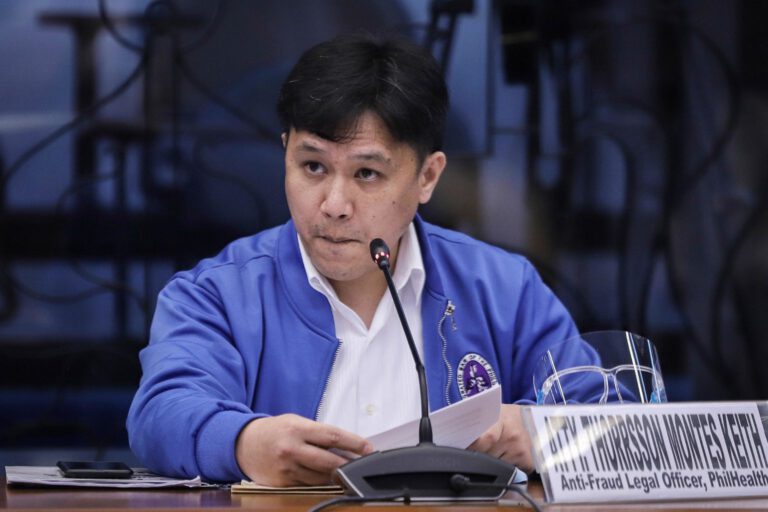
During the first of three hearings on the issue, lawyer Thorsson Keith, the anti-fraud officer that resigned from the agency after the controversial meeting, describe the recent PhilHealth anomalies “crime of the year” that resulted in the loss of P15-billion of the state insurer’s funds, allegedly pocketed by members of the PhilHealth “mafia.”
He and another whistleblower, board member Alejandro Cabading, tagged members of PhilHealth’s executive committee as part of the alleged “mafia.” Members of PhilHealth’s executive committee had denied this during the hearing.
Senators also questioned PhilHealth officials on the proposed P2.1-billion information technology project, which whistleblowers claimed was overpriced, as well as alleged favoritism in IRM fund releases.
The IRM is a funding measure to reimburse health care institutions to allow them to continue responding to a national emergency or calamity, such as the aftermath of Supertyphoon “Yolanda” in 2013 and the Marawi siege in 2017. This year, it is for the COVID-19 pandemic.
Health Secretary Francisco Duque III, who chairs PhilHealth board in an ex-officio capacity, was also dragged into the alleged anomalies and was tagged as the alleged “godfather” of the PhilHealth “mafia.”
The health chief denied this allegation.
“[A]bsolutely malicious and without basis. I don’t wish to dignify that allegation,” Duque had said.
After three separate hearings lasting a total of over 30 hours, the Senate Committee of the Whole, chaired by Sotto, came out with its report containing its findings and recommendations last September.
The committee recommended charges against Duque, former PhilHealth president Ricardo Morales and several other top officials for the alleged misuse of funds through the agency’s IRM.
Sotto told INQUIRER.net that the Senate’s PhilHealth investigation could be “one of the most controversial” this year since the irregularities were “unearthed when the country was experiencing a devastating health problem and yet the health officials involved were insisting that there was nothing injurious happening with the people’s money.”
Red-tagging
An online post warning a young actress and a beauty queen against engaging with a progressive women’s group ignited backlash for a top military official and prompted a Senate committee to investigate what is now popularly known as red-tagging.
Armed Forces of the Philippines (AFP) Southern Luzon Command chief Lt. Gen. Antonio Parlade Jr. received flak for warning actress Liza Soberano and Catriona Gray against involvement with Gabriela Women’s Party-list, which he had repeatedly claimed was a communist front.
Sen. Panfilo Lacson, chair of the Senate defense committee, then called for an inquiry on the issue last November.
Parlade and the defense sector faced the Senate inquiry in “full force” and used it as a venue for accusations that the left-wing Makabayan bloc of lawmakers in the House of Representatives were involved in the underground communist movement.
The security sector had presented several alleged former rebels, who accused the progressive lawmakers of having links with the Communist Party of the Philippines.
“If you are red-tagged, of course you will become a target, you will be scared and you will opt to become silent. Red tagging is guilt by association with our accusers playing the role of judge, jury and executioner,” said former Bayan Muna Rep. Teddy Casiño at one of the hearings.
In the course of the investigation, some sectors criticized the conduct of the hearings, saying that it was being used by the military as a “venue for witch hunting.”
He said both sides had been given equal opportunity to air sentiments and concerns.
Lacson said his panel will collate all testimonies and documents from both sides and “come up with our conclusions and recommendations in our committee report.”
The Senate inquiry also ignited discussions on criminalizing red-tagging, which Lacson said he was “seriously” considering but admitted that passing such a legislation would be a “tall order” in the upper chamber.
Other controversial investigations in the Senate were triggered by the massive flooding in parts of Luzon and the monstrous traffic caused by the shift to a completely cashless payment scheme in tollways.
Flooding in Luzon
In November, the country’s news cycle was dominated by images of submerged homes and flooded roads. This, after three typhoons hit the country in a span of weeks.
With the massive flooding catching the attention and concern of senators, an inquiry was called to determine why this happened.
Before the year ended, the head of the Toll Regulatory Board (TRB) took a beating at a Senate inquiry into the faulty implementation of the radio-frequency identification (RFID) payment system in tollways, particularly along the North Luzon Expressway.
Transportation Secretary Arthur Tugade at one point during the hearing admitted seeing flaws within the TRB.
“Let’s be frank here, I saw a failure of implementation in the TRB” Tugade told senators during the Dec. 18 hearing.
“You have the power but you don’t use it. Ever heard of ‘regulatory capture?’ The TRB is being ‘captured.’ Operators are laughing at us,” said Sen. Sherwin Gatchalian.
The regulatory board recently earned the ire of the President, who warned its officials that they would be removed in the event of “another fiasco.”
Sen. Grace Poe, chair of the Senate public services committee, said the TRB chief should just step down from his post before he is sacked over the RFID mess.
With 2020 coming to a close, the Senate is gearing up for another year of investigations in search for clear answers on controversial issues.
Among resolutions filed in the Senate were calls for an investigation into the spate of extrajudicial killings in the country as well as an inquiry into the government’s “game plan” on the vaccination of Filipinos against COVID-19.
The Healthcare Professionals Alliance Against COVID-19 is alarmed that some Filipinos have already received COVID-19 vaccines that are not FDA-registered
Medical experts called for “safe and transparent” use of COVID-19 vaccines after an unregistered vaccine was used on top government officials and soldiers.
In a statement on Tuesday, December 29, the Healthcare Professionals Alliance Against COVID-19 (HPAAC) said it was alarmed that some Filipinos have already received COVID-19 vaccines which were not registered with the Food and Drug Administration (FDA).
HPAAC raised 3 “critical points of concern” regarding the use of unregistered vaccines:
In keeping with public safety, we strongly discourage the use of vaccines that are not yet approved by the FDA.
Even if a vaccine is approved in other countries, its storage, transport, and distribution are complex procedures. Improper handling can damage vaccines and can render them useless. This is why distribution channels and processes need to be transparent and regulated.
Because all vaccines against COVID-19 are in various stages of clinical trials and are not yet approved for commercial use, all information about use and their actual effects should be properly documented and monitored. Such surveillance is only possible with proper regulation and coordination with health authorities.
HPAAC urged the government and the general public to address these concerns.
“The success of any vaccination program is hinged on mutual trust between the public and institutions,” it said.
The HPAAC is the Philippines’ largest group of health workers, and includes medical groups which called on the government to review its pandemic response. The group had said the country was “losing the battle” against COVID-19.
On December 28, officials confirmed some Cabinet officials and soldiers had already been vaccinated against the deadly virus, which stoked public ire for appearing to prioritize select individuals outside of the government’s own list of target priority groups – the first of whom are frontline health workers treating COVID-19 patients.
A total of 13,527 health workers have contracted COVID-19 as of December 27. Of these, 76 have died while 13,243 have recovered.
On Tuesday morning, FDA Director General Enrique Domingo said neither the Department of Health nor the FDA were consulted over the early use of the unregistered COVID-19 vaccine.
Malacañang defended the early vaccination of officials and urged the public to just “accept” that uniformed personnel were among those already inoculated against COVID-19. – Rappler.com
NUPL: Duterte ‘wrong’ to publicize accused of crimes without due process
By: Gabriel Pabico Lalu – Reporter, INQUIRER.net / December 29, 2020
MANILA, Philippines — The publication of any list of persons being accused of having links to crime — whether for corruption, for alleged involvement in the drug trade, or for supposed involvement with communist rebels — is wrong if due process was not observed, according to the National Union of People’s Lawyers (NUPL).
In a statement released a day after President Rodrigo Duterte mentioned lawmakers from the House of Representatives accused of involvement in corrupt activities, NUPL President Edre Olalia said it is unfair to place anyone on an incriminatory list without it being verified by the courts.
Duterte name-dropped seven incumbent lawmakers and one former congressman, most of whom were part of the House majority bloc. However, Duterte clarified that his announcements should not be taken as damning evidence or a sign that they are already guilty — softening his stance on naming alleged corrupt officials.
“It is not prudent, let alone fair, for anybody to publicly and perfunctorily link anyone to an incriminatory list — whether it be in the form of a narco list, red-tagging or about corruption — without due process,” Olalia said.
“The damage and danger to one’s reputation, occupation, profession or livelihood, and worse, even one’s life, liberty, and security, are irreparable and unquantifiable,” he added.
Duterte said during his public address on Monday that the names landed on the list and he had no part in crafting it, repeatedly saying that these were complaints made by people.
The incumbent House members are the following:
Occidental Mindoro Rep. Josephine Ramirez-Sato Quezon City 5th District Rep. Alfred Vargas Misamis Occidental 2nd District Rep. Henry Oaminal Northern Samar 1st District Rep. Paul Daza Quezon 4th District Rep. Angelina Helen Tan ACT-CIS party-list Rep. Eric Yap Bataan 1st District Rep. Geraldine Roman
Meanwhile, former Ifugao Rep. Teodoro Baguilat — a member of the opposition Liberal Party (LP) — was also mentioned by Duterte. Sato appears to be an LP member, although she is with the majority.
This was not the first time Duterte had tagged individuals who are allegedly on a list — or a matrix in some instances — of people trying to destabilize the government, those involved with the Communist Party of the Philippines, or those with alleged links to the drug trade.
In 2019, before the midterm elections, he read names of officials allegedly involved in the drug trade, to dissuade voters from electing them again.
Just recently, Duterte used the late-night briefings on the COVID-19 response to name suspended and dismissed officials of the Bureau of Immigration (BI) and Philippine Health Insurance Corporation (PhilHealth), out of his frustration with corruption issues.
PhilHealth is facing a myriad of corruption allegations from overspending to widespread corruption to the advancement of COVID-19 funds, while BI is reeling from the pastillas scheme where payoffs are given to Immigration officials in exchange for a smooth entry into the Philippines.#
By Franz Sorilla IV, December 21, 2020, Tatler Philippines
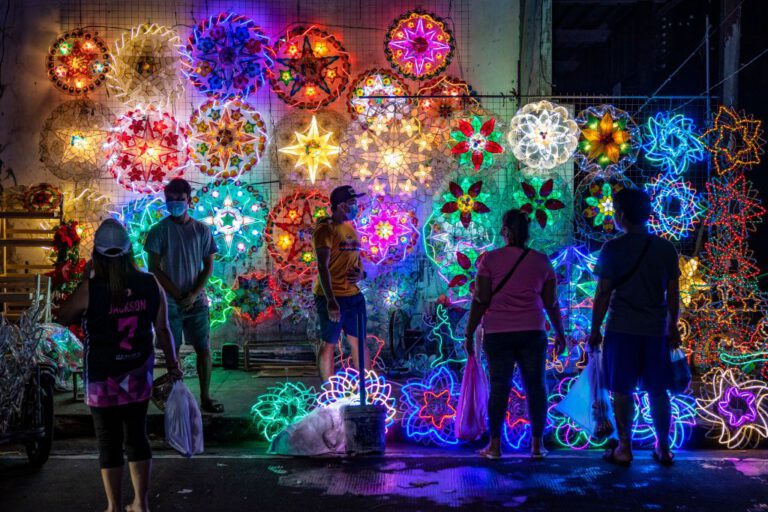
When city streets and houses light up with colourful Christmas lanterns, it only means one thing—the festive season is here. Known locally as parol, the star-shaped lanterns are, however, more than just mere decorations but rather, symbols of the victory of light over darkness. Signifying hope amidst despair, it holds a special meaning even more in this pandemic—as a reminder to remain resilient and optimistic and put our faith in the Lord.
Traditionally, the parol is made with bamboo sticks and papel de japon (Japanese paper) illuminated inside by candle or carbide. Today, these lanterns are lit up either with light bulbs manually operated with various switches or LED lights for dancing light sequences that give joy not only to kids but to everyone.
The parol’s traditional simple design may be credited to Francisco Estanislao, an artisan from the province of Pampanga, who crafted a five-pointed paper star lantern in 1908. Eventually, more durable materials, such as plastic and fiberglass, were used. But an authentic Philippine material that has become significantly popular for the parol is the capiz, iridescent shells indigenous to our seas, flattened and cut into precision. The shells can stay in natural pearly white or be tinted like stained glass pieces.
Derived from the Spanish word farol, which means “lantern”, parol has been used by barrio folks to light up their paths when going to their local churches for Misa de Gallo, the traditional nine-day novena of dawn Masses that starts on 16 December and culminates on Christmas Eve.
Ornate versions of the parol usually come with designs and patterns taken from Western Christmas figures such as angels, Santa Claus and reindeer, or from natural elements like flowers and snowflakes. But more importantly, the parol symbolises the Star of Bethlehem that guided the Three Kings to the manger where Christ was born. Hence, parol and other Christmas decorations are not taken down until the feast of the Epiphany in January, in honour of the Three Kings.
The Philippines can very well lay claim to the title Christmas Capital of Asia for its various festivals, parades and religious festivities associated with the season. Not to mention, the Christmas spirit being awakened by songs and decorations as early as September. One of the biggest and most anticipated non-religious events of the season is San Fernando City’s Ligligan Parul or the Giant Lantern Festival in Pampanga. In this annual competition of various barangays, people from everywhere flock to the city’s first day of the Misa de Gallo to witness towering lanterns compete in beauty and creativity.
Allan Severino, Esquire Philippines, December 20, 2020
A lot has been said about the recent turn of events which involved policemen killing, detaining, and apprehending various types of people in broad daylight. We can even point out that in this pandemic, they have been given a carte blanche to do such acts, often with bureaucratic approval. But public perceptions on the police in general have still been negative, in spite of the enduring appeal of the anti-crime rhetoric of the present administration and before it.
Some will even defend the institution entirely, arguing that the actions of only a few policemen are not indicative of what they are doing, which is to serve and protect. But another concern must be raised: where did they gain the audacity to break the law they swore to protect? Blaming this on the pro-violence rhetoric of the last few years is only scratching the surface of this problem. But it’s more complicated—convoluted—than that. To get to the bottom of where we are now, we have to look at the beginning.
Out With The Guardia Civil, In With the Constabulary
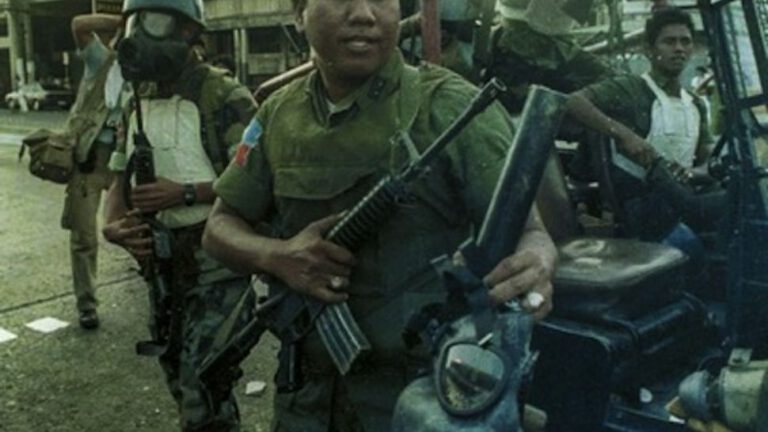
During the early years of the American occupation and beyond, the independence movement in the Philippines never died out. There has been a succession of various personages and associations ranging from the Colorums in the rural areas, trade unions, reformist associations of elites, and full-blown parties like the Sakdalistas. Contrary to the notion of American rule as ‘benevolent’ and ‘progressive,’ the Americans knew that they could only impose their agenda with force. Thus, the Philippine Constabulary was established to become a component of their security apparatus.
Succeeding the notorious Guardia Civil, the Constabulary inherited most of the functions and responsibilities of the previous Spanish regime. This included arbitrary arrests, the use of harassment, and even the tolerance of torture as anti-crime deterrents. For the Americans and their Filipino collaborators, the Constabulary was designed to provide security for the new order. This would mean that they had the full blessing and sanction of the State to repress its opposition, whether they come from the nationalist agitations or socialist causes, which often morphed as one as they addressed the same roots and grievances.
The Constabulary was involved in episodes wherein the Philippine independence movement was put to heel. It was complicit in the destruction of the Moro Sultanates, the pickets of the laborers, unrest by the farmers, the disbandment of the Sakdalistas, the death of Teodoro Asedillo among many other incidents. During the Japanese occupation, even a part of the Constabulary was fully invested in killing fellow countrymen and combating several patriotic guerrillas whose goal was to overthrow the puppet regimes set up by the Japanese.
The postwar era didn’t make it any better. It was the height of the Cold War between the U.S. and the former USSR, and anyone suspected of leftist sympathies was arrested. Poets such as Amado Hernandez saw their share of batons and the prisons. In the provinces, members of the Constabulary acted as agents of their governors and mayors who were more interested on liquidating their rivals.
Perhaps the most contributory factor on why the Constabulary was disbanded was its actions during the regimes of Ferdinand Marcos and Corazon Aquino. Despite their claimed differences from one another, both regimes were mere extensions of the system. The Constabulary acted on the wishes of their handlers. In the Marcos years, it worked hand in hand with the military to enforce the New Society. And during the ‘supposedly’ democratic administration of the Cory government, it was heavily implicated in the oppression of the common people, with the Mendiola Massacre cited as an example. Such a reputation has endured in the minds and memories of many, and this has led to calls for sufficient reform.
From its ashes, the Philippine National Police was born.
The PNP and The Present Order
Despite the alteration of names and the colors of their uniform, the PNP is hardly an improvement over the Constabulary. Large cadres of personnel of the PNP still came from the tumultuous years of the 1970s and 1980s Constabulary, which imbibed a notion of siege mentality in their conduct and habits. The opinion of the PNP has not improved either. In the closing decades of the 2010s, Ang Probinsyano of Coco Martin dared to portray the various issues of nepotism within the PNP, a controversial move given that it was funded and sponsored by the PNP. This became a controversy when former PNP Chief Oscar Albayade complained of the depiction in this television series, and the ‘alleged’ leftist bent of the show. It’s clear as day the PNP continues to struggle with an image problem, which is neither a contemporary manifestation or a reflection of current events.
So where do we go from here? In the United States, there are already calls for police abolition and defunding the police. While we can critique this perspective as too radical, we must entertain their points of contention. In recent years, the increasing rhetoric of security in a post 9/11 era has only confirmed this tendency: politicians can no longer promise a future, so they need to protect us from nightmares, whether existing or imagined.
If you think the dystopian worlds of Orwell’s 1984, Huxley’s Brave New World, Moore’s V For Vendetta, or even Collins’ The Hunger Gamesexist only in fiction, we are inching closer to its eventual realization. They have been in fact legally sanctioned with the spate of anti-terrorism laws passed through various national legislatures. The police forces, willingly or unwillingly, have become the last bastions of an increasingly detached and ravenous status quo who are no longer quiet of their desire to rule unquestionably and submit the people into indifference, fear, and apathy. The problem is not with the isolated incidents, but with the subconscious culture that has allowed it to proliferate.
These grisly origins are indeed painful, disorienting, and difficult to swallow, but the journey for rectifying it begins here.
References
Calairo, E. (2010). Cavite sa Digmaan. Kampanya ng mga Kabitenyo sa Pagkamit ng Unang Republika Republika ng Pilipinas. Cavite, Philippines. Cavite Historical Society
Constantino, R. (1976). A History of the Philippines: From the Spanish Colonization to the Second World War. New York, United States of America. Enigma Books.
Hurley, V. (1937). Jungle Patrol, the Story of the Philippine Constabulary (1901-1936). New York, United States of America. Cerberus Books.
Ochosa, O. (1994). Bandoleros: Outlawed Guerrillas of the Philippine-American War 1903-1907. Quezon City, Philippines. New Day Publishing
Reppetto, T. (2010). American Police: A History, 1845-1945. New York, United States of America. Enigma Books.
John Paul Cana, Esquire Philippines, December 2020
You don’t need us to tell you 2020 was a shitshow. But just file us under the glass-is-half-full column, because we refuse to believe there wasn’t anything to celebrate about this year.
So here’s a tiny list of good news. Because at this point, we’ll take what we can get:
1| Ipo watershed completely reforested by World Wildlife Fund Philippines and GCash
We’re constantly bombarded with news about how humanity is destroying the planet, so it’s good to hear the opposite sometimes. Some people thought the GCash Forest feature on the GCash app was just a virtual game, but, it turns out, it’s actually tied to a real-life effort to protect and rehabilitate the Ipo Dam watershed. Earlier this month, the World Wildlife Fund announced that it had completely reforested 75 hectares of the watershed thanks to the millions of transactions made through GCash Forest.
2| PEZA says investments shot up despite the pandemic
The pandemic may have severely impacted businesses around the globe, but at least one agency reported good numbers this year. The Philippine Economic Zone Authority (PEZA) said it has approved 318 applications for new and expansion projects that are projected to generate employment of about 70,000, according to the Philippine Information Agency. The applications prove that many investors are still looking to invest in the Philippines, it says. ADVERTISEMENT – CONTINUE READING BELOW CONTINUE READING BELOW Recommended Videos https://www.dailymotion.com/embed/video/x7xqors?api=postMessage&apimode=json&autoplay=true&embed_index=1&id=fb3037fea5d99&mute=true&origin=https%3A%2F%2Fwww.esquiremag.ph&pubtool=cpe&queue-autoplay-next=true&queue-enable=true&ui-highlight=false
“Only PEZA [among other IPAs] registered year-on-year growth in foreign investment commitments during the July-to-September period with P20.3 billion, up 97 percent from P10.3 billion last year,” the Philippine Statistics Authority said.
3| Carlos Yulo is world’s number one ranked gymnast in floor exercises
Award-winning gymnast Carlos Yulo has raked in multiple accolades in recent years, but, for the first time, he placed first in the world in the International Gymnastics Federation’s (FIG) world rankings in the floor exercise. Yulo shares the top spot Spain’s Rayderley Zapata. As far as we know, this is the first time ever a Filipino has achieved this feat.
4| Filipino graduates from Harvard Law
Everybody loves a good underdog story, and this one is no exception. Jose Angelo “Anjo” David graduated with a master’s in law degree from Harvard University, arguably the most prestigious institution for higher learning in the world. David grew up in a “small, cramped town in bustling Metro Manila” and describes his father as a self-made local government employee who chose to send him and his two siblings to a public high school so he could save enough money to afford to send them to college. Read his inspiring story here. ADVERTISEMENT – CONTINUE READING BELOW ADVERTISING
5| Companies shifted production to make alcohol
Antiseptic and disinfectant alcohol was definitely one of the most in-demand consumer products this year. After demand shot through the roof because of the pandemic, big companies heeded the call to produce more of them. In particular, manufacturers of the drinkable kind of alcohol, such as San Miguel Corp.’s unit Ginebra San Miguel Inc., Alliance Global Inc.’s Emperador Inc., Asia Brewery Inc. and Tanduay Distillers Inc (both under Lucio Tan’s LT Group), all pledged to produce rubbing alcohol to help replenish the supply for hospitals and consumers.
6| Jollibee cited as one of the world’s best employers
Everybody loves Jollibee as much as everybody loves a company that treats its employees fairly. This year, the ‘bee earned two citations as a world-class employer. The first is from the Gallup Exceptional Workplace Awards, given to organizations “whose cultures drive high engagement among its employees.” Jolllibee Foods Corp is the first ever Philippine-based company to be honored by Gallup. ADVERTISEMENT – CONTINUE READING BELOW ADVERTISING
JFC also made it to Forbes’ list of World’s Best Employers, along with Robinsons Retail Holdings and Alliance Global Group.
7| Family of endangered Philippine eagles sighted
At least three eagles were spotted in the forests of Lupon, Davao Oriental. According to reports, the eagle family is within the Mount Kampalili-Puting Bato Key Biodiversity Area of Davao Oriental, which is one of the few large habitats of Philippine Eagles in Mindanao. Fly free, eagles.
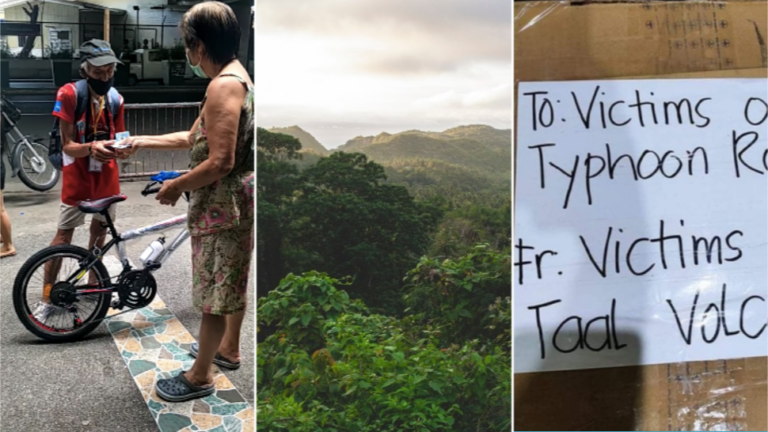
8| Benguet farmers donate harvest to Taal victims
People’s kindness knows no bounds. This was displayed yet again earlier this year when Taal Volcano acted up yet again. One of our favorite stories is when farmers from Benguet donated their harvests to those displaced by the eruption. Thousands of kilos of vegetables made their way to evacuation centers in Batangas.
On a somewhat related note, victims of the Taal eruption paid it forward, sending aid to those affected by typhoon Rolly. Faith in humanity restored.
8| UP builds digital library to save dying Filipino languages
The Philippines has anywhere from 120 to nearly 190 languages, and it’s a little sad to know that many of them are dying out. To save these dying Philippine languages, computer scientists and linguists from the University of the Philippines created a digital dictionary called Project Marayum that anyone can access on the Internet.
9| More women are assuming positions of power worldwide
According to the United Nations World’s Women 2020 report, 25 percent of parliamentary seats worldwide is filled by women. And there are now 20 countries with a woman head of state or government, up from 12 in 1995.
10| Man gets bike for free
Sometimes, a heartwarming story is all it takes for us to just forget all the bad news, even for a few moments. In June, it was the story of an old man who stopped by a bike shop in Pasay nearly every day expressing interest to buy a P4,500 bike. But he only had P2,000. In a gesture of goodwill that melted the hearts of netizens eveyrwhere, the bike shop’s owner finally decided to give the old man the bike, and he didn’t even have to shell out his P2,000.
11| More people had access to electricity
We might take turning a light bulb on or grabbing something from the fridge for granted, but the reality is that hundreds of millions of people around the world still don’t have electricity. However, that number dropped from about 860 million in 2018 to 770 million in 2019, according to the International Energy Agency.
12| Unemployment is going down
The number of jobless Filipinos was at a staggering 7.2 million (about 17.6 percent of the working-age population) last April. But according to Philippine Statistics Authority, that number has since gone down to 3.8 million (8.7 percent). We’ll take it .
13| Student who received rocks instead of laptop, finally gets real laptop
In Iloilo, a student who ordered a laptop online was dumbfounded when he opened the package and found rocks inside. It was especially heartbreaking considering the student and his fisherfolk parents saved up for the gadget so he could have something to use for his online classes.
Thankfully, a group of kindhearted individuals, led by MMDA Traffic Chief Bong Nebria took pity on the kid and decided to buy him an actual laptop. The online shopping platform reportedly gave the kid his money back and the student he plans to give the laptop he ordered to a relative who needs it.
14| More elephants and lions are roaming the plains of Africa
Kenya’s elephant population doubled from 16,000 in 1989 to 34,000 today, according to conservationists. Poaching is also reportedly down, from 80 in 2018, 34 in 2019, to just seven reported in 2020. Meawhile, lions in the country have also increased by 25 percent, from 2,000 in 2010 to 2,489 in 2020.
15| Age of sexual consent raised
In the Philippines, adults can have sex with children as young as 12 and that isn’t considered statutory rape. That’s about to change as the House of Representatives overwhelmingly approved a bill on third and final reading seeking to raise the age of sexual consent to 16. A similar bill has already been approved at the committee level at the Senate.#
Sexual harassment, distance learning, red-tagging. These issues mobilized students in a pandemic year.
No lockdown could stem the wave of activism this year, as students and young Filipinos acted on their rage – whether to expose sexual harassment in schools, call out red-tagging government officials, or unmask the flaws of distance learning.
Most of the campaigns that students waged in 2020 targeted the government’s inadequate response to the pandemic, which allowed them to immerse in related issues and make several protest hashtags trend online.
According to Jainno Bongon, chairperson of the University of the Philippines Los Baños University Student Council and convenor of Rise for Education, “once na [magsimula kang] makapagparticipate sa mga campaigns, sunud-sunod na ‘yan eh. Sunud-sunod na makikita mo ang mga issues sa labas ng pamantasan.” (Once you have participated in several campaigns, you’ll be exposed to different issues outside the university.)
What moved the young to action this year? Let’s look back.
Anti-terror law, red-tagging
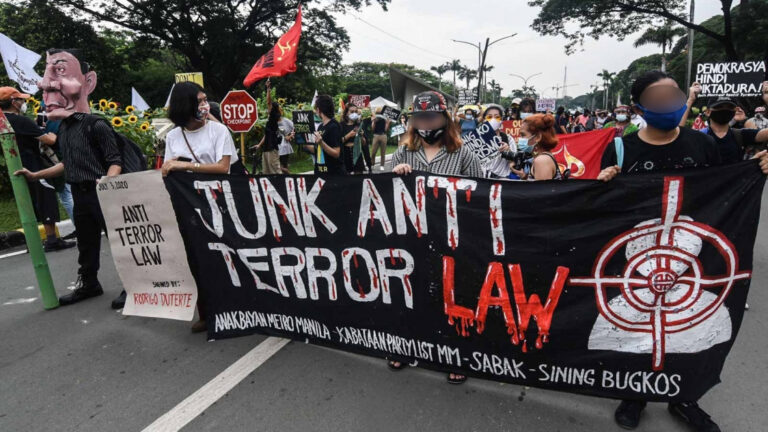
The protest movement against the anti-terror law – branded as unconstitutional by lawyers and retired justices – was dominated by students. They raised awareness about the dangers of the bill through online campaigns, colorful graphics, and on-ground rallies under a single call: #JunkTerrorBill.
Lawmakers still passed the bill in July.
Saying this spelled the “demise of democracy,” students promptly took to the streets under a new call: stop the anti-terror law. The pushback also emboldened various sectors to bring the battle to the Supreme Court via petitions that reached close to 40.
“Dahil sa Anti-Terrorism Law, nabibigyang leverage ang AFP at PNP na mang-redtag at i-brand as terrorist ‘yung mga progresibong kabataan,” Bongon said. (The Anti-Terrorism Law gives leverage to the AFP and PNP in red-tagging and branding progressive youth as terrorists.)
Outspoken celebrities like Liza Soberano and Angel Locsin have been targeted by these agencies, especially the National Task Force to End Local Communist Armed Conflict (NTF-ELCAC), which has falsely accused them of being allied with communist guerrillas. Soberano once joined a youth forum hosted by the progressive women group Gabriela, while Locsin has been vocal critic of government.
Student activists became easy targets for red-tagging, too. In a webinar hosted by the Cavite State University (CvSU) on October 24, 2020, a military officer red-tagged some progressive groups and student activists, warning the estimated 1,000 students in the webinar to stay clear of these groups that “recruits” the youth to join the New People’s Army.
For student organizations such as CvSU Kilos Na and League of Filipino Students, the CvSU administration should be held accountable for allowing soldiers to red-tag its students. CvSU later apologized but also argued that it’s up to students to believe the military’s claims or not.
Perils of distance learning
Due to the pandemic, the education department has been using distance learning as its main method for class delivery. This shift has always been controversial as the country struggled with the new system that demanded new protocols, infrastructure, and knowledge.
Students were quick to point this out. They took the discussion of #LigtasBalikEskwela and academic freeze to social media and onto the streets.
They also blasted the education department for incompetence and posted photos of sub-standard learning modules.
Despite the department’s “no student left behind” mantra, students still feel left out. They lamented that they cannot afford to buy the tools needed for online classes, given that their parents lost income during the lockdown.
Faced with incoherent government response, students launched their own donation drive dubbed #PisoParaSaLaptop.
Anger spilled over to other non-virus related matters, as two big typhoons dislocated thousands of Filipinos and devastated towns and cities. Government’s slow action to these disasters prompted students of big universities such as Ateneo de Manila University (ADMU) and De La Salle University (DLSU) to call for an academic break.
“We believe that things cannot continue business as usual. We can no longer stomach the ever-rising number of deaths due to the state’s blatant incompetence. We cannot prioritize our schoolwork when our countrymen are suffering unnecessarily at the hands of those in power,” Ateneo students said in their statement.
Students in other schools followed suit. “Spontaneous action siya na na-deem ng mga estudyante na necessary sa current situation at yun pa lang, yung mismong pagpapatawag ng mga estudyante at kaguruan, testament na ‘yun sa tagumpay ng isang strike kasi napakahalaga ng unity ng iba’t ibang sector kapag magpapatawag nito,” Bongon said.
([Student protests] are spontaneous actions that the students deemed necessary, given the situation of the school community. These actions alone are a testament to the success of a strike because of the unity of the different sectors.)
The students’ strike scored some victories. At UPLB where Bongon studies, the university implemented a no-fail policy as well as programs designed to assist students in their academics.
Exposing sexual predators
The Filipino youth also used social media to expose sexual misconduct they experienced in schools.
#HijaAko trended last June 2020 after a spat between the broadcaster Raffy Tulfo and Frankie Pangilinan, daughter of Senator Francis Pangilinan and megastar Sharon Cuneta.
A domino effect followed, with students owning the hashtag #HijaAko as they exposed cases of sexual harassment in different schools such as Miriam College High School (MCHS) and Taguig Science High School (TagSci). The online movement resulted in other campaigns– #MCHSdoBetter and #TagSciDoBetterNow – to trend.
To promote a “healthy” call-out culture, Bongon said the objective of a mobilization or a campaign on social media must be clear for the students and the rest of the school community. “Gamitin din siya, hindi lang siya basta pag-cacallout, but gamitin natin siya as a form para mag-educate pa ng mga tao regarding these cases,” he added. (Use it not just for the sake of “calling out” but as a way to educate more people about these cases.)
Given what young Filipinos have shown this year, Bongon is optimistic about the future of student activism in the country.
“‘Yung pinakaimportansya ng dissent sa isang demokrasya ay para mabuo yung sharpest line at malaman kung ang isang decision ba ay tama o meron siyang mali,” Bongon stressed. (The importance of dissent in a democracy is that it forms the “sharpest line” and helps determine whether a [leader’s] decision is correct or not.)
The goal is for leaders to acknowledge the problems and hear citizens out. Otherwise, it’s no longer democracy, he said.– Rappler.com